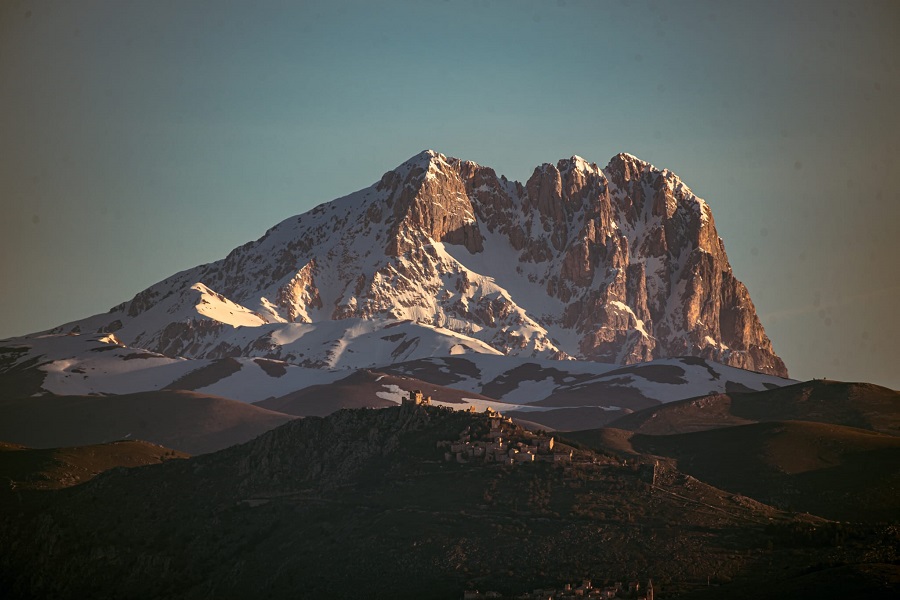
Surrounded by the spectacular nature of Abruzzo, these small towns and villages offer up-close encounters with the region’s history and culture.
The central Italian region of Abruzzo doesn’t seem to be ridding itself of the ‘best-kept secret’ epithet, but the word is out. Its extraordinary nature accounts for three national parks, with massifs such as the Gran Sasso and the Maiella including the highest peaks of the peninsula (2,914 mt and 2,793 mt respectively). The high-altitude sceneries echo those of the more famous Dolomites, except the sweeping beaches of the Adriatic litoral are only one hour away.
While the region is home to remarkable cities, its beating heart is in the rural settlements scattered across verdant valleys, dramatic cliffs or scenic hilltops. Many of these small towns and villages have succeeded in preserving their culture and traditions while opening up to tourism. They often feature an old castle, charming Medieval streets and exciting wildlife, alongside more specific attractions such as a local festival or a mystical hermitage perched on the mountainside. Our list mixes popular and under-the-radar destinations, suitable for both a day trip and a longer stay.
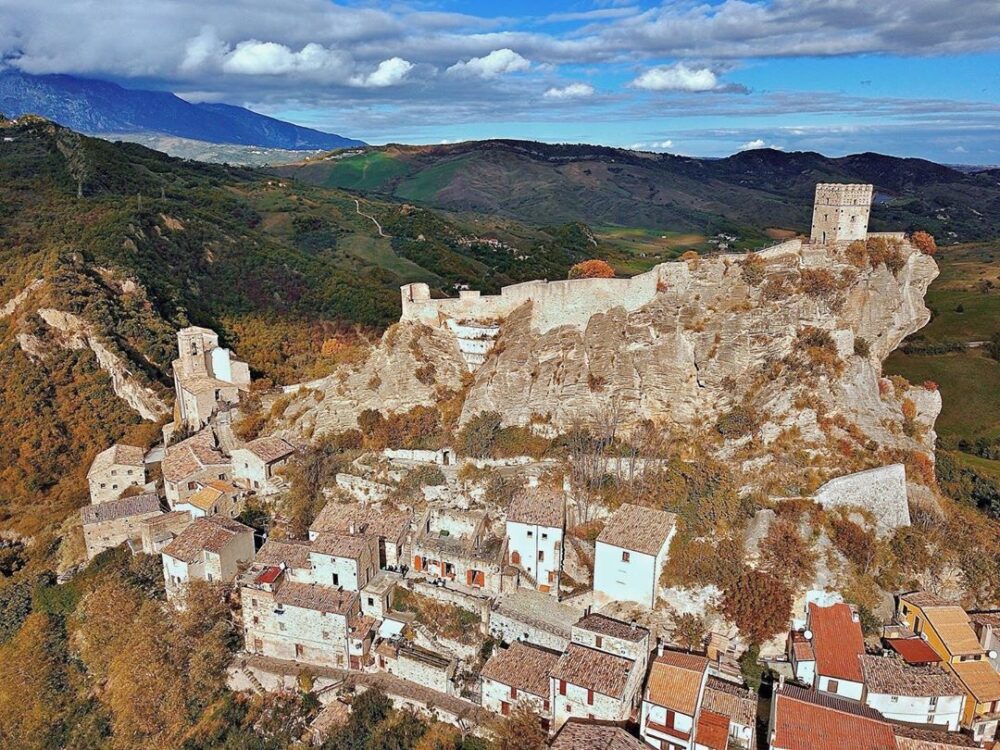
Roccascalegna
Roccascalegna lies underneath one of Abruzzo’s most charming castles – a cliffside Medieval fortress whose round and square towers reveal Langobard and Norman traces. Forgotten for centuries, the site was fully restored during the 1990s, and is today a museum and events venue. The scarce evidence available about the castle’s past has given way to the legend of a despot being murdered by a newlywed peasant couple, adding a gloomy note to the visit. A steep stairway links the fortress to the small hamlet below, notable for its old churches, stone houses and wide vistas over the Maiella massif. Another landmark is the San Pancrazio Abbey located a short hike away, thought to be linked to the castle’s origins.
Calascio
Worthy of a Medieval fantasy setting, the mountaintop fortress of Calascio got the attention of international cinema long before Game of Thrones or The Lord of the Rings. 1980s classics such as Ladyhawke and The Name of the Rose were shot here, spotlighting a site that had been neglected for centuries. Today, both the castle and the attached hamlet are restored, and visitors can spend the night at once-abandoned stone houses. Also worth a visit is the modern part of Calascio further down the mountain, where the population moved after the original settlement had become unsafe. Rocca Calascio is considered one of the highest castles in Italy (1,460 mt), and can also be reached via a two-hour hike from Santo Stefano di Sessanio.
Santo Stefano di Sessanio
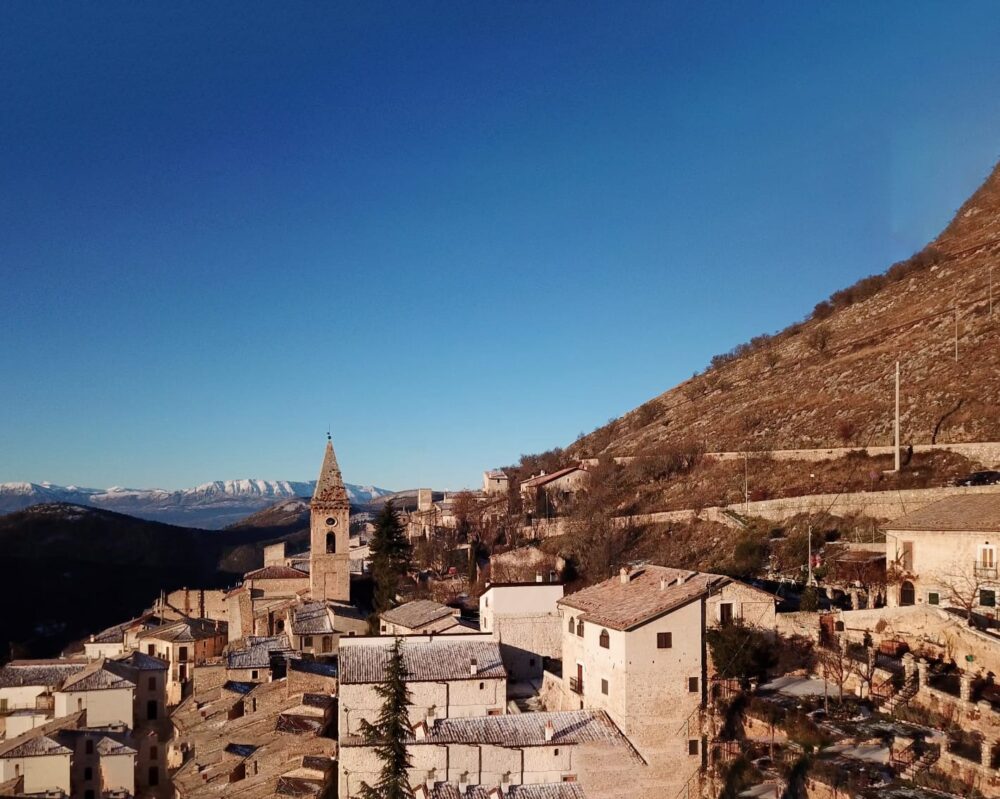
This mountain village is located within the Gran Sasso National Park, at an altitude of 1250 mt. Its perfectly preserved Medieval features display the town’s heyday as a Florentine outpost. Both the main gate and the Renaissance palace bear the signature of the Medici family, under which the town thrived as a wool trading hub. The 20-metre tower collapsed with the tragic Abruzzo earthquake of 2009, but has now been restored to its former glory. An albergo diffuso (dispersed hotel) project has salvaged many stone-walled houses from neglect and depopulation, turning them into charming accommodations where to experience the peasants’ traditions with a luxurious twist (Sextantio). Different types of accommodation are also available for those seeking a more raw approach to the local life.
Scanno
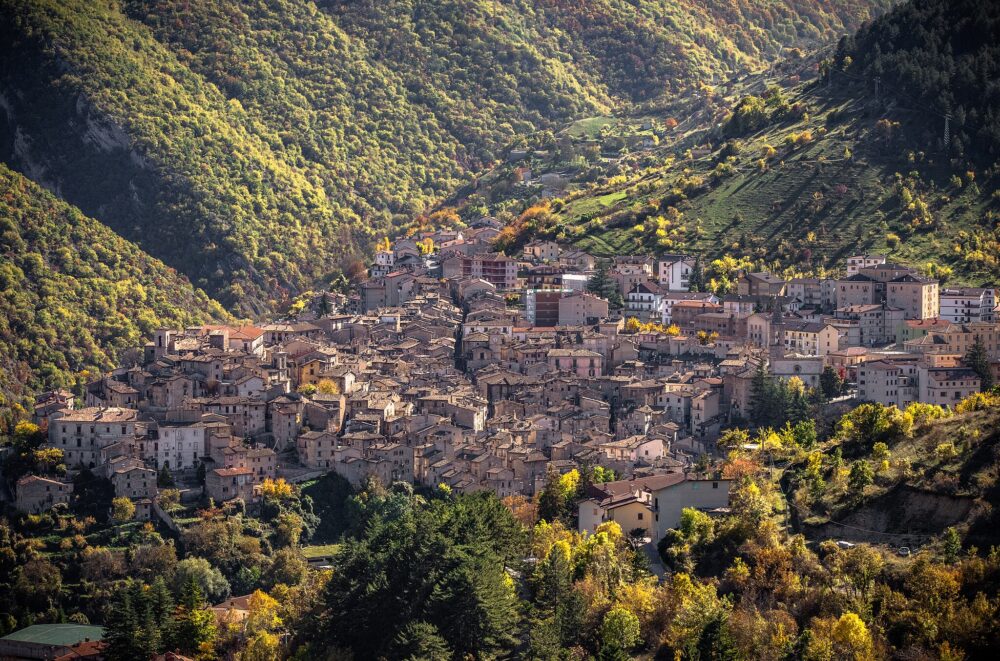
Shot by world-famous photographers such as Henri Cartier-Bresson, this lakeside town owes its popularity to well-preserved local traditions and a charming old town. Arches, gates, fountains and Baroque ornaments lend character to the rural setting, with stone-walled terraced houses accessed through distinctive external stairways. Elegant palaces testify to the town’s most thriving era (17th – 18th centuries), blending gracefully with Gothic and Romanic architecture of previous times. A wool museum recalls the town’s textile heritage, and so do the traditional costumes still in vogue. Outdoor activities ranging from skiing to windsurfing grant year-round tourist appeal, thanks to the natural attractions of the Abruzzo National Park. The heart-shaped lake nearby is the region’s largest.
Aielli
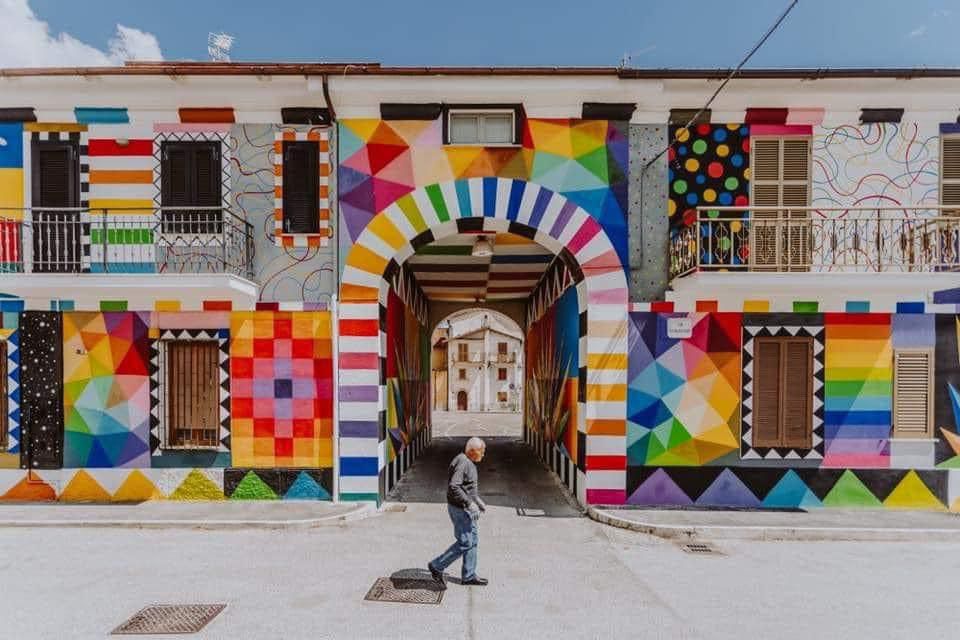
The town of Aielli celebrates an original bond between street art and astronomy. What started as an art-driven urban project in 2017, evolved into a yearly festival attracting world-famous street artists such as Vhils and Okuda San Miguel (Borgo Universo). The mural tour gets longer with every edition, currently amounting to 40 artworks. Some of them pay homage to the town’s stargazing vocation, which started in the 19th century with the Aielli-born astronomer Filippo Angelitti. The Medieval tower is home to the highest observatory in Central Italy, offering visitors astronomical walks, a sky museum and planetarium shows. Back on Earth, the nearby Celano Gorges play backdrop to some of Abruzzo’s most scenic treks.
Opi
As essential as its name suggests, Opi offers a perfect retreat to enjoy the simple pleasures and spectacular settings of the Abruzzo National Park. Dutch artist Maurits Cornelius Escher captured the scenery in his Abruzzo series: a small village stretched atop a crag, surrounded by a verdant valley and a crown of mountains further in the background. A small museum and a wildlife observatory celebrate the local species of chamois (Museo del Camoscio), while the hiking trails can be explored with horses or donkeys. In wintertime, the area is famous for cross-country skiing on the Macchiarvana Plateau.
Palena
Known for the many species of orchids found in its territory, Palena is a riverside town backdropped by the Maiella National Park. The 11th-century castle is the architectural highlight, perfectly restored and home to a geologic museum. Typical arches, portals and stone steps are spread across the Medieval centre, which has conserved its historic charm despite the damages it suffered during World War II. The natural heritage is particularly rich, including the headwaters of the Aventino River and a wildlife area home to the Marsicano bear. A museum dedicated to this local species of bear is housed in the Saint Anthony Cloister. Further up the mountain, a 14th-century hermitage is open to visitors and hikers seeking shelter.
Civitella del Tronto
Near the border with Le Marche region, the stone houses of Civitella del Tronto seem to guard the 6-acre fortress sitting above them, one of the most important military sites in Italy. This 13th-century stronghold proved impregnable to a French siege in 1557, and was the last Bourbon site to fall during the unification of Italy (1861). What’s written in history books also influenced the local cuisine, with recipes such as Filetto alla Borbonica taking centre stage (a beef fillet served on toast and topped with anchovies and mozzarella). The fortress is home to a military museum, and offers 360-degree vistas ranging from the Maiella Mountain to the Adriatic Sea. The outdoor activities nearby include trekking through the Salinello Gorges.
Navelli
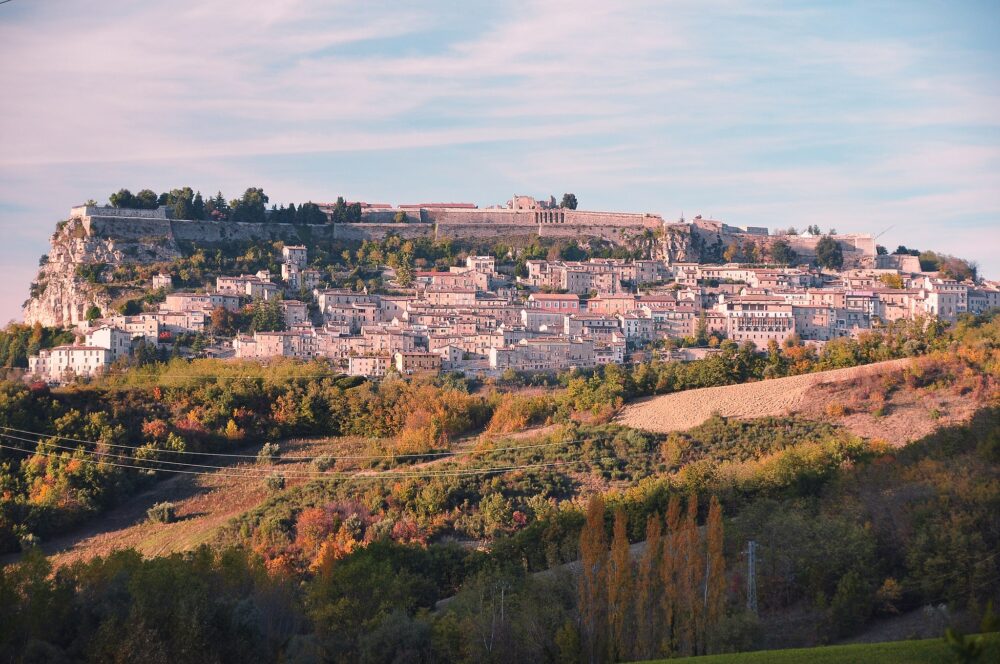
A uniform composition of houses terraced down a slope, Navelli comes across as an austere sight at first. Look closer, and a multitude of carved woodwork, decorated balconies and other ornaments will reveal a more imaginative demeanour, where remnants of the peasants’ life gone by sit next to elegant historic palaces. The town owes its riches to the cultivation of saffron, imported from Spain during the 16th century. The pre-harvest season is the best time of the year to visit, with the surrounding land taking on enchanting tinges of red and purple (mid-Autumn). The precious spice also offers an intriguing twist on the regional cuisine, making Navelli one of the top culinary destinations in Abruzzo.
Pacentro
Pacentro is the natural entrance to the Maiella National Park, and an excellent starting point for hikes and excursions. Its castle is considered one of the best preserved in Abruzzo, whose original parts date back to the 11th century. The whole town presents itself as a particularly harmonious mountain settlement, where visitors can feast their eyes on a variety of graceful details adorning the streets, churches and palaces. A small museum reenacts a peasants’ period setting (Casa Marlurita). Not far from the town are the cave paintings of Colle Nusca, while the highest peak of the Maiella National Park falls within the territory of Pacentro (Mount Amaro, 2,800 mt). The larger town of Sulmona is less than 10 km away.
Penne
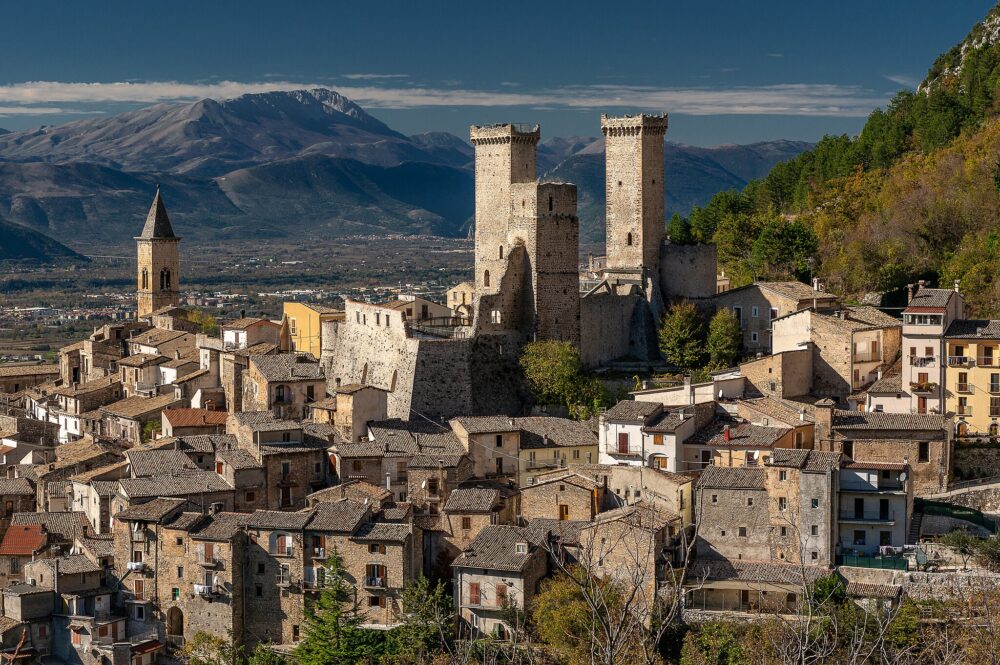
Penne lies on four hills at the foot of the Gran Sasso National Park, halfway between the sea and the region’s highest mountains. Red bricks cover its streets and walls like a soft mantle, creating a uniform urban landscape. Yet the architectural heritage reveals extraordinary details and creativity, with churches and palaces displaying a range of different styles. Little remains of the old castle, but it still points the way to the charming Belvedere Route circling the town’s outskirts. Among the most original attractions is Fornace del Bono, an artistic pottery workshop and jazz club housed in a historic palace. The artificial lake nearby takes its name from the town, and is home to a natural reserve where to engage in outdoor activities such as hiking and kayaking.
Colonnella
Of the small towns and villages on our list, Colonnella is the closest to the Adriatic coast. Its location atop a gentle hill has earned it the title of ‘terrace over the sea’, with narrow streets and charming piazzas opening onto spectacular vistas. The old town features notable palazzi and art-packed churches, alongside distinctive elements such as the clock tower and the stairways leading up to Piazza del Popolo. Water tanks located just outside the village date back to Roman times, one of which has been used until recently thanks to its excellent conditions (Cisterna Cincolà). Colonella is also a famous wine destination, where to try regional signatures such as Trebbiano, Passerina and Montepulciano d’Abruzzo. The family-friendly beaches of Martisicuro are five km away.