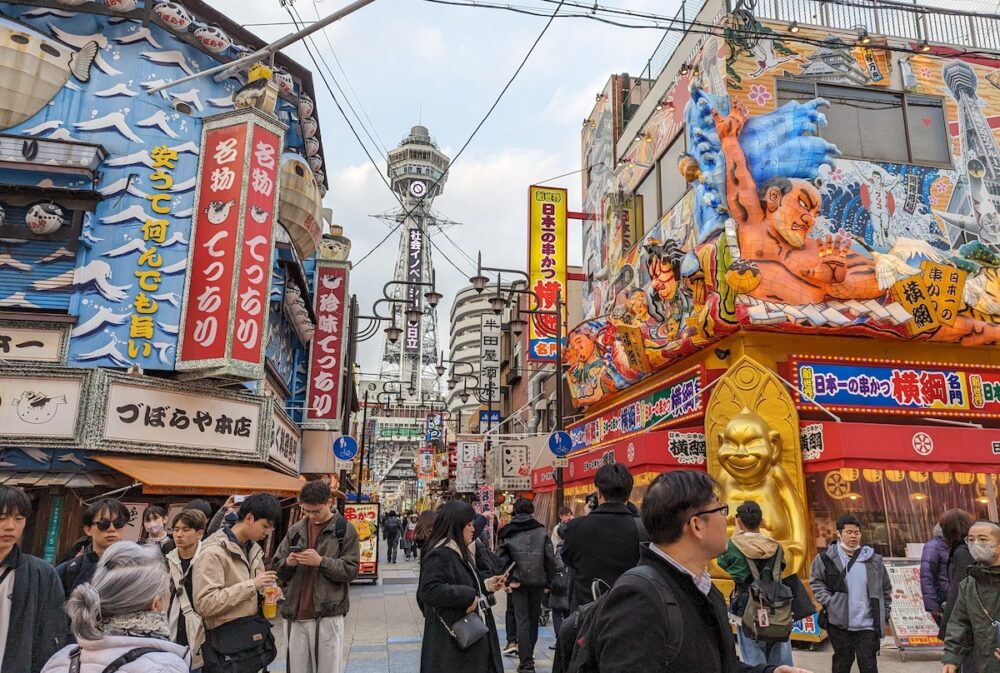
Once known as Osaka’s most dangerous district, this rapidly gentrifying neighbourhood is garnering attention for its retro arcades, personality-packed dive bars and some of the best street food in the city.
(Photo: Allie D’Almo)
Portrait of the neighbourhood
Designed in 1912 following the triumphant 1903 Industrial Exposition, Shinsekai literally means “New World”. At the beginning of the 20th century, it flourished as a major tourist attraction, a gleaming symbol of Osaka’s modern image. Barely three decades later, it had become one of the poorest areas in Osaka and a notorious hub for organised crime.
These days this vibrant enclave, with its colourful history and nostalgic attractions, has become a popular spot for locals and tourists on the lookout for good food and fun. The seedy karaoke joints and smoke-filled bars are still here, but as the neighbourhood becomes more popular, they share space with artistic residences, modern knife shops and arcades.
The northern half of the city is said to have been inspired by Paris, which explains its centrepiece: the looming Eiffel Tower-esque Tsutenkaku Tower (11 Chome-18-6 Ebisuhigashi). Much of the tower was scrapped for metal after World War II, but the current iteration, built in 1956, is every bit as iconic as the original. Standing at 103 metres high, the observation deck offers charming views over Tennoji Park (5-55 Chausuyamacho) and Southern Osaka.
The southern section of the city was modelled on New York’s Colney Island, with Luna Park, an impressive 132,000 square metre amusement park encompassing an arcade, mechanical rides, a music hall, a theatre and a hot springs spa, spreading across most of the area. By the mid-1920s the park had been abandoned and, like the tower, most of it was dismantled for scrap metal after the war to rebuild the city.
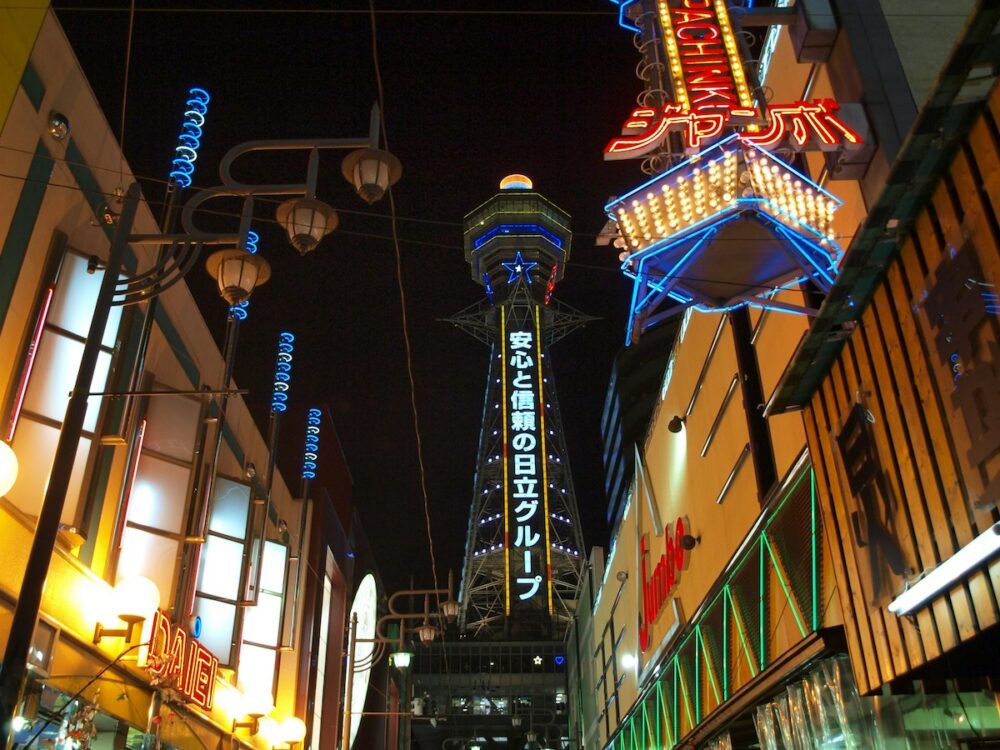
The iconic Tsutenkaku Tower (Photo: Unsplash)
While the park is long gone, this section of Shinsekai has retained the nostalgic charm of its glory days. Many of the shop fronts have remained unchanged and the covered arcades are brimming with retro-fronted shops, restaurants and cinemas, like the old 1930s Kokusai Movie Theatre (2 Chome-1-32 Ebisuhigashi), now plastered with hand-painted movie posters that rotate every few weeks.
This set of streets is also renowned for its retro coin-operated 1980s and 1990s arcade games. The Zarigani Arcade (1 Chome-21-4 Ebishuhigashi) is loaded with 200 vintage machines, while the Kasuga Amusement Arcade (JanJan Yokocho Alley), which has been in business for over half a century, boasts classics like “Puyo Puyo” and an excellent pachinko offering.
In keeping with its theme park origins, Shinekei is also home to one of Osaka’s most popular onsen attractions: Spa World (1 Chome Ebisuhigashi). This sprawling hot spring theme park features a variety of themed hot spring baths and saunas, including an Ancient Roman-inspired jacuzzi, an Ancient Greek medicinal bath, a Finnish-style bath house, Japanese hinoki cypress wood baths, and Balinese-style saunas.
Where to eat
Shinkseiki is the birthplace of kushikatsu – lightly battered meat and vegetable skewers served with a dipping sauce and slice of bread. Invented as a cheap, fast food for low-income workers, there are now dozens of kushikatsu restaurants dotted across the city but, while there are plenty of worthy contenders, Kushikatsu Daruma (2 Chome-3-9 Ebisuhigashi), which opened here in 1923, is arguably the best.
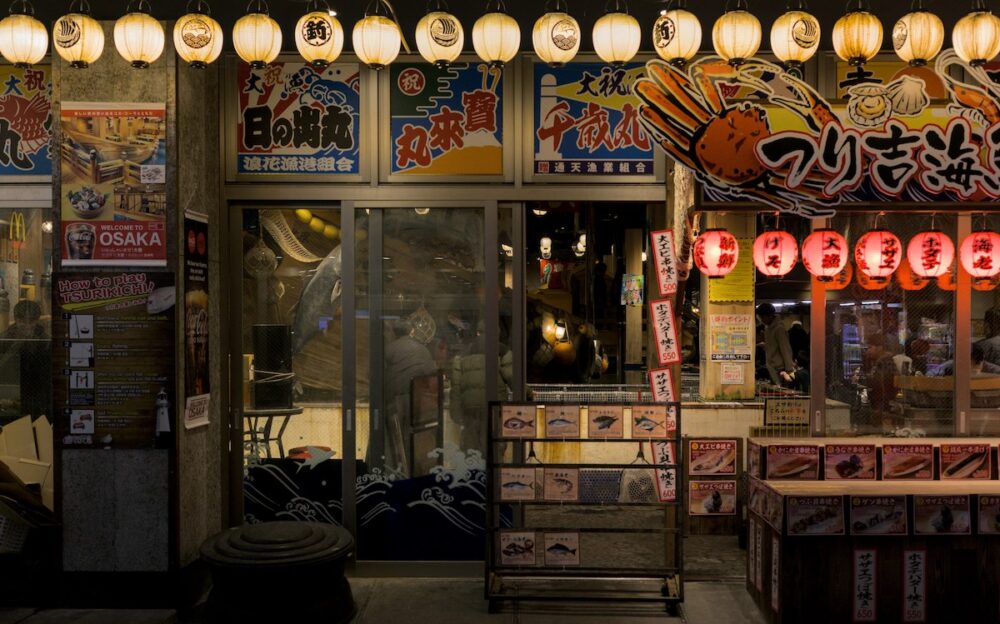
One of Shinsekai’s many excellent eateries (Photo: Unsplash)
Jan Jan Yokocho Alley (3 Chome Ebisuhigashi), popularised by labourers rebuilding the city after World War II, is a 180-metre-long covered arcade bustling with tiny, cheap restaurants with space for a dozen customers and bars with clientele packed in like sardines. It’s one of the best places to try low-priced, delicious dishes like crispy chicken and steaming gyoza, washed down with a local beer.
Until last year, the century-old Shinsekai Market Downtown Shopping Arcade was relatively run down, but it has since reinvented itself with a stretch of food stalls open day and night, offering affordable food and entertainment. Among them are several excellent stalls, including some of the best takoyaki (doughy balls stuffed with diced octopus) in the neighbourhood.
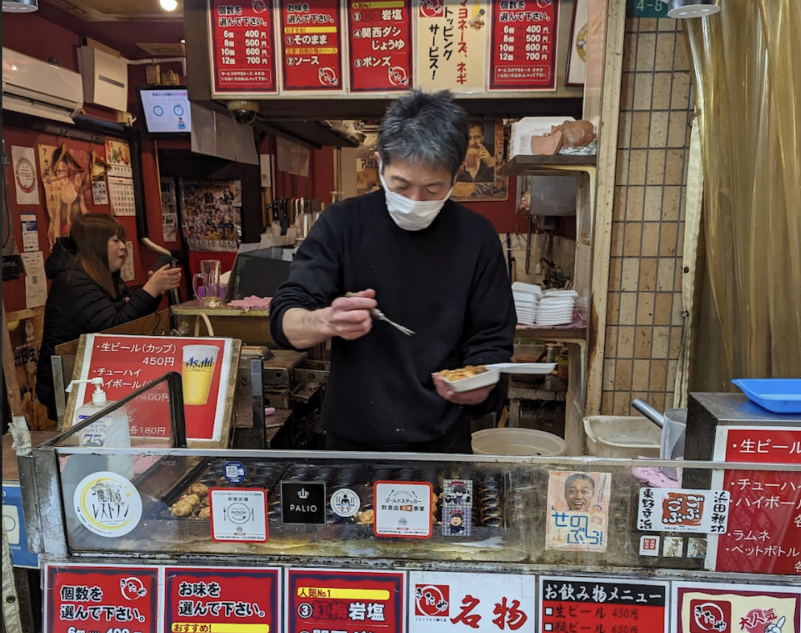
(Photo: Allie D’Almo)
Where to stay
Cocoroom Guesthouse and Cafe (2 Chome-3-3 Taishi,) is one of the most interesting accommodations in the city and ideal for those looking to get under the skin of Shinsekai. Founded in 2003, the guesthouse doubles up as a creative space to provide workshops and events for residents and guests. Guests can choose from single, twin, family and 8-bed dormitories. All rooms have a shared bathroom.
Those seeking a little bit more privacy should try Joytel Hotel (2 Chome-10-9 Ebisuhigashi), a four-star hotel located a stone’s throw from Tsutenjaku Tower. Rooms are larger than most, with sumptuous double beds, flat-screen TVs en-suite bathrooms, and some with city views.