A coastal city with a long history of international trade, Lisbon’s past has given rise to a cuisine that is both richly varied and unique.
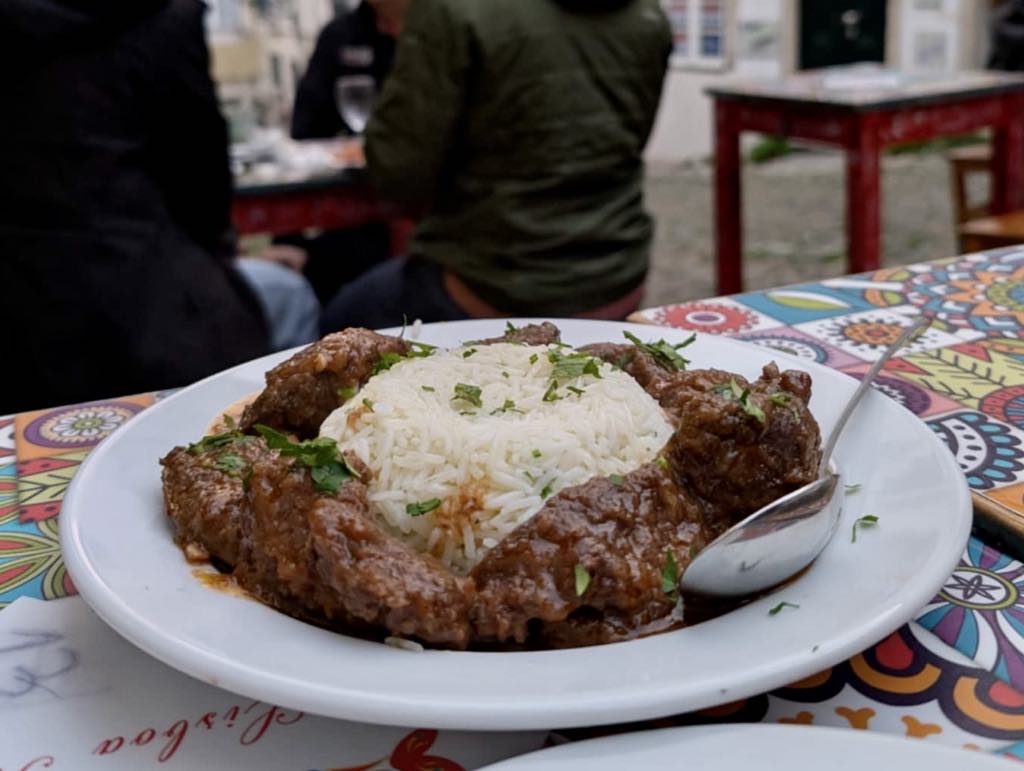
Garlic black pork cheek at Tu & Eu (Photo: Audrey Herrin)
Named the best culinary destination in Europe at the 2024 World Culinary Awards, Lisbon’s abundant natural resources are provided by the estuary on which the city is built, while its culinary flavors are enhanced by African and South Asian influences.
Seafood reigns over Lisbon’s gastronomic scene, with sardines and codfish being the most common items on restaurant menus, while octopus, shellfish, and tuna are also popular. However, there’s much more to the city’s cuisine. Rich, savory Iberian pork is the signature red meat and features in a variety of dishes. Lisbon also has plenty to offer the sweet-toothed, with a range if popular desserts sold in pastelarias throughout the city.
Lisbon’s cuisine is also remarkably fresh and diverse, and most of it is reasonably priced. Restaurants throughout historic neighborhoods such as Chiado and Alfama offer a taste of authentic local cuisine.
In short, Lisbon is a culinary haven for both thrill-seeking foodies, and travelers who simply enjoy a good, nourishing meal, with an almost endless assortment of dishes to taste. We’ve hand-picked seven of the most traditonal ones – and where to try them.
Black pork cheek
‘Porco preto’ or ‘black pork’ is the meat of the Iberian pig, native to Spain and Portugal. Enriched by the pigs’ diet of acorns and grass, black pork is known for its dark color and intense flavor. The cheek is one of the most tender cuts of meat, and in Portugal it is often slow-cooked in wine to create a richly flavored, savory dish. The flavor of the meat is usually enriched with garlic, root vegetables, tomato, and bay leaf, along with other spices. Black pork cheeks are often served with potatoes or rice, and pair well with a pitcher of port wine. The restaurant Tu & Eu, located in a quiet courtyard in the romantic Alfama neighborhood, offers one of the most delicious black pork cheek dishes you’ll find anywhere in the city.
R da Adiça 58
Tinned sardines

Tinned sardines in Port wine (Photo: Solepesca)
It would be close to a crime for foodies to leave Lisbon without sampling some of the city’s iconic tinned sardines. This little fish is emblematic of the city, as it’s one of its most abundant foods. It’s also closely associated with Lisbon’s patron saint, and during the festival of Santo Antonio each June, sardines are celebrated and eaten throughout the city. Lisbon has many shops dedicated to selling decorated cans of sardines, along with an infinite array of other canned seafood. The packaging is almost too beautiful to ruin by opening, making canned sardines the perfect souvenir to take home. There are also several restaurants which serve samples of tinned seafood, the most well-known being Sol e Pesca, which was once visited by the late celebrity chef Anthony Bourdain. This little restaurant on the iconic Pink Street, is decorated with fishing equipment and serves delicious small seafood plates. They have a variety of tinned sardines to choose from, including spicy and smoked.
R. Nova do Carvalho 44
Sericaia
One of Portugal’s most unique desserts is sericaia – an egg, flour, and milk-based dish similar to soufflé. The dish begins as a custard, lightly sweetened with lemon and cinnamon, before being dusted with cinnamon and baked in a traditional clay dish. The result is a cake-shaped dessert with a cracked surface. Sericaia is served by the slice, topped with stewed plums from the Alentejo region, honey, or syrup. The flavor is cinnamony, and not-to-sweet – perfect for a light dessert after a rich Portuguese meal of pork and seafood. Testament to Portugal’s tapestried culinary legacy, the dessert is influenced by a long history of trade with Southeast Asia and colonisation of Malaysia. Many authentic Portuguese restaurants offer sericaia as a dessert option, with the version served up at Solar dos Nunes receiving wide acclaim.
R. dos Lusíadas 68
Black linguine with seafood
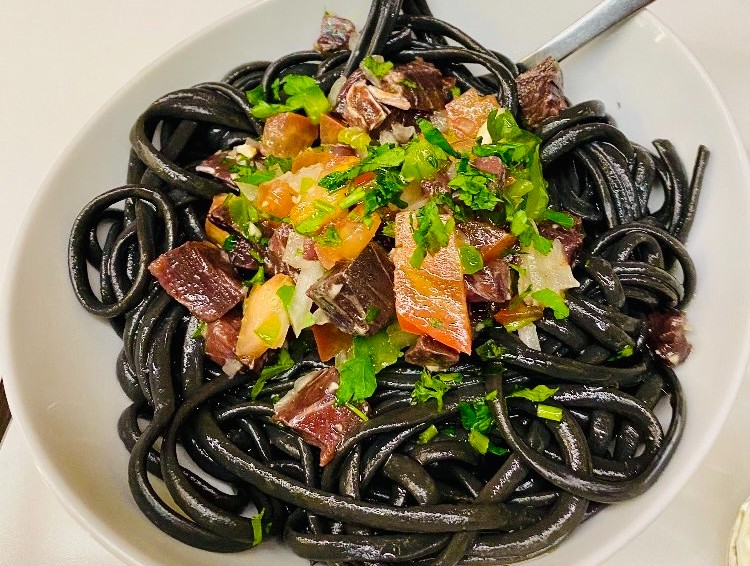
Black linguine at Sol e Pesca (Photo: Audrey Herrin)
Along with tinned sardines, black linguine is another dish offered at Sol e Pesca. Pairing well with fresh seafood, these linguine noodles are made with squid ink, which gives the pasta its black color and light, briny flavor. Sol e Pesca serves the pasta cold, alongside locally-caught fish such as anchovies or tuna. The linguine is tossed with oil and white vinegar to give it a light sweetness, along with fresh tomatoes, cucumbers, garlic, and onions. The result is a mouth-wateringly refreshing flavor, the brininess of the seafood perfectly balanced by the acidity of the tomatoes and vinegar and the freshness of the cucumber. This dish also pairs well with Portuguese Vinho Verde, a crisp, often-fizzy white wine.
R. Nova do Carvalho 44
Bifanas
A simple, meat sandwich – like the Portuguese equivalent of the American hot dog – bifanas are a popular street food. Comprised of a crusty bread roll filled with thin pieces of pork, marinated in white wine and seasoned with paprika, garlic, vinegar, and other spices, it’s either served plain or with condiments such as mustard. Many casual restaurants serve bifanas as a lunch option, and it’s often served at street food joints and outdoor markets too. Portuguese McDonalds even sells a version called the ‘Mcbifana’. One of the best places to try one is at As Bifanas do Afonso in the Baixa district.
R. da Madalena 146
Pastéis de bacalhau
These delicious fried fish cakes are a popular appetizer or snack food in Lisbon. The dish dates back to the age of exploration, when potatoes were brought back from the Americas, and began to be cultivated and used in Portuguese dishes. It combines potatoes, parsley, and onion, with one of Lisbon’s most common foods – codfish. The result is similar to a croquette, soft on the inside, with a crispy, fried shell on the outside. Pastéis de bacalhau can be found all over Lisbon, at both late-night fast food joints and high-end restaurants. While not necessarily traditional, Casa Portuguesa do Pastel de Bacalhau specializes
in large pastéis de bacalhau, filled with molten cheese. To try traditional pastéis de bacalhau, simply order them at any authentic Portuguese restaurant.
R. Augusta 106
Pastel de natas

Pastel de natas with cinnamon (Photo: Audrey Herrin)
No trip to Lisbon is complete without sampling the city’s favorite snack – pastel de natas. These sweet custard tarts are often enjoyed with espresso as a midday pick-me-up. Most people order their pastel de nata served warm and with a dusting of cinnamon. The crust should be flaky, the surface lightly charred to produce a caramelized effect, and the center creamy. Pastel de natas can be found in pasticcerias, cafes, and specialty shops all over Lisbon. Preferences vary between individuals as to custard to crust ratio and
other factors, so it’s best to try them from a few different places. One of the most highly rated places to try pastel de natas is Pastéis de Belém.
R. de Belém 84 92