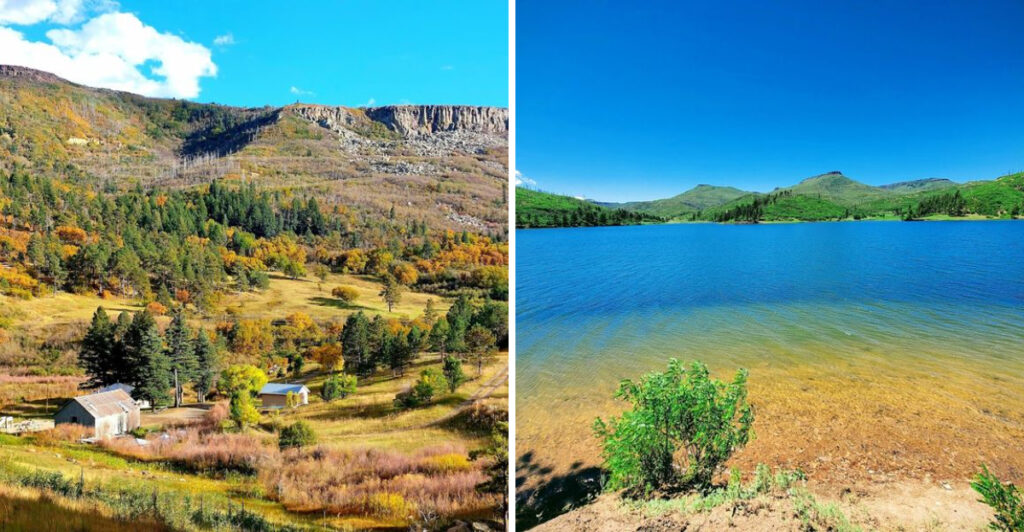
Some parks make you work a little before they show off, and this canyon escape seems to enjoy that. You leave the highway, follow the road, and suddenly the whole day gets quieter.
Pine-covered slopes rise around you. A wide mountain lake flashes through the trees.
Old coal camp traces wait beside the trail like the park is still holding part of its past in plain sight. This corner of New Mexico does not feel crowded or polished for a crowd, which is exactly why it sticks with you.
One minute you are looking at trout water under a huge sky. The next, you are standing near sealed mine entrances, wondering what life looked like here a century ago.
It is a place for slow walks and long looks, with that rare feeling that you found somewhere beautiful before everyone else started talking about it again.
Canyon Roads That Feel Quiet From The Start
The moment you turn off the highway and follow the road into the canyon, the noise of everyday life starts to fade behind you.
State Highway 526 curves through the canyon in a way that feels almost deliberate, as if the road itself is asking you to slow down and pay attention to what surrounds it.
Cell service drops off about four miles after leaving I-25, and rather than feeling like an inconvenience, that quiet disconnection becomes one of the best parts of the whole trip.
The road stays smooth and manageable for most of the drive, though some of the upper routes near Soda Pocket Campground shift to steeper dirt paths that hint at wilder terrain ahead.
Very few cars share these roads on most days, which means you can roll the windows down, take your time, and actually look at the canyon walls rising on either side.
The whole drive in sets a tone that the rest of the park happily keeps, and you find yourself at Sugarite Canyon State Park at 211 Highway 526, Raton, NM 87740 before the outside world even crosses your mind again.
Forested Slopes With A Northern New Mexico Mood
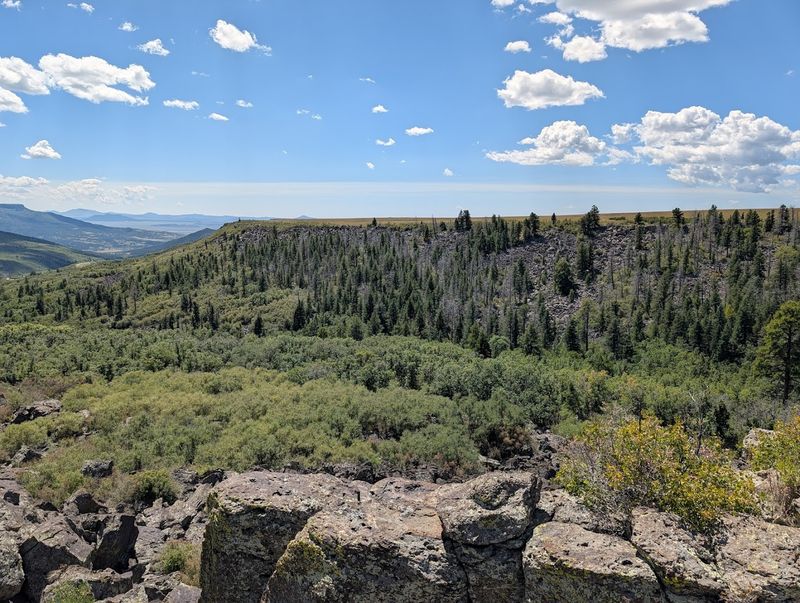
Few things prepare you for how lush and layered the forest feels once you climb into this high canyon.
The park ranges from about 6,900 to 8,400 feet, and those elevations bring a cooler, richer atmosphere that feels distinct from the drier landscapes you might expect in the broader region.
Ponderosa pine and gambel oak cover the sun-facing slopes in thick stands, while Douglas fir, white fir, and aspen take over the shadier north-facing hillsides with softer, more filtered light.
Walking among these trees, you catch the sharp, clean scent of pine mixed with damp earth, a combination that feels restorative in a way that is hard to put into words.
The forest here carries a distinctly northern New Mexico personality, cooler and more alpine than the desert stretches further south, with birdsong threading through the canopy at nearly every turn.
Wildlife moves through these slopes with regularity, and elk sightings near the tree line during early morning or evening hours are common enough that keeping your eyes open becomes second nature on every walk.
Lake Views Framed By Pine-Covered Hills
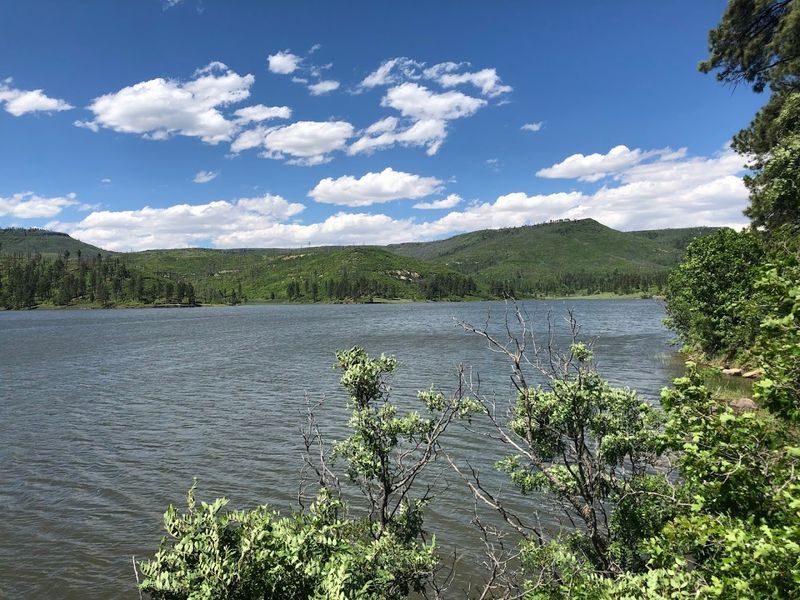
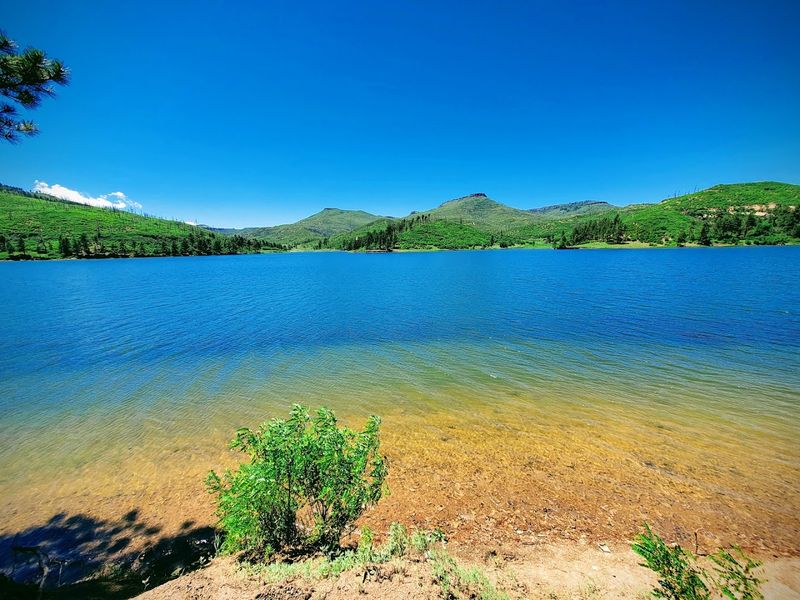
Lake Maloya is the kind of view that stops you mid-step, a 120-acre stretch of calm water tucked inside a bowl of pine-covered hills that seem to hold the whole scene together.
The surface of the lake catches the light differently depending on the time of day, and the reflections of the surrounding trees give it a depth that makes it genuinely hard to stop staring.
Lake Alice sits nearby and offers its own quieter charm, with shaded banks and a stillness that feels almost private on most days.
Both lakes are regularly stocked with rainbow and brown trout, so anglers tend to find their way here with good reason, setting up along the shore with an unhurried patience that matches the pace of the whole park.
From the higher vantage points near Soda Pocket Campground, the lakes appear below as bright patches of blue set against the darker greens of the forest, sometimes framed by clouds building over the mountains.
The panoramic views from these elevated spots have a way of making the whole canyon feel even larger and more rewarding than it already does at ground level.
Old Coal Camp Traces Along The Trail
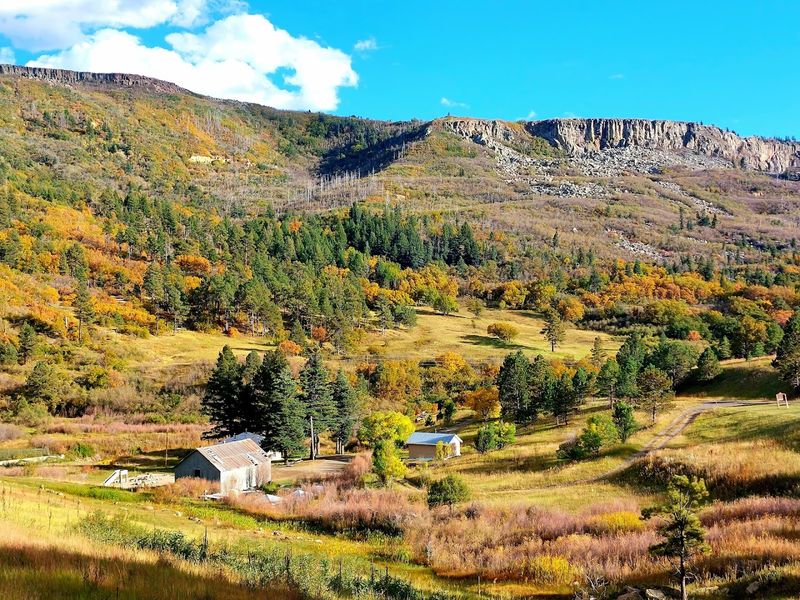
History has a way of sneaking up on you at this park, and nowhere is that more true than along the interpretive trail near the visitor center.
From 1912 to 1941, a coal camp operated right here in this canyon, and the traces it left behind are still surprisingly visible if you know where to look.
Old building foundations sit quietly along the path, half-swallowed by grass and shrubs, while scattered pieces of rusted equipment offer a tangible connection to the families who once called this rugged place home.
Sealed mine entrances appear along the trail as well, and standing in front of them gives you a grounded sense of just how much labor shaped this landscape over those three decades.
The visitor center itself occupies the former camp post office, which adds a layer of authenticity to the exhibits inside and makes the whole experience feel more rooted than a typical trailside display.
Visitors who make time for this trail often say it becomes the most memorable part of their trip, turning an afternoon walk into something that genuinely shifts how they see the canyon around them.
Meadows That Open Beneath Wide Mountain Skies
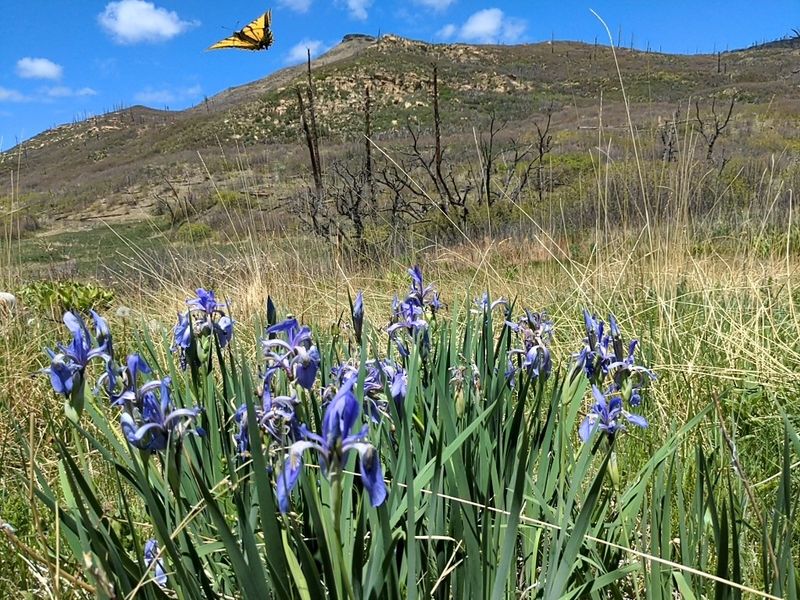
After spending time under the forest canopy, stepping into one of the park’s open meadows feels like the landscape taking a deep breath.
Little Horse Mesa flattens out into a grassy expanse that invites slow walking, with wildflowers threading through the grass during the warmer months in bursts of yellow, purple, and white.
The meadow near Segerstrom Creek is another spot worth seeking out, where the combination of open sky and flowering plants draws pollinators and birds in numbers that make every pause feel productive.
Standing in the middle of these clearings with mountains rising on multiple sides creates a sense of scale that the forest trails, beautiful as they are, simply cannot replicate.
The sky above these meadows tends to put on its own show, with afternoon clouds building into dramatic formations that photographers and casual observers alike tend to find impossible to ignore.
Elk and deer move through these open areas regularly, especially in the early morning and at dusk, turning a simple meadow walk into a genuinely memorable wildlife encounter without any extra effort on your part.
Creekside Paths With A Calm Backcountry Feel
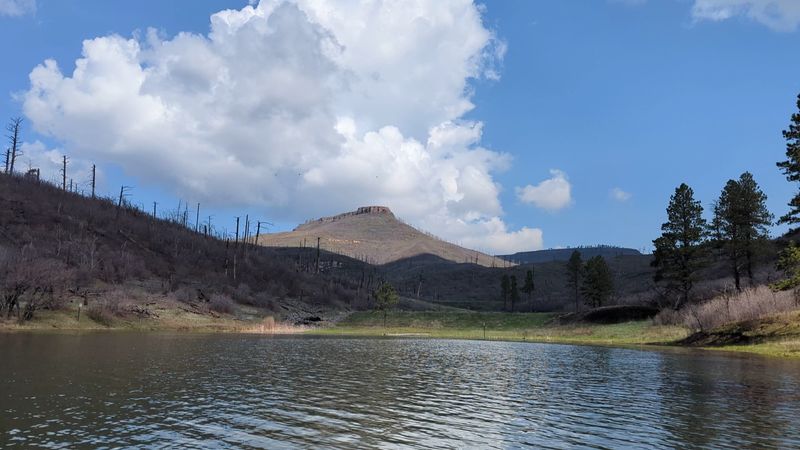
Chicorica Creek runs through the heart of the canyon with a quiet persistence that makes the trails following its banks feel especially welcoming.
The River Walk Trail traces a forested loop along the creek, and the combination of moving water and dense tree cover keeps the temperature noticeably cooler than the more exposed sections of the park.
Sound plays a big role in what makes this path so calming, with the creek providing a steady backdrop that blends with birdsong and the occasional rustle of something moving through the brush nearby.
The west side of the creek is particularly rich in wildlife activity, and patient walkers often spot a wide range of birds and small mammals without having to stray far from the main path.
The overall feel of these creekside routes leans more toward backcountry than developed trail, even though the paths themselves are accessible and well-defined for most of their length.
Spending a morning on these trails has a way of resetting your internal pace, and most people who start out planning a quick walk end up lingering far longer than they originally intended.
Campsites Surrounded By Stillness And Trees
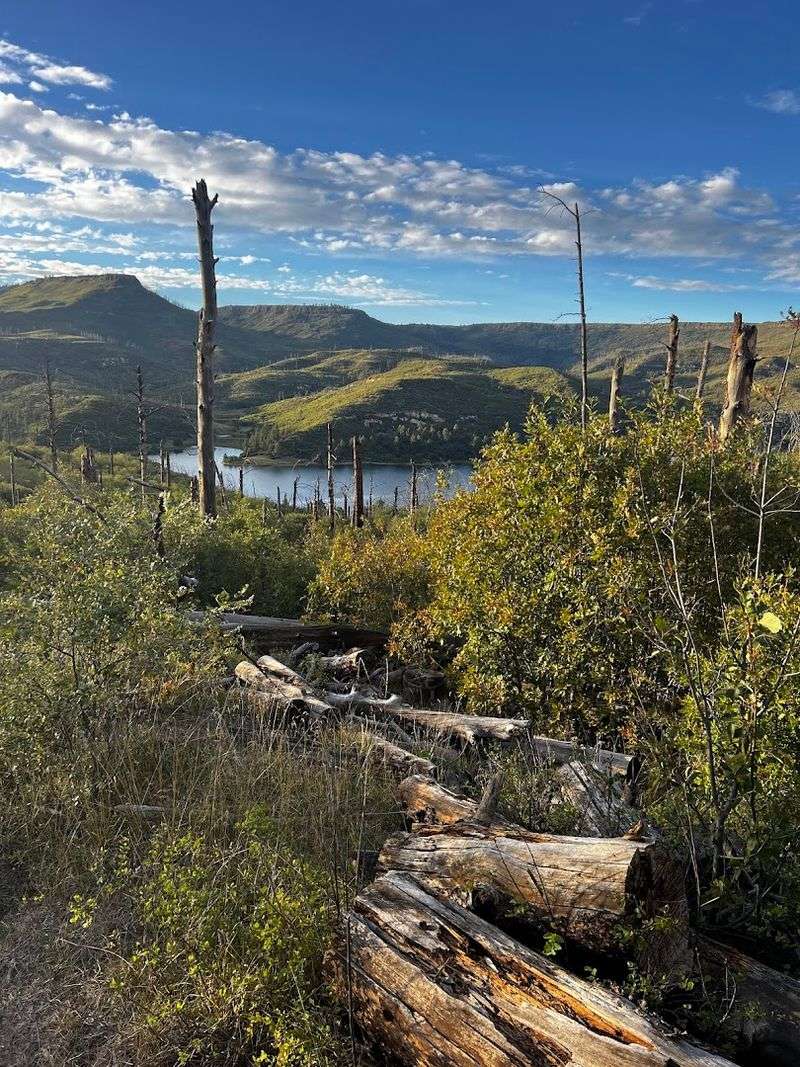
A night at this park lets you trade the usual background noise of daily life for something much better: wind moving through pine trees and almost nothing else.
Lake Alice Campground sits in the lower canyon with mature trees and dense brush providing shade and a natural sense of privacy between sites, making each spot feel more tucked away than the numbers might suggest.
Higher up, Soda Pocket Campground trades that enclosed feeling for something more expansive, with open views stretching across the canyon and individual sites equipped with covered picnic tables and fire rings ready for a proper evening under the stars.
The complete absence of cell service throughout much of the park turns out to be one of the campground’s best features, removing the low-level distraction that follows most of us everywhere else we go.
With 41 developed sites spread across both campgrounds, the park rarely feels crowded, and the quiet between sites tends to hold even on busier summer holiday weekends.
Waking up in this canyon, with the forest still cool and the light just starting to filter through the trees, is the kind of morning that makes the drive back feel genuinely bittersweet.
Scenic Pullouts Made For Slow Photo Stops
The park sits at the convergence of the Rocky Mountains and the Great Plains, and that geographic fact shows up clearly in the views from its higher vantage points.
Pullouts along the upper roads offer sweeping perspectives of the canyon below, with the two lakes visible as bright focal points set against the surrounding forest and the plains stretching out toward the horizon beyond.
Soda Pocket Campground provides some of the most dramatic overlooks in the park, where the full depth of the canyon becomes visible in a single glance and the scale of the landscape finally registers in a satisfying way.
The Little Horse Mesa Trail rewards those who make the climb with a panoramic view that takes in Sugarite Canyon from edge to edge, a payoff that justifies every uphill step without question.
Early morning visits to these pullouts tend to offer the clearest air and the most dramatic light, with the canyon floor still in shadow while the ridgelines catch the first warm glow of the day.
These spots invite you to simply stop, put the camera down for a moment, and let the view settle in before New Mexico reminds you that some things are better felt than photographed.