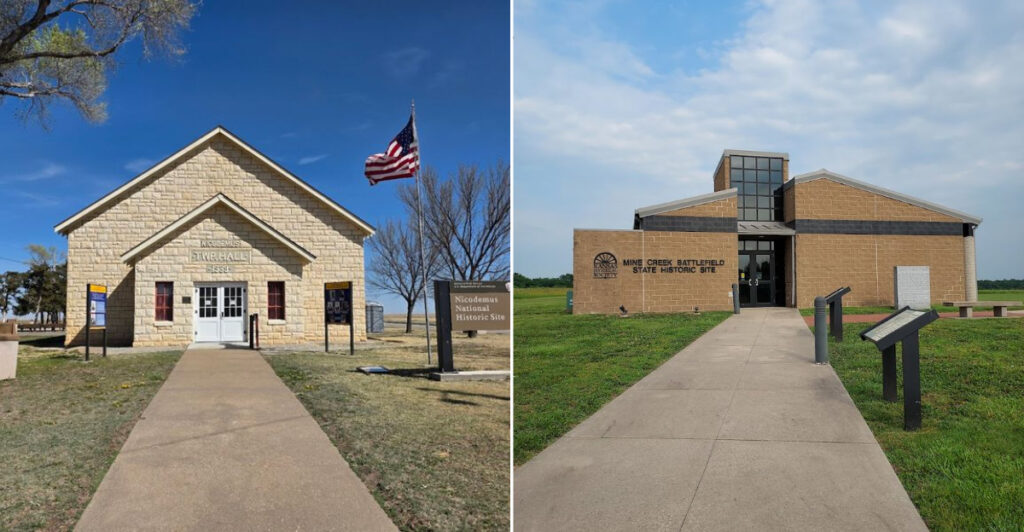
The best history trips are the ones that make the map feel like it is holding secrets. This hidden Kansas road trip has that pull, leading travelers beyond the usual stops and into places where the past still feels alive.
Old trails, quiet landmarks, frontier stories, and unexpected small-town moments turn the drive into more than scenery through the windshield.
It is part treasure hunt, part history lesson, and part reminder that the most fascinating stories are not always sitting in the busiest places.
Kansas has a way of surprising anyone willing to take the slower route, especially when each stop adds a new piece to the bigger picture.
A trip like this is the kind that starts with casual curiosity and ends with me reading every marker, taking the long way home, and wondering how many stories I have driven past before.
Fort Scott National Historic Site, Fort Scott, Kansas
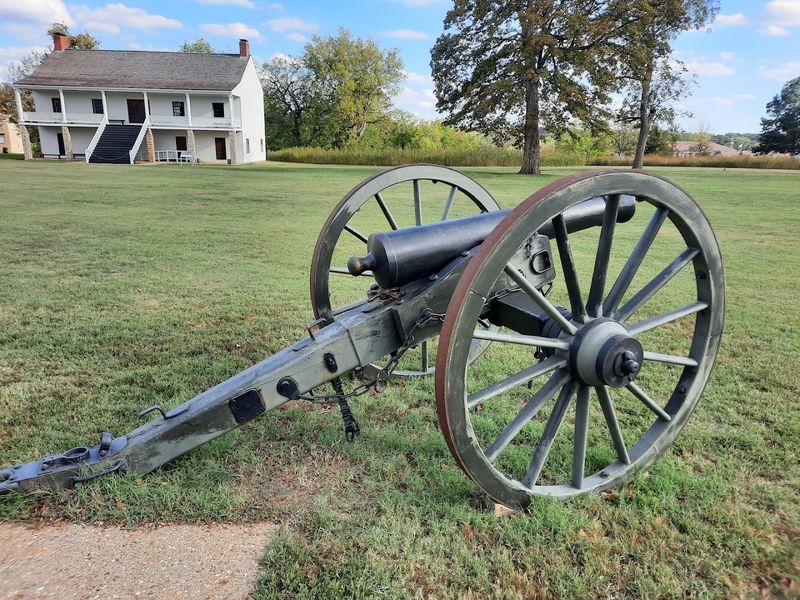
Standing at the edge of what was once the American frontier, Fort Scott National Historic Site in Fort Scott, Kansas, tells a story that stretches from frontier expansion all the way through the Civil War.
Built in 1842, this post served as a base for troops protecting the Permanent Indian Frontier and later became tied to the conflict known as Bleeding Kansas.
Today, Fort Scott preserves 20 structures, including barracks, officers’ quarters, and a hospital, with original buildings and reconstructions interpreting fort life during the 1840s.
Walking through Fort Scott feels like stepping into a living history textbook.
Living history programs and exhibits bring the past to life, explaining just how central this location was to westward expansion and the lead-up to the Civil War.
Plan to spend at least two to three hours exploring the grounds. Fort Scott is located at 101 Old Fort Boulevard, and admission is free, making it an ideal first stop on your Kansas history road trip.
Fort Larned National Historic Site, Larned, Kansas
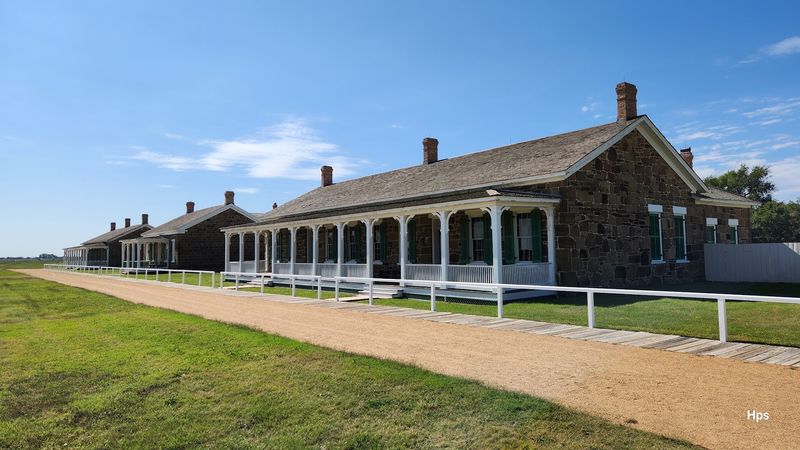
Few places in Kansas feel as genuinely untouched by modern development as Fort Larned National Historic Site, located along the Santa Fe Trail near Larned, Kansas.
Established in 1859, Fort Larned was one of the most important military posts on the southern plains, protecting mail coaches, wagon trains, and travelers heading west along the trail.
The sandstone buildings here are remarkably well-preserved, and the site is considered one of the best-remaining examples of a plains frontier military post in the entire country.
Fort Larned sits on the same ground where soldiers once kept watch over the vast Kansas prairie, and that sense of open space and history hits you the moment you arrive. Rangers lead tours that explain the complicated relationships between the U.S.
Army, traders, and the Indigenous nations who called these plains home.
The site at 1767 KS Highway 156 also hosts living history weekends that draw history enthusiasts from across the region. Fort Larned is the kind of place that makes the past feel genuinely close.
Nicodemus National Historic Site, Nicodemus, Kansas
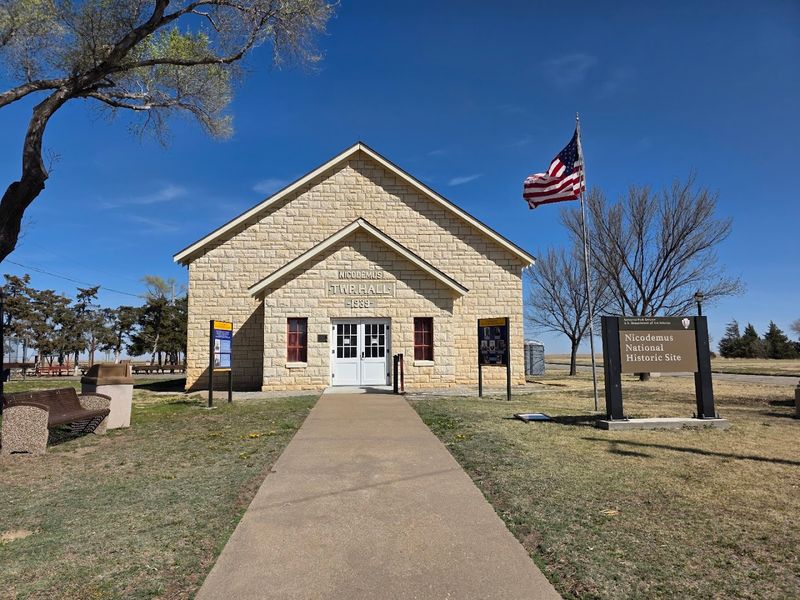
Nicodemus, Kansas, carries a story unlike any other place on this road trip. Founded in 1877 by formerly enslaved African Americans seeking freedom and land on the western plains, Nicodemus became the oldest and only remaining Black settlement west of the Mississippi River.
Nicodemus National Historic Site preserves five historic structures and tells the remarkable story of a community that carved out a new life in one of the most unforgiving landscapes in America.
Visitors often describe the experience as deeply moving. The site at 304 Washington Avenue in Nicodemus includes a visitor center with exhibits that trace the town’s founding, its struggles, and its survival through drought, economic hardship, and the near-total abandonment of similar communities.
Every year, Nicodemus hosts a Homecoming celebration that brings descendants of original settlers back to the town, filling the quiet prairie with music, food, and shared memory.
For anyone interested in African American history or the broader story of the American West, Nicodemus National Historic Site is an absolutely essential stop that puts a human face on resilience.
John Brown Museum State Historic Site, Osawatomie, Kansas
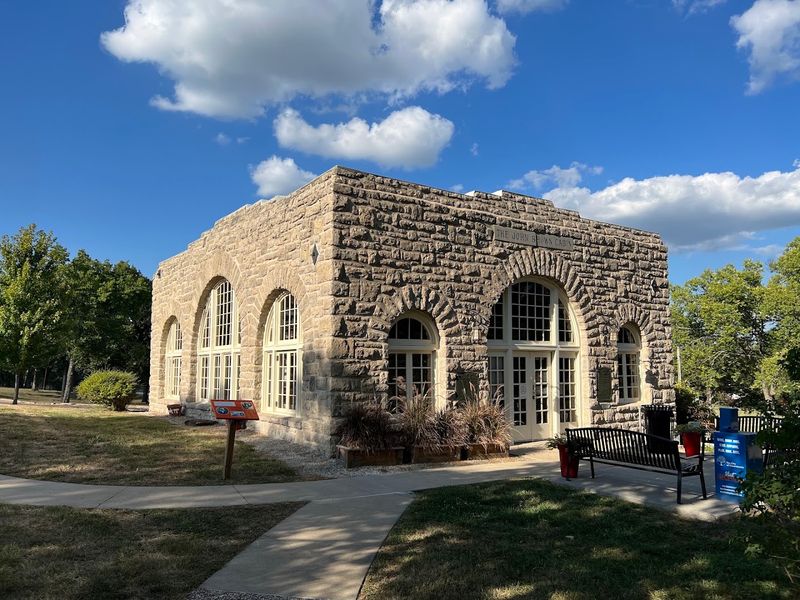
The name John Brown carries enormous weight in American history, and the John Brown Museum State Historic Site in Osawatomie, Kansas, is one of the most direct places to reckon with that legacy.
Brown, the fierce abolitionist, used Kansas as a base during the Bleeding Kansas period, and the Battle of Osawatomie in 1856 was one of the defining confrontations of that era.
The site at 1000 Main Street preserves the cabin of Rev. Samuel Adair, Brown’s brother-in-law, where Brown stayed during his Kansas campaigns.
The museum inside walks visitors through the violent struggle over whether Kansas would enter the Union as a free or slave state, a conflict that helped ignite the Civil War.
John Brown Museum does not soften the story. The exhibits present the full complexity of the period, including the brutal violence on both sides, making it one of the most intellectually honest historic sites in the state.
The surrounding park also includes a statue of Brown and grounds tied to the Battle of Osawatomie. Visiting John Brown Museum leaves you thinking long after you leave Osawatomie, Kansas, behind.
Mine Creek Civil War Battlefield State Historic Site, Pleasanton, Kansas
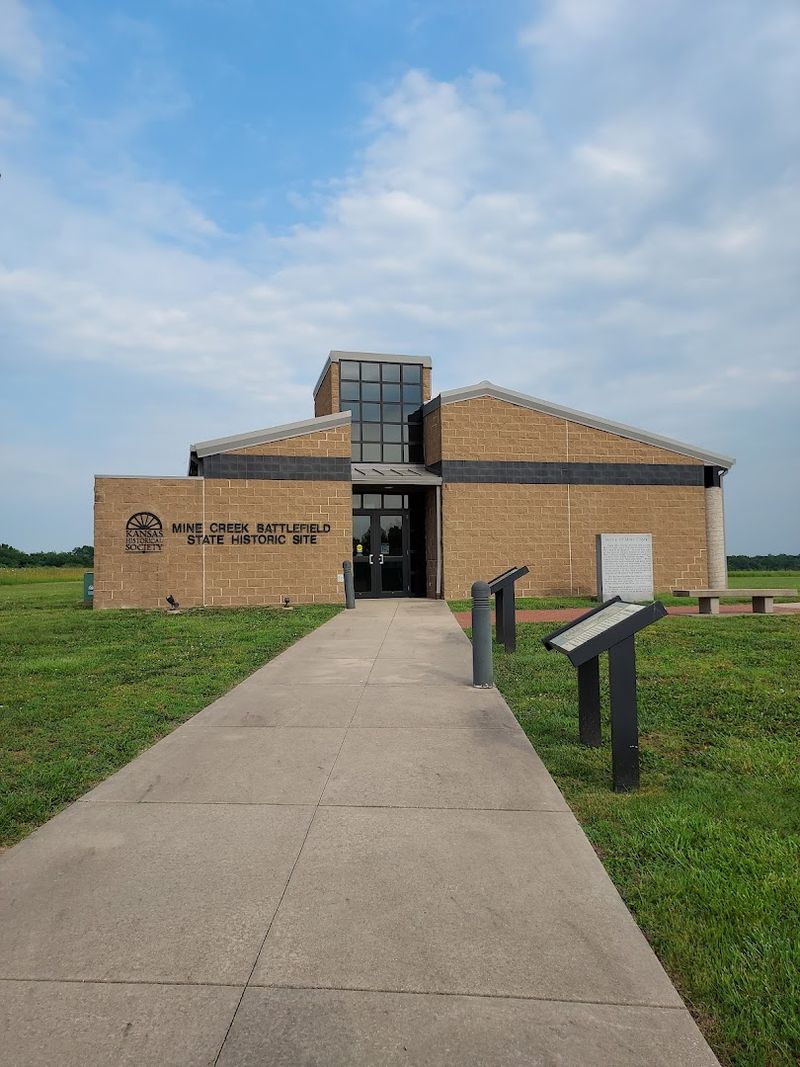
On October 25, 1864, one of the largest cavalry engagements of the Civil War took place along a small creek in what is now Pleasanton, Kansas.
Mine Creek Civil War Battlefield State Historic Site preserves that ground and the remarkable story of what happened there.
Union forces routed a Confederate army of more than 8,000 men in a battle that lasted less than 30 minutes, effectively ending Confederate hopes of controlling Missouri and Kansas.
The site at 20485 US-52 includes a visitor center with detailed exhibits, original artifacts, and a battlefield trail that lets you walk the actual terrain where the fighting unfolded.
Mine Creek does not see the same crowds as some Civil War sites further east, which means you can take your time on the trail without feeling rushed. The prairie setting gives the battlefield an open, almost melancholy quality that feels appropriate for the history it holds.
Visiting Mine Creek Civil War Battlefield is a genuinely grounding experience that reminds you just how close the outcome of the Civil War came to being very different.
Black Jack Battlefield and Nature Park, Wellsville, Kansas
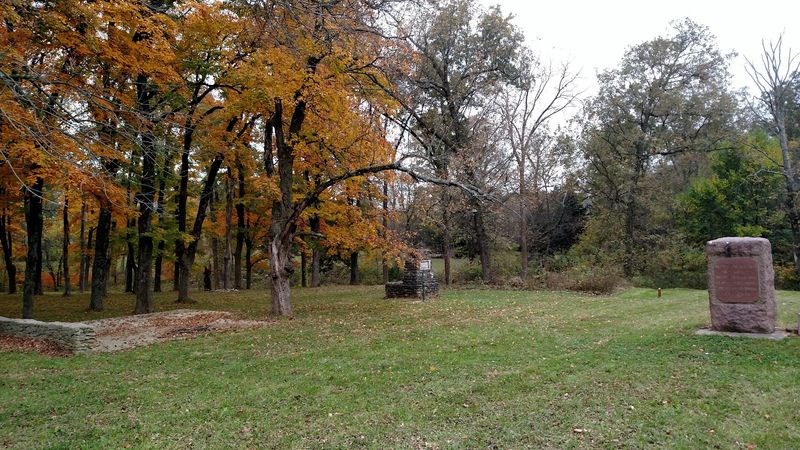
Long before the Battle of Gettysburg, there was the Battle of Black Jack. Fought on June 2, 1856, near what is now Wellsville, Kansas, this skirmish between John Brown’s forces and pro-slavery militia is widely considered the first armed battle of the Civil War.
Black Jack Battlefield and Nature Park at 163 East 2000th Road preserves the land where that confrontation took place, offering walking trails, interpretive signs, and a small museum that unpacks the tangled politics of Bleeding Kansas.
The park blends history with nature in a way that feels refreshing. Prairie restoration work has brought native grasses and wildflowers back to the battlefield, making the trails genuinely beautiful in spring and early summer.
Black Jack Battlefield is a smaller site than some others on this route, but its historical significance is enormous. The fact that a battle here in 1856 helped set the stage for the entire Civil War makes every step on these trails feel weighted with meaning.
If you enjoy combining outdoor exploration with deep historical context, Black Jack Battlefield and Nature Park in Wellsville is a stop you will be glad you made.
Constitution Hall State Historic Site, Lecompton, Kansas
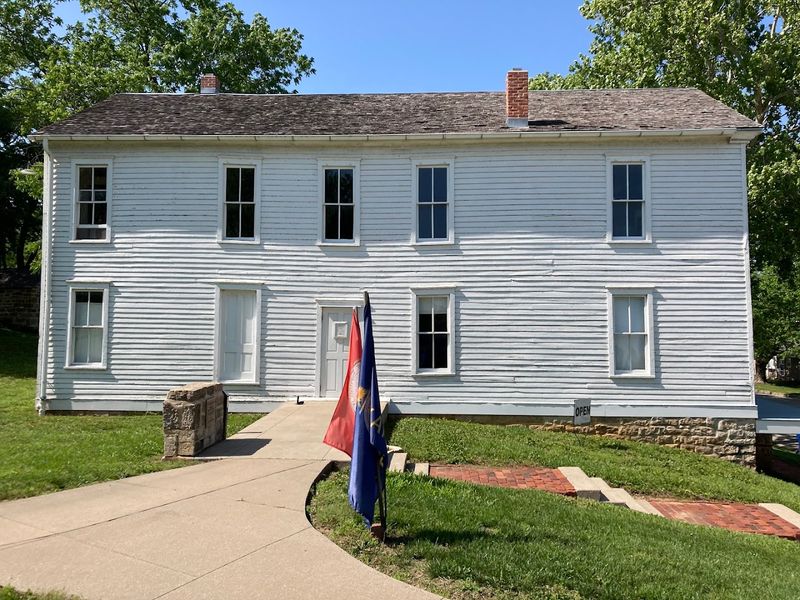
A small wood-frame building in Lecompton, Kansas, once held the fate of the entire nation in its walls. Constitution Hall State Historic Site at 319 Elmore Street is where pro-slavery delegates drafted the
Lecompton Constitution in 1857, a document that, had it been accepted, would have admitted Kansas to the Union as a slave state.
The rejection of the Lecompton Constitution was a turning point in the national debate over slavery and helped accelerate the country toward Civil War.
Today, Constitution Hall is a carefully restored site with exhibits that explain the dramatic political battles fought inside and outside these walls.
The building itself is modest, which makes the enormous consequences of what happened here all the more striking.
Lecompton was once the territorial capital of Kansas, and Constitution Hall sits in a town that still feels pleasantly unhurried and off the beaten path.
Staff and interpreters at Constitution Hall are particularly knowledgeable about the political history of Bleeding Kansas, and their guided talks add real depth to the visit.
Constitution Hall is the kind of place that makes American history feel genuinely urgent rather than distant.
Council Grove Santa Fe Trail Historic Sites, Council Grove, Kansas
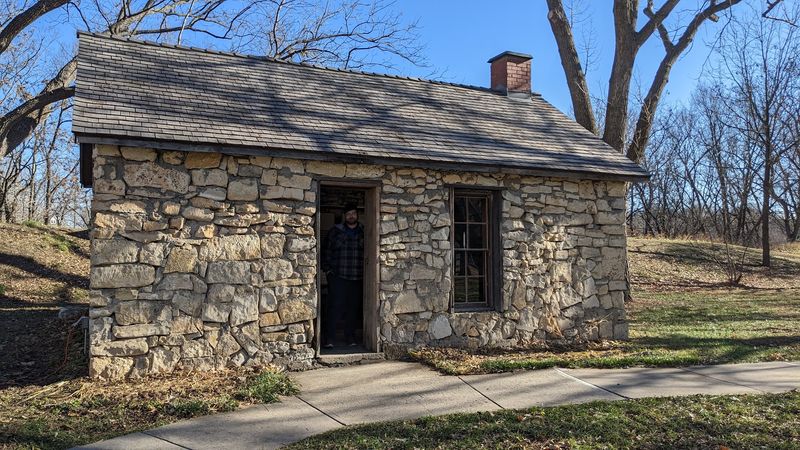
Council Grove, Kansas, earned its place in history as a major supply stop on the Santa Fe Trail before traders headed farther onto the plains toward Santa Fe.
The visitor center at 207 West Main Street is a useful starting point for more than two dozen historic sites within easy walking distance of each other.
Wagon trains gathered here to organize, stock up on supplies, repair gear, and prepare before the long journey west, making Council Grove one of the most important commercial hubs of 19th-century trail travel.
Today, the town has preserved much of that character. Historic markers, original stone buildings, and trail ruts visible on the edge of town all connect visitors to the era when this small Kansas community was a gateway to the frontier.
Council Grove Santa Fe Trail Historic Sites rewards slow exploration.
Pick up a walking tour map at the local visitor center and follow the route through the downtown area, stopping at landmarks like the Last Chance Store and the Kaw Mission.
The whole experience in Council Grove feels like a genuine journey back in time, complete with beautiful architecture and a community that clearly takes pride in its remarkable past.
Kaw Mission State Historic Site, Council Grove, Kansas
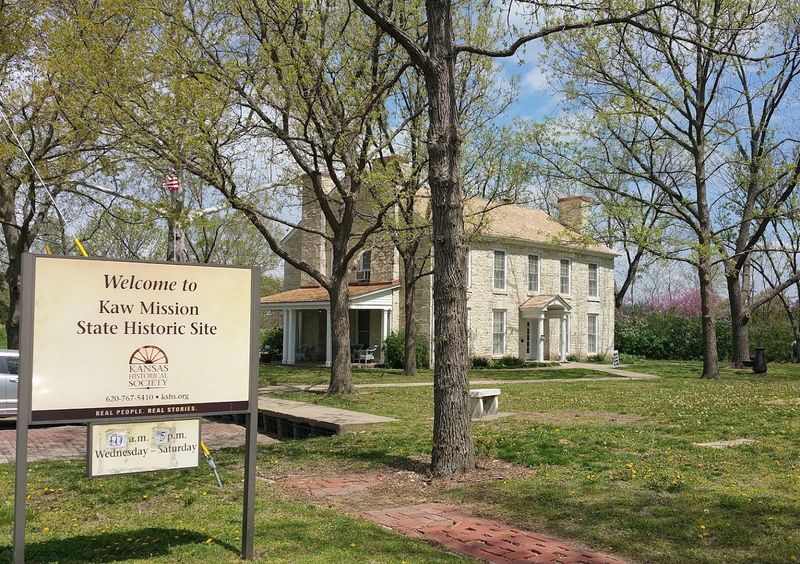
Just a short walk from the Santa Fe Trail markers in Council Grove stands a sturdy stone building with a layered and complicated history.
Kaw Mission State Historic Site at 500 North Mission Street was built in 1851 as a school for the children of the Kaw Nation, also known as the Kanza people, the Indigenous group from whom Kansas takes its name.
The mission school operated for only a few years, from 1851 to 1854, before the building survived and later became a museum dedicated to both the Kaw people and the broader local history of Council Grove for modern visitors today.
Exhibits inside Kaw Mission trace the history of the Kaw Nation from their deep roots on the Kansas plains through their forced removal to Oklahoma in 1873.
The story is told with care and respect, giving visitors a fuller picture of who lived in this region long before the Santa Fe Trail brought waves of American settlers.
Kaw Mission State Historic Site is compact but thoughtfully curated. Combining a visit here with the nearby Santa Fe Trail sites makes for a rich half-day of exploration in Council Grove that covers centuries of history.
Boot Hill Museum, Dodge City, Kansas
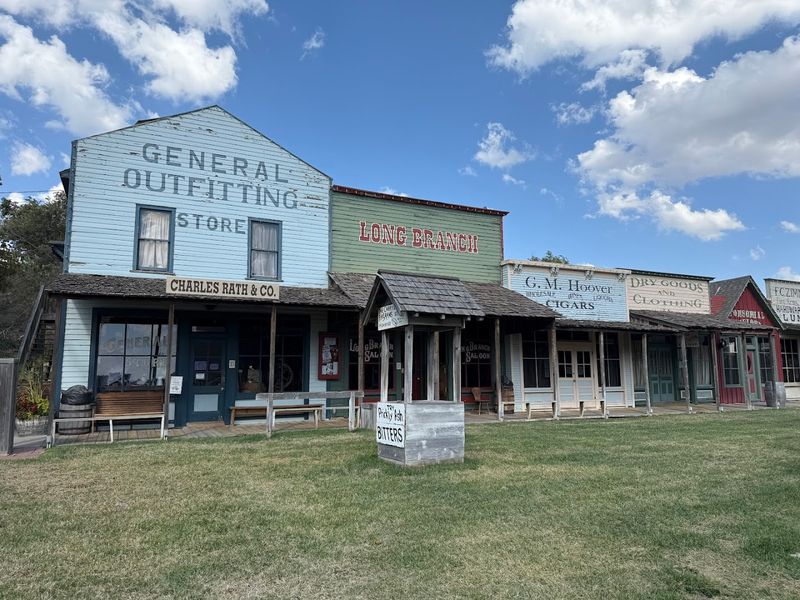
No Kansas road trip through history would be complete without a stop in Dodge City, and Boot Hill Museum at 500 West Wyatt Earp Boulevard delivers the full experience of the legendary cattle town era.
Dodge City was the wildest of the Wild West cattle towns, drawing cowboys, gamblers, lawmen, and outlaws during the great cattle drives of the 1870s and 1880s.
Boot Hill Museum sits on the site of the original Boot Hill cemetery, where many of those colorful characters ended up.
The museum recreates an entire 1870s frontier street, complete with a general store, a one-room schoolhouse, and a Long Branch Saloon set that looks straight out of a Western film.
Living history performers, gunfight demonstrations, and hands-on exhibits make Boot Hill Museum one of the most entertaining stops on this entire route.
Beyond the showmanship, the museum holds serious collections of artifacts, photographs, and documents that tell the real story of Dodge City and the cattle trade that built it.
Boot Hill Museum is a fitting finale for this Kansas road trip, sending you home with a genuine appreciation for just how wild, complicated, and fascinating this state’s history truly is.