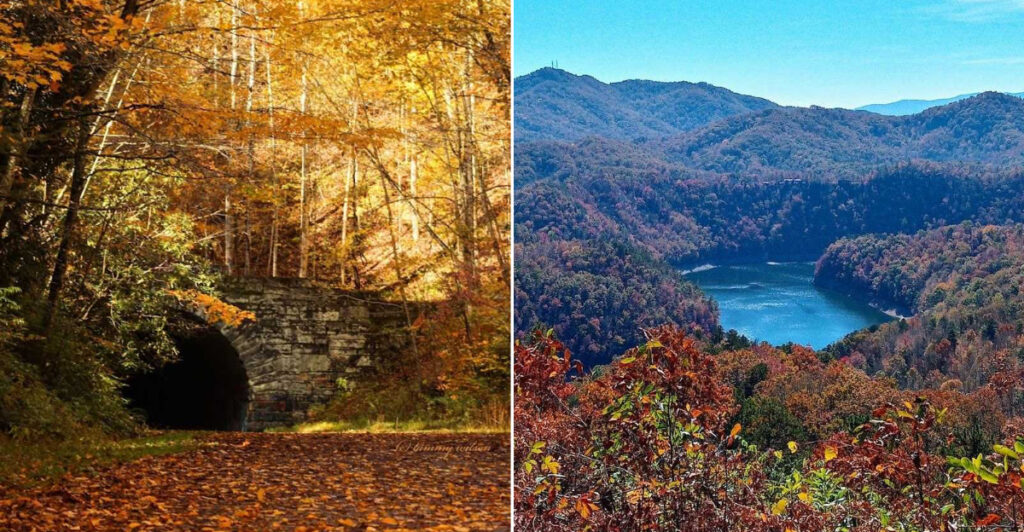
Some roads end with a sign. This one ends with a question mark wearing hiking shoes.
Near Bryson City, this place turns a simple mountain outing into a full-blown curiosity trap.
You get pavement, silence, shadow, and a nickname that sounds like it escaped a Southern Gothic novel.
Locals call it the Road to Nowhere, which is rude to your GPS but excellent for suspense.
The story behind it is heavier than the cool air inside the tunnel. Displaced families, an unfinished promise, and a road that never reached its purpose all meet here.
This place has the rare power to make a short walk linger in your head for days.
Bring a flashlight, a little patience, and a healthy respect for strange detours.
This tunnel does not just lead through rock. It leads straight into a story worth following closely.
Blasted Through Solid Mountain Rock
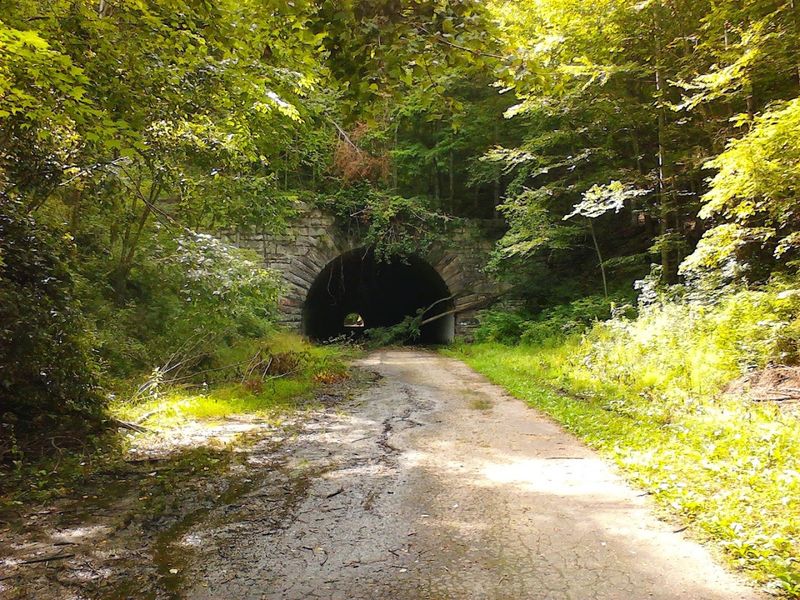
Punching a hole through a mountain is no small feat.
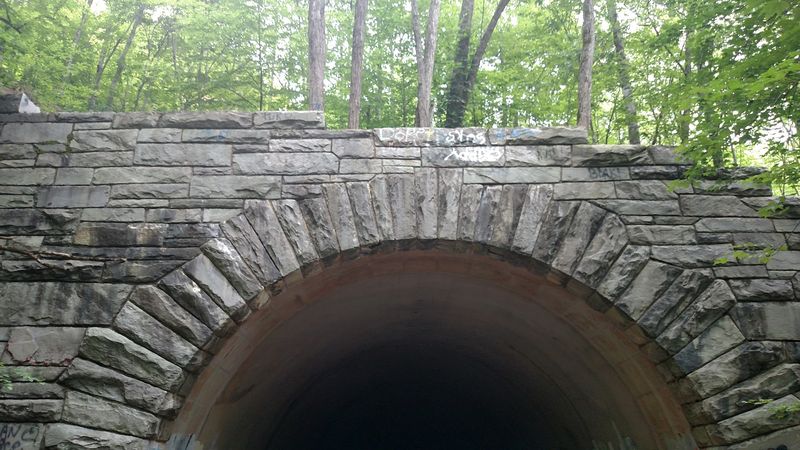
The Lakeview Drive Tunnel stretches roughly 1,200 feet through solid Appalachian rock, and stepping inside immediately gives a sense of just how much effort that took.
The walls are raw and unfinished, which adds to the atmosphere. Unlike polished highway tunnels lined with tile and fluorescent lighting, this one feels closer to the mountain itself.
Water seeps through cracks in the ceiling in places. The temperature drops noticeably as you walk deeper in.
Sound behaves differently inside, bouncing off the stone in ways that feel almost theatrical.
The tunnel is dark enough to feel suspenseful, even with light visible ahead. That small detail creates a moment of genuine suspense as you walk through.
That small detail creates a moment of genuine suspense as you walk through.
When the far end finally comes into view, it frames a perfect circle of green forest and blue sky.
The contrast between the dark tunnel interior and that bright opening is visually striking.
Hikers and photographers frequently pause at that moment just to take it in.
The tunnel itself, not just what surrounds it, is worth the trip to western North Carolina.
The Road That Was Never Finished
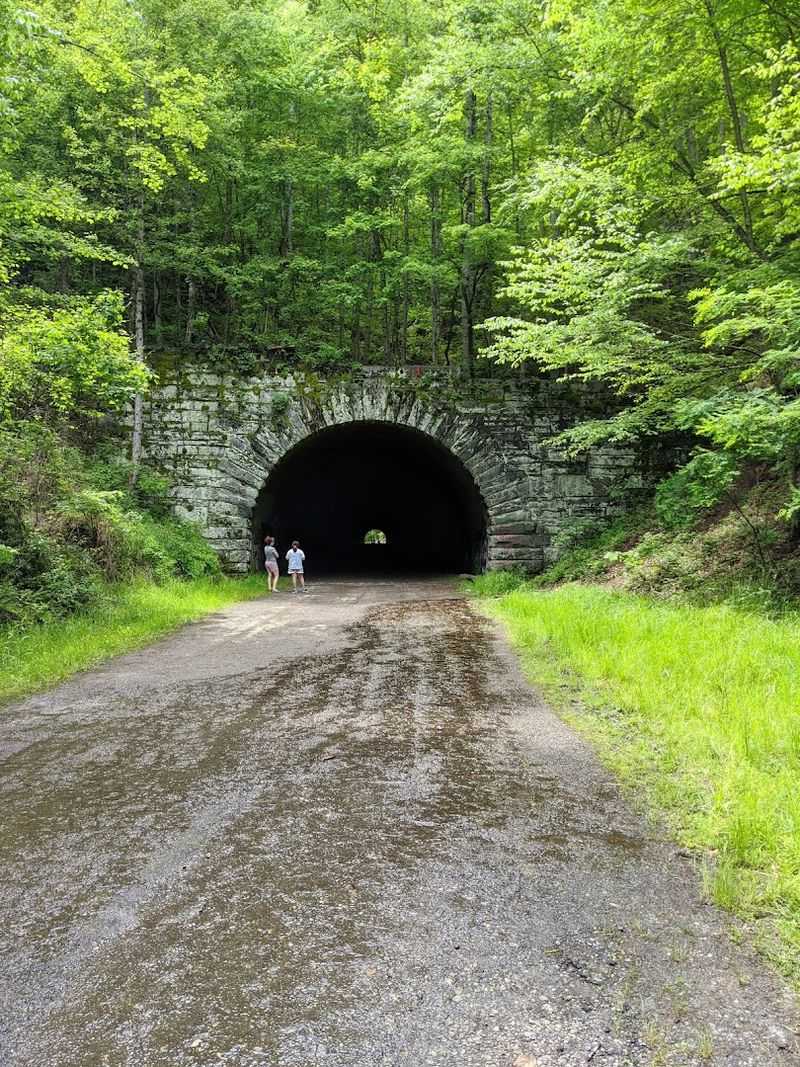
Few roads carry a nickname as poetic and melancholy as the “Road to Nowhere.” That is exactly what locals in Bryson City, North Carolina, call Lakeview Drive, the road leading to this famous tunnel.
The story starts decades ago, when the federal government flooded thousands of acres of land in Swain County to create Fontana Lake.
Entire communities were displaced. Cemeteries were cut off.
Families lost ancestral land that had been in their names for generations.
As part of an agreement, the government promised to build a road that would give residents access to those old community sites and burial grounds.
Construction began, a tunnel was blasted through the mountain, and then the project stopped.
Funding dried up. Environmental concerns slowed progress.
Years turned into decades, and the road never reached its destination.
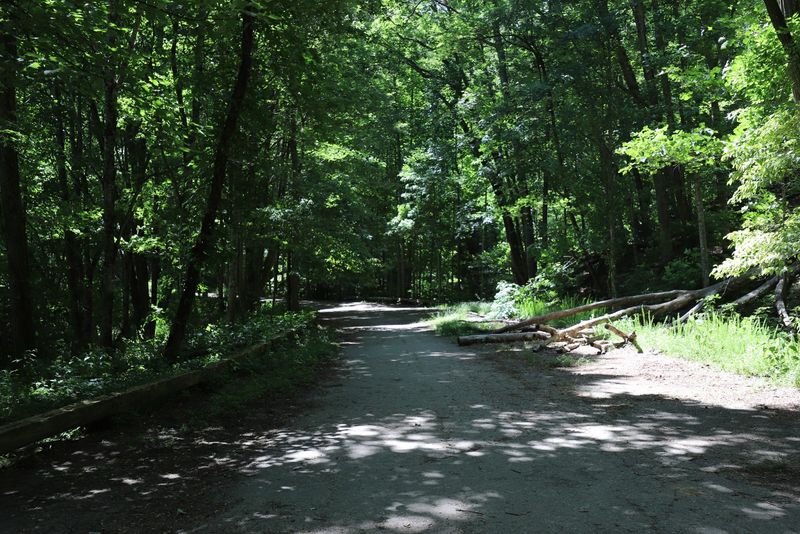
What remains today is a short stretch of pavement, a completed tunnel, and a trailhead that picks up where the asphalt ends.
The unfinished road became a symbol of a promise that many residents felt was never fully honored.
A Promise Broken, A Community Displaced
Behind every piece of infrastructure, there is a human story. The Lakeview Drive Tunnel is no exception, and the story behind it carries real weight.
When Fontana Dam was constructed during World War II, the rising reservoir waters swallowed entire communities in Swain County. Homes, farms, churches, and cemeteries all disappeared beneath the surface of Fontana Lake.
The federal government made a formal agreement with Swain County, promising a road that would allow displaced families to visit the graves of their ancestors on the other side of the lake. That road was Lakeview Drive.
Construction on the tunnel and road began in the 1960s and 1970s. Then it stopped.
Decades of back-and-forth negotiations followed, with the county pushing for completion and the federal government citing environmental and budget concerns.
Eventually, a financial settlement was offered in lieu of the road. The county accepted, though many residents felt it did not fully honor the original commitment.
The tunnel stands today as a physical reminder of that unresolved chapter.
For visitors who take time to learn the backstory, the experience of walking through it takes on an entirely different emotional dimension in North Carolina.
Where The Trailhead Picks Up The Story
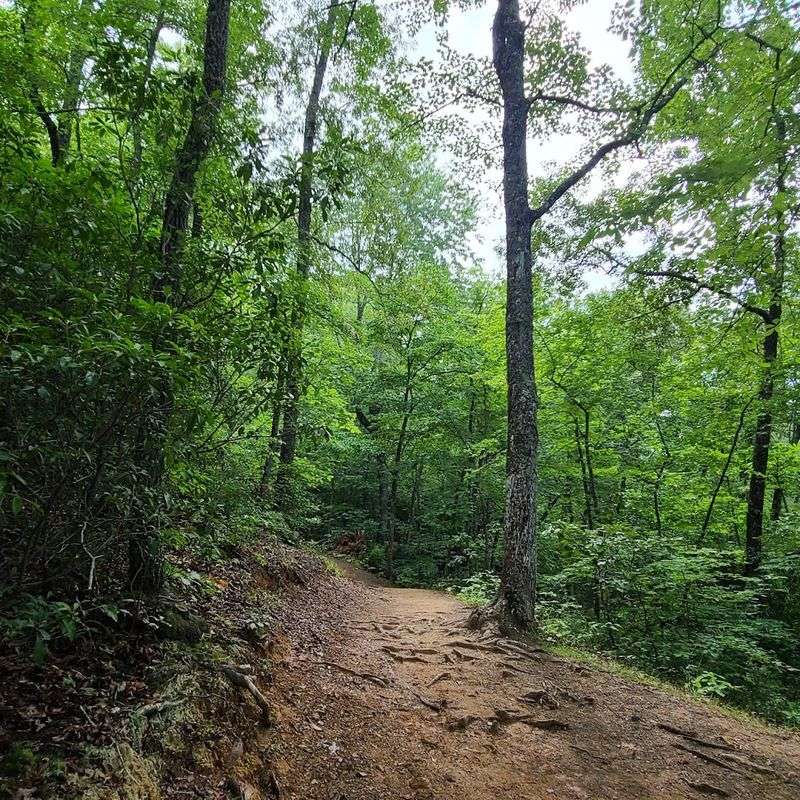
Past the tunnel, the pavement ends and the wilderness takes over.
The trail that continues beyond Lakeview Drive is part of the larger network within Great Smoky Mountains National Park, which borders this area closely.
Hikers who push on from the tunnel entrance find themselves on a well-worn path that winds through dense Appalachian forest. The trail offers views of Fontana Lake through the trees at various points.
The terrain is moderately challenging in sections, with some elevation gain and uneven ground. Sturdy footwear is a smart choice before heading out.
The forest here is thick with rhododendron, hardwoods, and hemlock. In spring, the wildflower display along the trail edges is genuinely impressive.
Wildlife sightings are common in this part of North Carolina. Black bears, white-tailed deer, and various bird species share the corridor with hikers throughout the year.
The trailhead parking area near the tunnel fills up on busy weekends, especially in fall when the leaf color peaks.
Arriving early in the morning gives the best chance of a quieter, more personal experience on the trail.
Fontana Lake Views That Make The Drive Worth It
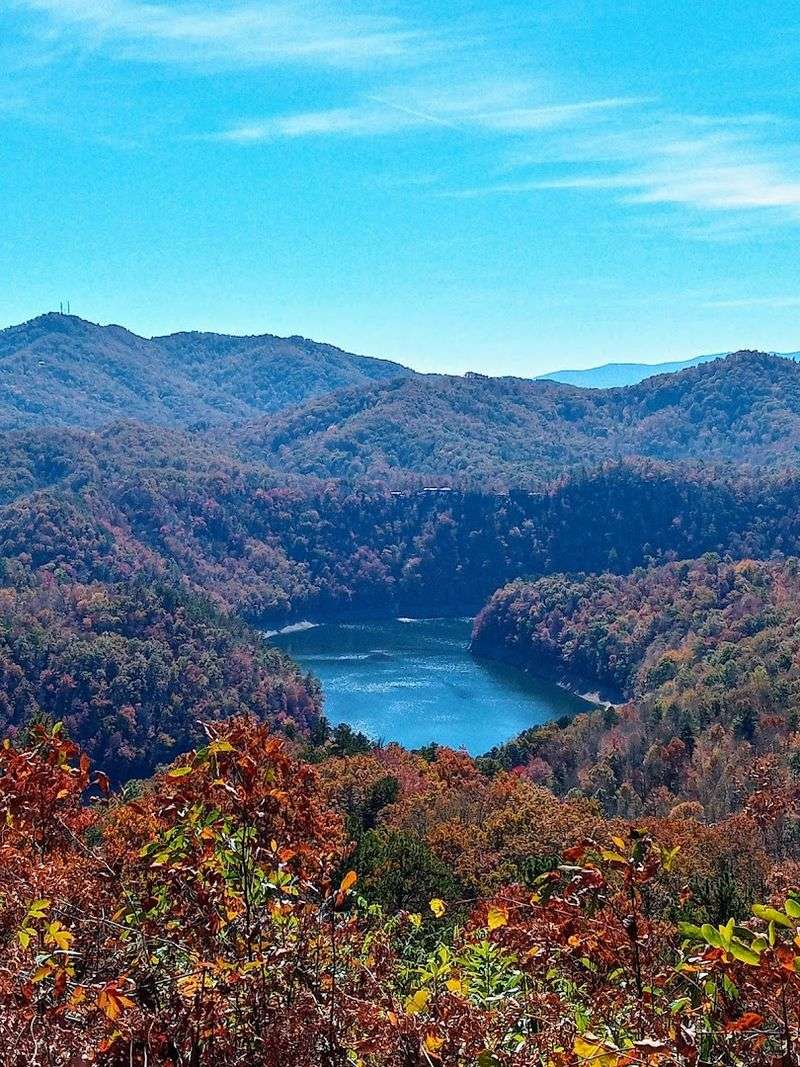
Fontana Lake stretches across the landscape with an easy confidence.
Created by Fontana Dam, it sits at the edge of Great Smoky Mountains National Park and offers some of the most striking water views in western North Carolina.
From certain points along the Lakeview Drive trail, the lake appears through gaps in the trees like a painting framed by bark and branches.
The blue-green water against the ridge lines is the kind of view that makes people stop mid-step.
The lake is large enough to feel expansive but surrounded by enough mountain terrain to feel intimate at the same time. It does not shout for attention; it simply sits there, quietly impressive.
Kayakers and boaters use the lake regularly, and on calm days the surface reflects the surrounding ridges with mirror-like clarity. Photographers find the early morning light particularly rewarding here.
The dam itself, located further along the lake, is an engineering landmark worth seeing separately. But from the trail near the tunnel, the lake views alone justify the visit.
Few spots in North Carolina combine historical weight and natural beauty in quite the same way as this stretch of shoreline.
Getting There Without Getting Lost
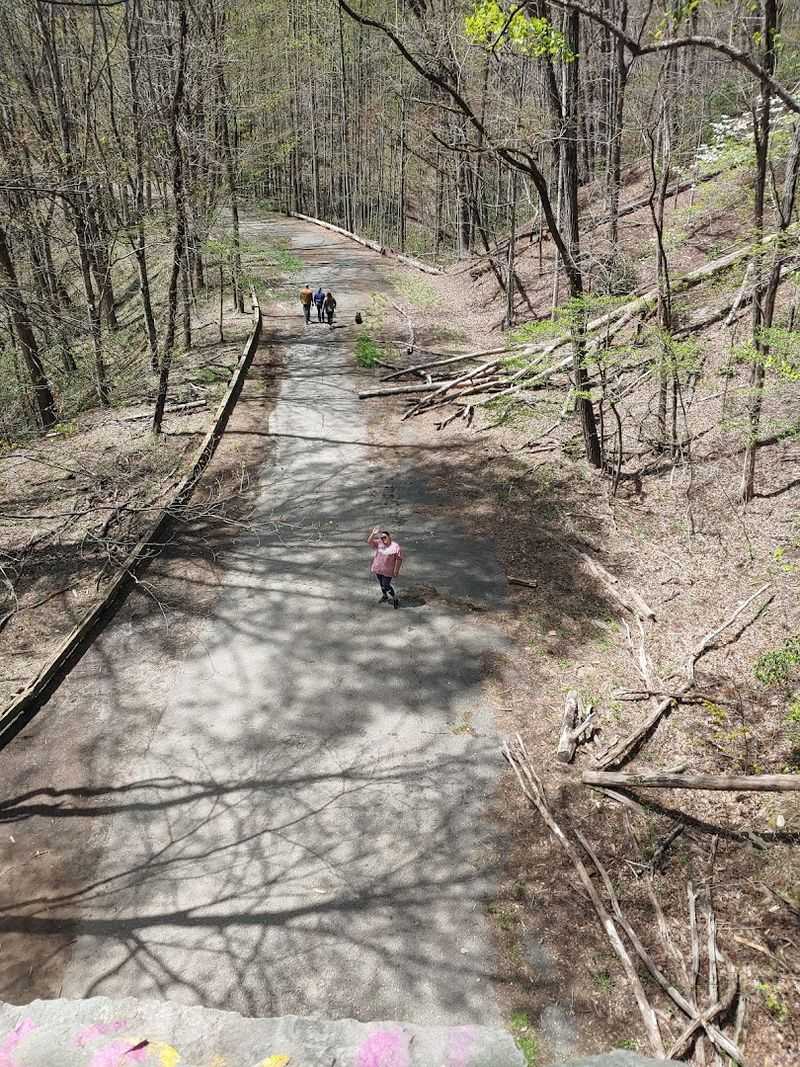
Finding the Lakeview Drive Tunnel requires a bit of navigation, but nothing too complicated for anyone comfortable with a GPS or a basic map.
The tunnel is located off Lakeview Drive East in the 28713 zip code area, near Bryson City, North Carolina.
From downtown Bryson City, the drive takes roughly ten to fifteen minutes. The road follows the Tuckasegee River for part of the route before climbing slightly into the forested hills.
Road signage in the area is fairly clear, and the parking area near the tunnel entrance is easy to identify. The lot is unpaved but manageable for most standard vehicles.
During peak season, which runs from late spring through early fall, parking can fill up by mid-morning on weekends. Weekday visits tend to be much more relaxed.
The road itself is paved right up to the tunnel entrance. Beyond that, the trail begins, and pavement gives way to packed dirt and rock.
No entrance fee is required to visit the tunnel or walk the trail, though the surrounding area falls within the jurisdiction of Great Smoky Mountains National Park, so standard park rules apply throughout the visit.
Fall Foliage Turns This Place Into Something Else Entirely
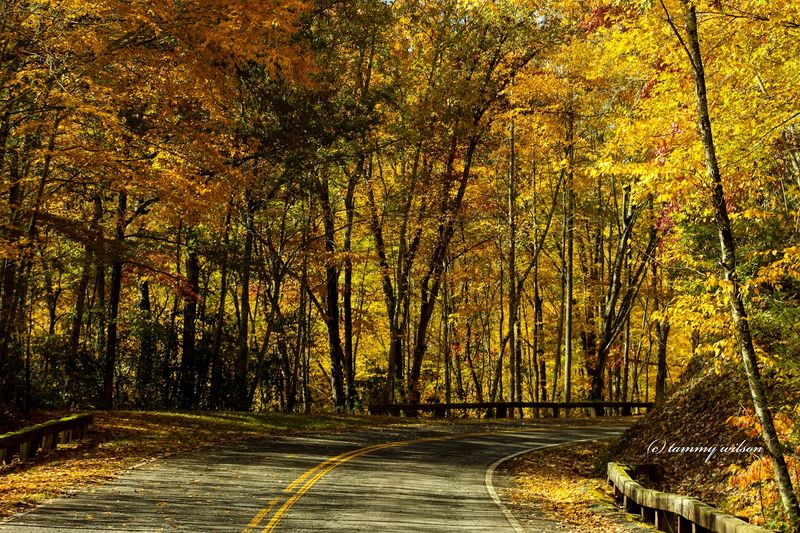
Autumn transforms western North Carolina into a landscape that barely needs a filter.
The hills around Bryson City shift from deep green to blazing orange, red, and gold as the season changes, and the area around the Lakeview Drive Tunnel is no exception.
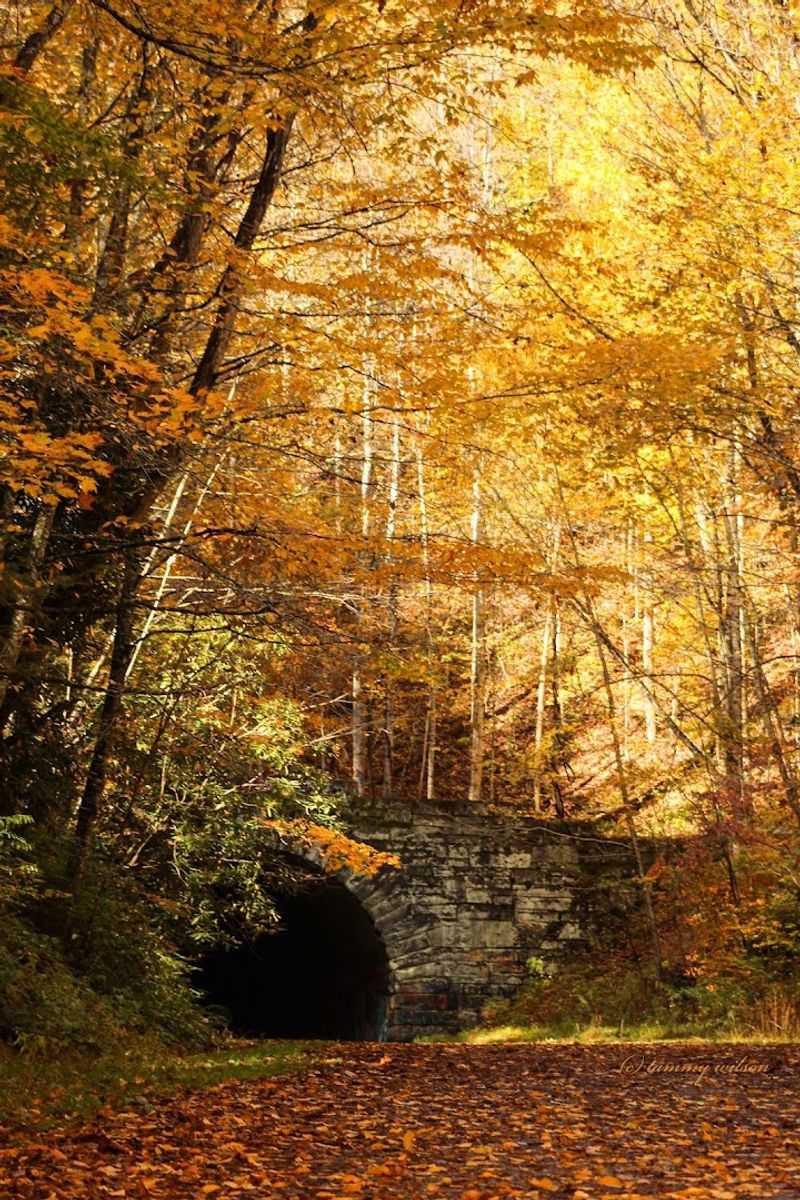
The tunnel entrance, already dramatic with its raw stone frame, becomes even more striking when surrounded by peak fall color.
Photographers come specifically for that shot: the dark tunnel mouth framed by fiery leaves.
Peak foliage in this part of North Carolina typically arrives in mid to late October, though exact timing varies by year and elevation.
Higher elevations tend to turn first, with lower areas following a week or two behind.
The trail beyond the tunnel becomes a canopy walk during this season. Leaves overhead catch the light and scatter it across the path in shifting patterns.
The crowds do increase during peak fall weekends, which is worth factoring into any plan. Arriving before 9 in the morning gives a noticeably quieter experience.
Even on cloudy fall days, the color is rich enough to make the drive worthwhile. This is arguably the single best time of year to visit this corner of North Carolina.
What Bryson City Adds To The Experience
Bryson City is the kind of small town that earns its reputation without trying too hard.
Sitting in the heart of Swain County, it serves as the closest town to the Lakeview Drive Tunnel and makes a natural base for exploring the area.
The downtown strip is compact and walkable, with local shops, bakeries, and casual eateries lining the main street. After a morning hike through the tunnel trail, the town offers easy options for food and rest.
The Great Smoky Mountains Railroad operates out of Bryson City, offering scenic train excursions through the mountain landscape. It adds a completely different way to see the same terrain.
The town sits along the Tuckasegee River, which draws fly fishers and paddlers throughout the warmer months. River access points are easy to find and generally well-maintained.
Accommodations range from small inns to campgrounds, giving visitors flexibility depending on budget and preference. Staying overnight allows for an early start on the tunnel trail before the crowds arrive.
Bryson City does not overwhelm with tourist infrastructure. It keeps things simple, which is exactly the right energy for a place built around natural beauty and quiet exploration in North Carolina.
Why This Tunnel Stays With You Long After The Visit
Most tunnels are forgettable. You drive through, you emerge on the other side, and you move on.
The Lakeview Drive Tunnel does not work that way.
It carries too much history for that. The displaced families, the broken agreement, the unfinished road, and the cemeteries still sitting on the far side of the lake all give the place a weight that lingers.
But it is not a heavy experience in a negative sense. Visitors often describe it as thought-provoking rather than sad.
The tunnel prompts questions about land, memory, community, and what it means to honor a promise. The physical experience reinforces that.
Walking through cool dark rock with your footsteps echoing back at you, then emerging into bright mountain air with lake views ahead, creates a journey that feels complete in a strange, satisfying way.
The setting in western North Carolina adds its own quiet power.
The mountains here are old and worn smooth, and they have a way of making human concerns feel both smaller and more meaningful at the same time.
The Lakeview Drive Tunnel is not just a curiosity on a map. It is a place that earns its story, and that story is worth every step of the walk to find it.