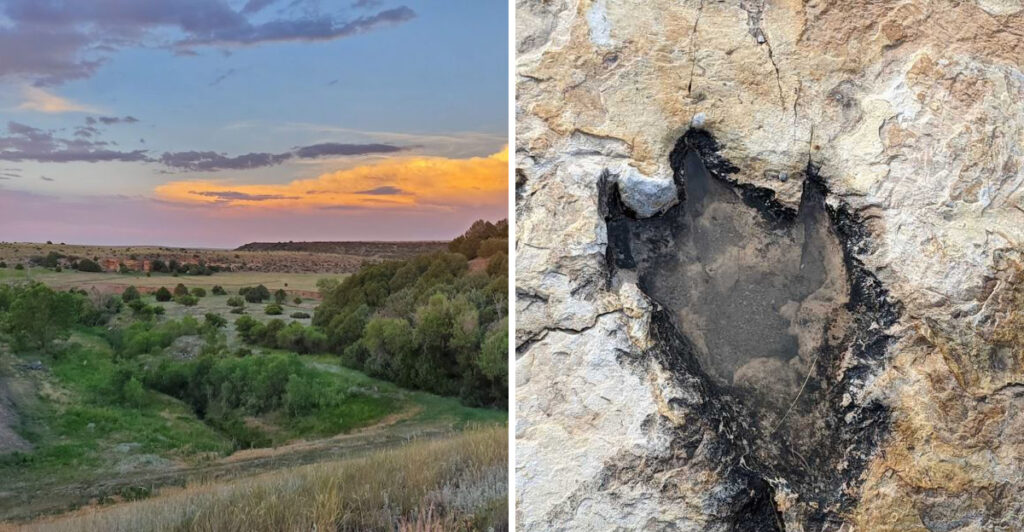
Imagine taking an afternoon walk and finding hundreds of dinosaur footprints waiting below the boardwalk. That is exactly what makes this park in northeastern New Mexico so hard to forget.
The tracks spread across a rocky spillway, showing where prehistoric animals crossed soft ground roughly 100 million years ago. Some prints are broad.
Others are narrower, with sharper toe marks that hint at very different dinosaurs moving through the same ancient landscape. You do not need a museum case or a complicated explanation to feel the impact.
Just look down. The lake nearby brings a calmer rhythm to the visit, and the open grasslands make the setting feel even bigger than expected.
Once darkness arrives, the sky becomes part of the experience too. These eight facts take a closer look at the boardwalk, the trackways, and the details that turn a simple park visit into a trip through deep time.
A Boardwalk Through Prehistoric Time
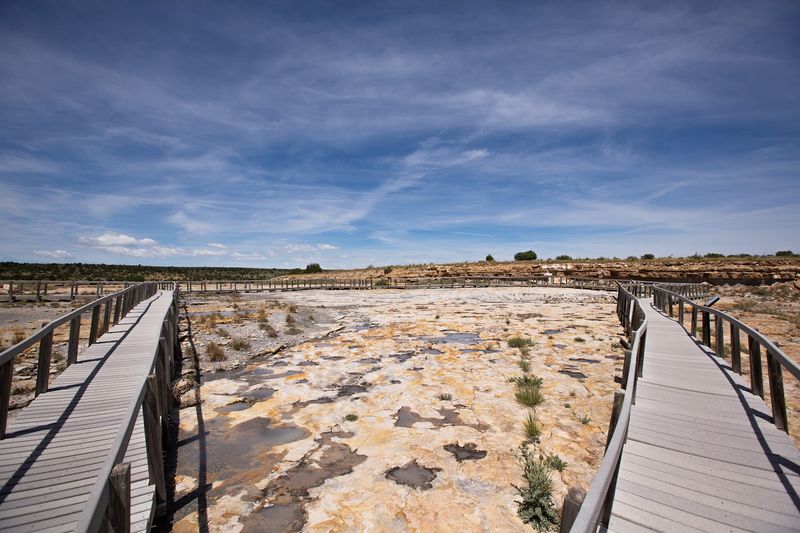
Most nature trails ask you to simply follow the path, but this one asks you to look down and rethink everything you thought you knew about the ground beneath your feet.
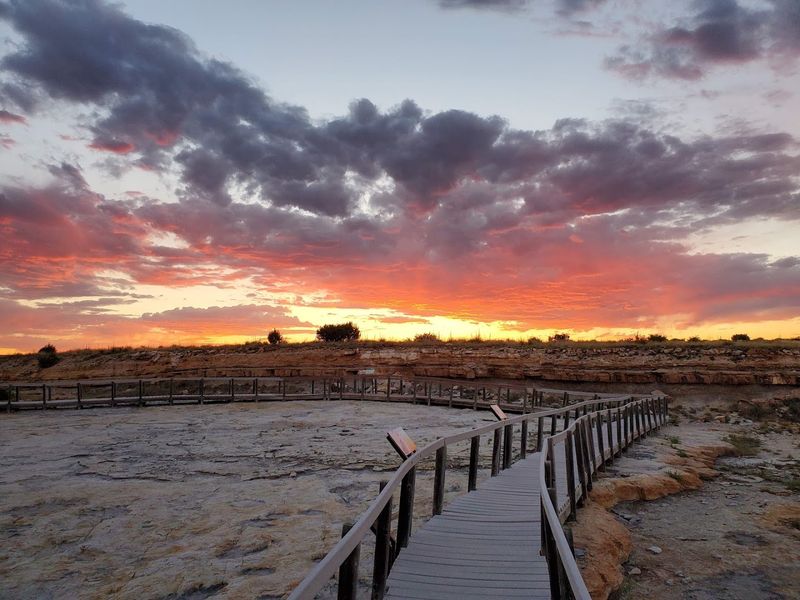
A specially constructed boardwalk at the park hovers directly above the ancient streambed, giving visitors a front-row seat to one of the most remarkable fossil sites in the American Southwest.
The elevated design is intentional and smart, keeping curious shoes safely away from imprints made quickly but preserved for millions of years.
Interpretive signs are posted at regular intervals along the route, sharing bite-sized facts about the dinosaurs that left these marks and the geological forces that preserved them.
I found myself reading every single sign, which is something I almost never do on a trail, because each one added a new layer to the story unfolding beneath the planks.
The boardwalk is accessible and easy to walk, making the experience welcoming for visitors of nearly all ages and fitness levels.
By the time I reached the end of the walkway, I felt less like a tourist and more like someone who had just quietly witnessed something sacred. This unforgettable experience awaits at Clayton Lake State Park and Dinosaur Trackways, located at 141 Clayton Lake Road in Clayton, New Mexico.
Ancient Footprints Cover The Rocky Spillway
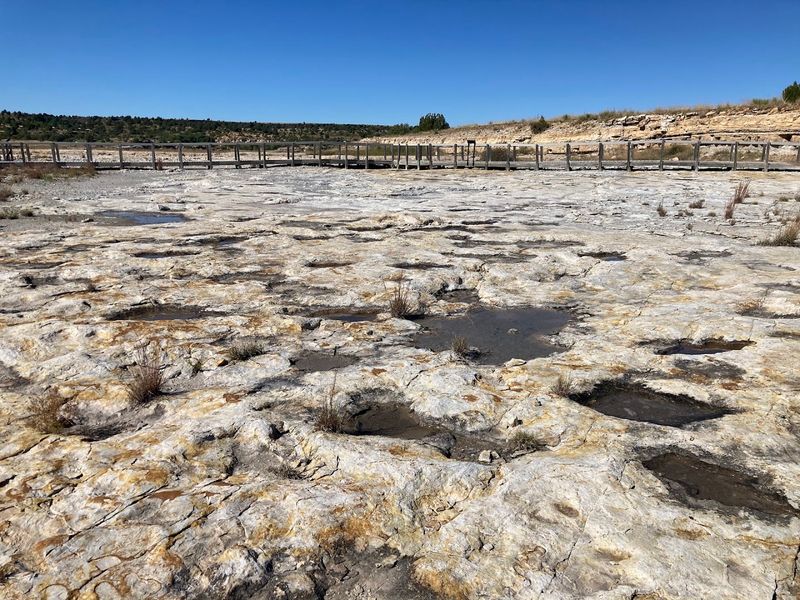
Nearly 500 individual dinosaur tracks pressed into sandstone wait at the spillway of this remarkable park, and the sheer density of them is genuinely jaw-dropping.
The prints were hidden for millions of years under layers of sediment until 1982, when a flood overflow washed the covering away and revealed the prehistoric tableau underneath.
That accidental discovery turned a quiet reservoir into one of the most significant dinosaur trackway sites in the entire country.
You can spot the broad, three-toed prints of plant-eating ornithopods alongside the narrower, sharper impressions left by carnivorous theropods, making the spillway feel like a frozen snapshot of an ancient ecosystem.
Some tracks show a dinosaur slipping in soft mud and using its tail for balance, a detail so specific and so vivid that it briefly made me forget what century I was standing in.
Paleontologists have used these prints to study dinosaur gait, speed, and social behavior in ways that bones alone could never reveal.
The rocky spillway holds more stories per square foot than almost any place I have ever visited, and every step along it feels like turning a new page.
Rolling Grasslands Stretch Toward The Horizon
Pull your gaze away from the trackways for a moment and the landscape around you is equally worth your full attention.
The park sits on the western edge of the Great Plains, where open grasslands roll toward the horizon in every direction, broken only by dramatic sandstone bluffs and the occasional cluster of volcanic rock.
This combination of geological features gives the scenery a raw, untouched quality that feels consistent with the ancient story the park is telling.
Standing out there on a quiet morning, I had the distinct sense that the view had not changed dramatically since the Cretaceous period, aside from the absence of enormous reptiles wandering through the grass.
The openness of the terrain also makes wildlife sightings surprisingly common, with pronghorn antelope, mule deer, and various bird species frequently crossing the grasslands near the water.
Hikers who take the time to explore beyond the trackway boardwalk are rewarded with trail segments that wind through this sweeping scenery and offer fresh perspectives at every bend.
The grasslands are not a backdrop here so much as a co-star, lending the whole place a mood that is equal parts wild and contemplative.
The Lakeshore Adds A Peaceful Backdrop
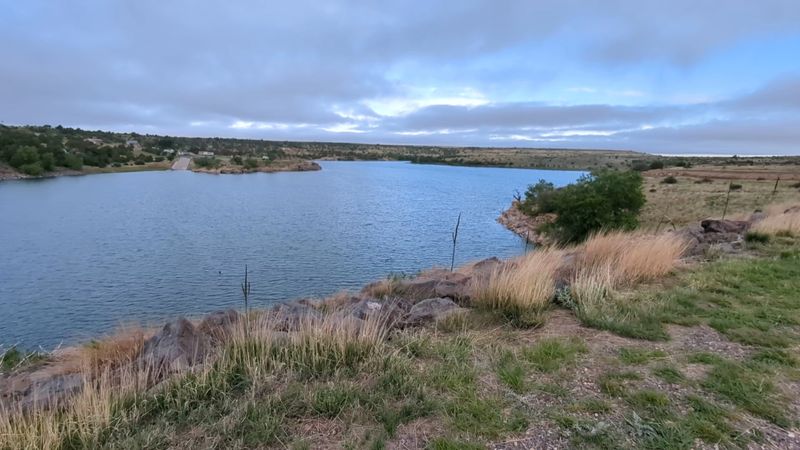
After spending time mentally processing the weight of 100 million years, there is something genuinely restorative about turning toward the water and just breathing for a while.
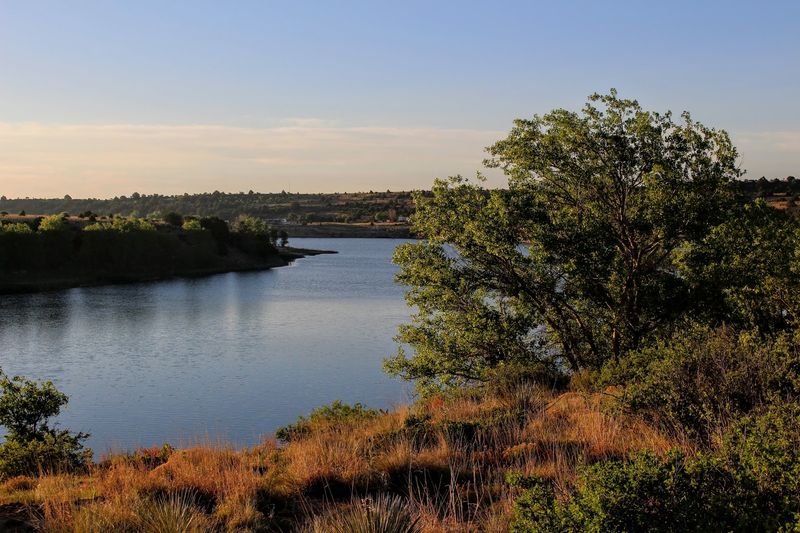
Clayton Lake itself covers about 170 acres and was created in 1955 when Seneca Creek was dammed, forming the reservoir that now anchors the park’s recreational offerings alongside its prehistoric ones.
Fishing is a favorite activity here, with anglers casting for catfish, bass, and other species in the calm waters that reflect the wide New Mexico sky above.
Boats are permitted on the lake, though they must move at a trolling speed, which keeps the atmosphere relaxed and the water surface smooth enough to mirror the surrounding grasslands beautifully.
I spent a long stretch of time simply sitting near the shore after my boardwalk walk, watching the water and letting the quietude settle over me in a way that busy parks rarely allow.
The lakeshore also offers picnic areas where families spread out and slow down, treating the park as both a natural history lesson and a proper outdoor retreat.
The lake and the trackways together create a balance that makes the park feel complete rather than one-dimensional.
Every Track Reveals An Ancient Journey
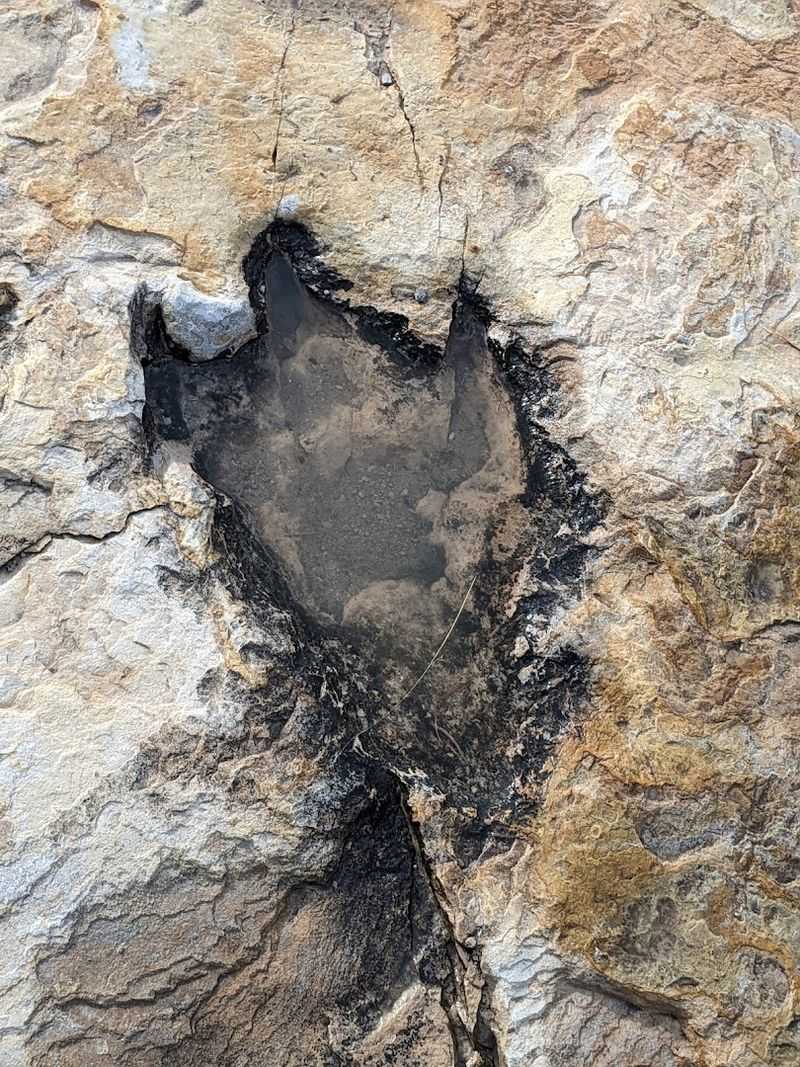
A single footprint in stone might seem like a small thing until you realize it represents a specific moment in a specific life, lived over 100 million years ago on what was then a seaway shoreline.
The tracks at this site belong to multiple dinosaur species, and distinguishing between them becomes a satisfying puzzle the longer you study the spillway surface.
Ornithopod prints, likely from relatives of the iguanodontid family, are wide and three-toed, suggesting animals that moved with deliberate, heavy steps across the soft ancient mud.
Theropod tracks are narrower and show the sharper claw structure of predatory animals built for speed and precision rather than bulk.
One of the most remarkable details preserved here is evidence of a dinosaur losing its footing on slippery ground and dragging its tail to recover, a moment so human in its clumsiness that it genuinely made me smile.
Researchers have used the track patterns to estimate travel speeds and even identify possible herd movement among certain species.
Each impression in the rock is a data point, a heartbeat, a step in a journey that ended long before humans ever arrived to notice it.
Wide-Open Scenery Makes The Past Feel Close
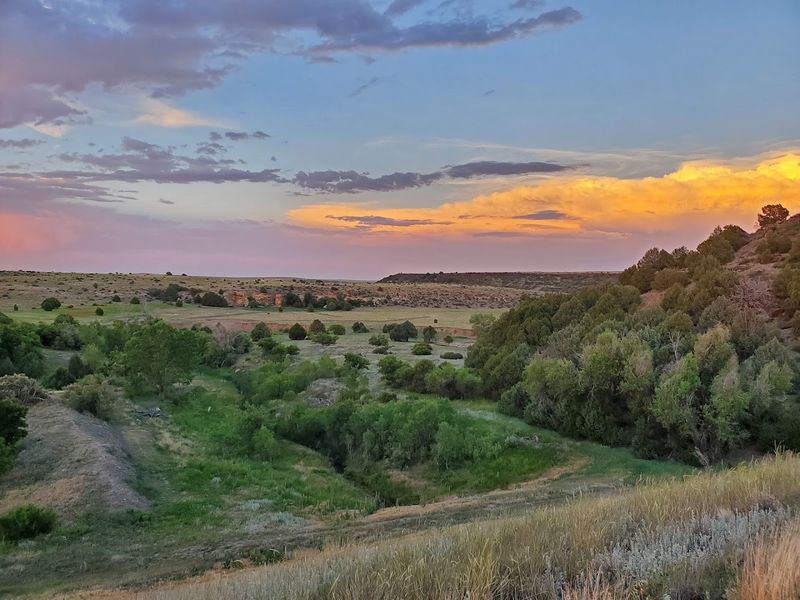
Geography has a way of shaping how we feel about history, and the setting of this park does something remarkable to your sense of time and scale.
Northeastern New Mexico places the park near the borders of Colorado, Oklahoma, and Texas, a crossroads of open country where the sky seems wider and the land more ancient than almost anywhere else I have traveled.
The uninterrupted horizons make it easy to let your imagination stretch alongside the scenery, filling the plains with the kinds of creatures that actually walked here when the landscape was a muddy coastal flat.
There is no urban noise, no crowded parking structure, and no competing attraction pulling your attention sideways, just open land and deep quiet that makes the prehistoric feel genuinely present.
On clear days, volcanic rocks scattered across parts of the park add another geological layer to an already richly storied landscape shaped by ancient forces today.
I kept stopping on the trail simply to stand still and absorb the view, which is something the wide-open scenery practically demands of you.
Few places I know manage to make the ancient past feel this immediate without a single museum wall in sight.
Golden Light Brings The Footprints To Life
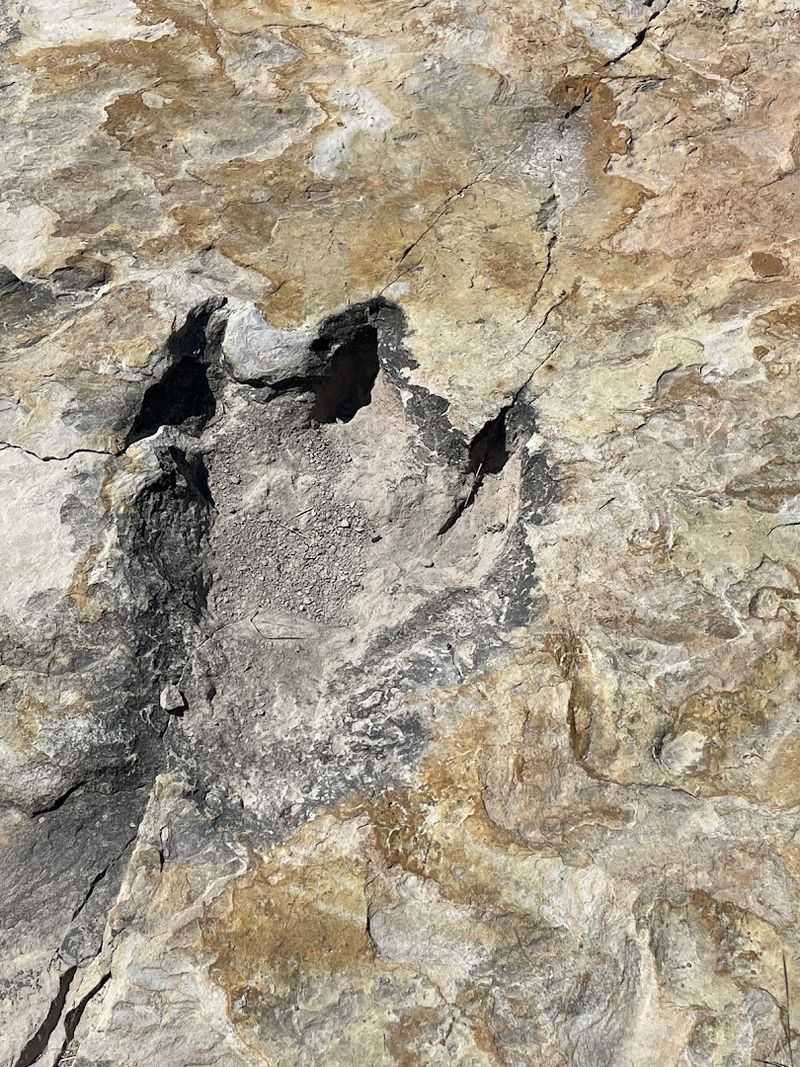
Timing matters at this park in a way that goes beyond simply beating the afternoon heat, because the quality of light here can completely transform what you see in the rock.
Early morning and late afternoon are the best windows for visiting the trackways, when the sun sits low on the horizon and sends long, raking shadows across the sandstone surface.
Those shadows fall directly into the depressions left by dinosaur feet, giving the prints a dramatic three-dimensional quality that midday light simply cannot produce.
I visited once in the flat brightness of noon and once again near sunset, and the difference was so striking it felt like looking at two entirely different sites.
The golden hour version revealed subtle textures and edge details within the tracks that had been completely invisible earlier in the day, including what appeared to be claw drag marks at the front of one print.
Photographers in particular will find the late afternoon light almost impossibly flattering, with warm tones that turn the pale sandstone into something that glows.
Plan your visit around the sun, and the footprints will reward you with details that feel almost too vivid to be 100 million years old.
Dark Skies Complete The Otherworldly Experience
Not every park earns a Gold-level International Dark Sky designation, but Clayton Lake State Park claimed that title in 2010, becoming the first park in New Mexico to receive the honor.
After the sun sets and the dinosaur tracks disappear into darkness, the sky above the park becomes the main attraction, and it delivers in a way that is hard to put into words.
The Milky Way appears as a dense, luminous band stretching from one edge of the horizon to the other, with a clarity that reminds you how much artificial light normally robs from the night.
An on-site observatory houses a 12-inch Meade telescope, giving visitors the chance to zoom in on planets, star clusters, and deep-sky objects with far more detail than the naked eye can manage.
I stood outside the observatory for a long time just looking up without any equipment at all, because the unaided view was already more than enough to hold my complete attention.
The combination of prehistoric footprints by day and a cosmos full of stars by night gives the park a genuinely otherworldly quality that stays with you long after you leave Clayton Lake State Park.