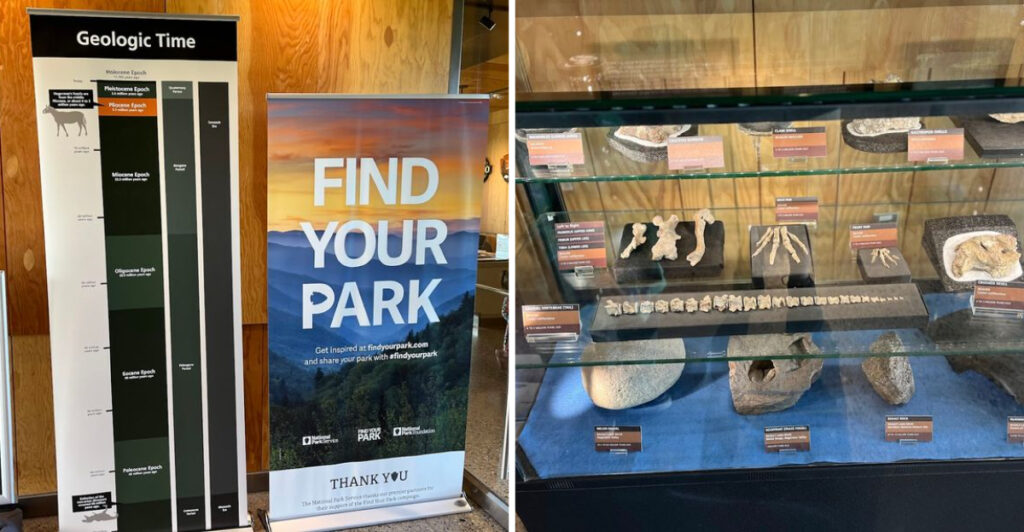
Ready to meet the neighbors Idaho had three million years ago? They were enormous, sharp-toothed, and definitely not worried about visitor-center hours.
Mastodons crossed the ancient landscape while prehistoric horses and saber-toothed cats turned the Snake River region into a full Pliocene blockbuster.
Suddenly, three million years does not feel distant at all.
The visitor center turns deep time into something you can actually follow, with fossils and displays that make the old Snake River landscape easier to imagine.
You start connecting clues, picturing enormous animals moving across the terrain, and wondering how Idaho managed to keep this much prehistoric drama beneath the surface.
The best part is how quickly curiosity takes over.
You do not need a geology degree or a fedora to enjoy the adventure. You just need sharp eyes, a little imagination, and enough enthusiasm to let a fossil-packed afternoon completely hijack the itinerary.
A Fossil Record Millions Of Years In The Making
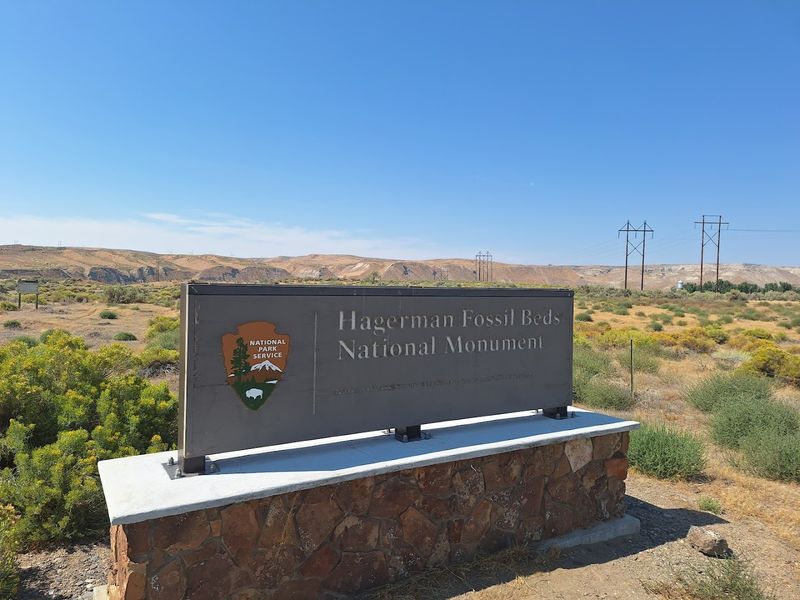
Time has a funny way of leaving clues behind. At Hagerman Fossil Beds National Monument, those clues happen to be millions of years old and buried in the canyon walls along the Snake River in Idaho.
The fossil record preserved here dates to the Pliocene Epoch. Roughly, three to four million years ago. That was a time when the landscape looked very different, filled with wetlands, grassy plains, and river habitats teeming with life.
Tens of thousands of fossils have been collected from the monument over the years. More than 140 plant and animal species have been identified from the site, making it one of the richest Pliocene fossil deposits anywhere on the planet.
What makes this place especially remarkable is the sheer variety of the record. It is not just bones. It is an entire ancient ecosystem, preserved layer by layer in the earth.
Visiting here means you are standing at the edge of a window that looks directly into a world that vanished long before humans ever walked this region.
Meet Idaho’s Famous Hagerman Horse
Idaho has an official state fossil, and it is not a dinosaur.
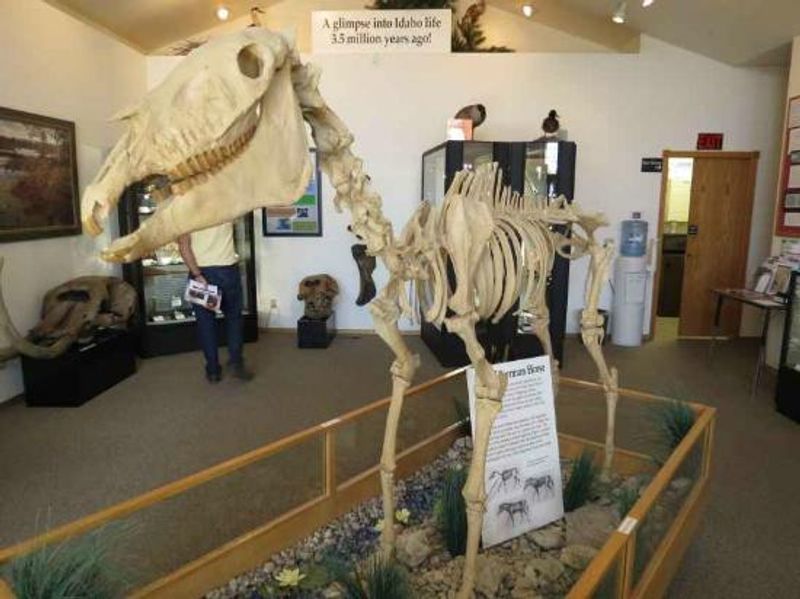
The Hagerman horse, known scientifically as Equus simplicidens, holds that title, and the story behind it is genuinely fascinating.
Fossils from more than 200 individual Hagerman horses have been uncovered at this monument. That makes it the largest known collection of this species ever discovered in one place. The sheer number of specimens found here is what put Hagerman on the paleontological map.
The Hagerman horse is considered one of the earliest true horses, closely related to modern zebras. It was smaller than today’s horses but built with a similar body plan, suggesting the evolutionary line was already well established by the Pliocene.
Inside the Thousand Springs Visitor Center, a reproduction of the Hagerman horse skeleton gives you a real sense of scale and structure.
Seeing it up close makes the animal feel less like a textbook entry and more like a creature that actually roamed the hills outside.
For anyone who loves horses or natural history, this exhibit alone is worth the stop.
Mastodons And Saber-Toothed Cats Once Roamed Here
Picture this: giant ground sloths lumbering through tall grass while saber-toothed cats prowl nearby. That was the reality of the Snake River region millions of years ago. The fossil evidence to prove it has been pulled right from Idaho’s soil.
Beyond the famous Hagerman horse, the monument’s fossil record includes mastodons, peccaries, otters, beavers, and a variety of bird species.
Each animal represents a different thread in the web of an ancient ecosystem that once thrived in this valley.
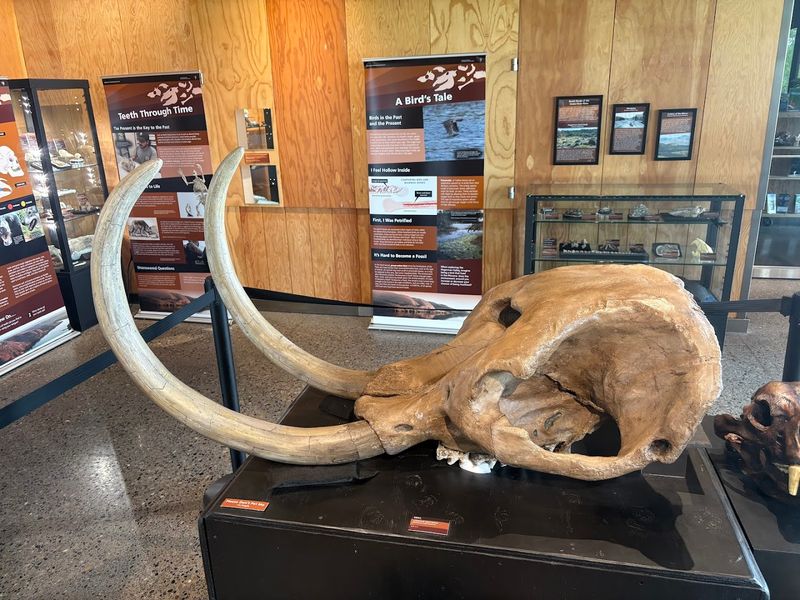
The Thousand Springs Visitor Center displays casts and authentic fossils from several of these species.
A cast of a mastodon head is among the standout pieces, giving visitors a dramatic sense of just how large these animals were.
What is striking about the diversity here is how complete the picture becomes. Predators, prey, waterway dwellers, and grazing animals all lived together in the same region.
The fossil record captures not just individual species but an entire community of life frozen in geological time, making every exhibit feel like a piece of a much larger puzzle waiting to be solved.
Fossil Exhibits Bring The Pliocene To Life
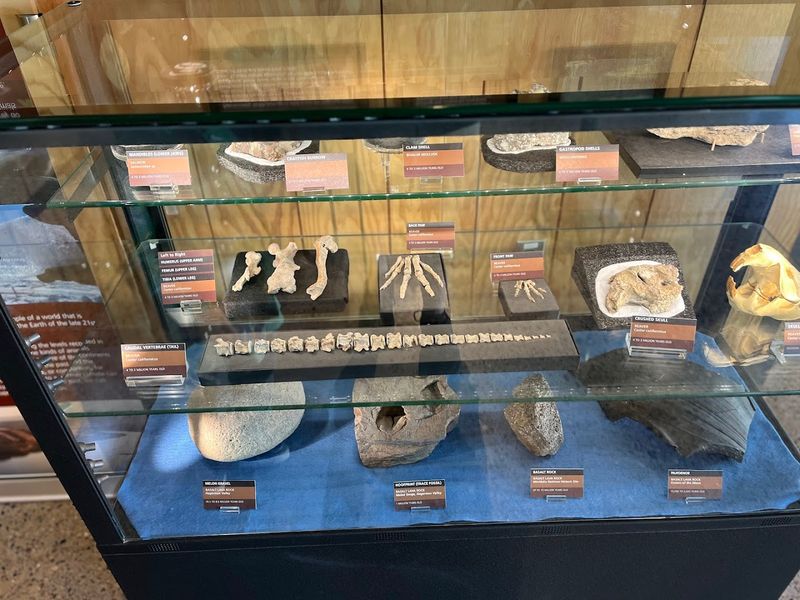
The Thousand Springs Visitor Center is the heartbeat of the entire monument experience. It’s located at 17970 U.S. Highway 30, Hagerman, ID 83332.
It is the only place within the monument where you can actually view fossils on display.
The exhibits include both original fossils and high-quality replicas, paired with detailed interpretive panels.
They explain what each specimen is and where it fits in the story of the Pliocene. The displays are well-organized and genuinely engaging, even for those who have never thought much about prehistoric life before.
A short film shown at the center covers the history of the fossil beds and the discovery of the Hagerman horse.
It runs for roughly twenty minutes and provides solid context before heading out to explore the overlooks.
Junior ranger materials are available for younger visitors, and passport stamp collectors will find several cancellations to add to their books.
The center also has a small gift shop and clean restrooms, making it a comfortable and rewarding stop for the whole family.
Scenic Overlooks Reveal The Ancient Landscape
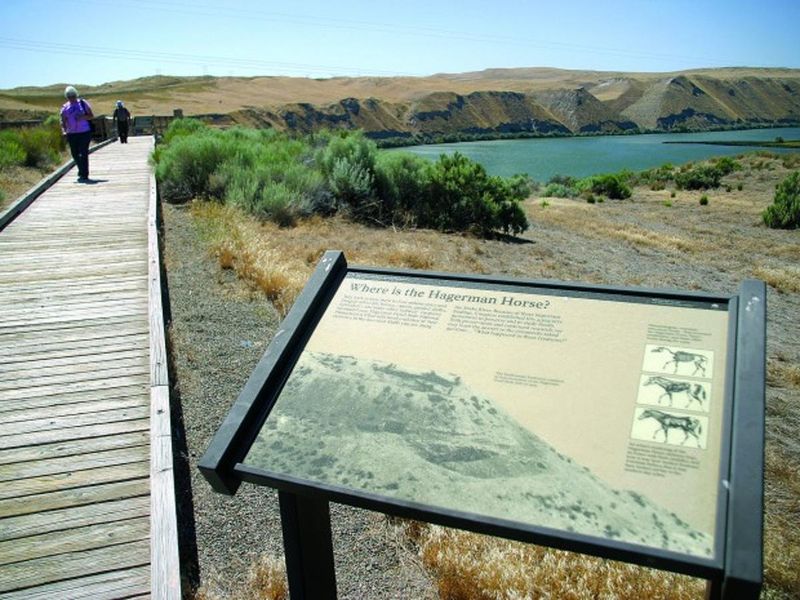
The fossil beds themselves are in remote terrain that is not open to the public. But the views from the overlooks tell their own compelling story.
The Snake River Overlook offers a quick and rewarding stop with sweeping views across the canyon.
The Snake River cuts through the valley below, and the layered canyon walls are the same formations where so many fossils have been discovered over the decades.
The Oregon Trail Overlook takes things a step further. Visible ruts from wagon wheels are still pressed into the earth here. They are left behind by pioneers who traveled this route more than a century and a half ago.
Interpretive signs explain the history of both the fossil beds and the trail itself. Standing at either overlook, the scale of the landscape becomes immediately clear.
The canyon stretches wide and deep, and the silence of the high desert adds to the sense of standing somewhere genuinely ancient.
Idaho’s wide-open terrain has a way of putting things in perspective. These viewpoints deliver that feeling without requiring a long hike or any special equipment.
Why Fossil Collecting Is Strictly Prohibited
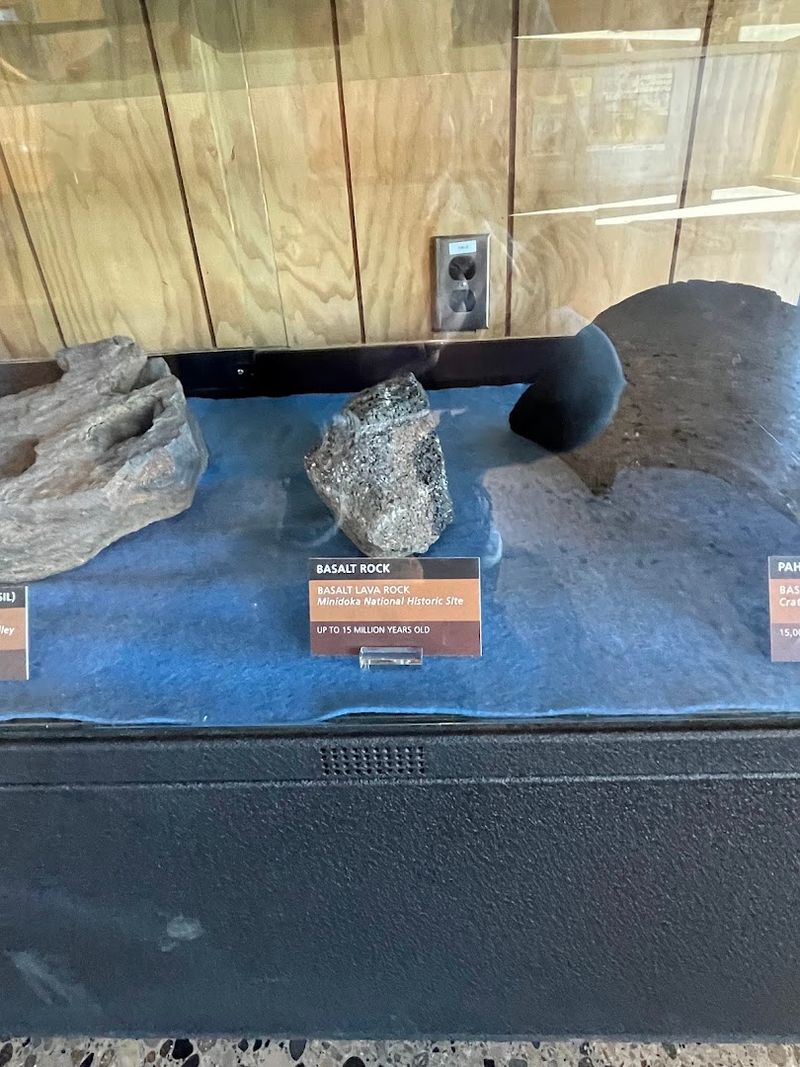
It might be tempting to pocket a small rock or fragment while exploring the area, but that temptation needs to stay firmly in check.
Collecting fossils, rocks, plants, or any natural objects within the monument is strictly prohibited. The rule applies everywhere within the monument boundaries, not just near the visitor center.
The reason for the restriction is straightforward. The fossil beds occupy fragile terrain, and every specimen removed from context loses much of its scientific value.
Paleontologists rely on the precise location and orientation of fossils to understand how animals lived, how they gathered, and what conditions led to their preservation.
The monument’s fossil record has taken millions of years to form and decades of careful scientific work to document.
Protecting it ensures that future researchers can continue learning from this extraordinary site. You should respect the rules and actively contribute to that ongoing scientific mission.
The best way to take something home from Hagerman is through photographs, memories, and a passport stamp or two. The gift shop at the visitor center also offers you souvenirs that celebrate the site without removing anything irreplaceable from it.
The Pliocene Ecosystem Explained
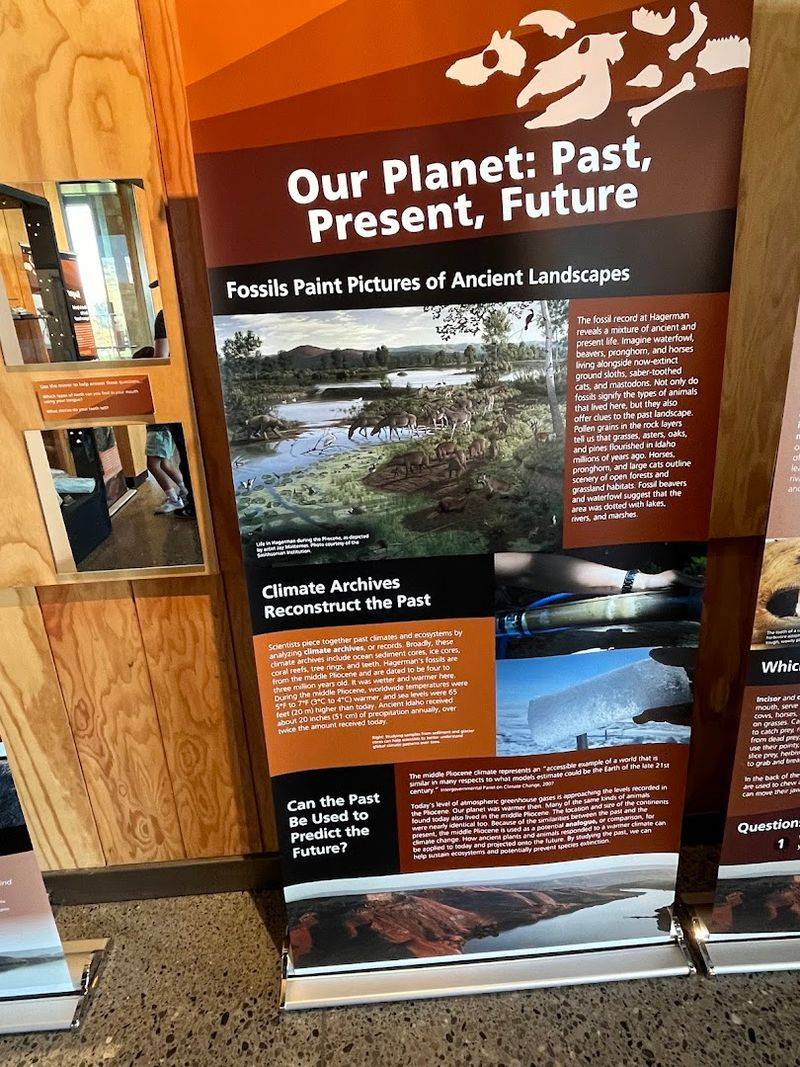
Three to four million years ago, the Snake River plain looked nothing like the high desert it is today. The Pliocene landscape was wetter, warmer in some ways, and bursting with biological diversity that is hard to picture standing in the dry Idaho heat.
The fossil record at Hagerman captures a snapshot of riverside wetlands, open grasslands, and the creatures that moved between them.
Aquatic animals like beavers and otters shared the habitat with large grazing mammals and the predators that followed them.
Plants are part of the record too. Fossilized plant material recovered from the site helps scientists reconstruct what the vegetation looked like and how it supported the animal community.
It is a more complete picture than most fossil sites can offer.
The visitor center’s exhibits do an excellent job of translating this scientific complexity into something accessible.
Illustrated panels, specimen displays, and the short film all work together to help visitors build a mental image of the ancient world.
By the time you finish walking through the exhibits, the Pliocene stops feeling like an abstract concept. It starts feeling like a real place with real animals that actually existed right here in Idaho.
Planning Your Visit Around Fossils And Nearby Park Views
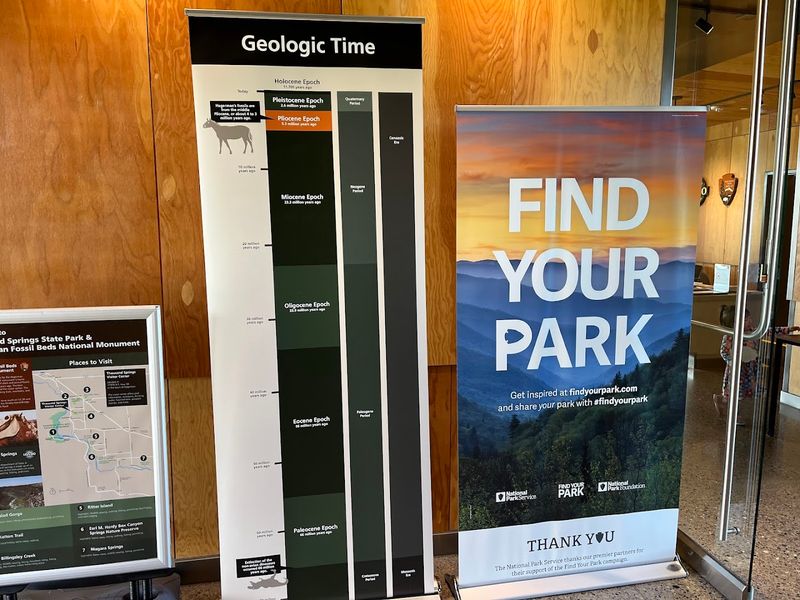
Getting to Hagerman Fossil Beds National Monument is straightforward for anyone traveling through southern Idaho.
The Thousand Springs Visitor Center sits at 17970 U.S. Highway 30, just outside the town of Hagerman.
The parking area accommodates cars, RVs, and vehicles with trailers. There is no entrance fee to visit the monument or the fossil exhibits. This makes it one of the more generous stops along any Idaho road trip.
The visitor center is a combined facility serving both the national monument and Thousand Springs State Park, so one stop covers a lot of ground.
After exploring the fossil exhibits, continue into Thousand Springs State Park for waterfall viewpoints, Snake River scenery, and more time outdoors.
The monument grounds are open throughout the year, but the visitor center operates on seasonal hours.
Checking ahead before your arrival ensures the exhibits and staff will be available during your visit. The center is compact, and you can move through the exhibits comfortably in under an hour.
Nearby attractions include waterfall viewpoints and additional state park sites. So, building a half-day or full-day itinerary around the area is easy.
Idaho’s high desert landscape rewards those who slow down long enough to look around, and Hagerman is exactly the kind of place that makes slowing down feel worthwhile.