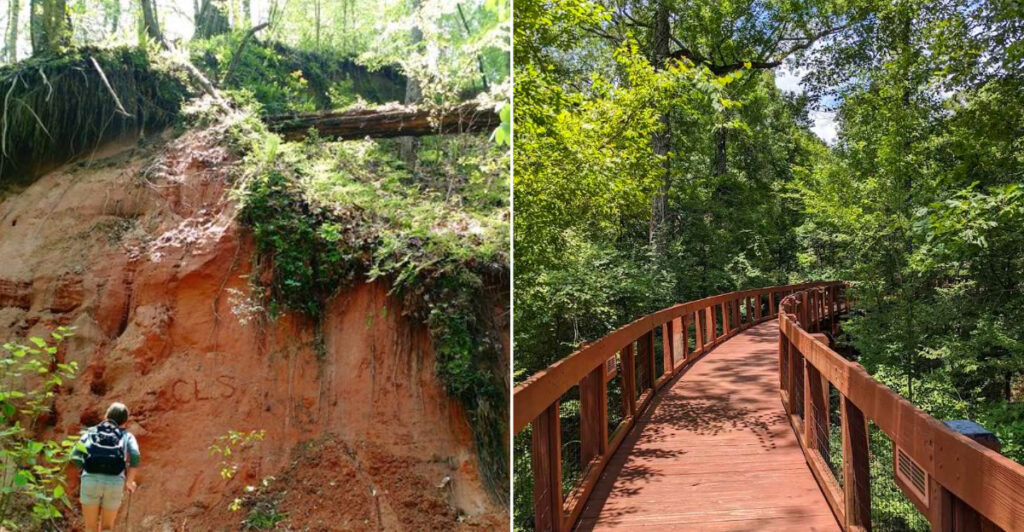
I have always believed that the best way to understand a place is to walk through it slowly, and Louisiana rewards that kind of patience like few states can.
The trails here wind through cypress swamps, climb past Civilian Conservation Corps stonework, and dip into bottomland hardwood forests where the canopy closes overhead and the air goes thick and green.
Some are short boardwalks perfect for a morning stroll, while others stretch long enough to fill an entire afternoon with overlooks and creek crossings.
A side of the state that most visitors never see unfolds along Louisiana’s hiking trails, far from the noise of the city and deep into landscapes that feel older than memory. Lace up your boots and bring plenty of water because these paths are worth every step.
11. Rock Falls Trail, J.C. “Sonny” Gilbert WMA
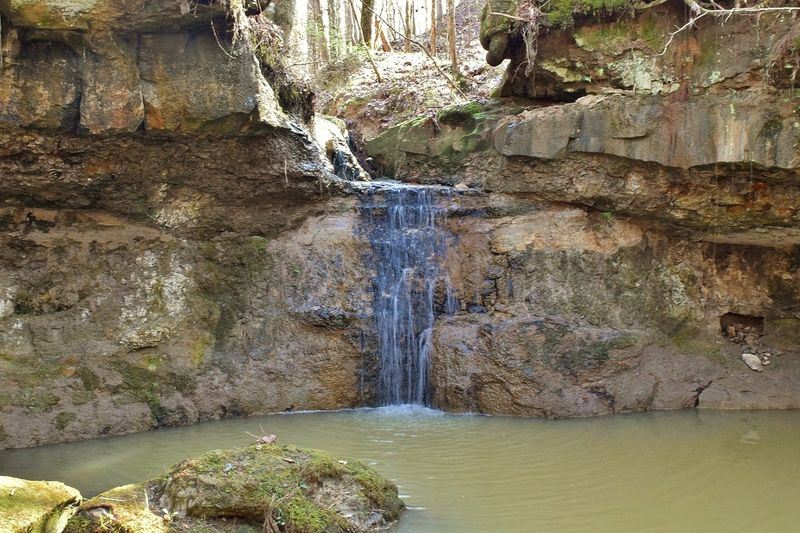
A sudden change in geography makes this trail feel like a secret Louisiana keeps hidden in the hills. Rock Falls Trail is found in J.C. “Sonny” Gilbert Wildlife Management Area along LA Hwy 915 near Sicily Island, LA 71368, where ridges drop toward shaded creek bottoms and the sound of moving water starts guiding the walk.
The nearly 17 foot Rock Falls is modest by mountain standards, but in Louisiana it feels dramatic. The compact loop moves through mature pine and hardwood forest, with leaf litter, roots, and uneven ground keeping the hike more interesting than its short distance suggests.
The setting feels older and wilder than many visitors expect, especially when the creek appears between the trees.
Wildlife is present in quiet signs rather than big displays. Deer tracks, bird calls, and the possibility of black bear activity remind hikers that this is protected habitat, not a city park.
You need the proper WMA access, such as a Wild Louisiana Stamp or appropriate license, plus a self clearing permit. Bring water, wear shoes with grip, and let the trail slow you down.
10. Tunica Hills Wildlife Management Area Trails
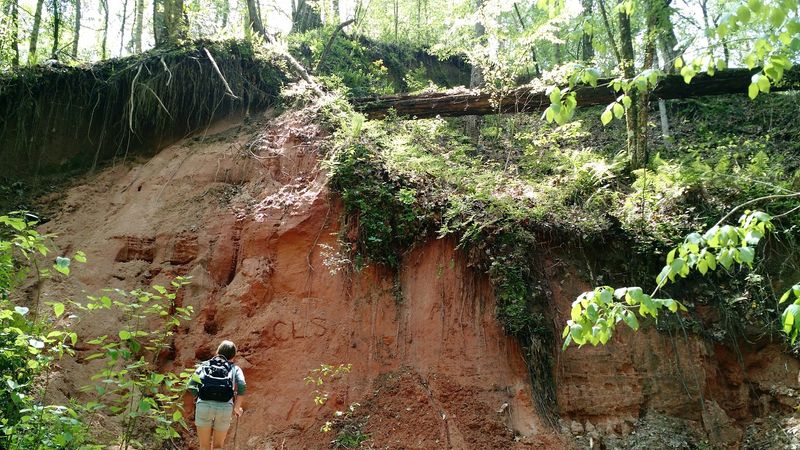
Steep ravines and loess bluffs give this area a rugged personality that surprises people who think Louisiana is all flat land and bayou. Tunica Hills Wildlife Management Area is located off LA Highway 66 near St. Francisville, LA 70775, and the trails here offer some of the state’s most dramatic hiking terrain.
Trail A is the best known option, with a roughly 4.8 mile loop that brings elevation changes, creek beds, bluffs, and a botanical richness that feels different from surrounding lowlands. The landscape supports plant species not commonly seen across much of Louisiana, so slow walkers often notice more than fast ones.
Ferns, hardwoods, ravine edges, and shaded slopes make the route feel almost Appalachian in brief flashes.
This is not a trail to treat casually in midsummer. Erosion, loose footing, sparse blazes in places, and creek routes can make navigation more demanding than the mileage suggests.
A GPS, map, good shoes, and extra water are smart choices. Start early, respect fragile plant life, and build in time for overlooks.
The reward is a hike that proves Louisiana has more vertical drama than most people realize.
9. Wild Azalea Trail
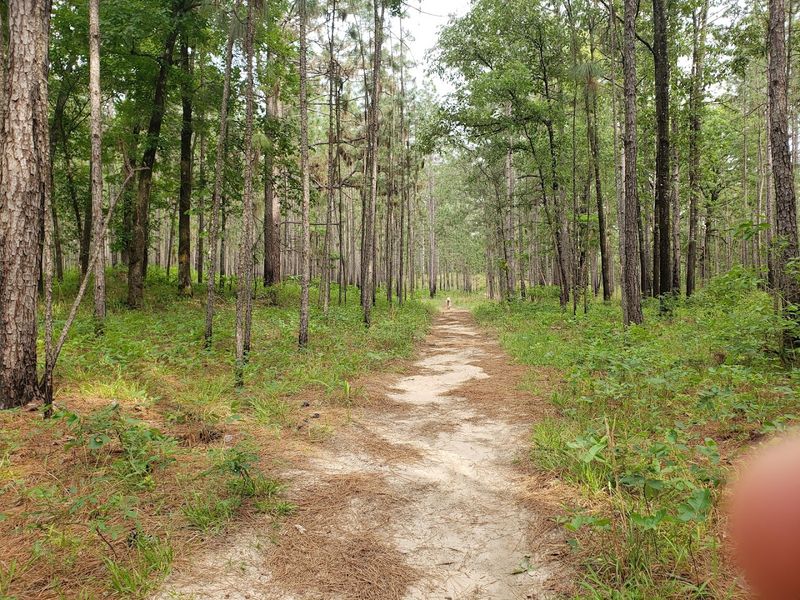
Long, generous, and deeply tied to Kisatchie National Forest, this trail gives hikers a real taste of Louisiana uplands.
The Wild Azalea Trail can be accessed through areas including Valentine Lake Recreation Area near Forest Road 282 around Gardner and Boyce, LA 71409, and it stretches far enough to serve both serious backpackers and day hikers.
The route is known for pine ridges, hardwood bottoms, quiet clearings, and seasonal bursts of wild azalea bloom that make spring especially memorable. In summer, the flowers may be gone, but the forest still offers shade, birdsong, and that immersive feeling you only get when the trail keeps unfolding beyond the next bend.
Sections can be chosen according to time, energy, and heat tolerance, which makes the trail flexible despite its full length.
Water planning matters here. Natural sources are not always dependable, and summer conditions can make a small mistake feel large quickly.
Carry enough water, consider purification if you are planning a longer route, and do not underestimate humidity. The Wild Azalea Trail rewards preparation with one of the most substantial hiking experiences in the state, especially for anyone wanting more than a short boardwalk stroll.
8. Longleaf Vista Interpretive Trail
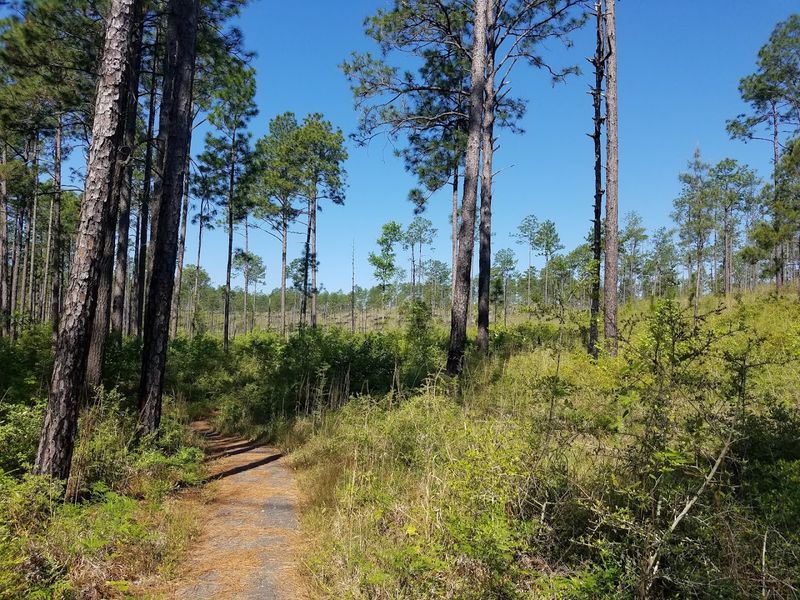
Big views arrive quickly on this short loop, which makes the trail feel generous beyond its mileage.
Longleaf Vista Interpretive Trail sits within Longleaf Vista Recreation Area, with the Kisatchie Ranger District office listed at 229 Dogwood Park Road, Provencal, LA 71468, and the trail itself offers one of the easiest introductions to the varied terrain of Kisatchie National Forest.
The loop runs about 1.5 miles and moves through open meadows, wooded areas, sandstone mesas, bottomland hardwoods, and interpretive stops that explain the landscape without overwhelming the walk. A stone gazebo provides the classic overlook moment, with wide views that feel unexpectedly expansive for Louisiana.
Bayou Cypre adds another layer, especially when water is flowing enough to create small seasonal cascades near the rock formations.
This is a strong choice for families, casual hikers, and anyone who wants scenery without committing to a long route in summer heat. The trail is marked and approachable, but comfortable shoes still help on natural surfaces.
Bring binoculars for birds, read the signs, and give yourself permission to stop often. Longleaf Vista works because it combines education, geology, forest, and a little drama in a compact walk.
7. Bogue Chitto State Park Trails
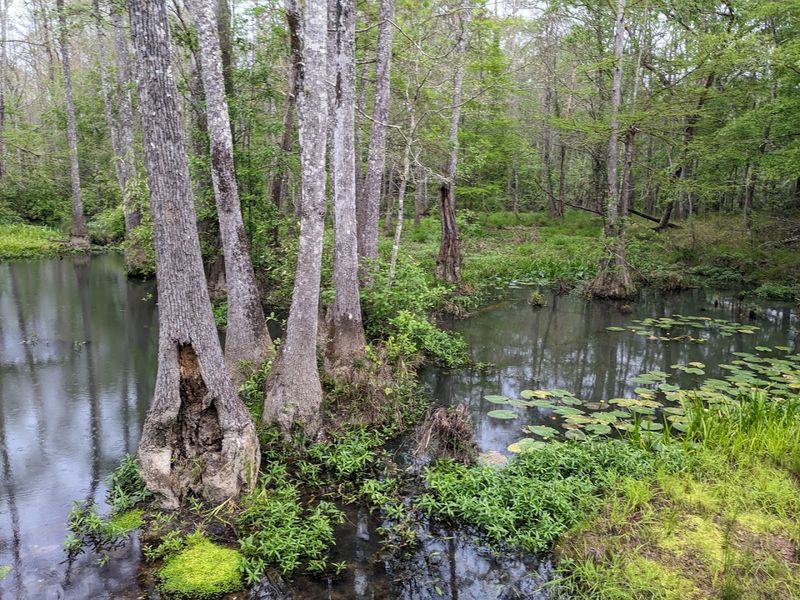
Water shapes almost everything here, from the sandy banks of the Bogue Chitto River to the swampy pockets and forested paths that make the park feel more varied than expected.
Bogue Chitto State Park is located at 17049 State Park Boulevard, Franklinton, LA 70438, and its trail system gives summer hikers several ways to move through the landscape.
The park includes cypress tupelo swamp, upland forest, clear streams, boardwalk sections, and dirt paths that range from easy walking to more active exploration. Fricke’s Cave is one of the most memorable features, with delicate sandstone formations best viewed from the boardwalk.
The tiny spires and erosion shaped surfaces feel almost too fragile for a state park setting, which is why staying on designated paths matters.
This is a good destination for mixed groups because not everyone has to hike the same way. Some visitors can focus on short boardwalks, while others can take longer trails or combine hiking with river time.
Summer heat makes early starts and water essential, and insect protection is useful near wet areas. Bogue Chitto rewards curious hikers with small geological surprises, changing habitats, and a sense that water has been quietly sculpting the whole place.
6. Chicot State Park Trail
A long loop around a lake gives this park a scale that feels closer to a backpacking destination than a casual afternoon stop.
Chicot State Park is located at 3469 Chicot Park Road, Ville Platte, LA 70586, and the Lake Chicot Loop is one of Louisiana’s more substantial hiking challenges, often measured around 20 to 22 miles depending on route details.
The trail circles through hardwood forest, swampy sections, lake views, ridges, and quiet shoreline areas that make the park feel much larger once you are inside it. The terrain is not mountainous, but it is not effortless either.
Some stretches climb and dip enough to test legs, especially in humid weather. Tackling the entire loop is a serious commitment, while shorter sections still offer a satisfying sample of the park’s character.
Primitive campsites make overnight trips possible for hikers who want a fuller experience. Day visitors can choose a smaller segment, especially in summer when heat and mosquitoes can change the mood quickly.
Start early, know your route, and carry more water than you think you need. Chicot is rewarding because it lets Louisiana hikers feel real distance, not just scenery.
5. Louisiana State Arboretum Trails
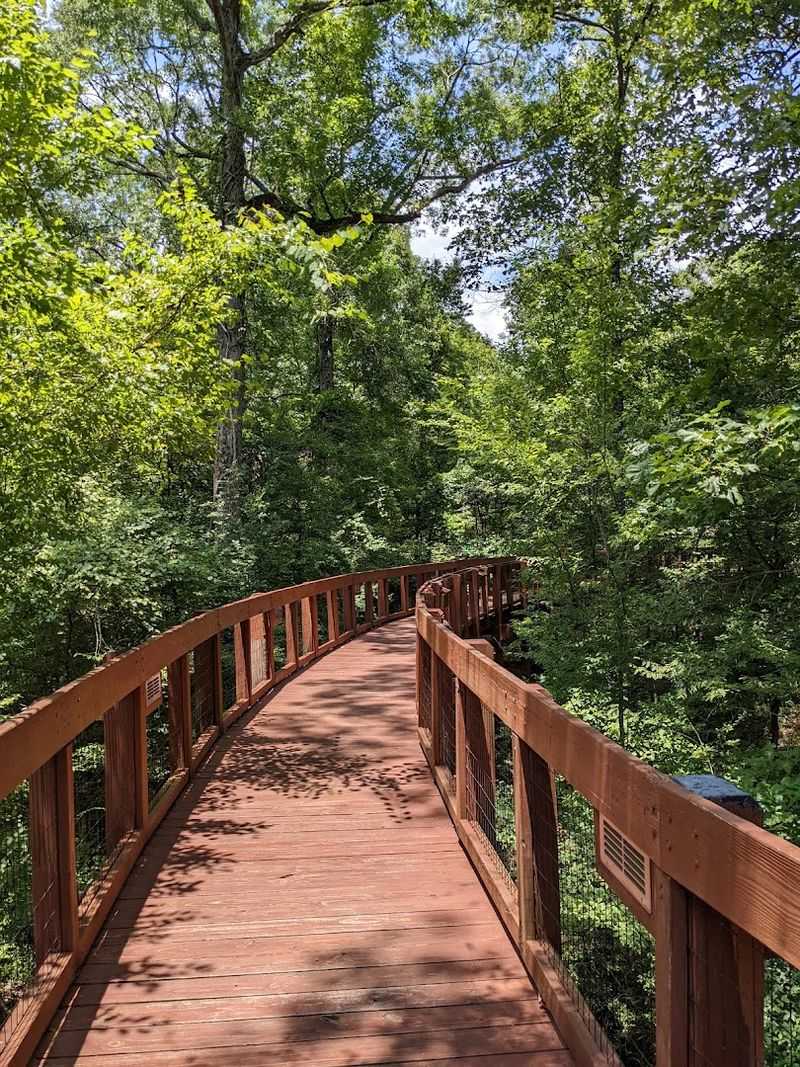
A walk here feels part hike and part living museum, which is exactly the point. The Louisiana State Arboretum is located at 1300 Sudie Lawton Lane, Ville Platte, LA 70586, near Chicot State Park, and it protects a remarkable collection of inland Louisiana plant communities in one accessible setting.
Established in 1961 as the first state supported arboretum in the country, the site offers trails that move through mature beech, magnolia, hardwood, and pine habitats with interpretive signs helping visitors understand what they are seeing.
The paths are generally manageable, but the experience becomes richer when you slow down and pay attention to how the understory changes between sections. This is not a trail system built only for mileage. It rewards observation.
Families, plant lovers, students, and casual walkers can all find something useful here. The trails are maintained, the signage adds context, and the setting feels calm even when the day is warm.
Mud can appear after rain, so shoes with traction help. The arboretum is a good reminder that hiking does not always have to mean dramatic overlooks.
4. Fontainebleau State Park Trails
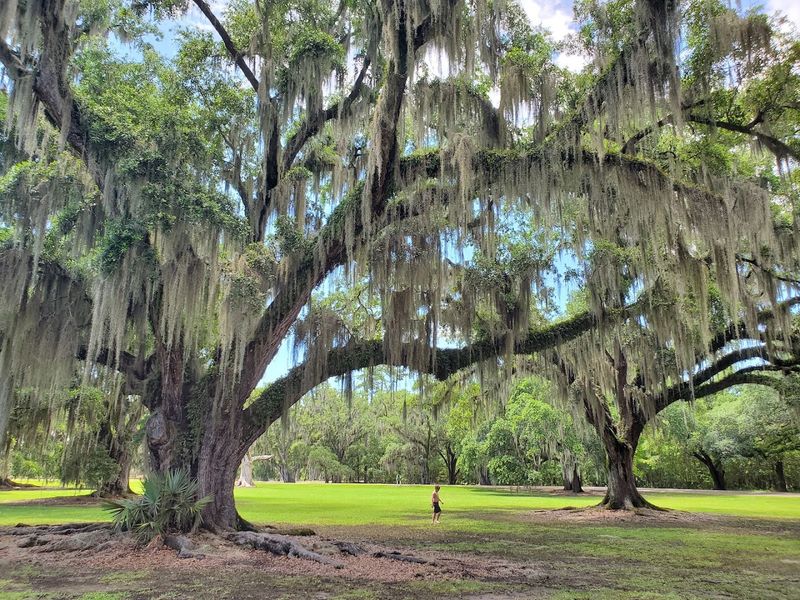
Lake air, old ruins, and shaded trails give this Northshore park a layered personality. Fontainebleau State Park is located at 62883 Highway 1089, Mandeville, LA 70448, where Lake Pontchartrain meets marsh, hardwood forest, beach, and the remains of an 1829 sugar mill.
The trails move through several moods in a relatively easy visit. One section may bring you under live oaks and Spanish moss, another may open toward lake views, while boardwalks and marsh edges invite slower attention.
The sugar mill ruins anchor the park’s historical side, reminding visitors that the landscape carries plantation era history as well as natural beauty. That mixture gives even a short walk more depth than expected.
Birdwatchers should come early, when the shoreline and wooded areas are most active. Comfortable shoes matter because trail surfaces can vary from firm paths to sandy stretches near the lake.
Sunscreen is useful for open water facing areas, while insect repellent helps near marshier spots. Fontainebleau is especially good for visitors who want a flexible summer outing: hike a little, cool off near the beach, picnic under shade, and let Lake Pontchartrain set the pace.
3. Tickfaw State Park Trails
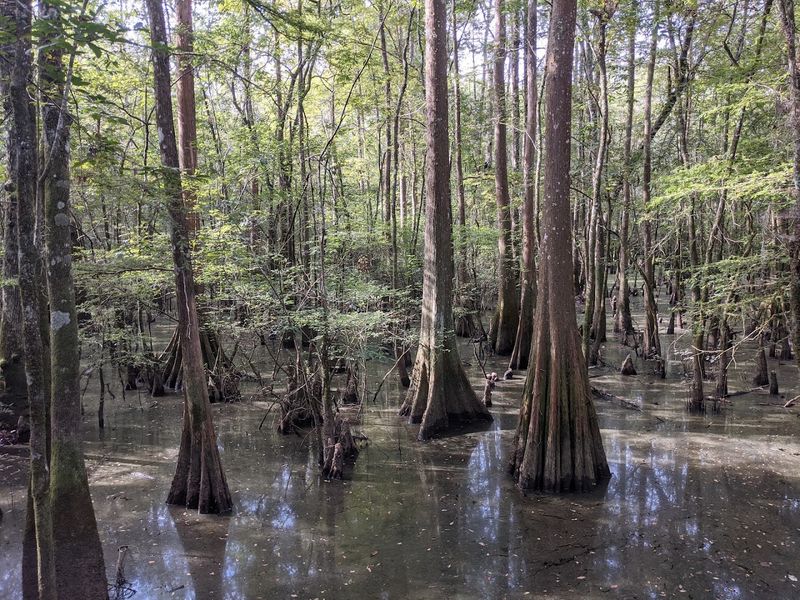
Four ecosystems sit close enough together here that a single walk can feel like a compact Louisiana field lesson.
Tickfaw State Park is located at 27225 Patterson Road, Springfield, LA 70462, and its trail system uses boardwalks, natural paths, and looped routes to guide visitors through swamp, bottomland hardwood forest, mixed pine hardwood forest, and river habitat.
The boardwalk sections are especially appealing in summer because they provide dry access into wet landscapes without damaging sensitive ground. Cypress trunks, still water, reflections, frogs, birds, and the slow movement of swamp life make these sections ideal for quiet photography or a slower family walk.
The nature center adds context, including an aquarium that helps explain the river systems and native species connected to the park.
This is not a place to rush for mileage. The pleasure comes from noticing small shifts: the change from damp swamp to drier forest, the sound of insects, the way light sits on water, the sudden movement near a cypress knee. Heat and mosquitoes are real in summer, so go early, bring repellent, and carry water.
2. Lake Fausse Pointe State Park Trails
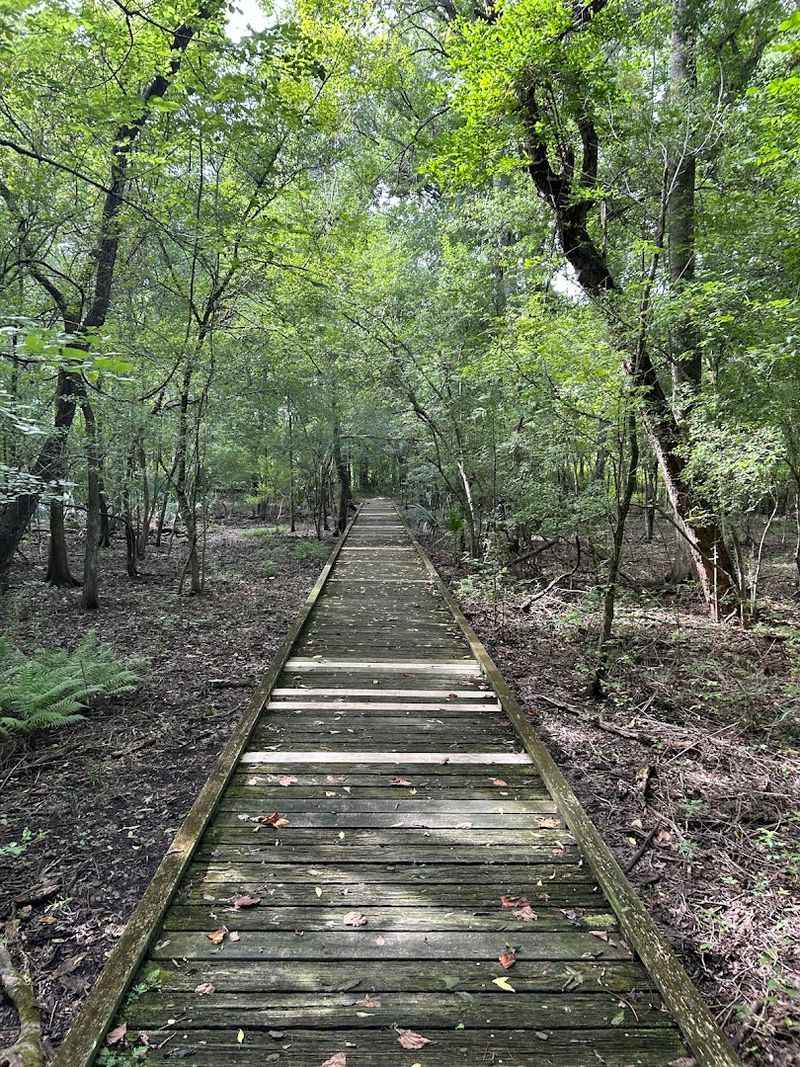
Atchafalaya Basin edge wetlands give these trails a dense, watery atmosphere that feels fully Louisiana. Lake Fausse Pointe State Park is located at 5400 Levee Road, St. Martinville, LA 70582, and the park’s paths, boardwalks, and footbridges move through cypress, sloughs, swamp edges, and lowland forest.
The Barred Owl Trek is one of the more interesting routes, measuring about 3.3 miles and including a long footbridge that feels almost architectural as it crosses the wetland. The trail’s rhythm is shaped by openings and closings in the landscape.
One moment you are surrounded by trees, and the next a stretch of water or a wildlife pocket appears through the vegetation. Herons, turtles, frogs, and seasonal flowers can all become part of the walk if you move quietly.
Respect for the environment is especially important here. Stay on boardwalks and marked paths to protect roots, wet soil, and fragile habitat.
Summer hikers should aim for early morning, when mist, cooler air, and wildlife activity make the trail more rewarding. Bring insect protection, water, and a camera if you like slow wildlife watching.
1. Sam Houston Jones State Park Trails
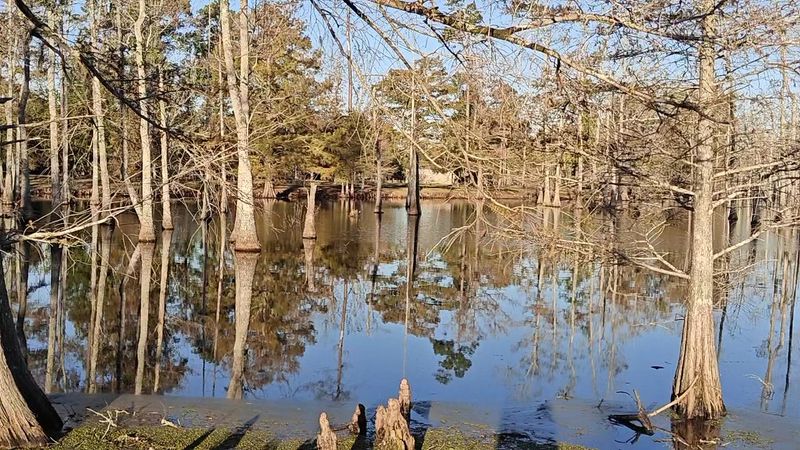
A mix of rivers, lagoons, pine woods, and cypress pockets makes this Lake Charles area park a rewarding summer hike for people who like quiet variety.
Sam Houston Jones State Park is located at 107 Sutherland Road, Lake Charles, LA 70611, and its trails move through habitats shaped by water, forest, and the meeting of regional waterways.
The park is especially strong for birdwatching. Nearly 200 species have been recorded in the area, and early morning walks often bring the most movement and song.
Trails pass through pine hardwood stands, wetland edges, and tree lined lagoons, giving hikers a steady change of scenery without requiring extreme effort. An old stagecoach road adds a historical layer, reminding visitors that movement through this landscape has mattered for a long time.
Summer planning is simple but important. Start early, carry water, use insect protection, and give yourself enough time to stop rather than power through. The shaded sections help, but Louisiana humidity still deserves respect.