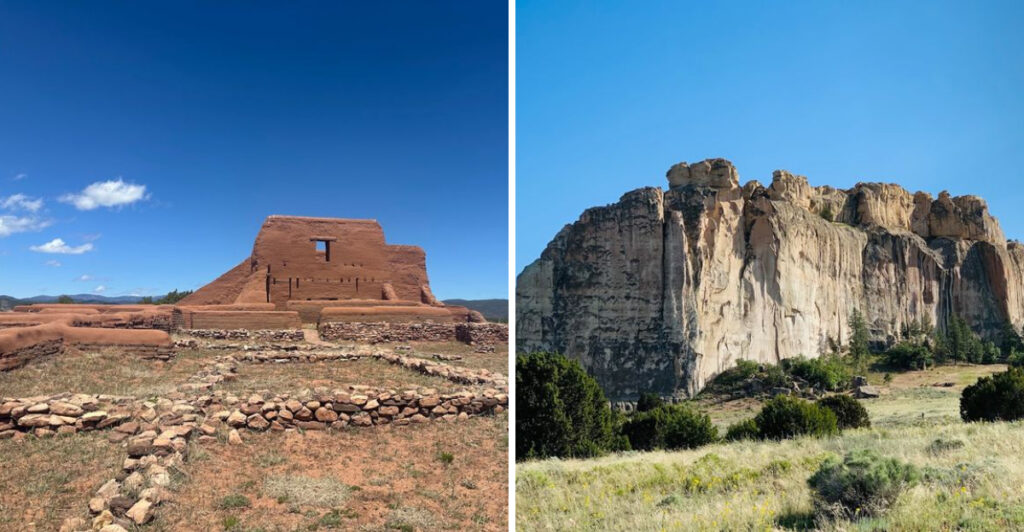
A good desert hike keeps your eyes moving. The view may pull your attention toward a distant bluff, but the ground beside the trail can hold its own surprise.
New Mexico has several outdoor destinations where rattlesnakes live among lava rock, canyon walls, and open scrub. They are usually not looking for trouble, yet a startled snake can turn a careless moment into a serious problem.
This guide highlights eight areas with rattlesnake activity and explains what makes each destination worth visiting anyway. Some protect centuries of human history.
Others reveal landscapes shaped by volcanic forces or shifting sand. Every one rewards visitors who slow down, stay alert, and treat wildlife with respect.
You can enjoy these trails without spending all day feeling nervous. Knowing where sightings occur and how to move carefully gives you confidence.
Keep reading before your next trip, and let awareness become part of the adventure.
1. Bandelier National Monument, Los Alamos
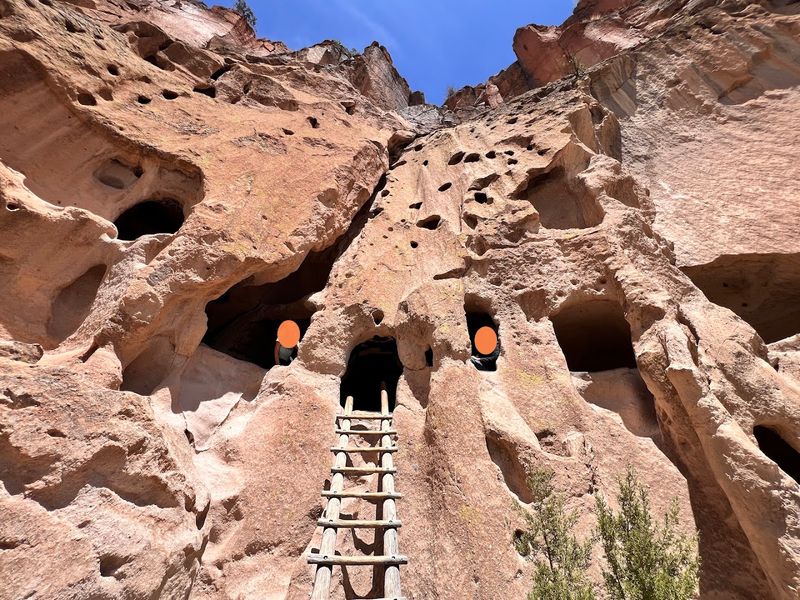
My first time walking into Frijoles Canyon at Bandelier National Monument, Los Alamos, NM 87544, I felt like I had stepped straight into a chapter of history that nobody had bothered to close.
The canyon walls rise dramatically around you, riddled with ancient cliff dwellings carved directly into soft volcanic tuff by the Ancestral Puebloans who lived here over a thousand years ago.
The Main Loop Trail winds about 1.2 miles through the canyon floor, passing masonry ruins and leading to ladder-accessed alcove houses that cling to the cliffside like something from a dream.
Rangers here are candid about rattlesnake activity, especially during the warmer months when the rocky terrain becomes prime basking territory for these reptiles.
Staying on marked trails is a genuinely smart move, not just a suggestion printed on a pamphlet you grab at the entrance station.
The Tsankawi section of the monument offers a mesa-top walk with petroglyphs and sweeping views, and it adds a quieter, more solitary feel compared to the main canyon area.
I found that visiting in the early morning kept temperatures manageable and gave me the best chance of spotting wildlife before the midday heat pushed everything into the shade.
Bandelier also runs stargazing programs and full moon hikes in autumn, which transform the canyon into something almost otherworldly after dark.
The cultural depth here is staggering, with human habitation evidence stretching back more than 11,000 years packed into one compact and accessible park.
Pack water, wear closed-toe shoes, and watch where you place your hands when scrambling near rocks, because sharing the trail respectfully is the whole point of a visit like this.
2. Pecos National Historical Park, Pecos
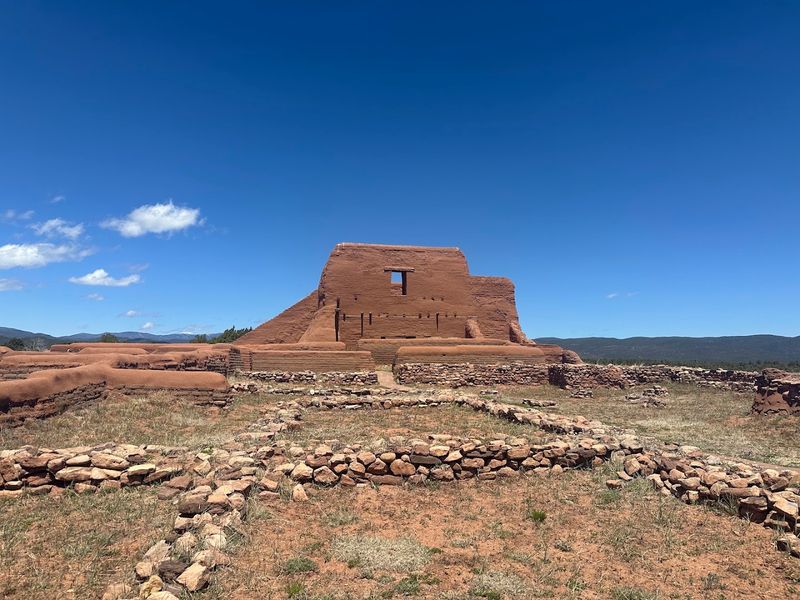
Just east of Santa Fe, Pecos National Historical Park in Pecos, NM 87552 sits where two completely different worlds once collided, and the ruins left behind tell that story better than any textbook ever could.
The ancestral pueblo here was once one of the most powerful trading hubs in the entire Southwest, connecting the Rio Grande valley to the Great Plains in a web of commerce and culture.
A self-guided 1.25-mile loop takes you around the crumbling walls of the mission church and the pueblo, with interpretive signs that fill in the gaps between what you see and what actually happened here centuries ago.
Rangers at Pecos have a nickname for summer: snake season, and the prairie rattlesnake is the most commonly encountered species along the park trails during that stretch of the year.
Keeping your eyes on the ground near rocky outcroppings and brushy areas along the path is a habit that pays off, and not just for avoiding snakes but for spotting other desert wildlife too.
The 2.3-mile Glorieta Battlefield Trail adds a Civil War dimension to the visit, winding through terrain where a pivotal western battle was fought that many historians consider the turning point of the conflict in the region.
Fishing along the Pecos River is another draw, with the Sangre de Cristo Mountains providing a backdrop that makes even a slow afternoon feel cinematic.
I especially loved how uncrowded this park felt compared to some of the bigger-name sites nearby, giving the whole experience a more personal and unhurried pace.
Come in spring for wildflowers, come in fall for golden light, but always come with eyes wide open on every step of the trail.
3. Petroglyph National Monument, Albuquerque
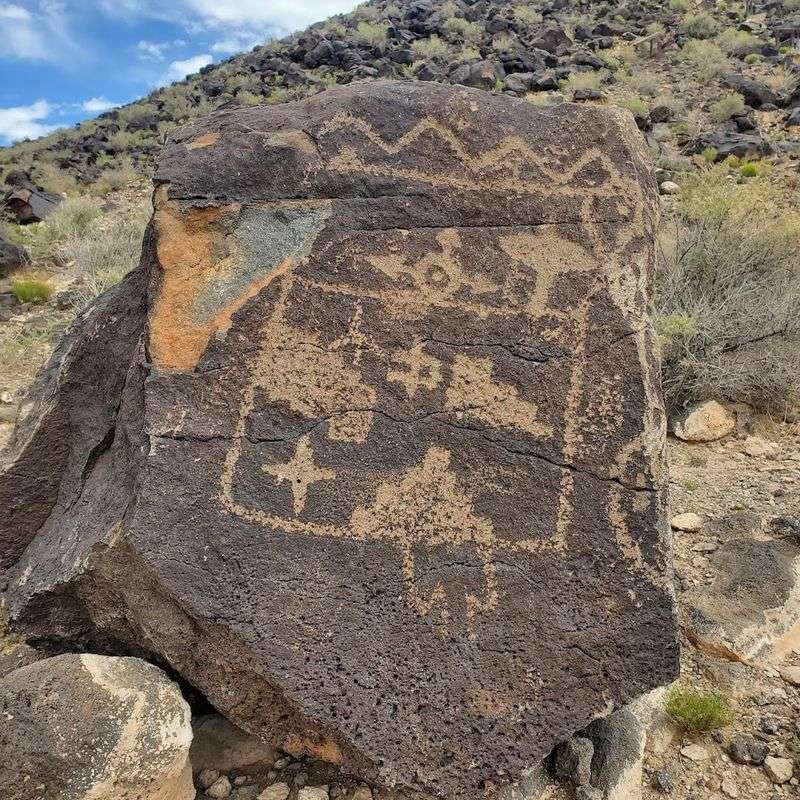
Thousands of ancient carvings etched into dark volcanic basalt make Petroglyph National Monument in Albuquerque, NM 87120 one of the most visually arresting outdoor sites I have ever wandered through.
Native American and early Spanish settler communities left behind more than 25,000 images here, everything from spirals and animals to human figures and crosses, spread across miles of rocky escarpment on the western edge of Albuquerque.
The Boca Negra Canyon area offers paved, accessible trails that put you face to face with the carvings quickly, while the Rinconada Canyon trail gives a longer, wilder walk through open desert scrub.
Western diamondback and prairie rattlesnakes are documented residents of this monument, and spring through summer brings them out onto the warm basalt surfaces where they absorb heat before the day gets too intense.
I learned to scan ahead on the trail before stepping over or around any rock, a habit that feels second nature after just one visit to a place like this.
The monument sits right at the edge of a major city, which creates a surreal experience of looking out from ancient rock art toward a sprawling modern skyline just a short distance away.
Birdwatching is surprisingly rewarding here too, with roadrunners, hawks, and various desert songbirds moving through the scrub around the lava formations throughout the year.
Mornings are the best time to visit both for cooler temperatures and for the quality of light on the carvings, which shows the etched details in sharp, dramatic relief.
A respectful distance from the art and from any wildlife you encounter makes every moment here feel like a privilege rather than just another item on a sightseeing checklist.
4. White Sands National Park, Alamogordo
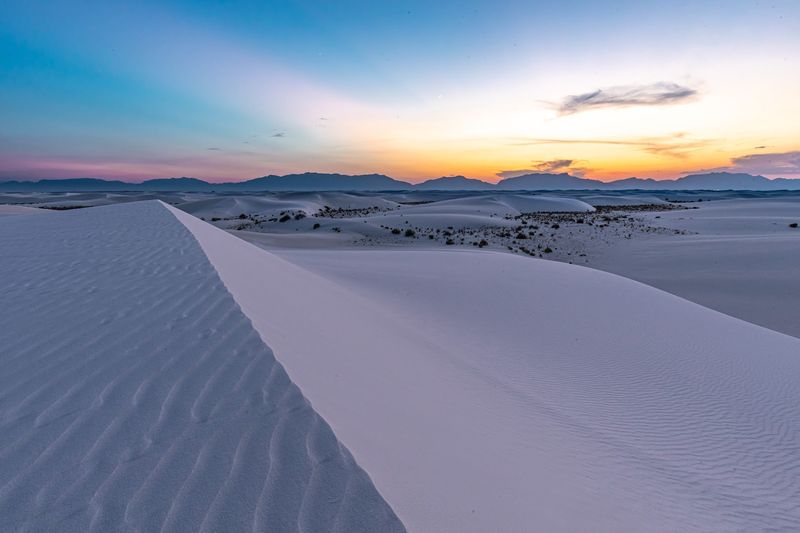
Nothing in my years of travel quite prepared me for the visual shock of White Sands National Park, located near Alamogordo, NM 88310, where an ocean of brilliant white gypsum dunes stretches in every direction as far as the eye can reach.
The park protects the largest gypsum dunefield on the planet, and walking across those soft, cool dunes feels genuinely unlike any other landscape experience I can point to.
The Dune Life Nature Trail is a great starting point, offering interpretive signs that explain how plants, insects, and animals have adapted to survive in this extreme and seemingly inhospitable environment.
Rattlesnakes do appear here, and the contrast of their patterned scales against the white sand makes them easier to spot than in most other desert settings, though a watchful eye is always warranted.
Spring and fall are the sweet spots for visiting, with temperatures that make longer hikes genuinely pleasant rather than a test of endurance against the desert sun.
Dune sledding is a wildly popular activity, and the park even sells plastic sleds at the visitor center, so you can spend an afternoon launching yourself down the silky slopes without any gear of your own.
Sunset at White Sands is a full sensory event, with the dunes shifting from blinding white to soft pink and gold as the light drops toward the San Andres Mountains on the horizon.
Stargazing after dark is equally spectacular, and the remote location away from major city lights gives the night sky a clarity that feels almost too vivid to be real.
Bring more water than you think you need, because the desert here is beautiful and completely indifferent to how thirsty you get.
5. Carlsbad Caverns National Park, Carlsbad
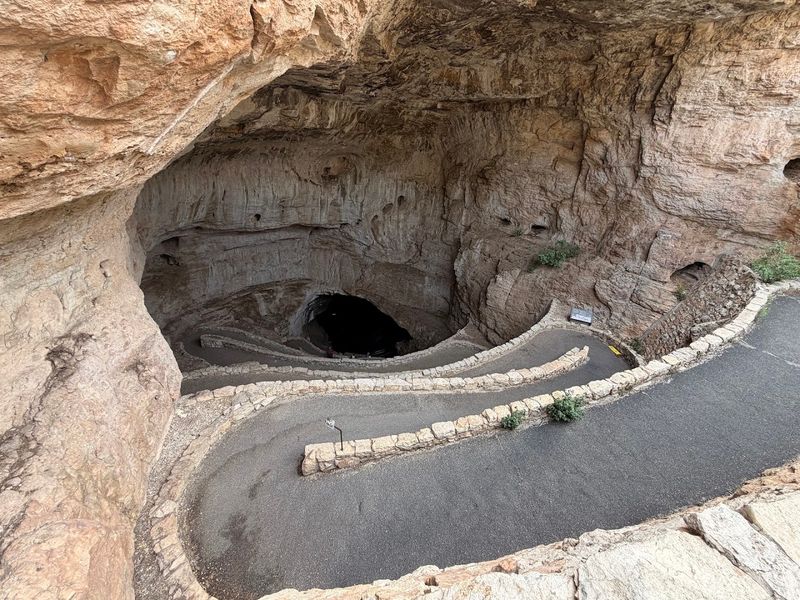
Most people come to Carlsbad Caverns National Park near Carlsbad, NM 88220 for what lies underground, and the Big Room absolutely delivers on every expectation with its cathedral-scale formations and eerie, cathedral-like silence.
The cave system here contains over 100 limestone caverns, shaped over millions of years by sulfuric acid dissolving rock from below in a process that makes the geology here genuinely unusual compared to most cave systems in the world.
Above ground, though, the Chihuahuan Desert landscape tells its own compelling story, with rocky canyon trails winding through desert scrub that supports a surprisingly rich community of plants and animals.
The black-tailed rattlesnake and the mottled rock rattlesnake are both documented in the park, and the rugged terrain above the cave entrances gives them plenty of rocky ledges and warm surfaces to occupy.
Rattlesnake Springs, an oasis of flowing water tucked into the park, draws an impressive variety of bird species and other wildlife, making it one of the best spots in the entire region for wildlife observation of all kinds.
The evening bat flight program runs between May and October, when hundreds of thousands of Brazilian free-tailed bats spiral out of the natural entrance in a swirling column that lasts for the better part of an hour.
I sat in the outdoor amphitheater watching that bat flight one August evening and genuinely forgot to check my watch for the entire duration.
The cave tours include self-guided walks and currently available ranger-led tours, giving visitors real flexibility in how they experience this underground world.
Plan to spend a full day here, because both the surface trails and the caverns below deserve more than a rushed pass-through visit.
6. El Malpais National Monument, Grants
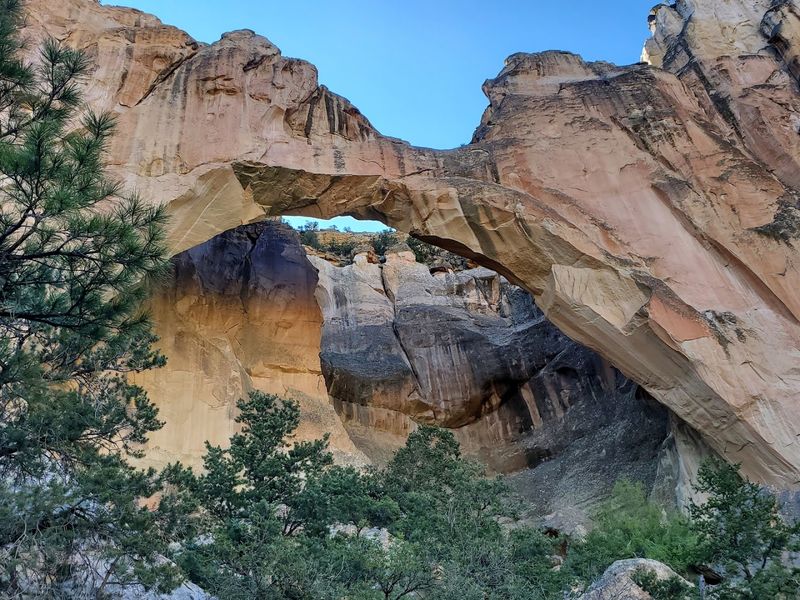
El Malpais National Monument near Grants, NM 87020 spreads across hardened lava flows that make the landscape look like the earth is still deciding what to do with it.
The name translates roughly to “the badlands,” and the terrain earns that label honestly, with jagged black basalt stretching across the high desert in formations that look freshly poured even though the youngest flows are several thousand years old.
Cinder cones, shield volcanoes, and extensive lava tube systems give the monument a geological variety that rewards anyone willing to explore beyond the roadside pullouts.
La Ventana Natural Arch is one of the most photographed spots in the monument, a graceful sandstone span that contrasts beautifully with the dark volcanic rock surrounding it.
Western diamondback and prairie rattlesnakes are known residents here, and the rocky lava terrain gives them ideal cover and basking spots that can make them harder to see than on open sandy trails.
The visitor center posts rattlesnake warning signs, and the rangers there are genuinely helpful about which routes are best suited to different experience levels and what wildlife to expect along each one.
Cairned routes across the lava require careful footing and sturdy footwear, because the surface is uneven in ways that flat trail photos simply do not communicate.
I found the silence out on the lava field to be one of the most striking things about the place, a deep, windswept quiet that you do not find in many spots this accessible from a main road.
The contrast of red sandstone cliffs, dark lava, and wide blue sky makes every photograph here look almost too dramatic to be believable.
7. El Morro National Monument, Ramah
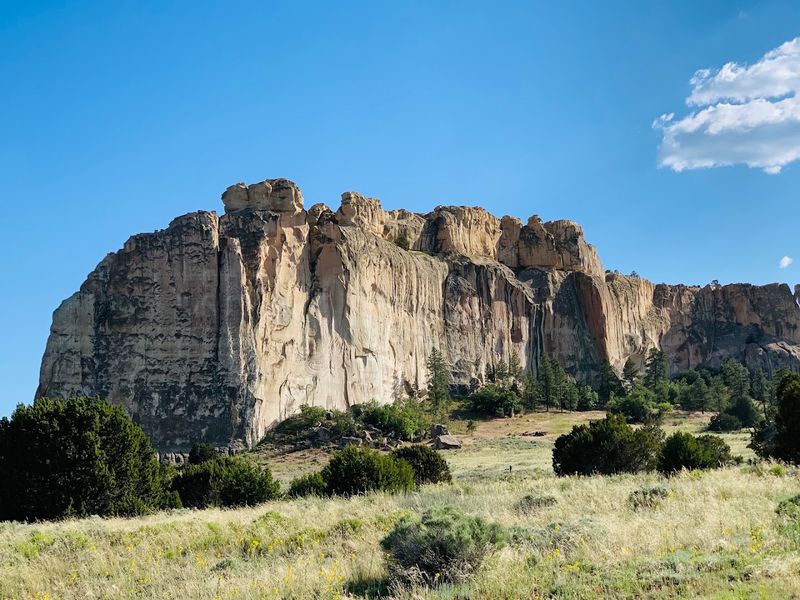
A sandstone bluff near Ramah, NM 87321 once served as a watering hole and landmark. Its centuries of carved inscriptions make El Morro National Monument one of the most fascinating stops on any New Mexico itinerary.
Inscription Rock, as the bluff is known, carries thousands of carved messages left by Ancestral Puebloans, Spanish conquistadors, and American settlers who passed this way and felt compelled to leave their mark on the soft sandstone surface.
Reading those inscriptions feels oddly personal, like stumbling across old letters written by people who had no idea anyone would still be reading them hundreds of years later.
The Headland Trail offers a two-mile loop that climbs to the top of the bluff, passing the ruins of Atsinna, an Ancestral Puebloan village that once housed a substantial community overlooking the surrounding high desert.
Views from the top stretch across the Zuni Mountains in a wide panorama that rewards the modest climb with something genuinely worth the effort.
The western prairie rattlesnake is the only venomous snake found at El Morro, and like most reptiles in high-desert settings, it tends to be most active during the warm summer months when the sun heats the exposed rock surfaces.
The monument sits at a higher elevation than many of the other parks in the region, which keeps temperatures noticeably cooler and makes summer visits more comfortable than you might expect.
I appreciated the unhurried atmosphere here, with fewer crowds than the larger national parks and a pace that lets you actually sit with the history rather than rush past it.
Stay hydrated, move slowly near rocky areas, and give yourself time to read the inscriptions properly because the stories embedded in that rock face are worth every minute.
8. Capulin Volcano National Monument, Capulin
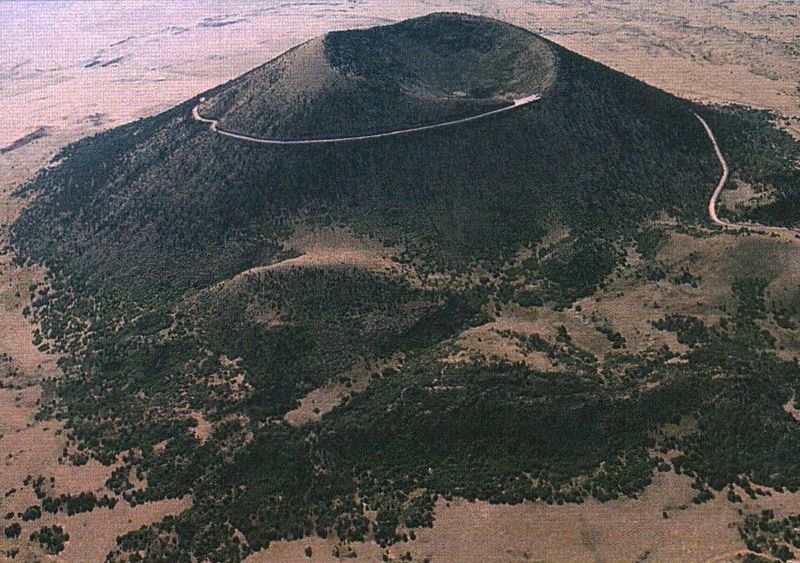
A two-mile paved road spirals up to the rim of Capulin Volcano at Capulin Volcano National Monument in Capulin, NM 88414. The climb gradually reveals just how dramatically this cinder cone rises above the surrounding plains.
The volcano is one of the most perfectly shaped cinder cones in North America, a symmetrical peak that looks almost sculpted rather than formed by the chaotic processes of volcanic eruption.
From the crater rim, the views spread out across the Raton-Clayton Volcanic Field in all directions, and on a clear day you can spot landmarks in New Mexico, Colorado, Oklahoma, and Texas from a single vantage point.
A trail descends into the volcanic vent itself, which is a genuinely unusual experience that most visitors do not expect to be possible at a volcano they can drive to.
The western prairie rattlesnake lives here and has been spotted on trails and roads throughout the monument, particularly during the warmer months when the paved surfaces and sunny slopes make ideal basking spots.
Capulin holds a Gold Tier Dark Sky Park designation, which means the night sky above the volcano is among the least light-polluted in the entire region, and ranger-led stargazing programs take full advantage of that.
The northeastern corner of New Mexico where this park sits sees fewer visitors than the more famous parks in the southern and central parts of the state, giving Capulin a relaxed, off-the-beaten-path character that I found refreshing.
Wildlife on the slopes includes mule deer, wild turkeys, and various raptors that ride the thermals rising off the warm volcanic rock.
Pack a jacket even in summer because the elevation means temperatures at the rim drop faster than you might anticipate once the sun starts to set.