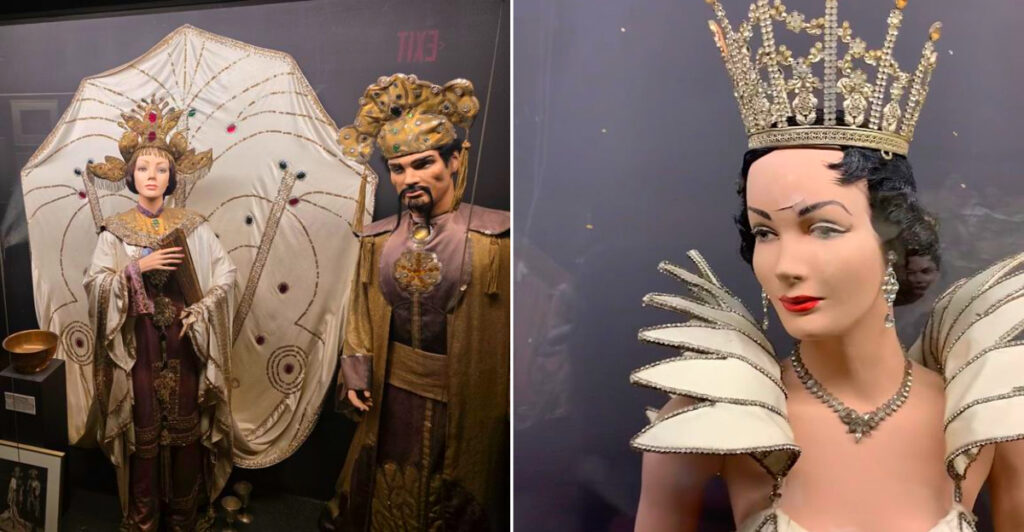
Tucked above one of the French Quarter’s most storied dining rooms lies a collection that most visitors walk right past without ever knowing it exists.
Lavish queen gowns, sparkling scepters, and vintage Carnival masks fill glass cases on the second floor, each one carrying the story of a woman who reigned over more Mardi Gras balls than anyone in the history of the celebration.
The exhibits draw you in with their intricate beadwork and bold colors, but it is the personal history behind each costume that leaves a lasting impression.
Germaine Wells herself reigned as queen over twenty-two Carnival balls, and the museum named after her preserves that legacy with a care that makes you feel like you have been invited into a private archive rather than a tourist attraction.
One of the most remarkable hidden attractions in Louisiana sits quietly above a restaurant, waiting to be discovered by anyone curious enough to climb the stairs.
A Glimpse Into A Queen Wardrobe
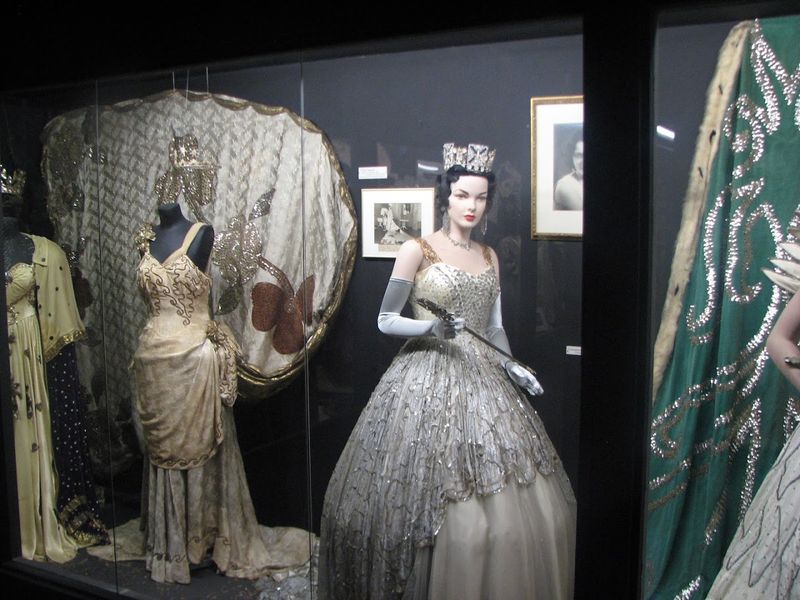
The first thing that catches the eye is the scale of the gowns. These are not costumes in the casual sense; they are formal Carnival court garments built to command a ballroom.
Heavy fabrics, metallic trim, rhinestones, sequins, embroidery, and dramatic silhouettes make each display feel closer to ceremonial armor than ordinary evening wear.
Germaine Wells’ queen costumes are the heart of the museum, and they work like a timeline of Mardi Gras society life from the 1930s through the 1960s. Each gown carries the mood of a specific ball, krewe, and theme, which makes the collection feel personal rather than generic.
You are not simply looking at “Mardi Gras outfits.” You are looking at what one woman wore while stepping into a highly ritualized public role again and again.
The best way to enjoy this section is to slow down and study the details. Look at the beadwork, the trim along the sleeves, the way the colors are chosen, and the sheer weight suggested by the fabric.
The room makes Carnival feel less like a party and more like a carefully staged world of rank, pageantry, and memory.
Bienville Street Hides The Museum Upstairs
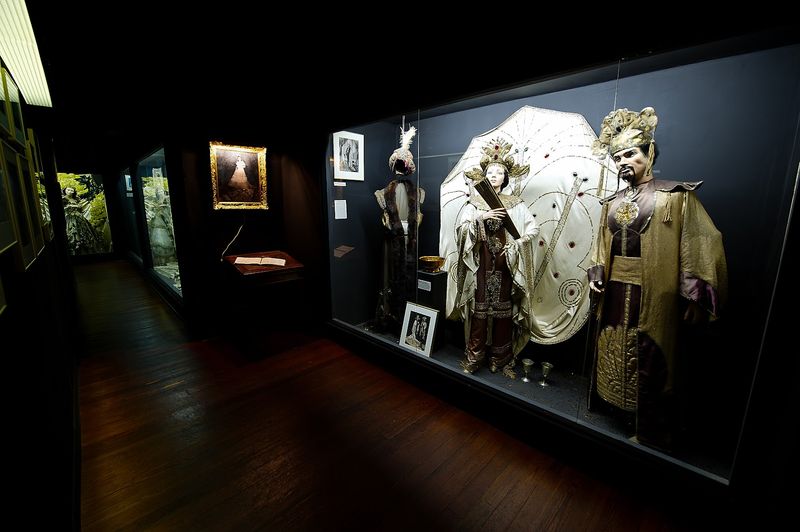
Arnaud’s Germaine Cazenave Wells Mardi Gras Museum is inside Arnaud’s Restaurant at 813 Bienville Street in New Orleans, Louisiana, in the French Quarter between Bourbon and Dauphine streets.
The final approach follows a narrow, busy Quarter block where pedestrians, delivery vehicles, and slow traffic often share the space. Look for Arnaud’s main entrance on Bienville Street rather than a separate museum sign.
Use a nearby public garage or legal street space, then enter through the restaurant and ask to visit the museum upstairs. The collection is on the second floor, and the historic building does not have an elevator.
History In Threads
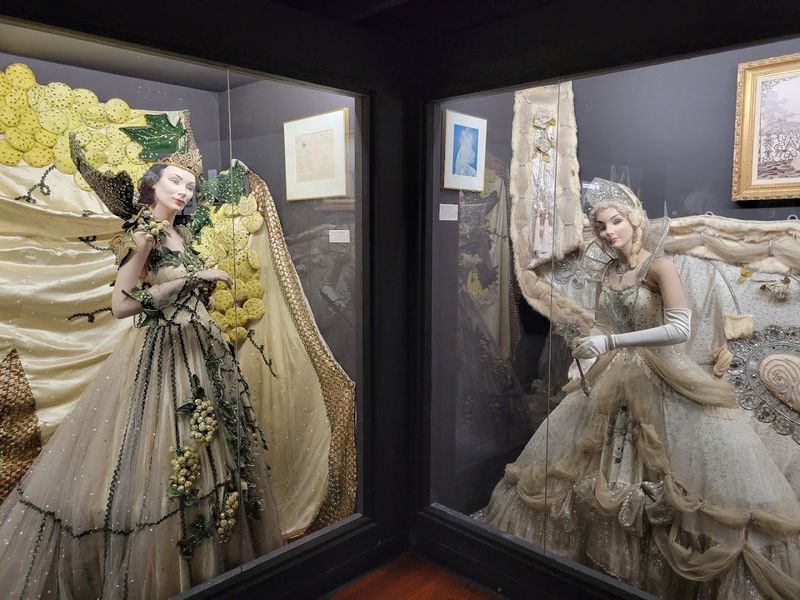
Carnival history can feel abstract until you see it sewn into fabric. In this museum, the past is not presented only through dates or wall text.
It appears in velvet, satin, embroidery, feathers, sequins, metallic thread, and handmade ornament. The gowns become documents, and every stitch suggests the labor and ceremony behind a single night of Mardi Gras court life.
Germaine Wells’ costumes are especially valuable because they connect personal biography to a larger New Orleans tradition. She was not a distant collector gathering random artifacts.
She wore many of these pieces herself, and her family’s connection to Arnaud’s makes the museum feel rooted in one household’s relationship with Carnival. The result is unusually focused.
Instead of trying to explain all of Mardi Gras, the collection tells a smaller story very well. That narrower focus gives the display power. You can trace changes in style, taste, materials, and presentation across decades.
Some pieces feel regal and old-world, while others carry brighter mid-century personality.
Sensory Oddity Details
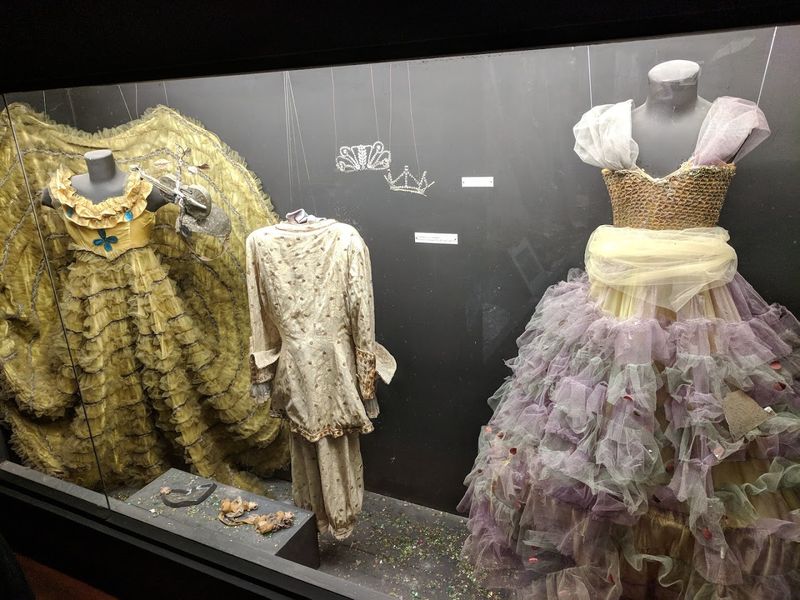
The museum is full of small sensory surprises that make it more memorable than its size suggests. The glitter is obvious, but the stranger details are better.
A crown catches the light at an unexpected angle. A mask looks playful from across the room, then slightly eerie up close.
A jeweled accessory suddenly feels too delicate to have survived decades of storage and display.
Mardi Gras is often imagined through sound and motion, but this room lets visitors experience it through stillness, texture, and shine. Sequins create a kind of frozen movement.
Old photographs add black-and-white context to garments that still explode with color. Costume jewelry feels theatrical, but also intimate, because it once completed a real person’s public appearance.
That mix of glamour and oddity is what keeps the museum from feeling like a simple fashion display. Some items are beautiful in a straightforward way, while others feel wonderfully strange because Carnival pageantry has never been shy about exaggeration.
Architectural Journey Upstairs
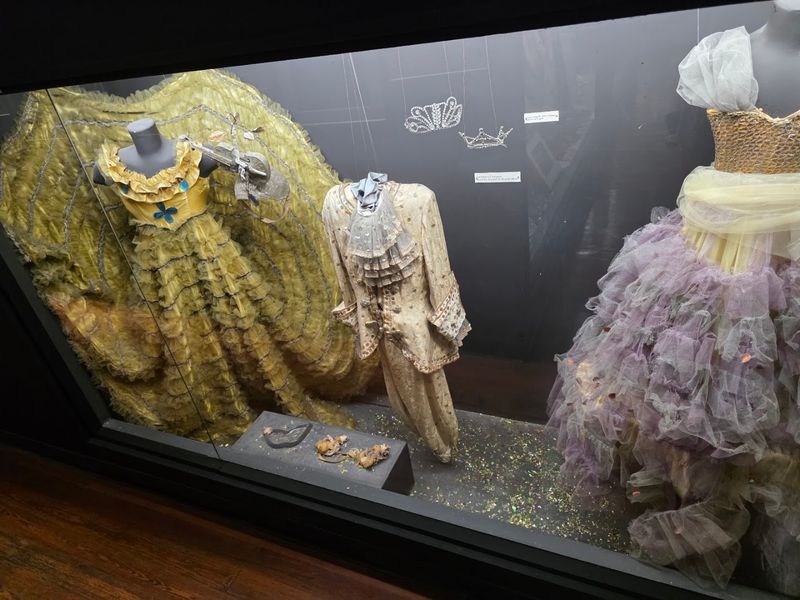
Part of the pleasure is the climb. The museum is not sitting in a neutral gallery space; it is hidden within Arnaud’s, one of the French Quarter’s classic Creole restaurants.
That means the route upstairs already feels like a transition from public dining room to private memory chamber. You move away from the meal, the bar, and the restaurant’s polished hospitality into something quieter and more archival.
That journey changes how the museum lands. If the same gowns were displayed in a modern museum building, they would still be impressive, but they would lose some of the secret-room feeling.
Here, the staircase, restaurant corridors, old building details, and sense of vertical discovery all help frame the collection. The museum feels like something preserved inside the restaurant rather than simply attached to it.
The building’s history also matters because Arnaud’s itself is part of the story. Germaine Wells was tied to both the restaurant and Mardi Gras society, so seeing the collection upstairs makes the restaurant feel less like a dining brand and more like a family institution with layered rooms of memory.
A Quiet Observation Of Tradition
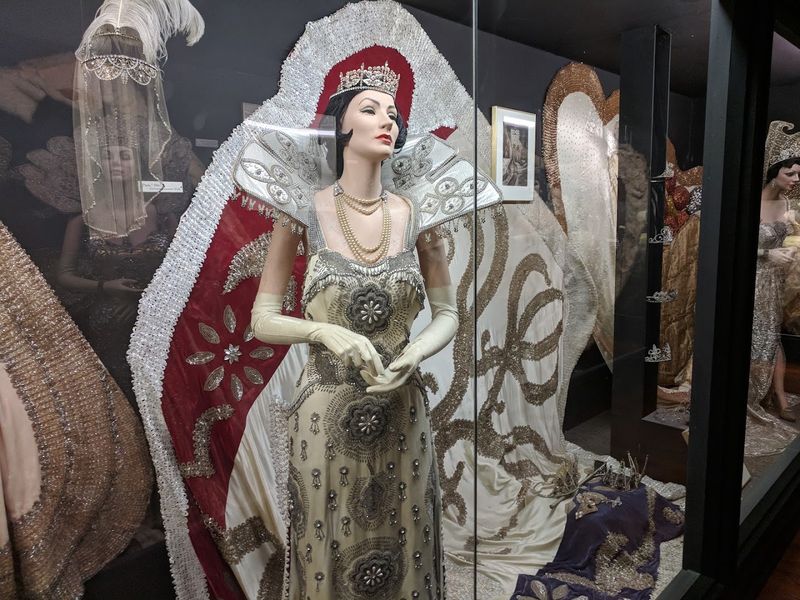
This is not the Mardi Gras of parade throws, street crowds, plastic cups, and balcony noise. The museum introduces a different side of Carnival, one built around formal balls, krewes, queens, kings, themes, court presentations, invitations, and carefully preserved social ritual.
That quieter version can be easy for visitors to miss if they only experience Carnival from the street.
The displays show how much ceremony sits behind the public celebration. A queen’s gown was not simply a pretty dress.
It was part of a system of presentation, family status, artistic theme, and social expectation. The costumes had to communicate role and spectacle immediately, which explains the scale, shine, and theatrical detail.
What makes the museum useful is that it does not need to lecture heavily for the tradition to become visible. Seeing costume after costume, each tied to a ball or family member, gradually builds an understanding of how structured Carnival society could be.
How To Find The Hidden Gem
The museum is easy to miss because it does not announce itself like a major street attraction. Start with Arnaud’s Restaurant at 813 Bienville Street in the French Quarter, just off Bourbon Street and within easy walking distance of many central Quarter hotels.
From the outside, the building reads first as a restaurant, not as a museum stop, which is why so many people pass by without realizing what is upstairs.
Once inside, ask the restaurant staff about visiting the Germaine Wells Mardi Gras Museum. Because the museum is located within the restaurant building, access can depend on restaurant hours, events, and staff guidance.
It is smart to check current hours before building your day around it, especially if you are not planning to dine there.
The location makes it easy to pair with a French Quarter afternoon. You can visit before or after a meal, combine it with a cocktail at the French 75 Bar, or use it as a quiet cultural pause between louder Quarter stops.
Seasonal Quirk And Tradition
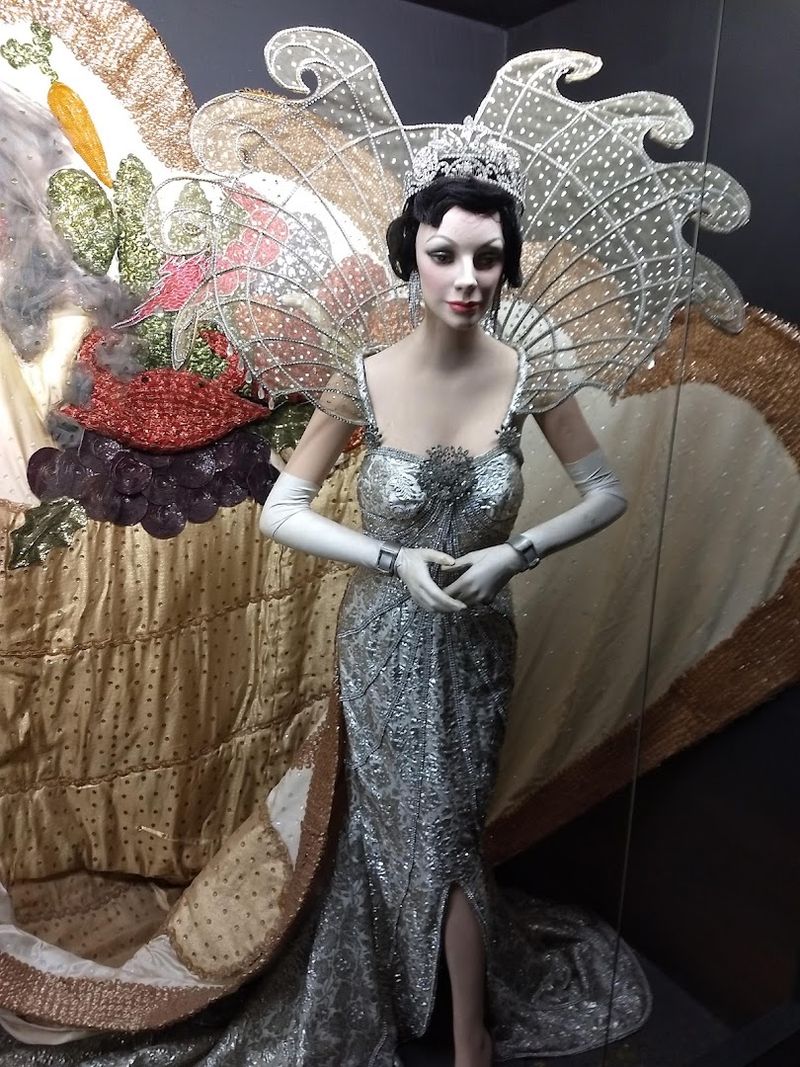
Seeing Mardi Gras gowns outside Carnival season feels oddly satisfying. New Orleans often treats Mardi Gras as a season, but the museum makes it available year-round in a quieter form.
That creates a strange little time shift. You can step in during summer heat, holiday travel, or an ordinary weekday and suddenly find yourself surrounded by ball gowns, masks, and Carnival court imagery.
That off-season quality is part of the museum’s charm. During Mardi Gras, the city is full of motion and noise, so these objects might feel connected to the living celebration outside.
During the rest of the year, they become more dreamlike. The gowns sit still while the city moves around them, holding a version of Carnival that is ceremonial rather than chaotic.
The museum also helps visitors understand that Mardi Gras is not just one day or one parade route. It is a system of traditions that repeat, change, and return across generations.
Costumes are created for specific moments, then preserved after those moments vanish. Seeing them in July, October, or December makes that cycle clearer.
Carnival becomes not only a party to attend, but a tradition people spend lifetimes preparing, performing, remembering, and protecting.
Detail Spotlight On Crowns
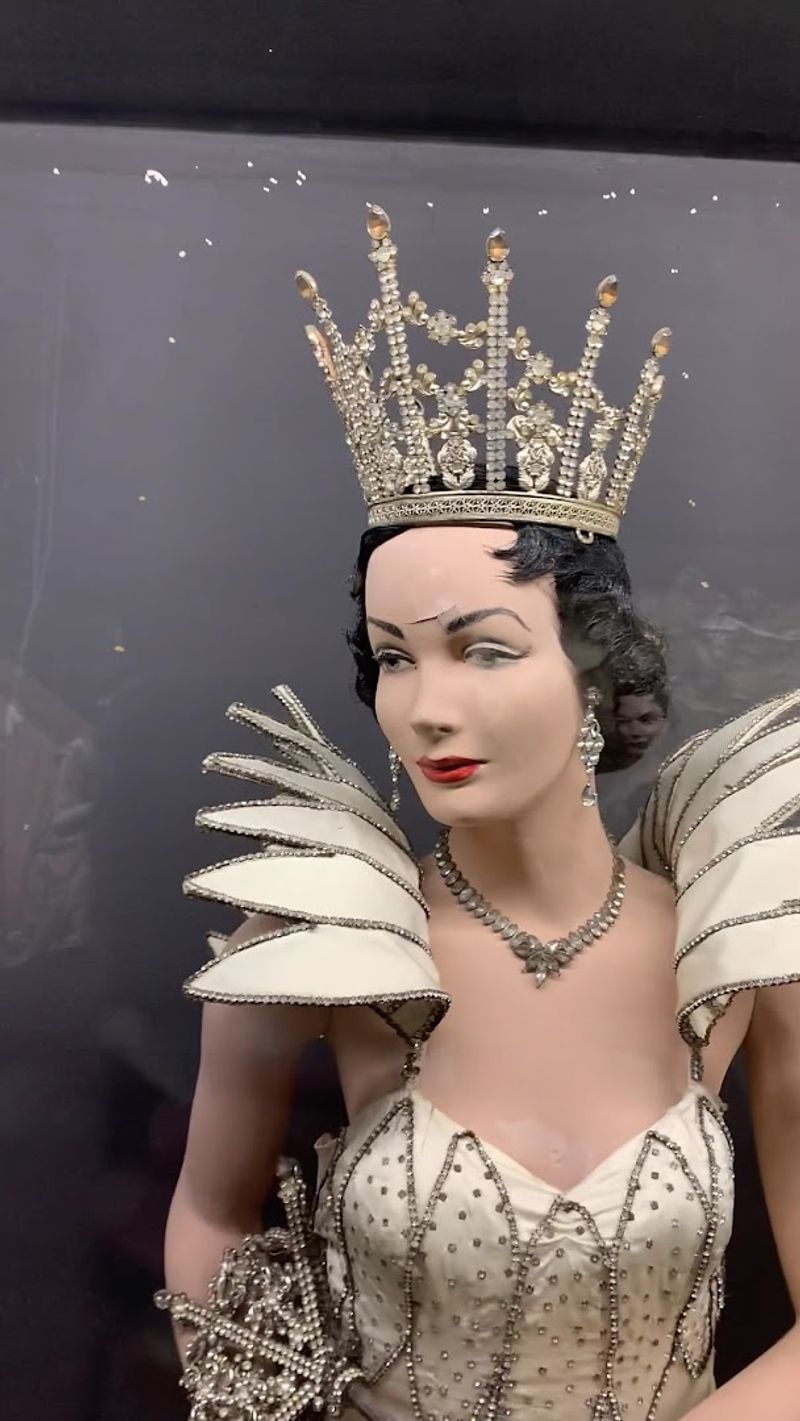
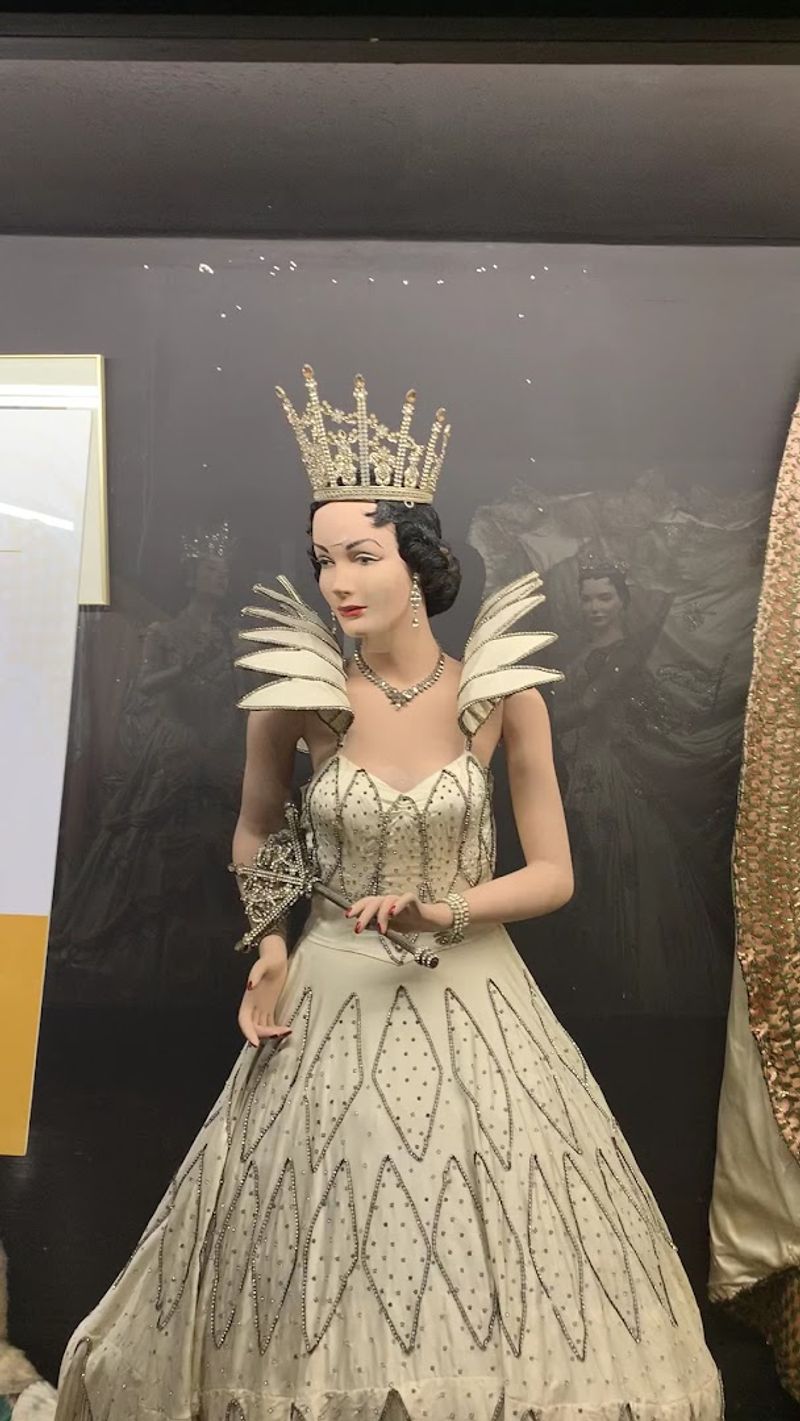
The crowns deserve their own attention because they compress the whole idea of Carnival royalty into a single object. A gown may dominate the room, but the crown gives the role its immediate signal.
It tells you where to look, who is being presented, and how seriously the pageantry wants to be taken. In the museum, those crowns and headpieces turn the displays from fashion into ceremony.
Up close, the details can be surprisingly delicate. Metalwork, stones, faux jewels, careful shaping, and theatrical scale all work together to create something meant to shine under ballroom lights.
Some pieces feel elegant, while others lean more dramatic, but all of them belong to a world where symbolism matters. A crown in this context is not just decoration.
It is a prop of social ritual.
The crowns also help visitors imagine the missing movement. You can picture a queen entering a ballroom, the headpiece catching light as the gown moves behind her. In the museum, that moment has been stilled, but the object still carries the posture of performance.
Preservation And Display Technique
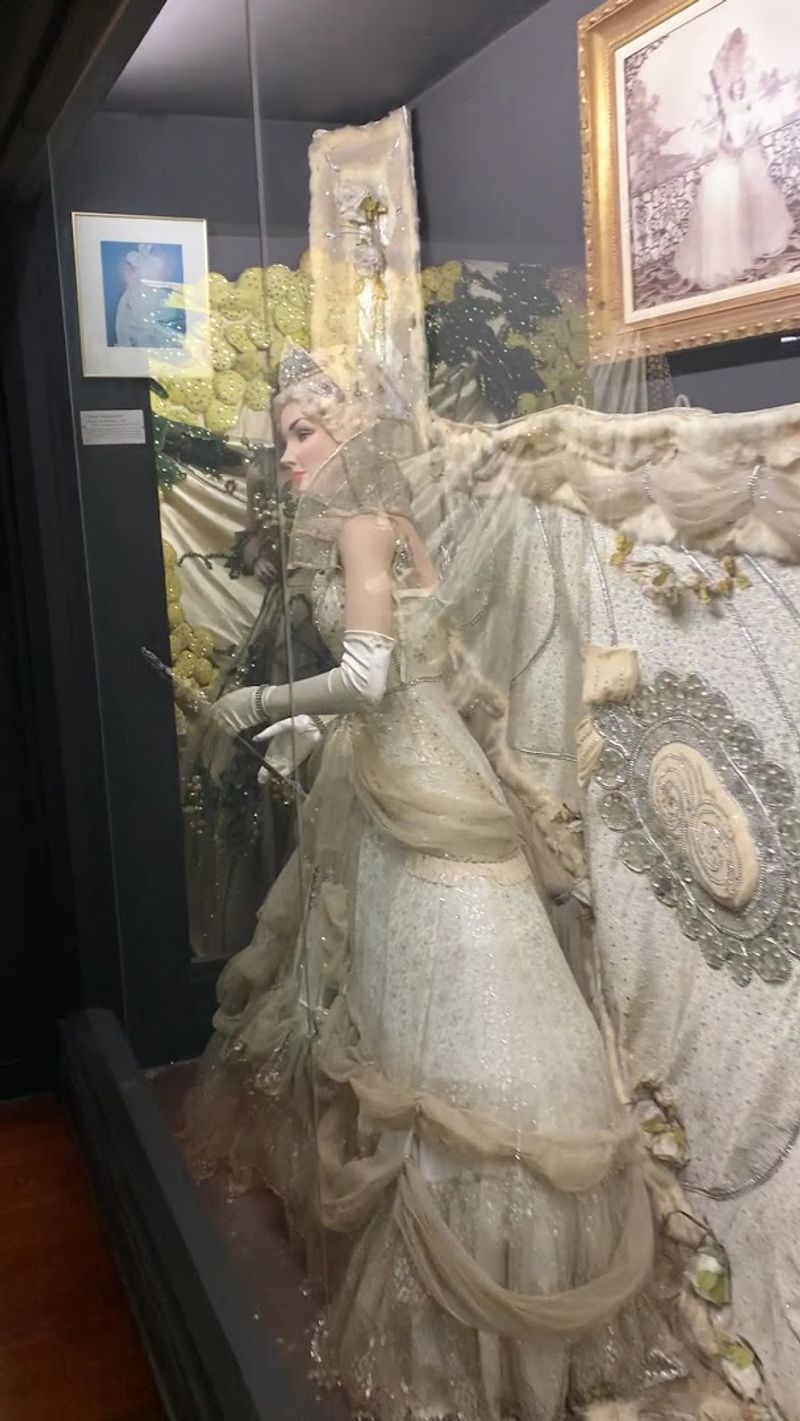
The museum’s power depends on preservation as much as spectacle. Carnival costumes are not easy objects to care for.
Heavy fabrics, fragile trims, sequins, feathers, faux jewels, metallic threads, and old construction methods all require careful handling if they are going to survive beyond the night they were made for. The fact that these pieces remain visible is part of the achievement.
The displays let visitors see the garments clearly without turning them into touchable props. Glass cases, mannequins, controlled presentation, and careful spacing protect the items while still allowing close visual inspection.
That balance matters because the temptation with Mardi Gras material is always to treat it as playful and durable. In reality, many of these pieces are delicate historical objects.
The preservation also changes the emotional effect. A costume made for one night of grandeur becomes, decades later, a record of craft and social history. The museum asks visitors to look at glitter seriously.
Visitor Habits And Tips
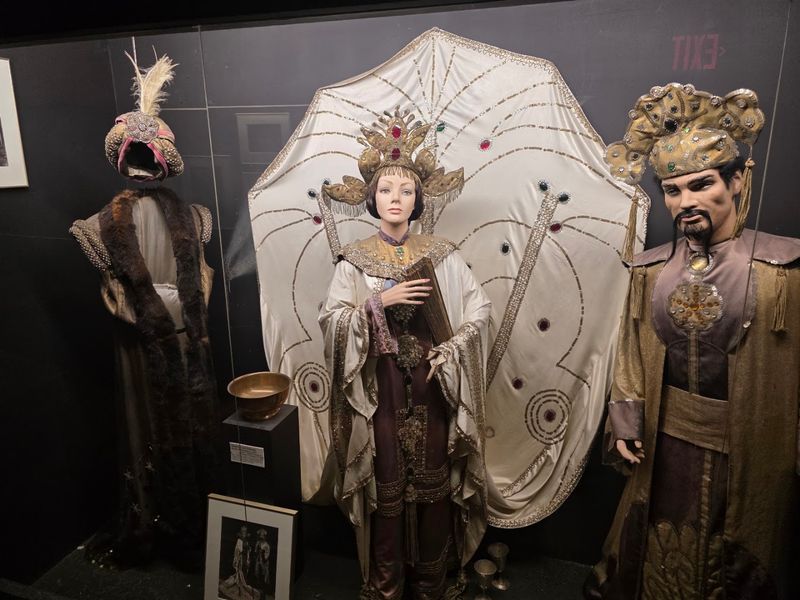
This is a small museum, so the best visit is slow rather than long. Do not treat it like a major attraction that requires half a day.
Treat it as a hidden French Quarter bonus that rewards twenty focused minutes, especially if you are already dining at Arnaud’s or nearby. The room is compact, but the details are dense enough that rushing through would waste the best part.
Ask staff before heading upstairs, check current access, and avoid assuming it will be open exactly when you arrive. Restaurant events, private dining, or changing schedules can affect the experience.
If you plan to eat at Arnaud’s, the museum makes a natural before-or-after addition. If you are stopping in only for the museum, confirming ahead is the safer move.
Once inside, take your time with labels and photographs. The gowns are the obvious draw, but the accessories, masks, invitations, jewelry, and family context make the collection richer.