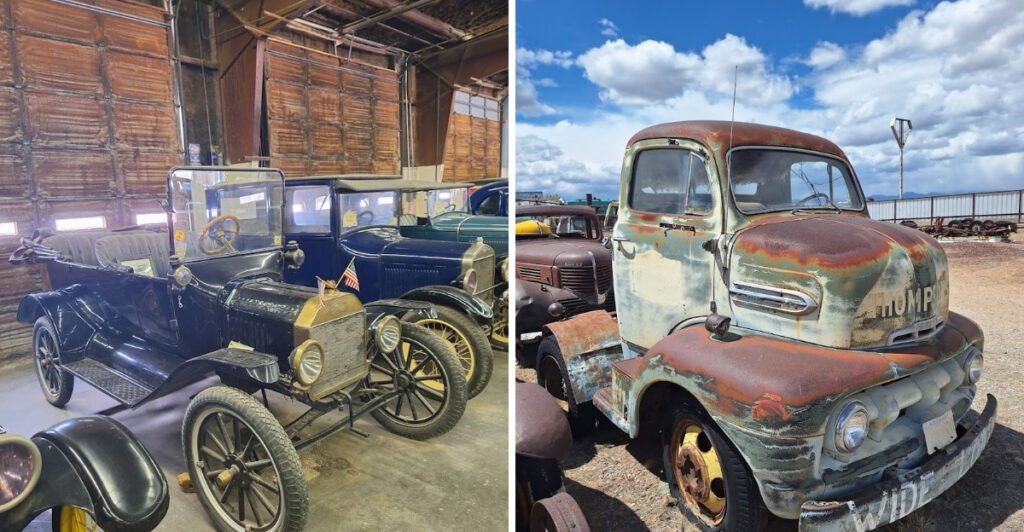
Some museums ask you to admire history through glass. This Route 66 stop lets history crowd the building, spill into the yard, and sit beneath the New Mexico sun.
Hundreds of cars and trucks cover an eight-acre property, while vintage toy vehicles fill shelves inside. The result feels less like a formal exhibit and more like stepping into one person’s lifelong obsession.
That gives the place its pull. You keep noticing another grille or faded sign that sends you closer.
Even a casual visitor can lose track of time here. There is too much to scan in one glance, and the rough edges make the collection feel alive rather than overly arranged.
Come for the old cars, but expect the toys and roadside atmosphere to compete for your attention. This is the kind of stop that turns curiosity into a long, unplanned visit before you realize the afternoon is gone.
A Route 66 Time Capsule
Few places on earth make you feel like you have physically stepped backward through time the way this one does.
The moment you pull into the lot, the atmosphere shifts, and suddenly the modern world feels very far away.
Route 66 has always been more than a road, it is a living record of how Americans once traveled, dreamed, and built their lives around the open highway.
This museum sits directly on that historic route, and it does not just reference that legacy, it embodies it in every rusted bumper and faded hood ornament on the property.
The collection actively celebrates the Mother Road rather than simply preserving it behind glass, which gives every visit a raw, immediate energy that polished exhibits rarely capture.
Visitors often describe the experience as emotional, and I completely understand why, because the weight of so many decades packed into one property is genuinely hard to process.
You can almost hear the hum of mid-century traffic and smell the old motor oil baking in the desert sun.
All of this history lives at Lewis Antique Auto and Toy Museum, located at 905 U.S. Route 66, Moriarty, NM 87035.
Vintage Cars Packed Wall To Wall
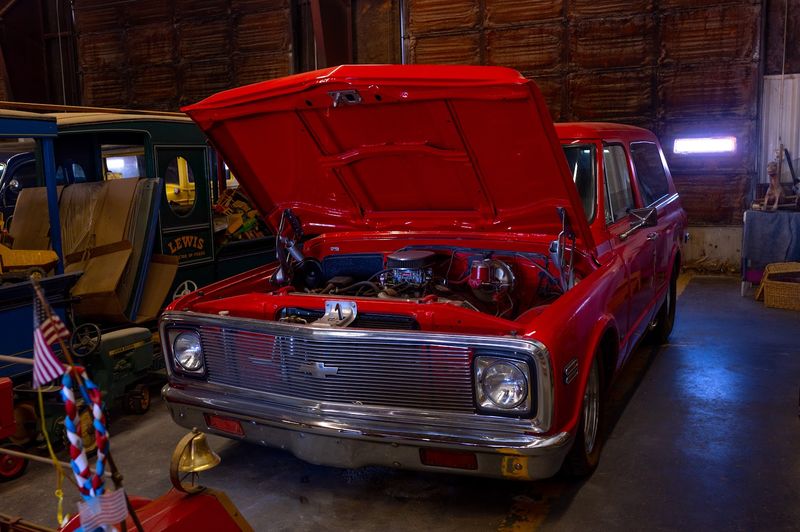
Walking through the main building here feels less like touring a museum and more like being swallowed whole by automotive history.
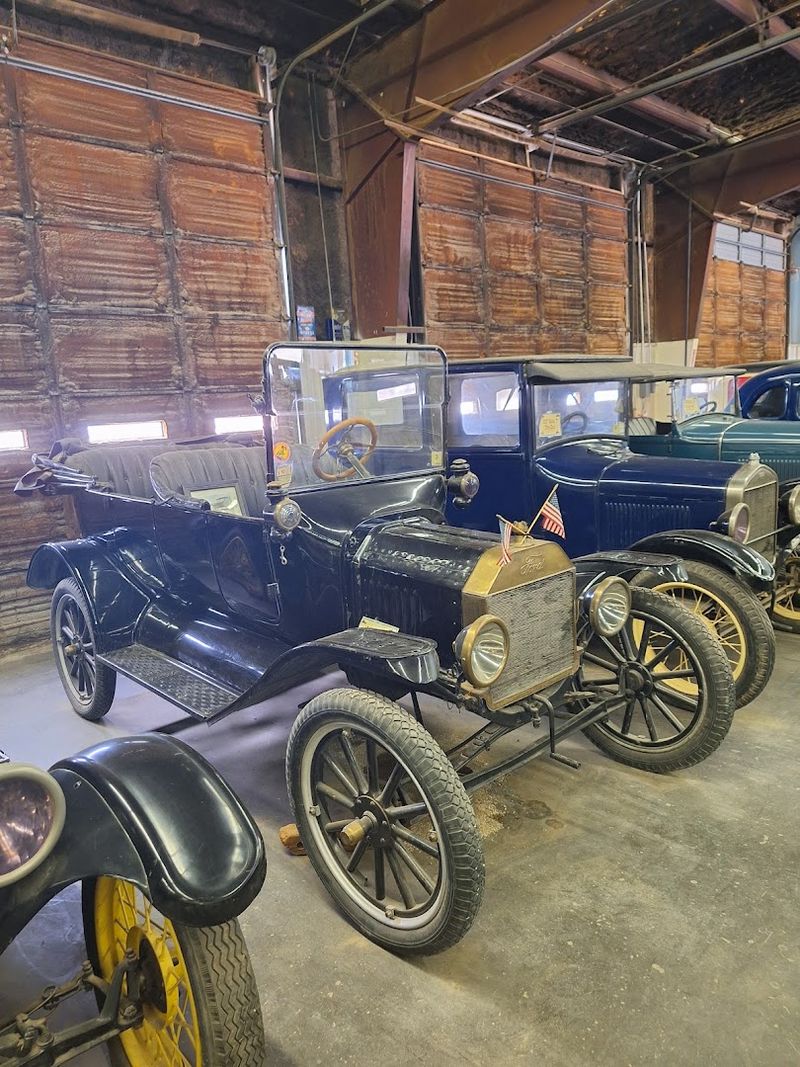
The warehouse interior is absolutely crammed with antique cars, trucks, and memorabilia, and your eyes genuinely struggle to take it all in at once.
A brass radiator Model T commands attention near the entrance, and nearby you will find various Model A Fords standing in quiet formation like old soldiers at attention.
A 1932 Nash sits tucked between mid-1930s Fords, and the density of vehicles means you are always discovering something new just a few feet from where you were standing.
The sheer volume of machines packed into this space creates a sensory experience that photographs simply cannot replicate.
I kept thinking I had seen everything, then turning a corner to find another row of beautiful old machines waiting patiently for someone to notice them.
Every square foot of floor space seems to hold a piece of American manufacturing history, and the cumulative effect is quietly overwhelming.
Serious car enthusiasts could easily spend an entire afternoon in this one building without running out of things to study and admire.
Weathered Classics In The Open Air
Step outside the main building and the scale of this place suddenly doubles, then triples, then keeps going.
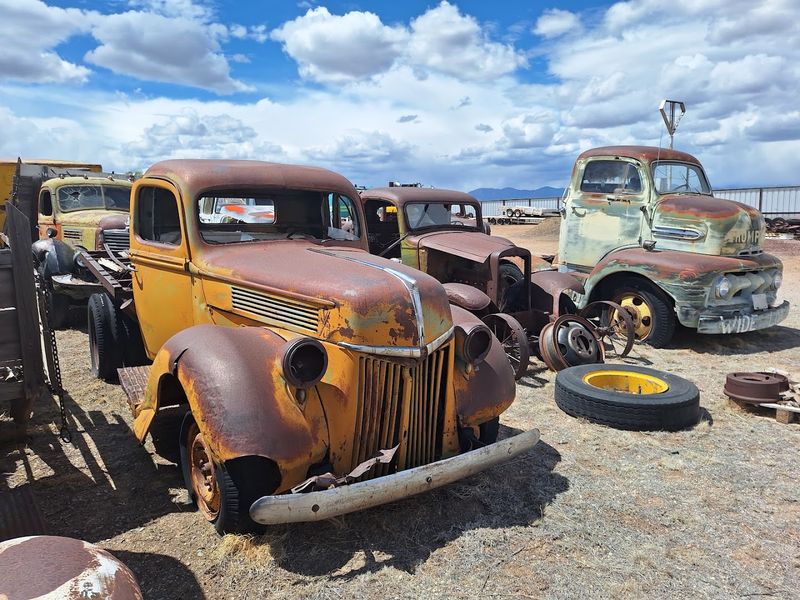
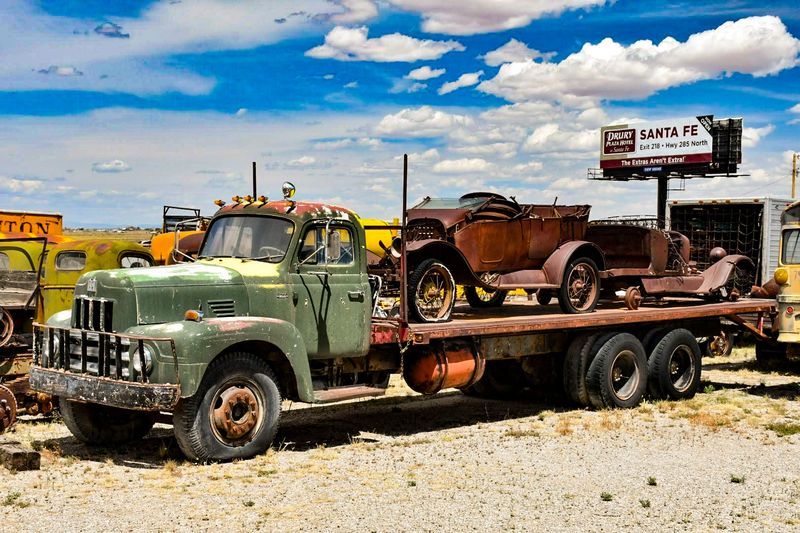
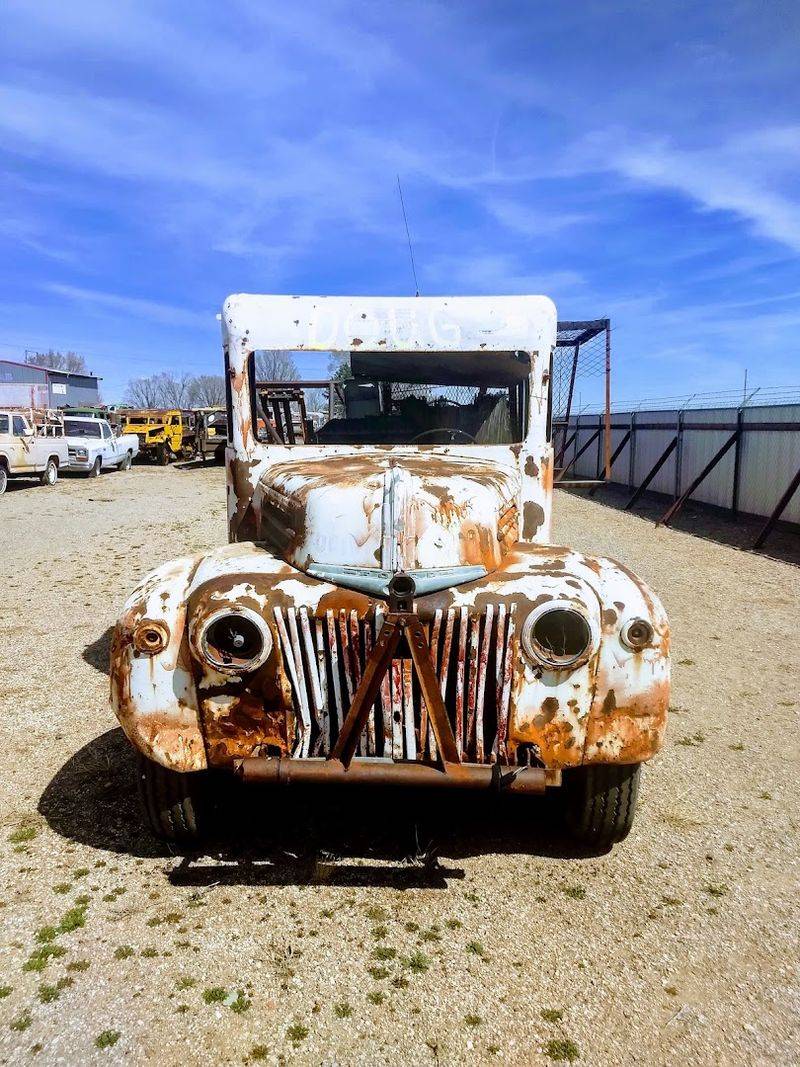
More than 700 cars and trucks sit in the open yard under the New Mexico sun, arranged across a sprawling eight-acre property that rewards slow, unhurried exploration.
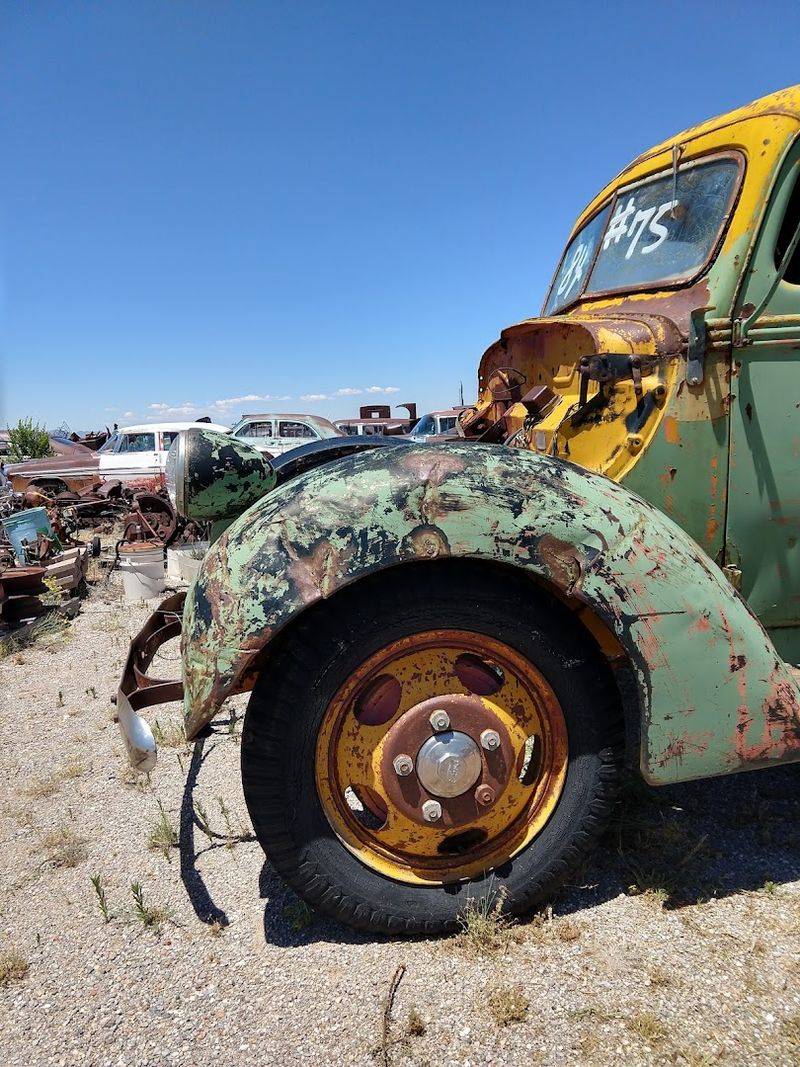
Large trucks dominate sections of the outdoor lot, and a Mack wrecker from the 1940s stands out as one of the most impressive hulks in the entire collection.
Ford trucks and pickups produced between 1920 and 1960 appear in remarkable numbers, making this outdoor section a focused study in how American work vehicles evolved over four decades.
The dry climate here plays a critical role in how well these vehicles have survived, with many showing only surface rust rather than the deep structural decay you would expect after decades outdoors.
I spent a long time just walking the rows, pausing at vehicles that caught my eye, running my hand along fenders that had not felt a coat of paint in sixty years.
Bring sunscreen, comfortable shoes, and more time than you think you will need, because the outdoor lot alone can absorb an entire afternoon without effort.
Automotive History Frozen In Time
Beyond the cars and trucks, this museum quietly preserves something broader and harder to define, which is the entire agricultural and industrial culture that surrounded these machines when they were new.
Restored antique farm tractors share floor space with ongoing restoration projects, giving the collection an active, working-museum quality that static displays rarely achieve.
Accessories, period advertisements, and various pieces of automotive ephemera line the walls and shelves, providing rich context for understanding why these vehicles mattered to the communities that used them.
The founder dedicated sixty years to building this collection, and that kind of sustained, lifelong commitment shows in every corner of the property.
You do not just see cars here, you see the tools, the culture, and the daily life that surrounded those cars during the decades when they were simply transportation rather than artifacts.
I found myself reading old advertisement signs and studying accessory displays for far longer than I expected, because each item added another layer to the story being told.
This place functions as a serious cultural archive, not just a parking lot for pretty machines, and that distinction makes every visit feel genuinely meaningful and worthwhile.
Rare Rides Around Every Corner
Car collectors talk about “unicorn” vehicles, those rare models that almost never appear outside major auction houses, and this museum offers plenty of unusual machines worth a closer look.
Inside, a brass-radiator Model T shares space with Model A Fords, a 1932 Nash, and several mid-1930s Fords.
The outdoor collection broadens the picture with an Olds Rocket 88 near an early Buick Roadmaster, along with a Federal fire truck weathering beneath the sun.
Visitors can also find a Mack wrecker dating to the 1940s and an extensive group of Ford trucks and pickups produced between 1920 and 1960.
The museum is especially notable for its many unrestored Crosleys, which stood out even to an automotive writer familiar with large collections.
Crosleys were compact American cars produced primarily during the 1940s and early 1950s, and seeing numerous examples together gives visitors a clearer sense of the brand’s place in automotive history.
Every aisle and outdoor row holds another detail for patient visitors, making the collection rewarding without relying on unsupported claims about specific rare models or world-record status.
The variety feels remarkable for a single property beside Route 66 in a small town.
Old-School Memorabilia Everywhere
Not everything here has four wheels and an engine, and that is a big part of what makes this place so unexpectedly rich as an experience.
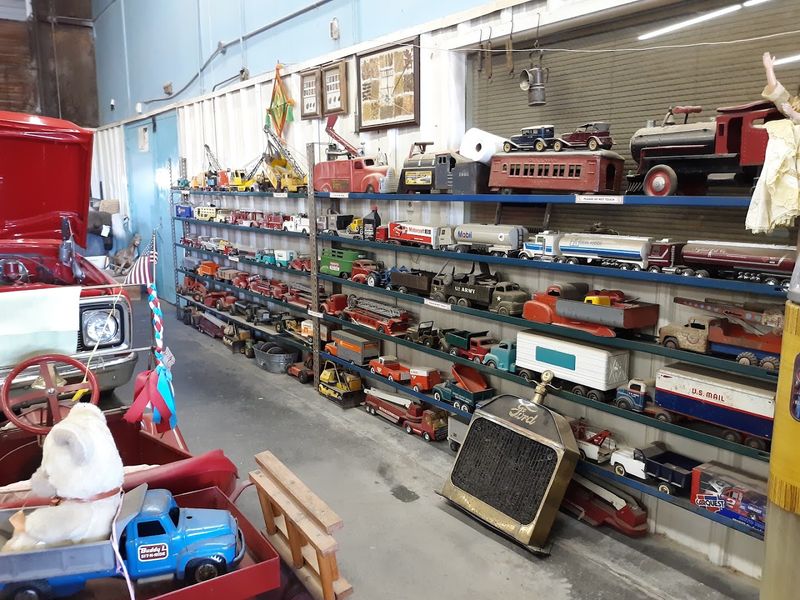
Dusty shelves inside the main building are lined with Lionel Trains, Buddy L Trucks, and push toys in quantities that make you wonder how long it took to gather them all.
Route 66 memorabilia fills gaps between the vehicles, creating a layered atmosphere where automotive history and American pop culture blend together in a way that feels completely natural.
One of the most quietly striking features is the License Plate Memorial Wall, covered entirely in New Mexico license plates that trace the historic alignments of Route 66 across the state.
Standing in front of that wall, I counted plates from multiple decades, each one a small rectangular record of a specific moment in the highway’s long history.
The memorabilia here does not feel like decoration, it feels like evidence, proof that this road and these machines were woven deeply into everyday American life for generations.
For visitors who are not primarily car enthusiasts, these shelves and walls often turn out to be the most personally resonant part of the entire visit.
A Rusty Wonderland Of Forgotten Cars
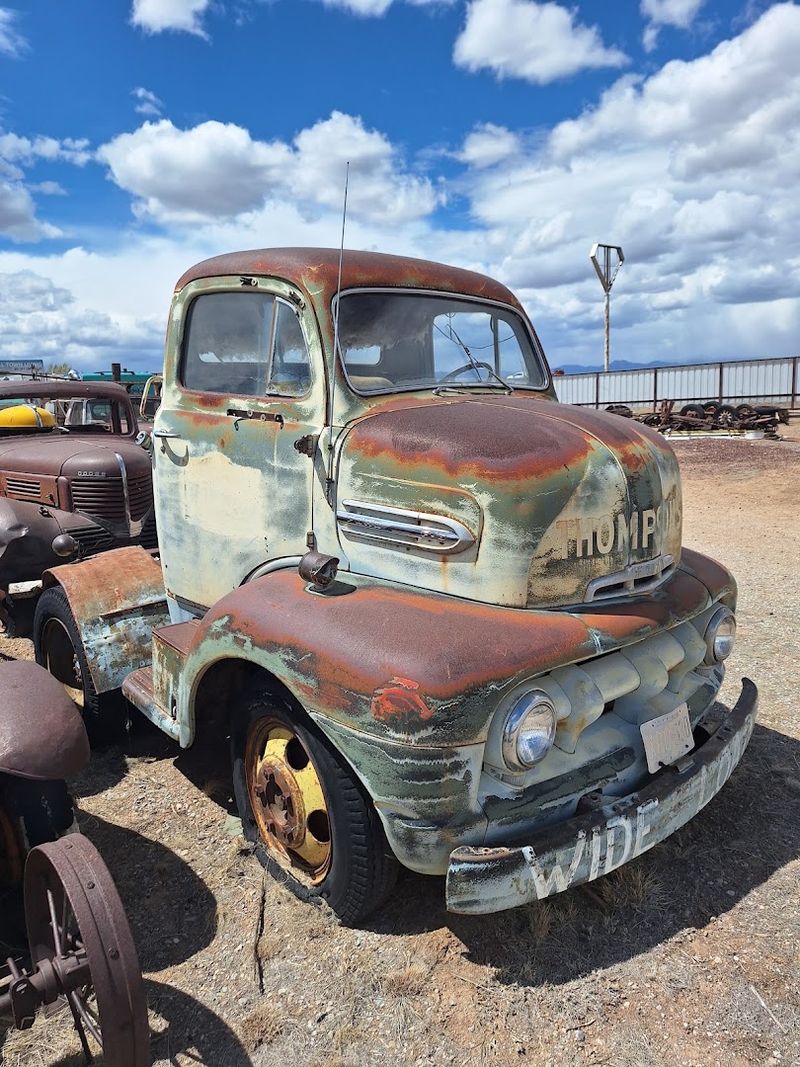
Rust, in most contexts, signals neglect, but here it tells a completely different story, one of survival, dry air, and accidental preservation.
Roughly 700 cars and trucks fill the outdoor grounds, and the New Mexico climate deserves significant credit for keeping so many of them in a state that is still visually compelling and historically legible.
Many vehicles show only surface rust, which means their body lines, details, and original character remain largely intact beneath the oxidized surface layer.
A Federal fire truck sits prominently in the lot, its bulk impossible to ignore, slowly bronzing under the same sun that baked it decades ago when it was still answering calls.
Walking through these rows feels different from any conventional museum experience, because there are no ropes, no barriers, and no glass panels keeping you at a respectful distance.
I could get close enough to peer through windows, study dashboard gauges, and notice small details that would be invisible from any kind of regulated viewing distance.
The freedom to explore at your own pace, surrounded by hundreds of forgotten machines, gives the outdoor lot an almost meditative quality that is genuinely hard to find anywhere else.
Tiny Toys With Serious Nostalgia
Somewhere between the full-sized Fords and the outdoor truck lot, the museum quietly delivers one of its most charming surprises in the form of a toy collection that is almost absurdly large.
More than 6,000 toy cars, trucks, and trains fill the shelves, and that number is not a typo or an exaggeration.
Lionel Trains, Buddy L Trucks, Tonka vehicles, and countless other classic brands appear in quantities that suggest decades of dedicated, patient collecting rather than casual accumulation.
For visitors who grew up in the mid-20th century, this section of the museum tends to produce a very specific kind of quiet, where people slow down and stare at shelves with an expression that is half recognition and half disbelief.
I watched one visitor stand completely still in front of a shelf of old tin trucks for a solid two minutes, just absorbing what he was seeing.
The toy collection works as a perfect complement to the full-sized vehicles, because the same models that inspired those childhood toys are often parked just a few feet away in the main building.
Tiny and towering, old and older, this museum earns its place as one of the most distinctive stops in all of New Mexico.