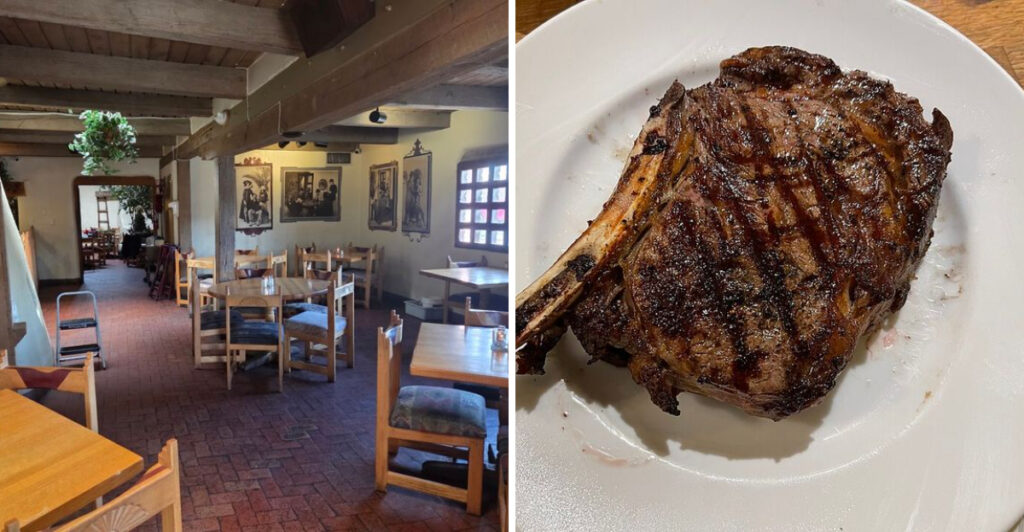
Albuquerque knows how to make dinner feel like a destination. This Old Town restaurant starts with a hand-cut ribeye, cooks it to order, and serves it beside mashed potatoes and seasonal vegetables under red chile jus.
Then the building takes over. Adobe walls and historic rooms surround the table, giving the meal a sense of place that cannot be copied with decorative signs.
This New Mexico steakhouse opened in 1974, but its setting reaches back to the eighteenth century. That history gives you plenty to study while waiting for dinner, though attention shifts quickly once the ribeye arrives.
A dark sear covers the outside, while the center stays tender and the chile jus brings the plate firmly into local territory. This is not the kind of steak you forget by the next morning.
Keep reading, because one memorable dinner may be all the reason you need to start the car.
A Historic Adobe Setting Dating To 1785
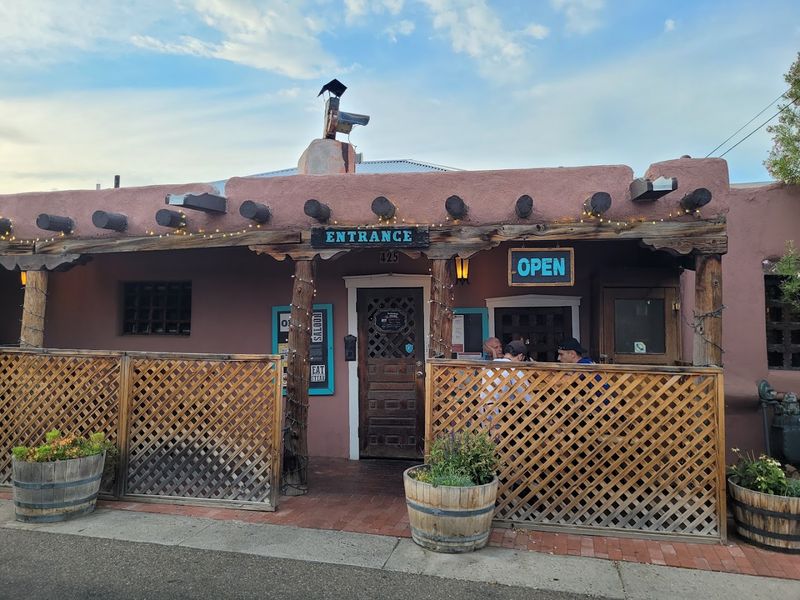
Few restaurants in the country can claim a birthplace that predates the United States itself, but this one comes remarkably close.
The structure that houses this Old Town steakhouse was originally built as a private residence sometime around 1785, making it one of the oldest standing buildings in the area.
Over the centuries, those thick earthen walls reportedly sheltered all manner of activity, from domestic life to more colorful commercial ventures that would raise an eyebrow or two today.
By the time the modern restaurant era arrived, the building had already lived several full lives, passing through the hands of craftsmen and residents alike before becoming a dining destination.
Walking through the front door, I felt the weight of that history in a way that no amount of themed decor can manufacture.
The adobe itself, uneven in places and warm to the touch, communicates something that polished drywall simply cannot.
That sense of deep time firmly anchors the entire memorable dining experience here at High Noon Restaurant, located at 425 San Felipe St NW, Albuquerque, NM 87104.
Old Town Character Beyond The Front Door
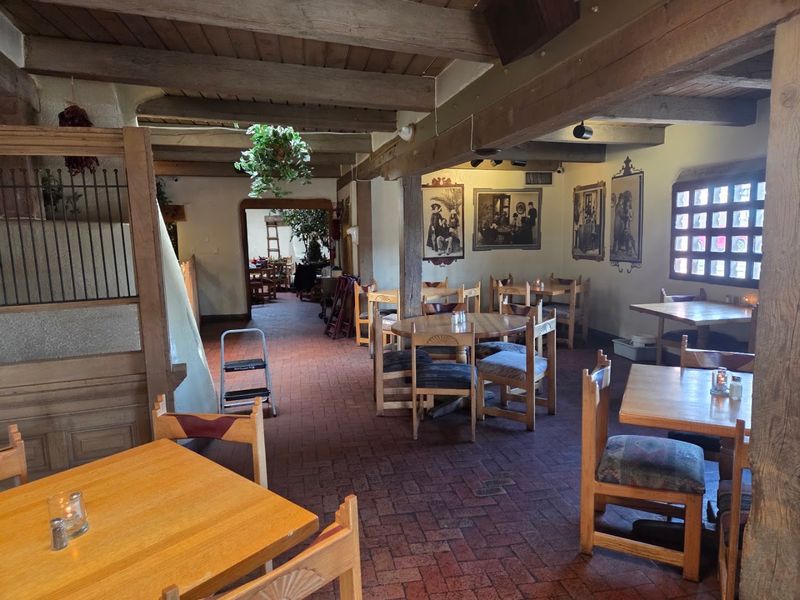
Old Town Albuquerque carries a particular kind of atmosphere that seeps into everything around it, and this restaurant absorbs that energy completely.
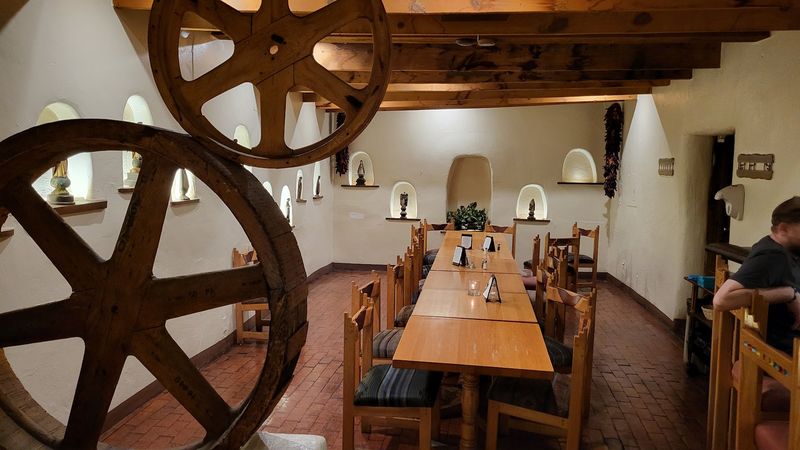
The moment I stepped inside, the brick floors underfoot and the viga-lined ceiling overhead made it clear that this was not a place trying to look historic.
It simply is historic, and the difference between those two things is enormous.
Kiva fireplaces anchor the corners of several rooms, and on cooler evenings they do exactly what a fireplace should do, which is make every nearby seat feel like the best seat in the house.
The southwestern decor here does not feel like a costume; it feels like a lived-in identity that has been accumulating character for decades.
Locals and out-of-towners mingle naturally in the space, drawn together by the shared pull of a room that rewards slowing down and looking around.
Every glance reveals another small detail, a carved wooden panel, a clay pot tucked into a niche, a ceiling beam worn smooth by time.
Albuquerque has plenty of restaurants with nice interiors, but very few where the building itself is part of the story being told.
The Rib Eye That Inspires The Drive
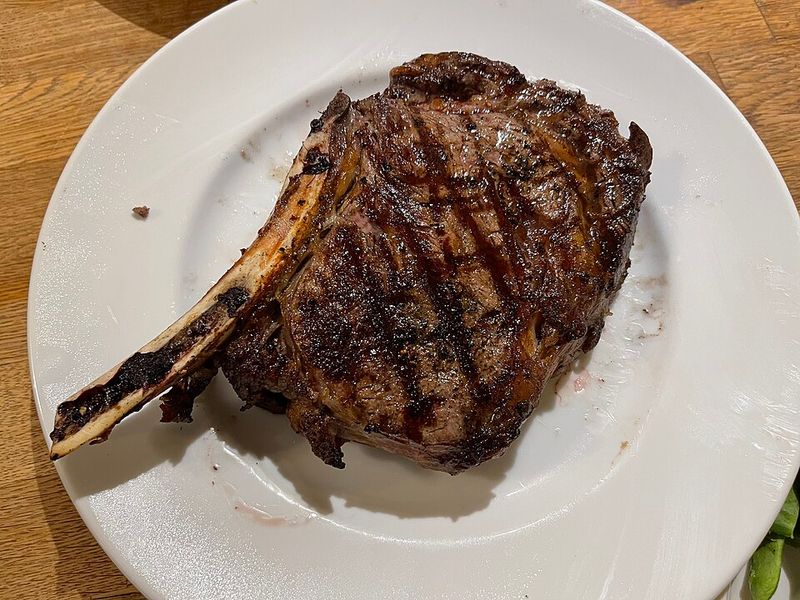
A 14-ounce ribeye that is hand-cut in-house and cooked to order is already a strong opening argument, and the kitchen here does not stop there.
The cut arrives alongside creamy mashed potatoes and sauteed seasonal vegetables, but the detail that really sets it apart is the red chile jus pooling beside it on the plate.
That jus carries the unmistakable warmth of the region, a subtle heat that complements the richness of the beef rather than competing with it.
I ordered mine medium rare on my visit, and when it came back slightly under, the kitchen re-fired it without a single moment of attitude or inconvenience.
What came back was exactly what I had been hoping for the entire drive over, deeply seared on the outside and perfectly pink through the center.
The restaurant’s current menu confirms that every ribeye is freshly hand-cut and cooked to the guest’s requested temperature before reaching the table.
That consistently careful kitchen preparation shows up on the plate in a way that is hard to fake.
This ribeye is the reason people plan their road trips around a restaurant instead of the other way around.
A Santos-Filled Lounge With Local Detail
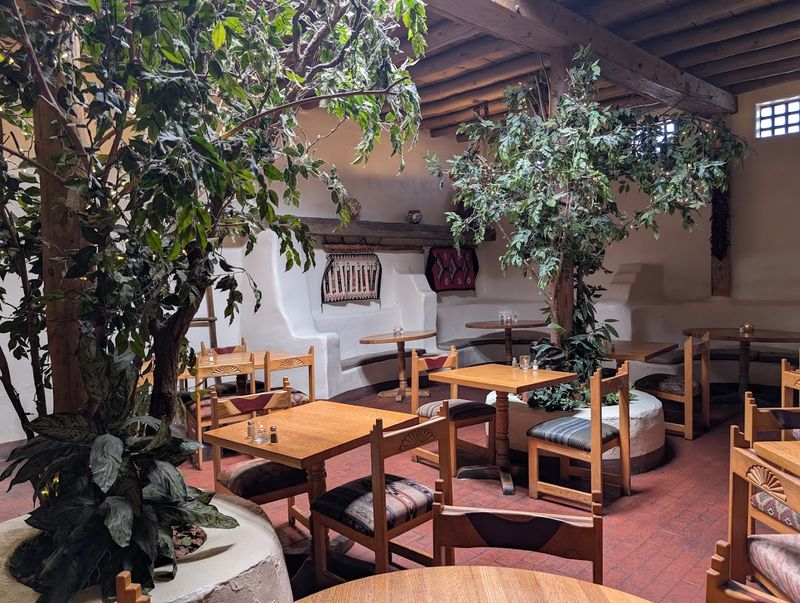
The Santos Room starts making an impression before the menu even opens, with detail packed into nearly every corner.
The space is officially known as the Santos Room, and the name earns its keep the moment you spot the illuminated niches built directly into the adobe walls.
Those lighted nichos hold authentic santos, carved religious figures that give the room its unmistakable identity and connect its decor to regional artistic traditions.
Careful lighting draws attention to each figure while keeping the room calm and visually rich throughout dinner. The pieces carry a quiet authority that makes the space feel more like a cultural archive than a waiting area.
Historic adobe surfaces surround the room, reinforcing the sense that this is part of a building with a life extending far beyond its restaurant years.
That kind of continuity, with old architecture still shaping a modern dining experience, is not something you encounter every day.
The room invites you to settle in, take stock of your surroundings, and appreciate how some places accumulate meaning the same way they accumulate years.
Slowly, deliberately, and with plenty of character built into every layer.
Adobe Walls Shape The Dining Experience
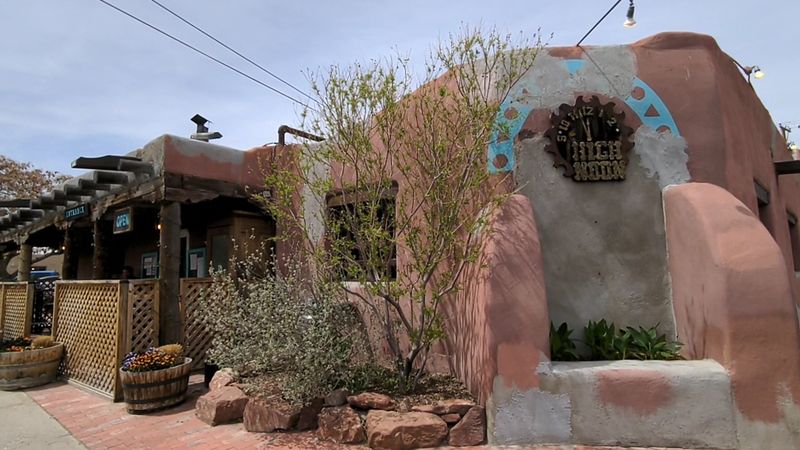
The physical architecture of this building is not just a backdrop; it actively shapes how a meal feels from start to finish.
Moving between the dining rooms, I noticed how the thick adobe walls create natural acoustic pockets that keep the noise level surprisingly manageable even when the place fills up.
One room in particular, referred to as the Kiva Room, showcases Pueblo-style bancos built directly into the walls, which are essentially low bench seats that curve with the contour of the room.
Sitting in one of those bancos felt like the building was offering you a seat rather than a chair being placed in front of you, and that distinction matters more than it sounds.
The high ceiling in that room amplifies the sense of open space without sacrificing warmth, a balance that many modern restaurants chase and rarely achieve.
Adobe construction has a thermal quality that keeps rooms cooler in summer and holds heat well in winter, so the walls are doing practical work alongside the aesthetic work.
Every structural choice here reflects a deep respect for traditional building methods that have served this region for centuries.
Patio Tables Beneath The New Mexico Sky
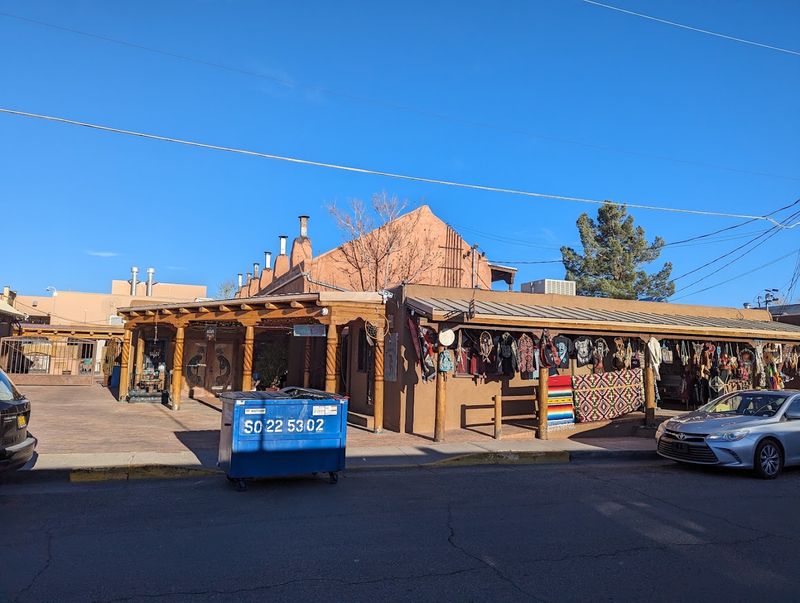
Not every great meal needs four walls around it, and the outdoor patio at this Old Town spot is proof of that argument.
On the afternoon I chose a table outside, the sky was doing that particular thing it does in New Mexico, going an almost unreasonable shade of blue that makes you feel like you are sitting inside a postcard.
The western ambiance carries through to the exterior seamlessly, with the old adobe facade framing the seating area in a way that feels natural rather than staged.
Watching the foot traffic of Old Town move past while working through a plate of food is one of those low-key pleasures that travel writers tend to undervalue.
The front patio places diners close to the movement of the historic district throughout many busy Old Town afternoons, adding an entertaining neighborhood layer to the overall experience.
The patio is a good option for anyone who wants to connect with the neighborhood setting rather than retreat from it.
Albuquerque afternoons can be generous with sunshine, and this spot takes full advantage of that generosity with comfortable outdoor seating that complements the food beautifully.
Blue Corn Enchiladas Bring Regional Flavor
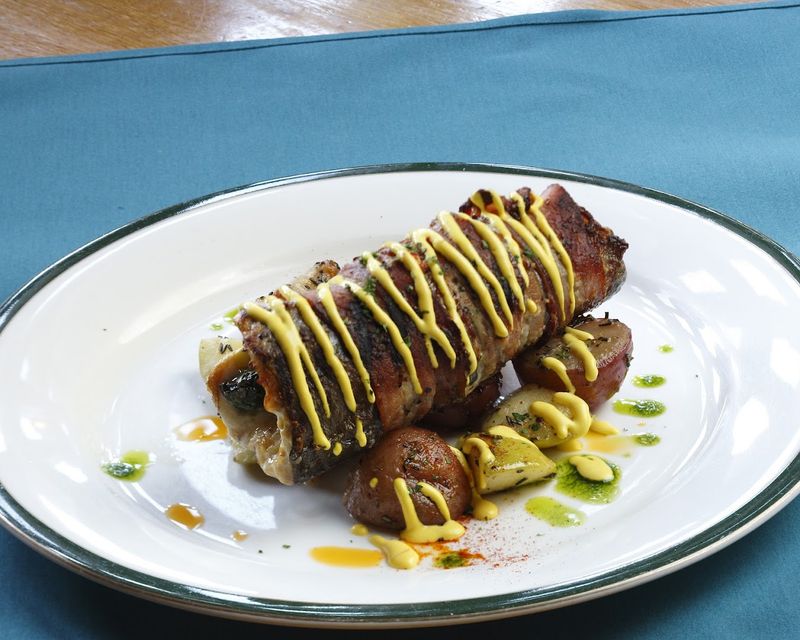
Blue corn tortillas are not a garnish or a gimmick here; they are a foundation, and the stacked enchiladas built on them are one of the most satisfying things on the menu.
The preparation leans into tradition, with fresh blue corn tortillas layered with your choice of filling, whether that means slow-cooked shredded beef, chicken, carnitas, or a fully vegetarian build with veggies and cheese.
What really seals the deal is the chile choice, either Hatch green or Chimayo red, both of which carry the kind of regional specificity that mass-market Mexican food chains cannot approximate.
I watched a neighboring table receive an order smothered in green chile, and the aroma that drifted over was enough to make me regret my ribeye for about three seconds before I came back to my senses.
The plate comes with rice and pinto beans, rounding out a meal that feels both generous and grounded in place.
The menu also offers shrimp enchiladas as a separate dish on the current menu, stacked with blue corn tortillas and served in a red chile cream sauce.
This dish is a vivid expression of what New Mexico cooking does best.
Decades Of Steakhouse History Live Here
Old Town Albuquerque has no shortage of places to eat, but only one can claim the title of the neighborhood’s original steakhouse, and that distinction carries real weight.
High Noon Restaurant has proudly been serving fine steaks in this historic corridor since 1974, building a reputation one hand-cut piece of beef at a time over the course of several decades.
The menu has grown and evolved over the years to include wild game dishes and a range of New Mexican fare, but the steakhouse identity has never wavered or been diluted by trend-chasing.
That consistency is rare and worth acknowledging, because plenty of restaurants lose their focus somewhere between their first decade and their fifth.
The beef bites off the appetizer menu have drawn their own loyal following, with guests returning specifically for that starter before committing to a full entree.
The green chile stew has also carved out a devoted audience, earning specific praise for its heat and depth of flavor.
Knowing that the same commitment to quality cuts has held firm across so many years makes every bite feel like a small act of trust between the kitchen and the guest.