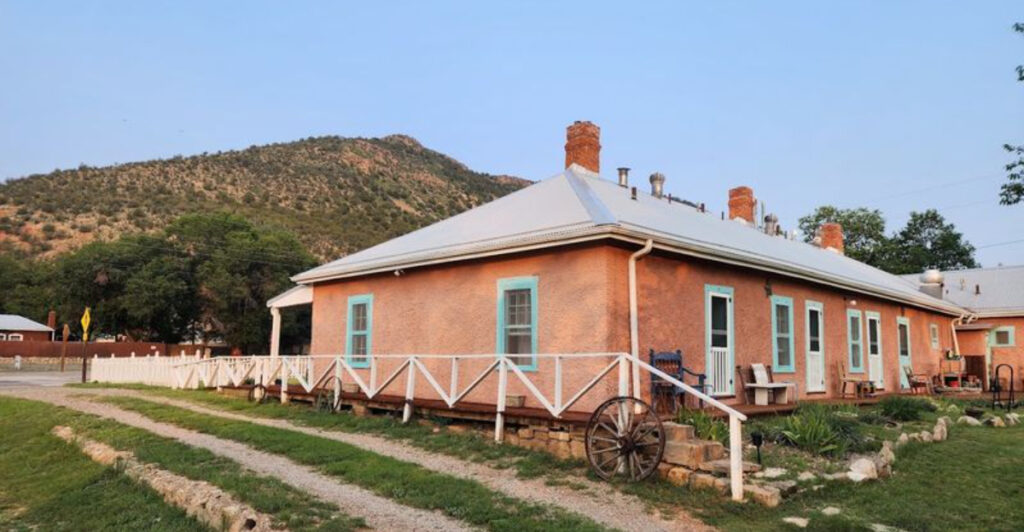
Lincoln is not flashy, and that is exactly what makes it hit harder. The village sits under a wide New Mexico sky with a main road that still feels ready for hoofbeats.
Old adobe walls line the street. Wooden porches lean into the light.
The courthouse carries the kind of tension that makes Billy the Kid feel less like a legend and more like someone who just slipped around the corner. You will not find a polished attraction trying to shout for attention here.
Lincoln works more quietly than that. It lets the buildings and the silence do the convincing.
A short walk can pull you deeper than expected, especially when every doorway seems attached to a story. This old frontier town still has enough Wild West charge to stop people midstep, pull their eyes back to the porches, and make leaving feel like the hardest part of the visit.
Where Adobe Walls Hold Centuries Of Stories
Sun-dried mud bricks have a way of holding heat, history, and secrets all at once.
Many of the town’s structures embody the Territorial Style of adobe construction, a design deeply rooted in the American Southwest, and several of these buildings trace their origins back to the 1850s, making them older than the drama the town became famous for.
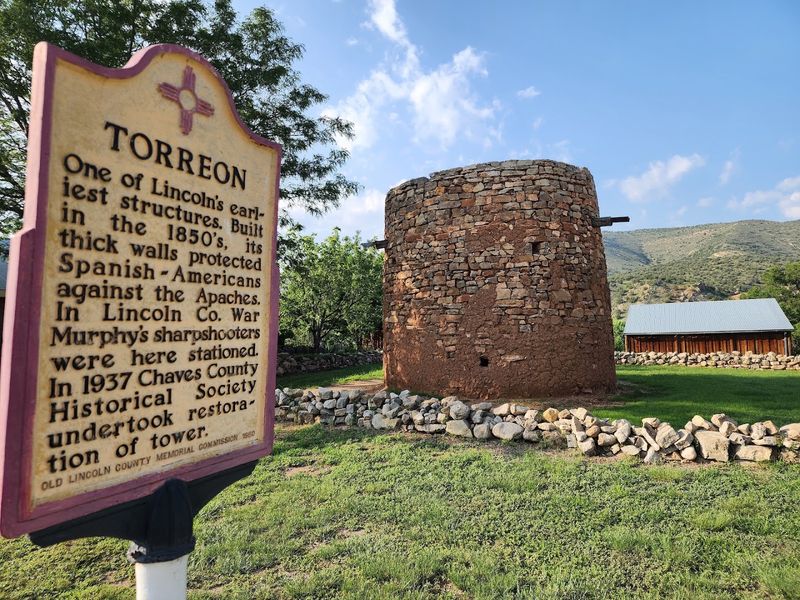
The Torreón, a round rock tower built by early Hispanic settlers in the 1850s, was originally constructed as a defensive refuge against raids, and its thick stone walls still stand with quiet authority at the edge of the village.
Even the old schoolhouse and gallery features walls that measure a full fourteen inches thick, a detail that sounds modest until you press your hand against one and feel how much cooler the interior stays under a blazing New Mexico sun.
Adobe construction was never just practical; it was a statement that people intended to stay, to build something permanent, and to root themselves into the earth of this valley.
Every cracked surface and faded plaster layer on these walls represents a decade of weather, conflict, and quiet daily life that no exhibit can fully replicate in Lincoln, New Mexico.
A Main Street Frozen In The Wild West
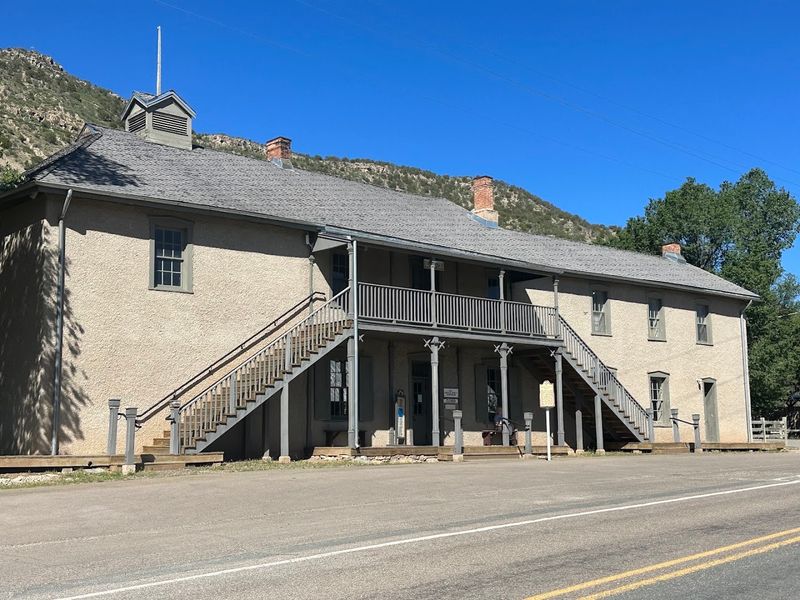
President Rutherford B. Hayes once called this stretch of road the most dangerous street in America, and standing on it today, you can almost feel why he said it.
Lincoln’s main thoroughfare doubles as US Route 380, also known as the Billy the Kid Trail, and it cuts through the village in a straight, unhurried line that looks almost identical to photographs taken in the early 1880s.
Unlike most Western towns that were eventually swallowed by development, Lincoln managed to hold its shape, and historians widely recognize it as one of the best-preserved frontier cow towns in the entire United States.
Much of that preservation credit belongs to the Lincoln Historic Site, which manages most of the community’s significant historical buildings with a steady, careful hand.
Walking down this street, I kept glancing at doorways and windows, half-convinced that the faces peering back would belong to another century rather than fellow tourists with camera bags.
No neon signs, no fast food wrappers, no modern storefronts interrupt the view, just a road that refuses to forget where it came from.
Weathered Boardwalks Beneath Desert Skies
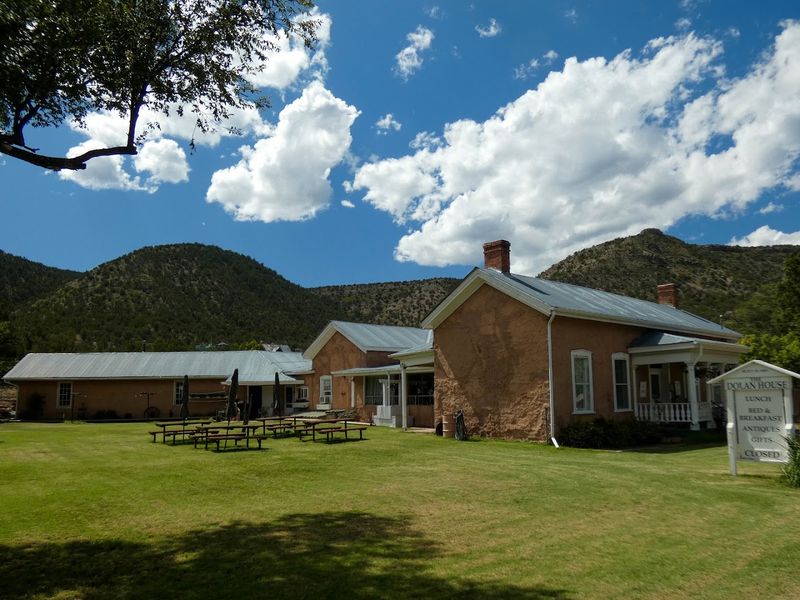
Wood weathers differently in the high desert, turning silver-grey and splintered in a way that feels more honest than any fresh coat of paint ever could.
The preservation efforts across Lincoln’s 1870s and 1880s structures include a careful attention to original wooden elements, from porch planks to door frames, that give the village its unmistakably tactile frontier atmosphere.
The Old Lincoln County Courthouse restoration, carried out in the 1930s, went so far as to faithfully replicate the building’s original front porch and side stairways, working from records that dated those features to 1891 and 1901 respectively.
Standing under one of these wooden overhangs while a dry desert breeze moves through the Bonito Valley is the kind of moment that travel writers reach for but rarely find so effortlessly delivered.
Above all of it stretches a sky that the Southwest does better than almost anywhere, impossibly wide, shifting from pale blue to deep copper as the sun drops behind the rocky bluffs that frame the valley.
Those bluffs and those boards together create a backdrop so cinematic that I genuinely forgot, more than once, to take a photograph.
Inside Buildings That Witnessed Frontier History
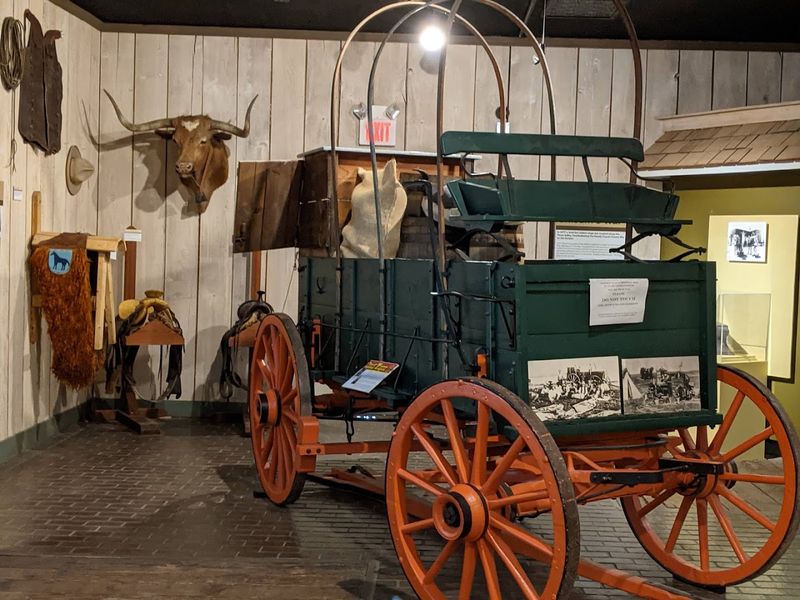
Few experiences match the odd electricity of stepping into a room where something genuinely significant happened.
The Lincoln Historic Site encompasses seventeen structures and outbuildings, with seven of them open year-round as fully functioning museums that pull visitors directly into the texture of the 1880s frontier.
The Tunstall Store is a particular standout, displaying its original nineteenth-century merchandise arranged in the very same shelving and glass cases that were in use during the Lincoln County War, a detail that transforms browsing into something closer to time travel.
The Old Lincoln County Courthouse carried an almost absurd variety of roles throughout its long history, functioning at different points as a general store, a Masonic meeting room, a billiard room, a sheriff’s office, a jail, and even private living quarters.
Exhibits inside the courthouse reconstruct the dramatic events of the Lincoln County War with enough specificity that even visitors who arrived knowing very little leave with a vivid sense of how volatile this community once was.
Walking out of those thick-walled rooms and back into the sunlight always felt like surfacing from somewhere very deep.
Quiet Roads Framed By Rugged Hills
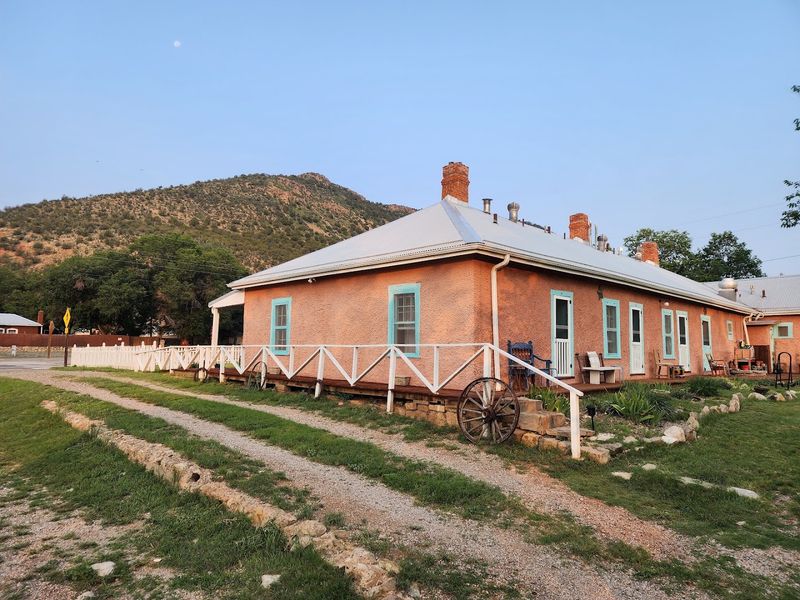
The road into Lincoln does something to your shoulders before you even arrive, loosening them gradually as the valley opens up and the mountains take over the view.
The village rests in the Bonito Valley between the Sacramento Mountains and the Capitan Mountains, a geographical arrangement that gives every road approaching town a natural drama that no highway engineer planned.
The Lincoln National Forest spreads across 1.1 million acres of southeastern New Mexico, covering the Sacramento, Guadalupe, and Capitan mountain ranges, with elevations ranging from roughly 4,000 to 11,500 feet across the forest, not just the village itself.
That elevation range means the landscape can shift remarkably as you drive, moving from arid scrubland dotted with juniper and yucca toward cooler ponderosa pine country within a single afternoon.
I pulled over twice on the road in just to sit with the view, which is not something I typically admit to, but the framing of rugged ridgeline against open sky demanded it.
Roads this quiet, framed this well, have a way of making the destination feel earned.
The Old Courthouse At The Heart Of Town
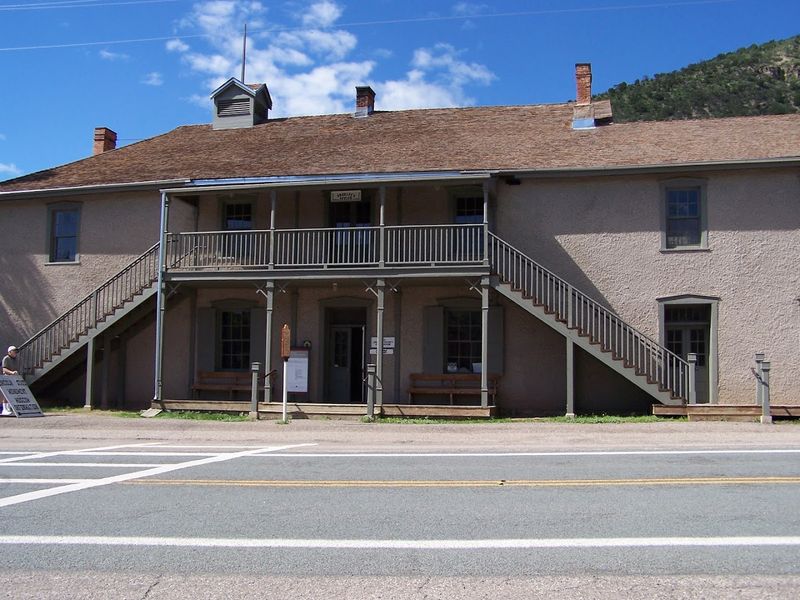
Every town has a building that carries more weight than the rest, and in Lincoln, that building is unmistakable.
The Old Lincoln County Courthouse was originally constructed between 1873 and 1874 as the Murphy-Dolan Store, a commercial hub that locals called the Big House, reflecting both its physical size and its outsized influence on the community.
Lincoln County acquired the property in 1880 and formally converted it into the county courthouse in 1881, a role it held until 1913 when the county seat moved elsewhere and the building entered a quieter chapter of its long life.
April 1881 brought the moment that cemented the courthouse’s place in frontier legend, when Billy the Kid staged his audacious escape from the second-floor jail, an event that sent shockwaves far beyond the borders of New Mexico.
Today the building serves as the primary museum within the Lincoln Historic Site Complex, with exhibits that lay out the Lincoln County War and its key figures with impressive clarity and historical rigor.
Standing in that second-floor room, looking at the window Billy used, I felt the floor beneath my boots carry an almost unreasonable amount of story.
Wooden Porches With A True Western Feel
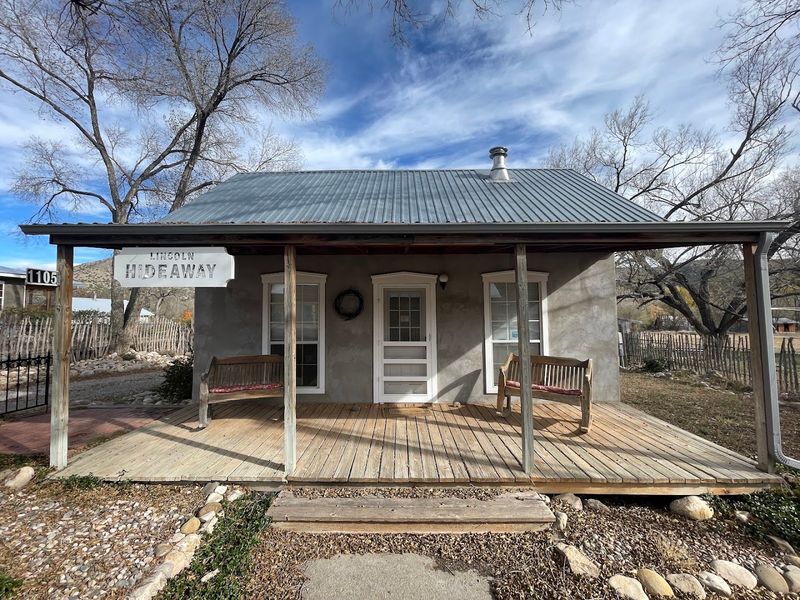
A wooden porch in the frontier West was never just a place to sit; it was a stage, a watchtower, and a social hub all rolled into a few planks and some rough-cut posts.
Lincoln’s preserved buildings showcase architectural details that carry that same layered meaning, with Territorial Style adobe construction frequently incorporating wide, inviting wooden porches that frame the street views in a way that feels deliberately composed.
The restoration of the Old Lincoln County Courthouse in the 1930s paid particular attention to authenticity, carefully recreating the original front porch and side stairways based on documented features from 1891 and 1901.
The Lincoln Schoolhouse and Gallery adds another dimension to this wooden heritage, with original doors and hardwood flooring that have survived more than a century of use without losing their character.
I spent a long, unhurried stretch of one afternoon simply sitting on one of these restored porches, watching the light shift across the valley and listening to the particular silence that only small, historic places seem to generate.
That kind of stillness is rarer than any artifact on display inside.
A Preserved Frontier Landscape Built For Wandering
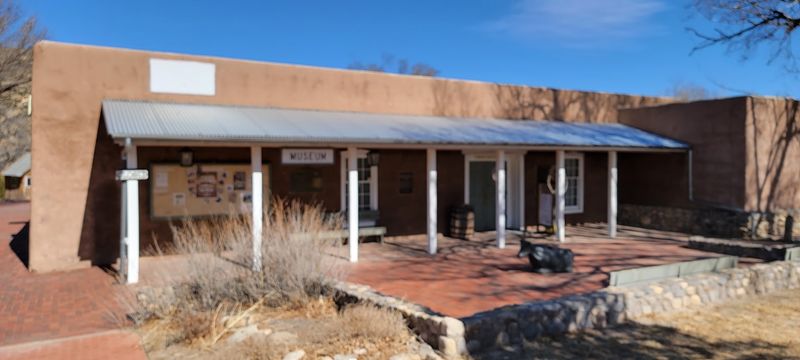
Not many places get described as one of the best-preserved Old West towns in the country, but Lincoln carries that reputation with the kind of quiet confidence that only lived-in history can produce.
The Lincoln Historic District has federal recognition as a National Historic Landmark, while the state-run Lincoln Historic Site preserves the buildings visitors explore there today.
The historic district encompasses 48 structures in total, with 17 structures and outbuildings maintained by the state and operating as part of the Lincoln Historic Site, creating a density of preserved history that rewards slow, unhurried exploration on foot.
Walking these grounds, I retraced paths connected to figures like Billy the Kid and Pat Garrett, names that carry a mythology so large it can feel abstract until you are standing in the actual places where their stories unfolded.
Beyond the village boundaries, the Lincoln National Forest extends the experience considerably, offering hiking trails, mountain biking routes, and scenic drives through wilderness and mountain country that provide a natural counterpoint to the dense human history in the valley below.
You can find all of this waiting at Lincoln, New Mexico 88338, a place that earns every step you give it.