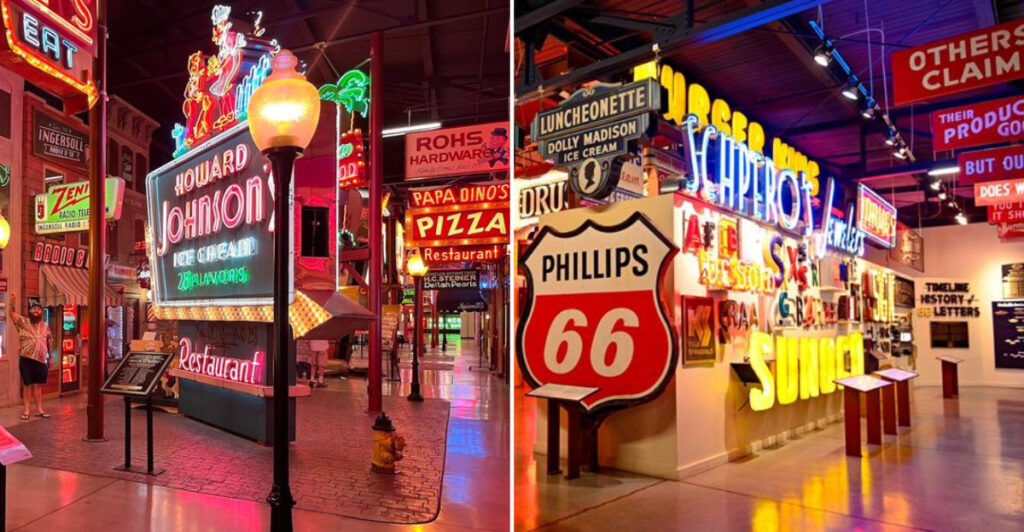
Sign me up, because this Ohio attraction makes following the signs rewarding.
Cincinnati has plenty of reasons to grab your attention, but this one practically glows, flashes, and points you toward an entertaining afternoon.
What sounds like a niche stop quickly turns into the kind of place that has you wondering why old lettering, bold colors, and clever advertising never got their fan club sooner.
There is history here, but it never feels like homework. Instead, every display has personality, every curve tells a story, and every glowing detail seems determined to steal the spotlight.
You do not need to be a design expert or nostalgia collector to enjoy it either. Curiosity is more than enough.
This is the rare indoor outing that works for road trippers, families, camera-happy visitors, and anyone who appreciates a good pun with lighting.
Consider this your official sign to add Cincinnati to the plan.
A Museum Born From Passion and Purpose
Every great museum starts with someone who cares deeply enough to build it.
The American Sign Museum in Cincinnati, Ohio, grew out of one person’s determination to preserve a vanishing slice of American culture.
Founded in 2005, the museum set out to document the full arc of sign-making history in the United States.
The collection started modestly but grew fast. Today, it houses hundreds of signs spanning more than a century of American commercial art and design.
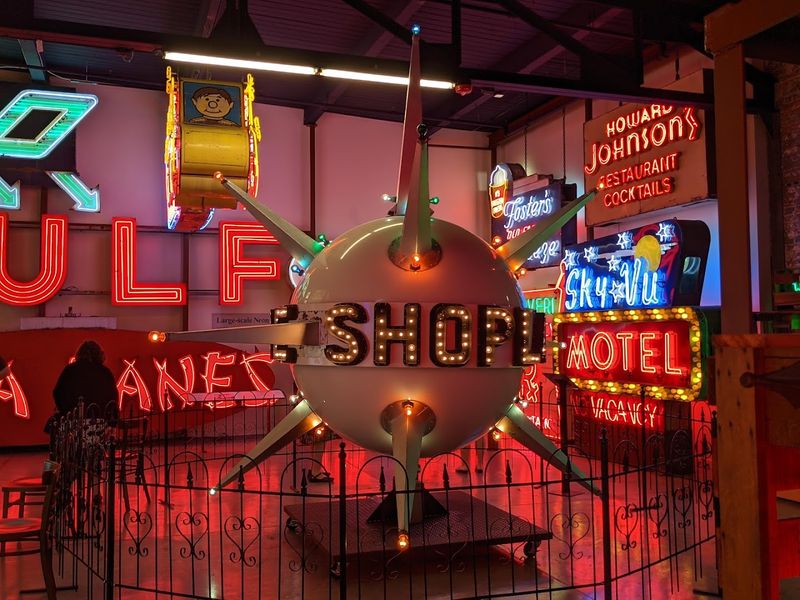
The pieces range from ornate gold-leaf wooden signs to the glowing plastic and neon displays that lit up mid-century roadsides.
Located at 1330 Monmouth Ave, Cincinnati, OH 45225, the museum sits in a former factory building in a warehouse district.
The industrial setting might raise an eyebrow at first glance, but it suits the collection perfectly. Big signs need big spaces, and this building delivers exactly that.
The museum’s story is proof that passion can build something lasting. Ohio has plenty of history to offer, and this particular chapter of it glows brighter than most.
The Main Street Experience That Stops You Cold
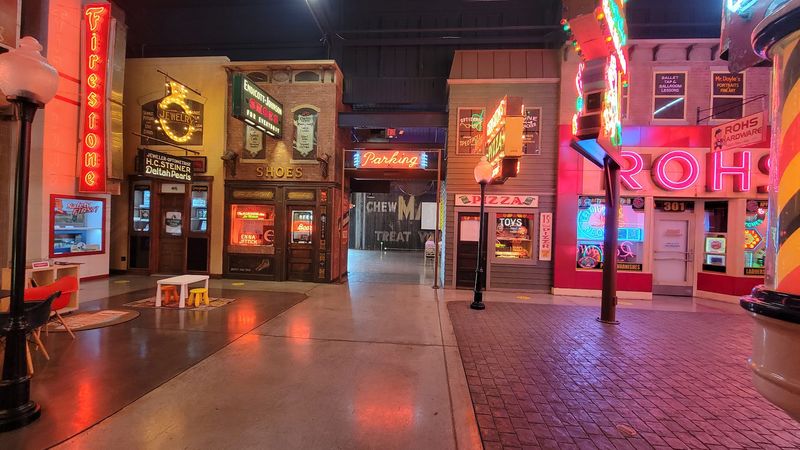
Right at the heart of the museum, a recreated Main Street pulls visitors straight into another era.
Vintage storefronts line the path, each one glowing with hand-painted artistry and period-accurate signage. The effect is genuinely striking.
This section of the museum is designed to look like a 1950s American town center. Old pharmacy signs, barbershop poles, and classic diner marquees crowd the space with color and light.
The craftsmanship on display here is extraordinary, and the sheer density of detail rewards slow, careful looking.
Visitors often linger here longer than anywhere else.
The layout invites exploration, and every storefront holds something new to discover. It is the kind of space where photographers burn through memory cards fast.
The Main Street section also puts the signs in context. Seeing them arranged as they once appeared on real streets helps visitors understand how powerful visual communication was before the internet age.
Ohio’s commercial history is woven right into these displays, making the experience both personal and educational.
Few museum exhibits manage to be this immersive without relying on digital tricks. This one does it entirely with glass, paint, and light.
Neon Lights and the Workshop Where Magic Happens
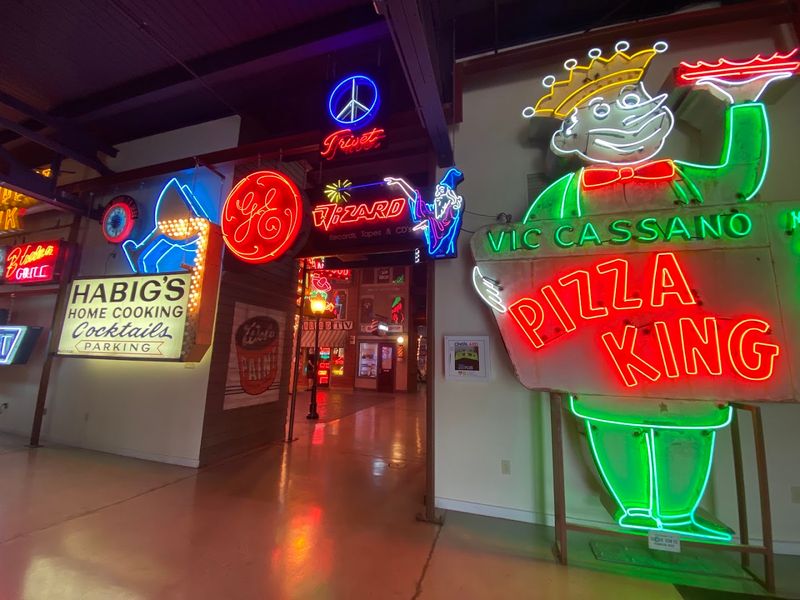
Neon signs have a reputation for being purely decorative. The working neon workshop at the American Sign Museum quickly corrects that assumption.
Watching a skilled craftsperson bend glowing glass tubes with an open flame is genuinely jaw-dropping.
The on-site shop handles real restoration work.
Signs brought in for display are repaired and maintained right there in the museum, making the workshop an active, living part of the collection. Visitors can watch the process unfold in real time.
Live demonstrations take the experience even further. Seeing the science and artistry behind neon tube bending reveals just how much skill goes into every glowing sign.
The precision required is remarkable, and the results are beautiful.
Ohio draws visitors for many reasons, but few attractions offer this kind of behind-the-scenes access to a dying craft.
Neon sign-making is increasingly rare, and the museum is actively working to keep that knowledge alive.
The workshop adds real depth to a museum visit. It shifts the experience from passive observation to active discovery.
Visitors leave with a new appreciation for every buzzing “OPEN” sign they have ever walked past without a second thought.
Iconic Signs That Defined American Culture
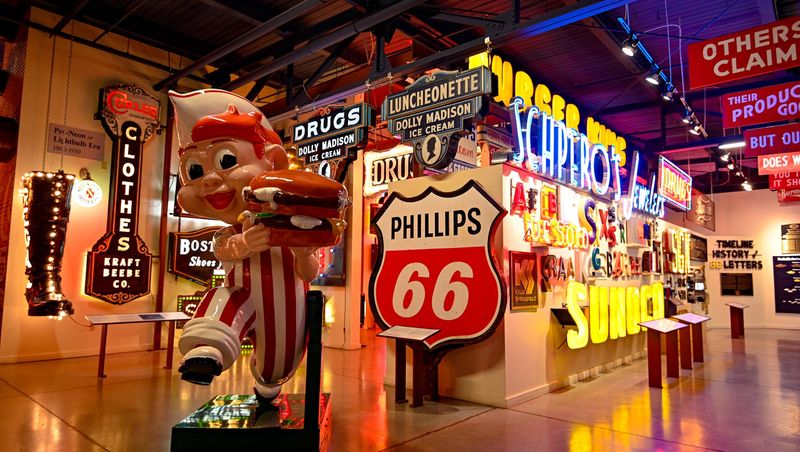
Some signs are so familiar they feel like old friends. The American Sign Museum houses several iconic pieces that carry genuine cultural weight.
Spotting them for the first time produces a real jolt of recognition.
Seeing the early single-arch design and Speedee mascot up close reveals an earlier era of McDonald’s branding stripped of its current context, reveals just how bold and clever early fast-food branding really was.
The same goes for the massive Satellite Shopland sign, which commands attention from across the room.
These are not reproductions.
They are the real objects, preserved and displayed with care. Each one carries decades of history in its paint and metal.
The museum does an excellent job of connecting individual signs to broader American cultural moments.
A sign is never just a sign here. It is evidence of how businesses competed for attention, how graphic design evolved, and how public spaces looked and felt across different decades.
Ohio is home to many cultural institutions, but this one occupies a uniquely specific and underappreciated niche.
Advertising history is American history, and the museum makes that argument convincingly with every piece on display.
A Self-Guided Tour Built for Curious Minds
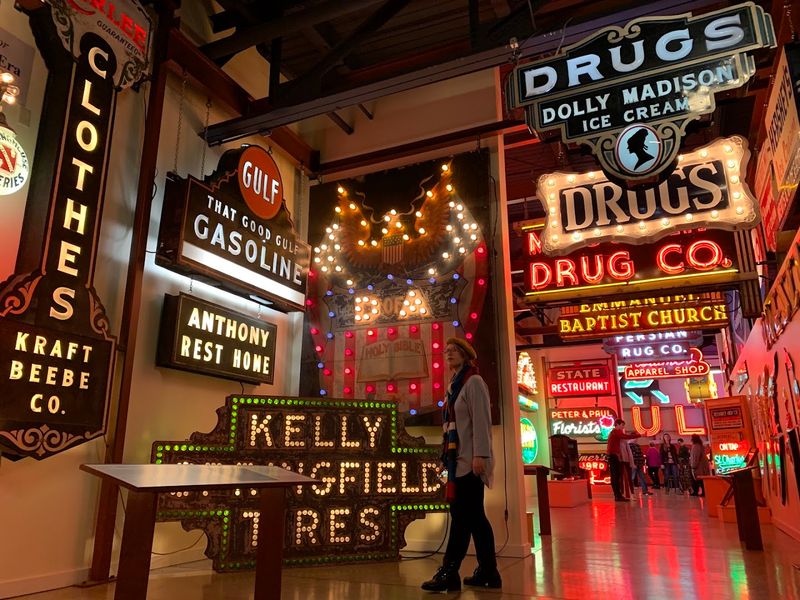
Not every museum visit needs a tour guide.
The American Sign Museum offers a self-guided audio tour that lets visitors explore at their own pace. It works through a dedicated app, and the commentary is sharp, informative, and easy to follow.
The audio guide provides background on individual signs and broader historical context.
It explains the technology behind different sign types, the businesses that commissioned them, and the cultural moments they represent. Bringing headphones is a smart move.
For visitors who prefer more structure, guided tours are also available.
The guides are knowledgeable and clearly enthusiastic about the collection. They field questions well and point out details that are easy to miss on a solo walk-through.
There is also a scavenger hunt option, which adds a playful layer to the visit. It is particularly useful for keeping younger visitors engaged and curious as they move through the space.
Ohio attracts history lovers, road trip fans, and design enthusiasts from across the country.
The museum’s flexible touring options mean the experience works equally well for solo travelers, couples, and families.
Visitors consistently report that the audio commentary deepens their appreciation of what they are seeing.
The Building Itself Tells a Story
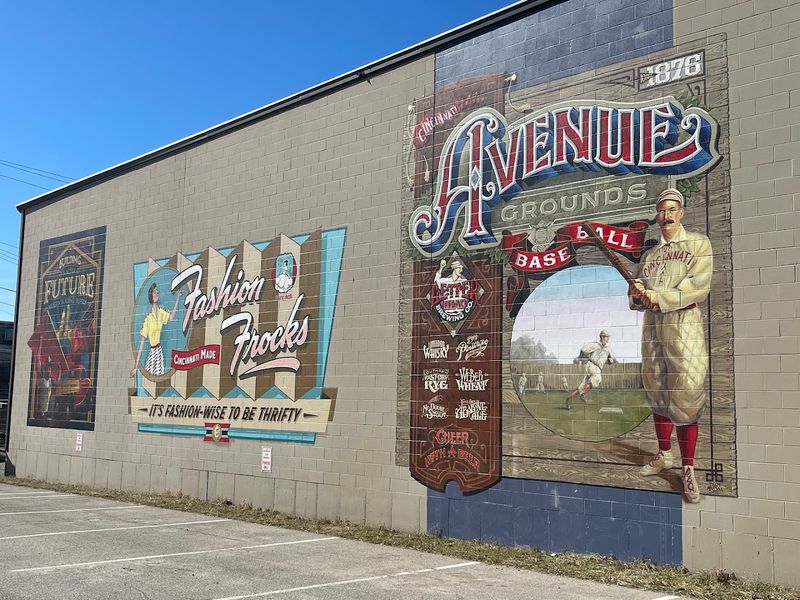
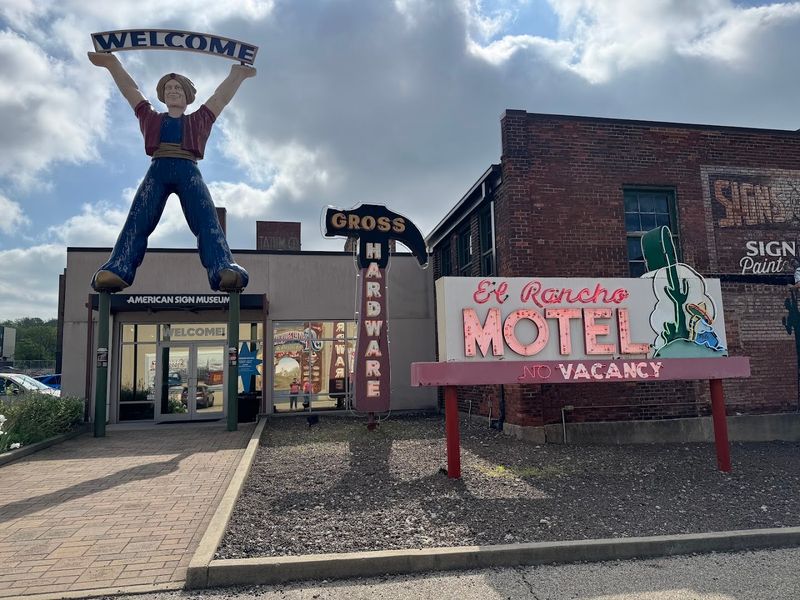
Before visitors even get inside, the building sets the tone. Large murals cover the exterior walls of the former factory, and oversized signs greet arrivals in the parking lot.
The whole complex announces itself loudly and without apology.
The industrial bones of the space work in the museum’s favor. High ceilings allow large-format signs to be displayed at full scale.
Wide open floor plans create natural flow between different eras and sign types.
The warehouse aesthetic gives the collection room to breathe.
Free parking is available right at the museum.
Given that the surrounding warehouse district can feel a little disorienting to first-time visitors, having a dedicated lot is a practical bonus. Street parking is also available nearby when the lot fills up.
Inside, the physical layout guides visitors naturally from one section to the next.
The progression through different sign-making eras feels intuitive. Nothing about the space feels cramped or cluttered, even though the collection is genuinely enormous.
Cincinnati’s warehouse districts have a long industrial history, and this building fits right into that legacy.
The museum has made something remarkable out of a space that could easily have been forgotten.
A Century of Craftsmanship on Display
Sign-making in America goes back further than most people realize.
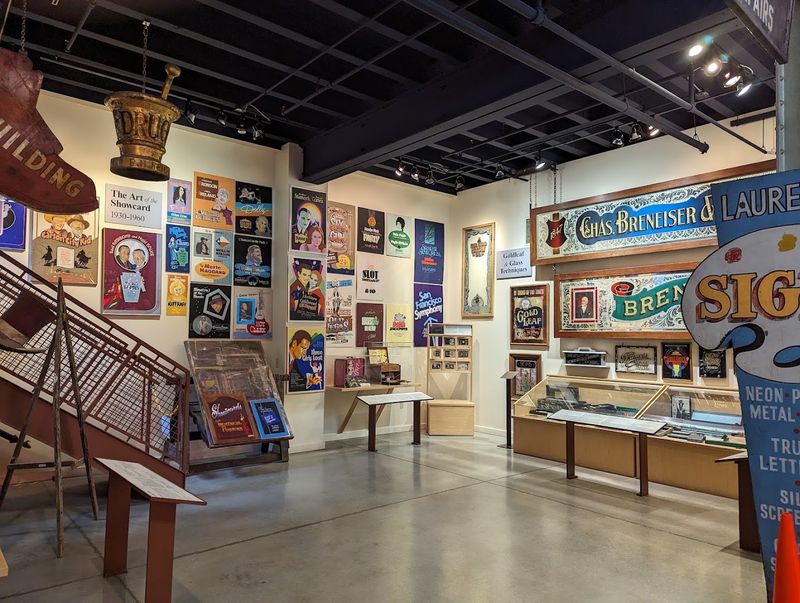
The museum traces the craft from its earliest roots, when skilled artisans painted gold-leaf lettering onto wooden boards by hand. These early pieces are delicate, precise, and deeply impressive.
As the collection moves forward in time, the technology shifts dramatically. Electric signs appear.
Neon arrives. Plastic and backlit displays take over.
Each transition reflects changes in American business culture, manufacturing capability, and public taste.
The museum presents this evolution clearly and without overwhelming visitors with technical detail. Labels are informative but accessible.
The focus stays on helping visitors understand what they are looking at and why it matters.
Craftsmanship is a thread that runs through every section. Whether the sign was made in 1890 or 1970, the skill involved in its creation is evident.
The museum treats sign-making as the legitimate art form it has always been.
Ohio has a proud manufacturing heritage, and the sign industry was a significant part of that story.
Seeing the tools, techniques, and finished products together in one space gives that history a tangible, visual shape that no textbook could quite replicate.
Photography Heaven With Every Turn
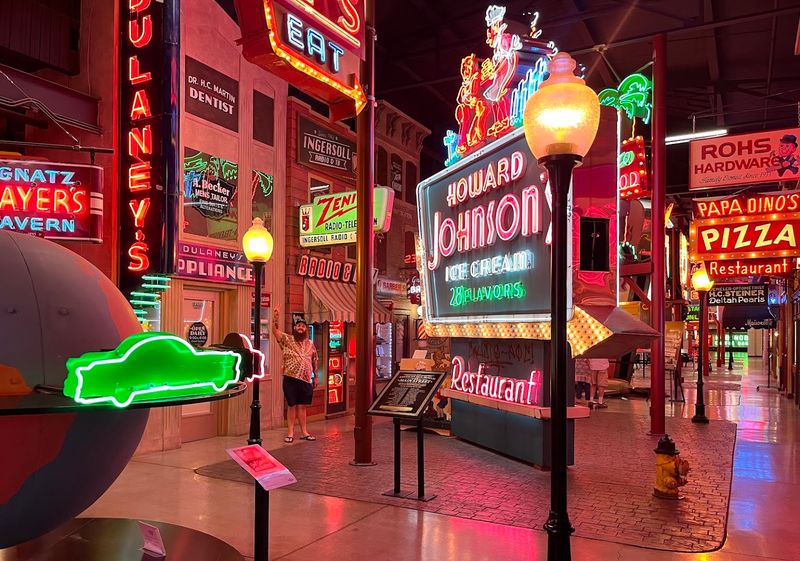
Few indoor spaces in Ohio are as photogenic as this one.
The combination of glowing neon, vintage color palettes, and dramatic scale makes the American Sign Museum a dream location for anyone with a camera or a smartphone.
The lighting conditions inside are genuinely unusual. Many of the signs are illuminated, which means the space glows with warm, shifting light throughout the day.
Shadows and reflections create natural drama without any effort from the photographer.
The Main Street section is particularly popular for portraits and wide-angle shots.
The storefronts provide ready-made backdrops that look like something out of a mid-century film set. Visitors consistently leave with images that impress even people who were not on the trip.
The museum does not rush visitors through. Spending extra time in a favorite section to get the perfect shot is entirely acceptable.
The relaxed atmosphere encourages lingering, exploring, and returning to spots that caught the eye earlier.
Social media posts from the museum tend to generate real interest.
The visual impact of the collection translates well to screens, which has helped spread awareness of this Cincinnati destination far beyond Ohio’s borders.
Practical Tips for Making the Most of Your Visit
A little preparation goes a long way at the American Sign Museum.
The museum is open Wednesday through Sunday, so checking the schedule before heading out saves potential disappointment. Admission is priced per person, and the cost covers access to the full collection.
The visit typically takes between one and two hours, depending on how much time is spent at each exhibit. Downloading the audio tour app before arriving is a smart move.
It loads faster on a good connection, and the commentary adds real value to the walk-through.
Bringing headphones is worth the effort. The audio guide works best with them, and the museum can get lively enough that speakers on a phone do not always cut through the ambient sound clearly.
The gift shop near the entrance carries sign-themed souvenirs and memorabilia.
It is a good spot to pick up something distinctive that you will not find at a generic tourist shop. Restrooms are available at both the front and back of the building.
Ohio road trippers passing through Cincinnati should add this stop to their itinerary without hesitation.
The museum rewards curiosity and delivers an experience that sticks with visitors long after they have driven away.