The places that stick with you are often the ones you almost skipped. Maybe the sign looked modest.
Maybe the road seemed too quiet. Then you step inside, start exploring, and realize the detour was the best decision of the day.
New Mexico has plenty of stops that create that feeling. They are imaginative, surprising, and full of stories without needing huge crowds to prove their value.
One destination turns hours of handwork into a world visitors can watch come alive. Another reveals ice where the desert says it should not exist.
Several places bring difficult history into sharp focus with exhibits that feel personal rather than distant. This is not a checklist for racing through the state.
It is an invitation to slow down and notice what usually gets overlooked. Leave a little space in the schedule.
The road ahead may hold something far better than the original plan.
1. Tinkertown Museum, Sandia Park
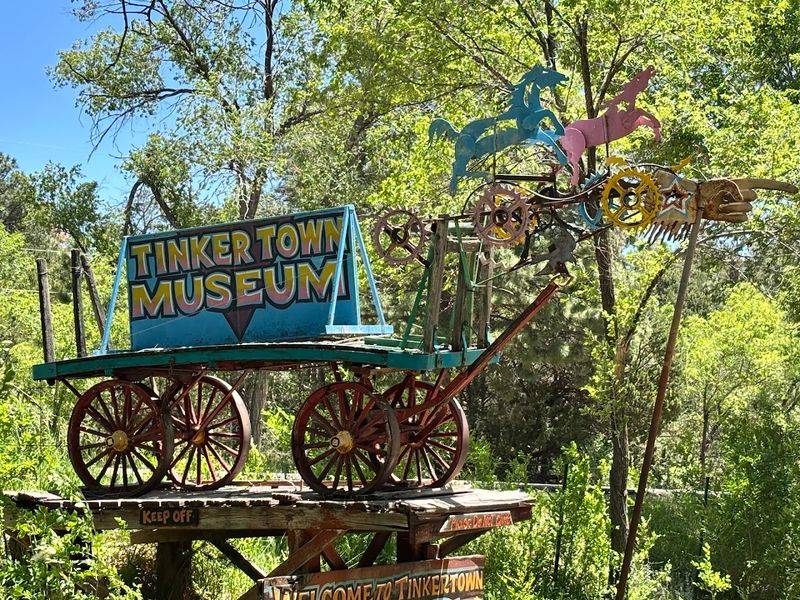
A building made of over 50,000 glass bottles is not something you expect to stumble upon while cruising the scenic Turquoise Trail, but that is exactly what awaits at Tinkertown Museum in Sandia Park, NM 87047. What started as one man’s obsessive hobby eventually grew into one of the most wonderfully strange museums in the American Southwest.
The late artist Ross Ward spent more than four decades hand-carving a miniature Old West town, complete with a general store, hotel, and tiny animated residents that spring to life when you press a button.
The museum spans 22 rooms packed with surprises at every turn. Beyond the Old West scenes, you will find a hand-carved circus big top, a collection of over 280 wedding cake toppers, and a coin-operated fortune teller named Esmeralda who is always ready to share her wisdom.
Ward’s penny-covered Jeep sits outside as its own piece of roadside art, and it somehow fits perfectly with the rest of the property’s playful spirit.
I walked through every room slowly, laughing at unexpected details tucked into corners and marveling at the sheer patience it must have taken to create all of this. The museum is open seasonally, so checking ahead before your visit is a smart move.
Kids and adults both find something to love here, which is rarer than you might think. Tinkertown is located at 121 Sandia Crest Rd, Sandia Park, NM 87047, just a short drive from Albuquerque.
It rewards the curious and the unhurried in equal measure.
2. Ice Cave And Bandera Volcano, Grants
Fire and ice are not supposed to coexist, yet that is exactly the deal at 12000 Ice Caves Rd, Grants, NM 87020, where a dormant volcano and a perpetual ice cave share the same dramatic stretch of high desert landscape. The self-guided tour splits into two distinct experiences that could not feel more different from each other, and that contrast is precisely what makes this place so memorable.
You tackle the Bandera Volcano trail first, winding through ancient lava fields and old-growth trees before reaching a lookout point above a wide cinder cone crater.
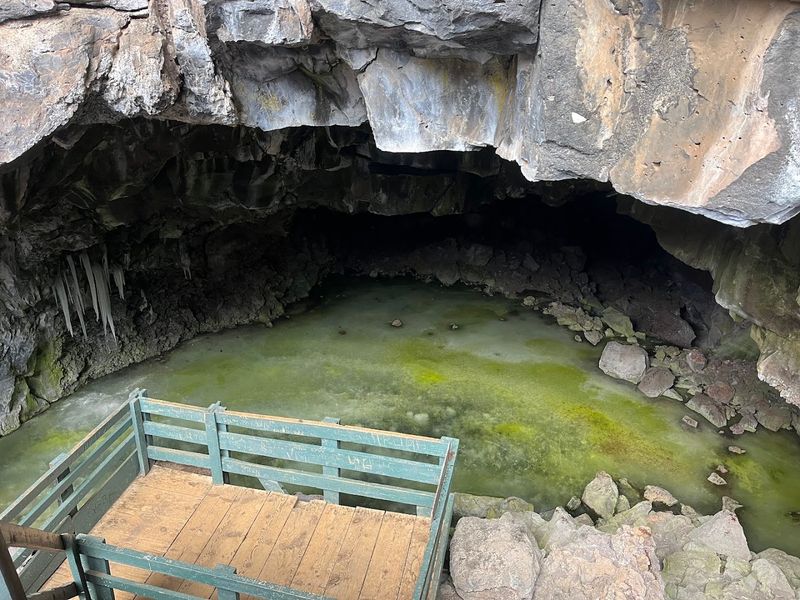
After all that volcanic drama, the Ice Cave brings the temperature crashing down. Tucked inside a collapsed lava tube, the cave maintains a year-round temperature that never climbs above 31 degrees Fahrenheit.
The ice glows with an eerie blue-green tint, thanks to arctic algae and thin shafts of natural light filtering in from above. Layers of ice can stack up to 20 feet thick, which is hard to wrap your head around when you are standing in the middle of the New Mexico high desert.
The historic Ice Caves Trading Post, which has welcomed visitors since the early 1900s, doubles as the site’s visitor center and small museum. Snacks, souvenirs, and displays of ancient local artifacts round out the stop nicely.
I found the whole experience genuinely surprising, especially the sensation of stepping from sun-baked lava rock into a natural freezer within minutes. Plan for at least two hours to do both trails comfortably.
This one is a double feature worth every mile of the drive.
3. New Mexico Mining Museum, Grants
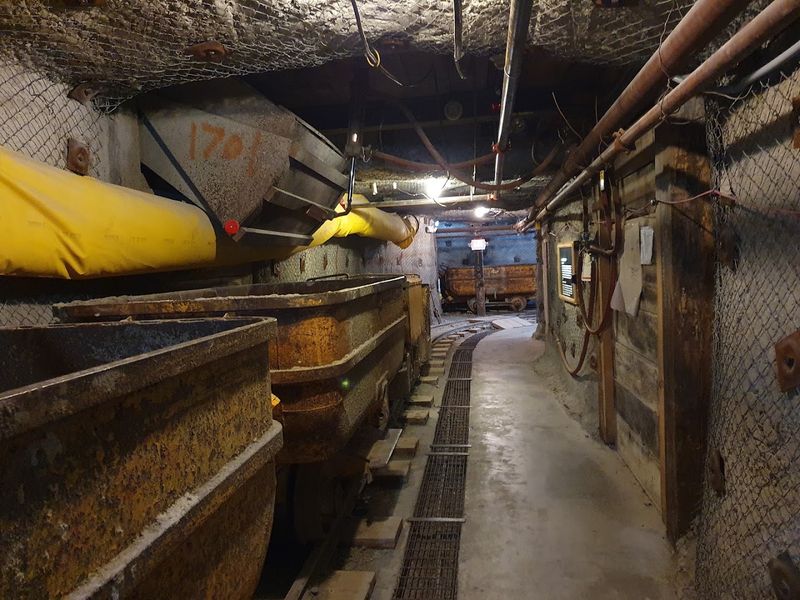
Grants, NM 87020, once held the title of uranium capital of the world, and the New Mexico Mining Museum at 100 Iron Ave makes sure that chapter of history does not get forgotten. The crown jewel of the museum is a fully simulated underground uranium mine that you actually descend into, and it is far more immersive than any flat display case could ever be.
Dim tunnels, authentic mining tools, and carefully recreated workstations pull you straight into the mid-20th century boom years that put this small town on the national map.
The simulation is detailed enough to feel slightly claustrophobic in the best possible way, giving you a real sense of what miners experienced on a daily shift underground. Above ground, the museum continues with artifacts including original mining helmets, hand tools, and a photo archive that tells the human side of the story.
You get a clear picture of what life looked like for the families who moved to Grants during the uranium rush, not just the industry itself.
What I appreciated most was how the museum balances technical information with personal storytelling. It never feels like a dry industrial exhibit; it feels like a community preserving its own identity with pride.
The staff is knowledgeable and clearly passionate about the subject, which adds a lot to the visit. Grants is a quick stop along I-40, making this an easy addition to a road trip through western New Mexico.
Budget about 90 minutes here, and you will leave with a much richer understanding of the region’s surprising economic history.
4. Blackwater Draw Locality 1, Portales
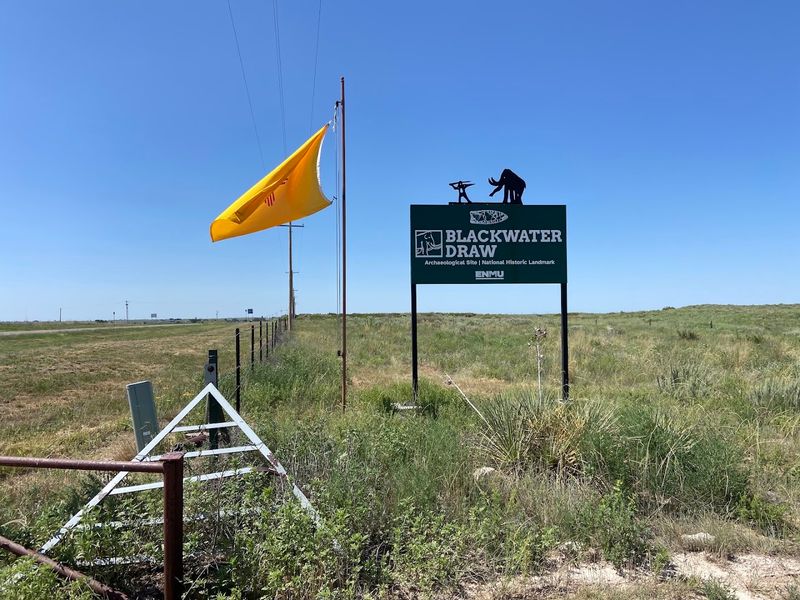
Long before anyone drew state lines or named towns, this patch of eastern New Mexico was a busy watering hole for some of the most impressive creatures to ever roam North America. Blackwater Draw Locality 1, located at 508 NM-467, Portales, NM 88130, is the site where researchers first confirmed that ancient humans hunted alongside Columbian mammoths, giant bison, and other Pleistocene megafauna.
Discovered in 1929, it became the type site for the Clovis Culture, one of the most significant archaeological designations in the Western Hemisphere.
The interpretive center preserves actual exposed archaeological deposits right on-site, so you are not looking at replicas behind glass. You are looking at real sedimentary layers that hold the physical record of human activity stretching back thousands of years.
Self-guided trails trace the perimeter of what was once a spring-fed lake, where early hunters and their prey gathered in a landscape that looks almost unrecognizable today.
I found standing at the edge of those excavation pits genuinely humbling. The idea that people stood in this exact spot, making tools and hunting enormous animals, reshapes how you think about time and place.
Research at Blackwater Draw is ongoing, meaning the story here is still being written by archaeologists with brushes and patience. This National Historic Landmark does not get nearly the visitor traffic it deserves, which means you often have the whole place practically to yourself.
For history lovers and curious minds alike, it is one of the most quietly powerful stops in southeastern New Mexico.
5. Bosque Redondo Memorial At Fort Sumner Historic Site, Fort Sumner
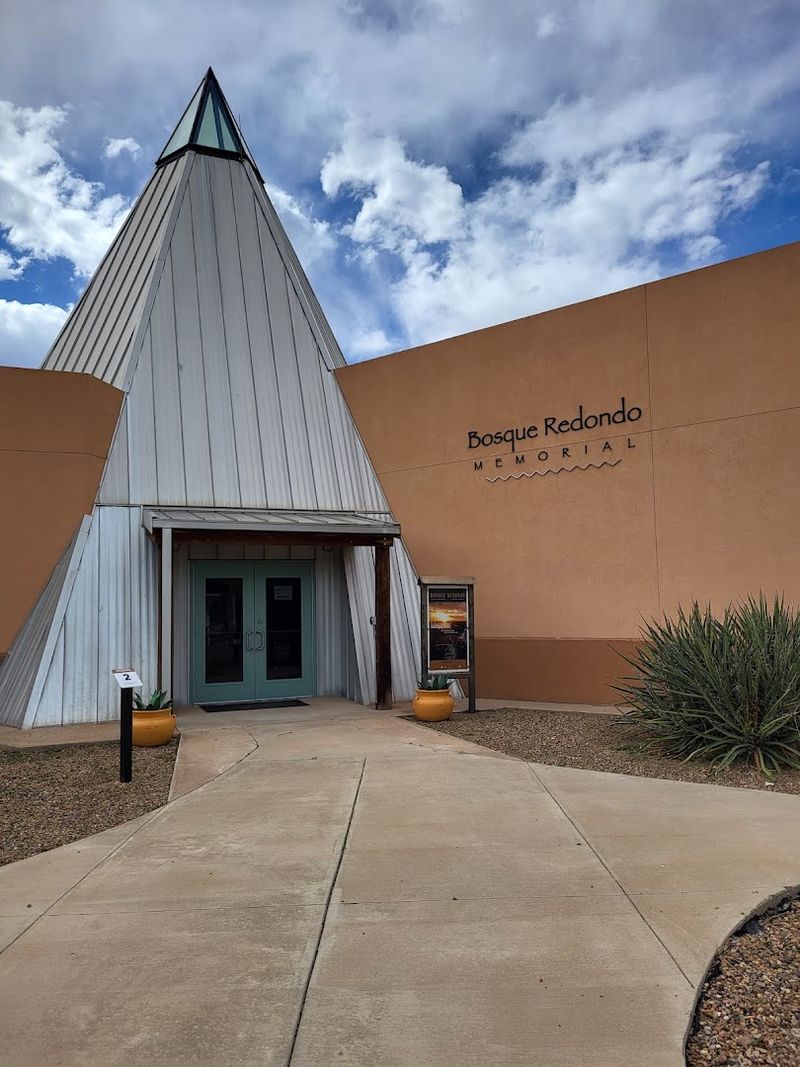
Some places carry weight that you feel the moment you arrive, and the Bosque Redondo Memorial at Fort Sumner Historic Site is one of them. Located at 3647 Billy The Kid Dr, Fort Sumner, NM 88119, this site memorializes a forced relocation of Navajo and Mescalero Apache peoples by the U.S. government during the 1860s, an event known as the Long Walk.
The memorial building itself, designed in the shape of a hogan and a tepee by Navajo architect David Sloan, is a striking structure that honors the cultures it represents before you even step inside.
The permanent exhibition titled Bosque Redondo: A Place of Suffering, a Place of Survival uses oral histories recorded in Dine, Nde, and English, alongside murals, photographs, and historic objects to tell this story with the depth it deserves. Nothing about the presentation feels rushed or simplified.
An interpretive trail connects the memorial to the grounds of historic Fort Sumner, helping visitors understand the physical scale of what happened here and the resilience it took to survive it.
I walked the trail slowly, reading each marker and letting the quiet do its work. This is not a stop you rush through for a photo opportunity; it is a place that asks something of you as a visitor.
Educational programs run throughout the year, making it a meaningful destination for school groups and families who want history that actually matters. Fort Sumner is a small town, but this site gives it a significance that stretches far beyond its size.
Plan at least two hours to absorb everything properly.
6. Earthship Visitor Center, Tres Piedras
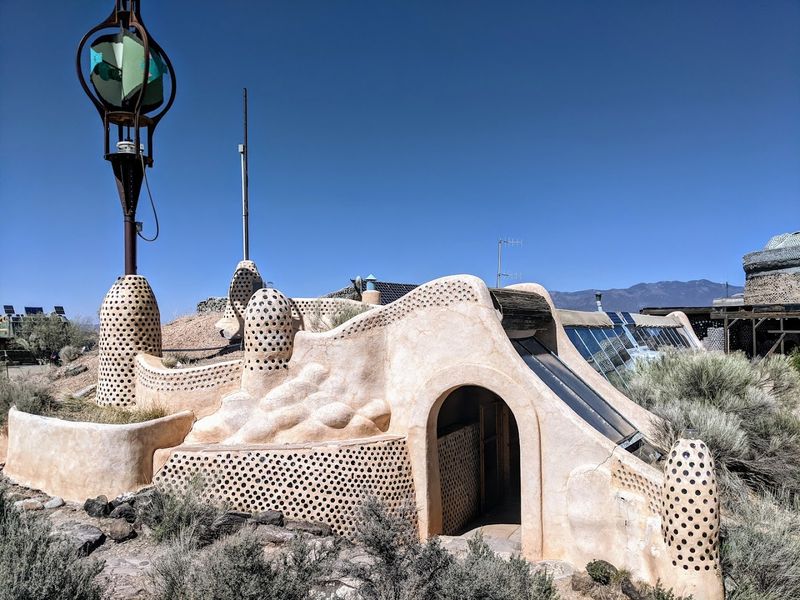
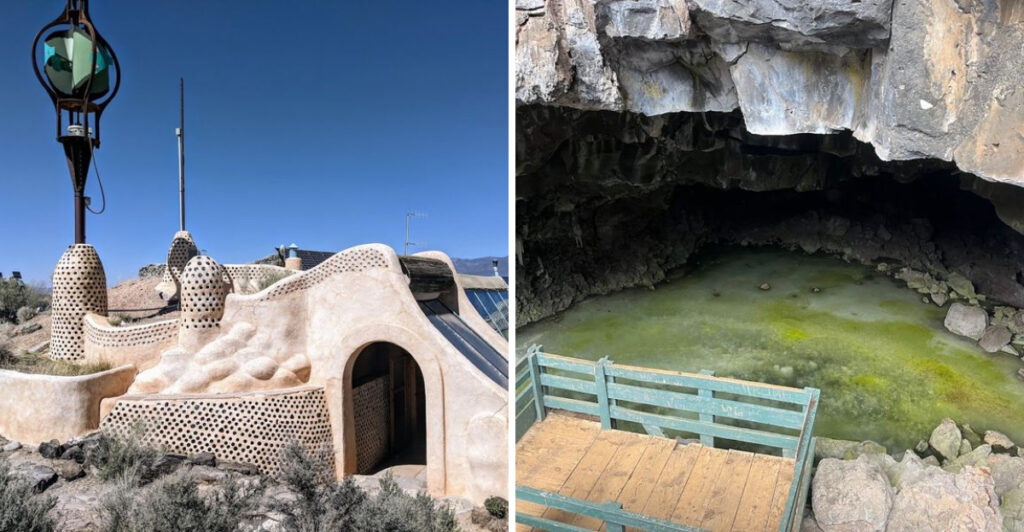
Tucked into the high desert outside Tres Piedras, NM 87577, the Earthship Visitor Center at 2 Earthship Way is the kind of place that quietly rewires how you think about buildings, energy, and everyday living. Earthships are homes constructed from recycled tires, glass bottles, and aluminum cans, and they are engineered to generate their own power, collect their own water, and grow food right inside the walls.
The visitor center offers both self-guided and guided tours that walk you through these six core design principles in a way that is surprisingly easy to understand.
Walking through an active Earthship home is the highlight of any visit here. Indoor gardens full of vegetables and tropical plants thrive year-round despite the surrounding desert, which never gets old no matter how many times I have seen it.
The thermal mass of the tire walls keeps interior temperatures stable without relying on conventional heating or cooling systems, which means utility bills that most homeowners can only dream about.
For travelers who want to go deeper, overnight stays inside an Earthship rental are available and book up quickly for good reason. Waking up surrounded by bottle-glass walls and a garden feels like sleeping inside a very stylish science experiment.
The community around Tres Piedras has been developing this concept since the 1970s, making it one of the longest-running off-grid architectural movements in the country. I left this place genuinely rethinking what a house needs to be.
It is a destination that blends practical innovation with a creative spirit that is hard to find anywhere else.
7. Toy Train Depot, Alamogordo
Model trains have a way of pulling adults back to childhood faster than almost anything else. The Toy Train Depot at 1991 N White Sands Blvd, Alamogordo, NM 88310 leans into that feeling with full enthusiasm.
Housed in a restored 1898 wooden depot that was relocated to its current spot inside Alameda Park, the museum grew out of a personal passion for railroading that eventually outgrew any reasonable living room. Three rooms of exhibits greet you inside, packed with model train layouts, vintage railroad memorabilia, and historical artifacts from the golden age of American rail travel.
The baggage room holds several large layouts spanning multiple scales, from tiny Z gauge tracks to the more familiar HO gauge setups. One layout recreates 1940s-era Alamogordo in careful detail, which local visitors find particularly charming.
Outside, the Alamogordo/Alameda Park Narrow Gauge Railway offers actual rides through the park on a working miniature railway, and that experience alone is worth the trip for families traveling with kids.
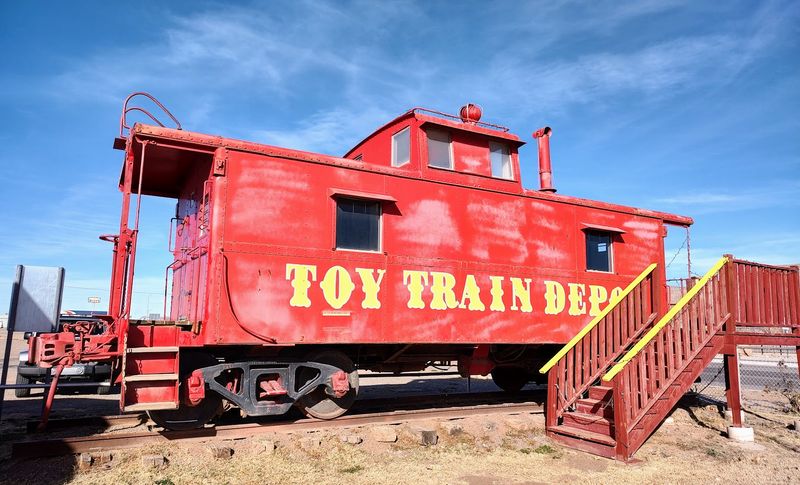
A full-scale caboose donated by a local McDonald’s sits on display near the main road, visible even if you are just driving past, which is how many people first discover the museum exists at all. Admission is affordable, the staff is friendly, and the whole atmosphere feels relaxed and welcoming rather than stuffy or overly curated.
I spent longer here than I planned, which is usually a good sign. The Toy Train Depot is a genuinely fun stop that pairs well with a visit to White Sands National Park just down the road.
8. Fort Stanton Historic Site, Fort Stanton
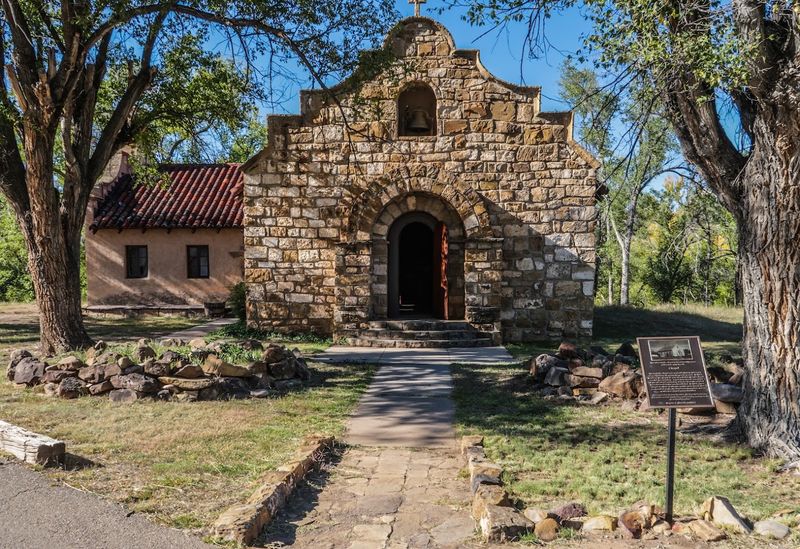
Not many 19th-century military forts survive in such complete condition, which makes Fort Stanton Historic Site at 104 Kit Carson Rd, Fort Stanton, NM 88323 a genuinely rare find. Established in 1855 on 240 acres in south-central New Mexico, the fort played active roles in both the Indian Wars and the Civil War before later serving as a merchant marine hospital and a state tuberculosis facility.
That layered history shows up in every building on the grounds, from the original officers’ quarters to the chapel, barracks, guardhouse, and hospital structures that still stand in remarkable shape.
The on-site museum and visitor center offers historical exhibits and an introductory video that helps orient first-time visitors before they head out to explore. Guided tours and periodic living history events bring the 19th-century military world to life with demonstrations and cemetery walks that add genuine texture to the visit.
A functioning U.S. post office still operates on the property, which is one of those small details that makes the whole experience feel charmingly surreal.
Lincoln National Forest wraps around the site, and the Bureau of Land Management maintains access to nearly 100 miles of surrounding trails open to hikers, mountain bikers, and horseback riders. So even if history is not your primary interest, the outdoor recreation alone makes the detour worthwhile.
I arrived expecting a quiet afternoon and ended up staying well into the evening, drawn in by the trails and the peaceful setting. Fort Stanton is the kind of place that rewards visitors who slow down and pay attention to what is right in front of them.