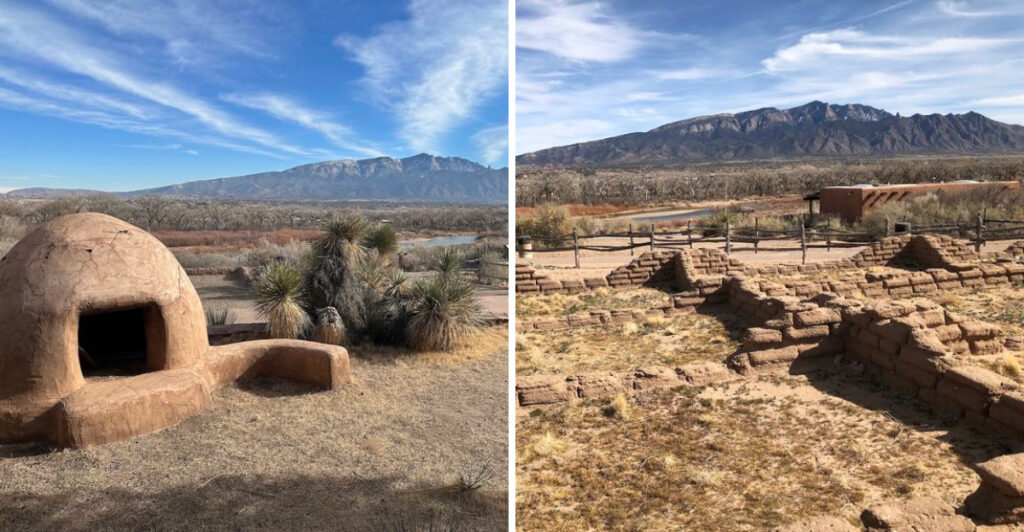
A stretch beside the Rio Grande holds more history than its peaceful setting suggests. At first glance, you may notice adobe walls beside a line of cottonwoods.
Stay a little longer, though, and the story becomes much bigger. Centuries before Spanish explorers entered the valley, a thriving Indigenous community built a large pueblo here and filled ceremonial spaces with painted murals.
Archaeologists later uncovered those images beneath layer after layer of plaster, preserving a rare connection to the people who once called this place home. Today, visitors can walk beside reconstructed ruins and explore artifacts inside the museum.
A guided tour also leads into a painted kiva. The setting feels calm, but the history is anything but simple.
This New Mexico site brings together beauty and conflict in a way that stays with you long after the visit ends. Here are eight facts that reveal why this place matters today.
Ancient Pueblo Walls Tell Centuries Of Stories
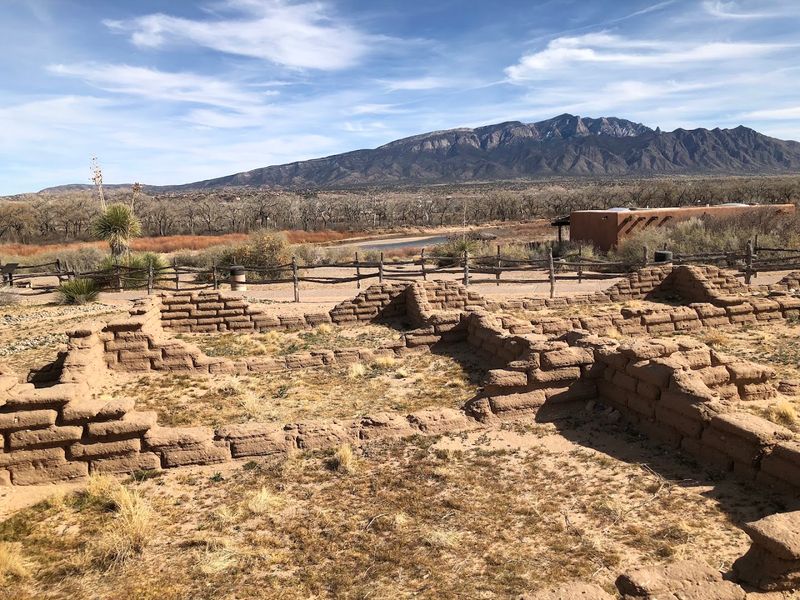
Long before any European ship crossed the Atlantic, the people of Kuaua had already built something extraordinary. Around 1300 A.D., they began constructing a multistory adobe community along the Rio Grande that would eventually grow to more than one thousand rooms and ten underground ceremonial chambers called kivas.
By 1540, roughly 1,200 people called this place home.
When archaeologists excavated the site in the 1930s, they quickly realized how fragile the original walls had become. Rather than leaving them exposed to the elements, the team carefully reburied the ancient adobe and constructed new walls directly above them.
This approach preserved what lay beneath while giving modern visitors a clear sense of the pueblo’s original scale and footprint.
The village was likely abandoned within a century of first contact with Spanish explorer Francisco Vázquez de Coronado, shaped by conflict and environmental pressures. Walking beside the reconstructed walls can make the site’s seven centuries of history feel remarkably immediate.
Visitors can experience this history firsthand at Coronado Historic Site at 485 Kuaua Road in Bernalillo, New Mexico.
Sweeping Rio Grande Valley Views Stretch For Miles
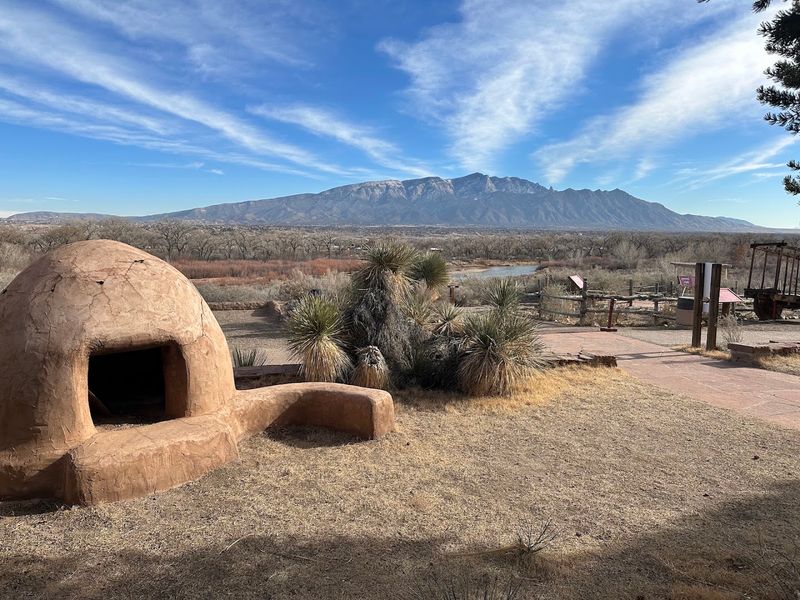
Few historic sites come with a backdrop this dramatic. Positioned on a natural rise above the Rio Grande, this spot offers sweeping views of the valley floor and the rugged Sandia Mountains that frame the eastern horizon.
On clear mornings, the mountains can appear close enough to touch, with their rocky ridgelines sharply outlined against the sky.
The ramada-covered picnic tables offer comfortable places to watch the landscape shift as clouds move through the valley. The riverbanks below are thick with cottonwood trees that form the bosque, a lush riparian corridor surrounded by an otherwise dry environment.
Birds frequently move through the canopy, adding sound and life to the stillness.
Sunset can be a particularly rewarding time to visit. The Sandia Mountains are famous for taking on a rosy color near sunset, an effect connected to the Spanish meaning of the word sandía, or watermelon.
As that color spreads across the mountains, the scenery can feel less like a backdrop and more like an important part of the experience.
A Museum Filled With Remarkable Indigenous Artifacts
The visitor center is more than a place to pick up a map. Designed by noted Southwestern architect John Gaw Meem, the building itself deserves attention before visitors explore the exhibits inside.
The collection includes pottery and tools, along with Pacific Coast seashells, macaw feathers connected to Mexico, and bison materials associated with the Great Plains.
The distant origins of those objects are especially remarkable. The presence of trade goods from multiple regions indicates that Kuaua was not an isolated community.
Its residents participated in extensive trade networks long before European contact transformed the region. The museum explains this history through exhibits for adults and interactive components intended for younger visitors.
Fourteen original mural examples recovered during excavations are among the collection’s most significant features. They are considered outstanding surviving examples of pre-Columbian art in New Mexico.
Up close, the panels reveal remarkable detail that remained visible after centuries beneath layers of plaster. Visitors may want to allow plenty of time to examine the displays.
Adobe Architecture Blends Into The Desert Landscape
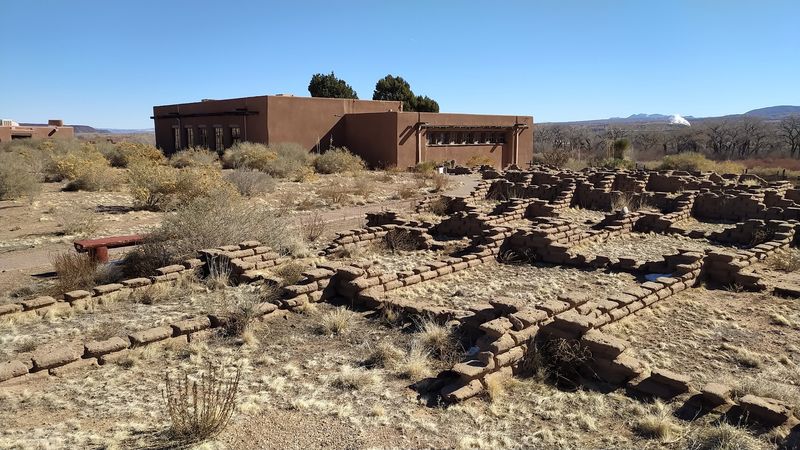
Adobe is more than a traditional building material in the Southwest. Its use reflects construction methods based on locally available earth and adaptations suited to the region’s dry climate.
The builders of Kuaua Pueblo shaped earthen materials into bricks and stacked them into walls that formed an extensive multistory community.
At Coronado Historic Site, reconstructed walls trace the footprint of the original pueblo. Around the perimeter, the structures appear to settle naturally into the terrain, with warm earth tones that closely match the surrounding soil.
The architecture does not demand attention. Instead, it appears closely connected to the landscape.
The visitor center reflects a similar regional approach. Architect John Gaw Meem designed the building using elements associated with Pueblo Revival architecture and Southwestern building traditions.
Together, the reconstructed pueblo walls and the Meem-designed visitor center create a visually connected experience throughout the grounds. The walls and doorways can seem to rise naturally from the desert earth beneath them.
Quiet Courtyards Invite A Slower Pace
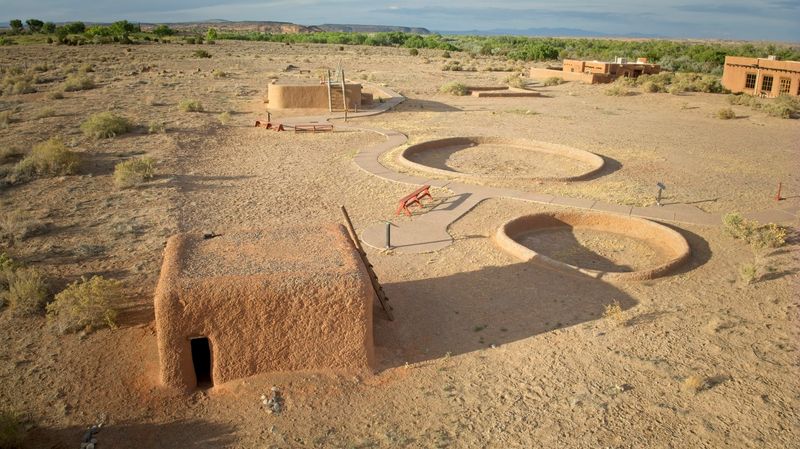
Not every historic site needs dramatic displays to leave a lasting impression. At Coronado Historic Site, the layout encourages visitors to slow down and look carefully at what remains of the community that once stood beside the Rio Grande.
Interpretive paths pass through the reconstructed pueblo area and continue toward the river, offering different views of the ruins and surrounding landscape.
Small details along the path frequently encourage visitors to pause and look more closely. Shaded picnic areas across the grounds provide places to sit, eat lunch, and spend more time with the surroundings.
The quiet atmosphere feels natural rather than deliberately staged.
Visitors accustomed to moving quickly through attractions may find that this site rewards a different pace. The reconstructed ruins are not flashy, but they help illustrate how people lived and gathered in the pueblo’s rooms and plazas.
Taking time to observe the walls, pathways, and open spaces can make the visit far more meaningful.
Murals Reveal A Vibrant Cultural Legacy
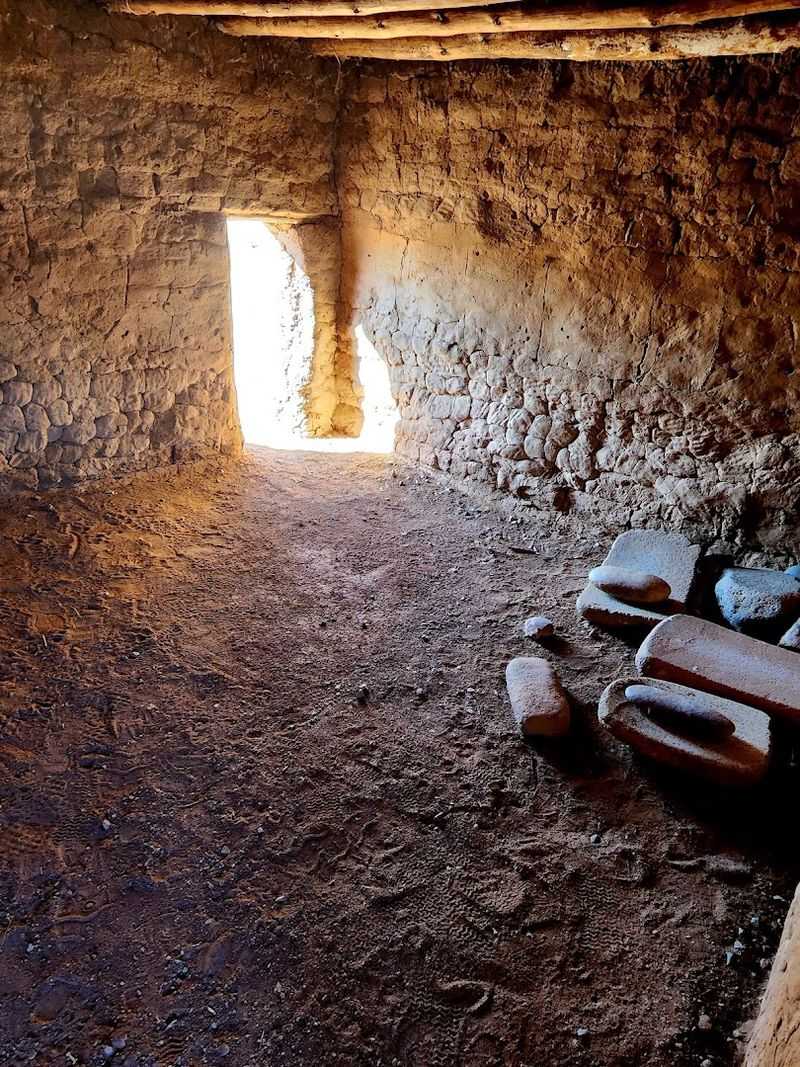
Beneath layers of plaster inside a square kiva in the south plaza, archaeologists working during the 1930s uncovered an extraordinary collection of painted images. One kiva contained more than 85 layers of plaster, with 17 layers carrying painted designs.
The imagery included animals and ceremonial figures, along with rain symbols, clouds, and lightning.
The murals date to the 14th and 15th centuries and are recognized as important examples of pre-Columbian art in the United States. They provide insight into the ceremonial and artistic traditions of the people who lived at Kuaua.
The fourteen original mural examples displayed in the museum can leave visitors humbled by their age and surviving detail.
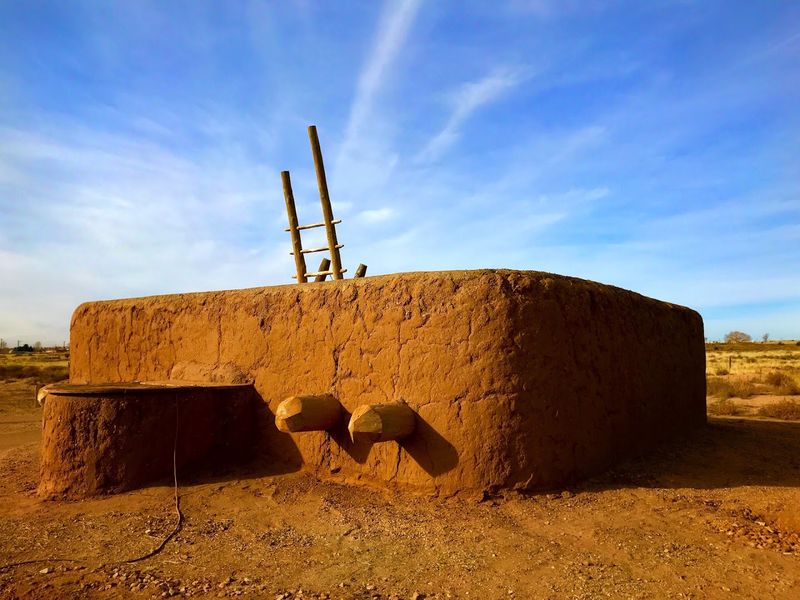
A reconstructed painted kiva can be visited during a guided tour. The reproduction was created to help visitors understand how the ceremonial space may have appeared when it was in use.
Entering the low-ceilinged structure can feel unlike anything else on the grounds. Photography of the original mural examples is not permitted, reflecting the cultural sensitivity and importance of the artwork.
Cottonwood Trees Frame The Historic Grounds
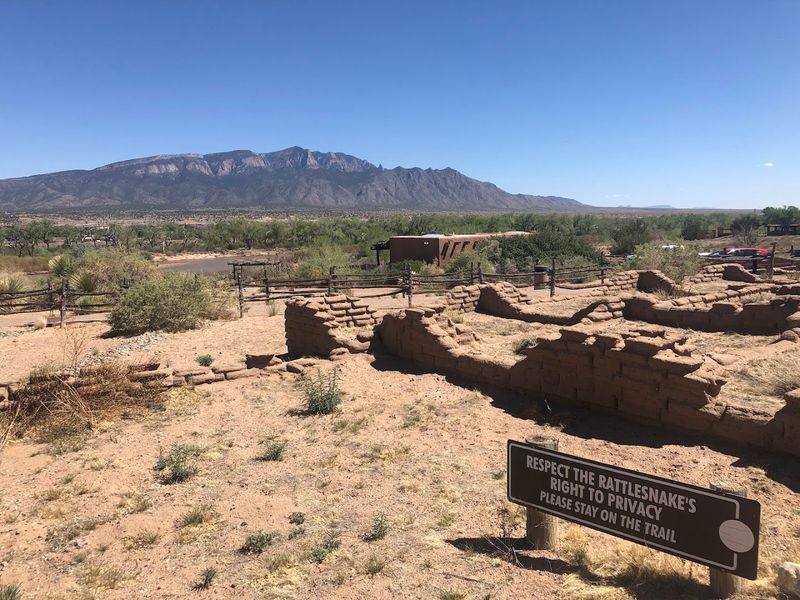
Cottonwood groves have a distinctive atmosphere that can be difficult to appreciate until visitors stand beneath their branches. Along the Rio Grande at Coronado Historic Site, tall trees create a canopy that softens the desert sunlight and fills the area with the sound of moving leaves.
Beneath the trees, the shaded riverside landscape feels noticeably different from the surrounding dry terrain.
Rio Grande cottonwoods and coyote willows are common species in the region’s riparian woodlands. Cottonwood also has a long history of practical and cultural use among Indigenous communities of the Southwest.
Its wood has been used for roof-support beams, drums, carvings, and other objects. The trees were therefore more than scenery for the people who lived beside the river.
The bosque also functions as an important wildlife corridor. Birds and mammals move through the woodland, while insects and reptiles occupy the surrounding habitat.
Hummingbirds and quail may appear along the grounds without much searching. The trees frame the historic site while supporting the riverside ecosystem.
Desert Light Gives Every Corner A Timeless Feel
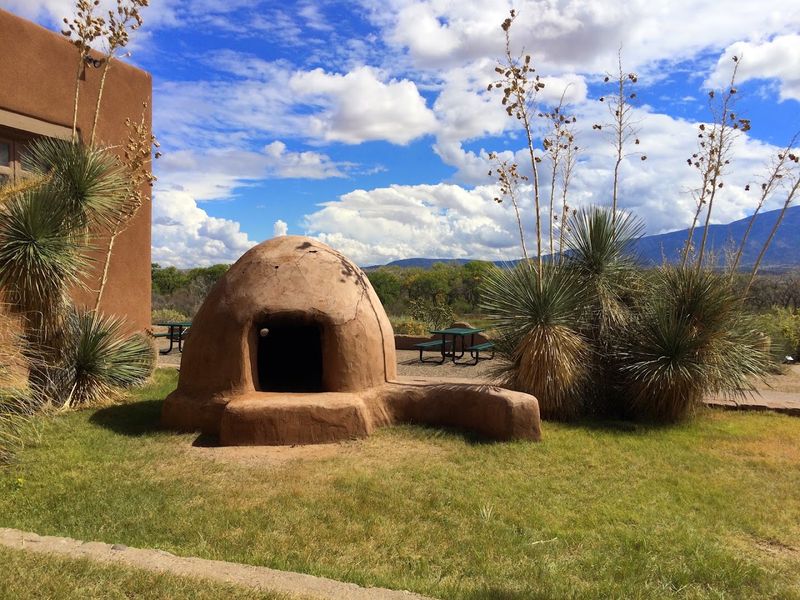
Light in the high desert changes noticeably throughout the day. Morning sunlight creates sharp shadows across adobe surfaces, while the warmer light near sunset can make the walls appear to glow.
At Coronado Historic Site, those changing conditions contribute to the way visitors experience the reconstructed pueblo and surrounding landscape.
Early sunlight moves across the reconstructed rooms of Kuaua after clearing the Sandia Mountains. As it passes through doorways and spreads across the open plazas, the ruins can briefly appear occupied rather than abandoned.
That impression can remain with visitors throughout the experience.
Standard operating hours are Wednesday through Monday, 10 AM to 4 PM, with the site closed on Tuesdays. New Mexico residents with valid identification receive free admission on the first Sunday of each month.
Arriving near opening or visiting later in the afternoon can provide especially appealing light for viewing the adobe walls and surrounding scenery.