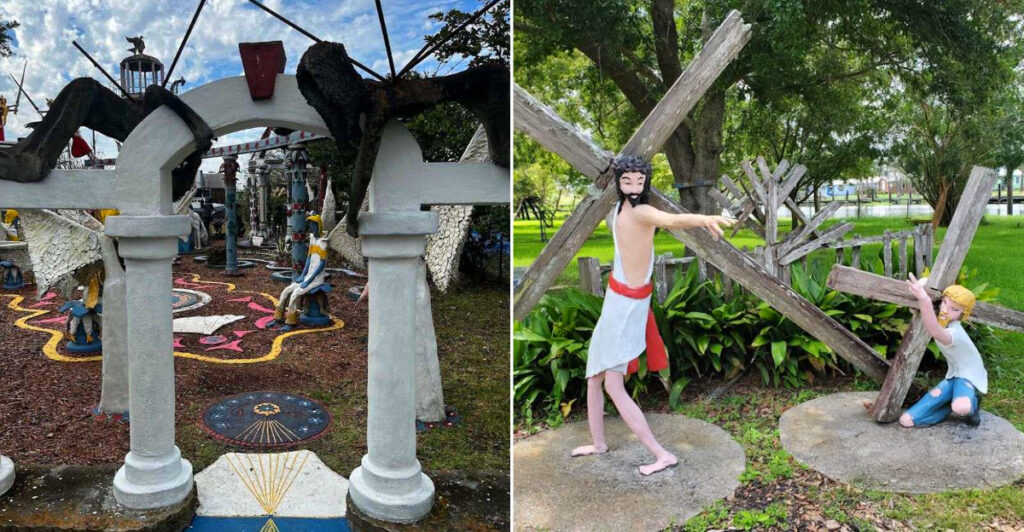
This Louisiana sculpture garden is truly unlike any place on earth. Nothing prepares you for what appears at the end of a narrow road winding through marshland dotted with cypress trees.
Over 100 life-sized concrete sculptures rise from the earth, depicting angels, soldiers, prophets, plus self-portraits of the artist, all crafted by a single bricklayer over several years.
A 45-foot lighthouse stands as the centerpiece, adorned with mosaic tiles plus crowned with a cross, while a concrete army of winged figures stretches in every direction.
Some angels hold trumpets, others kneel in prayer, yet the expressions on their faces shift between sorrow and triumph. The creator vanished without explanation, leaving behind this towering testament to faith and doubt.
Now maintained by a nearby university, the garden remains free and open to anyone willing to make the drive. A visit here changes how you think about folk art.
Notice The Lighthouse
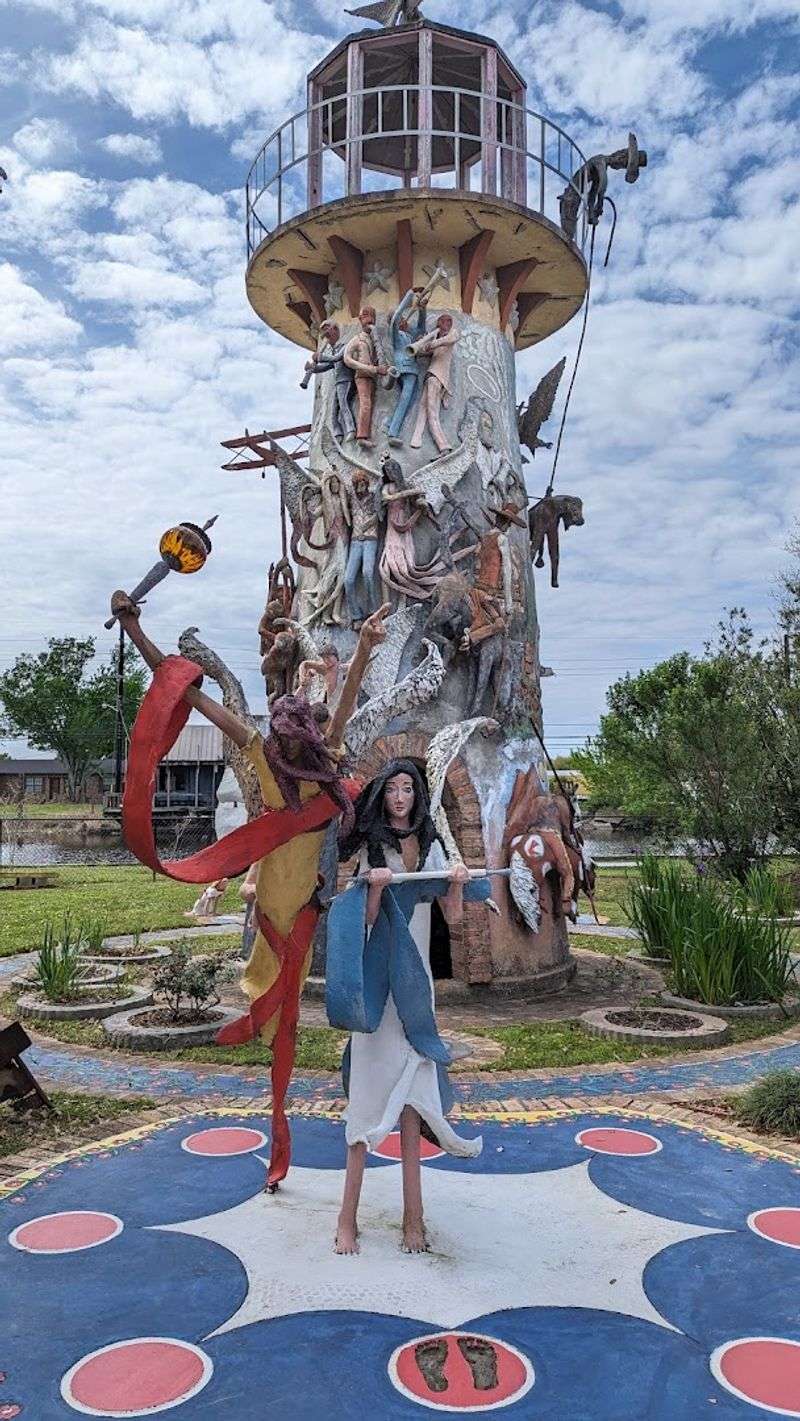
The tallest structure sets the whole garden’s emotional scale. A 45-foot lighthouse rises from the concrete landscape, built from thousands of bricks and crowded with figures that seem to climb, cling, announce, warn, and witness.
It is part tower, part pulpit, part handmade monument to a private spiritual drama. The brickwork matters because Kenny Hill was a bricklayer by trade. The structure does not feel like an art-school object placed outdoors.
It feels like a tradesman using familiar materials to build something he could not explain any other way. Cowboys, soldiers, angels, God, and Hill himself appear around the tower, turning it into a vertical story rather than a simple centerpiece.
Circle it slowly. The lighthouse changes as you move, opening new angles, faces, gestures, and tensions.
From one side it feels triumphant. From another, uneasy. That shifting impression is exactly why it holds the garden together so powerfully today.
Cross The Bayou, Then Look Both Ways For Angels
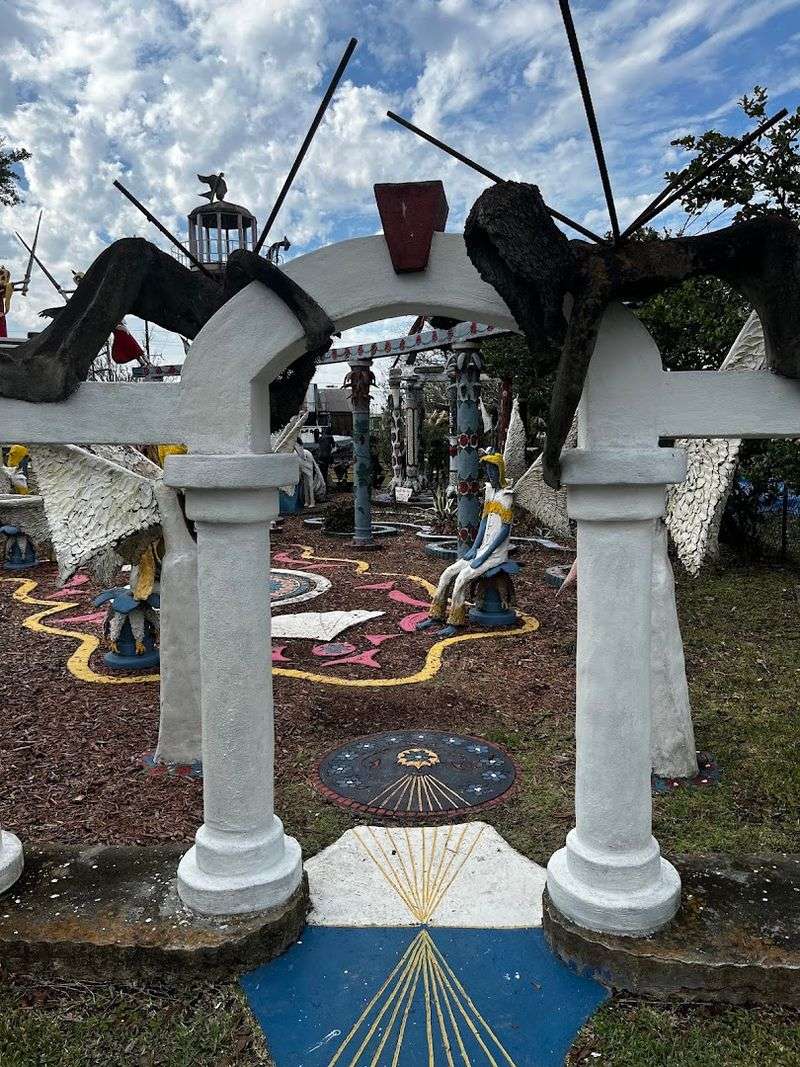
Getting there already feels like leaving the ordinary road map. Chauvin Sculpture Garden sits at 5337 Bayouside Drive in Chauvin, Louisiana, along Bayou Petit Caillou and about 19 miles below Houma.
The drive narrows into bayou country, where water, shrimping life, small bridges, and roadside houses prepare you for something stranger.
Follow the official route south from Houma, cross the Sarah Bridge, then turn onto Bayouside Drive. The Nicholls State University Art Studio stands on one side of the road, while the sculpture garden waits across from it, packed into a narrow bayouside property.
Public hours are limited, so confirm before driving. Current official guidance lists Saturday and Sunday hours from 11 a.m. to 4 p.m., or visits by appointment.
Admission is free, but the trip still asks for planning. This is not a place to rush toward accidentally.
The road is part of the spell itself.
Observe The Angels
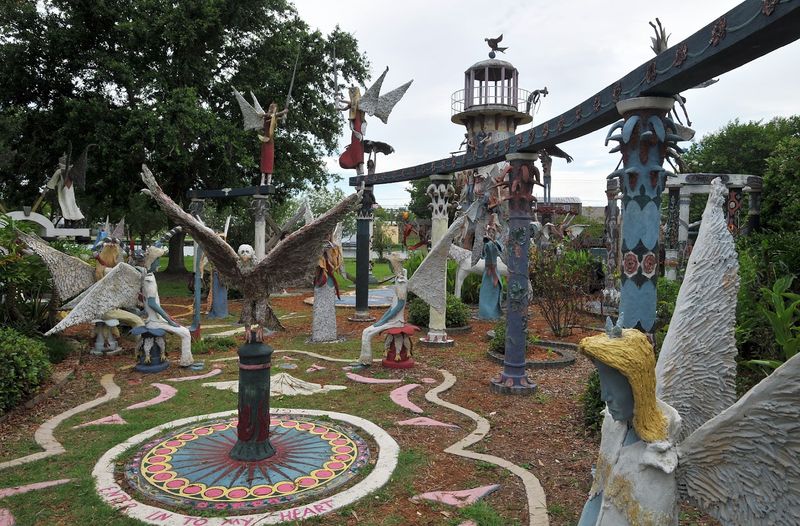
Angels fill the garden, but they do not all offer the same comfort. Some seem protective, some ceremonial, some severe, and others carry the rough awkwardness of figures made by hand rather than filtered through polish.
That variety gives the site much of its force.
More than 100 concrete sculptures crowd the property, and many are guided, supported, lifted, or confronted by angels. Some have blue skin, bare feet, shrimp boots, or expressions that blur sorrow and command.
The figures belong to biblical imagination, Cajun color, and Kenny Hill’s own inner struggle. Look closely at hands, wings, faces, and posture. The work can seem simple from a distance, but details accumulate when you slow down.
The angels are not just decoration around the lighthouse. They are the garden’s moving vocabulary, carrying warning, rescue, judgment, and tenderness through every path. Their repetition makes the whole place feel watched from many directions.
Look For Self Portraits
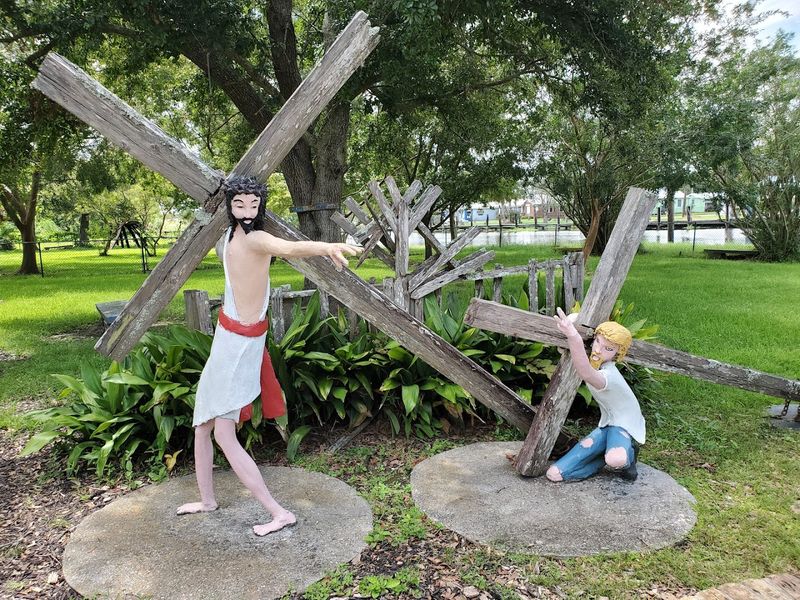
Finding Kenny Hill inside his own garden changes the walk. He did not remain outside the story as an invisible maker.
He placed himself among the figures again and again, sometimes riding a horse, carrying a cross, showing a bleeding heart, or appearing with a face divided between black and white.
Those self-portraits make the site feel autobiographical rather than merely religious. They suggest conflict, confession, performance, pain, and a need to turn private experience into public form.
The more you notice Hill within the scenes, the less the garden feels like a folk-art curiosity and the more it feels like a mapped interior life.
Do not search for these figures as if solving a puzzle too quickly. Let them appear gradually. One self-portrait clarifies another, and soon the garden starts reading like a spiritual diary built in the open air. The artist is absent; his presence returns in fragments.
Mind The Circular Layout
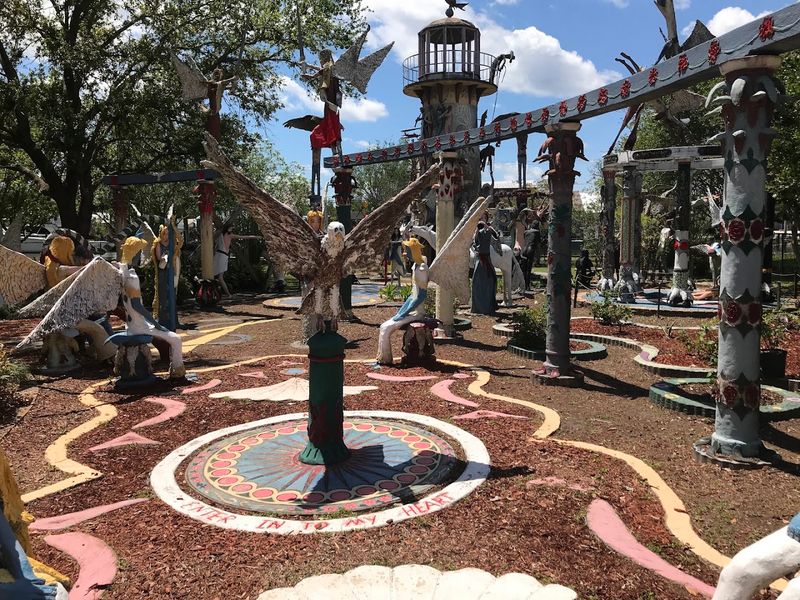
The layout does not behave like a straight museum aisle. Hill arranged figures on circular platforms connected by meandering concrete paths, so the visit turns, loops, doubles back, and constantly changes direction.
That movement matters because the garden feels less like a display and more like a procession.
Nine round platforms help organize the scenes, giving each cluster a stage while still keeping everything visually connected. As you move, sightlines open and close.
A figure that seemed secondary from one point can suddenly become central from another. The lighthouse, angels, bayou, and pathways keep reordering themselves.
Follow the route slowly instead of forcing a fixed checklist. The circles invite wandering, and the meaning often arrives through repetition.
You see a hand gesture once, then another echo of it later. You pass from warning to comfort, from crowding to open space, and the garden’s choreography begins to feel fully intentional now.
Visit During A Festival
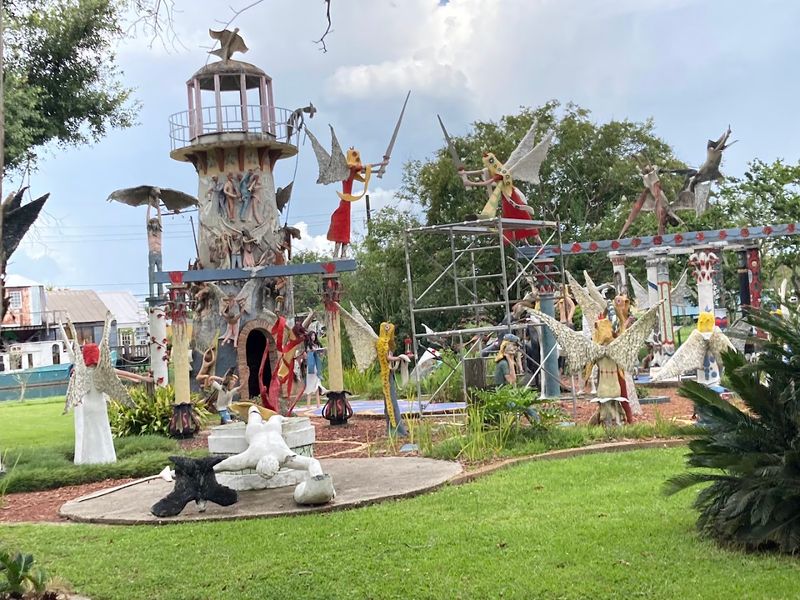
Community events change the garden’s mood from solitary vision to shared coastal ritual. The site has been connected with gatherings such as the Blessing of the Fleet, when local shrimp boats and bayou life become part of the same cultural landscape that shaped Hill’s imagery.
Art, faith, water, work, and community overlap naturally here. A festival visit can add music, food, conversation, student work, or docent presence. That liveliness gives the sculptures a different charge.
Instead of standing in silence as one artist’s private world, the garden becomes a gathering place for people who continue to care about it.
Check current event listings before planning around a festival, because dates and programming can change. A quiet weekend is better for contemplation, but an event day shows how the garden functions beyond tourism.
Both versions matter. One reveals the solitude of the work; the other reveals the community keeping it alive.
Appreciate The Materials
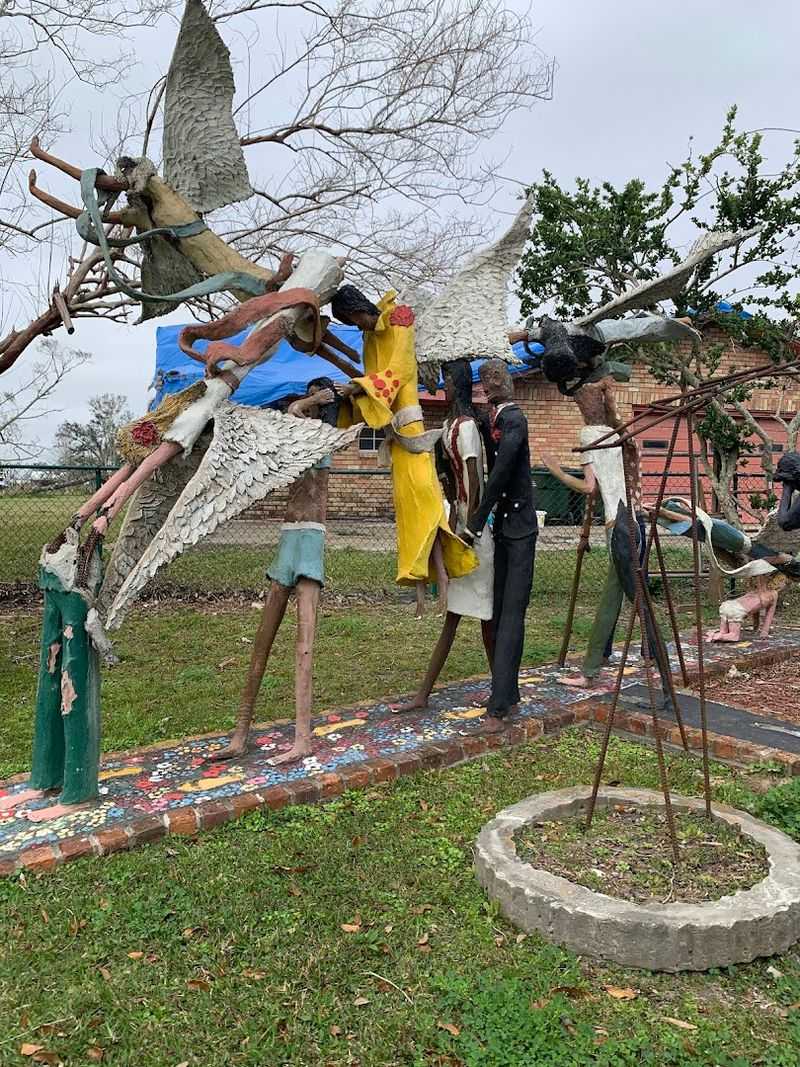
Concrete gives the figures their blunt power. The sculptures were built from practical materials such as cement, wire mesh, rebar, bricks, and hand-shaped surface work, which makes the garden feel direct.
Nothing is hidden behind refined finishes. You can sense labor in the texture.
That roughness is part of the beauty. Forks, spoons, and simple tools reportedly helped create marks and patterns, turning construction knowledge into expressive detail.
Hill’s background as a bricklayer matters because the garden is not fragile in intention, even when individual pieces now need careful preservation. It was made by hands used to building things that stand outside.
Look for seams, patched areas, weathering, and places where structure shows through. These details do not ruin the art.
They reveal how vulnerable outdoor folk environments can be in bayou weather. The materials carry both stubbornness and fragility, which is exactly the tension that makes the garden unforgettable.
Respect Preservation Needs
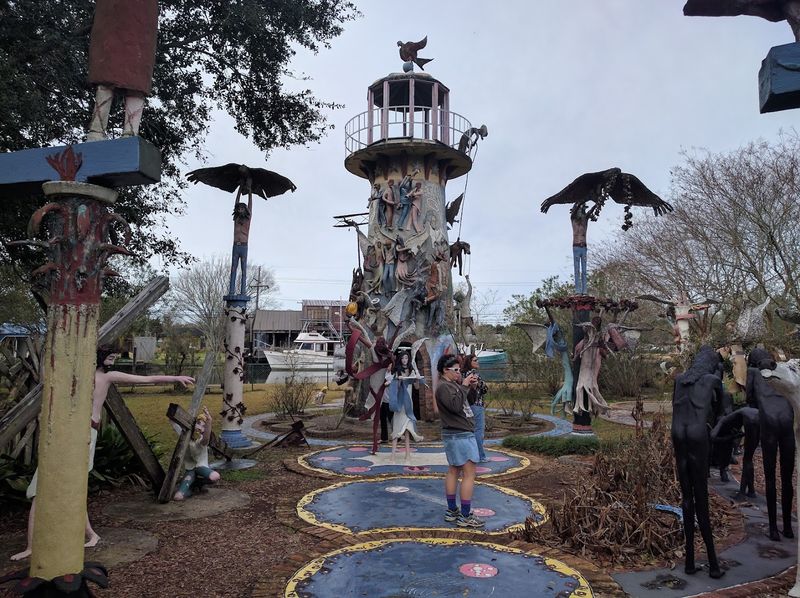
Preservation is not abstract here. The sculptures stand outdoors in humidity, storms, sun, and coastal conditions that test concrete, paint, brick, and metal.
Some figures show repairs or weathering, and that visible vulnerability makes visitor behavior matter more than it might at a conventional museum.
After Hill abandoned the site, the garden was gifted to Nicholls State University, which helps preserve, interpret, and protect the work. Hurricane damage and ongoing restoration needs have made that responsibility even clearer.
Keeping the site open requires labor, funding, patience, and visitors who understand that touching a sculpture for one photo can create real harm over time.
Stay on paths, avoid climbing or leaning, and treat barriers as conservation tools rather than annoyances. The garden’s power comes partly from how exposed it feels. Respecting that exposure means helping the work survive. A careful visitor becomes part of the preservation story, not just a witness.
Plan For Bayou Weather
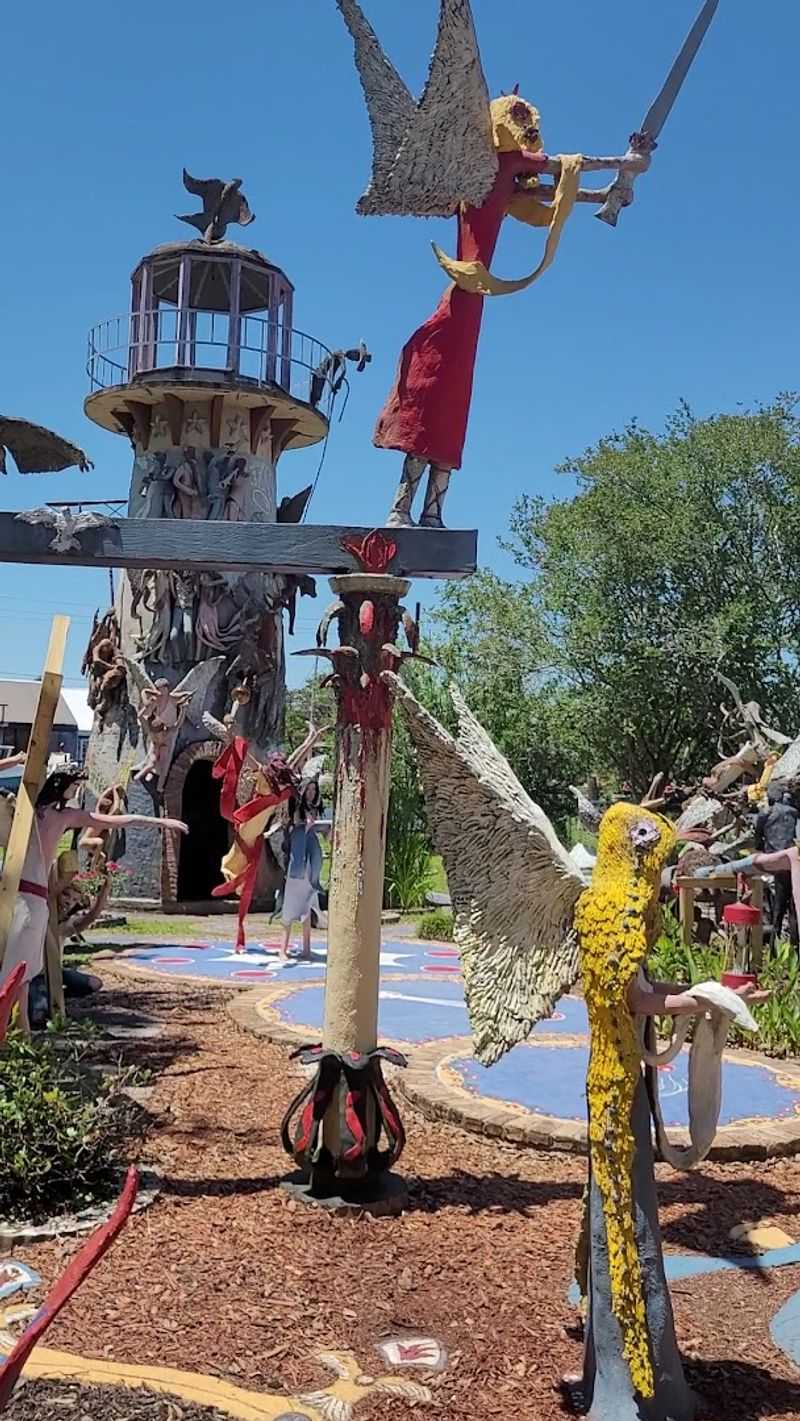
Bayou weather shapes the visit whether you plan for it or not. Heat, humidity, sudden showers, insects, and damp paths can all change how long you want to linger among the sculptures. Summer afternoons can feel heavy, while mornings offer gentler light and more mercy.
Bring water, sunscreen, insect repellent, and shoes with traction. The garden is not enormous, but the outdoor setting makes comfort important, especially if you want to study details rather than hurry from shade to shade.
Rain can deepen colors and make concrete textures more dramatic, but it can also make surfaces slick and parking or walking less pleasant.
Check the forecast before driving down from Houma or New Orleans, and build flexibility into the day. The weather is not separate from the place.
It is part of the bayou atmosphere that surrounds the art, wearing on sculptures and visitors alike. Preparedness lets you notice more.
Use Weekend Docents
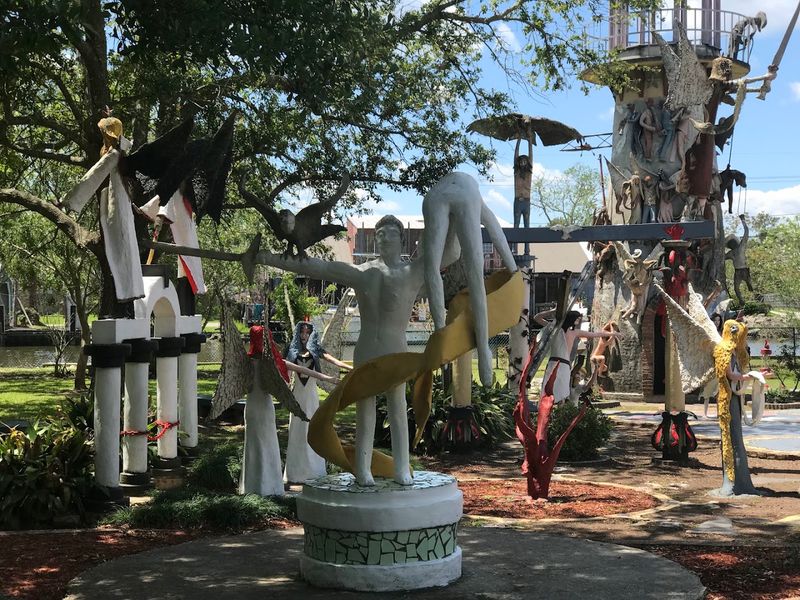
A docent can turn the garden from impressive to legible. On weekend public hours, the Nicholls State University Art Studio may offer staff or volunteers who can explain Kenny Hill’s life, the construction timeline, the religious imagery, and the preservation challenges that are not always obvious from a self-guided walk.
That context matters because the sculptures can feel overwhelming at first. Angels, soldiers, self-portraits, inscriptions, towers, circles, and bayou references arrive all at once.
A knowledgeable guide helps separate formal choices from local stories and points out details visitors might miss, such as repeated symbols or links to shrimping culture.
Ask questions gently and listen for uncertainty too. Some parts of Hill’s story remain incomplete, and that incompleteness is part of the site’s mystery.
The best interpretation does not flatten the garden into one explanation. It gives you enough grounding to look harder, stay longer, and leave with better questions.
Bring A Quiet Curiosity
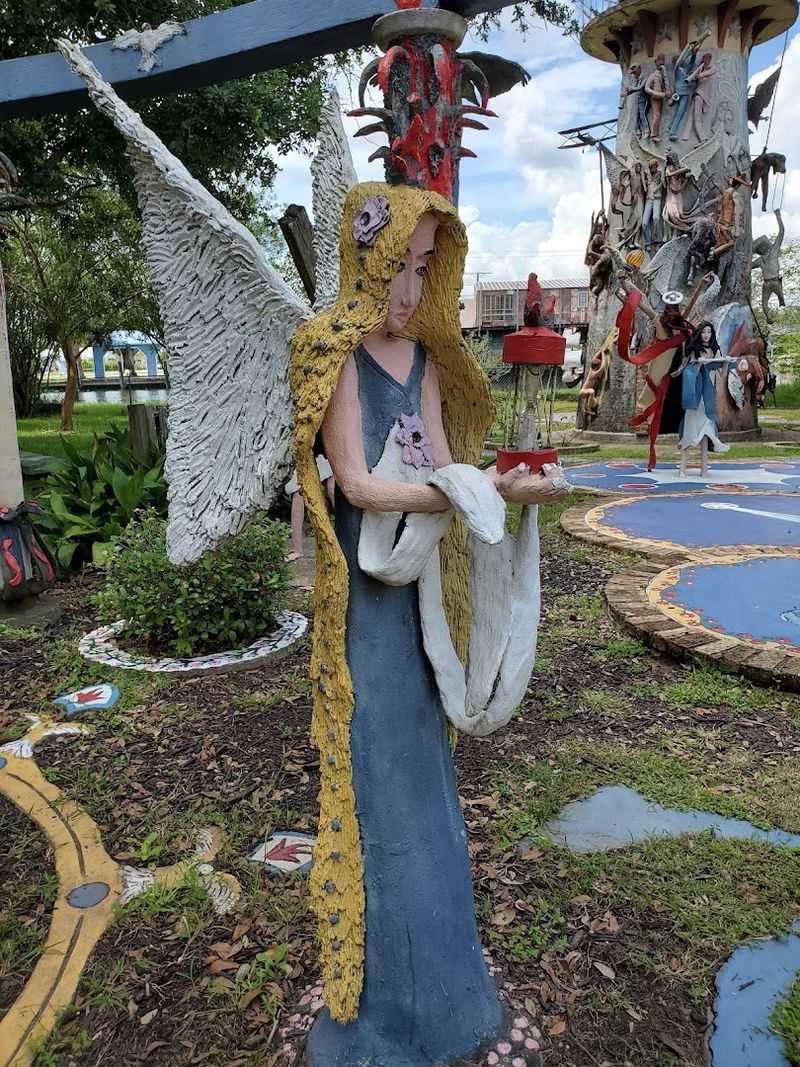
This is not a sculpture garden that gives itself away in one glance. The first view can feel almost overwhelming: concrete bodies, wings, towers, faces, and symbols crowding a narrow bayou lot. The better visit begins after that first shock, when curiosity becomes quieter.
Sit if you can, then look again. Notice how a hand points, how a figure leans, how one face seems calm while another looks strained.
Hill’s work can feel devotional, troubled, playful, theatrical, and lonely within the same few steps. Trying to solve it too quickly reduces its force.
Bring a camera or sketchbook if that helps you pay attention, but do not let documentation replace looking. The garden rewards people who can stay with ambiguity.
It is not only about faith, not only about folk art, and not only about one missing artist. It is about what remains when private urgency hardens into public form.