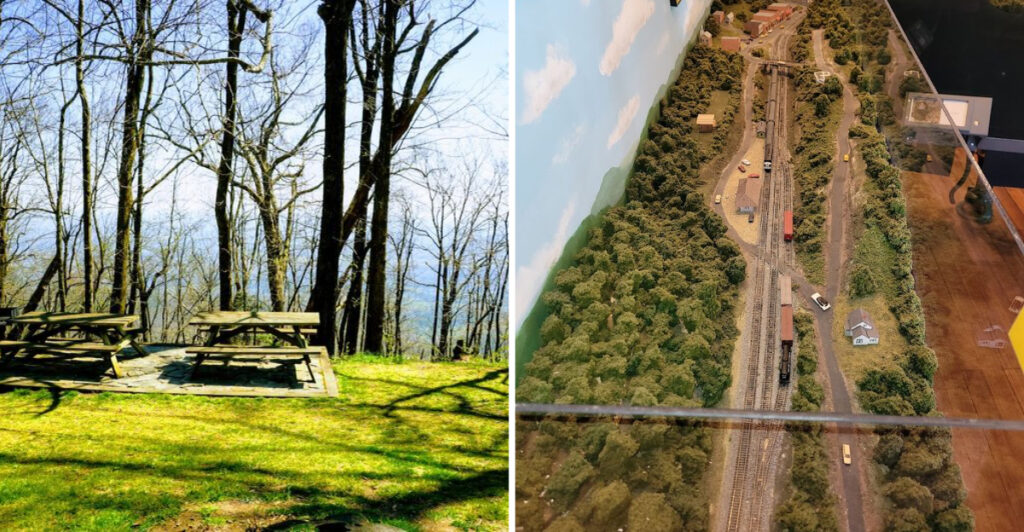
Your Saturday is about to lose an argument with a mountain road.
One small North Carolina stop has a habit of turning “we will stay an hour” into “should we find dinner?”
You arrive feeling organized. The town takes one look at that confidence and starts moving the goalposts by lunch.
Good luck keeping the schedule intact.
A short walk becomes a longer pause. One curious turn becomes three. Before long, Sunday is standing nearby, clearing its throat and asking whether you packed a toothbrush.
That is the trick here. Nothing chases you, yet leaving early starts to seem oddly rude.
North Carolina does not always need a grand entrance. Sometimes it just needs a quiet road, one free morning, and your willingness to be pleasantly outsmarted.
Come for the drive if you must. Just do not blame the town when your “quick trip” develops weekend plans of its own.
The City That Makes The Final Miles Count
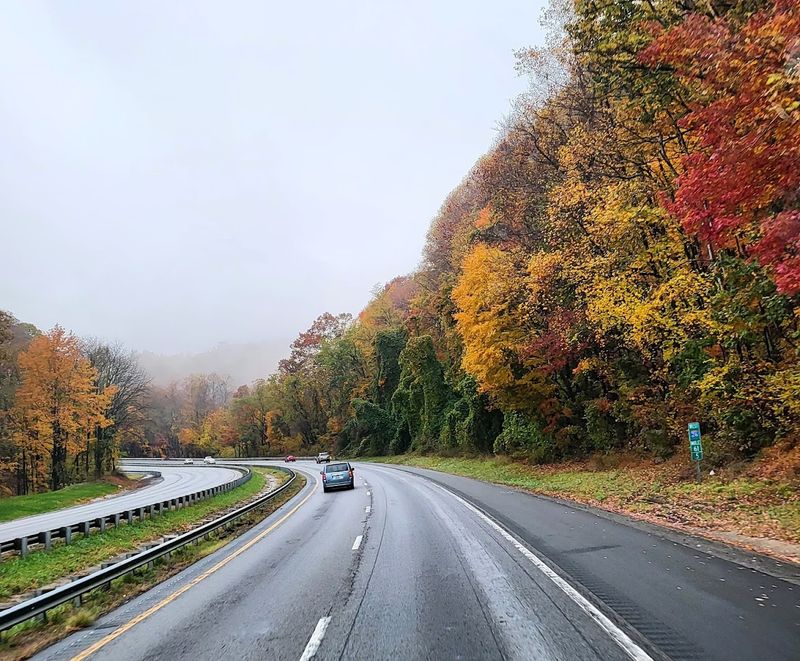
Saluda does not waste its entrance. The city sits about 35 miles south of Asheville, close enough for a spontaneous outing but high enough to make the trip register as a proper mountain break.
Drivers using Interstate 26 can take Exit 59 and reach downtown without turning the day into an expedition.
Saluda crosses the line between Polk and Henderson counties, although most of its historic center lies in Polk County. The 2020 Census counted 631 residents, so the word “city” comes with a wonderfully small footprint here. You do not arrive at a sprawling commercial district.
You reach a compact center where the railroad, storefronts, parks, and side streets sit close together.
One important route detail needs attention before you leave. The Pacolet River Scenic Byway normally follows U.S. 176 for about 10 miles between Tryon and Saluda, but the road is still temporarily closed after major Hurricane Helene damage.
Current local guidance directs visitors to other approaches, making Interstate 26 the practical choice until repairs are complete.
That adjustment does not cancel the trip. It simply removes one scenic approach from the day and saves it for a future return. Saluda is easy to reach.
The harder part is convincing yourself that one afternoon will do.
Main Street Packs History Into Three Blocks
Three blocks walk into a weekend, and somehow, they steal the whole schedule.
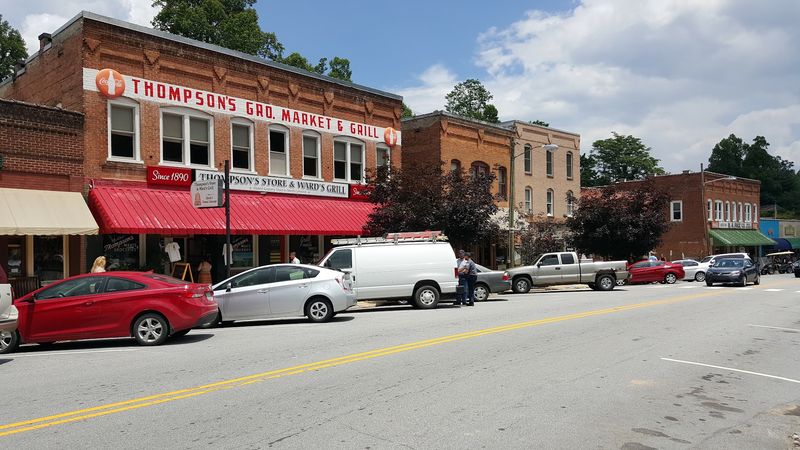
Saluda’s Main Street Historic District runs from Cullipher Street to Carolina Street and entered the National Register of Historic Places in 1996.
The district protects the core of a commercial strip shaped by rail travel, summer visitors, and more than a century of local business.
The length is modest, but the buildings keep the walk from becoming a quick march. Brick storefronts stand beside the old rail corridor, while shops, galleries, restaurants, and small public spaces give you reasons to cross the street more than once.
The district still performs its original job as downtown rather than sitting behind a rope.
That active use gives the architecture extra personality. A window display may occupy a building that served travelers generations ago, and a bench can put you within sight of the track that decided where the town would grow.
You can cover the district quickly, but speed would be a strange choice after driving here to slow down.
The compact layout also takes pressure off the visit. There is no giant checklist waiting to scold you, and missing one storefront does not require another parking battle. Main Street is short on mileage and suspiciously rich in detours.
The Railroad Supplied Saluda With Its Opening Chapter
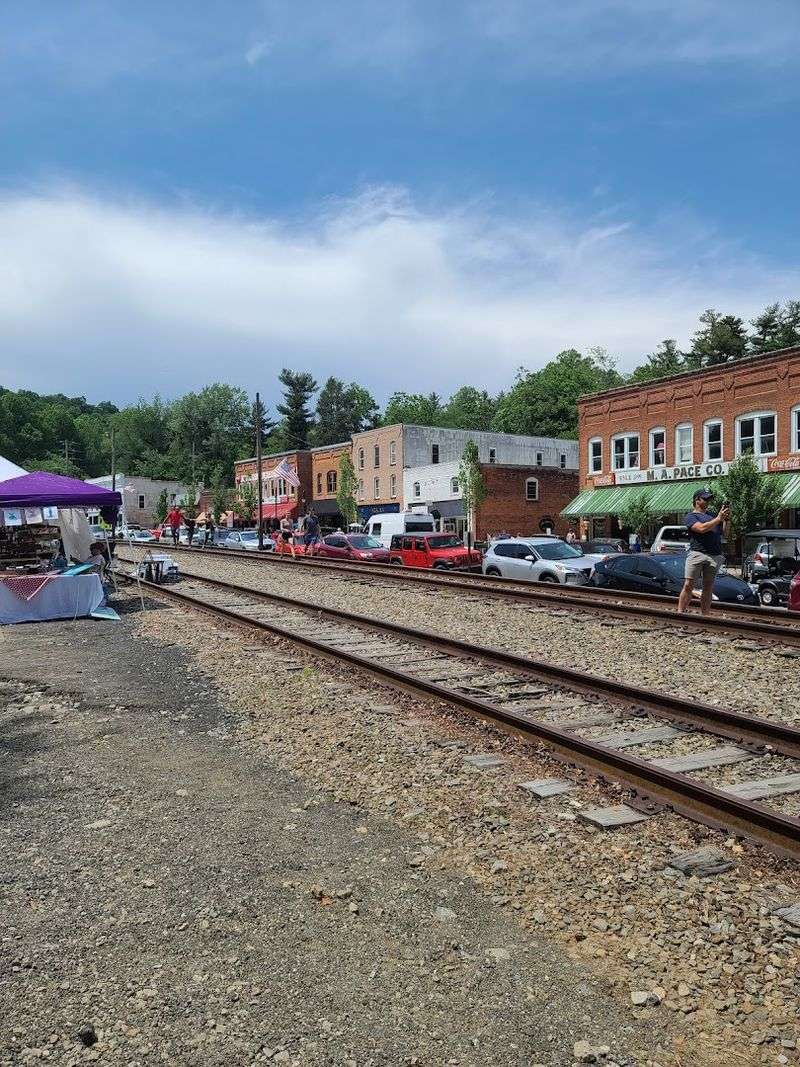
The railroad did not merely pass through Saluda. It supplied the plot. Construction activity reached the top of the grade during the 1870s.
In 1877, railroad contractor Andrew Tanner bought property near the right of way, where he established a commissary for workers and built the Mountain House, described in local history as the village’s first hotel.
The first train climbed the route on July 4, 1878. That connection brought workers, passengers, supplies, and new business to a settlement that had previously been little more than scattered homes and an older travel route across the mountains.
Development gathered near the tracks because the tracks were the reason development had arrived.
North Carolina lawmakers chartered Saluda in February 1881. The original town plan covered one square mile and placed the railroad directly through its center, a layout that explains the close relationship between Main Street and the rail corridor.
The town later expanded beyond that original plan, but its center still reads like a railroad town with excellent memory.
Knowing this history changes the way you explore. The rails stop looking decorative, the depot becomes more than a handsome building, and the narrow downtown begins to make geographic sense. In Saluda, the tracks are the sentence that started everything.
Saluda Grade Put Serious Muscle Behind The Name
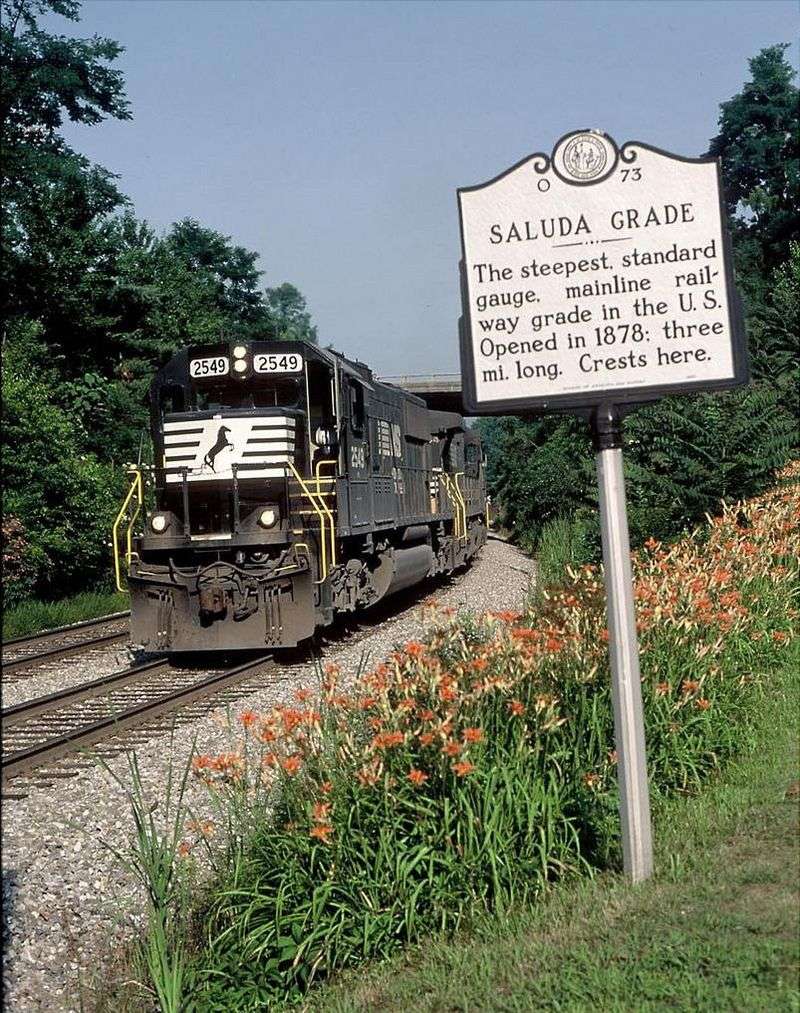
A 4.7 percent grade sounds polite until a locomotive has to argue with it. The Saluda Grade stretches for about three miles and crests beside Main Street.
According to the North Carolina Department of Natural and Cultural Resources, it rises an average of 4.7 feet for every 100 feet of track, making it the steepest mainline, standard-gauge railroad grade in the United States.
That engineering distinction carried heavy operational demands. Crews moving trains through the corridor had to respect the slope, and repeated runaway accidents eventually led to an escape track near Melrose.
Special procedures and close attention became part of everyday railroad work on a route where gravity never took a day off.
Regular freight service ended in the early 2000s, but the grade still dominates Saluda’s identity. You can stand near downtown, look along the track, and understand why railroad workers spoke about this stretch with such respect.
Numbers printed on a marker become much less abstract when the mountain is standing directly in front of you.
The grade also gives the town a story larger than its population. Many small cities have old tracks. Saluda has a national railroad superlative running through the center.
The trains stopped reporting for duty, but the slope still owns the room.
The Depot Turns Railroad History Into An Easy Stop
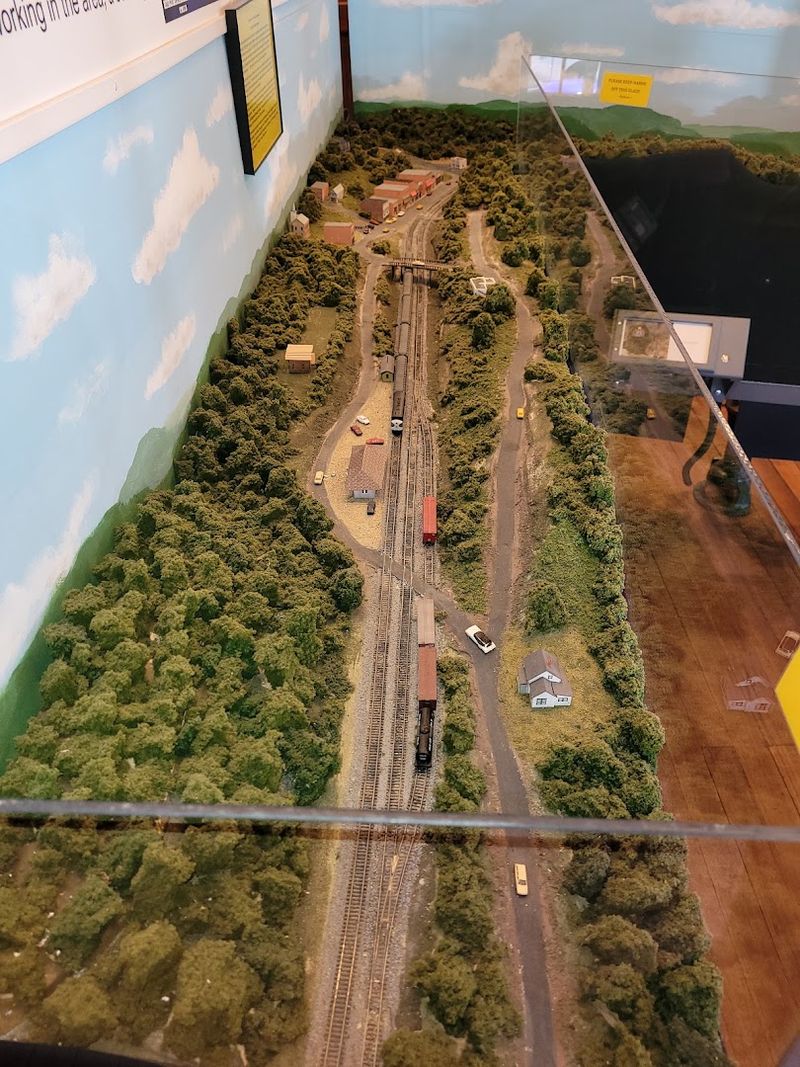
History behaves better when it comes with a diorama.
The Saluda Depot Museum stands at 32 West Main Street, beside the tracks and within a short walk of the rest of downtown.
Its location makes it an obvious starting point, especially when you want the town’s railroad story before the shops and brick buildings begin competing for your attention.
Exhibits focus on the Saluda Grade, the depot’s preservation, and different eras of railroading.
The museum’s displays include a Saluda Grade diorama, railroad photographs, and material explaining how crews and equipment handled the famous climb. You do not need a railway vocabulary to follow the story.
The scale suits a weekend stop. You can spend enough time to understand the essential history, then step outside and see the actual corridor described indoors.
That quick connection between exhibit and landscape gives the museum more impact than its small size suggests.
Check the museum’s current schedule before arriving, since opening days are limited. Once the doors are open, the stop gives you useful context without swallowing the whole afternoon.
Local Shops And Public Art Keep Downtown Personal
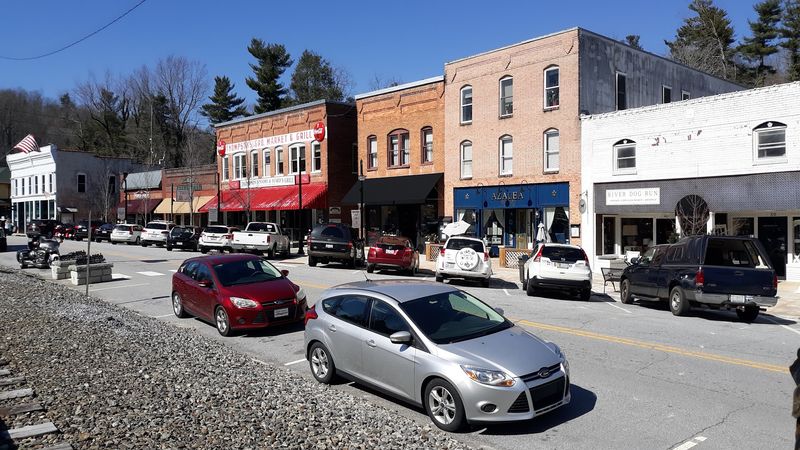
Retail therapy here arrives with fewer receipts and better stories.
Saluda’s downtown businesses lean toward independent shops, galleries, studios, and long-running local names. The official town directory still lists M.A. Pace at 60 East Main Street, while nearby storefronts showcase art, gifts, home goods, and work by regional makers.
Browsing becomes part of the walk rather than a separate mission.
Pace Park adds a free history lesson between stops. The park displays “Saluda Past and Present,” a mural by artist Susan Olivari that was unveiled in 2023.
Its imagery draws on residents, landscape, music, waterways, and community life, packing a broad local story into one colorful wall.
The town’s creative side becomes much louder during the annual Saluda Arts Festival, when Main Street turns into an outdoor gallery.
Coon Dog Day brings a different kind of celebration each July, with a parade, dog events, family activities, music, and dancing. Both occasions prove that a population of 631 can host a much larger personality.
A quieter weekend offers more elbow room, while event days bring more energy and tighter parking. Either version keeps the town recognizably local. You came for a mountain drive, but your trunk may return with a small identity crisis.
The Return Drive Should Not Be Treated Like An Exit Interview
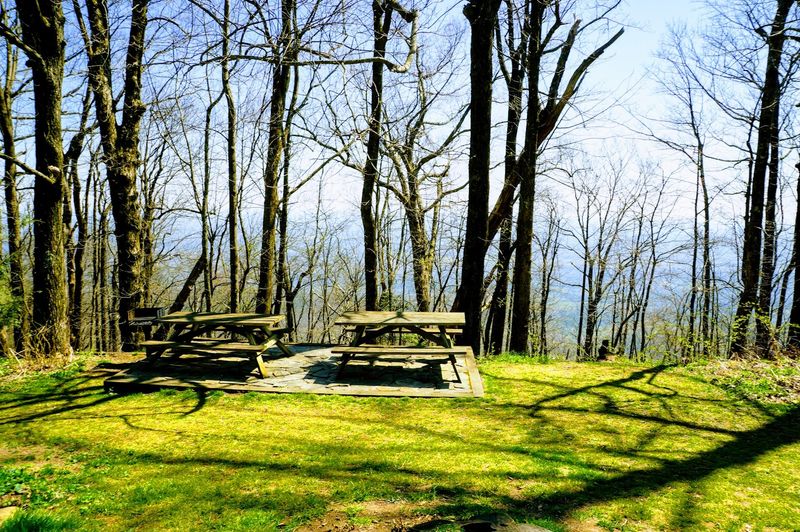
Leaving Saluda deserves better than a hurried goodbye and a slammed car door.
The town’s compact center lets you build a full day without racing. The depot can set up the railroad story, Main Street can handle the wandering, and Pace Park provides an easy pause before you decide whether another shop deserves a final look.
Nothing requires complicated navigation once you park.
Current road conditions do require a little homework. U.S. 176 between Saluda and Tryon is still temporarily closed, so do not rely on older itineraries that send you down the Pacolet River Scenic Byway.
Use the Interstate 26 approach and check official travel updates before departure, especially while regional repairs continue.
That practical note is the only serious piece of scheduling the outing needs. Saluda works because the history, shops, art, and railroad landmarks sit close enough to share one afternoon without fighting over it.
You can stay longer, but you never need to sprint in order to justify the drive.
Give yourself time for one last pass along Main Street before heading home. The buildings often reveal a detail you missed earlier, and the tracks look different after the depot explains what happened there. A day trip can end at the car.
Saluda is more likely to make Sunday negotiate.