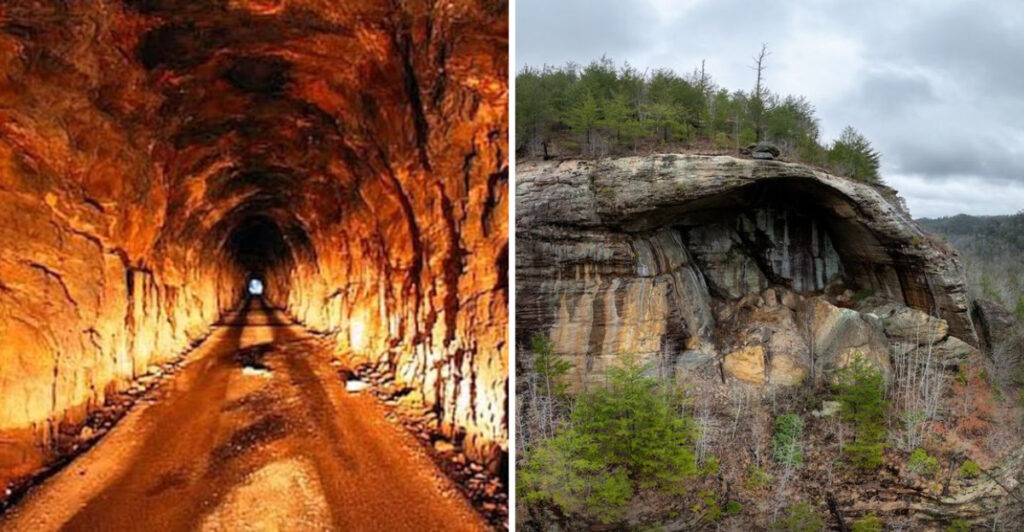
There should be a small trophy waiting at the far end.
Not for speed, and definitely not for style. The prize is for keeping your mirrors intact while a Kentucky highway slips through a sandstone opening built for railroad cars.
First comes the pause. You study the black entrance, search for headlights, and silently nominate the other driver to go first.
Then the tunnel swallows the road.
Inside, every sound becomes official. Tires hum. Stone crowds the windows.
Your passenger suddenly develops strong opinions about vehicle width.
The exit finally brightens, and the whole car seems to exhale at once.
That brief crossing carries more history than many roadside museums. Timber trains used it first, local travelers kept it useful, and modern traffic inherited the squeeze.
Kentucky kept the route practical, which makes the experience better.
You do not simply visit the past here. You negotiate the right of way with it.
A Timber Company Needed A Shortcut Through Stone
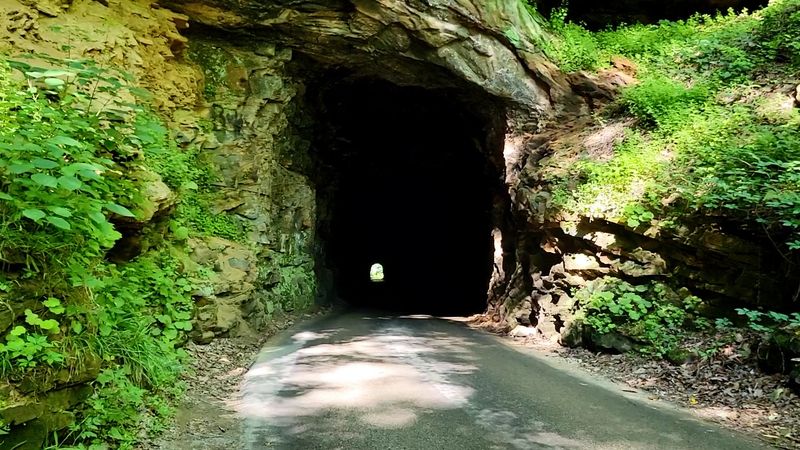
The ridge refused to move, so the lumber company edited it.
During the early twentieth century, the Dana Lumber Company developed logging operations around the Red River Gorge. Valuable timber stood beyond steep sandstone terrain, but moving heavy logs out efficiently required a more direct route.
The company commissioned a tunnel through Tunnel Ridge for a narrow-gauge railroad. Construction took place during 1910 and 1911, giving timber trains a path between the logging area, the company sawmill, and larger rail connections outside the gorge.
This was infrastructure with one blunt assignment. The passage did not need decorative stonework, comfortable clearance, or room for sightseeing. It needed to move loaded rail cars through a mountain without sending them over it.
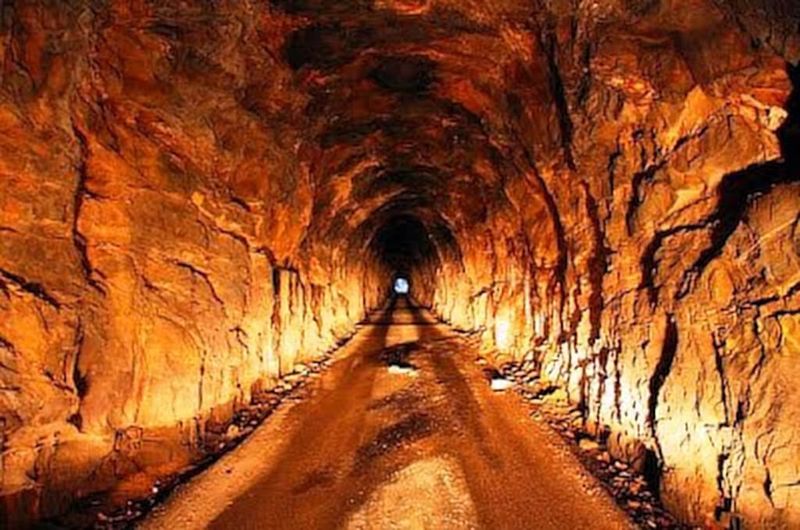
That practical origin explains the tunnel’s rough interior today. The walls were cut for work, not appearance, and their uneven surfaces still show where engineering met stubborn geology.
Modern visitors often treat the route as an unusual entrance to the gorge. The original builders would have measured success in logs, schedules, and fewer miles of difficult hauling.
The company wanted timber, but it accidentally built a landmark.
The Mountain Charged Every Foot In Labor
Dynamite handled the punctuation, but picks and shovels wrote the rest.
Workers used explosive charges and a steam-powered drill to break through the sandstone. Hand tools handled the slower work of clearing material, shaping the passage, and pushing construction forward through roughly nine hundred feet of rock.
The tunnel is approximately twelve feet wide. It was initially cut about twelve feet high, but the commonly documented account says the first load of logs could not clear the roof. Workers then enlarged the passage to roughly thirteen feet.
That extra historical foot should not be treated as modern vehicle clearance. Current Forest Service guidance lists the usable clearance for traffic as twelve feet wide by twelve feet high.
Drivers of tall or wide vehicles should follow the posted limits rather than relying on historic measurements.
The confined route also makes the labor behind it easier to understand. There was little room for equipment, debris, workers, and track construction to share. Every advance created another load of stone that had to be left before the crew could continue.
You do not need to stop inside to appreciate the workmanship. In fact, keep moving and save photographs for a safe pull-off.
The walls already display the receipt for every hard-earned foot.
Steel Wheels Had The Road Before Your Tires
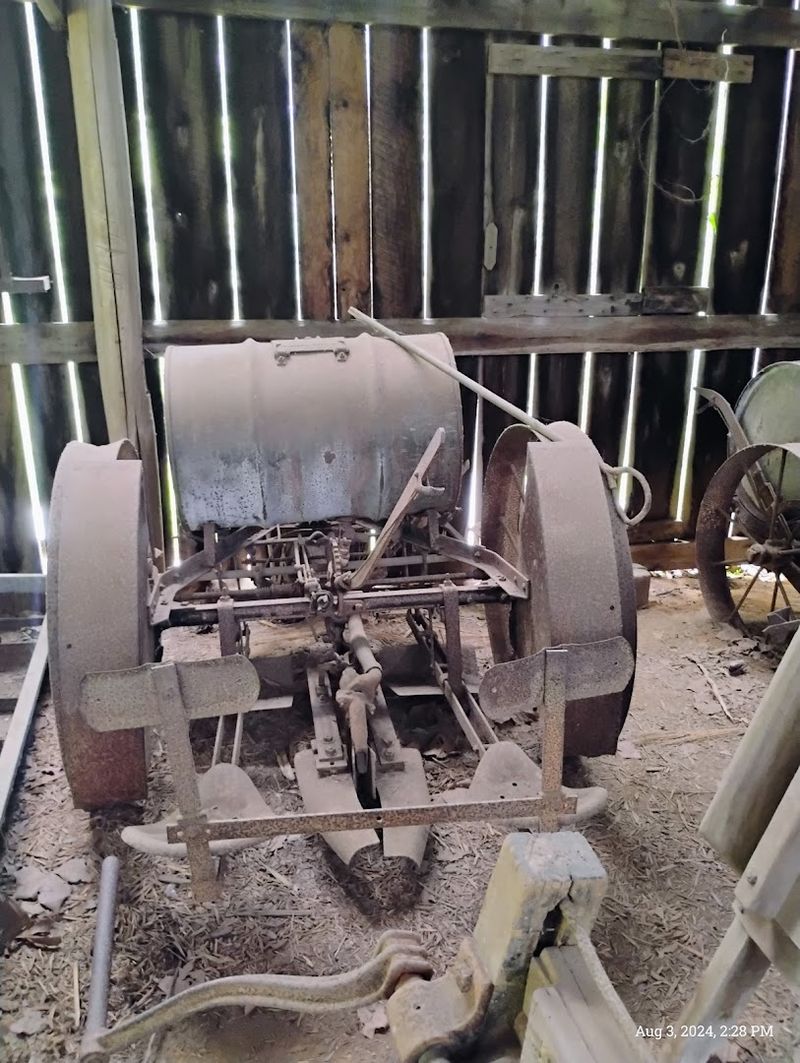
Before your car arrived, a logging train had the reservation.
Rail tracks once ran through the full passage, carrying logs from the gorge toward the Dana Lumber Company’s sawmill and onward to the broader rail network. The tunnel was not a side attraction. It was a working link in an industrial system.
The lumber operation changed quickly. A fire destroyed the company sawmill in 1914, and ownership later shifted as the original business struggled. Logging trains stopped using the tunnel by the early 1920s, and the rails were removed in 1921.
That brief railroad life makes the structure’s survival especially surprising. Many industrial routes disappear once the work ends. This one stayed useful because the mountain still needed crossing and the opening was already there.
Look closely while driving, and the passage still reads more like a rail bore than a modern road tunnel. Its narrow width, rough walls, and direct alignment belong to a vehicle that followed steel tracks and never met oncoming traffic.
KY 77 now carries ordinary drivers through the same corridor. The machinery changed, but the route kept its job.
Your car is not the tunnel’s first unlikely passenger.
Nada Is Dana With The Letters Rearranged
The local name is a four-letter inside joke hiding on every map.
The community of Nada grew around the lumber operation and its sawmill. Rather than copying the company name directly, residents rearranged Dana into Nada, creating an anagram that preserved the connection without looking like a company label.
The small settlement served workers and families tied to the timber business. A nearby post office moved into the community and adopted the Nada name in 1911, the same period when tunnel construction was finishing.
That origin gives the road sign more weight than its size suggests. The tunnel, the former mill settlement, and the name all come from the same industrial chapter.
The word can surprise travelers familiar with its Spanish meaning, but the Kentucky version points toward timber history rather than emptiness. It is a compact reminder that place names sometimes preserve stories more effectively than plaques.
You can pass through the community quickly, especially when focused on reaching the gorge. Slow down enough to notice the name before the tunnel takes over your attention.
Nada may look like almost nothing on the map, but its four letters carry the entire company story.
Local Travelers Gave The Tunnel Another Job
Obsolete infrastructure rarely receives a neighborhood adoption story this good.
After the rails came out, residents continued using the passage on foot, horseback, and in horse-drawn buggies. The timber route had lost its commercial purpose, but it still offered the most practical opening through Tunnel Ridge.
That steady local use gave the tunnel a second career before tourism entered the conversation. It became a community passage rather than an abandoned industrial bore, linking people across terrain that had not become any easier to cross.
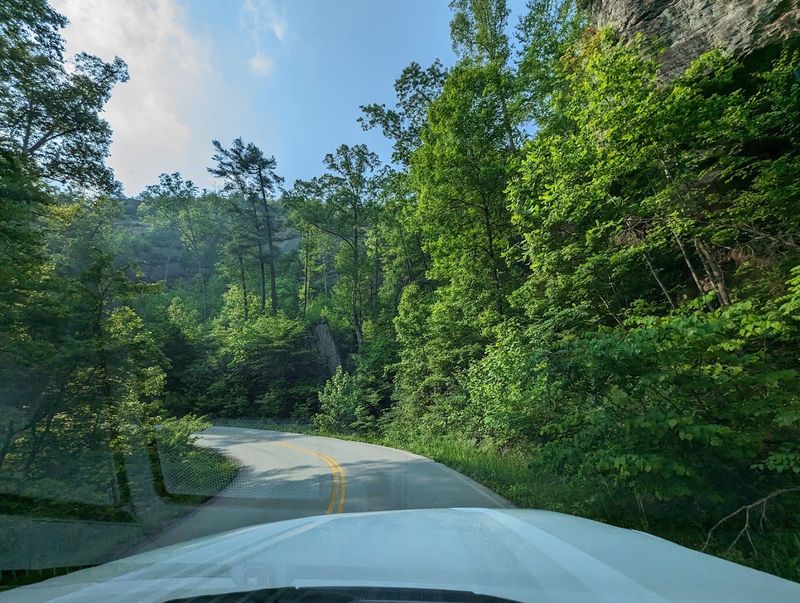
A paved road eventually replaced the former rail bed, and the route became part of Kentucky Highway 77. Each change preserved the same basic idea: get through the ridge using the opening already carved into it.
This history also explains why the tunnel does not resemble a restored museum piece. It continued evolving because travelers kept needing it. Asphalt replaced track, motor vehicles replaced buggies, and headlights replaced lanterns.
The best preservation decision may have been the simplest one. People refused to stop going through.
The tunnel survived because locals treated it like a road, not a relic.
KY 77 Turns Patience Into Road Etiquette
This may be the only highway moment when backing down counts as excellent manners.
Nada Tunnel carries one lane of traffic, so drivers must wait for the passage to clear before entering. Pause at the mouth, look carefully for headlights, switch on your own lights, and proceed slowly once the route is open.
The official vehicle clearance is twelve feet wide by twelve feet high. Large RVs, tall trucks, and wide vehicles should not gamble on approximate dimensions or online photographs. Posted restrictions get the final vote.
Do not stop inside, walk through for pictures, or treat the entrance as roadside parking. KY 77 is an active state highway, and the Forest Service limits parking on this road to designated, paved, and signed sites.
The surrounding rock can also create a quick adjustment in light and depth perception. A patient approach gives your eyes time to adapt and leaves room for the next driver to do the same.
Temporary roadwork, storms, or forest conditions can affect access, so current Kentucky Transportation Cabinet and Daniel Boone National Forest alerts are worth checking before departure.
The Gorge Waits Beyond The Headlights
The tunnel does not end so much as reveal its punchline.
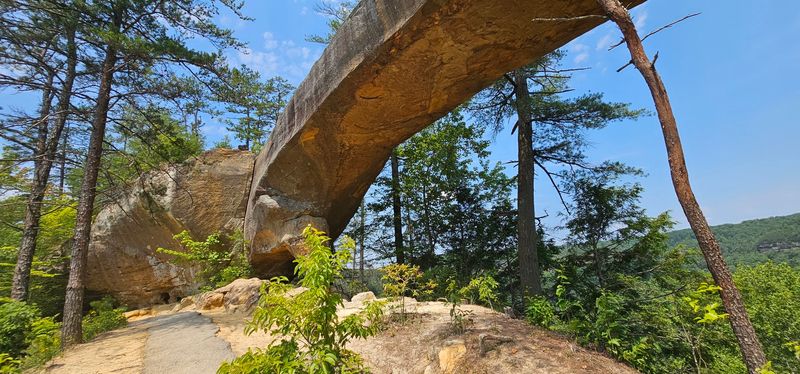
Its northern side leads into the Red River Gorge Geological Area of Daniel Boone National Forest. The Forest Service describes the tunnel as the western portal to the gorge, while generations of visitors have called it the gateway.
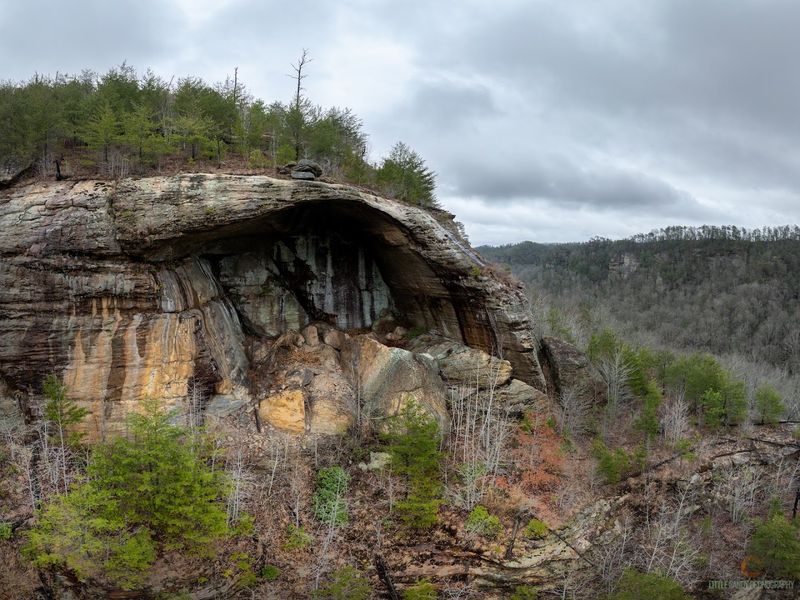
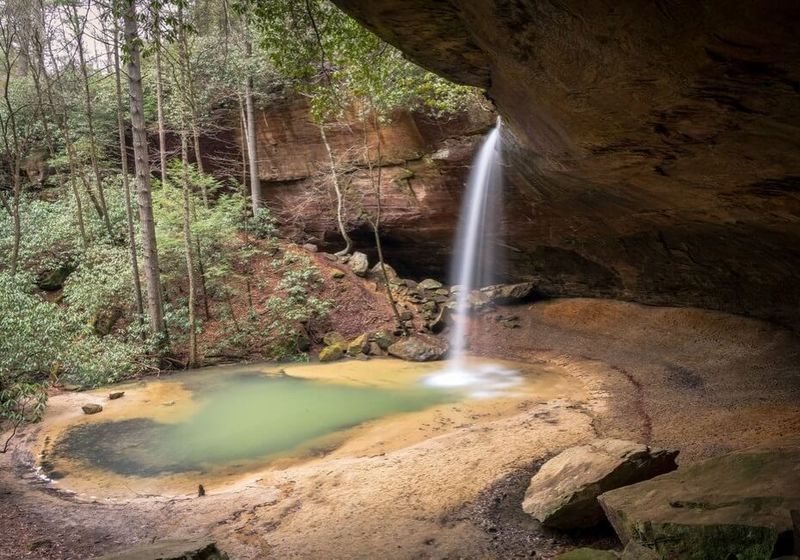
That nickname earns its keep. The narrow, dark passage gives way to a landscape shaped by sandstone cliffs, forested slopes, ravines, and more than one hundred natural arches. The contrast turns a practical road crossing into a memorable entrance.
KY 77 also forms part of the Red River Gorge Scenic Byway, a route of roughly forty-six miles connecting several major sights.
Farther along, the Gladie Visitor Center provides maps, passes, safety information, and guidance for trails and camping. Its schedule can vary, so verify current hours before making it the day’s anchor.
Forest rules prohibit climbing or rappelling within three hundred feet of Nada Tunnel. Parking is also restricted to designated spaces, protecting both traffic flow and the surrounding site.
The road through the tunnel is brief. Its history stretches from timber trains to buggies, local cars, and modern gorge traffic.
You enter for the shortcut, and the gorge makes sure you remember the crossing.