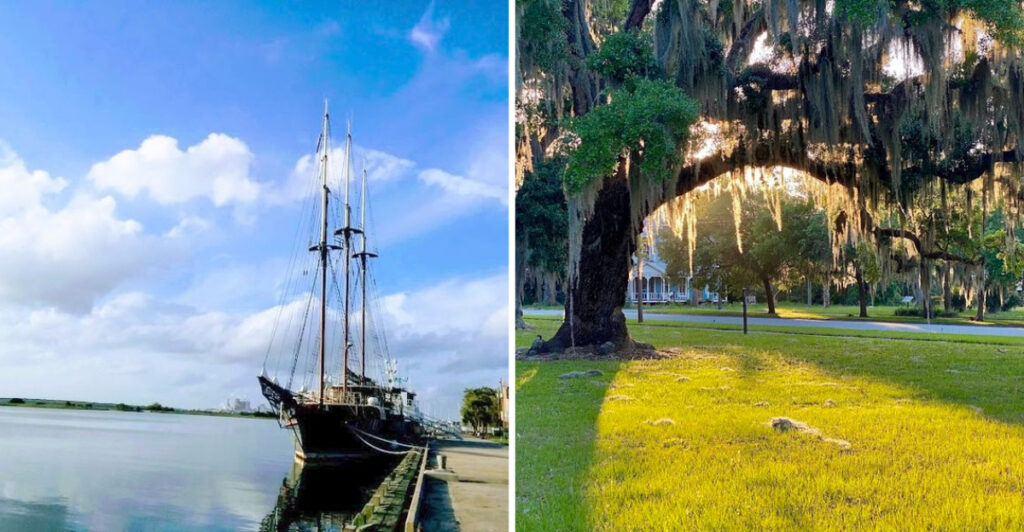
This coastal town has spent years watching travelers wave from the highway while chasing shinier islands.
Now the mainland is waving back.
It has sharpened its comeback without sanding away the parts that made it interesting. Old buildings have new jobs. Colonial squares still interrupt the street grid.
A working waterfront refuses to pose quietly for photographs.
You can start with a bench, a theater marquee, or a ship large enough to make your camera reconsider perspective. None requires booking or an itinerary.
The town has no interest in behaving like the one that is preserved under glass. Its history spills into market stalls, waterfront music, and painted walls.
Georgia supplies the marsh light and enough backstory to keep every corner talking.
You supply comfortable shoes and one slightly embarrassing confession: how many times have you passed this exit?
A Colonial Grid Still Runs The Show
Most cities hide their original blueprint beneath traffic lanes and hurried construction. Brunswick still walks around wearing its 1771 plan.
The Council of the Royal Province of Georgia laid out the town with a formal street grid broken by public squares and green spaces.
The design borrowed the basic logic used in Savannah, while street and square names reflected British traditions.
Prince, Newcastle, Hanover, Gloucester, and London still keep that history visible without requiring a textbook.
Fourteen signature squares remain part of the downtown experience. They give long blocks natural pauses and make wandering easier on both your feet and your attention span. One turn may deliver a fountain.
Another offers palms, magnolias, benches, or a courthouse tower rising beyond the trees.
Old Town Brunswick joined the National Register of Historic Places in 1979. The district includes houses, churches, civic landmarks, and commercial buildings representing architectural styles developed across many decades.
You do not need to memorize those styles to enjoy the effect. Simply follow Newcastle Street, let the squares interrupt your route, and notice how often the city hands you somewhere to stop.
Brunswick planned breathing room before breathing room became a travel amenity.
Downtown Buildings Refused To Retire
Empty storefronts are terrible tour guides, so Brunswick gave many of them new assignments.
The city became a Main Street community in 1986, linking preservation with long-term economic development.
That work continues through the Downtown Development Authority and local partners focused on keeping the historic core active rather than turning it into a decorative time capsule.
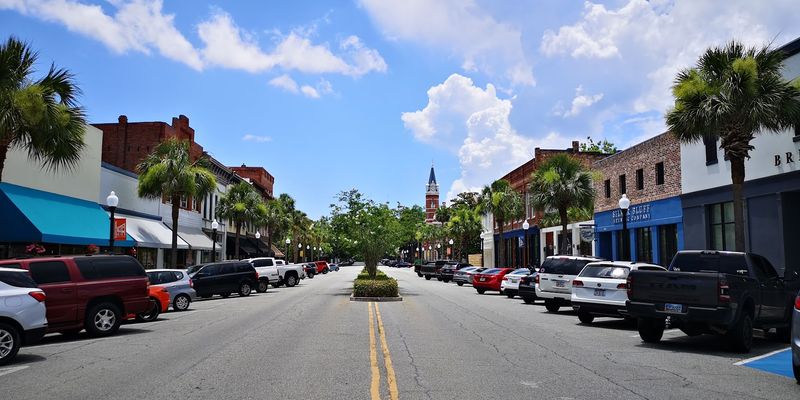
Along Newcastle Street and nearby blocks, older buildings now hold shops, galleries, workspaces, residences, and community gathering places.
Restored facades keep their age visible, while new uses give you a reason to enter instead of merely admiring brickwork from the sidewalk.
The mix matters. A downtown built only for visitors can lose its pulse after closing time. Brunswick’s center still hosts public services, local businesses, arts programming, markets, and events that residents use throughout the year.
Look upward while you walk. Cornices, arched windows, masonry details, and old signs often carry more personality than the ground-floor display competing for your attention.
Then look through the door. Preservation earns its keep when a building has something happening inside.
Pause near Old City Hall as well. Its clock tower closes the southern end of Newcastle Street with the sort of confidence modern office blocks rarely attempt. Even your navigation app may seem underdressed beside it.
Fourteen Squares Keep Interrupting Your Schedule
Brunswick’s squares have mastered a sneaky trick: they turn “one quick walk” into an afternoon.
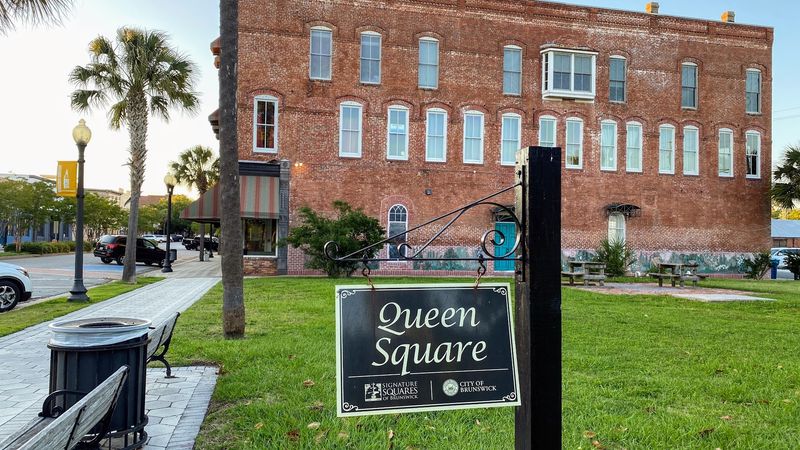
The original town plan placed green space throughout the grid, and today’s signature squares still shape how you move through Old Town. Queen Square may catch you with its courthouse view. Machen Square divides itself around Newcastle Street.
Other pockets offer shaded benches, landscaping, fountains, memorials, and room to sit without buying anything.
That last part deserves applause. A public square asks very little from you except basic manners and perhaps enough patience to finish your coffee before moving again.
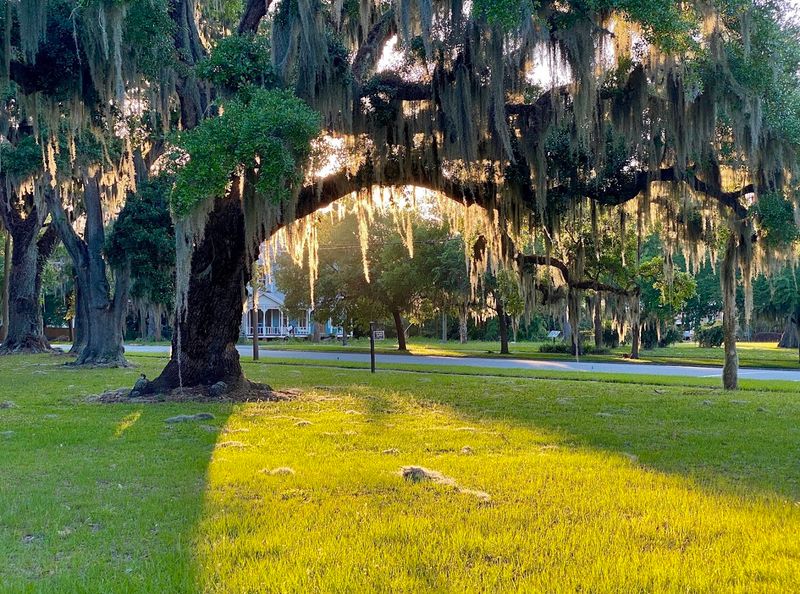
Mature trees soften the coastal sun, while brick paths and surrounding architecture make each space feel connected to the city rather than dropped beside it. The squares also break up a self-guided architecture walk without forcing you to march from landmark to landmark.
Families gain a pause. Photographers gain better angles. Anyone who underestimated the humidity gains a bench and a chance to reconsider life choices.
Try choosing a favorite before you have seen them all. The decision becomes harder each time another square appears around the corner.
Brunswick built rest stops into its identity, then disguised them as scenery.
Mary Ross Park Puts The Waterfront On Center Stage
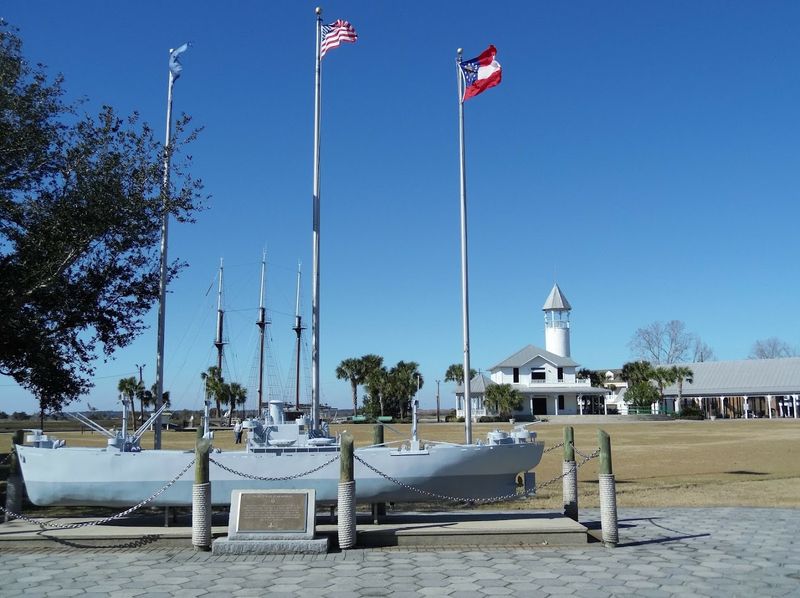
The waterfront does not ease into view. It arrives with shrimp boats, giant ships, and a pavilion ready for company.
Mary Ross Waterfront Park sits at 100 F Street, where downtown meets the East River near Bay and Gloucester streets. The grounds include a staged pavilion, amphitheater, farmers market area, musical playscape, sidewalks, and the Liberty Ship Memorial Plaza.
The memorial tells a larger story than its scale model suggests. Brunswick shipyard workers built 99 cargo vessels between 1943 and 1945, including 85 Liberty ships that helped supply the Allied war effort.
23-foot replica in the park honors the shipyard crews and the industrial surge that transformed the city during World War II.
You can absorb that history while modern vessels move through the channel. Ocean-going ships pass with astonishing calm, while shrimp boats add a smaller reminder that coastal work did not end when the history marker was installed.
The park also hosts markets, festivals, family activities, and community gatherings. On quieter days, it works just as well for a picnic or a long sunset watch across the marshes.
The Ritz Theatre Keeps Its Curtain Call Going
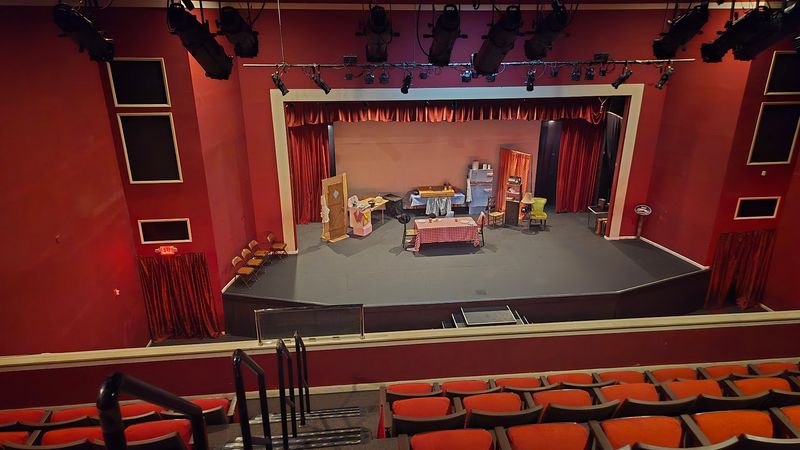
The Ritz has changed names, uses, and decades, yet the building still knows how to gather a crowd.
Built in the late 1890s, it originally housed the Grand Opera House, retail spaces, and offices for the Brunswick and Birmingham Railroad. Today, the Historic Ritz Theatre anchors the north end of Newcastle Street inside the Old Town district.
The restored venue seats 440 people and presents live performances, films, exhibitions, educational programs, and community events throughout the year.
Its calendar gives visitors a practical reason to check dates before arriving, especially when an evening show can turn a daytime walk into a full downtown outing.
Even without a ticket, the building earns a stop. Its facade, marquee, and position along the historic commercial corridor give Newcastle Street a strong visual finish.
Inside, the scale stays intimate enough that a performance does not disappear into a cavernous room. The theater serves the city’s current arts scene while carrying traces of an era when opera houses doubled as commercial and civic centers.
Brunswick’s comeback did not require a brand-new cultural centerpiece. It already had one waiting for the lights.
Working Ships Keep The Waterfront Honest
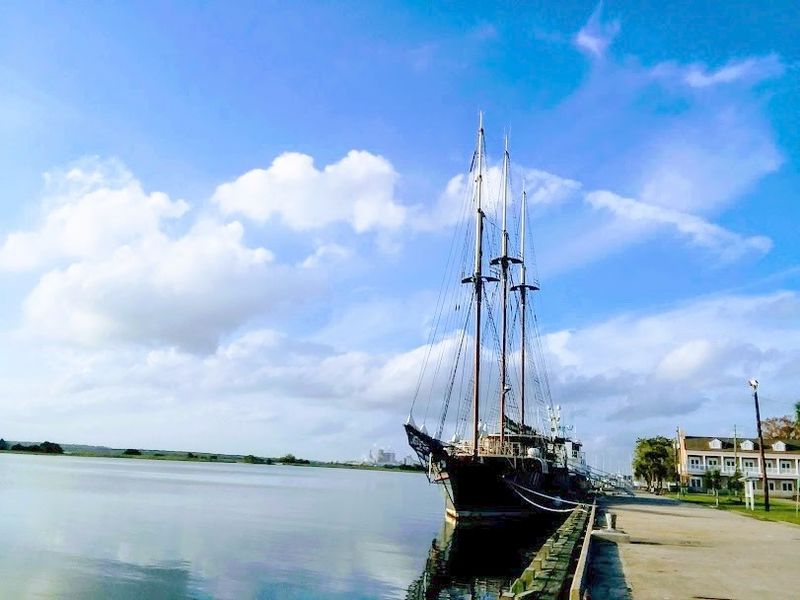
Some coastal towns hide the machinery. Brunswick lets it cross the horizon.
The Port of Brunswick operates as a major deepwater hub handling vehicles, heavy equipment, and other cargo. Its active terminals give the city a working identity that no mural or decorative anchor could manufacture.
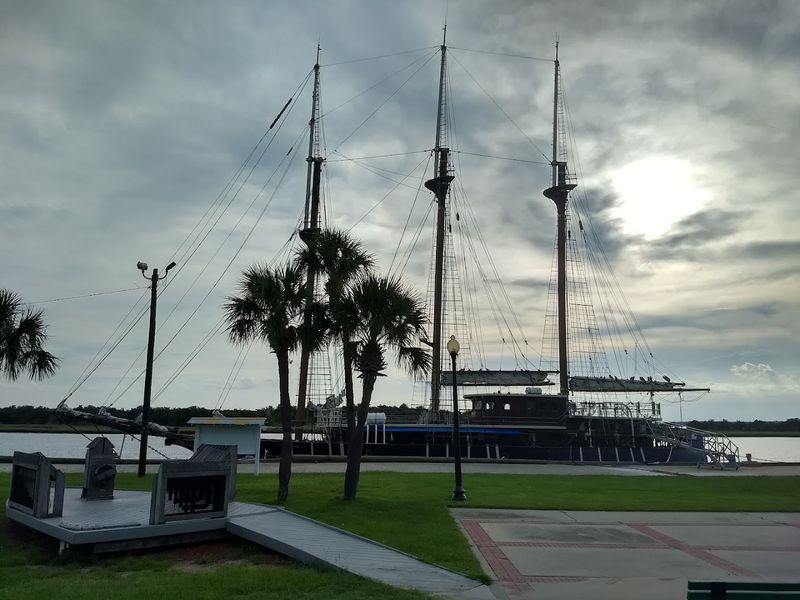
From Mary Ross Waterfront Park, you may see large ships moving slowly through the channel. Their scale becomes clearer when a shrimp boat, dock, or pavilion enters the same frame. What looked distant now appears enormous.
That traffic does not turn the waterfront into a sightseeing performance. Crews are working, schedules are moving, and cargo is connecting Brunswick with markets far beyond the marshes.
Shrimp boats add another layer. Their rigging and working decks reflect a local industry celebrated through longstanding community traditions. The contrast between commercial ships and smaller fishing vessels gives the riverfront more than one rhythm.
You can sit on a bench and watch without paying admission, though patience improves the experience. Ships do not arrive on command simply because your camera is ready.
Brunswick Finally Became More Than The Gateway
For years, Brunswick’s most familiar travel role was giving directions to somewhere else.
The city still serves as a gateway to nearby islands, but downtown now offers enough character to claim its own line on the itinerary.
Historic squares, active storefronts, the Ritz Theatre, public art, markets, and Mary Ross Waterfront Park can fill a day without borrowing attractions from across the causeway.
Recurring events help keep that identity visible. First Friday brings people into the historic district each month, while markets and seasonal celebrations use downtown streets and the waterfront as community gathering spaces.
The calendar changes, but the pattern stays consistent: Brunswick gives people reasons to return after the first walk.
That repeat value matters. On one visit, you may focus on architecture. Another could revolve around a performance, a market, or the sight of a ship easing past the park at sunset.
The city does not need to compete with every beach nearby. Its strongest qualities belong to the mainland.
Stop treating Brunswick like a comma between destinations. The story gets much better when you let the town become a chapter of its own.