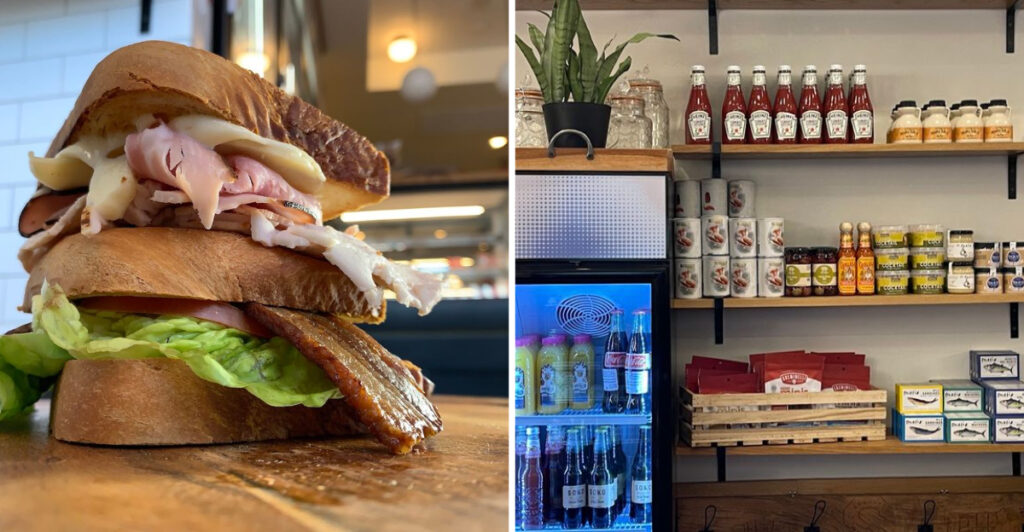
A sandwich should fit in your hands. This one hired extra meat and ignored the building code. Prime rib piles into a toasted roll.
Caramelized onions settle in. House-made cheese whiz arrives like it owns the lease. Maryland lunch plans rarely recover from that introduction.
The butcher counter watches from a few feet away, explaining why the beef tastes like the main event instead of sandwich filler.
Tallow fries stand nearby, ready to turn one order into a full afternoon project.
This compact shop began on a neighborhood street and somehow sent its appetite across Washington and into Virginia.
Maryland diners saw the warning signs early. The rolls kept getting fuller, the following kept spreading, and nobody volunteered to make lunch smaller.
Bring both hands and an honest understanding of napkin physics.
By the final bite, your quick sandwich stop may require a recovery walk and a revised dinner schedule.
A Neighborhood Butcher Shop Opened With Sandwich Ambitions
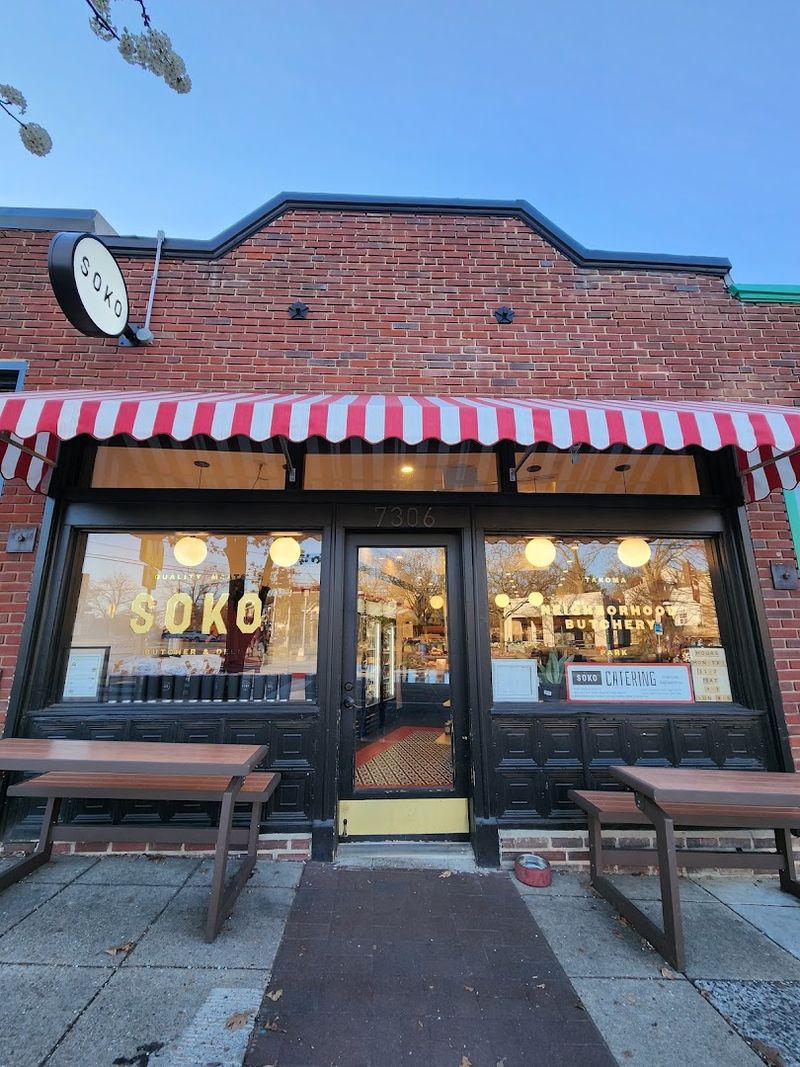
The meat case came first. The sandwich obsession followed almost immediately.
SOKO opened in Takoma Park in February 2022 as a butcher shop, deli, and small market built around locally sourced meat. Chef and butcher Brad Feickert launched the business with restaurateur Chris Brown, combining a working counter with a full kitchen.
The shop’s name comes from the Swahili word for market, a word Brown remembered from his Peace Corps years in Tanzania. It suits a place where customers can buy dinner ingredients, grab lunch, and leave holding more than either plan required.
The original menu included butchered cuts, sausages, bone broth, fermented foods, breakfast sandwiches, deli creations, and beef-tallow fries. That mix gave the little shop several personalities without making any of them feel borrowed.
Feickert brought experience from professional kitchens, fine-dining restaurants, and formal culinary training. He also brought the butcher’s habit of seeing every trim, cut, and cooking method as part of the same larger job.
SOKO did not open as a sandwich counter pretending to know meat. It opened as a butcher shop that happened to understand bread extremely well.
One Thousand Square Feet Hold A Serious Lunch Operation
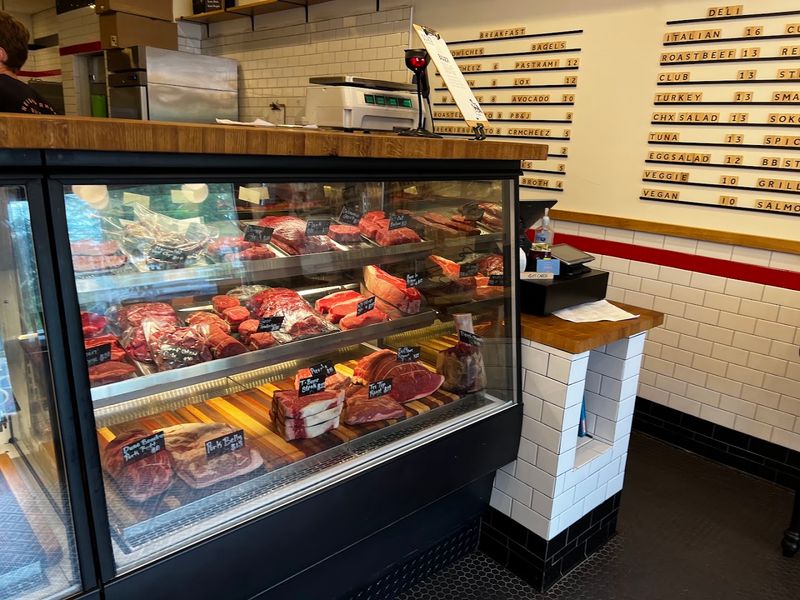
The room is compact enough for the butcher case and sandwich counter to keep an eye on each other.
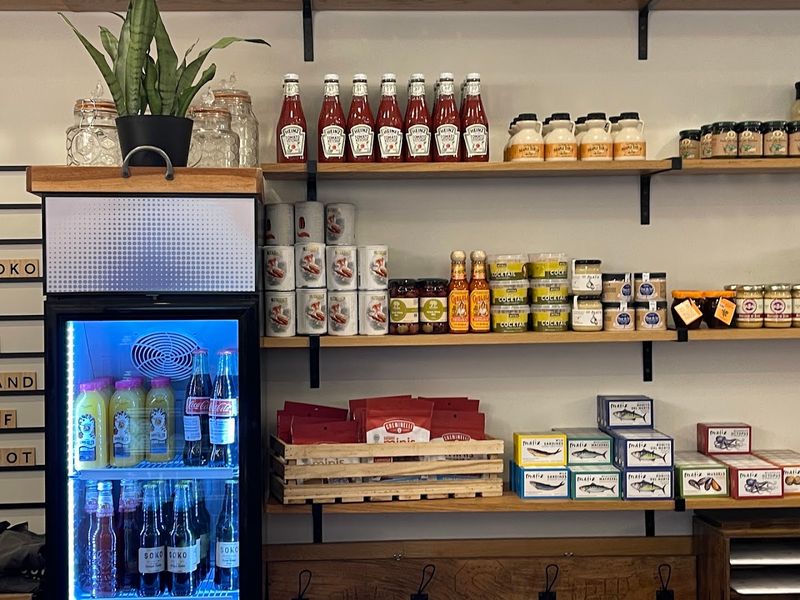
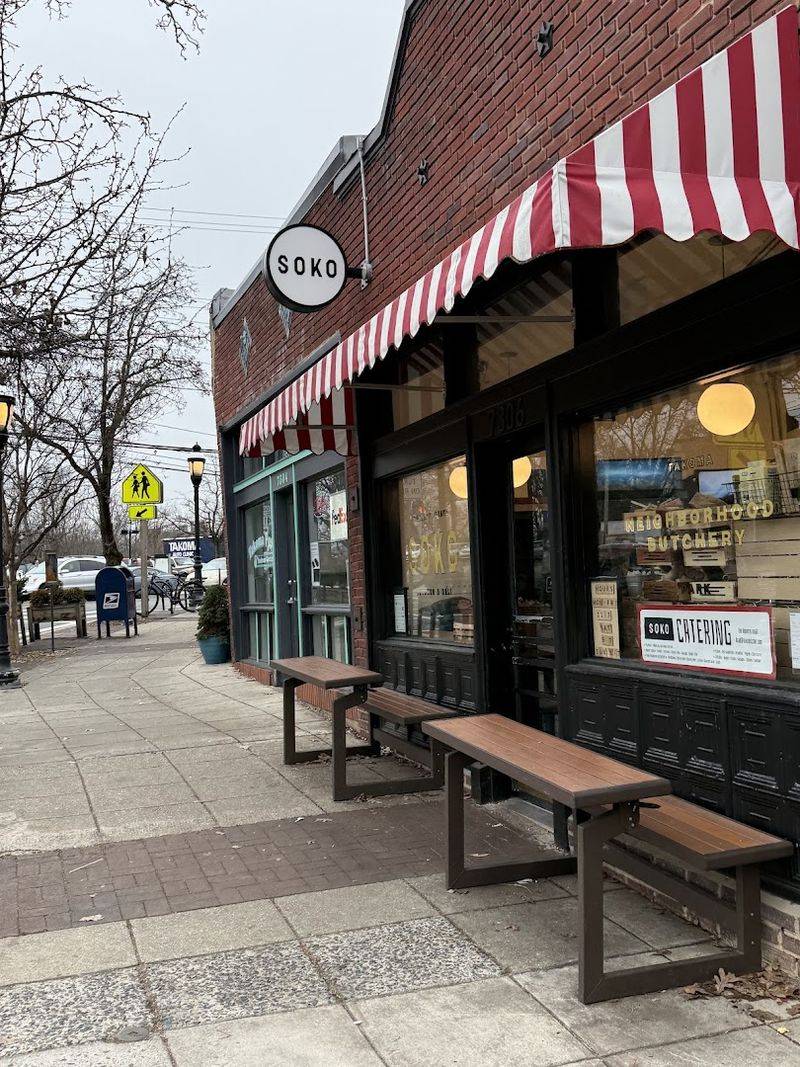
At 7306 Carroll Avenue in Takoma Park, SOKO occupies roughly 1,000 square feet. The space uses classic red, black, and white deli details, a glass meat case, an open kitchen, and a wall menu capable of derailing a customer who arrived with a firm decision.
You can order lunch, study dry-aged steaks, inspect sausages, and begin planning tomorrow’s dinner before today’s sandwich reaches the counter.
The small footprint creates energy rather than confusion. Butchers work through cuts while the kitchen handles cheesesteaks, burgers, breakfast orders, fries, and deli sandwiches only a few steps away.
That closeness gives the visit a practical rhythm. Nothing feels separated into a staged retail display and a distant restaurant kitchen.
The meat you see in the case belongs to the same operation building your lunch. The scraps and rendered fat also have places to go, allowing the team to use more of each animal.
Small shops must make every foot behave. SOKO makes several of them smell like caramelized onions.
Local Farms Give The Butcher Counter Its Foundation
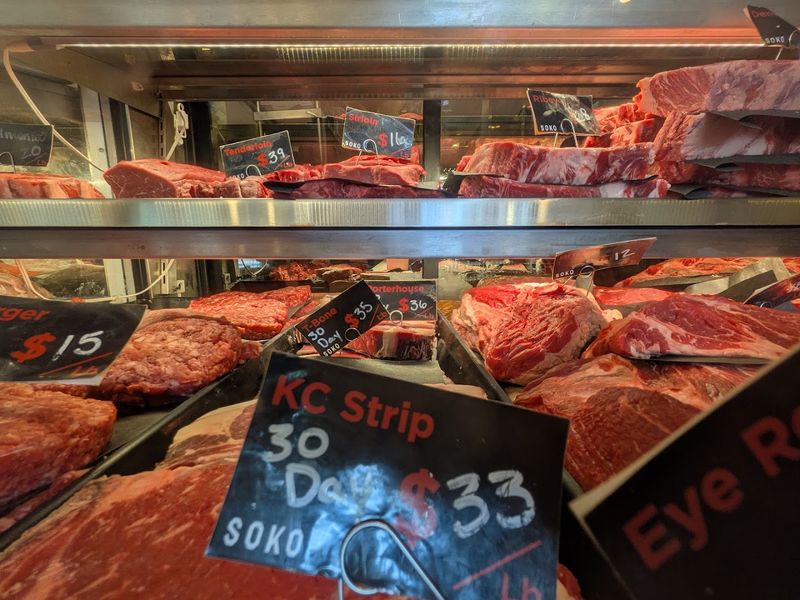
Great sandwiches begin long before anybody slices the roll.
SOKO sources from local and regional farms selected for their animal care, land practices, and approach to raising meat. The shop’s suppliers include family farms and producers across Virginia, Maryland, West Virginia, Pennsylvania, and the wider region.
Feickert grew up in Purcellville, Virginia, and began cooking professionally at sixteen. His career later took him through culinary training, farm-to-table restaurants, fine dining, and kitchens in Australia before he returned to the Washington area.
That background shows in the way SOKO connects sourcing with cooking. A steak is not merely an item for the case, and trim is not treated like an inconvenience.
Different cuts can become sausages, sandwich fillings, burger blends, broth, or rendered fat. Each route asks the kitchen to understand what the meat can do rather than forcing every piece into the same assignment.
The approach also gives you more choices at the counter. Familiar cuts share space with lamb, chicken, pork, specialty beef, and rotating options.
Your sandwich may last twenty minutes. The decisions behind its meat started much earlier.
Prime Rib Gives The Philly Its Oversized Personality
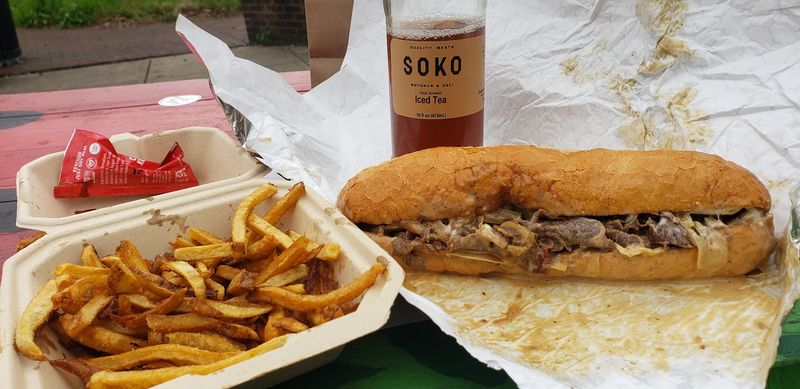
The signature cheesesteak does not enter quietly. It arrives carrying enough prime rib to block the roll’s view.
SOKO’s Philly combines prime rib, caramelized onions, house-made cheese whiz, and mayonnaise on a toasted French roll. The ingredient list stays short because each part already has a full-time job.
The beef brings richness and tenderness. Onions add sweetness from the griddle. Whiz coats the meat without requiring a fork, while mayonnaise gives the toasted roll another layer of richness.
The result is substantial enough to challenge both grip and appetite.
Can you save half for later? Certainly.
Can you stop thinking about the wrapped half sitting beside you? That part may require training.
Washington Post readers selected the Philly as the region’s standout cheesesteak in a 2025 sandwich feature. The recognition widened an audience already familiar with the shop’s towering rolls.
It also confirmed what the sandwich announces before the first bite.
This is not lunch designed to disappear politely. It is prime rib wearing bread as crowd control.
House-Made Cheese Whiz Keeps Every Bite Together
Cheese whiz usually arrives with baggage. SOKO gives it a new job and a better résumé.
The kitchen makes the sauce in-house, creating a creamy layer designed specifically for hot beef and onions. It moves through the sandwich instead of sitting in one heavy pocket near the center.
That distribution helps each bite carry meat, sweetness, salt, and cheese together. Without it, the prime rib could feel like a pile of excellent ingredients waiting for introductions.
Too little sauce leaves the roll dry. Too much can bury the beef.
SOKO lands between those problems, letting the whiz behave like the enthusiastic friend who keeps the whole table talking.
The toasted French roll also earns credit. It needs enough crust to hold the filling, yet enough softness to compress when both hands finally take control.
A weaker roll would surrender near the first onion. This one understands the assignment and accepts that structural dignity may not survive lunch.
Tallow Fries Make The Side Order Part Of The Butcher Shop
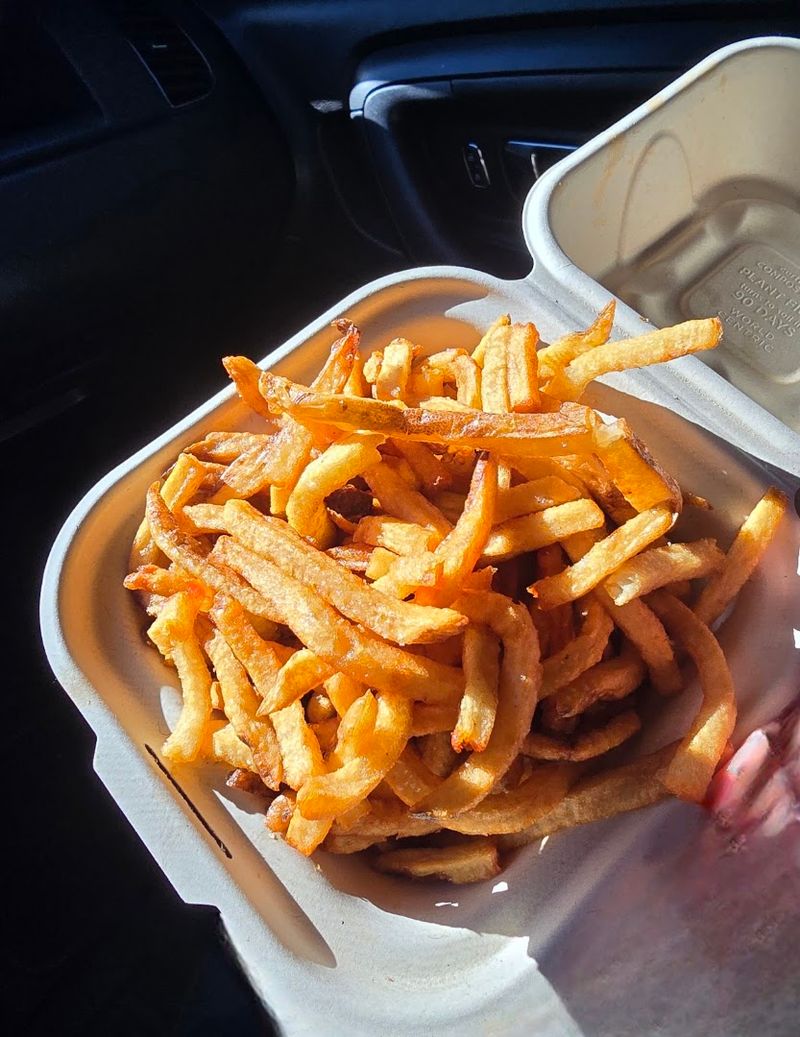
French fries enter beef fat and return with a much stronger opinion of themselves.
SOKO cooks its fries in tallow, connecting the side dish directly to the butcher operation. Rendered beef fat brings a savory depth that ordinary frying oil does not imitate.
The idea also fits the shop’s use-more approach. Fat that could be discarded becomes part of one of the menu’s most obvious companions for burgers and cheesesteaks.
A hot order brings crisp edges, tender centers, and enough beefy character to make ketchup reconsider its role.
Would you share them? The carton says yes. Your hand may produce a different policy once the cheesesteak arrives.
The shop applies the same butcher-to-kitchen thinking to its Smashed SOKO burger. Two house-blend beef patties meet American cheese and mayonnaise on a potato bun, creating a simpler sandwich with the same meat-first logic.
Breakfast also gets involved through egg sandwiches and a burrito built with house-made sausage.
At SOKO, the butcher case does not close when the bread opens.
Harvey’s By SOKO Carried The Sandwiches Into Washington
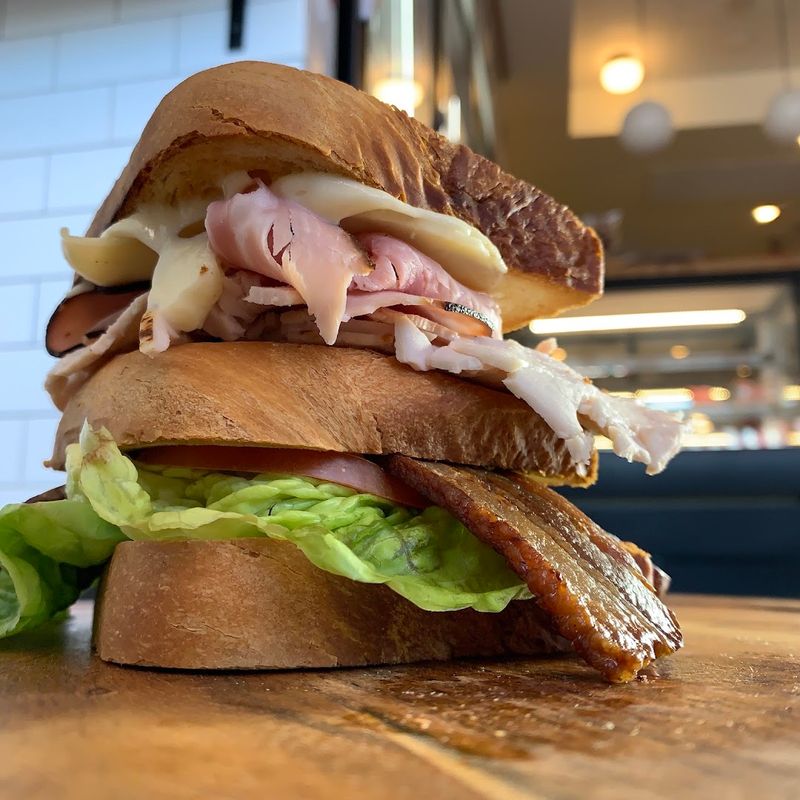
A neighborhood following can grow without moving. SOKO decided to give it another address.
Brad Feickert took the helm at Harvey’s in Union Market, continuing a butcher tradition that had served Washington shoppers for decades.
The operation became Harvey’s by SOKO, combining the market stall’s meat legacy with SOKO’s steaks, ready-to-eat foods, and signature sandwiches.
The move placed the Philly closer to diners who might not regularly travel to Takoma Park. It also gave SOKO a setting built around food counters, specialty shopping, and people who arrive prepared to change lunch plans several times.
Harvey’s history reaches back to O Street Market in 1931 and Union Market in 1971. Carrying that name forward meant taking over more than a stall and a refrigerator case.
SOKO stepped into a long relationship between a butcher and a neighborhood.
The new chapter kept quality cuts at the center while adding the sandwiches that had already built a following in Maryland.
The Philly crossed into Washington. Its napkin requirements remained unchanged.
Leesburg Turned A Maryland Favorite Into A Two-State Story
The cheesesteak eventually crossed the Potomac and returned its owner closer to home.
SOKO opened a Leesburg location in spring 2026, bringing its sandwiches and butcher-shop identity into Virginia’s Loudoun County. The move carried extra meaning because Feickert grew up nearby in Purcellville.
The Leesburg shop took over a downtown space with outdoor seating, giving Northern Virginia diners direct access to the Philly, burgers, breakfast items, and other SOKO staples.
Expansion can flatten a small business by turning personality into a template. SOKO’s advantage is that its identity begins with a clear system rather than decorative nostalgia.
Source good meat. Understand the cut. Use the animal carefully, and build sandwiches that make the meat impossible to overlook.
Those ideas can travel, even when the original shop remains the place where customers first watched the butcher case and lunch counter work side by side.
A thousand-square-foot Maryland shop started the story. Virginia proved the sandwich had packed for the trip.