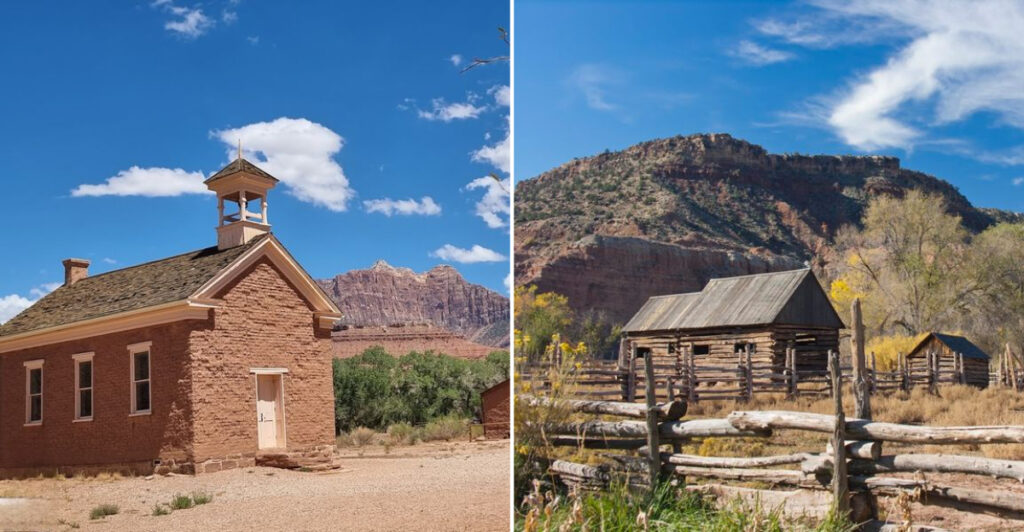
Some roadside stops preserve more than history; they preserve the feeling of interruption, as though the past refused to leave quietly. Settled by Mormon pioneers in 1859, this abandoned frontier site still holds adobe walls, a restored schoolhouse, and a cemetery beneath enormous desert skies.
Years of relentless river flooding eventually drove residents away, but the remains stayed behind, weathered and strangely intimate beneath the fierce afternoon sun. Southern Utah gives the ruins a dramatic stage, with red cliffs rising beyond buildings that once held lessons, meals, worries, and ordinary family routines.
Thirty minutes is enough to walk the grounds, read the landscape, and understand why survival here demanded stubbornness. Nothing feels polished into a theme park.
The silence does the work. By the time you leave, Utah’s pioneer story feels less like a chapter in a book and more like a place still waiting to be heard, even now.
The Dirt Road That Earns You the Destination
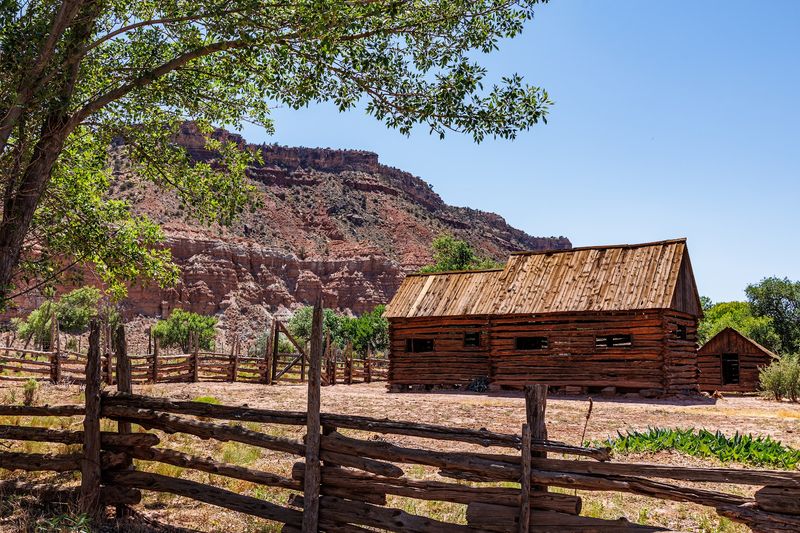
Some places reward the effort of getting there, and Grafton starts earning its keep before you even arrive. The drive out from Rockville takes you down a dirt road that stretches just under a mile of unpaved terrain, flanked by scrubby desert brush and the kind of silence that makes city-dwellers instinctively check their phones for signal they are not going to find.
Most standard vehicles handle the road just fine, so there is no need to rent a truck or make special arrangements. The road condition has been described by visitors as manageable, if not exactly smooth, so go at a relaxed pace and enjoy the scenery doing the work.
That slight inconvenience is actually part of the charm. Because Grafton is not sitting on a paved loop with a gift shop attached, it feels genuinely discovered rather than packaged.
By the time the first adobe building appears through the windshield, you have already mentally committed to the experience.
Pro Tip: Stop at a gas station before the turnoff. There are no restrooms on site, and the nearest facilities are back in town.
A little planning here saves a lot of regret later.
Pioneer Cemetery: Where the Past Speaks Quietly
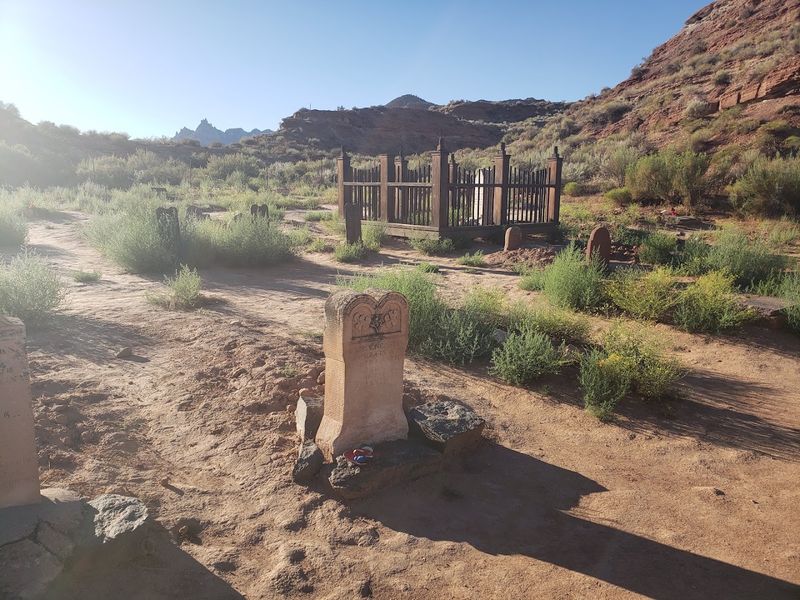
Before you reach the main cluster of buildings, the road delivers you to a small pioneer cemetery sitting quietly off to the left. It is the kind of place that stops conversation mid-sentence.
Weathered headstones mark lives cut short, and the dates tell a story of hardship that no museum exhibit could replicate quite this effectively.
Visitors often leave coins and small offerings at the graves, a spontaneous tradition that has developed organically over time. There is something deeply human about that impulse, acknowledging strangers across more than a century with a gesture as simple as a penny placed on stone.
Reading the names and dates here reframes everything else you are about to see. These were not historical characters from a textbook.
They were families navigating flood, drought, and isolation in a landscape that was beautiful and unforgiving in equal measure.
Why It Matters: The cemetery anchors the entire Grafton experience in real human stakes. Spending five minutes here before exploring the buildings gives the rest of the visit a weight and meaning that photographs alone simply cannot deliver.
Do not skip it, even if the main structures are calling your attention forward.
Adobe Walls and Weathered Homesteads Still Standing
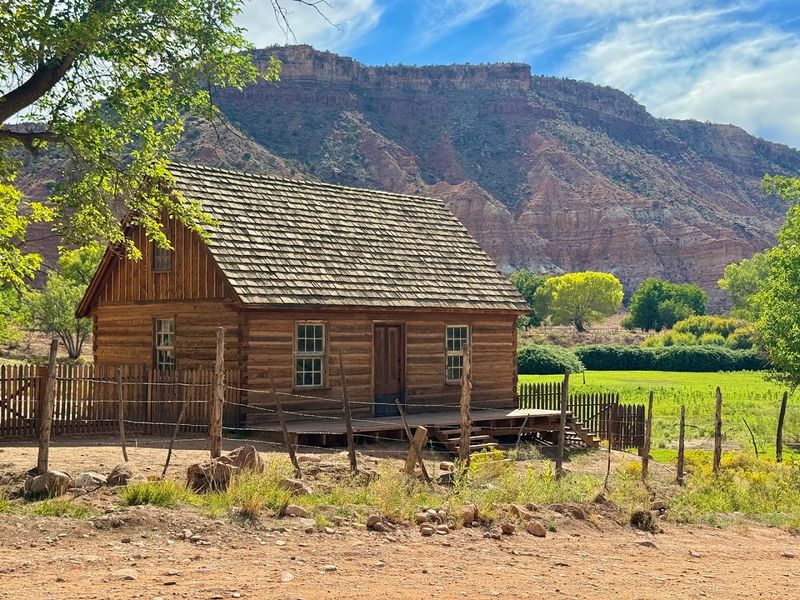
Standing in front of Grafton’s remaining structures, you get the distinct feeling that the desert simply decided to preserve them out of respect. Several homesteads remain on the property, their adobe and brick walls holding together with a stubbornness that seems almost personal.
Two of the buildings have been restored, while others retain much of their original condition, which is exactly the kind of honest presentation that history deserves.
Visitors can walk inside some of the homes, which adds a dimension that photographs cannot capture. Stepping through a doorway that a pioneer family used daily has a way of collapsing time in a manner that feels almost disorienting in the best possible way.
Informational signs are posted throughout the grounds, offering context about who lived here and what daily life looked like in this remote corner of Utah. The signs are well-written and genuinely informative without being overwhelming.
Best For: Curious visitors who like history served without a tour guide script. Families with older kids, couples who enjoy wandering at their own pace, and solo travelers who want to linger as long as the light stays good will all find something worth their attention inside these walls.
The Restored Schoolhouse and Church That Anchor the Site
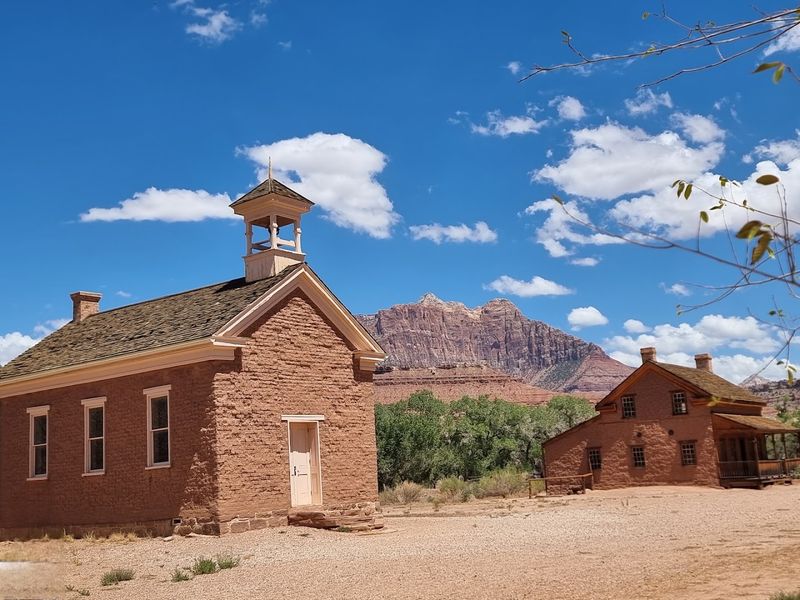
Two buildings at Grafton received formal restoration work, and they serve as the visual anchors of the entire site: the old schoolhouse and the church. Both structures look remarkably solid given their age, and the restoration has been done with enough restraint that they still feel like genuine historical artifacts rather than theme-park reconstructions.
The church is typically locked during visits, though a photograph posted on the door gives curious visitors a glimpse of the interior. It is a small but thoughtful detail that manages to satisfy without requiring anyone to break anything, which is always a good outcome at a heritage site.
The schoolhouse carries its own quiet authority. Standing inside or near it, you can almost hear the improbable ambition of people who built an educational institution in the middle of a desert frontier, because of course they did.
Insider Tip: The informational signs inside the large house adjacent to the church building contain some of the best historical detail on the property. If you are the kind of visitor who wants actual context rather than just atmosphere, start there before wandering the rest of the grounds.
It makes everything else land with considerably more meaning.
The Butch Cassidy Connection That Adds a Layer of Cool
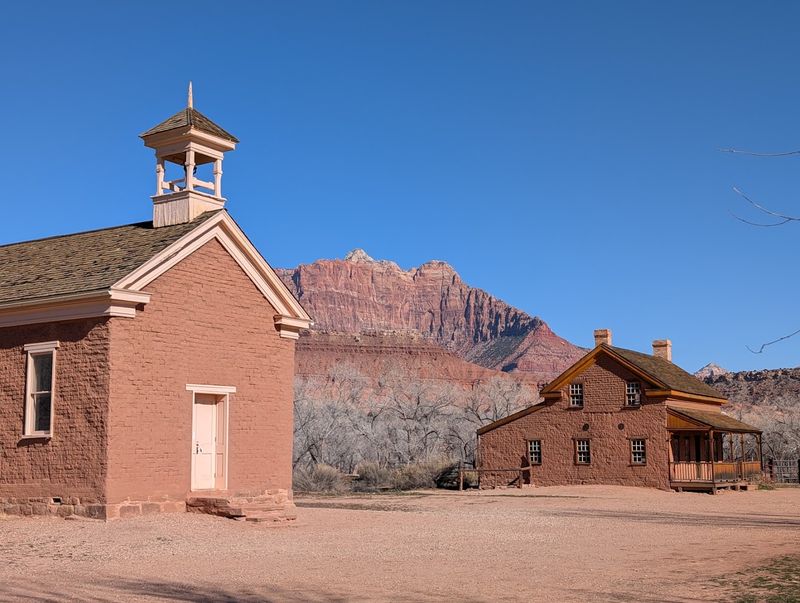
Here is a detail that tends to make visitors stop mid-sentence and reconsider everything they just photographed. Grafton served as a filming location for the 1969 classic Butch Cassidy and the Sundance Kid, specifically for the memorable bicycle scene set to the song about raindrops.
That scene was shot right here, among these same weathered buildings and under these same Utah skies.
Knowing that gives the site a second layer of cultural significance that sits comfortably alongside its pioneer history. You are not just walking through a preserved frontier settlement; you are standing on a piece of American film history that most visitors have seen without ever knowing where it was.
It also explains why the buildings feel oddly familiar the moment you arrive, even on a first visit. There is a cinematic quality to the landscape at Grafton that the filmmakers clearly recognized long before anyone else thought to preserve it.
Fun Fact: Some visitors to the site have actually met descendants of the original families who lived here, a reminder that this history is not entirely distant. Grafton is still connected to living people who carry its story forward, which makes the whole experience feel considerably less like a museum and considerably more like a conversation.
Red Cliff Views That Make Every Photo Effortless
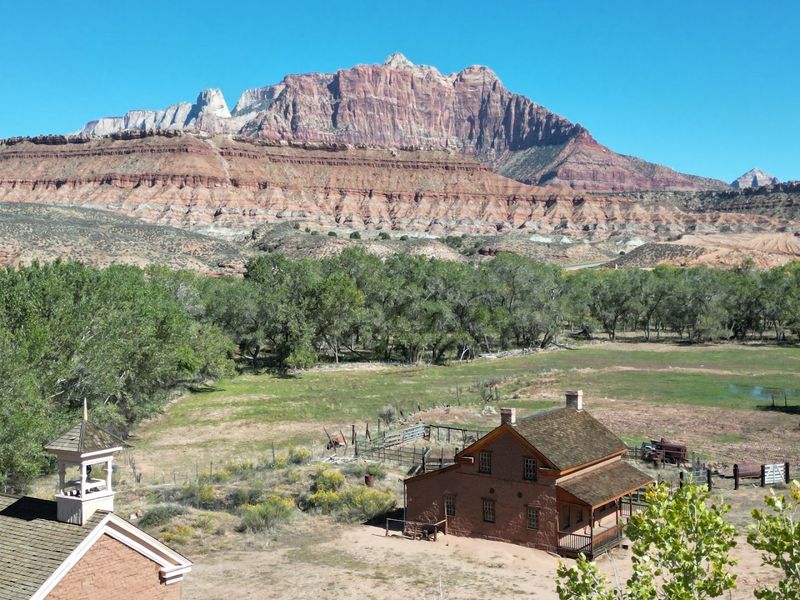
Whatever you came to Grafton expecting, the backdrop is going to exceed it. The red Zion cliffs rise behind the settlement with the kind of theatrical confidence that makes even mediocre photographers look talented.
Every angle from the property delivers something worth capturing, whether you are pointing your camera at the buildings, the cemetery, or simply the open desert stretching toward the horizon.
The contrast between the human-scale structures and the enormous geological formations behind them is striking in a way that is genuinely hard to describe without resorting to superlatives. So instead of reaching for superlatives: go see it yourself and then try to explain it to someone who stayed in the car.
Morning light hits the cliffs with particular intensity, which is worth keeping in mind if you are the type who plans visits around golden-hour conditions. That said, the site is open around the clock, every day of the week, so the timing is entirely yours to decide.
Quick Verdict: For photographers, landscape enthusiasts, or anyone who simply wants a view that justifies the drive, Grafton delivers without requiring any special equipment, skill level, or planning beyond showing up. The scenery does the heavy lifting entirely on its own terms.
The Perfect Half-Hour Add-On to Any Zion Trip
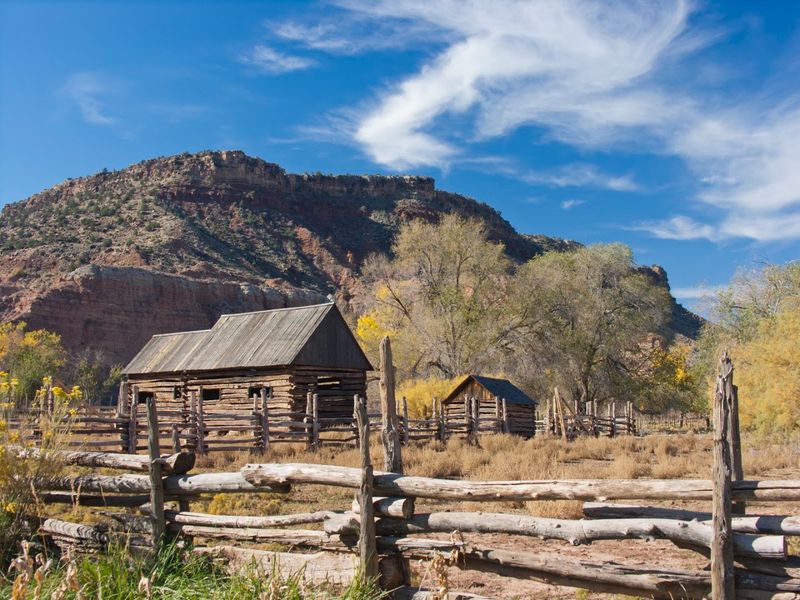
Grafton sits roughly 20 minutes from Springdale down a quiet road past Rockville, which puts it squarely in the category of stops that require almost no rerouting. If you are already heading to or from Zion National Park, passing Grafton without stopping is the kind of decision you would spend the rest of the drive second-guessing.
The site is free to enter, no tickets required, no guided tour necessary. You simply show up, park in the well-marked lot, and explore at whatever pace suits your group.
Thirty minutes is enough to see everything comfortably, though plenty of visitors find themselves lingering longer than planned.
Families, couples, and solo visitors all find their own version of the experience here. Kids engage with the tangible, walk-inside-it quality of the buildings, while adults tend to get absorbed by the informational signs and the quiet weight of the cemetery.
Planning Advice: Bring a small donation if you can. The site is maintained by the Grafton Heritage Partnership, and a couple of dollars dropped in the donation box helps preserve what you just enjoyed for the next group of visitors who will almost certainly be pulling up right behind you.
Leave the place better than you found it, as the original residents of Grafton would have understood completely.