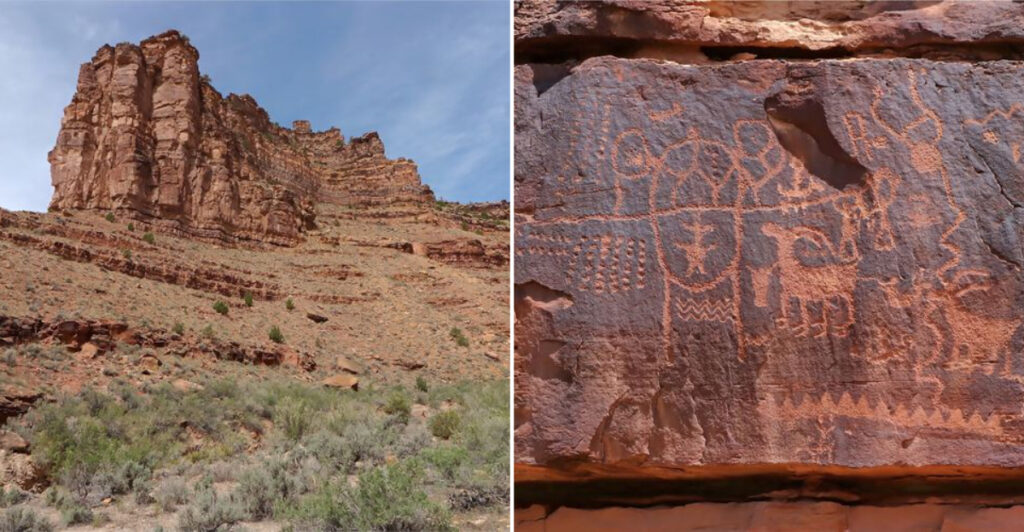
The desert does not need a museum case to preserve a story. Along a scenic road, canyon walls hold an archive of figures, symbols, and scenes carved or painted by people who lived here centuries ago.
The effect is immediate. You are not looking at decoration, but at evidence of life, belief, movement, and memory left in stone.
Across this stretch of Utah, every turn feels like another page opening in a book far older than paper. There are no velvet ropes, no dramatic soundtrack, and no easy way to ignore how small the present feels beside such endurance.
Take your time, look closely, and let the silence do the explaining. What makes the journey unforgettable is not only the amount of rock art, but the intimacy of encountering it where it was created.
In Utah’s desert country, history is not displayed. It remains part of the living landscape.
A Canyon That Rewrites Your Weekend Plans
Some destinations require a committee meeting, a spreadsheet, and at least three group texts before anyone commits. This place is not one of those places.
The moment you pull onto the Nine Mile Canyon Scenic Backway near Wellington, Utah, the decision makes itself.
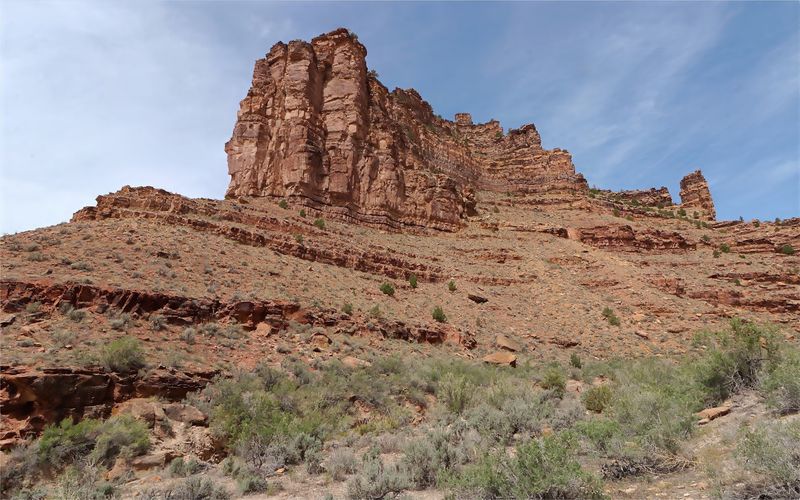
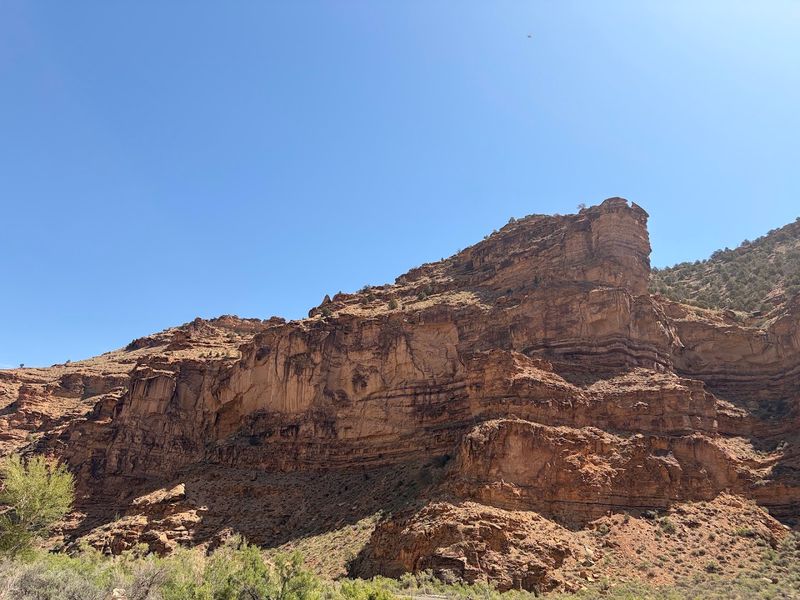
The canyon runs roughly 40 miles through the Book Cliffs of eastern Utah, and the road traces the canyon floor in a way that feels almost cinematic. You are not hiking to find the art here.
Much of the rock art sits close enough to the road that you can pull over, step out, and stand face-to-face with panels of petroglyphs without breaking a sweat.
This is a Bureau of Land Management site, open 24 hours a day, every day of the week. That kind of access is genuinely rare for a place this remarkable.
Visitors consistently describe it as one of the best sights in the American West, and that is not hype. It is the quiet confidence of a place that has been extraordinary for a very long time and sees no reason to change.
Quick Tip: Bring more water than you think you need. The desert does not negotiate on hydration.
What This Place Actually Is, And Why That Matters
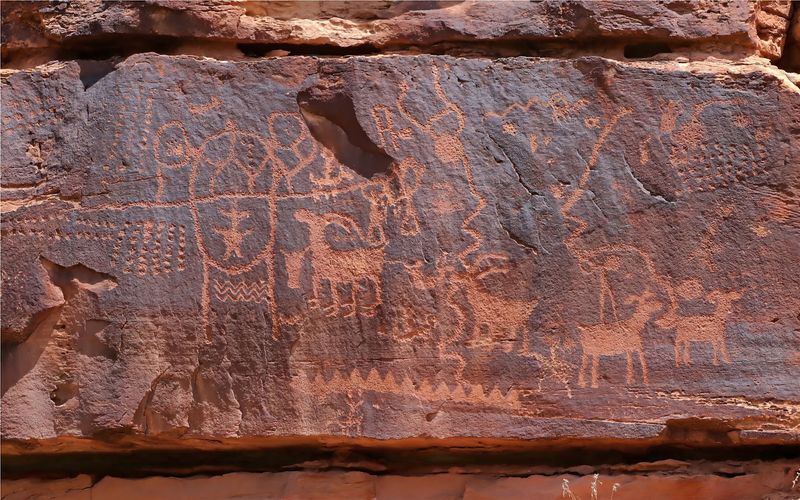
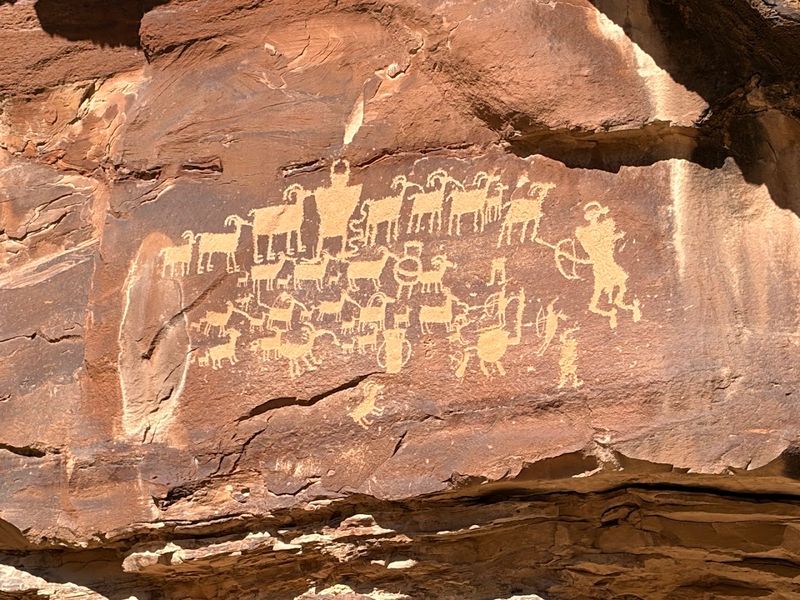
Nine Mile Canyon is often called the world’s longest art gallery, and that description earns its keep. The canyon walls are covered in petroglyphs and pictographs left behind by the Fremont people and other ancient cultures who lived in this region long before European contact.
Petroglyphs are images carved or pecked into rock surfaces, while pictographs are painted directly onto the stone. Nine Mile Canyon has both, in remarkable quantity and quality.
Visitors have compared the pictographs here to those at Newspaper Rock, which is saying something considerable given how celebrated that site is across the Colorado Plateau.
The Bureau of Land Management oversees the canyon, and their website at blm.gov/visit/nine-mile-canyon offers helpful planning information before you go. The phone number on file is 435-636-3600 if you want to call ahead with questions.
Why It Matters: This is not a reconstructed attraction or a curated museum exhibit. The art is original, in place, and exposed to the same sky it has faced for hundreds of years.
That kind of authenticity is increasingly hard to find anywhere.
The Arrival Feeling You Cannot Manufacture
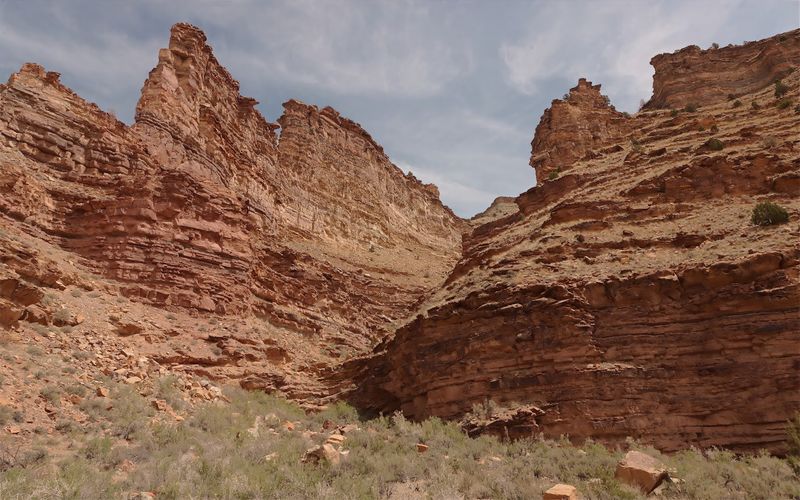
There is a specific feeling that arrives when a road starts to narrow and the canyon walls begin rising on either side of you. It is part awe, part mild second-guessing, and mostly the satisfying sensation that you are going somewhere genuinely off the beaten path.
The drive into Nine Mile Canyon from the Wellington side delivers exactly that. The pavement gives way to gravel, the cell signal thins out, and suddenly the only thing competing for your attention is a wall of ancient stone covered in figures, animals, and symbols that have been here longer than most countries have existed.
Utah has a way of scaling things dramatically, but Nine Mile Canyon does it quietly. There are no crowds jostling for position.
Visitors who have made the trip describe very few people in the canyon, which means you get the rare experience of standing in front of remarkable history without someone else’s elbow in your peripheral vision.
Insider Tip: Morning light hits the canyon walls at an angle that makes the petroglyphs significantly easier to see and photograph. Plan your drive direction accordingly if you want the best visual experience.
Why Locals Keep Coming Back To The Canyon
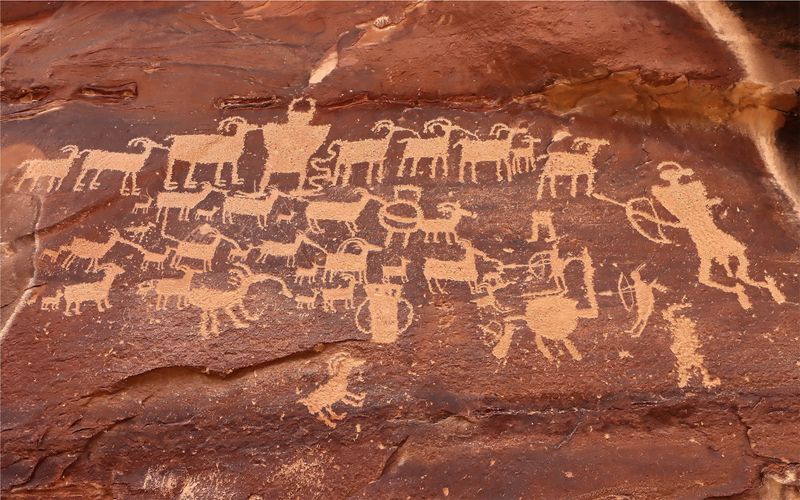
There is a certain kind of place that earns repeat visits not because it changes, but because you do. Nine Mile Canyon is that kind of place.
The rock art does not move, but your ability to notice new details, new panels, new figures you missed the first time, keeps the experience fresh.
People who live in eastern Utah treat this canyon the way residents of other states treat a beloved state park. It is a reliable point of pride, the kind of thing you bring out-of-town guests to see when you want to make a genuine impression without much effort.
The canyon has a five-star reputation among those who have visited, and the feedback is consistent: the art is extraordinary, the setting is dramatic, and the experience rewards attention. That combination builds loyalty in a way that flashier tourist destinations rarely manage.
Best For: Anyone who appreciates history, geology, or photography without needing a formal guided structure. The canyon rewards the curious and the patient equally well.
Couples, families, and solo travelers all find their version of the experience here.
How Families, Couples, And Solo Explorers All Fit In
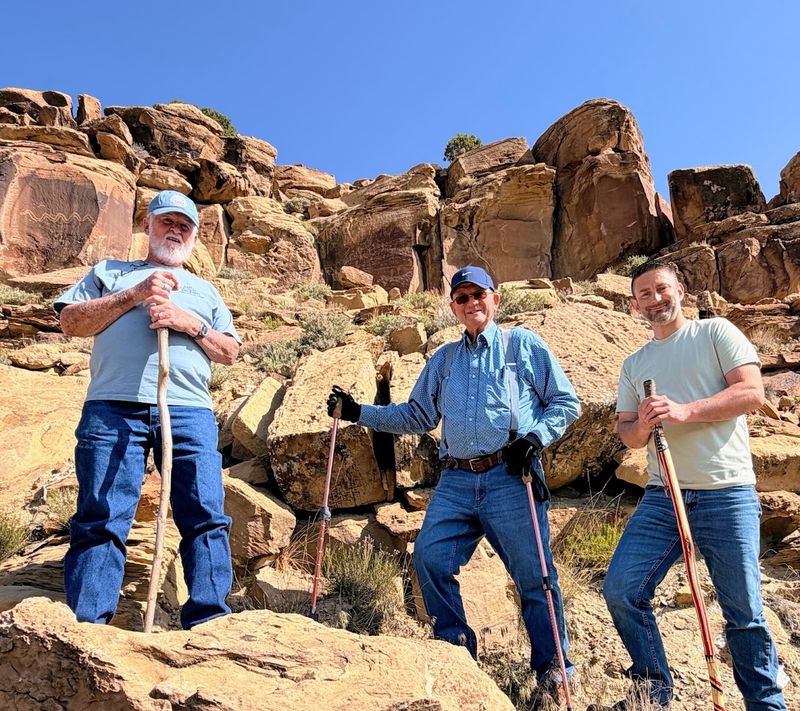
One of the quiet strengths of Nine Mile Canyon is that it does not require everyone in your group to be on the same page about what kind of trip this is. Kids see hunting scenes and animal figures carved into rock and immediately want to decode them like a puzzle.
Adults feel the weight of something ancient and real.
Couples who want a day that feels meaningful without requiring a reservation or a complicated itinerary find that the canyon delivers a natural rhythm. You stop when something catches your eye, you walk a short distance, you take pictures, and you move on at whatever pace feels right.
Solo visitors, meanwhile, get something even rarer: genuine solitude in a landscape that has not been domesticated for tourism. The canyon is open around the clock, so early risers and late-afternoon wanderers both find their moment without competing for it.
Planning Advice: Wear sturdy shoes even if you plan to stay close to the road. The terrain around pull-off areas can be uneven, and the desert floor has a way of surprising flat-shoe optimists.
Pack snacks, sunscreen, and a fully charged phone camera.
Making It A Real Outing Without Overcomplicating Things
Wellington, Utah sits at the canyon’s western entrance and makes a natural starting point for the drive. It is a small town with a distinctly unhurried Main Street energy, the kind of place where a quick stop for fuel and a cold drink before heading into the canyon feels like part of the experience rather than a detour.
The canyon itself is not a loop. It is a corridor, which means you can drive in as far as time allows and turn around, or push through to the far end if you have a full day.
Either approach works. There is no wrong amount of Nine Mile Canyon to see.
If you want to build a simple outing around the visit, a post-canyon stop back in Wellington for something to eat makes the whole trip feel complete without any extra logistics. Small towns near remarkable natural sites have a way of absorbing the leftover energy of a good day outdoors.
Common Mistakes to Avoid: Do not underestimate the drive time. The canyon road is gravel and requires a slower pace than a highway.
Budget more time than your map app suggests, and bring a physical backup if your signal drops.
The Rock Art Panels That Stop You Mid-Sentence
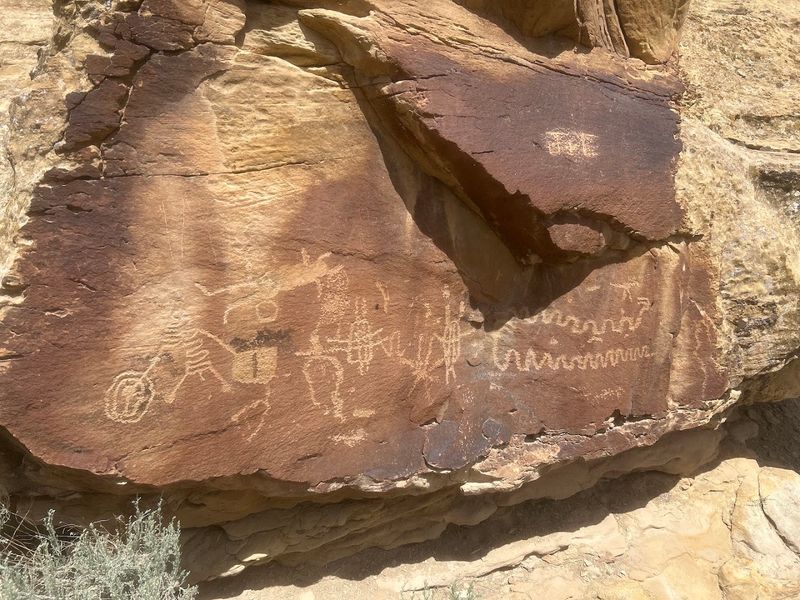
There are panels along Nine Mile Canyon that genuinely stop conversation. You are mid-sentence about something entirely unrelated, and then a section of canyon wall appears that makes whatever you were saying feel immediately unimportant.
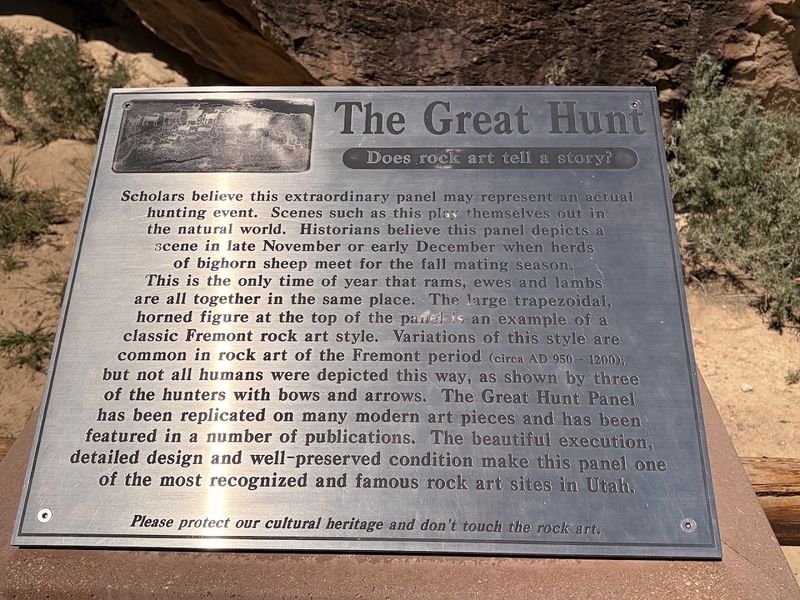
The hunting scenes are particularly striking. Figures of bighorn sheep, deer, and human hunters are arranged across the rock in compositions that suggest real narrative intent.
These were not idle scratches. The people who made them were communicating something, and even across the distance of centuries, the message lands.
Visitors consistently single out the walls of petroglyphs as the defining feature of the canyon, and it is easy to understand why. The sheer density of imagery in certain sections creates an experience closer to reading than sightseeing.
You find yourself moving slowly, looking carefully, and staying far longer than you originally planned.
Pro Tip: Binoculars are genuinely useful here. Some panels sit higher on the canyon walls and reveal significantly more detail when viewed up close.
A pair of compact binoculars takes up almost no space and transforms the experience at several key stops along the backway.
What To Know Before You Go, Practically Speaking
Nine Mile Canyon is open every day of the week, all day and night, with no entrance fee. That combination of access and affordability makes it one of the more genuinely democratic outdoor experiences in the American West.
You do not need to book anything, beat a permit lottery, or arrive at dawn to claim a spot.
What you do need is water. The canyon is remote, the terrain is dry, and the sun in eastern Utah is not subtle.
Every visitor account that mentions practical advice circles back to the same point: bring more fluids than feels necessary, because the desert will use all of them.
The road is unpaved and best suited to vehicles with reasonable clearance. Standard passenger cars can manage under dry conditions, but a truck or SUV gives you more flexibility and peace of mind.
Cell service is limited inside the canyon, so download offline maps before you leave.
Quick Verdict: No fee, no reservation, no crowds, and some of the most significant ancient rock art in the country. The practical barriers to visiting are almost nonexistent, which makes the reasons not to go genuinely hard to construct.
The Closer That Stays With You After You Leave
There is a particular kind of travel experience that does not announce itself as memorable until you are already back home, describing it to someone who was not there. Nine Mile Canyon is that kind of trip.
It does not perform for you. It simply exists, on its own terms, in one of the quieter corners of a state that is not short on dramatic scenery.
What lingers is not just the visual scale of the canyon or the volume of rock art. It is the specific feeling of standing somewhere genuinely untouched, where the thing you came to see has not been roped off, explained away, or optimized for a gift shop.
The art is right there, on the rock, where it has always been.
If someone asks you for a Utah recommendation that is not Zion or Arches, and you want to give them something that will actually surprise them, Nine Mile Canyon is the answer. It is the kind of place a good friend texts you about with total confidence, no caveats attached.
Final Word: Pack water, drive slow, and give yourself more time than you think you need. The canyon will fill it.