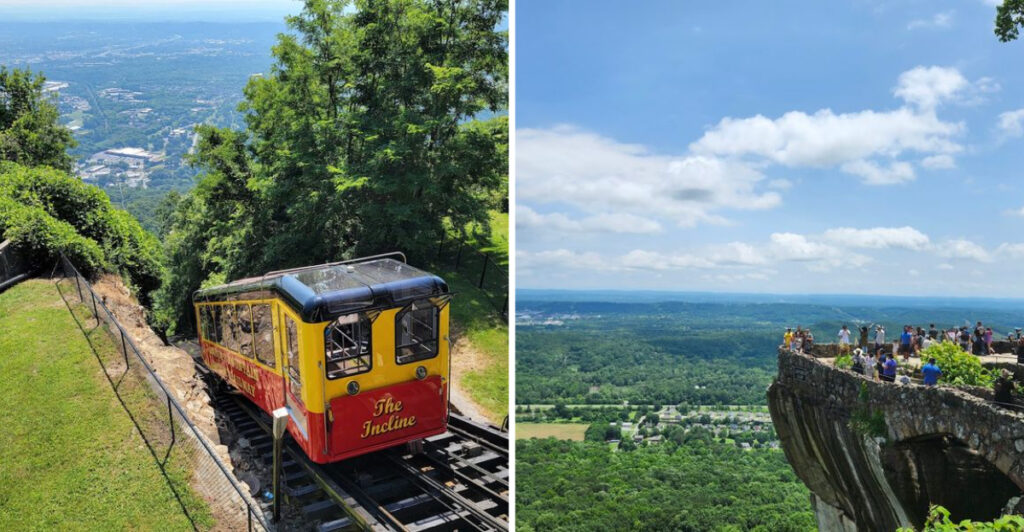
How much trust do you place in a trolley before it starts climbing a mountain at an angle your legs would immediately reject?
From Chattanooga’s historic St. Elmo neighborhood, the railway heads uphill. Tennessee Valley spreads wider across the windows by the minute.
The one-mile ride lasts about ten minutes each way, giving you plenty of time to chase the view and rethink every joke you made about skipping leg day.
Near the upper station, the track reaches a 72.7 percent grade. That is where cameras rise, conversations pause, and everyone suddenly becomes interested in holding the nearest railing.
The current line opened in 1895, and new accessible railcars arrived in 2020 with larger windows for more sky, valley, and dramatic evidence that Tennessee does not believe in gentle slopes.
Keep your grip loose and your courage ready for the climb.
A Railway From 1895 Still Climbs The Same Dramatic Route
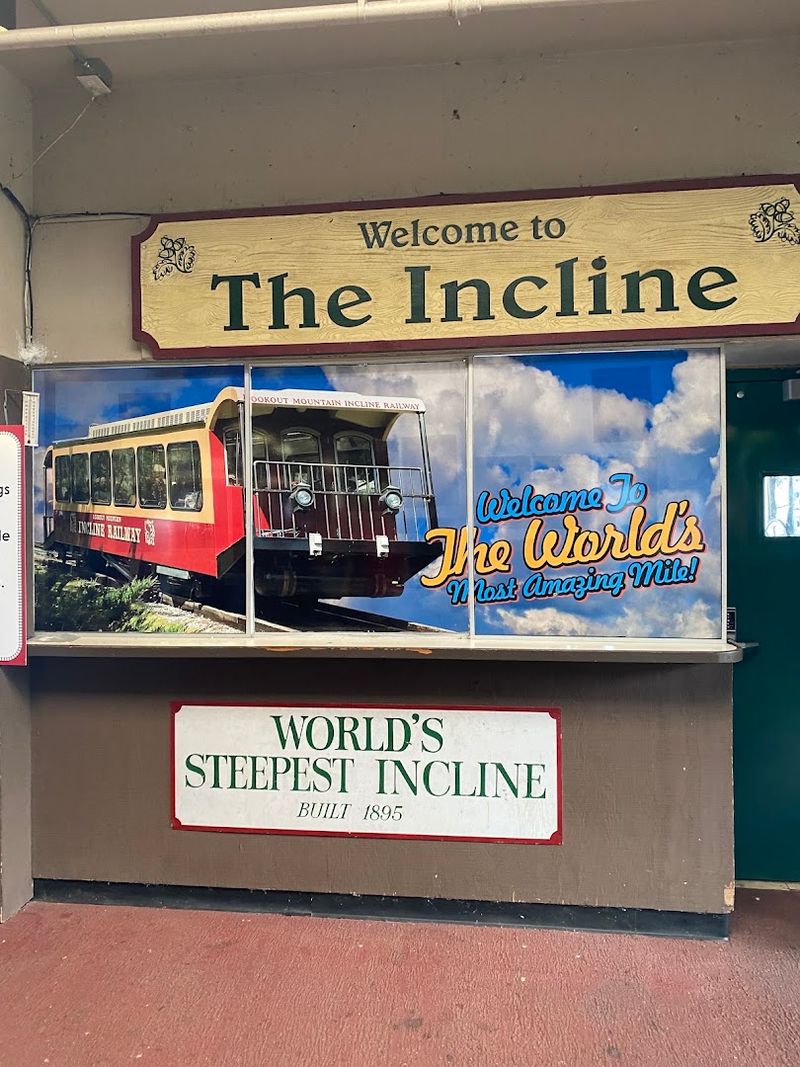
Long before scenic attractions came with digital tickets and gift-shop magnets, Chattanooga was already sending passengers up Lookout Mountain by rail.
The first incline on the mountain opened in 1887, but the line operating today arrived eight years later. Engineer John Crass designed the second route, which began carrying passengers on November 16, 1895 and soon proved more successful than its predecessor.
The original cars were wooden and moved with power from large coal-burning steam engines. Electric power took over after 1911, beginning another chapter in a system that had already made the steep mountain more accessible to residents and visitors.
The railway’s history has not been entirely smooth. A 1919 fire destroyed the upper station and one railcar, leading to a two-year closure while the station was rebuilt and new cars were acquired.
Later upgrades kept the attraction moving without erasing its old-fashioned character.
Stand on the platform and look up the track before boarding. More than a century of engineering sits inside that simple line disappearing toward the trees.
The mountain has changed far less than the machinery, and the railway still knows exactly how to meet it.
St. Elmo Gives The Adventure A Friendly Starting Point
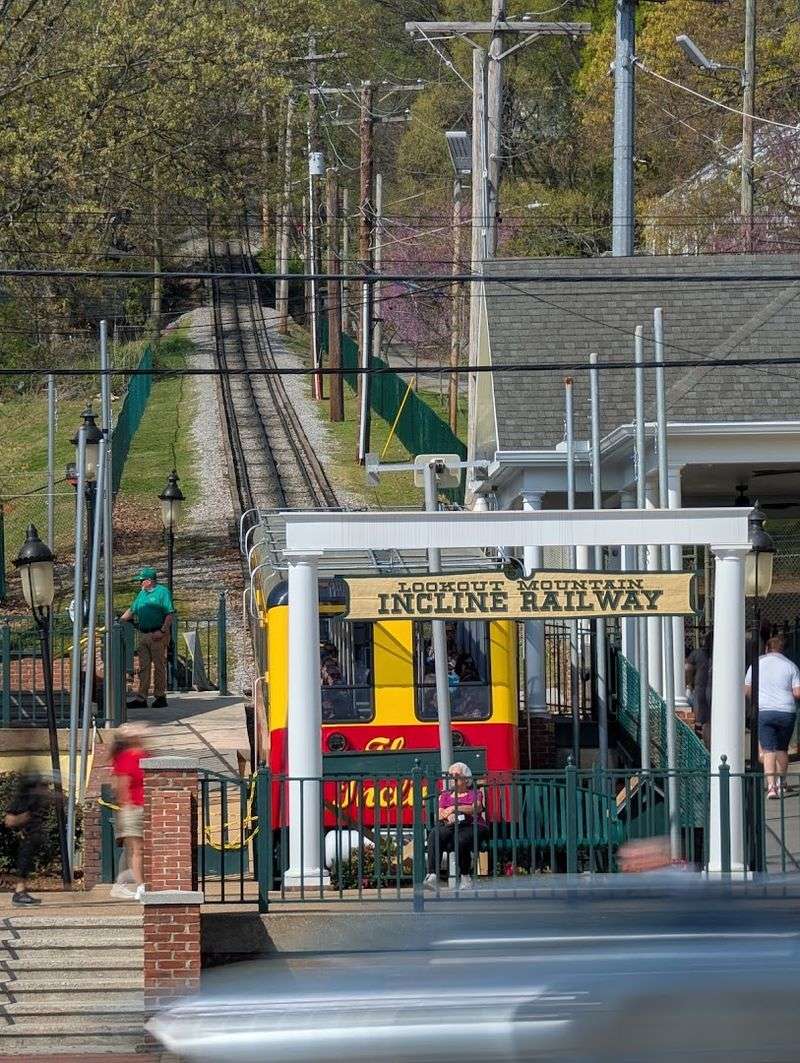
The bottom of one of America’s steepest railway rides begins on a neighborhood street rather than behind a giant amusement-park gate.
St. Elmo sits at the base of Lookout Mountain, where historic homes, local businesses, and tree-lined streets create an easy setting before the climb.
The lower station places the bright red and yellow cars beside the community instead of separating the attraction from its surroundings.
You can begin the trip at 3917 St. Elmo Avenue, Chattanooga, Tennessee. Boarding is also available at the upper station, but starting below gives the ride its most satisfying build as the city gradually falls away.
Reservations are useful because capacity is limited and popular days can fill in advance. Arrive with enough time to park, check in, and look through the station rather than racing toward the platform with your group scattered behind you.
The lower station has a gift shop and visitor facilities, while the surrounding neighborhood gives you room to extend the outing after the descent. A short walk makes a pleasant reset once your feet are back on level pavement.
St. Elmo keeps the welcome calm, which is considerate when the track ahead has other plans.
The New Railcars Put The Tennessee Valley In Full View
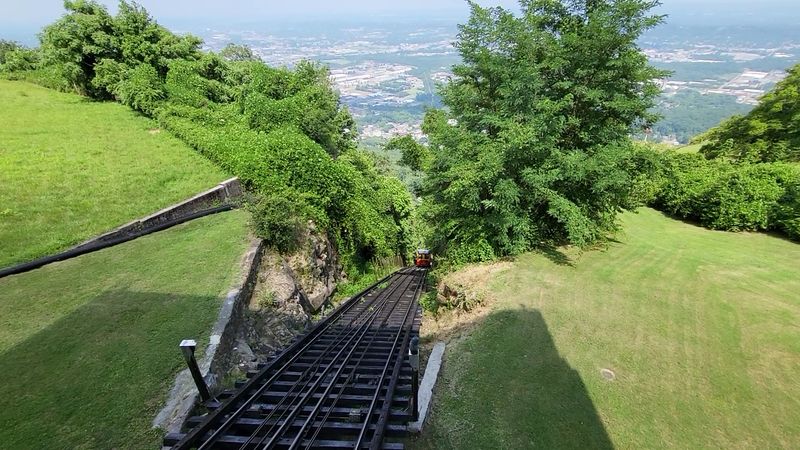
A small window would be a terrible waste on this route.
The railway installed a new pair of cars in March 2020 as part of a major upgrade. The design added more glass for panoramic views, wheelchair accessibility, heating, improved lighting, and onboard security cameras while preserving the recognizable trolley-style appearance.
Each enclosed car can carry 42 passengers. Wide windows and clear roof sections pull more of the landscape into the cabin, so even a seat away from the side can catch flashes of forest, rooftops, sky, and the valley below.
The cars are heated but not air-conditioned. Windows provide airflow, yet warm-season visitors may appreciate light clothing when the sun turns the glass into an enthusiastic greenhouse.
Choose your position with the view in mind, but do not spend the entire trip fighting for one perfect photograph. The scenery changes quickly enough that looking with your own eyes may deliver the better souvenir.
The upgraded cars respect the railway’s past while making sure the valley receives a much larger window.
One Mile Of Track Packs In An Unusual Amount Of Suspense
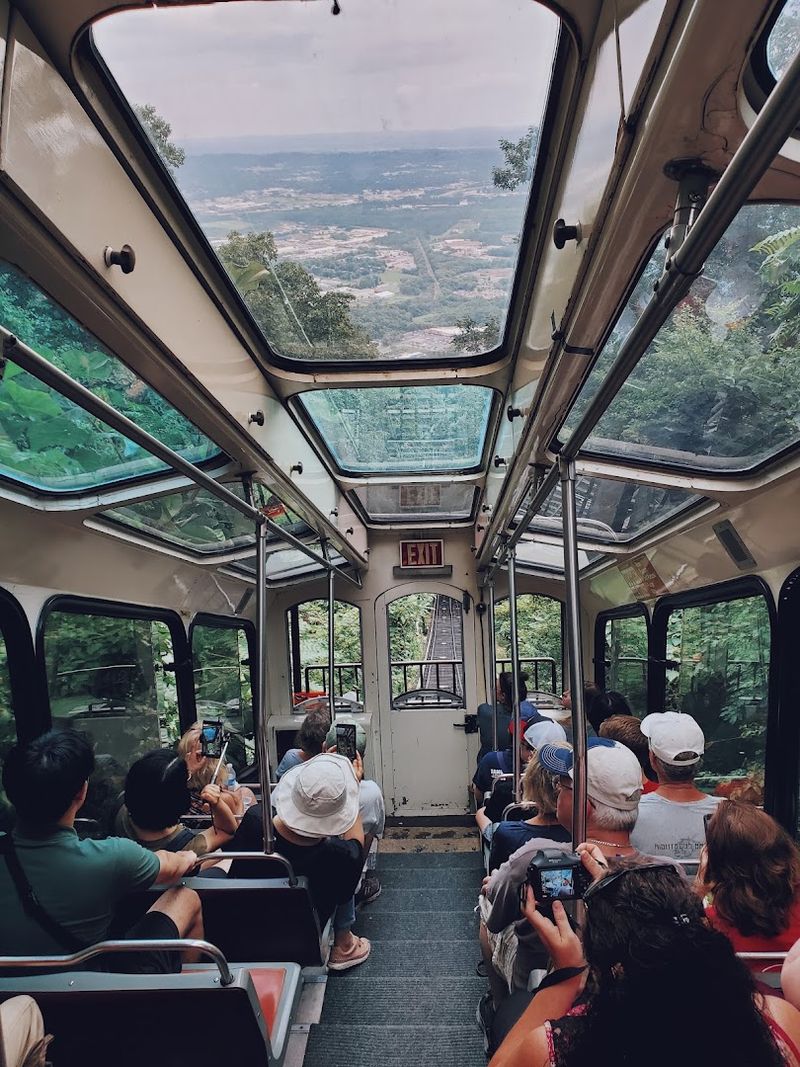
Ten minutes sounds brief until the floor begins disagreeing with the horizon.
The Incline travels just under ten miles per hour, a pace slow enough to study the mountainside yet steady enough to keep the journey moving.
Two cars operate along the route and pass near the middle, creating a quick meeting between passengers heading toward opposite views.
At first, the grade stays gentle enough to let everyone settle in. Trees frame the track, St. Elmo begins to shrink, and Chattanooga appears in pieces between branches and rooftops.
Then the angle increases. You notice bodies leaning differently, hands finding rails, and conversations pausing whenever the view opens unexpectedly across the Tennessee Valley.
The cars remain attached to the track throughout the journey, including the section crossing a bridge. Heavy-duty cable and the railway’s mechanical system guide each car between the stations.
How can one mile hold this much personality? Lookout Mountain simply refuses to waste the climb.
The Final Grade Turns A Scenic Ride Into The Main Story
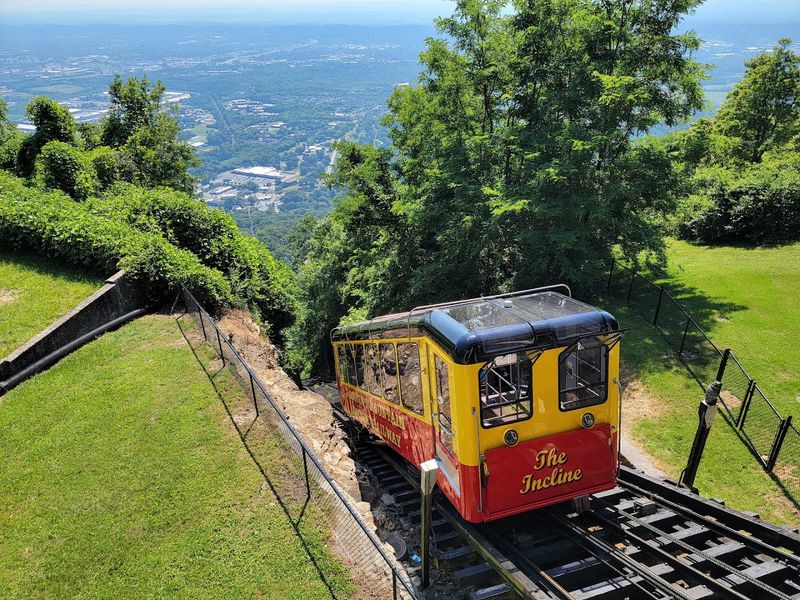
The famous number is 72.7 percent, but your stomach understands it before your brain finishes the calculation.
Near the top, the track reaches its steepest point and earns the Incline its worldwide reputation. The car tilts sharply enough to make Chattanooga appear far below, framed through glass at an angle that ordinary train rides never attempt.
A 72.7 percent grade does not mean the track rises at a 72.7-degree angle. It means the route gains 72.7 feet in height for every 100 horizontal feet, which is still remarkably steep for a passenger railway.
Height-sensitive riders may prefer a seat away from the most exposed view and should know the dramatic section arrives near the summit. Focus on the interior, breathe normally, and remember that the railway has spent generations performing this climb.
Everyone else can enjoy the strange thrill of sitting comfortably while the world outside seems to tip. Try watching the faces across the car when the steepest section arrives; they may be even more entertaining than the view.
The track saves its strongest punchline for the top, and the entire car understands it at once.
The Upper Station Rewards The Climb With A Wider Horizon
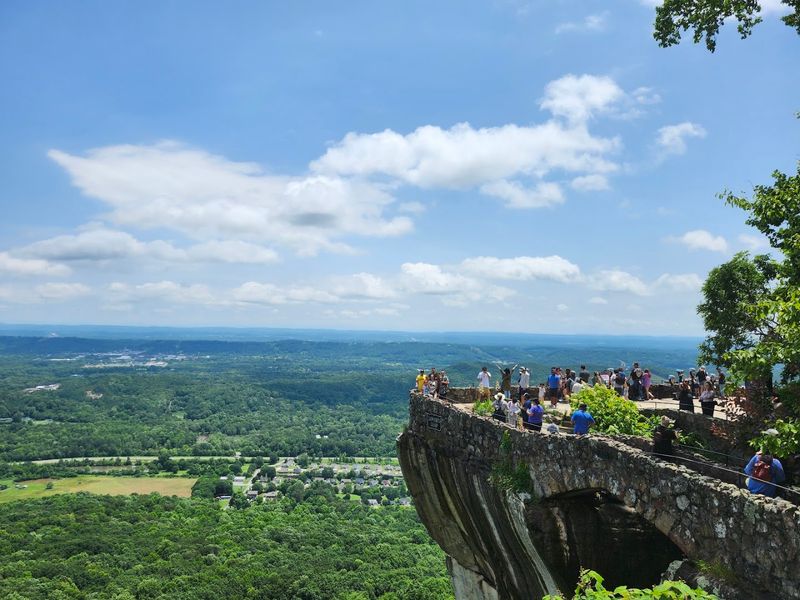
Doors open, feet meet level ground, and Chattanooga spreads across the valley as though the railway pulled back a curtain.
The Lookout Mountain station includes an observation deck with panoramic views over the Tennessee Valley. The elevated perspective reveals roads, neighborhoods, river bends, ridges, and distant hills that are difficult to understand from street level.
Clear weather brings the broadest views, but shifting clouds and mountain haze can add their own drama. Give the landscape a few minutes instead of taking one picture and immediately heading indoors.
The upper station also includes Centennial exhibits tracing the railway’s history through photographs, an engine-room display, a snack area, and a gift shop. Together, they give the summit enough substance to justify staying beyond the first view.
Your return ticket allows time to explore before descending, so there is little reason to rush back into line. Let the next car leave if the deck is quiet and the horizon is showing off.
The climb creates anticipation, but the summit knows how to hold your attention.
Point Park Adds A Powerful Chapter Within Walking Distance
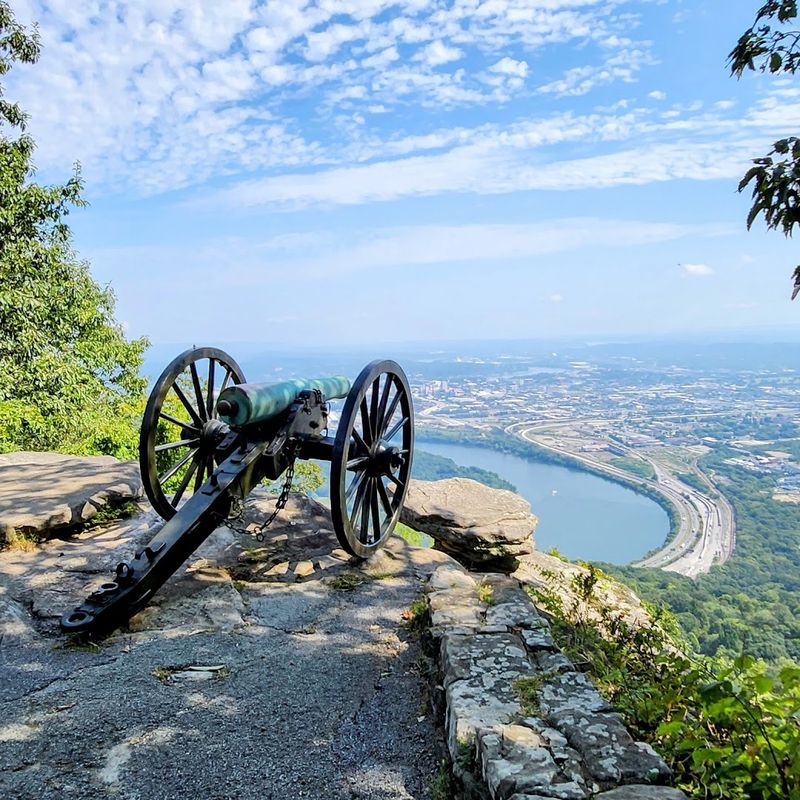
The railway may deliver the altitude, but nearby history gives the summit another reason to linger.
Point Park is part of Chickamauga and Chattanooga National Military Park and lies a short walk from the upper station. The park overlooks terrain connected to the 1863 Battles for Chattanooga, including the fighting remembered as the Battle Above the Clouds.
Inside the park, paved paths lead past monuments, historic tablets, cannon positions, and overlooks. The New York Peace Memorial stands as a tribute to reconciliation between former Union and Confederate soldiers.
The Lookout Mountain Battlefield Visitor Center sits near the entrance and contains exhibits along with James Walker’s large painting of the battle.
Admission and operating details are separate from the railway, so check current National Park Service information before adding it to the day.
Wear shoes suited to walking and leave enough time for the return journey. Missing your preferred descent because a battlefield overlook captured your attention is understandable, but it is still inconvenient.
The summit offers scenery first, then reminds you that the ground beneath it carries a much heavier story.
The Descent Gives The Mountain A Completely Different Ending
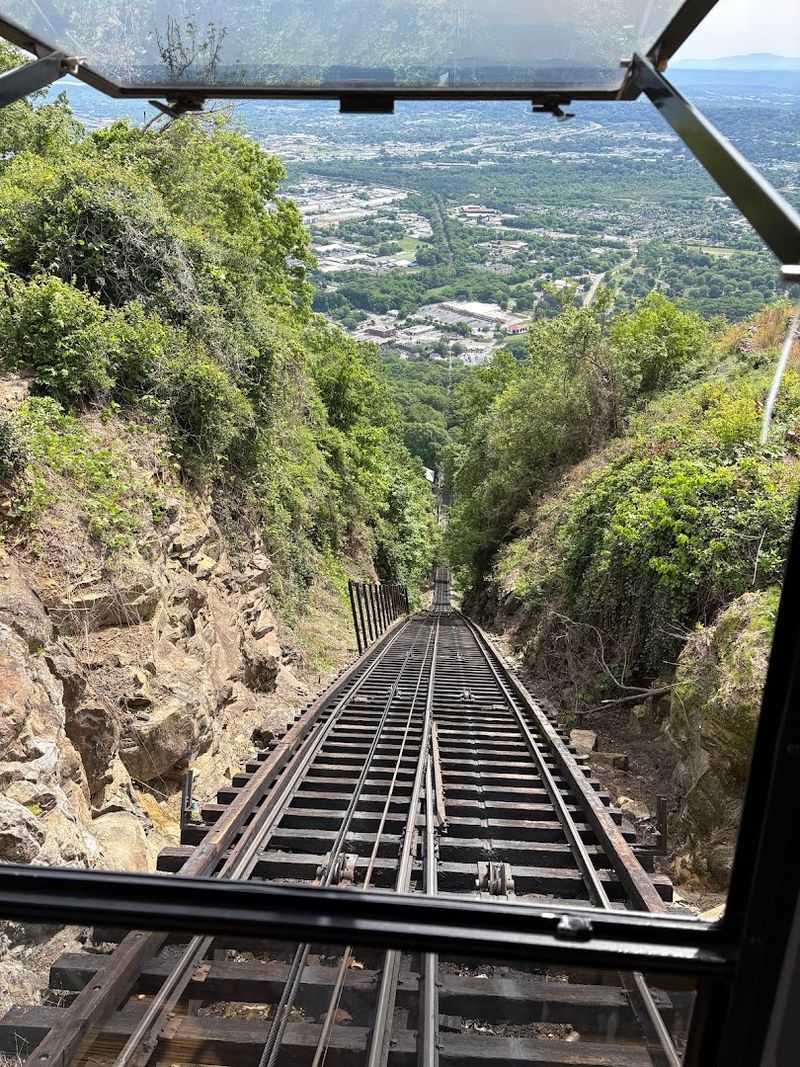
Going down is not a repeat performance.
The view now sits in front of you as the car begins its controlled return toward St. Elmo. Chattanooga grows larger, roofs regain their shape, and the track appears to drop through the forest with a directness that was easier to ignore during the climb.
Sit on a different side when space allows. New sightlines emerge through the windows, and details missed on the ascent may become obvious when the valley is moving toward you instead of away.
The steepest portion arrives immediately after departure from the upper station, giving the descent an early jolt before the grade gradually softens. Passengers who stayed composed going up may discover that facing downhill produces a very different expression.
Once the car reaches St. Elmo, take another look at the track. The route may seem even more improbable now that you understand exactly where it goes.
The Lookout Mountain Incline Railway turns a short Tennessee ride into a century-spanning adventure, a mountain panorama, and one unforgettable lesson in how dramatically a train can redefine the word uphill.