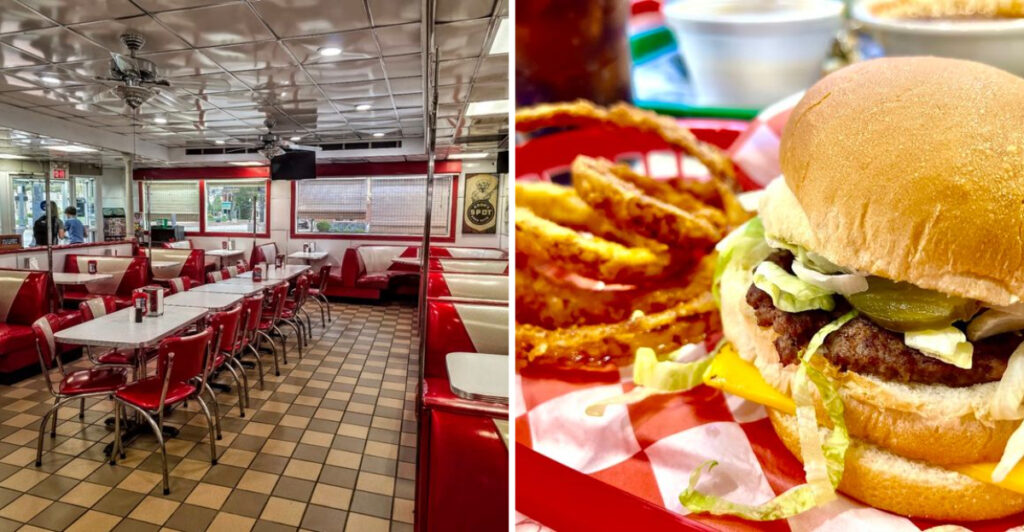
Some restaurants hand you a menu. This Ohio landmark hands you a small time machine with onion rings and asks whether you want pie for the return trip.
The downtown diner has occupied the same Sidney corner since 1907, long enough to watch chuckwagons give way to touchscreen dashboards. Its white-tiled exterior and house-baked pies make the past look suspiciously comfortable.
Nothing here was added last month to manufacture nostalgia. The history arrived honestly, through renovations, ownership changes, and generations of customers sliding into booths with serious opinions about lunch.
You can settle into the retro dining room or stay in the car and let your meal arrive at the window.
Just do not announce that you are too full.
Ohio pie cases have heard that excuse before, and this one has been winning the argument for generations.
A Chuckwagon Started Serving Sidney In 1907
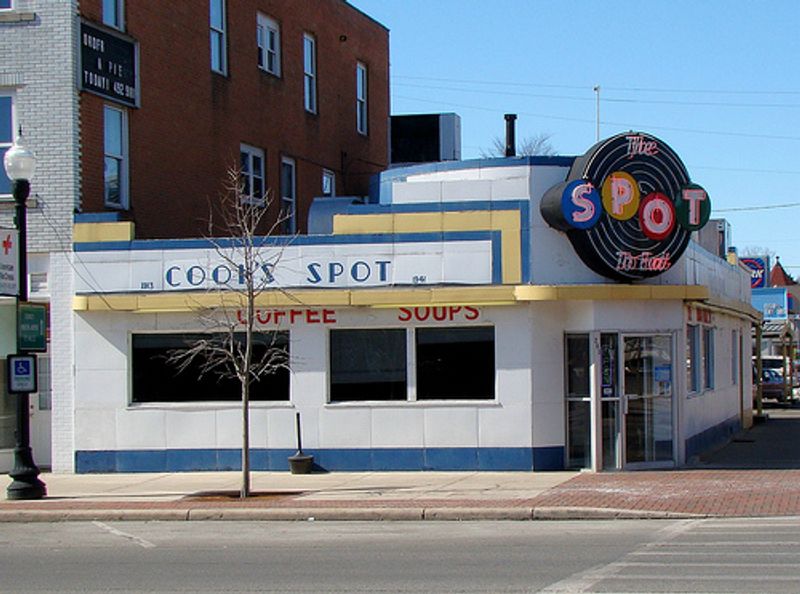
The first chapter did not involve a dining room, neon sign, or permanent kitchen. It began when Spot Miller brought a chuckwagon to the corner of Court Street and Ohio Avenue in 1907 and started serving hungry customers.
Miller had food. Sidney had workers, families, and travelers ready to eat. The arrangement sounded simple until the city objected to meals being sold from a wagon.
Plenty of people might have accepted defeat, rolled elsewhere, and complained about local rules for the next decade. Miller chose a better story. He removed the wheels.
That improvised restaurant lasted far longer than anyone might expect from a converted wagon. It established a dining tradition on the corner before drive-ins, interstate exits, and fast-food counters entered everyday life.
Miller retired in 1913, and Joe Cook and Homer Spence purchased the business. The restaurant became known as Cook’s Spot, but its purpose stayed wonderfully uncomplicated: serve satisfying food in a location people already knew.
The wheels disappeared, but the business kept moving forward.
The Address Has Anchored The Story For Generations
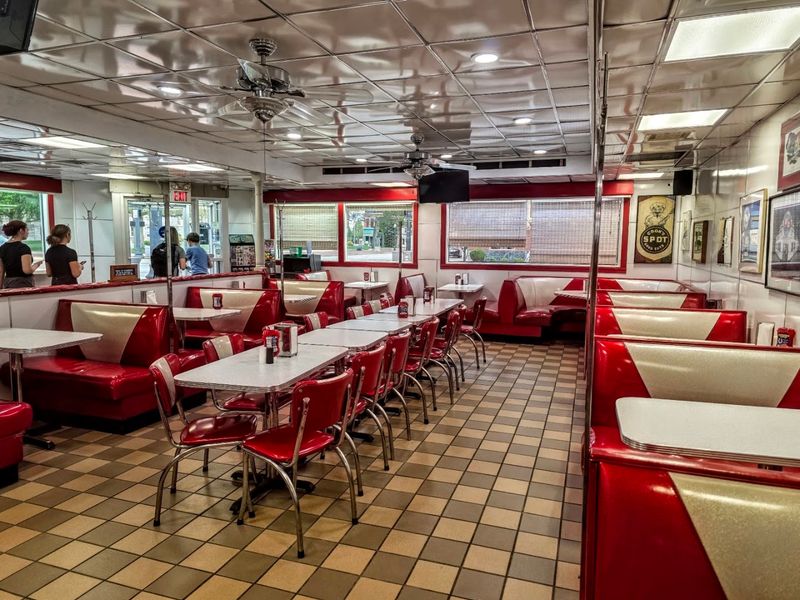
The Spot stands at 201 South Ohio Avenue, Sidney, Ohio, directly on Historic Courthouse Square. That address is more than a line for your map app. It explains how the restaurant became part of the town’s everyday rhythm.
The stationary chuckwagon served customers until 1934, when a permanent building took its place. Nearly three decades had passed since Miller solved his permit problem by removing the wheels, and the business had grown into a true local institution.
After the original building was lost in a fire at the end of 1940, The Spot reopened in 1941 inside the structure customers recognize today.
That quick return protected its place on the square and introduced the distinctive look that now makes cameras appear before menus do.
The interior continued changing over the following decades as equipment, seating needs, and customer habits evolved. A major renovation in 1976 created the layout that still shapes the dining room.
Through every update, the address kept doing its job. Generations arrived at the same corner in different cars, with different hairstyles, and equally strong opinions about the proper burger toppings.
The White-Tiled Exterior Brought The Machine Age Downtown
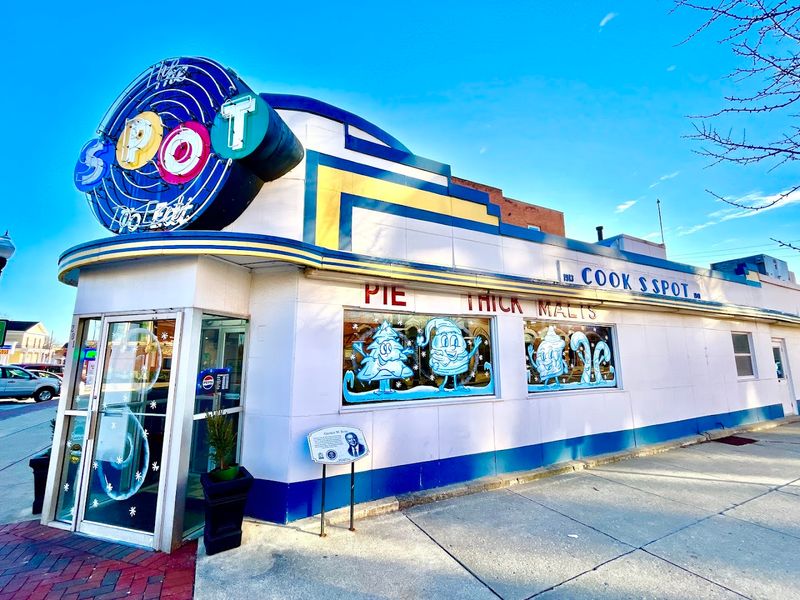
Before you go inside, pause long enough to study the building. The exterior is an example of Streamline Moderne design, an architectural style associated with smooth surfaces, clean horizontal lines, rounded forms, and the optimism of the machine age.
The gleaming white porcelain tile gives the restaurant its unmistakable appearance. In the early 1940s, those lines looked futuristic, borrowing visual energy from trains, automobiles, ocean liners, and industrial design.
Today, the same building sends the imagination in the opposite direction. The design now carries the visual language of classic roadside America, when restaurants used bold shapes and bright signs to catch a motorist’s eye before the next intersection.
That reversal is part of the fun. A building designed to look modern survived long enough to become historic.
You do not need an architecture degree to appreciate it. The bright tile, rounded corners, and confident proportions make the diner stand apart from ordinary storefronts immediately.
Its position on the square strengthens the effect. The building is not stranded beside an anonymous exit ramp or buried inside a shopping center. It belongs to the streets around it, and those streets give the retro exterior room to perform.
The facade has outlasted countless design trends. Now newer restaurants spend serious money trying to recreate the character this one earned naturally.
The Neon Sign Still Knows How To Steal The Scene
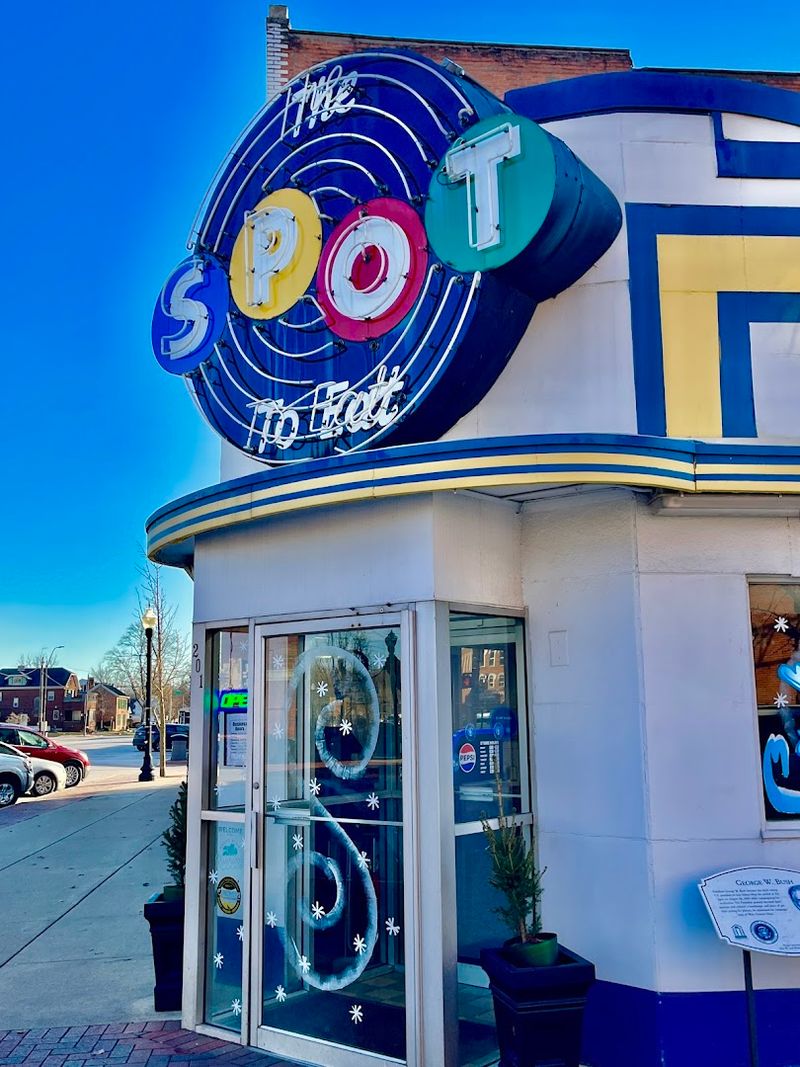
Modern restaurants can install enormous digital screens, change the message every six seconds, and animate a hamburger until it looks ready to file paperwork. One old neon sign can still beat all of them.
The Spot’s mid-century sign hangs above the entrance and serves as the building’s visual exclamation point. During daylight, it adds shape and color to the white-tiled facade.
As the sky darkens, the glow begins doing the job it learned decades ago, pulling attention toward the door and making dinner sound better than the original plan.
Older commercial signs were built to become landmarks. People used them for directions, met beneath them, and recognized towns through the businesses that lit their main streets.
This one still performs that role. It also gives photographers an easy subject because the building has already arranged the tile, lettering, and courthouse-square backdrop for them.
The only challenge is taking the picture before someone in your group asks why everybody is photographing the sign instead of ordering onion rings.
Take the photo. Then listen to the hungry person.
The sign has waited decades for its close-up. Your lunch has not.
Carhop Service Lets Lunch Arrive At Your Window
Eating inside offers the closest look at the retro dining room, but staying in the car adds another layer of roadside history. The Spot continues to offer carhop service, allowing drivers to park, order, and have the meal brought outside.
That tradition once played a major role in American dining culture. Drive-ins turned automobiles into private booths, giving families and travelers a quick meal without requiring everyone to reorganize around a restaurant table.
Today, the arrangement carries nostalgia, but it is also wonderfully practical. A child may be asleep in the back seat. You may be dressed for a road trip and unwilling to present yourself to a dining room.
The weather may be pleasant, the windows may be down, and a burger in the car may sound like the correct answer.
Carhop service meets you exactly where you are, which in this case is directly behind the steering wheel.
There is comedy built into the experience. You begin by promising to keep the car clean. Then the onion rings arrive.
Soon somebody is balancing a basket, a malt, napkins, and several sauces while guarding the seat upholstery like a museum conservator. Lunch becomes a tiny exercise in teamwork.
Keep the napkins nearby, respect the ketchup, and remember that a fresh burger has never cared about your clean shirt.
Burgers And Onion Rings Keep The Menu Grounded
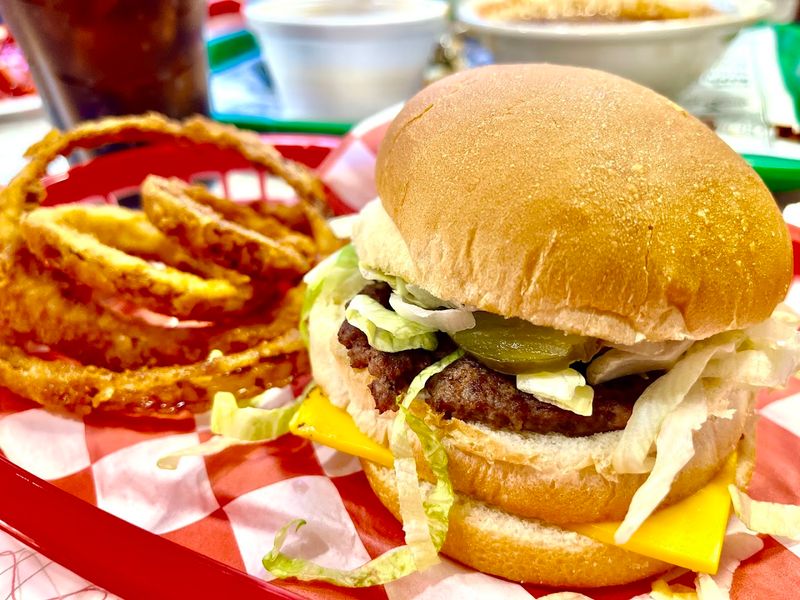
A historic restaurant still needs food people genuinely want to eat. Architecture can earn the first photograph, but it cannot carry lunch.
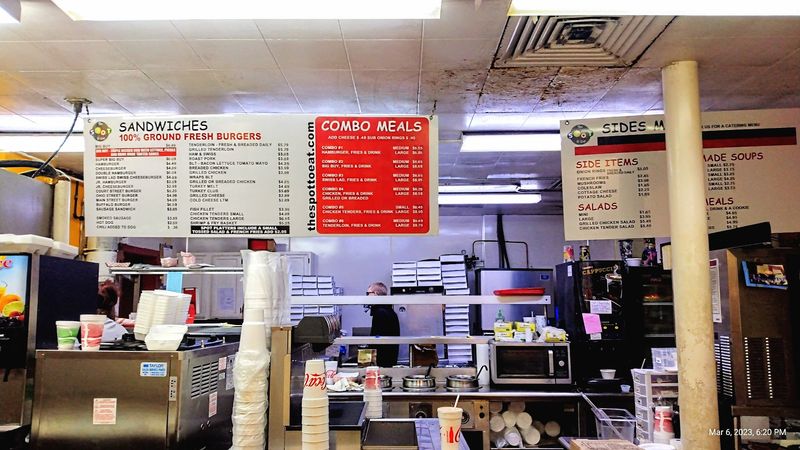
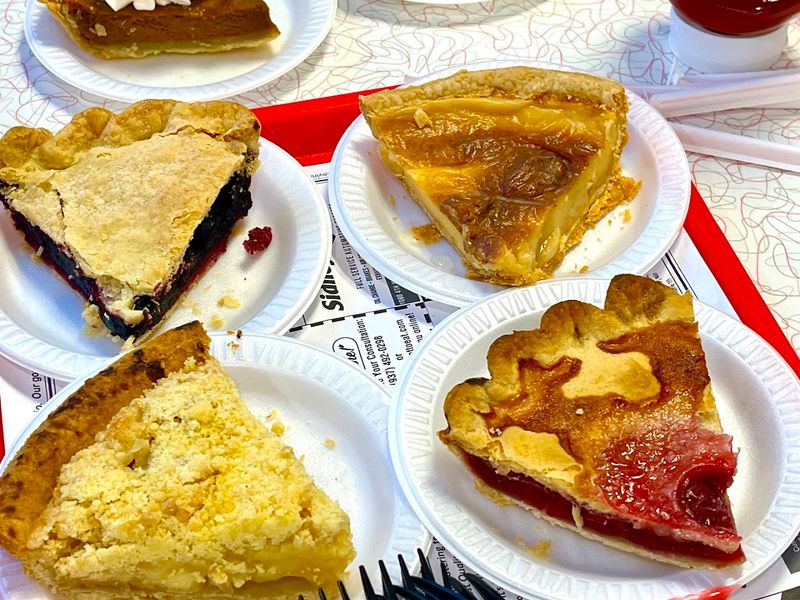
The menu centers on familiar diner favorites, including fresh-ground hamburgers, pork tenderloin sandwiches, hand-breaded onion rings, fries, soups, chicken, sandwiches, frosted malts, and pies baked in-house.
The burger selection gives regulars enough variety to develop favorites and defend them with courtroom confidence.
The Big Buy is a double-decker burger served with lettuce, pickle, and house tartar sauce. The Super Big Buy raises the stakes for anyone who considers one patty an opening act.
The Ohio Street Burger adds barbecue sauce and an onion ring to an onion bun.
These are not burgers assembled with tweezers or accompanied by a speech. They are built to be picked up, leaned over, and eaten before the bottom bun begins questioning its structural responsibilities.
The onion rings deserve their own decision. They are made on-site and show up both as a side and as a burger topping, giving customers several opportunities to choose correctly.
Watch the person who says they only want one. That person is gathering intelligence.
The pork tenderloin offers another classic Midwestern option and often requires two hands plus a brief strategy meeting before the first bite. Add a frosted malt, and you have assembled the diner version of survival equipment.
More Than A Century Later, The Corner Still Delivers
The Spot has lasted because it knows exactly what kind of restaurant it is.
It does not need to disguise its burgers, hide its age, or replace every historical detail with something trendier.
The chuckwagon origin, 1940 fire, 1941 building, white porcelain tile, neon sign, carhop service, and diner menu already provide more character than any manufactured theme could deliver.
That history does not require you to treat lunch like a museum visit. You can admire the architecture while reaching for ketchup. You can think about the chuckwagon while deciding between rings and fries.
You can photograph the neon sign while carrying a pie box toward the car with both hands.
The stories sit naturally beside the meal.
That balance gives the restaurant its staying power. Locals return to a familiar dining room, while road-trippers discover a place tied specifically to Sidney. You will not confuse the building with another restaurant in another town.
The corner, sign, exterior, menu, and history are too closely connected.
More than a century after Spot Miller rolled into town, people are still arriving hungry. The transportation has changed, but the destination has not.
Order the burger. Protect the final onion ring, and pretend the pie was always part of the plan.