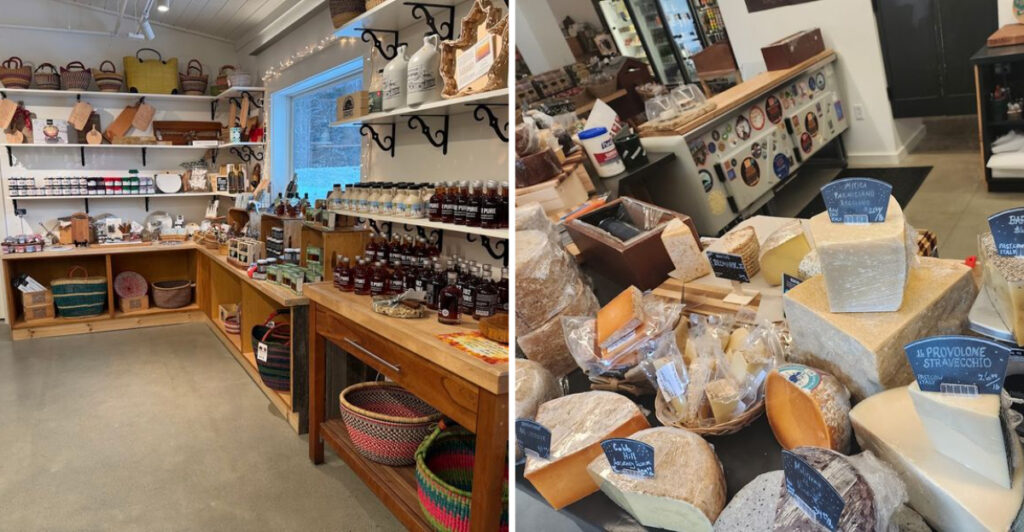
Cheese has one serious flaw: it makes confident adults forget how decisions work.
Vermont understands this dairy drama better than most places.
The shelves offer young cheddar, older cheddar, smoky cheddar, spicy cheddar, and cave-aged wheels with enough personality to require introductions.
Your cooler suddenly seems small, and your self-control seems fictional.
The shop also provides free tastings, which sounds helpful until every sample becomes a finalist.
Do you choose the buttery crowd-pleaser or the crumbly wheel that tastes like a forest learned excellent manners? There is no wrong answer, only increasingly ambitious shopping.
Soon enough, your “single wedge” will need its own passenger seat for the ride home, and perhaps a seatbelt.
A Farmers’ Cooperative Gave Leftover Milk A Better Future
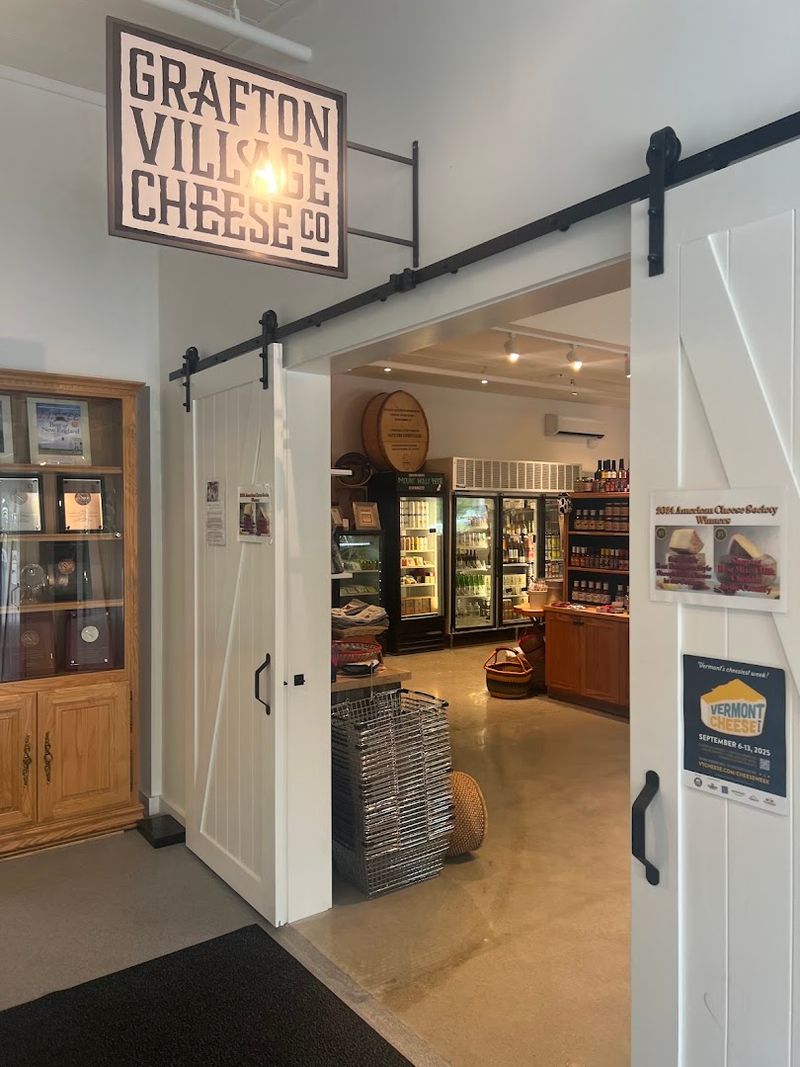
Before modern refrigeration, surplus milk came with a deadline and very little sympathy.
In 1892, farmers around Grafton pooled their milk through a cooperative and turned it into cheese that could last longer. The idea was practical, local, and much more delicious than watching valuable milk disappear.
Fire destroyed the original plant in 1912, bringing commercial cheesemaking in the village to a long pause. The Windham Foundation revived the operation in 1967 as part of its work supporting rural communities and traditional Vermont enterprises.
That ownership still shapes the company. Grafton Village Cheese operates as one of the foundation’s mission-driven businesses, linking cheese production with jobs, agriculture, and the wider regional economy.
The story also explains why the company keeps looking backward and forward at once. Old methods survive, but the cheese still has to earn space in a modern refrigerator.
History alone cannot make a good cheddar. Milk, cultures, salt, time, and steady cheesemaking still need to deliver every day.
The company’s origin remains easy to understand: farmers had milk, cheese offered a solution, and generations kept improving the answer.
The Proctorsville Store Gave The Cheese A New Home
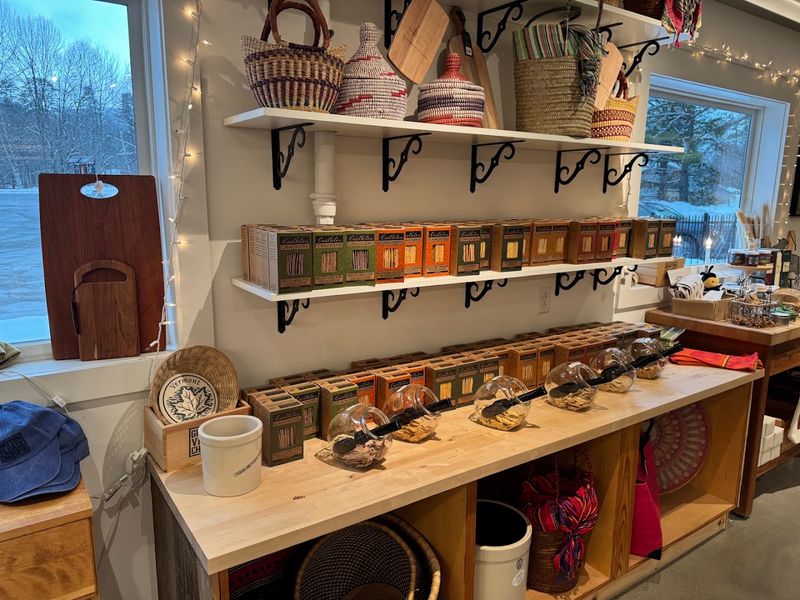
Can a shopping stop ruin every sensible plan in your cooler? At this Proctorsville shop, the first sample can quickly turn one planned purchase into a much heavier cooler.
The Okemo Valley Retail Store opened in Proctorsville in March 2024 after the company moved its retail, cutting, packaging, and warehouse operations from Brattleboro. Most cheesemaking continues at the production facility in Grafton.
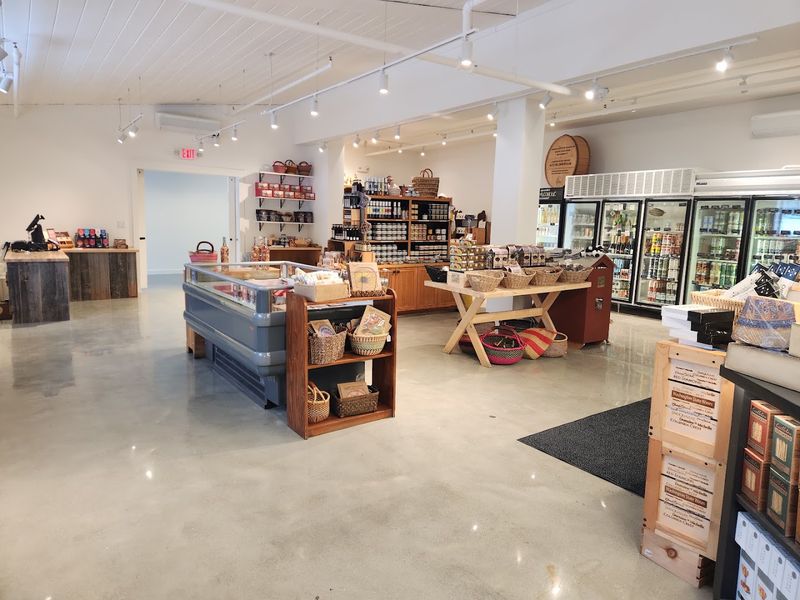
At 2568 VT Route 103 in Proctorsville, the shop carries Grafton’s own cheddars and cave-aged cheeses alongside selections from Vermont, other American producers, and international cheesemakers.
Specialty foods, serving pieces, baskets, and artisan gifts widen the possibilities beyond dairy.
Free tastings are offered daily, which makes choosing easier for approximately thirty seconds.
A sample may confirm your plan. The next one may overthrow it. Staff can explain age, milk type, texture, and flavor without turning the counter into a classroom with homework.
The Route 103 location also handles the less glamorous work that keeps cheese moving, including cutting wheels, wrapping portions, and preparing products for sale.
The renovated building gives all of those jobs room to coexist. Shoppers browse up front while the cut-and-wrap operation handles the precise work behind the scenes.
You see a neat wedge in the case. Behind it stands an entire operation with sharp knives, cold rooms, and excellent organizational skills.
Traditional Cheddaring Gives The Milk Somewhere To Go
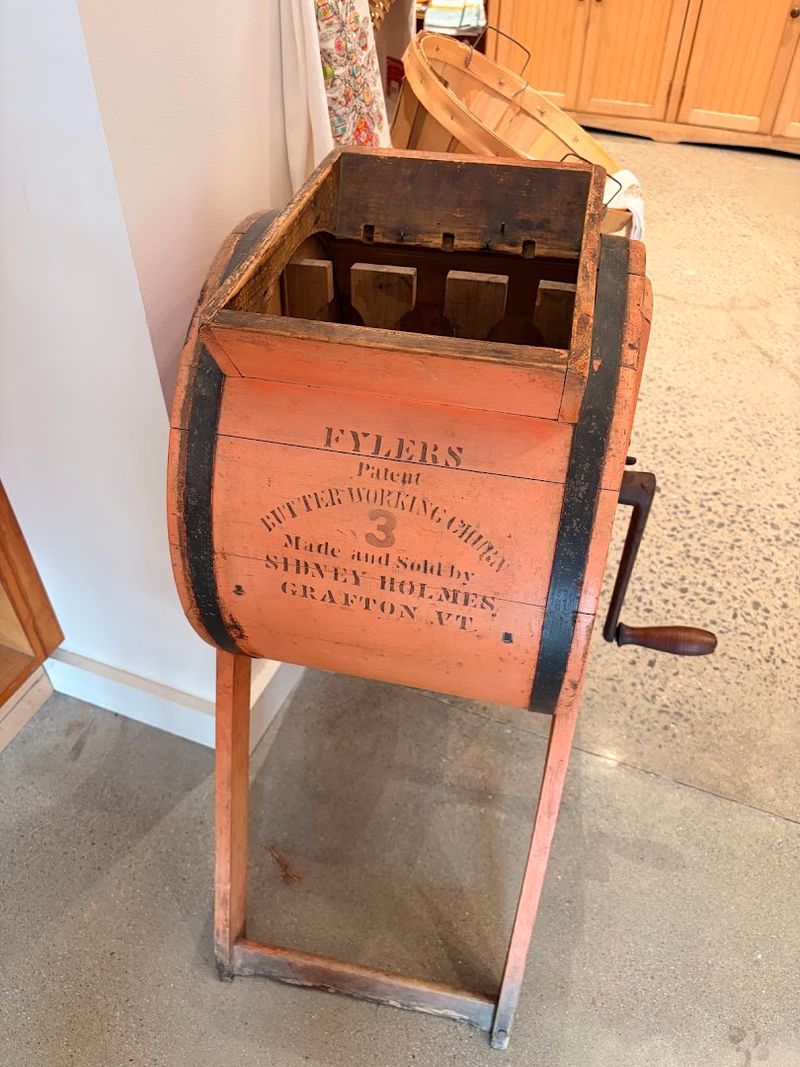
Cheddar is not only a cheese. It is also a verb with a surprisingly demanding schedule.
Fresh raw cow’s milk arrives from regional family farms, many of which raise Jersey cows. Their milk is known for high protein and butterfat, qualities that help create rich, full-bodied cheese.
Cultures begin the transformation. Once curds form and whey drains, the cheesemakers cut the curd into slabs, stack and turn them, monitor acidity, then mill the slabs into smaller pieces.
Salt joins before the curds are packed into forms and pressed overnight. The finished wheels move into cool storage, where time takes over the slower part of the job.
Grafton’s cheddar keeps its natural pale yellow shade because no coloring is added. The company uses heat-treated, unpasteurized milk for its cheddar, along with salt, cultures, and enzymes.
The entire cheddar-making process takes roughly five to six hours before pressing and aging begin. Around ten pounds of milk are needed to produce one pound of cheese, so every wedge represents a surprisingly large dairy contribution.
The process takes patience, but it also requires judgment. Cheesemakers decide which batches suit shorter aging and which have the structure to keep developing.
One-Year And Two-Year Cheddars Start The Friendly Argument
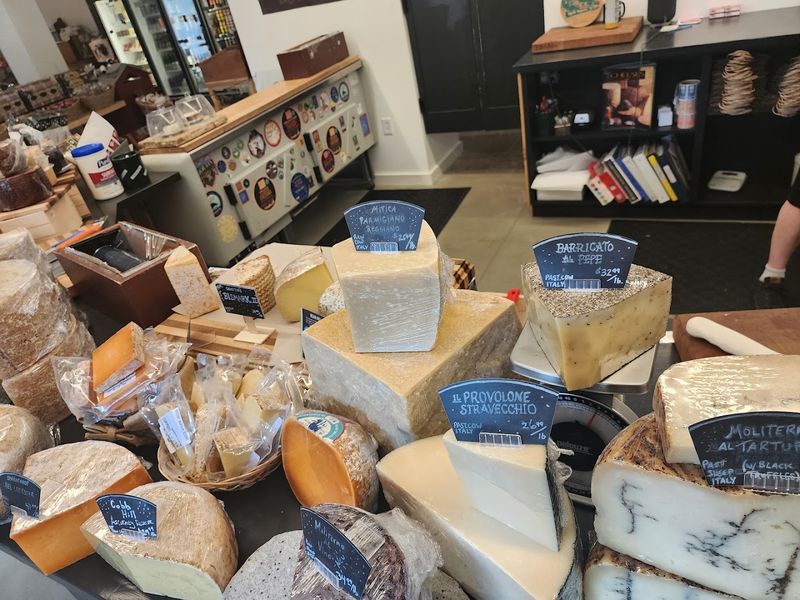
The first difficult decision looks innocent because both choices are called cheddar.
Grafton’s One Year Aged Cheddar is the younger, gentler introduction. The company describes it as creamy, lightly tangy, buttery, and nutty, with enough balance for snacking or melting.
The Two Year Aged Cheddar pushes further. More time creates a firmer texture and a stronger, sharper personality, giving each bite a longer finish.
Would you choose the easygoing wedge or the one with another year of opinions?
Buying both is not indecision. It is responsible comparison.
The younger cheddar also melts readily into sandwiches, baked dishes, or a skillet of potatoes. The older wedge earns center-stage treatment when you want sharper flavor without extra decoration.
Set them beside apples, crackers, or warm bread and taste them in order. The younger cheese gives you the baseline, while the older one shows what additional aging can do.
Temperature matters too. Letting cheese rest outside the refrigerator before serving allows its aroma and flavor to open more fully.
A cold wedge can be polite and quiet. Give it time on the counter, and suddenly it has stories, preferences, and strong feelings about your cracker choice.
Maple Smoke Truffle And Chili Make Cheddar Mischievous
Then the cheese case stops behaving like a history lesson.
Maple Smoked Cheddar brings wood smoke and a gentle maple character to the familiar cheddar base. Truffle Cheddar heads toward earthy, aromatic territory, turning a small bite into something that lingers.
Smoked Chili Cheddar combines smoke with habanero, jalapeño, and pasilla peppers. The heat builds through several kinds of chili rather than relying on one loud blast.
Independent producers make these Grafton-branded flavored cheddars for the company, which distributes them alongside its own aged and cave-aged cheeses.
The labels may begin with cheddar, but the personalities split quickly. Smoke brings warmth, truffle brings depth, and the pepper blend arrives with increasingly confident footsteps.
The smoky, earthy, and spicy profiles still turn an ordinary tasting into three completely different routes.
A smoky wedge can wake up a grilled sandwich. Truffle suits a simple cracker because it already brings plenty to discuss. Smoked Chili needs very little help beyond a knife and an appetite that respects peppers.
Which one would enter your cooler first?
Cave-Aged Wheels Take The Conversation Deeper
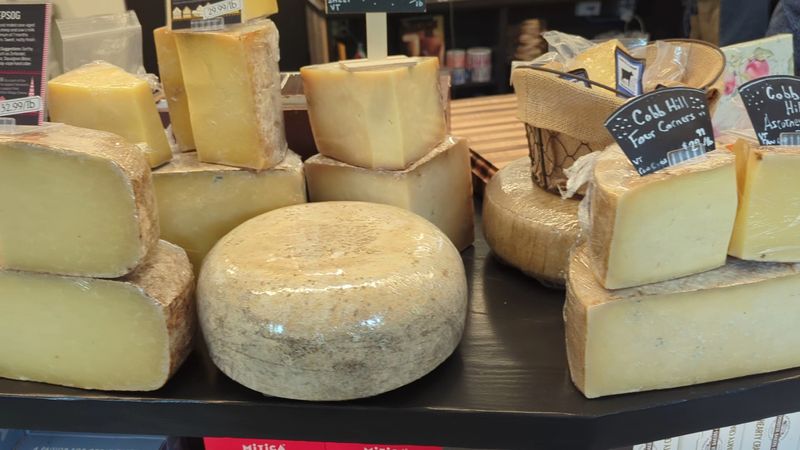
Welcome to the end of the case where cheese begins wearing rinds and collecting dramatic adjectives.
Clothbound Cheddar is wrapped in cheesecloth and cave-aged for at least seven months. The method allows the wheel to develop a natural rind, firm texture, crumbly edges, and earthy, nutty flavors unlike plastic-aged cheddar.
Shepsog blends raw sheep’s milk and cow’s milk in equal proportions. Bear Hill uses sheep’s milk, while Storyteller is made entirely from raw sheep’s milk and ages for at least six months.
Storyteller joined the lineup in 2023 as a Pyrenees-style cheese inspired by the grassy, herbaceous character of the milk. Bear Hill and Shepsog bring their own balance of richness, nuttiness, and sheep-milk tang.
The caves are controlled aging rooms designed to maintain temperatures near 55 degrees and humidity above 90 percent. They give cheesemakers a stable environment for developing rinds, textures, and deeper flavors.
Rinds need attention during aging, and each wheel changes at its own pace. The result is a case where appearance offers useful clues before your first taste.
Trying these beside the standard cheddars shows how far milk can travel without leaving the building.
Free Tastings Turn Every Wedge Into A Candidate
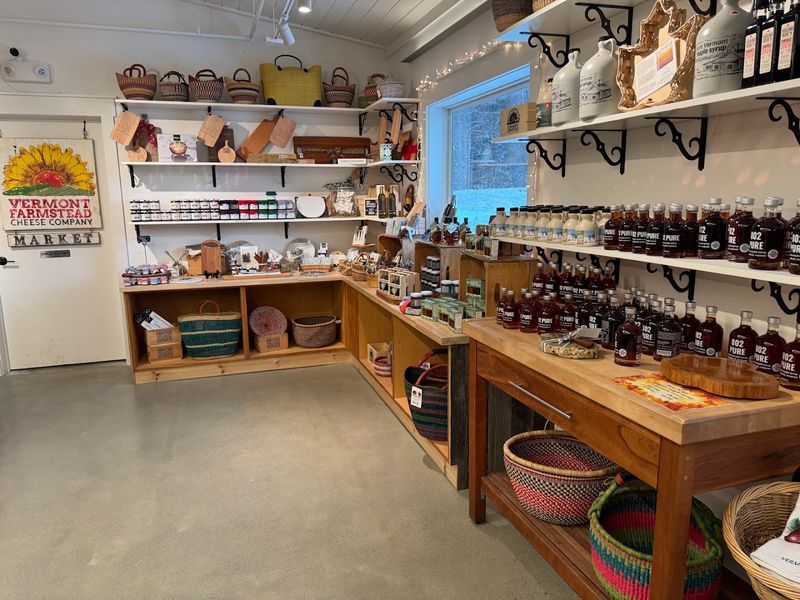
Free samples sound like a decision-making tool until the fourth cheese becomes your new favorite.
The Proctorsville shop offers tastings throughout the day, letting you compare styles before filling the cooler. A cheesemonger can steer you toward mild, sharp, smoky, spicy, crumbly, creamy, cow’s milk, sheep’s milk, or a combination you had not planned to meet.
Questions are welcome. Ask how long a cheese has aged, which texture suits melting, or which wedge can stand alone on a simple board.
The shop also carries crackers, preserves, condiments, baskets, serving pieces, and other specialty products. Those extras can turn a wedge into a gift or a complete snack before you reach the car.
A cooler remains the smartest travel companion, especially when the drive continues after shopping. Cheese appreciates cold air far more than it appreciates your optimism.
Sampling does not guarantee restraint. It often creates evidence against it.
You may enter looking for one-year cheddar and leave comparing clothbound rind, sheep’s milk tang, and the practical carrying capacity of your cooler.
That is the final lesson of the shop. Cheese choice becomes harder as knowledge improves, but the ride home becomes considerably better.