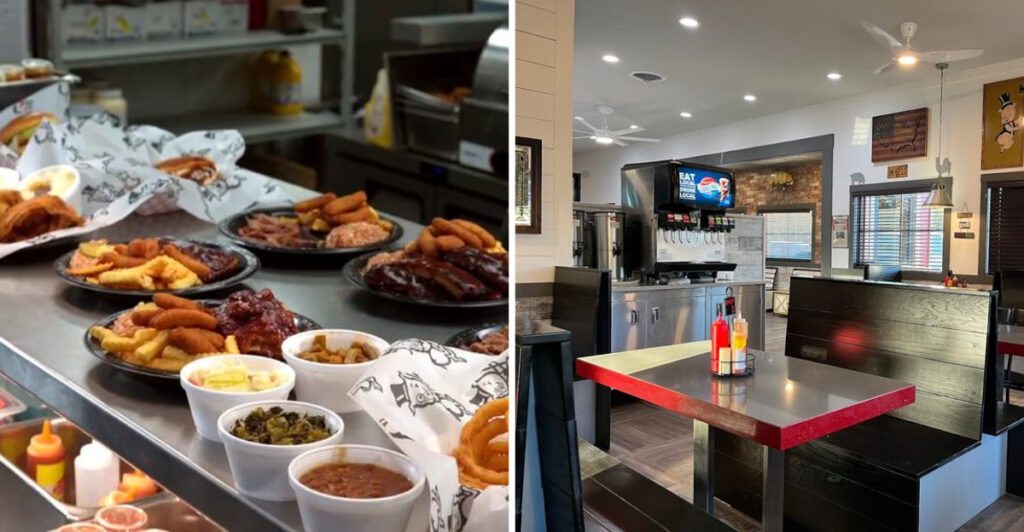
Smoke reaches the parking lot before you do, which is a bit persuasive and extremely effective.
By the time you spot the BBQ sign, lunch has already won.
This Winston-Salem barbecue joint has been feeding North Carolina since 1962 without needing fireworks or a celebrity pitmaster selfie.
The hickory never whispers. It settles into the meat, follows you to the table, and makes napkins feel underqualified.
North Carolina barbecue debates can get complicated fast. Your tray keeps things simple. Pick chopped, sliced, or chunky pork and add two sides.
The restaurant endured a long closure after a fire and came back with wood-burning pits still doing the heavy lifting.
Smoke has patience, but your appetite does not.
Well, at least not today.
Two Brothers Put Lexington-Style Barbecue On Peters Creek Parkway
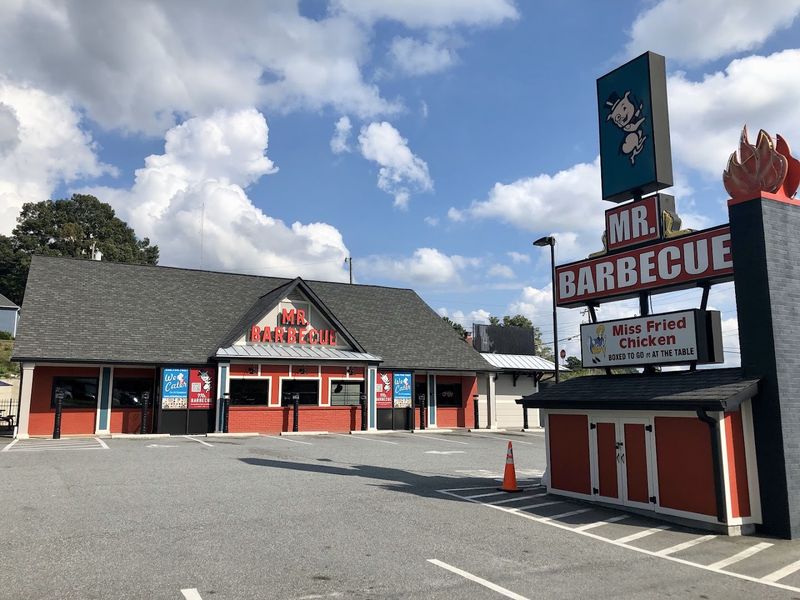
Every long restaurant story begins with somebody deciding dinner deserves a permanent address.
Brothers Andy and Nick Carros opened Mr. Barbecue in 1962, bringing Lexington-style barbecue to Winston-Salem. More than six decades later, the business still operates on Peters Creek Parkway under the next generation of the same family.
The menu lets you order the wood-smoked pork chopped, sliced, or left in larger chunks. That turns one barbecue tradition into three different eating strategies without crowding the plate with unnecessary tricks.
The founders built a working restaurant rather than a museum. Smoke, timing, and repetition mattered every day, helping the place become part of ordinary local routines.
Today, the founders’ sons, both named Jimmy, lead the restaurant. Two cousins sharing one first name could create confusion elsewhere. Here, it sounds like family continuity refusing to overcomplicate itself.
That family structure gives regulars a sense of continuity. The faces behind the counter may change with the shift, but the restaurant still feels connected to the people who built it, cooked through busy weekends, and kept returning customers fed.
The story began with two brothers and a pit. It continues with two Jimmys and a dining room that still understands lunch.
Hickory Wood Gives The Pork Its Main Argument
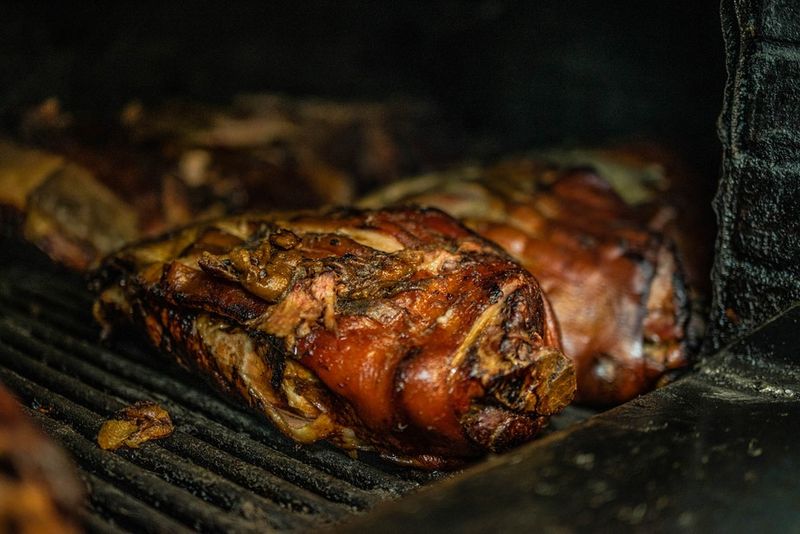
The parking lot gets a preview before your plate reaches the table.
Mr. Barbecue uses selected hickory wood in its pits and slow-cooks pork in-house. Hickory brings enough smoke to stand beside sauce, slaw, and bread without disappearing halfway through the meal.
Wood cooking demands attention. Heat shifts, coals settle, and every load of fuel behaves differently. A pit crew manages the fire rather than pressing a button and trusting a timer with lunch.
That work shows around the edges of the pork. Smoke builds gradually, while long cooking softens the meat enough for chopping, slicing, or serving in larger pieces.
You can test the method at 1381 Peters Creek Parkway in Winston-Salem. Even after the building had to be reconstructed, the restaurant remained rooted at the same address.
The smoke is not decoration here. It marks the building, the parking lot, and the ride home. Crack open a takeout container later, and the aroma returns with enough confidence to make the kitchen table feel like another dining room.
Order chopped pork for the classic introduction. Choose sliced or chunky when you want more texture.
The pit gives you options, but it refuses to become background music.
Two Pitmasters Helped Write Recipes That Stayed
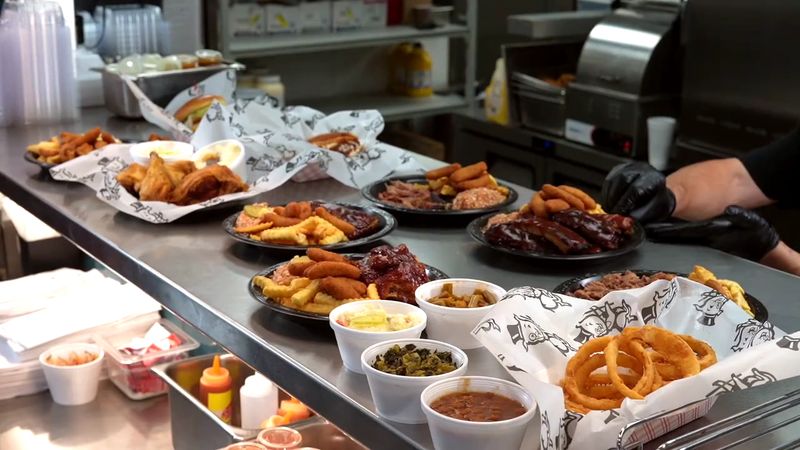
Great barbecue recipes rarely arrive wearing name tags. These two did.
Joe Pope and Leo Miller joined Mr. Barbecue in 1965, three years after the restaurant opened. The business credits the North Carolina pitmasters with sharing recipes that remain central to the menu.
Their influence reaches beyond one sauce or one side. Pit cooking depends on systems built through repetition: managing fire, judging texture, moving meat, and balancing seasoning with smoke.
A recipe lasting for decades cannot survive as a display piece. It must work during weekday lunch, packed takeout orders, and family meals moving through the drive-thru.
Mr. Barbecue still presents Pope and Miller as part of its foundation. Their names connect today’s plates with a period when barbecue knowledge traveled through kitchens and working pit crews.
You do not need to memorize the history before ordering. The better tribute is easier. Take a bite, notice how smoke and sauce cooperate, then reach for another hush puppy.
Old recipes have one unfair advantage: they already know you are coming back.
Scratch-Made Sides Refuse To Sit Quietly
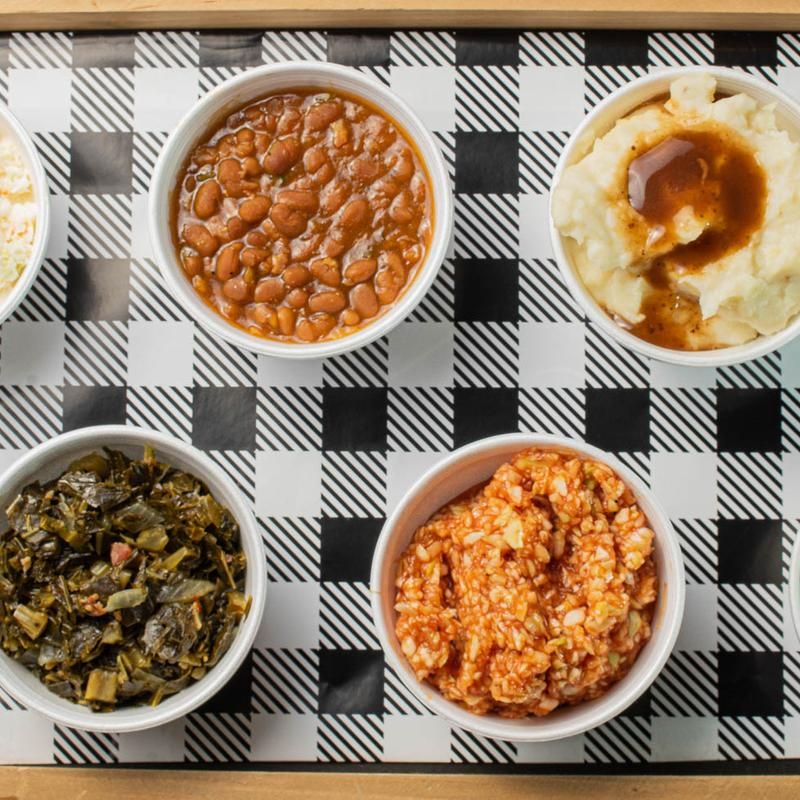
The current menu includes homemade hush puppies, barbecue slaw, coleslaw, potato salad, baked beans, green beans, collard greens, fried okra, fries, and onion rings when available. Plates pair meat with two sides and hush puppies, making selection part of the fun.
Regulars know the side order can change the entire plate. Fried okra adds crunch, collard greens bring depth, and baked beans lean sweeter beside the pork. Choosing only two feels less like a rule and more like an endurance test.
Hush puppies bring crisp edges and soft cornmeal centers. Barbecue slaw supplies the tangy companion many Piedmont diners expect beside chopped pork. Coleslaw offers a cooler route when you want contrast.
Banana pudding is made from scratch and does not behave like an optional ending. It arrives creamy, sweet, and dangerously easy to justify.
A plate also lets you build contrasts on purpose. Smoky pork, cool slaw, crisp hush puppies, and creamy pudding keep the meal moving instead of repeating the same note. Your fork gets variety, your appetite gets defeated, and the tray leaves very little evidence.
The menu moves beyond pork too. Brisket, ribs, fried chicken, flounder, burgers, hot dogs, salads, and vegetable plates give mixed groups room to order without staging a family debate.
Which side gets your first vote?
The Roadside Sign Has Its Own Fan Club
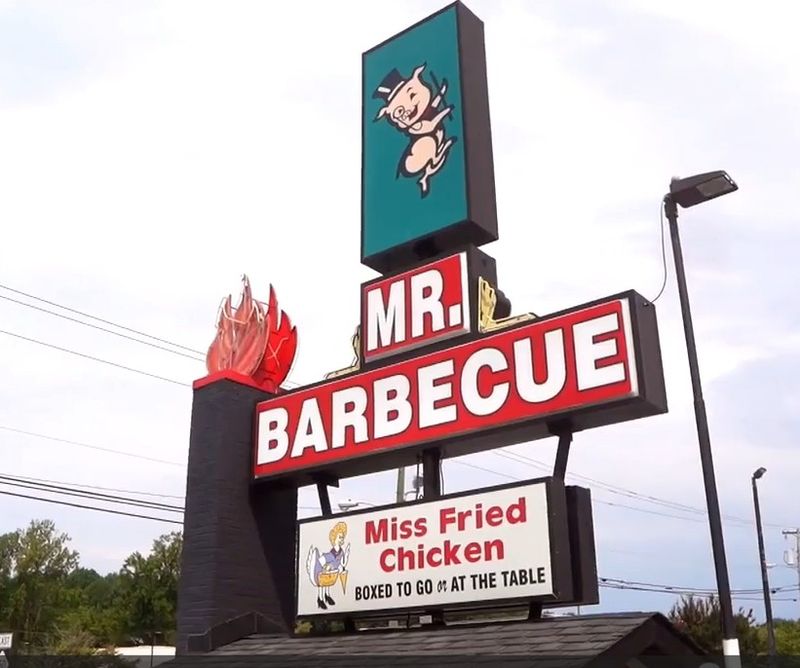
Some landmarks require a plaque. This one has a pig in a top hat and a glowing flame.
The Mr. Barbecue sign stands above Peters Creek Parkway with the kind of roadside confidence modern branding teams spend months trying to imitate. Its pig mascot, bold lettering, and flame make the restaurant difficult to confuse with anything else.
The business calls the sign a historic local landmark and invites visitors to photograph it. Long before every meal gained a camera crew, the sign was already telling drivers exactly what waited near the road.
Peters Creek Parkway has changed since 1962. Traffic increased, neighboring businesses rotated, and Winston-Salem expanded around the restaurant. The sign kept announcing barbecue through all of it.
That constancy gives the property a visual memory beyond the food. Locals use it as a reference point, while first-time visitors know they found the correct parking lot.
Take the photograph before eating.
Afterward, the heavy takeout bag may ruin your posture and improve the picture.
The Menu Has More Range Than The Name Suggests
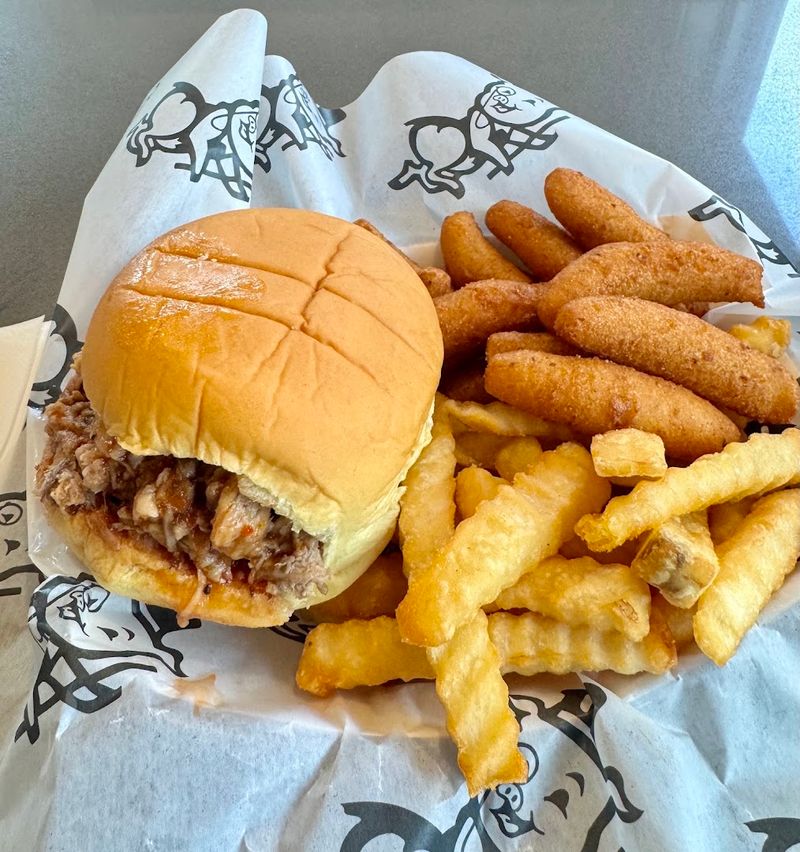
The name promises barbecue, then the menu starts showing off.
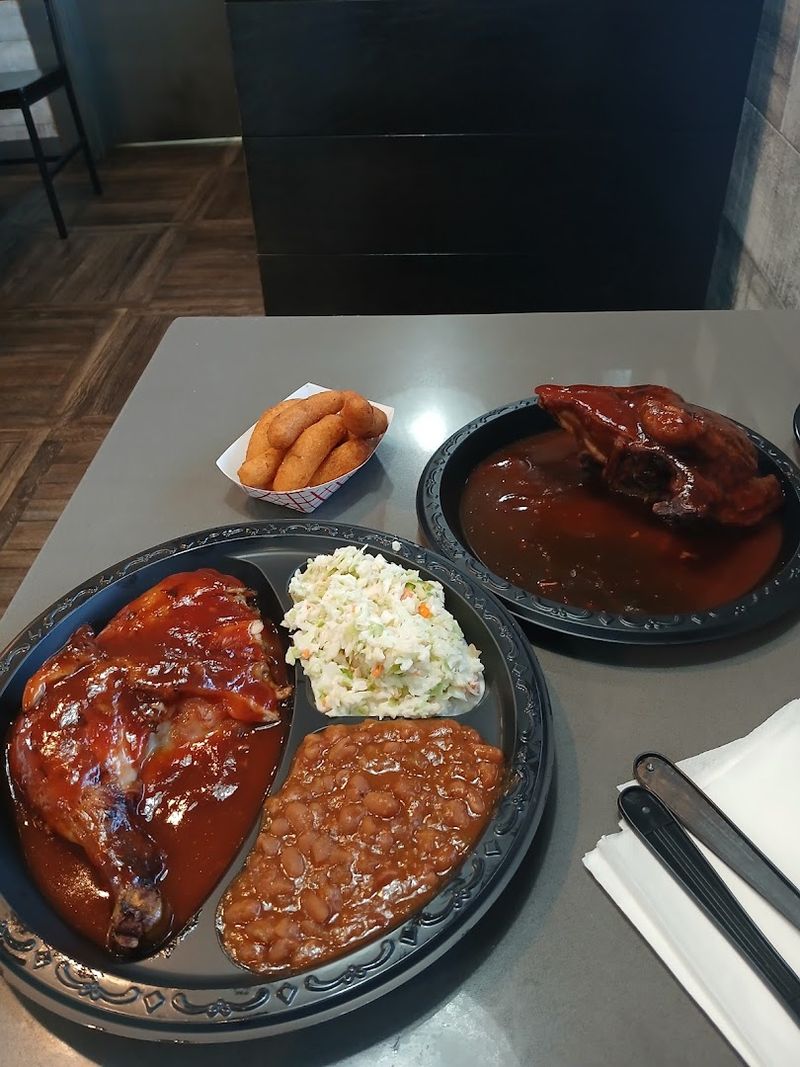
Chopped pork remains the classic introduction, but Mr. Barbecue also serves brisket, ribs, fried chicken, flounder, burgers, and vegetable plates. Sandwiches can feature chopped, sliced, or chunky pork, while larger plates bring sides and hush puppies.
That range helps groups with different appetites. One person can chase smoke, another can order fried chicken, and somebody else can build a vegetable plate without turning lunch into negotiations.
Bulk ordering and catering extend the menu to families, workplaces, churches, parties, and other gatherings that need plenty of food without assigning one relative to spend the morning beside a smoker.
The drive-thru, pickup, delivery, and dining room offer several ways to order. Convenience has changed since 1962, even when the recipes have not.
You may be certain that pork will settle the matter. Then fried chicken, brisket, and banana pudding begin presenting counterarguments.
This menu provides a tray large enough for changing your mind.
Two Generations Keep The Smoke Moving Forward
Mr. Barbecue remains led by the Carros family, with Jimmy Carros and his cousin Jimmy carrying forward the business started by their fathers.
The names repeat, but the responsibility is clear: protect the cooking method, maintain the recipes, and keep the restaurant useful.
That usefulness appears in ordinary details. Lunch happens in the dining room. Dinner leaves through the drive-thru.
A crowd can order catering. A longtime customer can choose the same pork style and sides remembered from earlier visits.
The restaurant does not require every diner to know the founders’ names or the reopening timeline. History works best here when it supports the present instead of interrupting the meal.
You can taste wood-smoked pork, order scratch-made sides, and leave with a bag heavy enough to turn one hand into a shelf.
That rhythm explains why the restaurant can feel familiar even on a first visit. You see trays moving, hear orders called, and understand the system. Nothing asks for ceremony.
You simply choose, sit down, and let lunch prove its point.
A family kept the pits burning, Winston-Salem kept showing up, and the roadside pig never stopped grinning.
Under the radar or not, lunch has known where to find it since 1962.