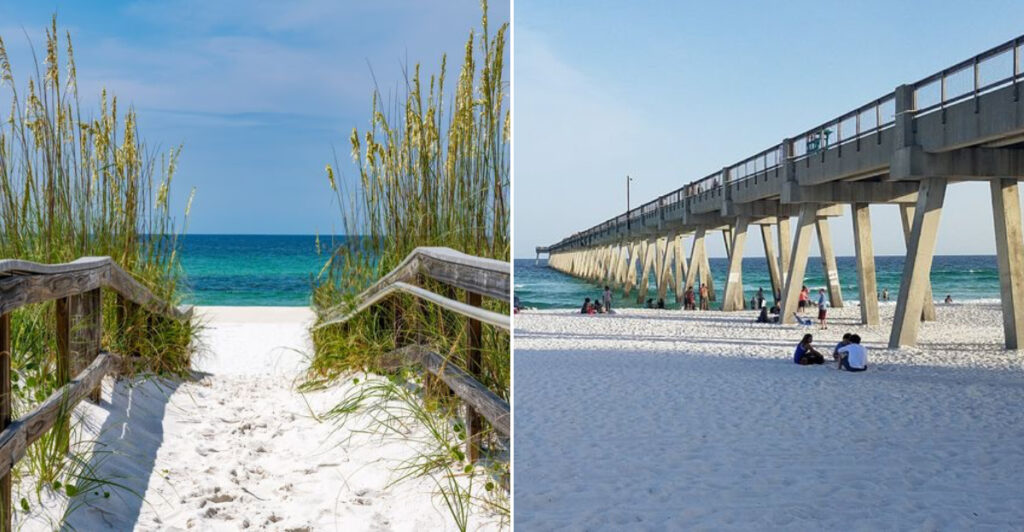
Give into the pier pressure! Florida will certainly reward you for it. If you usually pass over smaller coastal communities for better-known stops, this one may persuade you to slow down and reconsider.
It holds a statewide record that gives curious travelers a reason to visit, yet its appeal reaches beyond a single landmark. You can come for the novelty of stepping onto Florida’s longest pier, then discover why people make room for more time here.
This destination welcomes you without asking you to follow a packed schedule or chase the next attraction. Instead, it invites you to settle into an easier pace and enjoy the trip on your own terms.
If that sounds like the break you have been looking for, keep reading. A lesser-known corner of the Panhandle is ready to prove that passing it by would be a pier decision.
The Longest Pier In Florida
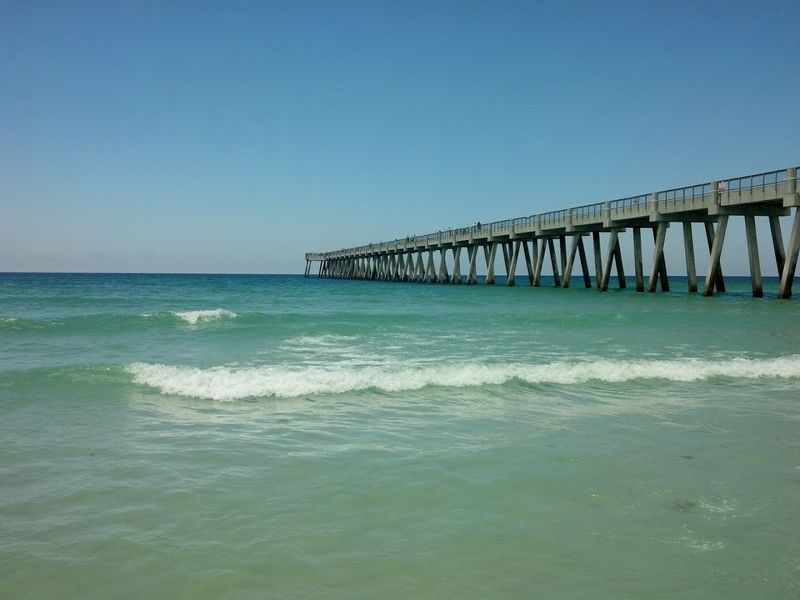
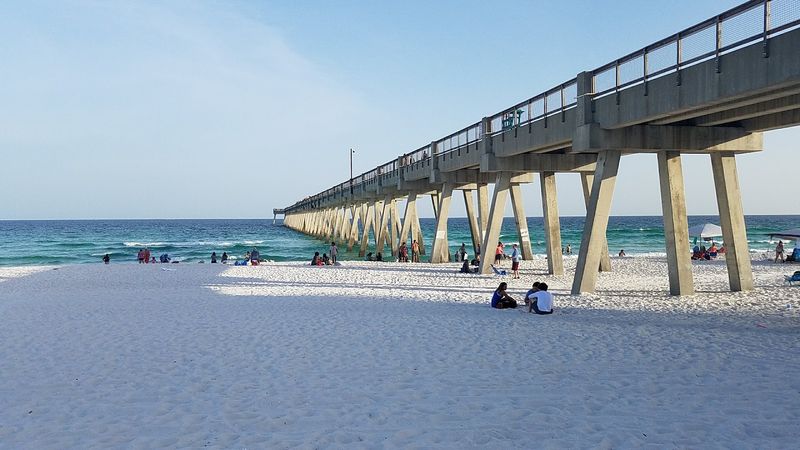
At 1,545 feet long, the Navarre Beach Fishing Pier holds the title of Florida’s longest pier. That is not a small claim.
Stretching nearly a third of a mile into the Gulf of Mexico, it offers a vantage point few beachgoers experience.
The pier sits at 8579 Gulf Boulevard on Navarre Beach, directly along the Florida Panhandle’s Gulf shoreline.
As you walk toward the end, the shore shrinks behind you. The Gulf opens wide on all sides.
The water below shifts from pale green near the beach to deeper blue-green farther out.
Anglers come here chasing redfish, Spanish mackerel, king mackerel, and cobia, depending on the season. The deep-water access attracts serious fishermen without boats.
Even if fishing is not your thing, the pier offers some of the most striking views along the Florida Gulf Coast.
The Uncrowded Alternative
Navarre Beach has long promoted itself as Florida’s Most Relaxing Beach. Its quieter reputation has some solid support.
The community occupies part of Santa Rosa Island, a barrier island that also includes protected sections of Gulf Islands National Seashore.
That federal protection preserves miles of undeveloped beachfront and limits construction across large sections of the island.
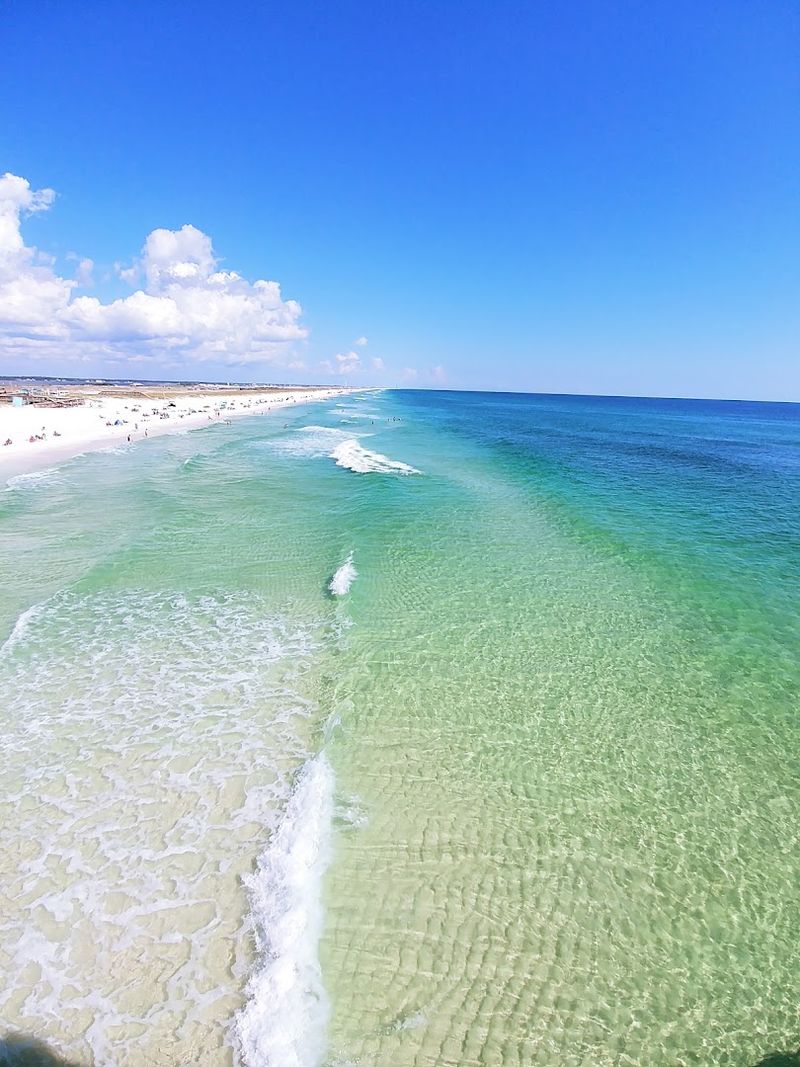
The sand consists largely of fine white quartz carried from the Appalachian Mountains by rivers, currents, and waves over time.
Its pale color reflects sunlight, making the sand more comfortable underfoot than many darker varieties.
The Gulf water often appears clear and emerald green, providing the color associated with this part of the Florida Panhandle.
Compared with Pensacola Beach and Fort Walton Beach, Navarre Beach has a smaller commercial footprint along the shoreline.
Families can spread out across wide stretches of sand without being packed together. That kind of space is increasingly rare along Florida’s Gulf Coast.
Gulf Islands National Seashore Connection
Immediately west of Navarre Beach lies the Santa Rosa Area of Gulf Islands National Seashore.
The park ranked as the seventh most-visited National Park Service site in 2025, recording more than 7.5 million visits.
The national seashore stretches 160 miles across Florida and Mississippi. It protects barrier islands, historic forts, coastal habitats, and surrounding waters.
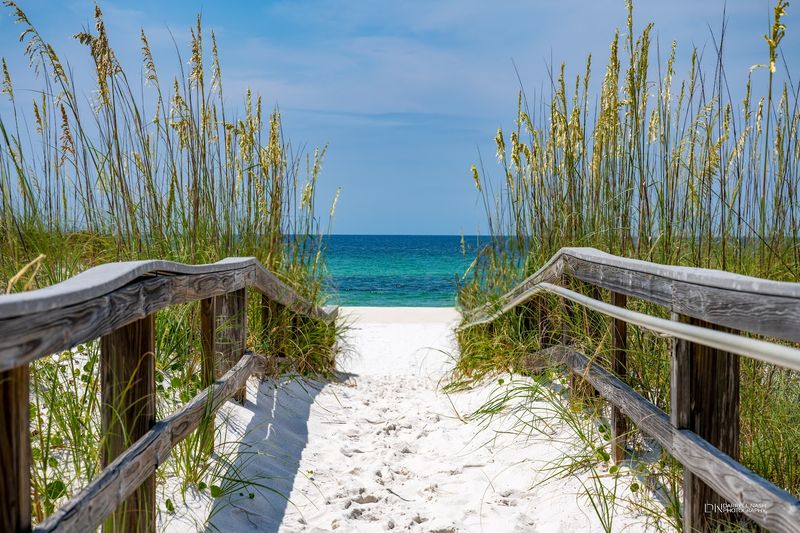
Its Florida section includes protected land on Santa Rosa Island, directly beside Navarre Beach. Development stops at a clearly visible boundary.
On one side sits a small beach community. On the other are undeveloped dunes, native plants, and nesting shorebird habitat.
A paved multiuse path follows the road through the Santa Rosa Area. Numerous beach access points lead toward the shoreline.
The nearby Opal Beach Complex provides parking, restrooms, outdoor showers, and pavilions.
Wildlife within the national seashore includes nesting loggerhead sea turtles and ospreys. Bottlenose dolphins can also be spotted from the beaches.
That protected setting gives Navarre Beach a character that heavily developed coastal towns cannot easily reproduce.
Santa Rosa County’s Quiet Corner
Navarre is a census-designated place in Santa Rosa County, stretching along the northern shore of Santa Rosa Sound.
The area’s military connections run deep. Eglin Air Force Base expanded during World War II, while nearby Hurlburt Field was reactivated in 1955.
Those installations have long influenced Navarre’s population, with many military households settling within commuting distance.
Santa Rosa County’s population rose from about 188,000 in 2020 to more than 211,000 in 2025. That represents growth of roughly 12 percent.
Navarre has expanded alongside the county, though its coastal geography still separates it from larger, more heavily built beach destinations.
Santa Rosa Sound divides the mainland community from Santa Rosa Island. Its sheltered waters are generally calmer than the open Gulf across the island.
Kayakers and paddleboarders use the sound, while county facilities provide boat and kayak access on the island’s northern side.
That gives visitors access to calm sound water and Gulf surf within minutes of each other. Few coastal communities offer both so conveniently.
Fishing Culture Runs Deep Here
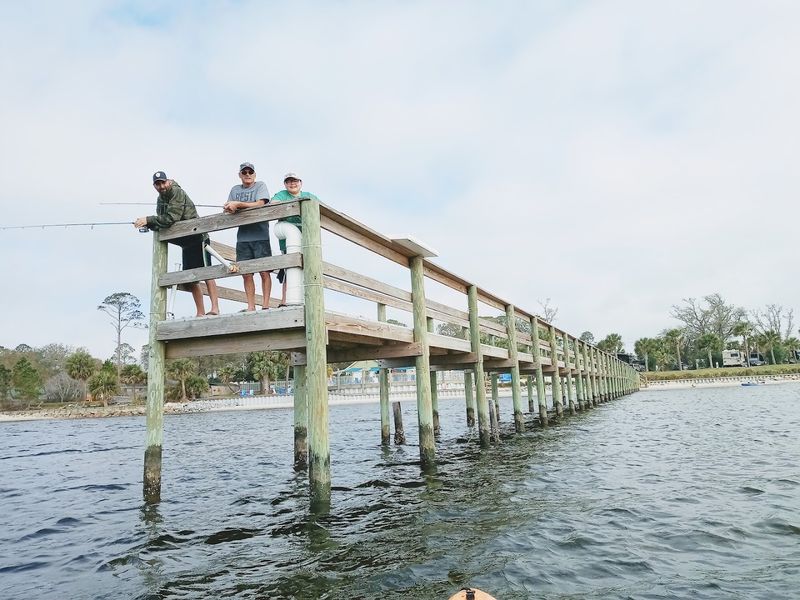
Fishing is woven into daily life in Navarre. The pier serves as a social gathering point as much as a fishing destination.
Regulars line the railing with rods and trade local knowledge about tides, bait, and recent catches.
The Gulf waters near Navarre support a varied fishery. Spring brings Spanish mackerel, king mackerel, pompano, and possible cobia sightings near the pier.
Redfish and speckled trout are also found around the surf, deeper sound channels, docks, and other structures.
Sheepshead gather near pilings, seawalls, and oyster bars, especially during late winter and early spring. Their talent for taking bait tests experienced anglers.
Beyond the pier, charter boats offer trips into deeper Gulf waters. Red snapper, amberjack, and grouper are common offshore targets when seasons allow.
The exact catch changes with water conditions, regulations, and the time of year.
Fishing connects directly to Navarre’s coastal identity. It gives the community an outdoor character extending well beyond a day on the sand.
Water Sports Beyond The Surf
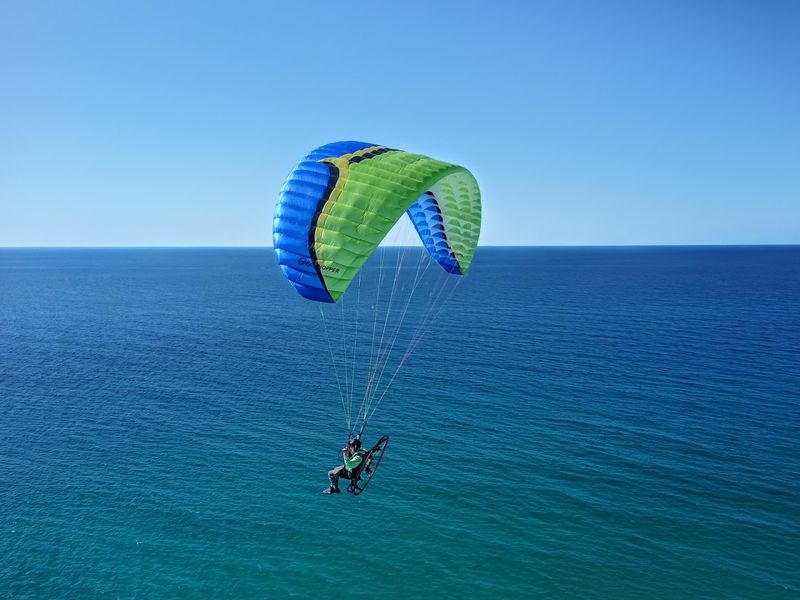
Navarre’s geography creates a natural playground extending beyond swimming and sunbathing.
Santa Rosa Sound runs along the island’s northern side. Its sheltered water is generally calmer than the open Gulf.
That makes the sound popular for paddleboarding and kayaking, especially among beginners and families. Local businesses offer equipment rentals near the water.
The sound also forms part of Florida’s Circumnavigational Saltwater Paddling Trail, which follows coastal waterways around the state.
Kiteboarders use the waters around Santa Rosa Island when winds and conditions cooperate. Experience and attention to designated riding areas are important.
Snorkeling and diving are available at three artificial reef sites inside Navarre Beach Marine Park.
Two reefs sit in Santa Rosa Sound. The more accessible eastern reef lies about 150 feet offshore in 12 feet of water.
A third reef sits on the Gulf side, roughly 2,000 feet east of the fishing pier. It lies about 340 feet from shore.
These marked reefs provide habitat for fish and other marine life. Visibility varies with weather, waves, and water conditions.
The combination of paddling routes and shore-accessible reefs gives Navarre more variety than a typical beach stop.
The Navarre Beach Marine Sanctuary
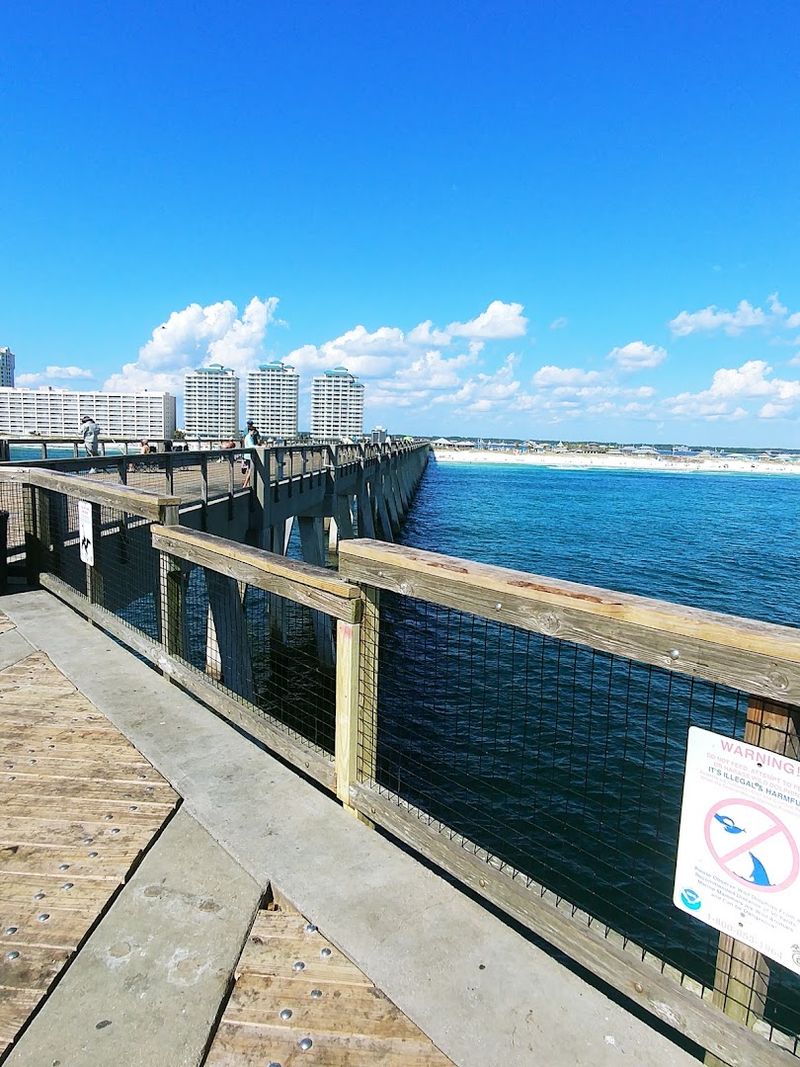
The Navarre Beach Marine Sanctuary includes three nearshore artificial reefs inside Navarre Beach Marine Park.
Two sites sit in Santa Rosa Sound, while a third lies in the Gulf. Together, they contain 183 individual reef structures.
These structures are not standard reef balls. Each uses concrete discs covered with Florida limestone and mounted on composite pilings.
The textured surfaces provide places for oysters, plants, crustaceans, and other organisms to grow.
Fish drawn to the reefs include snapper, sheepshead, jacks, porgies, and spadefish. Sea turtles and other marine animals may also pass through.
The eastern sound-side reef is the easiest to reach. It sits about 150 feet offshore in approximately 12 feet of water.
The larger western sound-side reef lies about 700 feet offshore in 20 feet of water. Its depth makes it better suited to diving.
On the Gulf side, 78 reef structures sit roughly 340 feet from shore, just beyond the second sandbar.
These reefs are accessible from shore rather than only by boat. That gives snorkelers and divers a rare chance to explore established marine habitat near the beach.
Sunsets That Earn Their Reputation
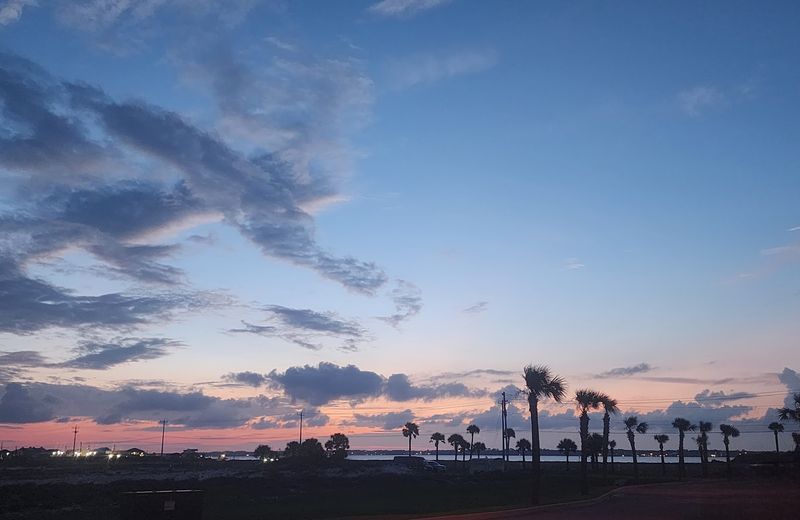
Sunsets from the Navarre Beach Fishing Pier have earned plenty of attention. Santa Rosa County promotes the pier as a year-round sunset viewpoint.
The pier’s long reach provides an open view across the Gulf and westward along the coastline.
It does not point directly toward every sunset. The sun’s position along the horizon shifts throughout the year.
Still, the open water leaves far fewer obstructions than a viewpoint surrounded by buildings or trees.
The pale quartz sand catches orange and pink light as the sky changes. On calm evenings, the Gulf can reflect those colors.
The pier often becomes a gathering point late in the day. Anglers keep working while other visitors settle along the railing.
Special events occasionally use the pier during sunset, but most evenings need no organized ceremony.
People simply show up, find a clear view, and watch the light fade. That informal rhythm is part of the appeal.
Navarre Park And The Sound Side
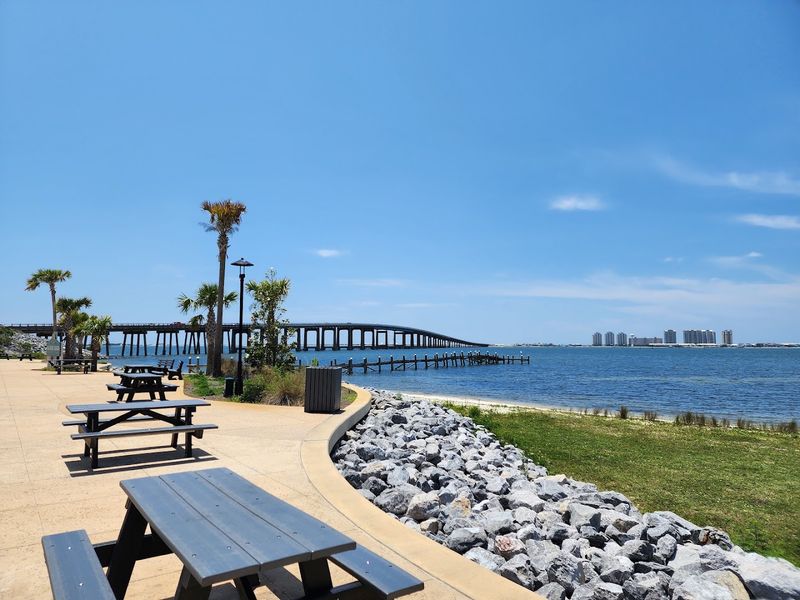
Navarre Park sits on the mainland shore of Santa Rosa Sound, offering a different perspective from the Gulf beach.
The five-acre county park includes picnic pavilions, tables, restrooms, a playground, and a seasonal splash pad.
A small pier extends over the sound, giving visitors direct access to the waterfront. The park does not have a public boat ramp.
Locals use the pavilions and picnic areas for family gatherings, while anglers work from the pier and shoreline.
Across the water, Santa Rosa Island forms a low strip along the horizon. Pelicans, herons, and egrets are often seen nearby.
Nature and walking trails provide another way to explore the grounds without leaving the waterfront.
The park also includes plenty of benches, making it easy to pause beside the sound rather than rush through.
Navarre Park serves residents throughout the year instead of existing only for summer visitors. Its modest size says plenty about the community’s priorities.