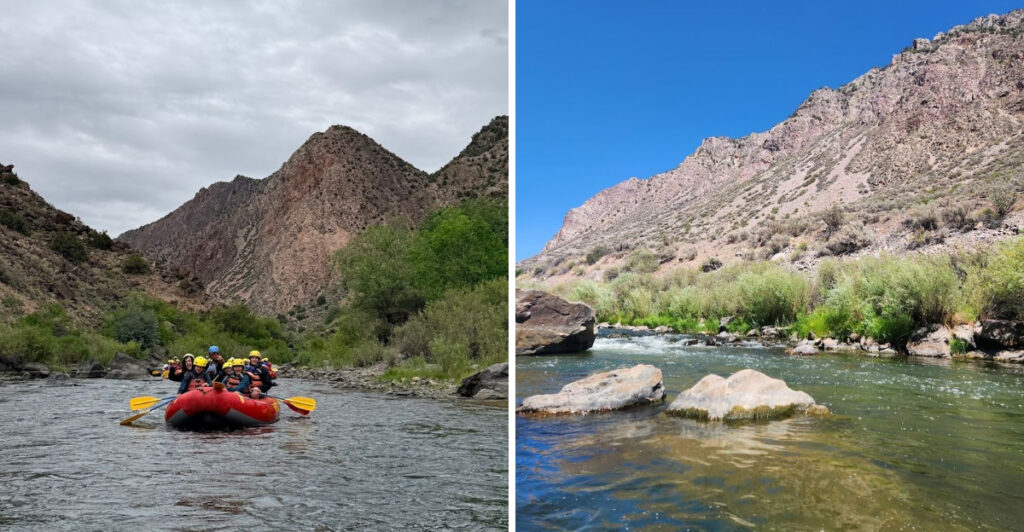
You hear the rapid before you see it. The sound rolls through the gorge, bounces off dark basalt walls, and grows louder with every paddle stroke.
Then the river drops and the raft surges forward. That is the rhythm of the Taos Box, a demanding full-day run through one of New Mexico’s deepest and most dramatic canyons.
The trip begins gently enough, giving paddlers time to learn the commands and take in the cliffs. The mood changes as the miles pass.
Rapids become stronger, the gorge feels tighter, and the final section turns into a sustained burst of technical whitewater. Even the quiet stretches carry a sense of scale, especially beneath the Rio Grande Gorge Bridge, where the road seems impossibly far overhead.
This is not simply a sequence of big waves. It is a complete canyon journey, and that is exactly why this river run is so hard to forget.
Where Black Canyon Walls Close In
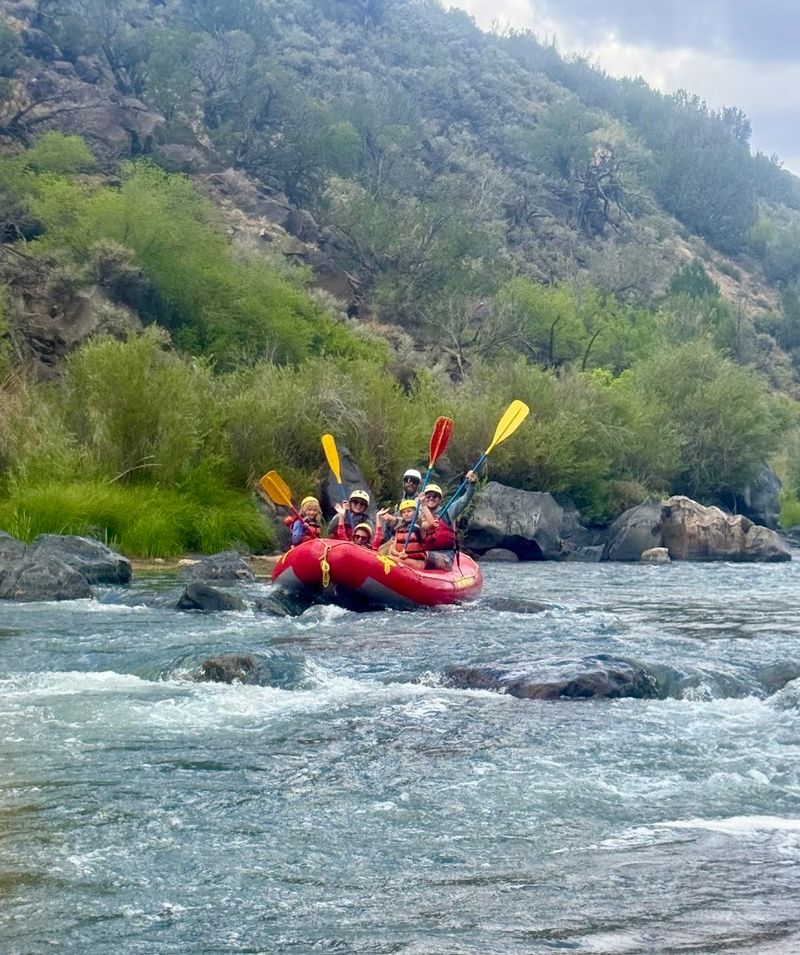
Few geological formations stop people mid-paddle quite like the basalt walls of the Rio Grande Gorge. Formed from ancient lava flows that cooled and cracked over millions of years, these sheer black cliffs define the character of the entire canyon experience.
As the raft moves deeper into the gorge, the walls rise higher and the sky above narrows to a thin ribbon of blue.
The basalt here is not just scenery. Its dark surface absorbs sunlight and radiates a subtle warmth, and the volcanic rock is polished smooth in places where the river has worked on it for centuries.
Geological processes along the Rio Grande Rift created this dramatic landscape, making the canyon feel both ancient and alive.
Rafters frequently pause to look straight up and take in the sheer scale of what surrounds them. The canyon walls can rise well over 600 feet in certain sections, creating a sense of awe that photographs rarely capture fully.
The outfitter behind this adventure, New Mexico River Adventures at 2273 NM-68, Embudo, NM 87531, has been guiding people through this stunning corridor for years.
The Gorge Drops Away Beneath The Raft
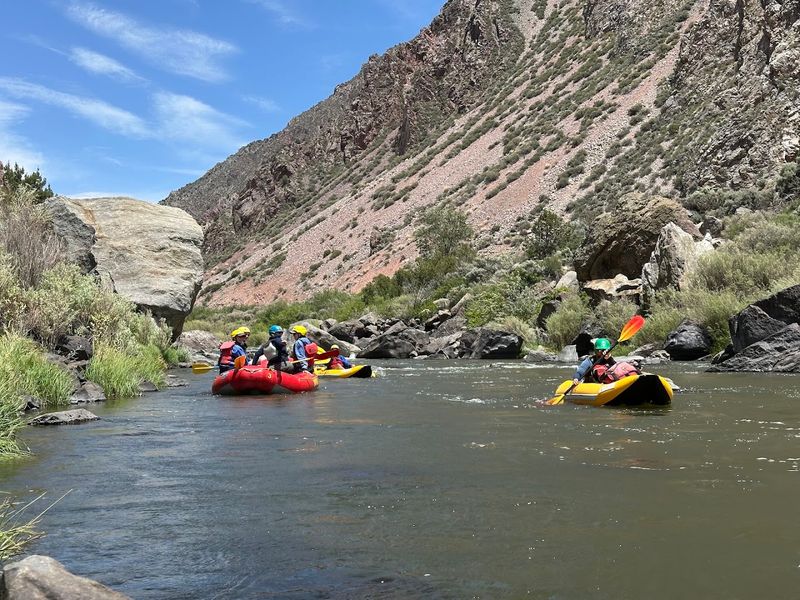
The view from the rim of the Rio Grande Gorge is impressive. Seeing those same canyon walls rise above you while sitting on the river feels completely different.
The gorge plunges roughly 800 feet from its edge to the water’s surface, creating one of the deepest river canyons in the American Southwest.
The Rio Grande Gorge Bridge, a steel structure that most visitors photograph from above, hangs approximately 650 feet over the water. Rafters passing beneath it get a perspective that very few people ever experience, looking up at a bridge that most tourists only see from the top.
It reframes the entire scale of the landscape in an instant.
That 800-foot depth is not just a statistic to recite at dinner. It is something you feel in your chest when the walls close in and the rim disappears from view.
The canyon becomes its own world, sealed off from the surrounding high desert plateau. Every paddle stroke carries you deeper into a place that rewards those willing to get below the surface and truly experience the river’s raw, vertical drama.
Whitewater Explodes Between Basalt Cliffs
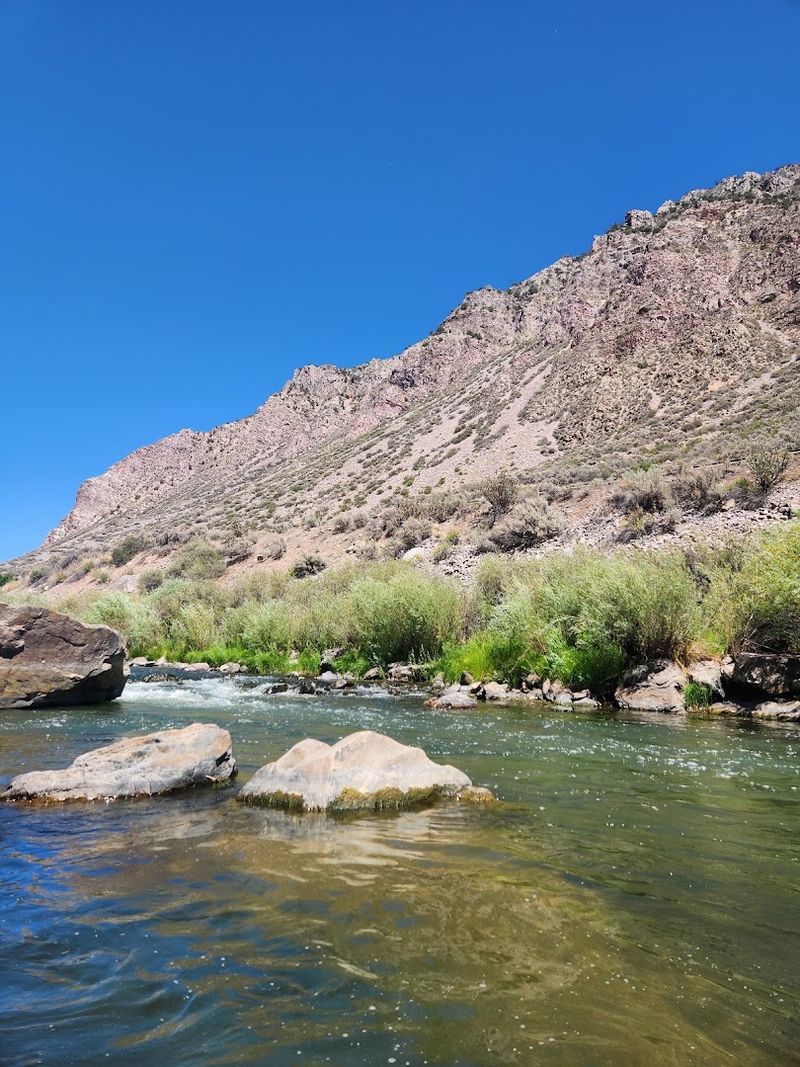
Class 4 rapids do not politely announce themselves. They build with a low rumble that you feel before you hear, and then the river drops, the water turns white, and everything happens fast.
The Taos Box section of the Rio Grande delivers this experience repeatedly, with powerful rapids that squeeze through narrow basalt passages and churn into frothy chaos.
The basalt cliffs flanking these rapids play a real role in the intensity of the experience. They funnel the current into tighter channels, amplify the sound of crashing water, and make the surrounding environment feel almost theatrical.
Ancient lava flows shaped these walls, and the river has spent thousands of years carving its path through them.
Paddlers who have run rivers across the country consistently rank this stretch among the most visually spectacular whitewater corridors they have encountered. The contrast between the dark volcanic rock and the bright white foam of the rapids creates a visual punch that hits hard on every drop.
The current sculpts the basalt continuously, meaning the river and its canyon are always, very slowly, changing shape together.
A Wild Ride Through The Canyon
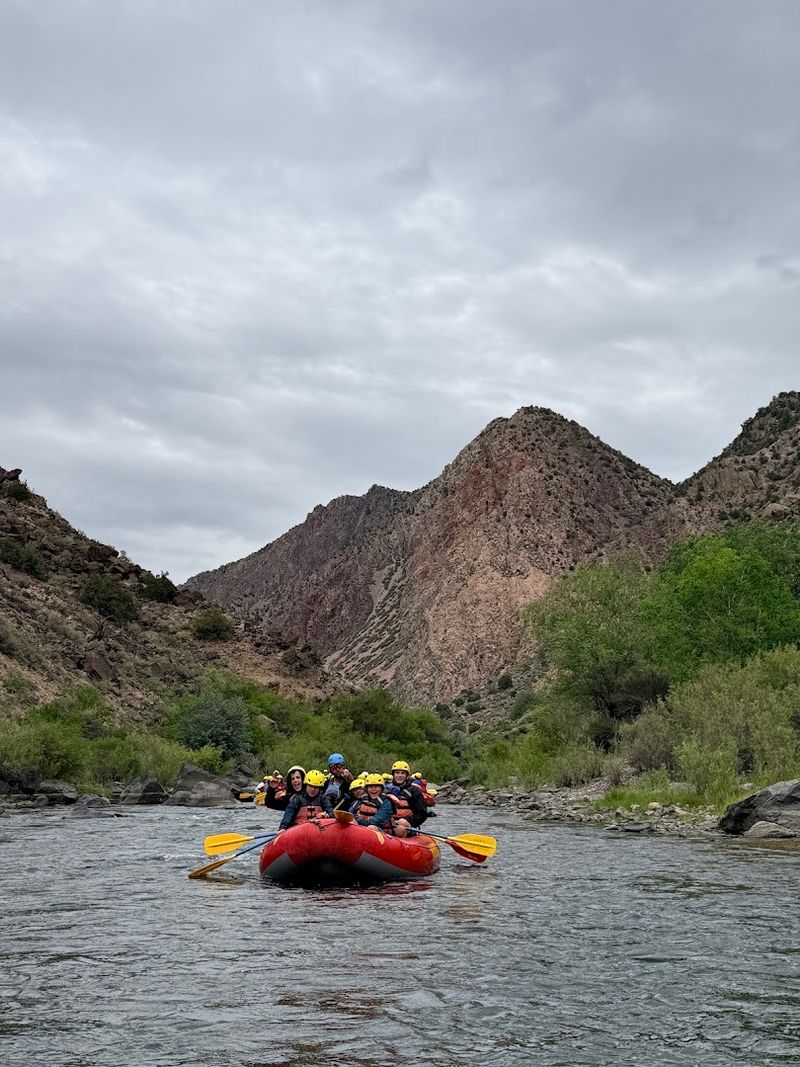
The Taos Box run covers roughly 16 to 17 miles of wilderness river, making it a genuine full-day commitment rather than a quick thrill. Many river experts and outdoor adventure publications point to it as one of the greatest full-day rafting experiences available anywhere in the country.
That reputation is earned mile by mile.
The journey moves through a remote stretch of canyon that has no road access for the entire run. Cell service is nonexistent, and the only way out is downstream.
That sense of true wilderness isolation is increasingly rare in the modern world, and it adds a layer of seriousness to the adventure that casual floats simply cannot replicate.
Giant rapids punctuate the route with enough frequency to keep adrenaline levels elevated, but the stretches of calmer water between them allow paddlers to catch their breath and absorb the canyon scenery. A full-day lunch stop gives everyone a chance to rest on the riverbank and appreciate just how far inside the gorge they have traveled.
The whole experience builds toward something that feels genuinely earned by the time the take-out point comes into view.
Where Calm Water Turns Fierce
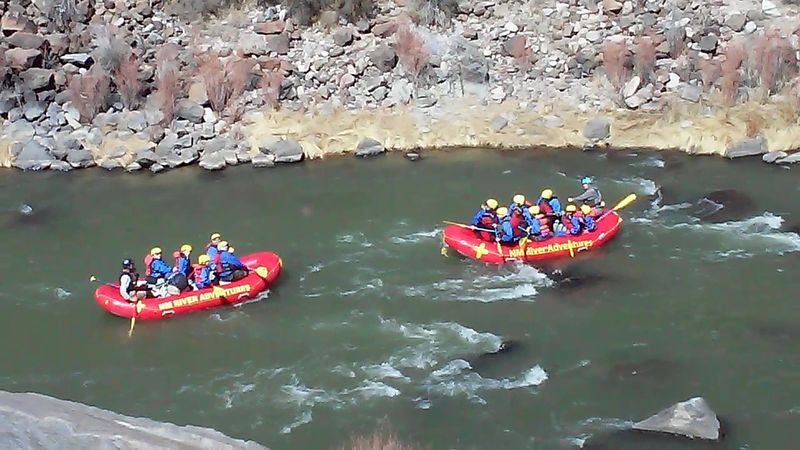
Not every river announces its intentions right away. The Taos Box run begins with a mellow float that lets paddlers settle in, adjust their grip, and take in the canyon walls without immediately fighting for their lives.
That opening calm is deliberate, and experienced guides use it to prepare their groups for what comes later.
As the miles accumulate, the river’s gradient steepens and the character of the water shifts noticeably. Class 3 rapids begin to appear, and then the intensity ratchets up further.
The final five miles of the run are where the river truly reveals its personality, with rapids arriving in quick succession and leaving little time to recover between them.
That progression from peaceful to powerful is part of what makes the Taos Box such a satisfying experience. Rafters who might feel nervous at the put-in find themselves growing more confident with each rapid, until the big drops at the end feel like a natural conclusion rather than a surprise.
The river essentially teaches you as it goes, raising the stakes gradually until the canyon delivers its most dramatic moments right when you are ready to handle them.
Rapids Roar Beneath Towering Rock Walls
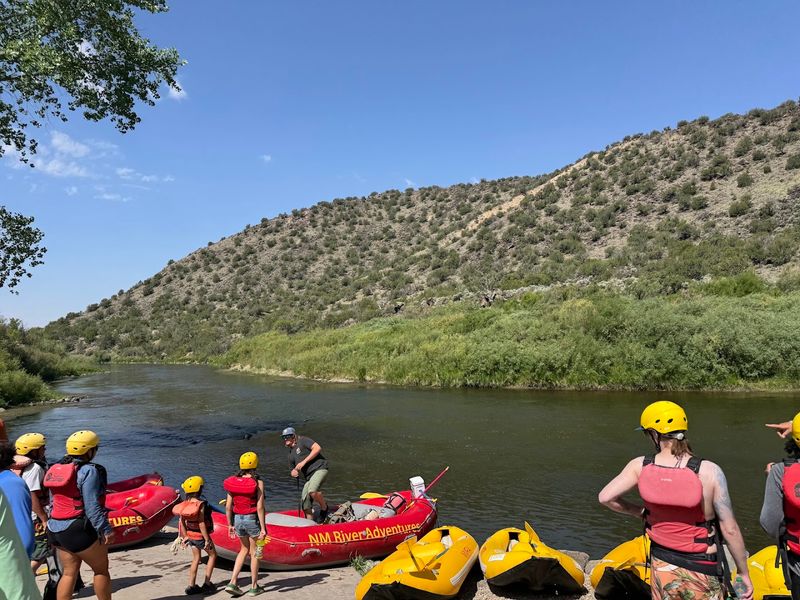
Named rapids carry a certain weight. When a guide calls out “Powerline Falls” or “Boat Reamer” from the back of the raft, the name itself signals that this stretch of river has earned its reputation.
The Taos Box features a roster of Class 3 and Class 4 rapids with names that reflect both their character and the history of the people who have run them.
Rock Garden is another standout, a technical section that demands precise maneuvering through a maze of boulders where the wrong line means getting stuck or spun sideways. Each named rapid has its own personality, its own rhythm, and its own way of testing a paddler’s focus.
Guides who know these rapids well can read the water instinctively and position the raft with impressive accuracy.
The towering basalt walls surrounding each rapid do something unexpected to the sound. They act like a natural amphitheater, bouncing the roar of the whitewater back and forth across the canyon until the noise becomes immersive.
Paddlers often describe the audio experience of the Taos Box as one of its most memorable qualities, a constant, powerful soundtrack that makes every rapid feel even larger than it already is.
The River’s Most Dramatic Narrow Passage
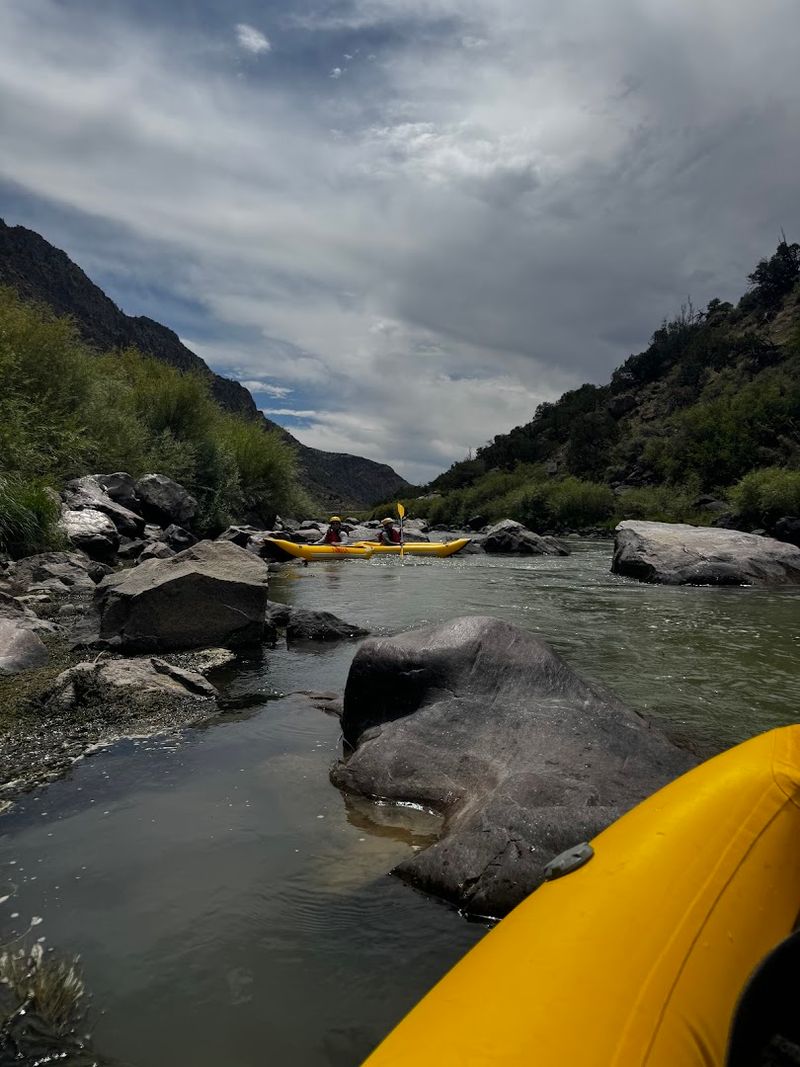
Protected within the boundaries of the Rio Grande del Norte National Monument, the Taos Box section of the gorge holds some of the most geologically striking terrain in the entire region. The monument designation means this landscape is preserved in its wild state, without development or infrastructure interrupting the canyon’s natural character.
A few miles after the put-in, the gorge narrows considerably. The walls press closer, the river accelerates through the tighter channel, and the sense of being inside something ancient and powerful becomes almost physical.
This narrowing is where the geological story of the canyon becomes most visible, with layers of volcanic basalt stacked and fractured by the forces of the Rio Grande Rift over millions of years.
The remote quality of this passage is genuinely striking. No roads reach this section of the canyon, and the only sounds are the river, the wind, and whatever birds have decided to nest in the cliff faces above.
Geologists find the rock formations here fascinating because the basalt and tectonic history are so clearly readable in the exposed canyon walls. For everyone else, it simply feels like the most dramatic room the river has to offer.
Deep Inside An 800-Foot Gorge
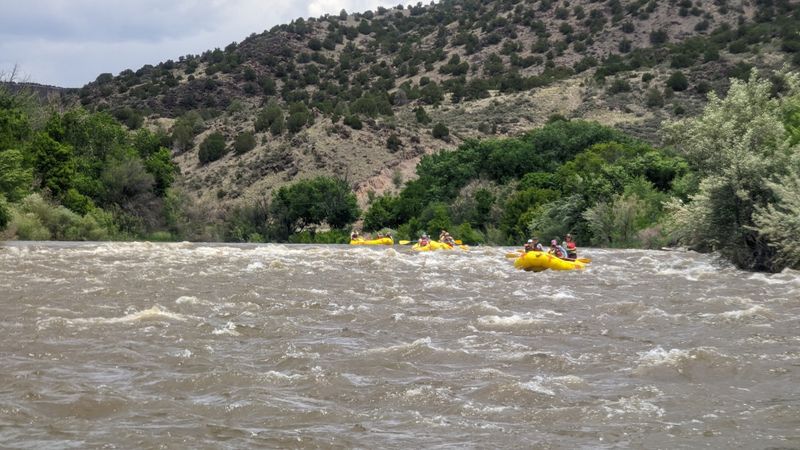
At its deepest, the Rio Grande Gorge drops approximately 800 feet from rim to river. Sitting in a raft at the bottom of that canyon puts the number in physical perspective in a way that no description fully manages.
The rim is a thin line far overhead, and the canyon ecosystem around the water is its own enclosed world.
The gorge ecosystem at river level is surprisingly rich. Otters have been spotted along calmer stretches, and various bird species nest in the cliff faces above.
The canyon creates its own microclimate, cooler and more sheltered than the high desert plateau above, and the contrast between the two environments is stark and immediate.
This deep, wild corridor in northern New Mexico is the kind of place that recalibrates a person’s sense of scale. The river has carved this canyon over an enormous span of time, and floating through it feels like moving through something that belongs to a different order of magnitude than everyday life.
The guides who work this section know every bend and drop by feel, and their confidence on the water is part of what makes the whole experience feel both thrilling and trustworthy at the same time.