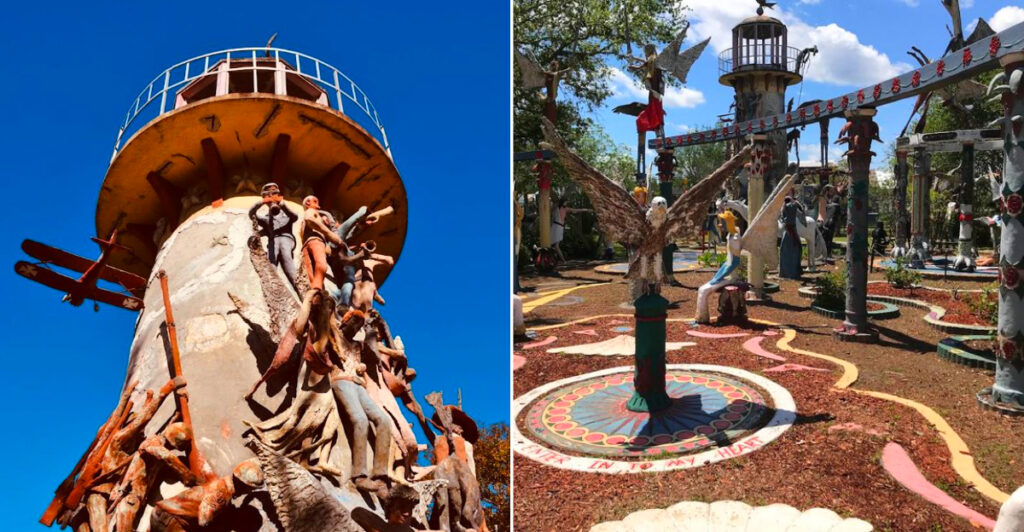
I turned off the highway onto a narrow road that felt like it was leading nowhere. Then the angels appeared.
Over one hundred of them, standing in clusters along a winding path beside the bayou. Some taller than the trees, others small enough to hold in your arms.
A forty-five-foot lighthouse rises from the center of the garden, built from seven thousand bricks, covered in figures climbing toward the top.
The man who created all of this was a bricklayer who arrived with no explanation, sculpted for over a decade, then walked away without telling anyone why.
A university now maintains the grounds. The mystery of what drove him to build, what made him leave, remains entirely unsolved.
Walking among the angels feels like stepping into a question that will never be answered. Over one hundred concrete angels standing in a bayou keep their secrets as tightly as the man who built them in Louisiana.
Material And Making
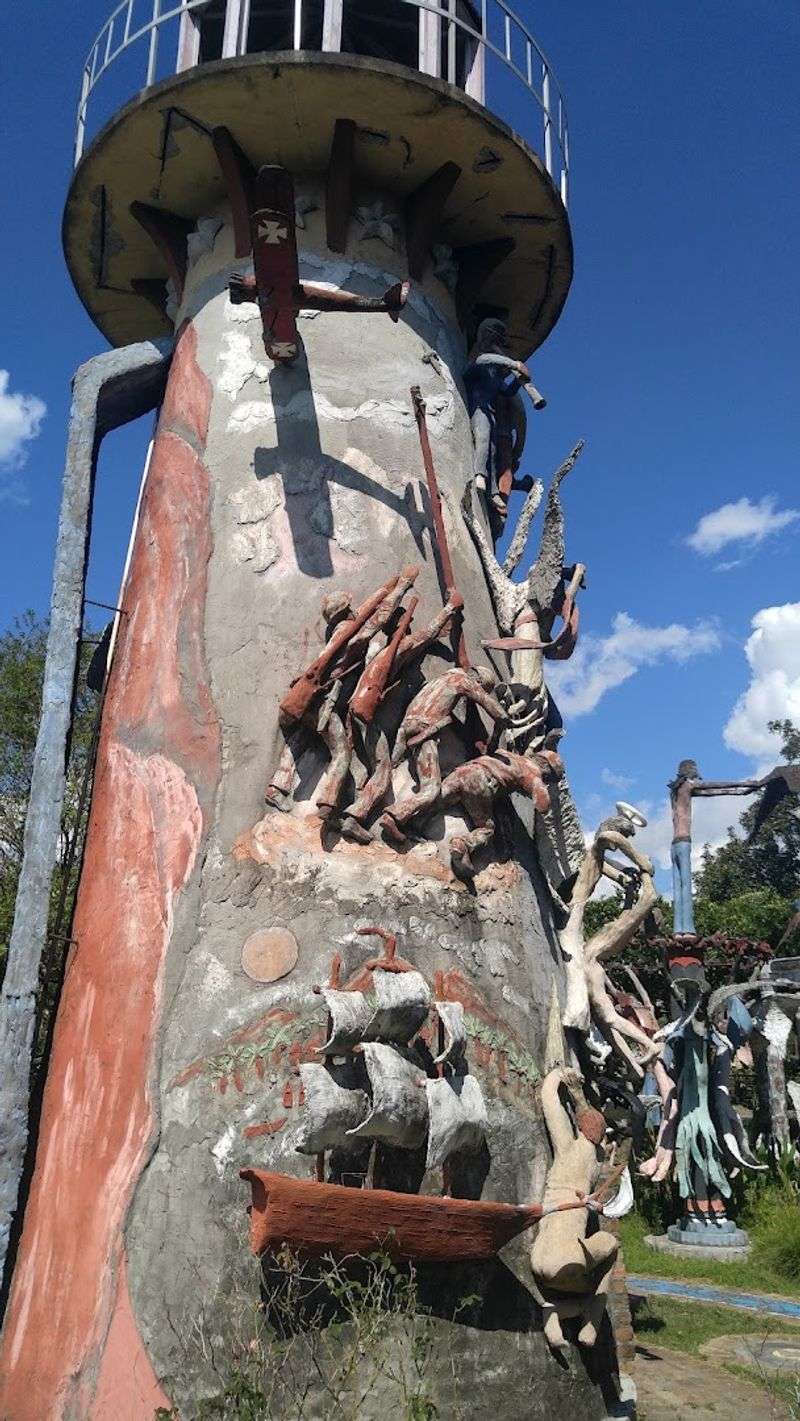
Cement, wire mesh, rebar, and brick form the basic vocabulary of the garden. Kenny Hill was trained as a bricklayer rather than a sculptor, and that background remains visible in every rough edge, exposed repair, and hand-shaped surface.
The figures feel improvised but never careless, as though construction knowledge gradually turned into a private visual language.
Many sculptures began with simple armatures before being covered in cement and shaped into bodies, robes, wings, faces, and gestures. The towering lighthouse required roughly 7,000 bricks, linking Hill’s trade directly to the garden’s most ambitious structure.
Close inspection reveals tool marks, patched cracks, and uneven textures that make the work feel immediate. Nothing has the polished finish of studio sculpture, yet that rawness is central to its power.
Understanding how ordinary building materials became angels, saints, and monuments makes the entire site feel less like a collection of objects and more like one sustained act of labor.
Angels Stand On One Side, The Art Studio On The Other
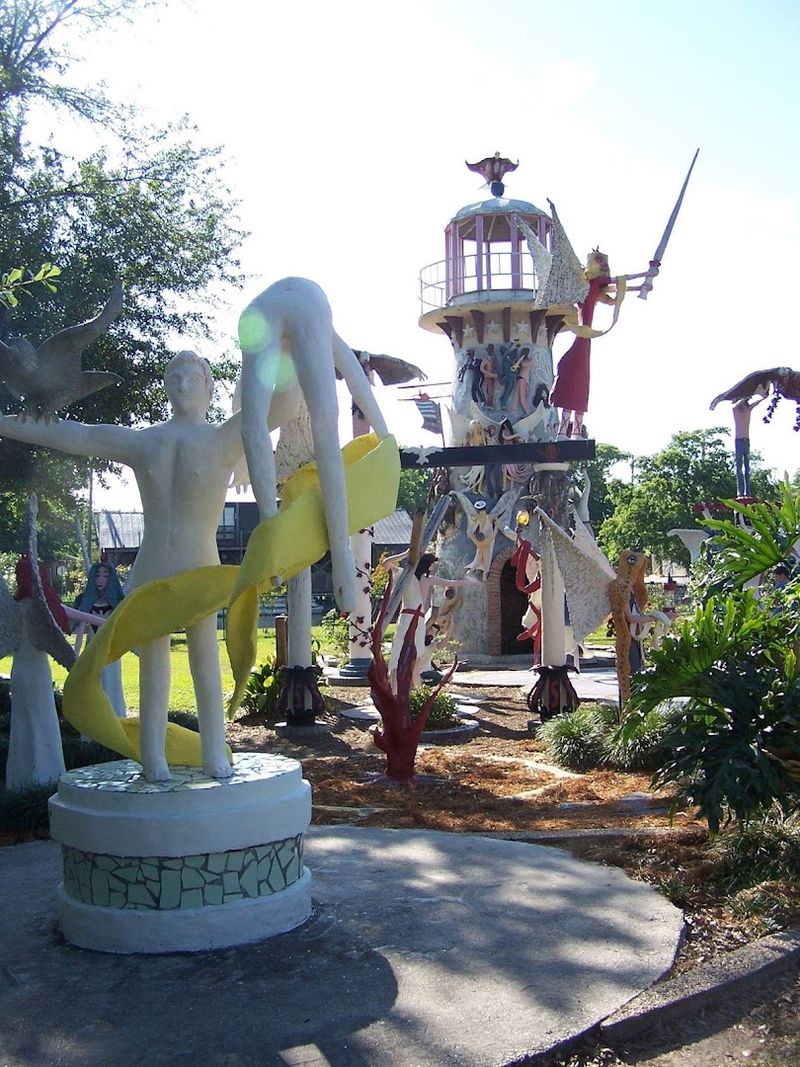
Bayou Petit Caillou runs beside the site, giving the garden a quiet, slightly isolated setting south of Houma. The Chauvin Sculpture Garden is located at 5337 Bayouside Drive, Chauvin, LA 70344, roughly 19 miles from Houma by way of LA-24, LA-56, and LA-58.
After crossing the Sarah Bridge, turn onto Bayouside Drive. The Nicholls State University Art Studio stands on one side of the road, while the narrow garden filled with angels occupies the other.
One side provides interpretation and visitor support, while the opposite side preserves the strange density of Hill’s original environment.
Parking is limited, so use designated spaces without blocking the road or nearby homes. The outdoor garden is generally open daily from 8 a.m. to 5 p.m., while studio access may follow separate hours. The final approach is easy to miss, so download directions before leaving Houma, especially if cell service becomes unreliable.
The Lighthouse Centerpiece
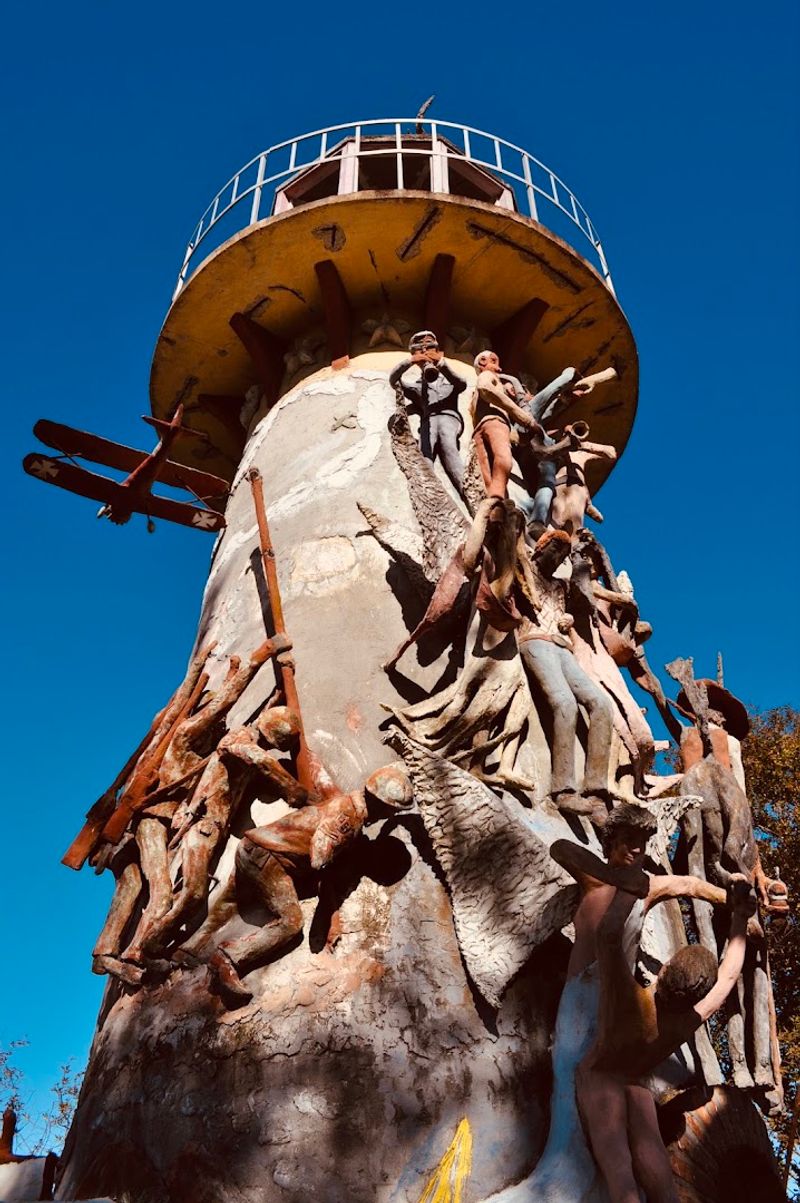
Everything in the garden pulls the eye toward the lighthouse. Rising about 45 feet above the smaller figures, it feels less like a navigational structure than a monument built from obsession, faith, and physical endurance.
Roughly 7,000 bricks form the tower, while sculpted figures appear to climb, gather, and strain around its surface.
Its scale changes how visitors move through the site. Smaller angels create a low, crowded field, but the lighthouse interrupts that rhythm and becomes the garden’s visual center.
You keep returning to it from different angles, noticing new faces, hands, and relationships each time.
Conservation work has stabilized the brick and cement without sanding away the handmade character. Cracks, patches, and irregular lines remain visible, preserving the sense that one person constructed this slowly and directly.
Standing beneath it can feel ceremonial. It suggests rescue, warning, ascent, judgment, and hope at once, which may be why no single interpretation ever feels complete.
Kenny Hill The Builder
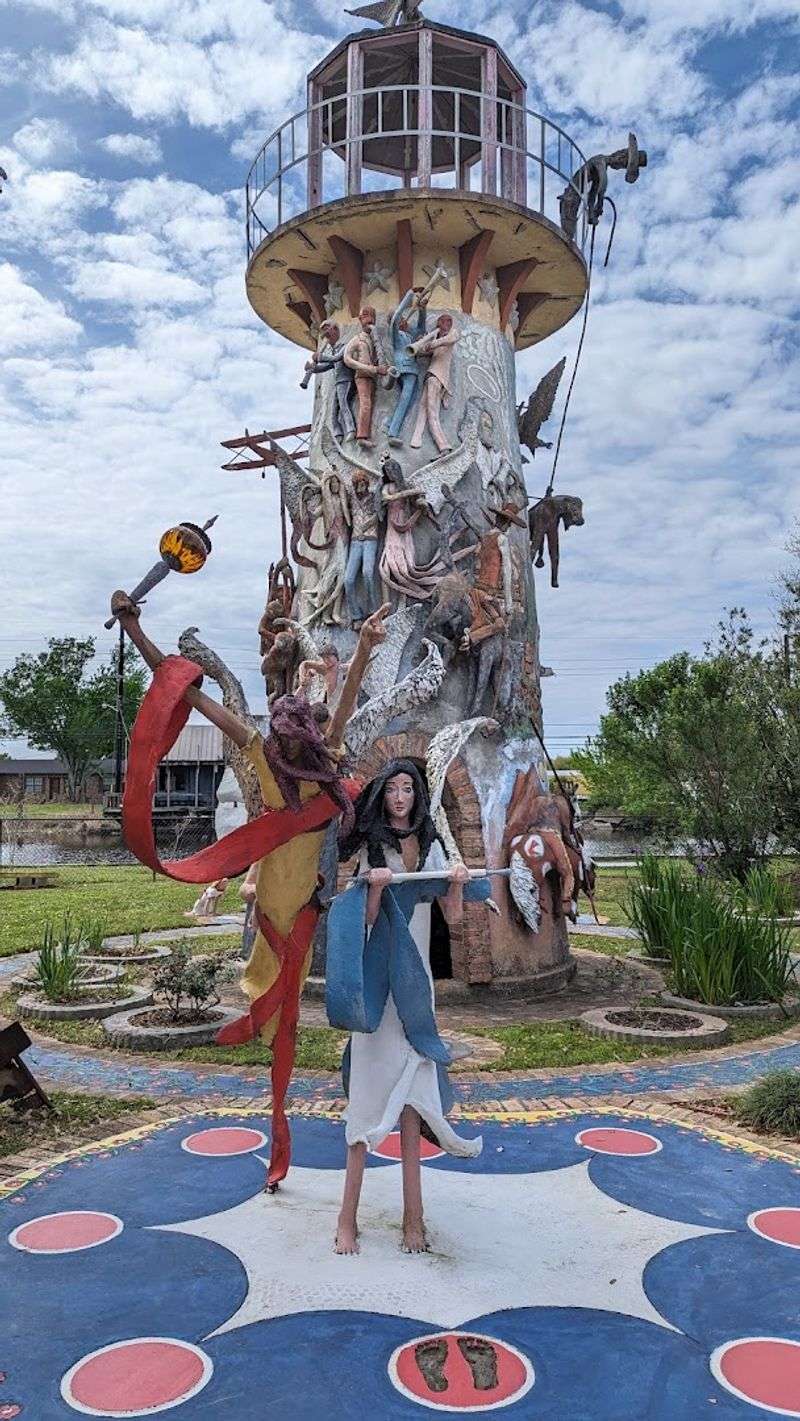
Before becoming associated with one of Louisiana’s strangest art environments, Kenny Hill worked as a bricklayer. He arrived in Chauvin around 1990 and began transforming the property beside the bayou with cement figures, angels, self-portraits, biblical scenes, and the towering brick lighthouse.
No formal art training appears to have guided the process. Instead, Hill relied on construction skills, improvised armatures, and an intensely personal symbolic world.
The figures often shift between devotion, fear, punishment, tenderness, and self-judgment.
Over roughly a decade, the garden grew into an environment rather than a conventional collection. Hill created relationships between the figures, paths, house, lighthouse, and water, making the entire property part of the artwork.
In January 2000, he left Chauvin abruptly. Accounts suggest personal turmoil and conflict surrounding the site, but no explanation fully resolves what happened.
His absence now shapes the garden almost as strongly as his labor, leaving visitors with an extraordinary body of work and very few reliable answers.
The Vanishing And Its Echoes
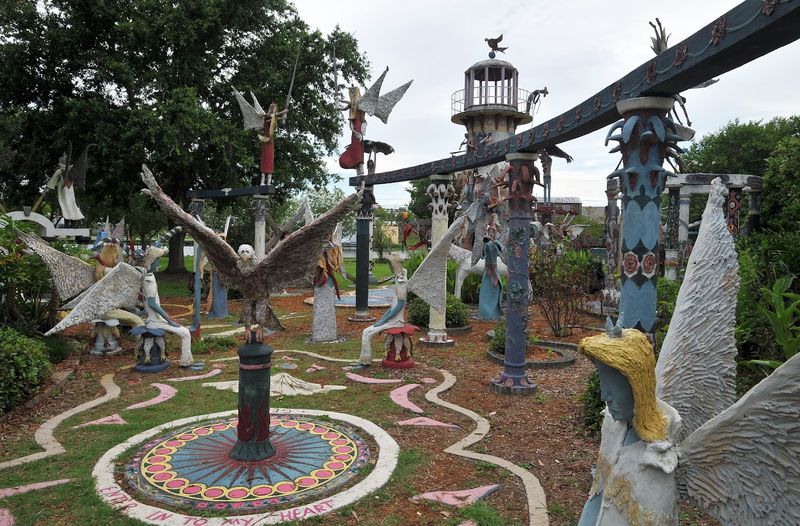
Hill’s departure did not leave behind a clean ending. Stories surrounding his final days describe damaged sculptures, an altered religious figure, and a painted message suggesting anger, despair, or a crisis of faith.
These details became part of the garden’s mythology, though they are best approached carefully rather than exaggerated.
What is known is that Hill left in January 2000 after years of near-continuous work. Reports mention conflict over the property and plans to travel to relatives outside Louisiana, but the reasons for abandoning the garden remain uncertain.
That uncertainty changes how the sculptures are read. The angels no longer appear only devotional; some seem anxious, pleading, or trapped.
Self-portraits and religious scenes gain a heavier emotional charge once visitors understand that the artist walked away from everything he had built.
The garden therefore feels like both an artwork and the remains of a human rupture. Its power comes partly from what survives, but equally from the questions Hill’s absence continues to hold.
Rescue And Restoration
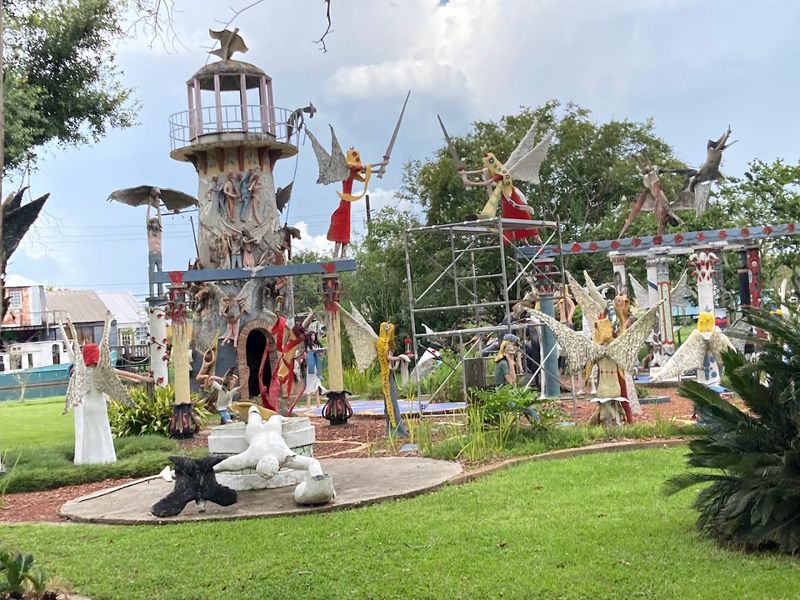
Abandonment could easily have destroyed the garden. After Hill left, a Nicholls State University professor recognized the site’s significance and helped draw attention to its fragile condition.
The Kohler Foundation later acquired the property, funded conservation work, and donated the restored environment to the university.
The goal was not to make the sculptures appear new. Conservators stabilized cracked cement, reinforced weakened structures, repaired brickwork, and addressed damage while preserving Hill’s rough surfaces and visible methods.
Excessive restoration could have erased the qualities that make the garden distinctive.
Today, the site feels cared for without becoming overly polished. Interpretive signs, maintained paths, and university involvement help visitors understand what they are seeing while protecting the work from weather, vandalism, and deterioration.
Preservation remains ongoing in this coastal environment. Humidity, storms, salt air, and shifting ground continue to test the sculptures.
The rescue effort shows how outsider art can be protected without stripping away its strangeness, vulnerability, or connection to the surrounding community.
How The Garden Feels
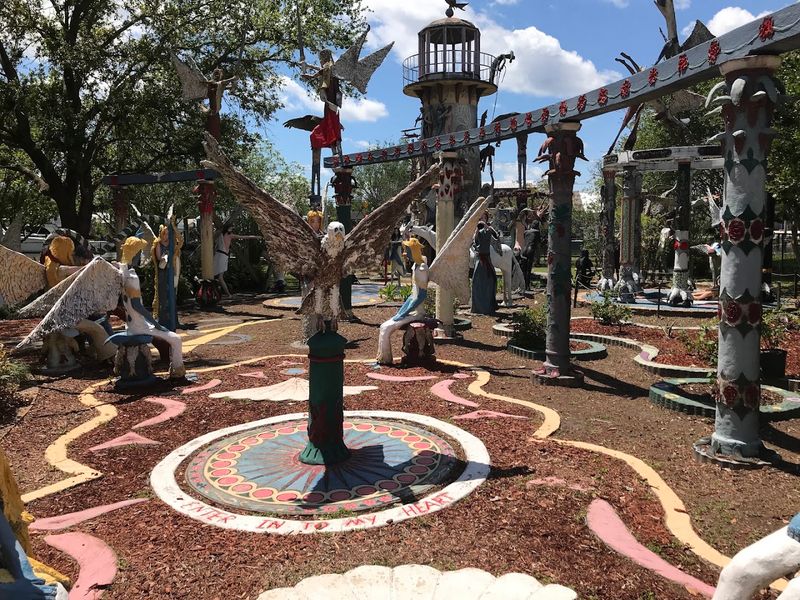
Silence settles differently here. The sculptures stand close together, but the garden rarely feels busy.
Narrow paths, bayou air, tilted halos, raised hands, and weathered faces create an atmosphere that moves between reverence, curiosity, and unease.
Some figures appear protective, while others seem to accuse, plead, or watch. Their expressions are simple but difficult to dismiss.
A single face can feel tender from one angle and severe from another as sunlight shifts across rough cement.
Crowds are usually limited, allowing the space to unfold slowly. Benches offer places to pause, and the compact layout encourages visitors to circle back.
Repeated views reveal relationships between sculptures that are easy to miss at first.
This is not a garden designed mainly for entertainment or easy photographs. Its strongest effect is reflective.
Give yourself time to stand still, listen to the bayou, and let the figures remain unresolved. The experience becomes more powerful when you resist explaining everything immediately.
Practical Visiting Tips
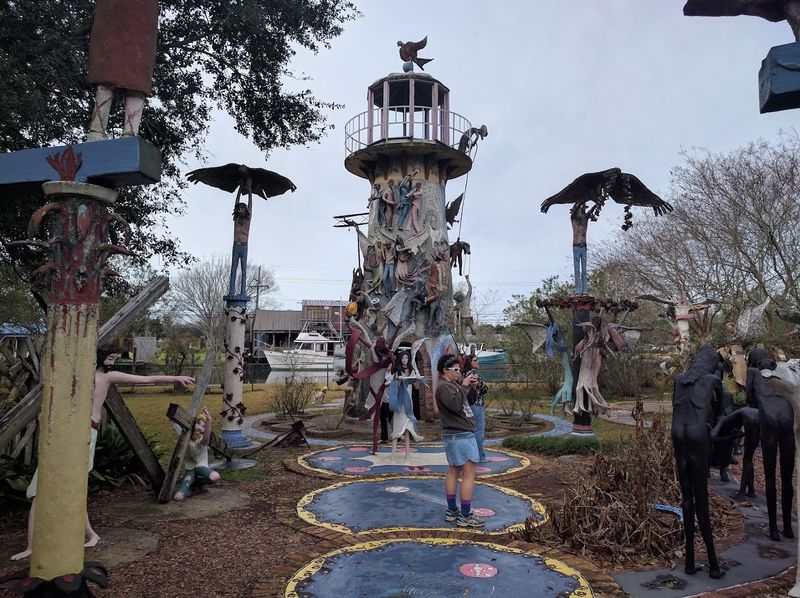
A little preparation makes this unusual roadside stop easier to appreciate. The Chauvin Sculpture Garden is located at 5337 Bayouside Drive, Chauvin, LA 70344, and the outdoor grounds are generally open daily from 8 a.m. to 5 p.m.
Admission is free.
Parking is limited near the garden and Nicholls State University Art Studio, so use marked areas and avoid blocking Bayouside Drive or nearby homes. Paths are narrow in places, and surfaces can become uneven or slippery after rain.
Comfortable closed shoes are more useful than sandals.
Cell service may weaken south of Houma, making downloaded directions worthwhile. Allow at least 30 to 45 minutes, though visitors interested in sculpture or photography may stay much longer.
Do not climb, lean on, or touch fragile surfaces. The cement has endured storms, repairs, and decades of exposure.
Bring water, insect repellent, and sun protection, then check current access details if severe weather has recently affected Terrebonne Parish.
Local Events And Traditions
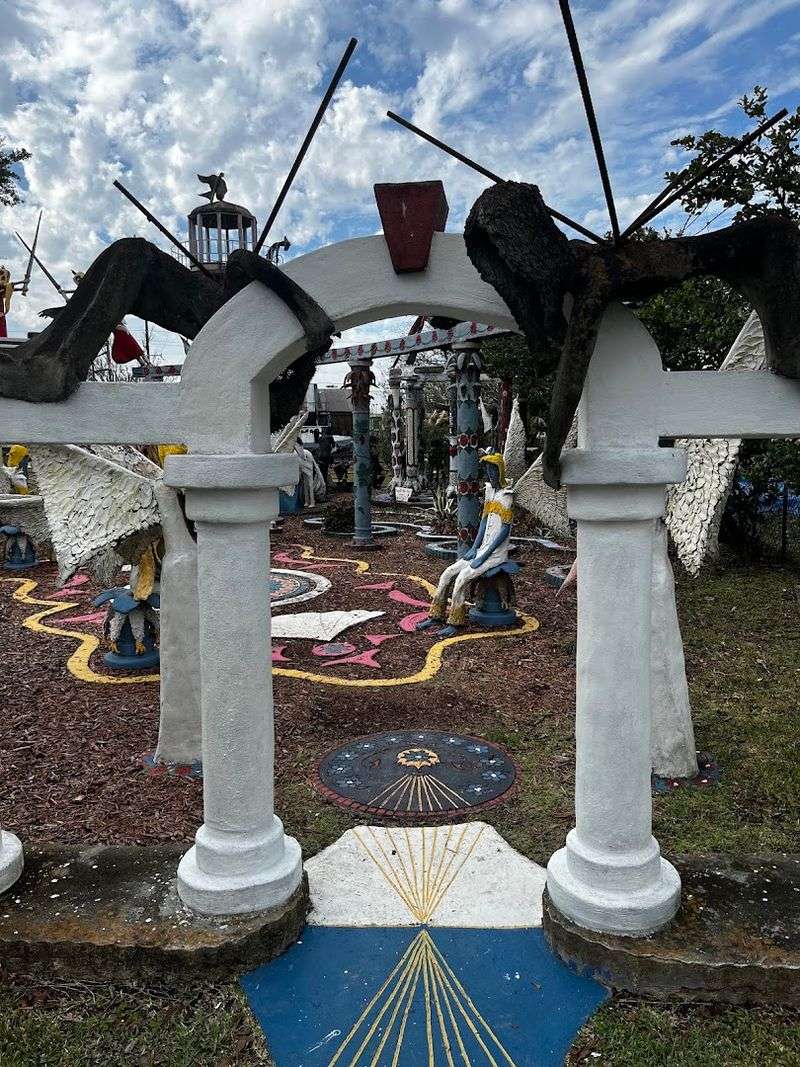
Most days, the garden feels solitary, but occasional community events reveal another side of the site. Student programs, open studios, and regional gatherings sometimes connect the sculptures with Cajun music, local food, and the traditions of lower Terrebonne Parish.
During these events, a space that usually encourages private reflection becomes social. Visitors can speak with artists, residents, and university representatives who know the garden’s history.
That contrast shows the site is more than an isolated curiosity preserved for tourists.
Schedules are not always fixed far in advance, so check Nicholls State University Art Studio announcements and local Terrebonne Parish listings before planning around a program. The Blessing of the Fleet and other bayou traditions may bring activity to the area, though they are not always hosted directly inside the garden.
A quiet visit remains worthwhile, but attending during a community event adds context. You see how Chauvin relates to the artwork and how the garden still functions as a living cultural space rather than a frozen memorial.
Weather And Seasonal Quirks
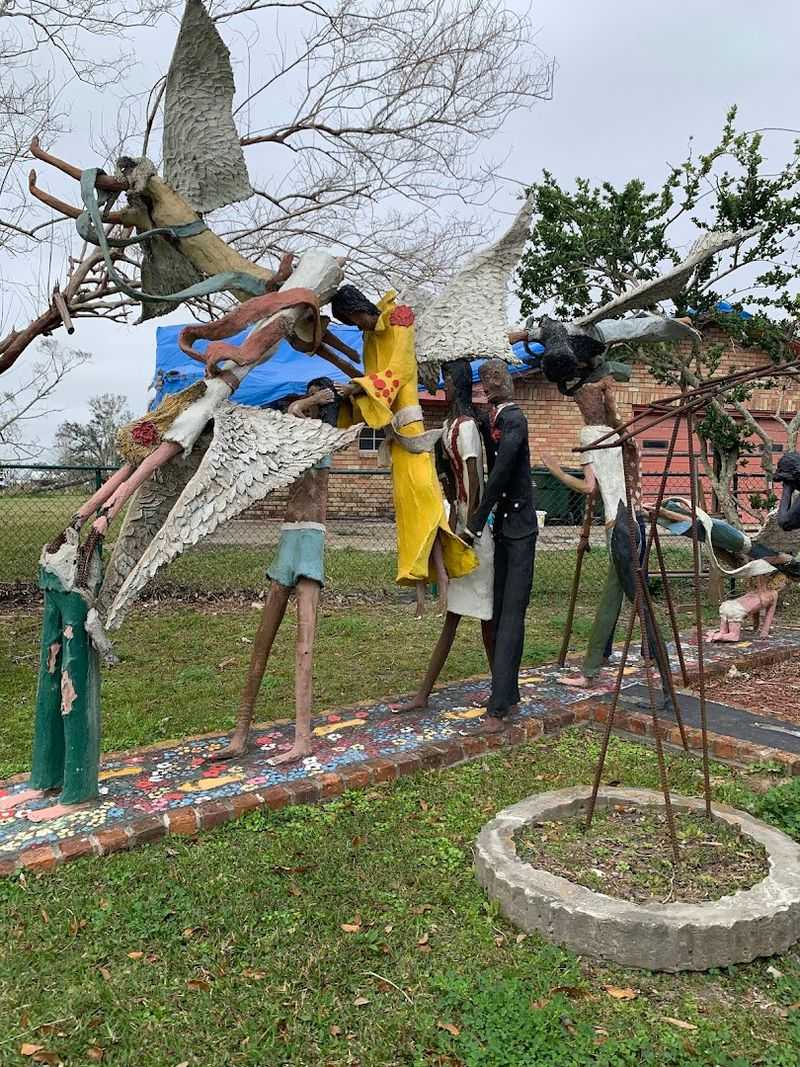
Coastal weather shapes both the visit and the condition of the sculptures. Summer brings intense humidity, strong sun, mosquitoes, and sudden rain, while tropical systems can cause closures, flooding, fallen branches, or new damage to fragile cement surfaces.
Cooler months are usually more comfortable for walking and photography. Lower humidity makes the narrow garden easier to explore, and softer light reveals textures that disappear under harsh midday sun.
Winter and early spring also reduce insect activity, though rain may leave paths damp.
Storm damage is part of the site’s continuing history. Conservation teams regularly respond to cracks, displacement, water intrusion, and weathering, reminding visitors that preserving outdoor art in coastal Louisiana requires constant work.
Check current conditions after major storms or heavy rain. Bring sunscreen, water, and insect repellent in warm weather, plus a light rain layer when forecasts look unstable.
Cloudy days can feel especially atmospheric, while bright sun creates striking contrasts between pale concrete, dark trees, and the reflective bayou.
Detail Spotlights To Seek Out
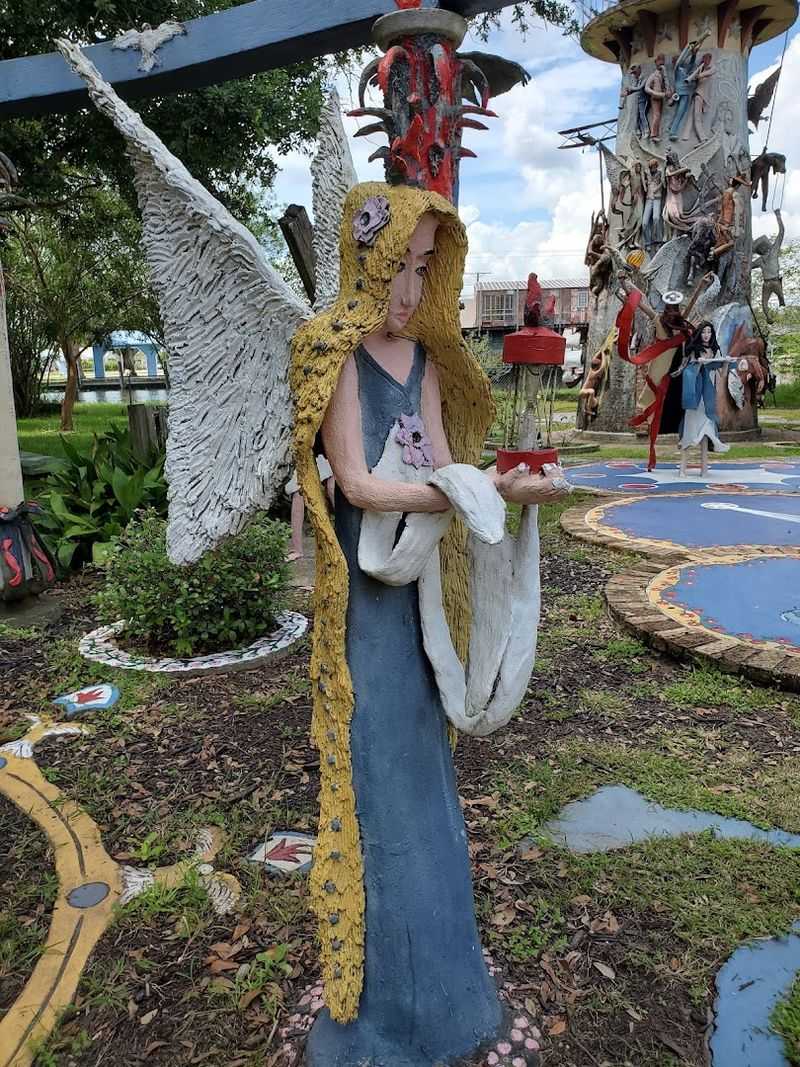
The garden becomes more memorable when you stop looking only at the largest structures. Small details carry much of its emotional weight: a chipped halo, a hand pressed against a chest, a face tilted upward, or a figure leaning toward another.
Tool marks remain visible across many surfaces, showing how Hill pushed, scraped, and shaped wet cement. Later repairs appear beside original cracks, creating a layered record of making, damage, and preservation.
Notice how the figures interact with paths, benches, trees, and the lighthouse. The layout creates shifting groupings as you move, allowing one sculpture to appear isolated from one angle and connected from another.
Self-portraits are especially worth seeking because they place Hill inside his own symbolic world.
Spend several minutes with one figure rather than photographing everything quickly. Close observation reveals differences in expression and posture that wide views flatten.
The garden’s deepest stories often sit in details easy to overlook on a first walk.