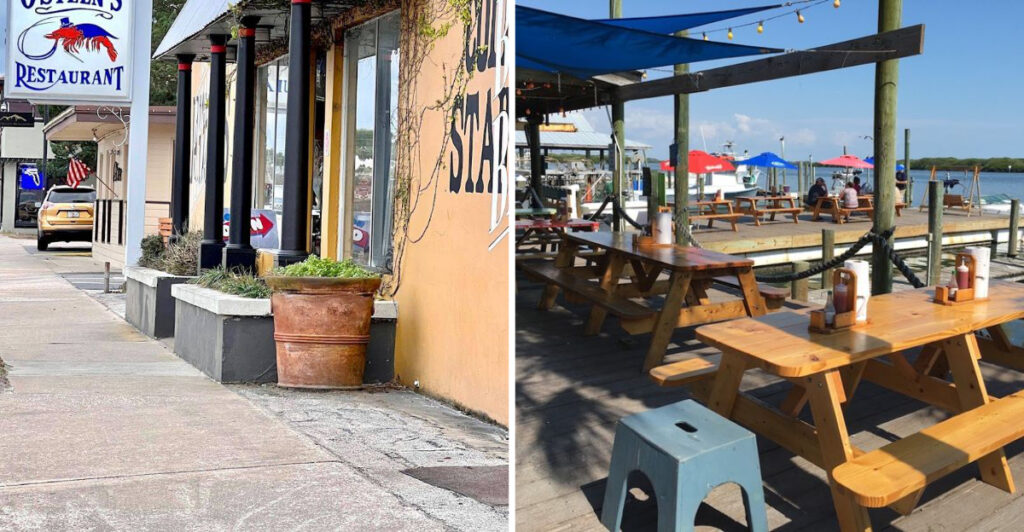
Forget the restaurant sign. The real recommendation is the line of cars circling for a parking space.
These restaurants keep drawing people back with burgers served inside a former service station, fish smoked over red oak, and Cuban sandwiches pressed until the crust snaps.
Some have fed the same communities for generations. Others earned their crowd one breakfast, or takeout order at a time.
The details do the heavy lifting. A working fishing fleet sits nearby. A customer-donated table becomes part of the room.
One sandwich gets a touch of honey and refuses to be forgotten.
Florida changes fast, but these kitchens know exactly what deserves to stay the same. So, which packed parking lot are you pulling into first?
1. T-Ray’s Burger Station
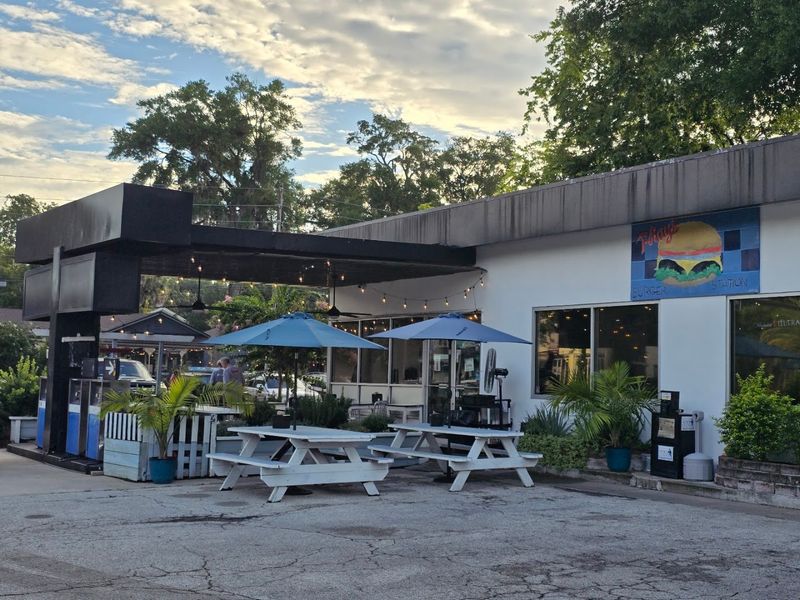
Gas pumps built the shell, but burgers gave this Fernandina Beach address a new fuel source.
The building began as a Standard Oil filling station in 1972. Years later, T-Ray Mullis persuaded his father, known locally as Big Ray, to let him sell sandwiches from the family business.
T-Ray’s officially opened in 1998 as a takeout operation with no formal advertising and no traditional restaurant sign. The old Exxon identity stayed visible, while word of mouth started doing the work that billboards usually handle.
Then a customer arrived with his own table and two mismatched chairs.
That improvised setup became part of the restaurant’s story. Other customers contributed more furniture, while Fernandina Beach memorabilia and local artwork slowly filled the former station.
The first donated table still sits inside. It now serves as a sturdy reminder that one determined diner can change the seating plan for everyone.
Breakfast runs through the morning before lunch takes over. You can start with eggs, biscuits, or another hearty plate, then return later for burgers and sandwiches served without unnecessary ceremony.
The relaxed dining room keeps its service-station roots close. Nothing tries to disguise the building’s past, and that honesty gives the restaurant much of its personality.
You come for a burger, but the room tells you why the business became a community fixture. Customers did not simply eat here. They helped furnish the place.
Check the gauge before you arrive. T-Ray’s handles the rest of the refueling.
Address: 202 South 8th Street, Fernandina Beach, Florida 32034.
2. O’Steen’s Restaurant
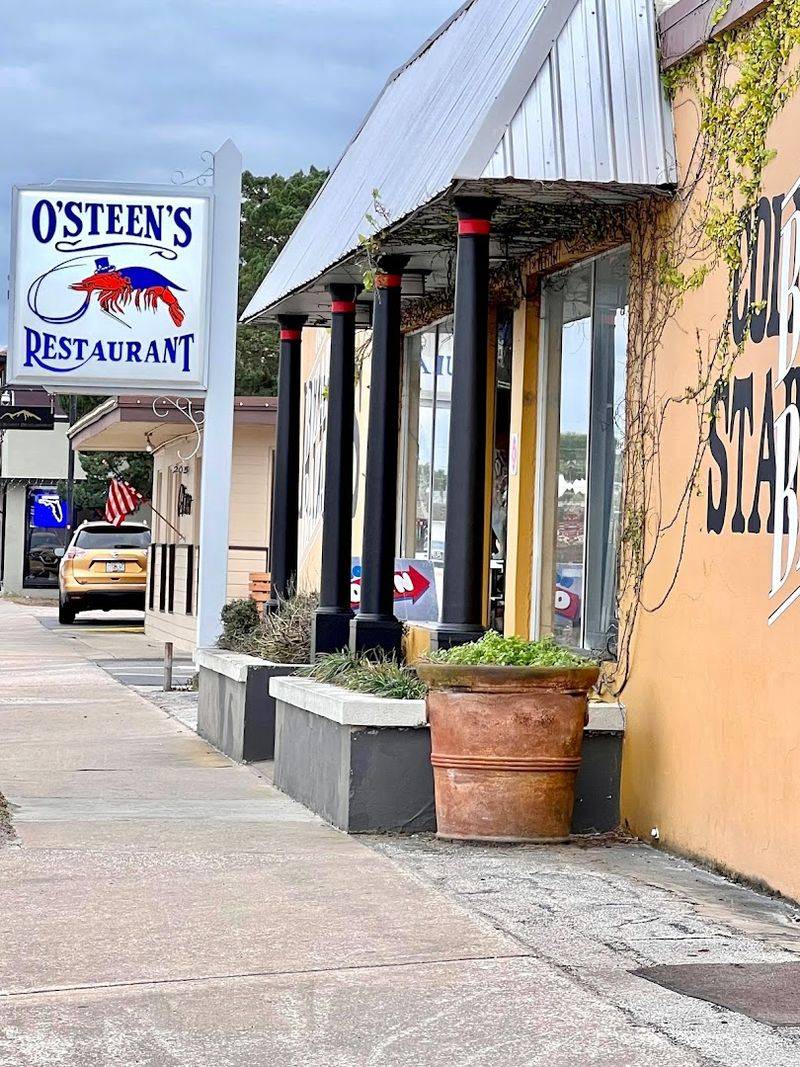
Mr. and Mrs. O’Steen opened the St. Augustine restaurant in 1965 with fresh seafood, daily specials, vegetables, and homestyle sides at the center of the menu.
More than half a century later, fried shrimp still receives top billing. You can order six, nine, twelve, eighteen, or twenty-four pieces, depending on your appetite and willingness to share.
Each seafood order comes with hush puppies and two sides. That leaves room for familiar Southern companions without distracting you from the main event.
The wider menu includes oysters, scallops, catfish, deviled crab patties, Minorcan clam chowder, fried chicken, pork chops, and assorted pies. One person can stay loyal to shrimp while the rest of the table builds a completely different meal.
O’Steen’s does not take reservations. The line can become part of the outing, especially during busy hours when experienced diners wait calmly and first-timers keep checking the door.
Bring cash because cards do not settle the bill here. That detail matters when you finally reach your table and discover your wallet brought the wrong kind of confidence.
Many employees have worked at the restaurant for decades, and the menu has stayed relatively steady. Familiar faces and familiar dishes give each visit a rhythm that regulars already understand.
You wait, claim a table, order seafood, and watch a basket of hush puppies create temporary silence. The process is wonderfully direct.
Bring cash, join the line, and let the final shrimp settle the argument.
Address: 205 Anastasia Boulevard, St. Augustine, Florida 32080.
3. The Yearling Restaurant
Your GPS may question the turn. Your appetite should keep going.
This place opened in 1952 near author Marjorie Kinnan Rawlings’ home in Cross Creek. Its name and setting connect the restaurant to the rural landscape that inspired her Pulitzer Prize-winning work.
The menu gives you an even faster introduction to this part of Florida. This is Southern cooking with a strong Cross Creek accent.
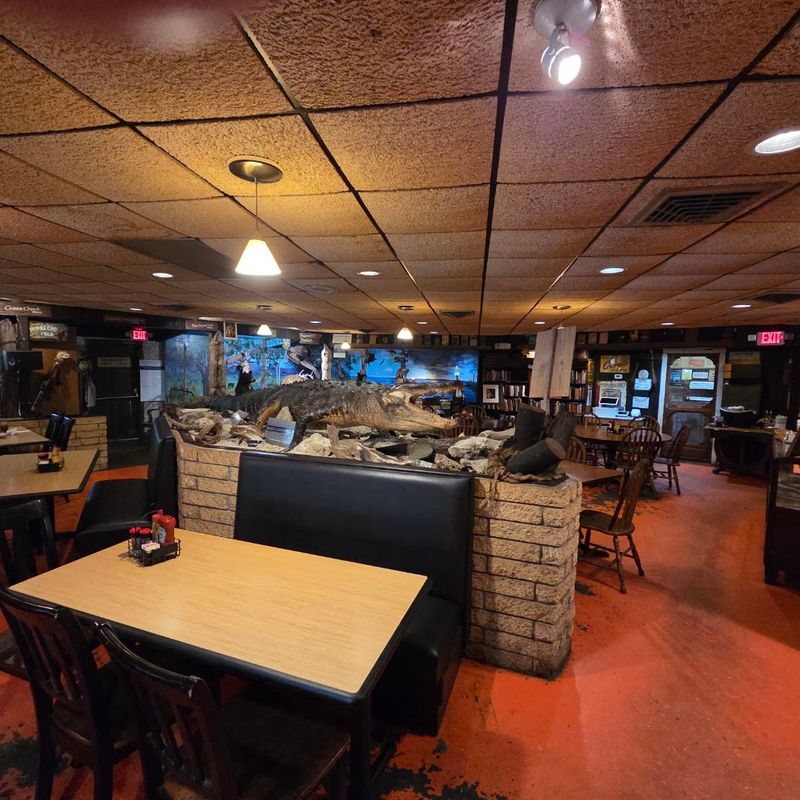
Fried or blackened catfish shares space with frog legs, Florida gator, and free-range venison served with a house game sauce. The Cross Creek Special combines gator, catfish, and frog legs on one plate.
That combination lets you explore several regional dishes without turning the order into a table-wide negotiation. Your fork can conduct the research.
Less adventurous diners still have plenty of familiar ground. Fried green tomatoes, conch fritters, chicken, seafood, burgers, and desserts keep the menu broad while the game dishes protect its distinct identity.
A library, gift shop, wildlife displays, and antiques carry the old-Florida story beyond the dining room. Even the walls seem ready with another chapter.
The surrounding roads replace city traffic with trees, water, and long stretches where your phone contributes very little. By the time you arrive, the drive has already slowed the pace of lunch.
You do not stop here for a rushed meal between errands. The road asks for patience, and the plates reward you for following through.
Cross Creek stays quiet after you leave. Lunch will keep talking for miles.
Address: 14531 East County Road 325, Hawthorne, Florida 32640.
4. Ted Peters Famous Smoked Fish
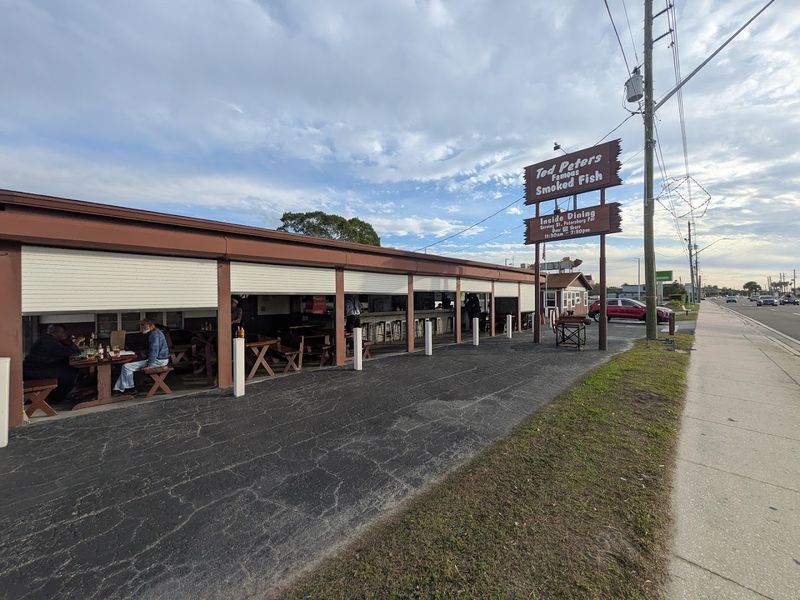
Ted Peters learned early that smoked fish sold better when customers could see and smell the process. After testing a smoker outside an earlier restaurant, he opened Ted Peters Famous Smoked Fish at its current location in 1951.
The smokehouse still relies on Florida red oak. Fish are arranged on racks and smoked over a slow fire for several hours, depending on their size and thickness.
That patience gives the flesh a firm texture and a deep flavor that does not need a complicated sauce. Red oak already handled the introduction.
Mullet is the classic order, while salmon and amberjack widen the choices. Dinner portions come with German potato salad, coleslaw, pickles, tomato, onion, and lemon.
The kitchen also serves smoked fish spread with saltines, Manhattan clam chowder, burgers, sandwiches, and key lime pie. You can build a full meal without wandering far from the smokehouse’s strongest ideas.
Several recipes carry family history. Tilla Lathrop developed the German potato salad served today, while Ellen Peters created the fish spread that now has its own loyal audience.
The business spans five generations, making the restaurant a family timeline written in oak smoke, fish, and side dishes.
You can also purchase smoked fish and containers of spread to take home. Their survival depends on how long you can drive with that aroma filling the car.
The old sales pitch still works brilliantly. Watch the racks, breathe in the smoke, and let the fire close the deal.
At Ted Peters, red oak signs the receipt before you ask for it.
Address: 1350 Pasadena Avenue South, St. Petersburg, Florida 33707.
5. Star Fish Company Market And Restaurant
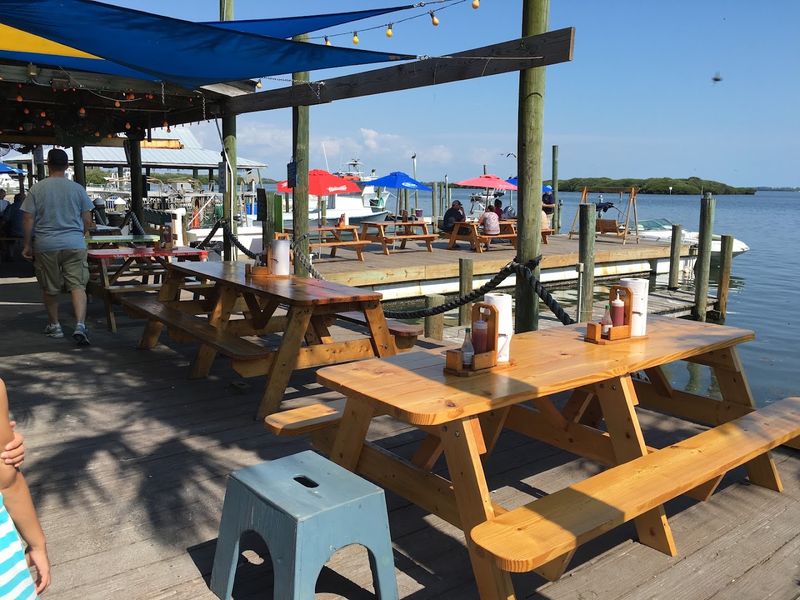
The boats handle procurement. Your only job is choosing fried, grilled, blackened, or sautéed.
Star Fish Company sits in Cortez, one of Florida’s remaining working waterfront communities. The restaurant and seafood market operate beside the commercial fleet, linking the boats, market counter, and your dockside table.
Local fishermen supply grouper, snapper, mullet, shrimp, stone crab claws, and other catches from nearby waters. The market sells fresh seafood, while the restaurant keeps preparation simple enough to let the main ingredient stay recognizable.
Mullet can arrive fried or blackened. Grouper may be fried, grilled, blackened, or sautéed, while Gulf shrimp, oysters, scallops, crab cakes, and pompano provide several ways to build a plate.
Hush puppies, coleslaw, broccoli, fries, and cheese grits handle the supporting roles. Choosing the sides may take longer than choosing the fish.
The Cortez Special allows you to select two seafood options. The larger Star Combination brings shrimp, oysters, scallops, and grouper together, solving indecision with a bigger tray.
Grouper tacos, shrimp and grits, smoked mullet, and Cortez fish chowder offer alternate routes when a traditional seafood plate is not calling your name.
Then there is the setting. Mangrove islands, neighboring keys, working boats, and seabirds provide the background without turning lunch into a staged attraction.
You are not looking at a waterfront theme. You are eating beside a fleet that still heads out to work.
The bay keeps moving, the pelicans keep watching, and your plate returns looking suspiciously clean.
Address: 12306 46th Avenue West, Cortez, Florida 34215.
6. West Tampa Sandwich Shop
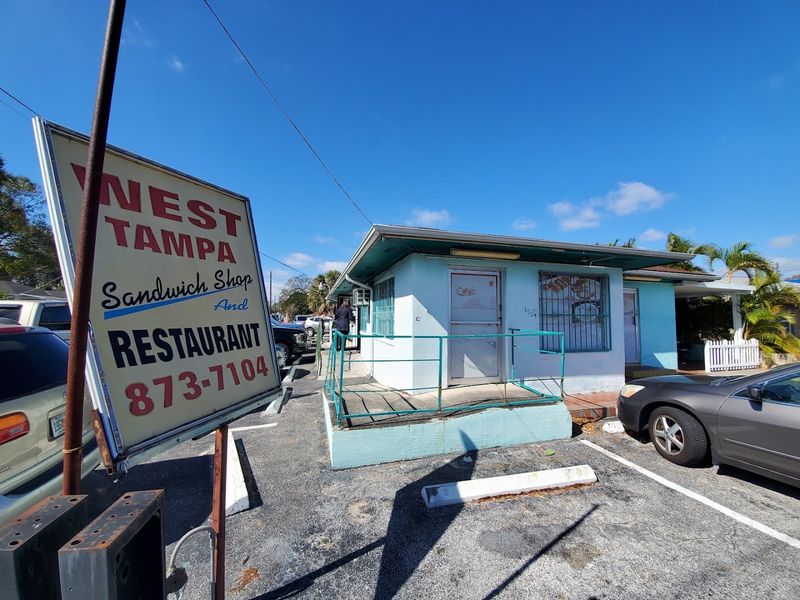
The shop opened on North Armenia Avenue in 1992 and became known for its original Honey Cuban Sandwich. That small change gives a Tampa favorite a sweeter edge while keeping pressed bread and savory fillings at the center.
Breakfast starts at 6 a.m. from Monday through Saturday. The counter begins working long before many lunch restaurants switch on their lights.
Café con leche and Cuban toast make an efficient opening move, especially when your morning needs stronger material. Eggs and other breakfast plates can turn the stop into a full meal.
The menu then expands through Cuban sandwiches, soups, entrées, salads, sides, and daily specials. Ropa vieja with yellow rice gives you a fork-and-plate alternative when pressed bread is not the plan.
Mango, mamey, and papaya batidos offer a cooler response to the Florida heat. Flan covers dessert in several forms, although reaching that decision may require ignoring how much sandwich you just finished.
West Tampa Sandwich Shop closes in the afternoon, so delaying lunch can turn a Honey Cuban plan into tomorrow’s problem. Local regulars know the clock and arrive accordingly.
The counter works quickly, but the food still carries the personality of a neighborhood place. You may come curious about honey on a Cuban and leave questioning why your usual sandwich never considered it.
Expect crumbs on your shirt and cafecito still arguing with your pulse.
Address: 3904 North Armenia Avenue, Tampa, Florida 33607.
7. Georgia Pig BBQ And Restaurant
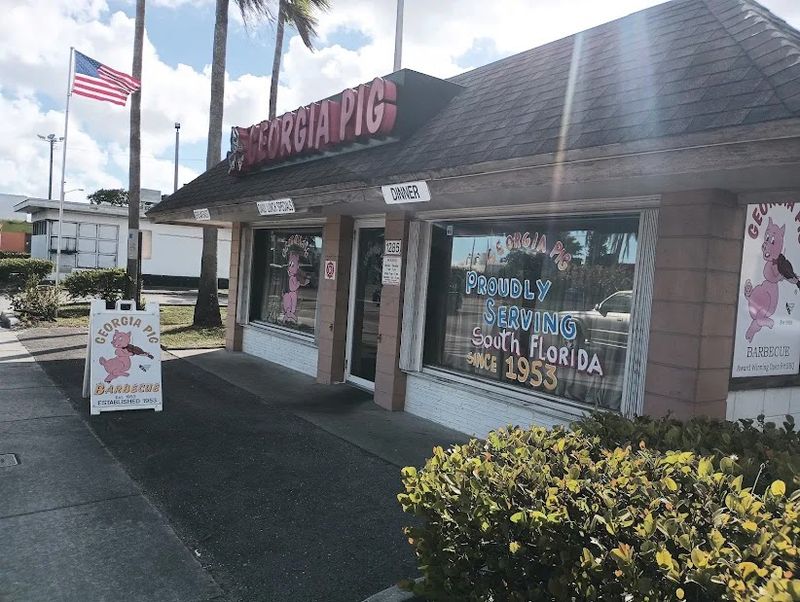
The billboard is invisible, and it smells like live oak.
This place has served family-run barbecue in South Florida for more than sixty years. Its open pit burns live oak daily, sending smoke through the meat and across the State Road 7 property.
That wood matters. Live oak forms the foundation of the restaurant’s flavor, while a thin North Georgia-style sauce adds tang without hiding the work of the pit.
The sauce supports the pork instead of turning each bite into a sweet disguise. Smoke stays in charge.
The modest dining room keeps your attention close to the food. You will not find oversized trays built for photographs, complicated rub descriptions, or a lineup of sauces demanding an audition.
The appeal comes from the relationship between fire, wood, meat, and time. Every plate carries evidence of the process.
Open-pit barbecue leaves little room for shortcuts. The fire stays visible, the smoke stays active, and the aroma starts working before you park.
The location also makes Georgia Pig an easy detour from major roads around Davie and Fort Lauderdale. Drivers may discover it by following the smoke, but repeat customers do not need the signal twice.
You can smell the operation outside, see the old-school setup when you enter, and taste why the restaurant has stayed in South Florida’s barbecue conversation for generations.
The pit does the talking, and the sauce leaves the accent.
Address: 1285 South State Road 7, Davie, Florida 33317.
8. Enriqueta’s Sandwich Shop
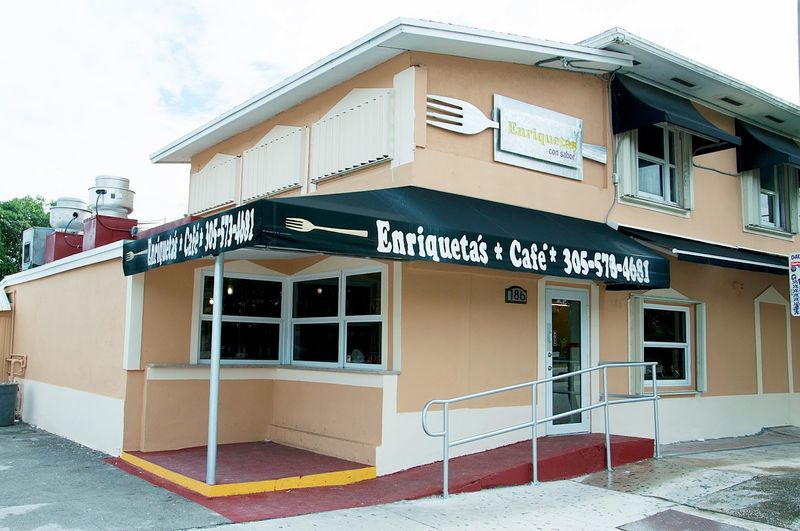
Miami keeps building upward. Enriqueta’s keeps pressing sandwiches flat.
The Cuban counter has operated on Northeast 29th Street since the 1970s, long before high-rise apartments began surrounding its corner near Wynwood and Edgewater.
The neighborhood looks different, but the walk-up window and compact dining room still run on coffee, griddled bread, and fast-moving breakfast orders.
The Cubano Doble is built for a serious appetite. It combines sliced pork with pulled pork prepared with mojo and red onion, then stacks both inside Cuban bread with the remaining classic fillings.
Pan con bistec, pan con lechón, Cuban sandwiches, croquetas, and breakfast plates widen the options. The Desayuno Especial brings eggs, bacon, Cuban toast, and strong coffee together before the surrounding city finishes waking up.
Lunch plates bring bistec, rice, black beans, salad, and a choice of plantains, tostones, or fries when bread alone cannot carry the assignment.
Cafecito stays the smallest order with the biggest personality. It arrives sweet and concentrated, delivering enough momentum to make a second sandwich sound perfectly reasonable.
Enriqueta’s also acts as a meeting point between old and new Miami. Construction workers, longtime regulars, office crowds, and curious newcomers can all end up at the same counter.
Each group may arrive for a different reason, but most leave holding a sandwich that requires two hands.
The skyline can chase tomorrow. Your cafecito has already started today.
Address: 186 Northeast 29th Street, Miami, Florida 33137.