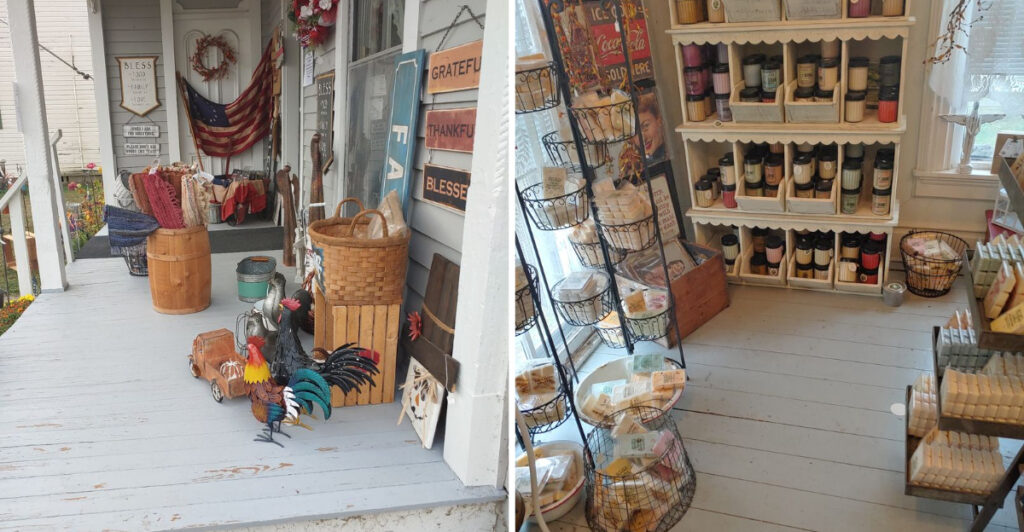
Calling all Indiana bargain hunters: this stop has your name on it.
Inside a two-story Victorian home, the merchandise changes from room to room. Handmade crafts, antiques, vintage finds, and gifts make a quick stop increasingly unlikely.
The building dates to 1878 and has operated as a shop since 1980. Its Italianate details still hint at the home’s earlier life, giving the hunt a little history along the way.
There is more outside. An 1822 log cabin adds another historic touch, while the barn opens during festivals and special events with extra vendors and handmade goods.
Then the surrounding district keeps the detour going with a covered bridge and working grist mill nearby.
You may come for one shop, but Indiana gives you an entire historic corner to explore.
The Miller’s Former Home Still Wears 1878 Above The Door
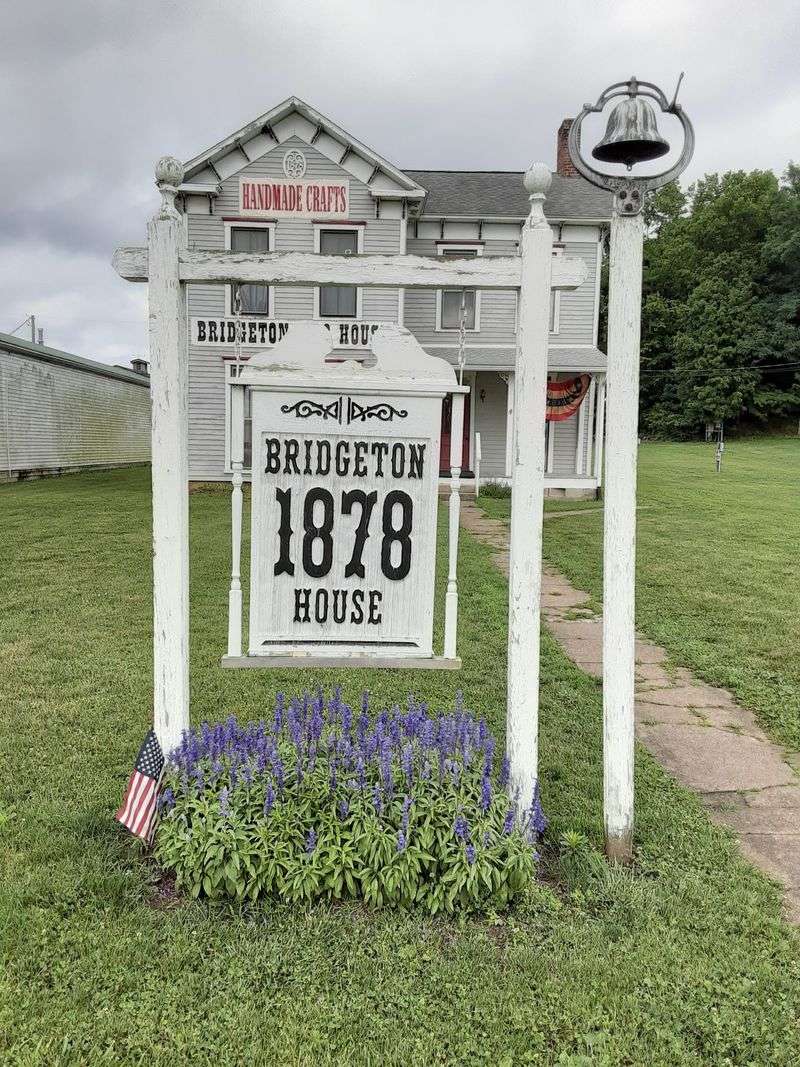
The date is not hidden on a plaque. The house practically signs its own name.
Ralph Sprague, who owned the Bridgeton Mill, built the residence in 1878. Historic records identify it as the Sprague-Webster-Kerr House, a two-story gabled-ell home with Italianate ornamentation and a sandstone foundation.
Look toward the gables, and you will find the detail that makes the building especially easy to recognize. Circular attic vents display “1878,” placing the construction year directly into the architecture.
The house changed owners several times after Sprague sold the mill property in 1882. It remained a single-family residence until 1980, when its use changed to a gift shop.
Shopping here still means moving through rooms once meant for daily family life. Windows, trim, and the old residential layout stay visible around the merchandise instead of disappearing behind a modern retail shell.
Today, Bridgeton 1878 House opens on weekends from April through December, as well as during special events and the Covered Bridge Festival.
The building has already lived several lives. Your job is simply to see what the next room is selling.
Every Doorway Changes The Shopping List
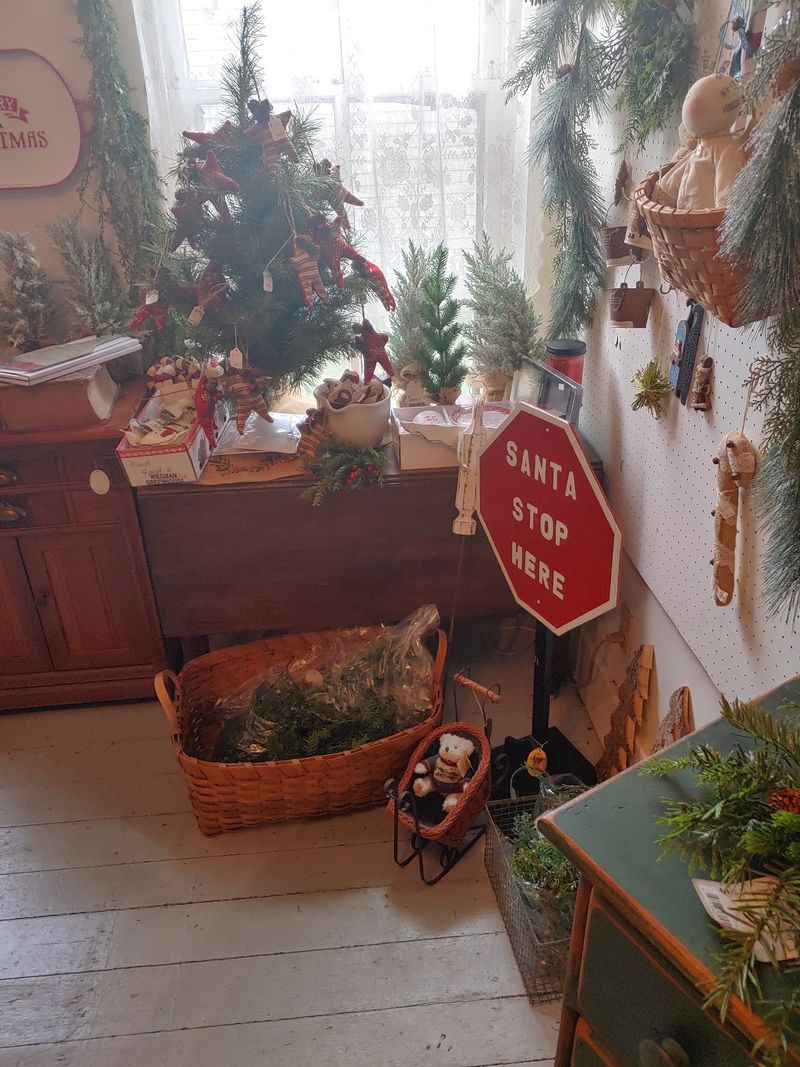
Forget the giant sales floor where you can see everything from the entrance. This place makes you earn each discovery one doorway at a time.
The 1878 House sells unique gifts, handcrafted items, antiques, vintage merchandise, and collectibles. A dedicated Christmas room adds another category for shoppers who believe holiday decorating should never be limited by the calendar.
The residential layout gives the merchandise natural divisions. One room can pull your attention toward old objects and collectibles, while another shifts toward handmade work or gifts.
Instead of racing down long aisles, you move through smaller spaces, stop at shelves, circle back to something you nearly ignored, and notice details that would vanish inside a larger store.
The house itself keeps joining the shopping trip. Old architectural features remain visible around the displays, so looking at merchandise also means looking at the building.
Bridgeton 1878 House is located at 8144 South Bridgeton Road, Bridgeton, Indiana 47836, placing you within easy reach of the town’s bridge, mill, cabin, and other historic buildings.
You do not need to arrive knowing exactly what you want. Let one shelf interrupt the plan, then see what the next room does to it.
Walk in looking for one gift and the old-house layout may send you home with three entirely unrelated ideas.
Handmade Crafts Share Rooms With Antiques And Vintage Finds
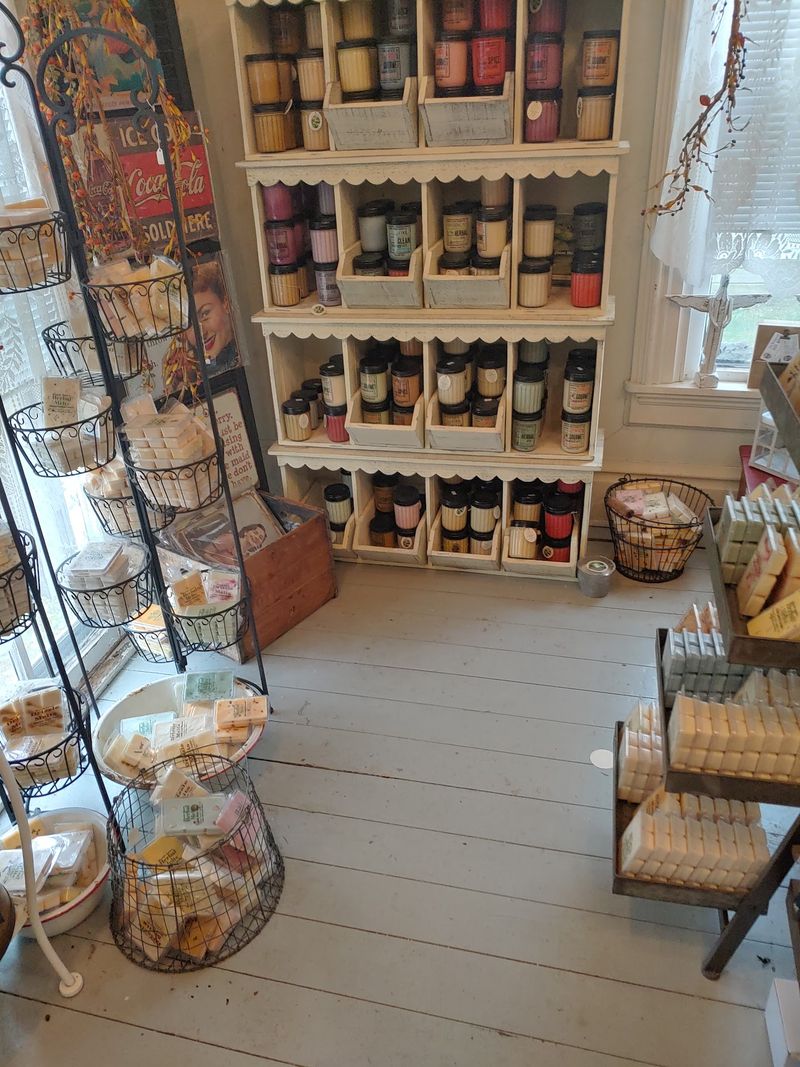
Newly made and well-aged objects do not have to compete here. They simply occupy neighboring shelves.
Handcrafted items form a major part of the 1878 House selection, while antiques, vintage pieces, and collectibles give the shop another layer for browsers who prefer objects with some age behind them.
That combination keeps the rooms from becoming predictable. A handmade decoration may sit near an older household object, and a collectible can pull your attention away from the gift you originally came to find.
The mix suits several kinds of shoppers at once. Craft lovers can focus on handmade work, collectors can scan for older pieces, and gift shoppers can move between both without changing stores.
Bridgeton itself strengthens that connection between old and new. The house belongs to a historic district where nineteenth- and early-twentieth-century buildings stand close to active shops, events, and working heritage sites.
During the Covered Bridge Festival and other special events, vendor space expands the shopping beyond the usual house inventory. Additional makers and sellers bring more crafts and collectibles onto the property.
This is the sort of browsing session where “just one more room” becomes a very effective way to lose track of time.
The 1822 Case Log Cabin Adds Another Century To Explore
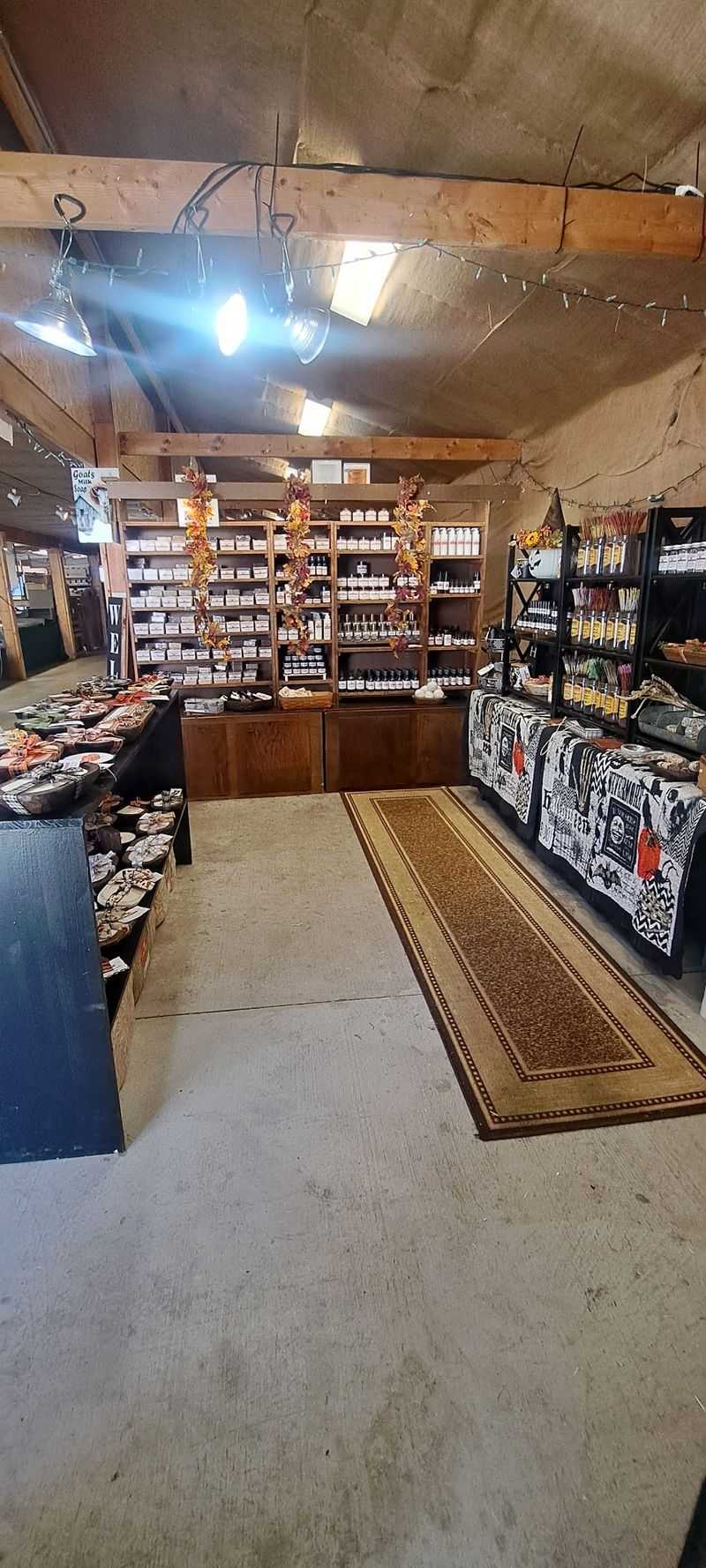
The Victorian house is old. The cabin behind it casually adds another fifty-six years.
The Case 1822 Log Cabin was built by pioneer Seba H. Case and now stands as another shopping and history stop on the same property. It opens on weekends from April through December, during special events, and throughout the Covered Bridge Festival.
Inside, the merchandise leans rustic. Gifts, cast-iron cookware, baskets, pottery, and handmade crafts match the log structure surrounding them.
Free tours add another reason to step inside. Visitors can hear the cabin’s history and learn about hearth cooking, giving the building a role that reaches beyond retail.
During living-history events, that setting becomes even more active. The Bridgeton Rendezvous uses the property for demonstrations tied to early nineteenth-century life, including hearth cooking at the cabin.
Moving from the 1878 House to the 1822 cabin changes the century without requiring a drive. The Victorian residence gives way to logs, pioneer history, and an earlier version of domestic life.
If the house starts the history lesson politely, the cabin pulls up a chair and keeps going.
The 1878 Barn Saves Its Biggest Entrance For Event Days
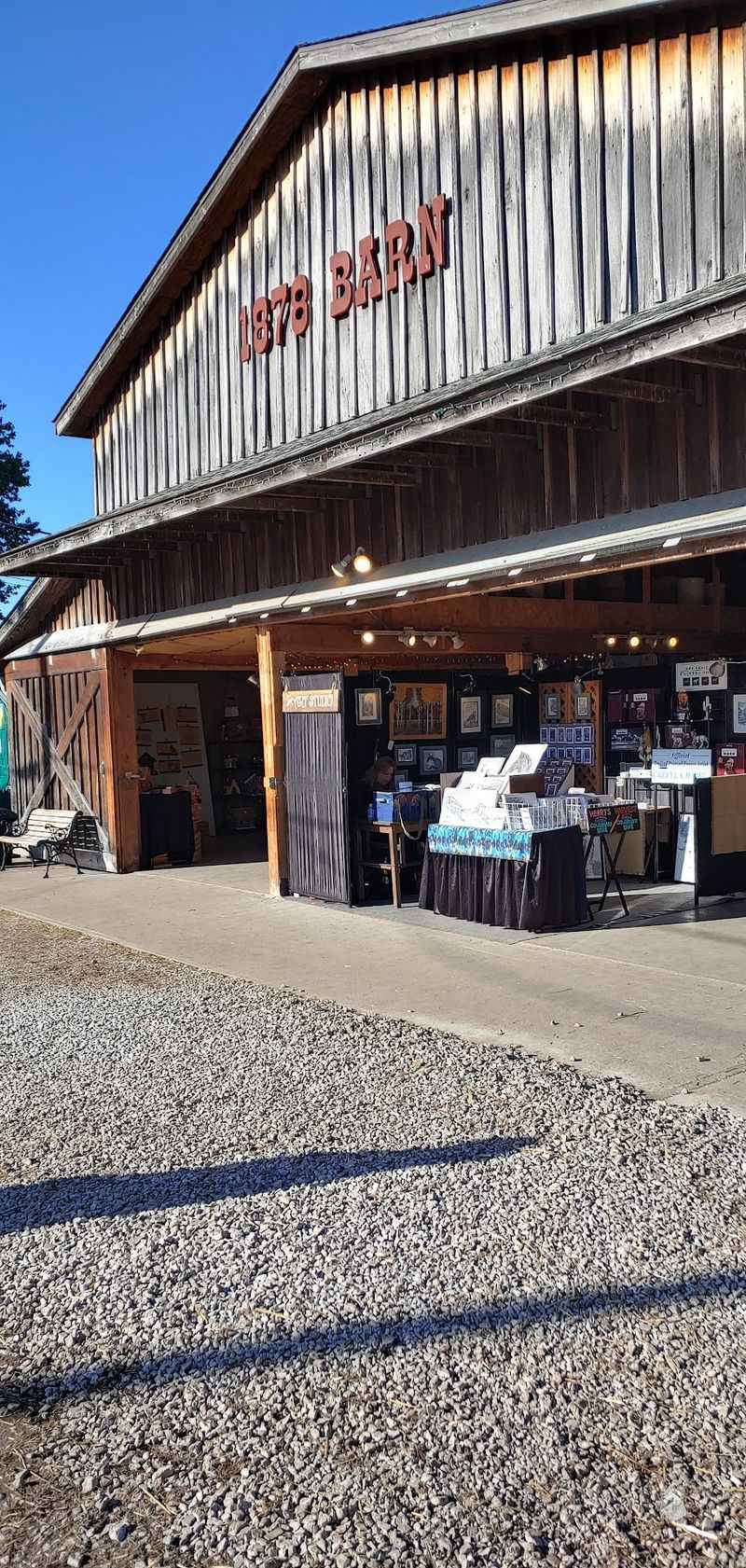
Just when the house and cabin seem like enough, the barn opens another set of doors.
The 1878 Barn operates during the Covered Bridge Festival and special events rather than following the house’s regular weekend schedule. During those occasions, it becomes additional space for original fine art, quality handmade crafts, and vendors.
The barn also serves as an event venue for weddings, receptions, reunions, showers, graduation parties, and other gatherings.
An ordinary weekend centers on the house and cabin, while festival dates expand the grounds into a larger craft-shopping stop.
The difference becomes especially noticeable during autumn. The Parke County Covered Bridge Festival runs for ten days each October and spreads across communities throughout the county.
Bridgeton is one of the festival locations, and the town reports more than four hundred vendors during its busiest annual celebration. Craft booths, antiques, collectibles, food vendors, and historic buildings fill the streets around the permanent shops.
Visit on a quieter weekend and you can inspect the house at your own pace. Return during a major event and the same property suddenly has much more company.
Covered Bridge Festival Days Turn The Whole Town Into A Craft Aisle
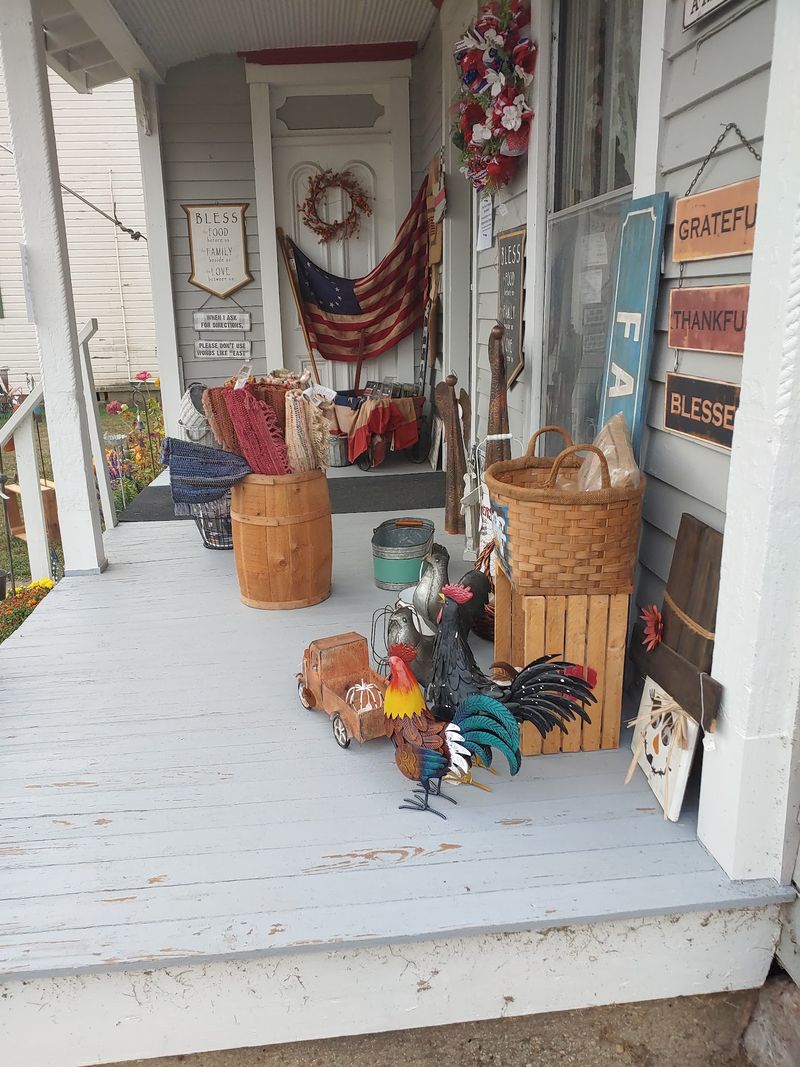
October does not simply decorate Bridgeton. It rearranges the town.
The 2026 Parke County Covered Bridge Festival runs from October 9 through October 18. The countywide event highlights Parke County’s thirty-one covered bridges while bringing artisans, crafts, food, and vendors into festival communities.
Bridgeton becomes one of the busiest stops. Its permanent shops stay open while vendor booths spread through the historic district, creating a much larger shopping area than the town offers on an ordinary weekend.
The 1878 House participates throughout the festival, and both indoor and outdoor vendor spaces are used during special events. The 1878 Barn also opens, adding more original art and handmade crafts to the property.
The festival is not the only time the town shifts gears. Bridgeton also hosts Rendezvous weekend, Civil War Days, Milling Days, and Country Christmas.
Country Christmas brings vendors back to the barn and opens local shops for seasonal shopping. The log cabin also becomes part of the celebration.
Choose a regular weekend when you want a slower room-by-room browse. Choose a festival weekend when you want the shop, barn, cabin, vendors, and historic town competing for your attention at once.
Either way, empty hands are going to have a difficult afternoon.
The Covered Bridge And Mill Finish The Bridgeton Loop
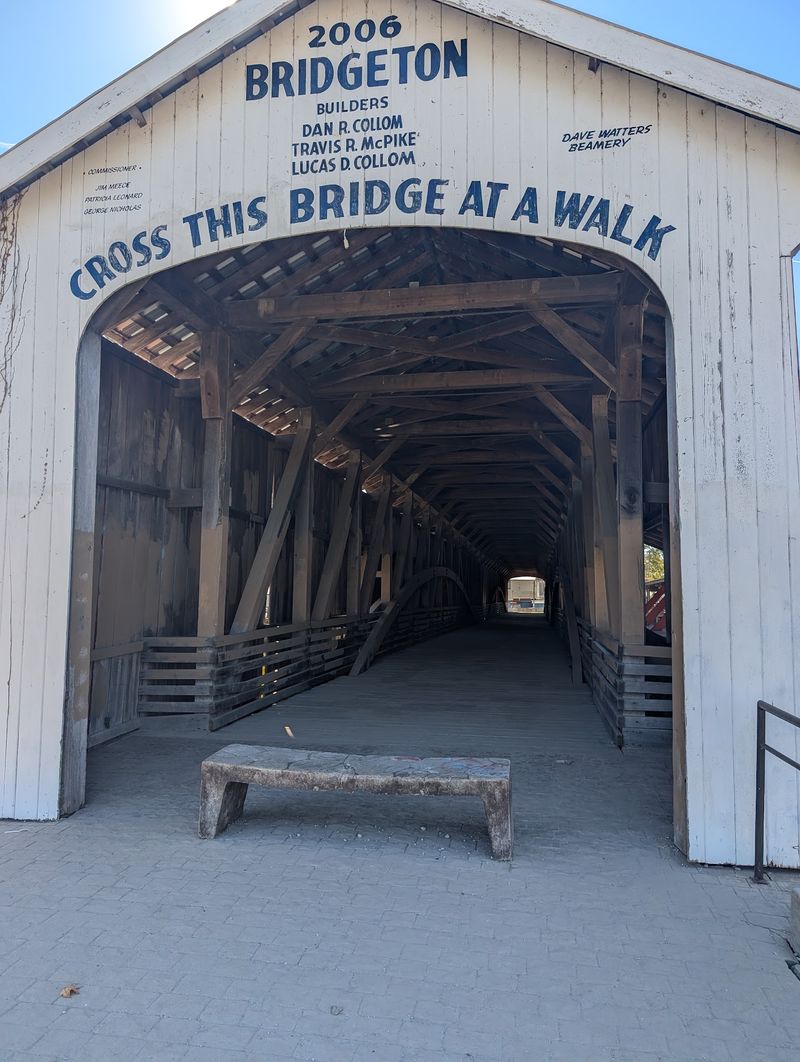
Shopping is only part of what fits into this small stretch of Bridgeton Road.
The 1878 House stands within Bridgeton’s National Register historic district, close to the Bridgeton Covered Bridge and the Bridgeton Roller-Grist Mill. The mill dates to 1823 and was rebuilt in 1870, and it still grinds grain using traditional millstones.
The covered bridge crosses Big Raccoon Creek beside the mill and dam. The current bridge was rebuilt by the community in 2006 after the previous bridge was lost in an unfortunate event the year before.
A short walk can move you from Victorian shopping to an 1822 cabin, an 1878 barn, a nineteenth-century mill, and the covered bridge without turning the afternoon into a series of car rides.
Browse the house, inspect the cabin, wander toward the mill, cross the bridge, then circle back if something in the second room is still occupying your thoughts.
The house and Case Log Cabin are generally open weekends from April through December and during special events, while the barn joins the schedule for festivals and event days.
One stop can put crafts, antiques, pioneer history, Victorian architecture, a grist mill, and a covered bridge within the same afternoon.
That is a shopping trip with enough plot twists to make the receipt look like a souvenir.