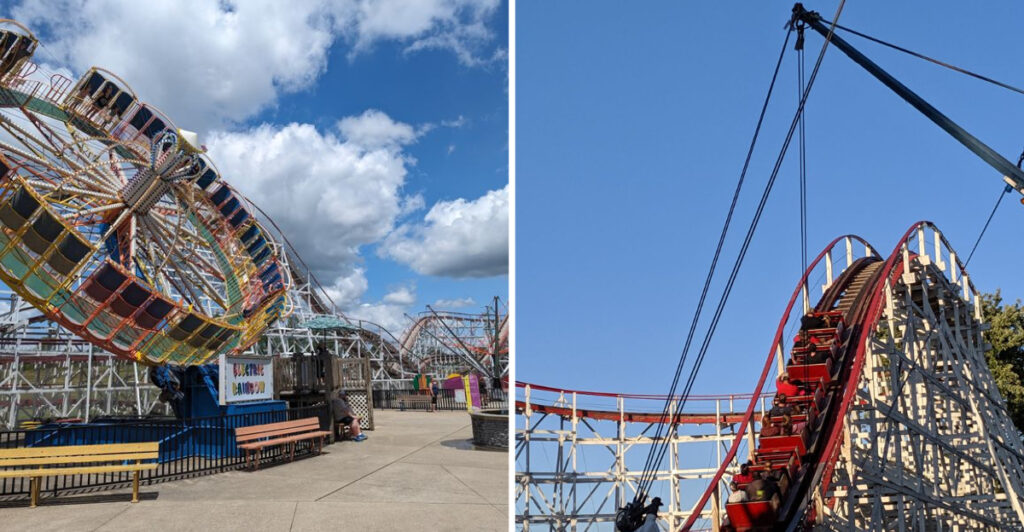
This Ohio amusement park likes to play hard to get.
It has been part of the local scene since 1924, but showing up whenever you feel like it is not really the deal.
The family-operated park mostly hosts private outings, with only a handful of public days opening the gates each year.
That limited calendar makes what waits inside even more surprising.
Two wooden roller coasters headline the old-school lineup, while classic rides and a miniature train keep the throwback mood rolling.
The whole place fits into about 25 acres, giving it more backyard carnival charm than mega-park chaos.
Finding the gates is easy. Catching them open is the real trick.
And when that rare public day finally lands on the calendar, you will understand why people keep watching for it.
The Story Began With A Dance Hall And A Big Piece Of Land
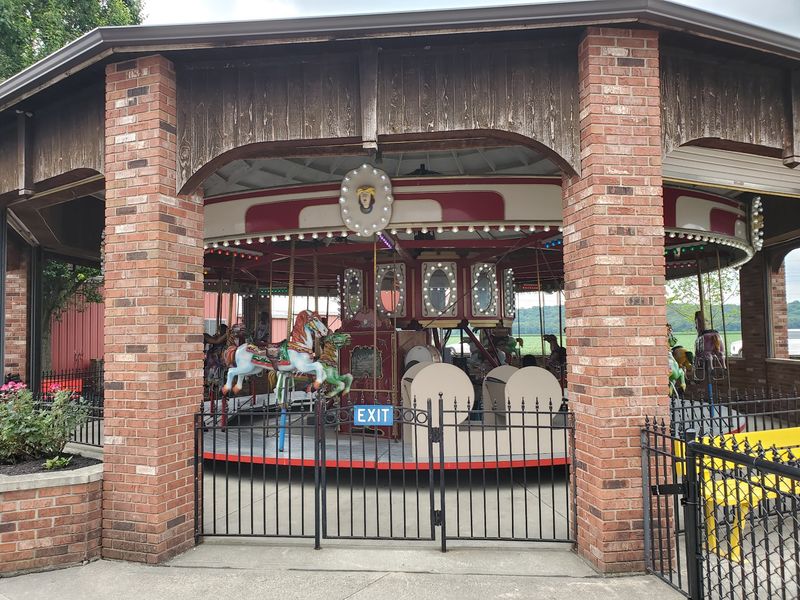
Before anybody screamed on a roller coaster at Stricker’s Grove, they came to dance.
The story dates to 1924, when Henry Stricker purchased 55 acres outside Cincinnati.
The property initially served as a place where families and groups could gather, and a dance hall became one of its defining early features. Mechanical amusement rides did not arrive until decades later.
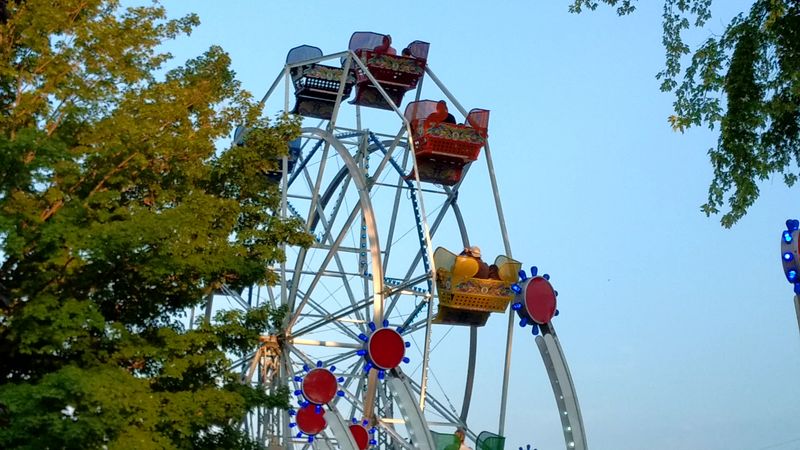
Boats, rockets, and a Ferris wheel were added in 1954, pushing the property closer to the amusement park you would recognize today.
Then came an even bigger change.
In 1972, Henry Stricker’s son Ralph relocated the operation to its current 25-acre home in Ross. The park remained in the family, and Ralph’s daughter later became part of the team continuing the tradition.
More than a century after the story began, the original idea has not completely disappeared. Groups still gather here. The dance hall still hosts events. Families still climb aboard rides.
The roller coasters came later, but gathering people together was always the first attraction.
Seventeen Rides Prove Bigger Is Not Always Busier
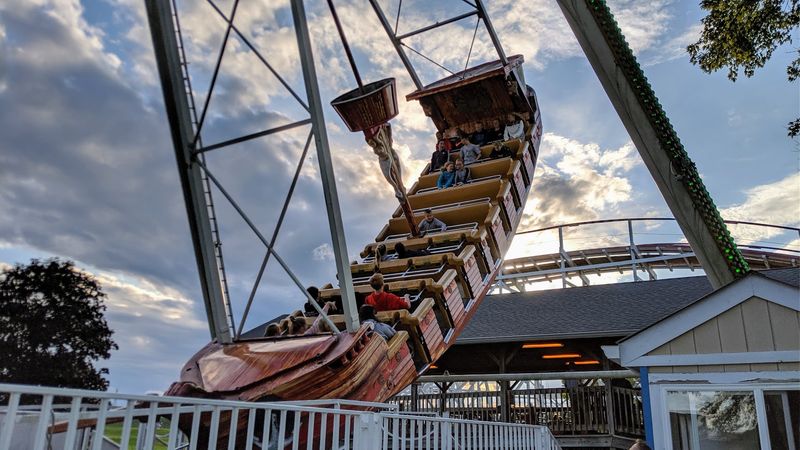
Here is a refreshing number: 17.
That is the current ride count, and it gives you enough variety for a full outing without requiring a map the size of a newspaper or a shuttle ride between opposite ends of the property.
The lineup leans heavily into classic amusement-park territory.
You will find a Ferris wheel, Tilt-A-Whirl, Flying Scooters, Pirate Ship, carousel, Scrambler, and other traditional rides alongside attractions aimed at younger visitors. A miniature train also circles the grounds, giving you a slower way to see the park between spins and drops.
Miniature golf and an indoor arcade add options when you want both feet on solid ground for a while.
The collection does not try to compete with giant destination parks on scale.
That is part of the appeal.
You can focus on riding instead of crossing enormous themed lands to reach the next attraction, and several old-fashioned midway staples sit within easy reach of each other.
Seventeen may sound modest. Your stomach after the Tilt-A-Whirl may disagree.
Two Wooden Coasters Bring The Rattle Back
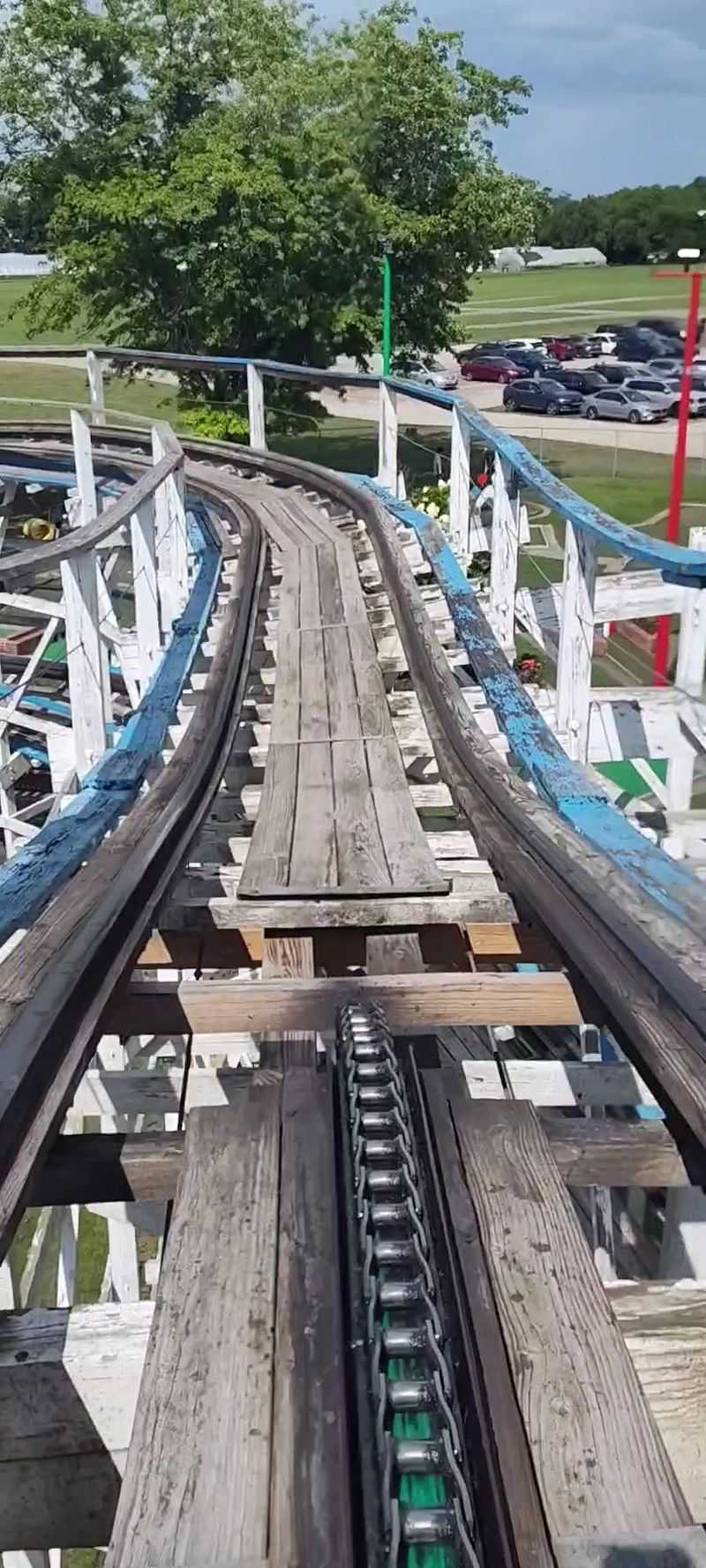
Steel may be smoother, but wooden roller coasters have never been interested in whispering.
This park has two of them.
Tornado is the larger coaster, while Teddy Bear gives younger riders and families a smaller wooden experience. Both are closely connected to the Stricker family rather than being standard rides purchased from a modern manufacturer.
Teddy Bear opened in 1996 and was built using plans based on the Teddy Bear coaster that once operated at Cincinnati’s former Coney Island. The result keeps a piece of regional amusement history rolling long after the earlier coaster disappeared.
Tornado delivers the bigger ride.
Its traditional wooden structure, drops, turns, and unmistakable clatter make it the park’s signature thrill attraction.
You do not need a record-breaking height or a launch system to understand why coaster fans notice this place.
Sometimes wood, wheels, gravity, and a century-old amusement tradition are plenty.
Besides, silence was never the point of a wooden coaster.
Tornado Has A Family-Built Story Behind Every Turn
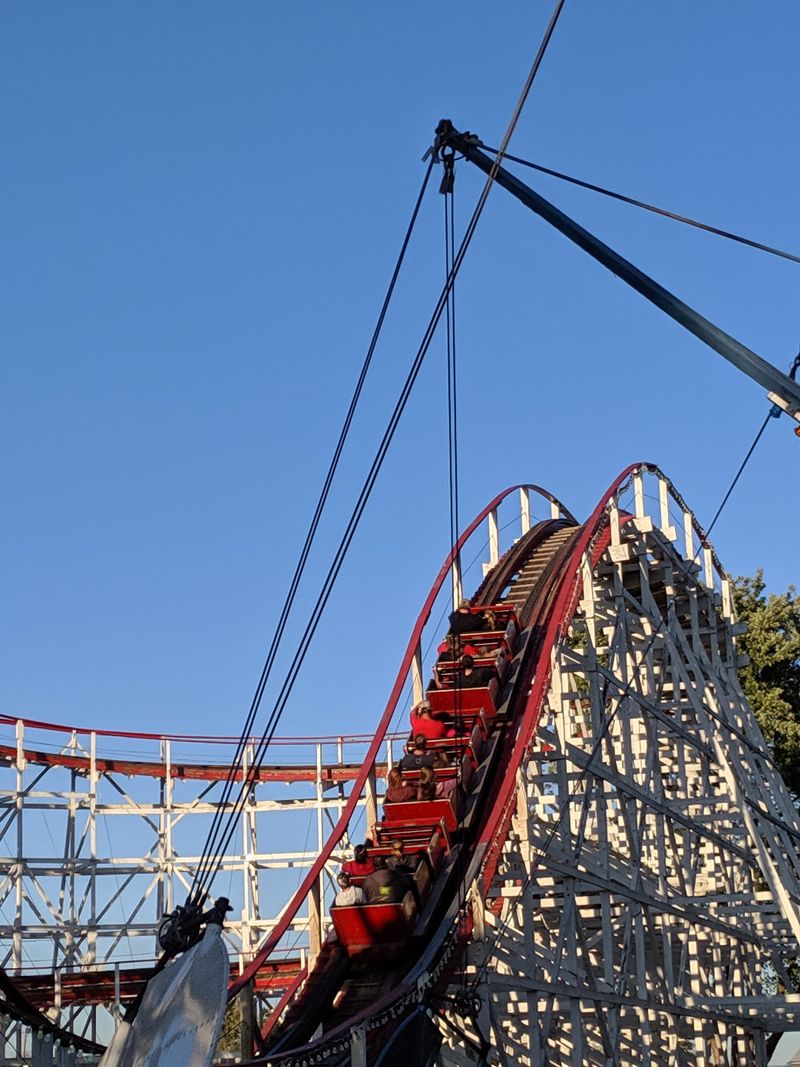
Most roller coasters arrive with a construction crew. This one arrived with Ralph Stricker.
Tornado was designed by Al Collins and built by Ralph between 1990 and 1993 on the family property. The wooden coaster eventually opened in 1993 and became the larger of the park’s two coasters.
That background makes the ride more than another entry on an attraction list.
You are climbing aboard a coaster constructed by a member of the family that operated the park, on grounds that family had already moved and rebuilt decades earlier.
Tornado also has a connection to an older coaster design. Roller-coaster records identify it as a mirror image of the former Jet Coaster, later known as Mighty Lightnin’ and Comet, from Pennsylvania’s long-closed Rocky Glen Park.
So the ride manages to connect several eras of amusement history at once.
It is relatively young compared with the park’s 1924 beginnings, but its design reaches backward even as the train moves forward.
That is quite a lot of history to pack beneath one lap bar.
Most Summer Days Are Not Public Days
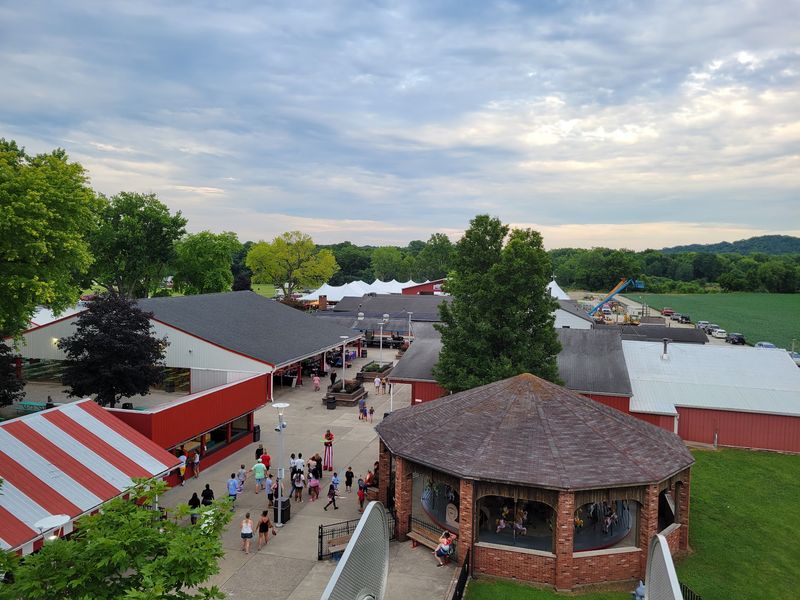
Here comes the catch, and it is a big one. You usually cannot visit.
The park operates primarily as a venue for private groups, including company outings, churches, reunions, weddings, and school events. During its operating season, organizations can reserve the grounds rather than sharing them with ordinary daily admission crowds.
That unusual setup explains why a century-old amusement park near Cincinnati can remain unfamiliar even to people who have traveled through the area.
It simply does not function like a traditional public amusement park.
For 2026, four standard public days were scheduled: July 4, Family Day on August 9, Labor Day on September 7, and Customer Appreciation Day on October 11.
The Hamilton County Community Fair added another stretch of public access from July 8 through July 11, with rides included as part of the event.
So you have to pay attention to the calendar.
Spontaneity is fun, but a locked amusement-park gate is a fairly convincing argument for planning ahead.
Public Days Turn The Calendar Into Part Of The Fun
Circle the date before you start dreaming about the coaster.
The limited public schedule gives each open day a different purpose.
The Fourth of July celebration operates differently from the other standard public dates. In 2026, admission was free for that event, while ride tickets or an unlimited-ride armband were sold separately.
Family Day, Labor Day, and Customer Appreciation Day used admission that included rides.
That makes checking current pricing and operating details important before you leave home.
There is another route inside, too.
The Hamilton County Community Fair takes place on the grounds and opens the park to the public during the fair. In 2026, the event ran July 8 through July 11, with admission covering unlimited rides along with fair exhibits and entertainment.
Ride hours during the fair can differ from the fair’s overall operating hours, so the schedule matters if coasters are your priority.
At most amusement parks, you check the weather. Here, you check whether the park is open first.
The Community Fair Adds Animals To The Roller Coasters
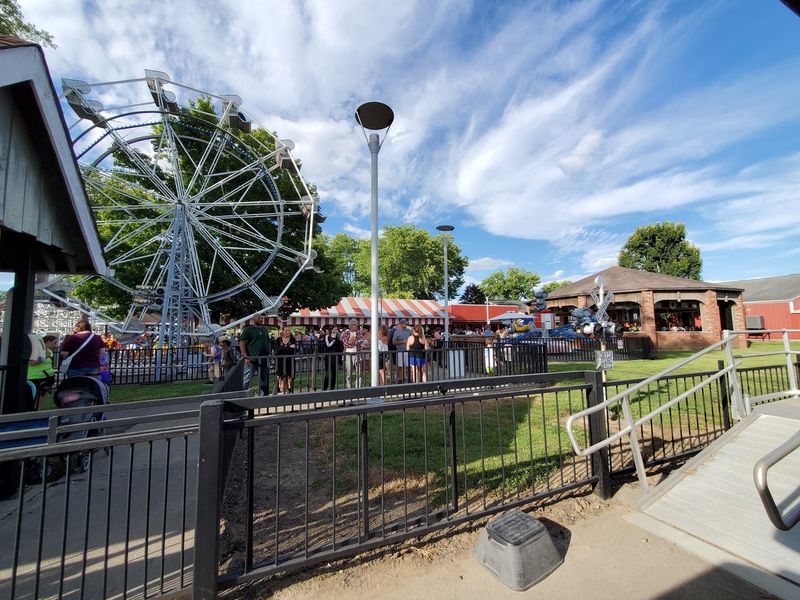
Roller coaster or livestock show? In this place, you do not necessarily have to choose.
The Hamilton County Community Fair is held at the amusement park and adds another dimension to the property each summer. The event combines the park’s rides with animals, exhibits, food, shows, and other fair activities.
During the 2026 fair, the grounds opened to the public for four days.
Rides and concessions operated on schedules separate from some of the daytime fair activities, while one-price admission covered unlimited rides when they were operating.
That mixture makes the setting especially unusual.
One part of your visit can involve traditional community-fair displays and livestock. Another can put you aboard a hand-built wooden roller coaster.
Few fairgrounds have their own permanent amusement park waiting in the background.
The relationship also reinforces what this property has been doing since its earliest years: giving groups a place to gather.
The midway simply became considerably faster along the way.
A Century Later The Park Is Still Doing Things Its Own Way
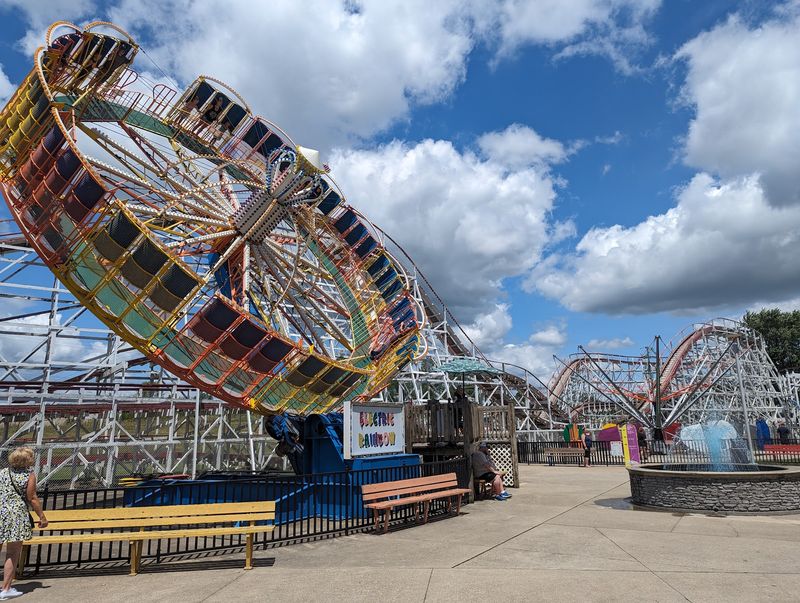
For a place that began in 1924, conformity clearly never became a priority.
The park does not open every morning and chase daily attendance. It does not fill hundreds of acres with themed districts. It does not need dozens of roller coasters to give you a full afternoon.
Instead, it remains family operated, primarily serves private groups, and opens to everyone on limited scheduled dates.
Within roughly 25 acres, you can find 17 rides, two hand-built wooden coasters, a miniature train, an arcade, miniature golf, and a dance hall whose roots reach back to the park’s earliest era.
That combination is unusual enough to make the address worth remembering: 11490 Hamilton Cleves Road, Ross, OH 45061. The Hamilton County Community Fair also lists the property at that location.
If you are used to amusement parks competing to become taller, faster, louder, and larger, this one offers a completely different kind of surprise.
Its biggest trick is not hiding a giant new coaster behind the trees.
It is making more than a century of family amusement look remarkably comfortable in just 25 acres.