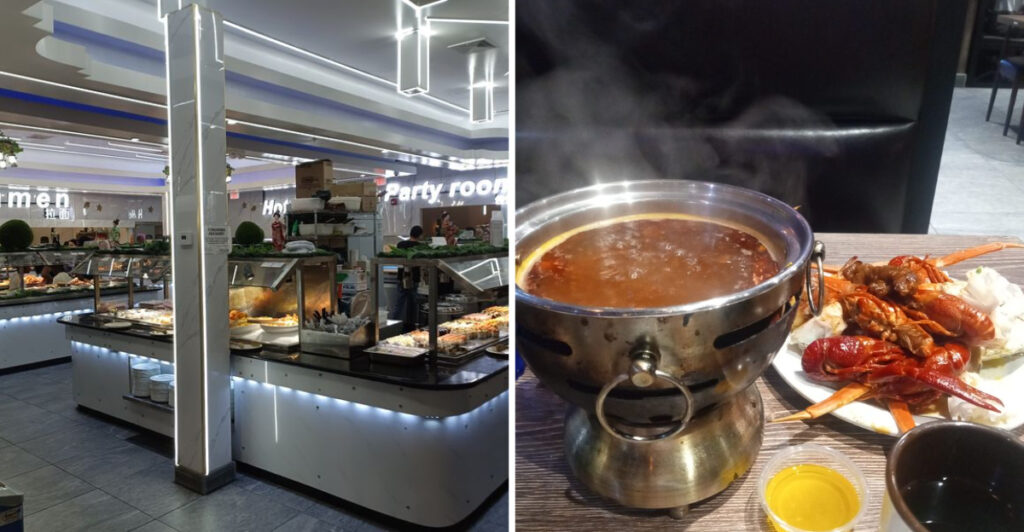
Florida buffet fans, your plate is about to need a game plan.
More than 200 items fill this all-you-can-eat spread, which means the first lap barely counts as an introduction.
Sushi can start the meal, seafood can hijack it, and hot pot may send the whole plan in another direction.
That is before ramen gets involved.
The sheer variety makes every round look different. One plate can stay light, the next can go all in, and dessert still waits at the finish line with absolutely no respect for your earlier promises.
The smartest move may be to stop pretending you will try everything.
At this buffet, dinner is not one decision. It is 200 reasons to change your mind.
Seafood Takes Up More Than One Corner Of The Buffet
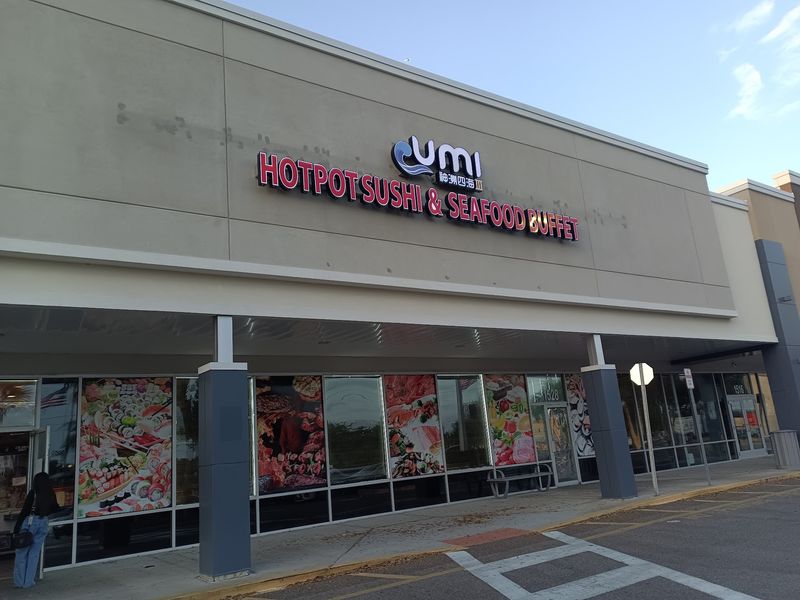
Start counting seafood choices and your first plate can get crowded fast.
The wider UMI menu lists 23 seafood preparations, ranging from snow crab legs and chilled shrimp to oysters, crawfish, mussels, scallops, lobster, clams, octopus, salmon, and whole crab.
Some appear chilled, while others come grilled, steamed, baked, stir-fried, or coated in Cajun or butter sauces.
That variety matters because “seafood buffet” can mean very different things from one restaurant to another. This spread does not stop at one tray of shrimp and a pan of fish.
You might begin with snow crab legs, add chilled oysters, then notice garlic-topped grilled oysters or baked scallops before you have even made it to the next station.
A Cajun seafood mix brings crab, shrimp, mussels, sausage, and corn together, while ginger-scallion lobster pushes the selection in another direction entirely.
Availability can change, especially with premium or seasonal items, so no single visit should be treated as a guarantee that every listed dish will appear at once.
That may actually help. With this much seafood in the conversation, your plate already has enough negotiations to handle.
Sushi And Sashimi Can Turn Into A Meal Of Their Own
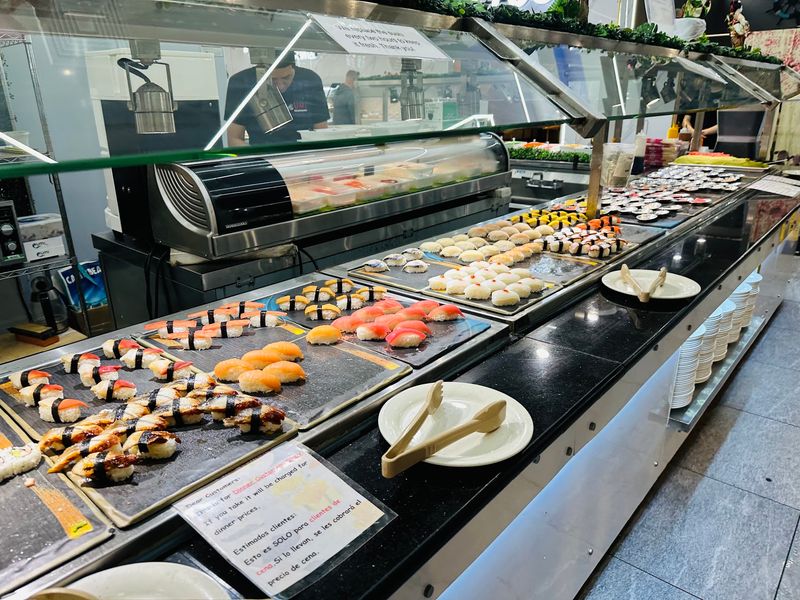
Now suppose you walk past the crab and head straight for the cold counter.
UMI lists 28 sushi and sashimi selections across its broader menu, including hand-pressed nigiri, rolls, and sliced seafood prepared as part of the daily lineup.
The section includes multiple fish and shellfish choices, giving you plenty of room to build a plate before anything hot gets involved.
That makes sushi more than a decorative corner added to justify a longer buffet sign.
You can sample several pieces, go back for a favorite, or use a lighter sushi round before moving toward richer seafood and grilled dishes. Because the format is unlimited, trying one unfamiliar piece does not require committing your entire dinner to it.
The sushi section also works well when you want to control how quickly the meal escalates. A couple of nigiri pieces can start things quietly before the buffet pulls you toward richer options.
Rolls make it easy to sample several combinations without building an enormous plate all at once.
The Brandon restaurant is at 1528 W Brandon Blvd, Brandon, FL 33511, giving you one address for a meal that can move from nigiri to crab legs without asking you to change tables.
A first plate of sushi can seem disciplined. Then the second plate notices there are still more than 200 items in the building.
Hot Pot Lets You Become Part Of The Kitchen
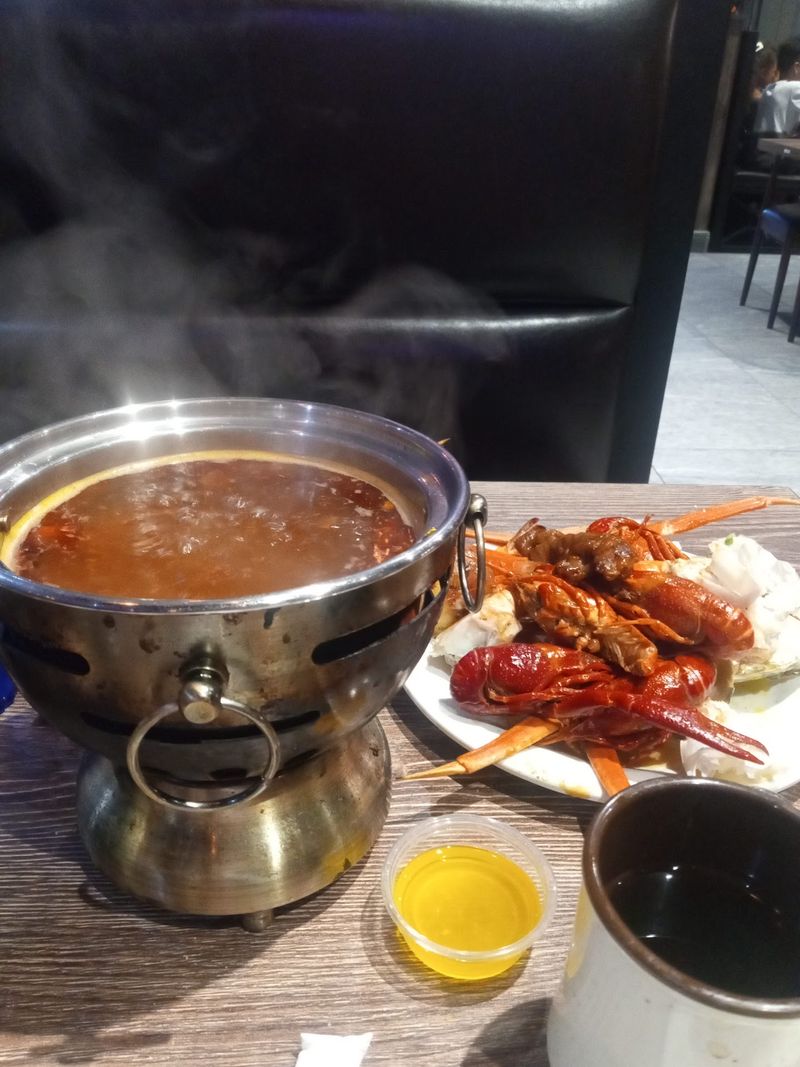
Some buffet food asks you to serve yourself. Hot pot hands you part of the cooking job.
The UMI menu devotes 38 selections to its hot pot section, beginning with broth choices such as spicy mala, tomato, mushroom, and bone broth.
From there, you can add thinly sliced beef, lamb, shrimp, mussels, clams, squid, fish balls, tofu, mushrooms, lotus root, vegetables, noodles, blue crab, and other ingredients.
That changes the pace of dinner completely.
Instead of grabbing a finished dish and heading back to your seat, you build combinations around the broth and cook ingredients at the table. A mild tomato or mushroom base can go one direction, while mala broth brings a much bolder level of heat.
The long ingredient list also makes hot pot easy to customize. Someone interested in seafood can focus on shrimp, clams, mussels, squid, and crab, while another diner can lean toward beef, lamb, tofu, mushrooms, greens, and noodles.
Hot pot also gives groups a reason to slow down. Instead of everyone disappearing toward different stations at the same time, the pot becomes part of the table itself, turning the meal into something you build together rather than simply collect.
You control what goes into the pot and when it comes out.
At a buffet with hundreds of prepared choices, somehow the section that makes you do a little work can become one of the most entertaining parts.
Grilled Meat Gives The Ocean Some Competition
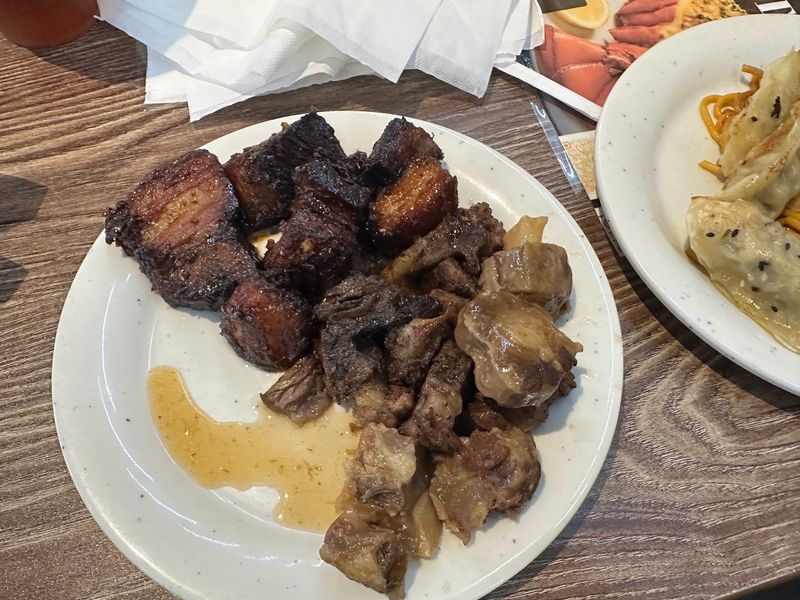
Just when seafood starts acting like it owns dinner, the grill steps in.
UMI groups chicken, pork, and beef into their own portions of the menu, with grilled and cooked selections that give you a substantial break from shellfish and sushi.
Beef cubes, grilled short ribs, ribs, pork dishes, and other hot preparations broaden the buffet well beyond its seafood-heavy name.
That is useful when a group does not share one obsession.
You can spend most of your meal comparing crab and sashimi while somebody else builds a plate around beef, pork, noodles, or other cooked dishes. Nobody has to agree on a single cuisine or cooking style before sitting down.
The grill also changes the textures on the table. Cold sashimi and chilled seafood can give way to seared beef or ribs, then perhaps back to something from the seafood station once your appetite resets.
With more than 200 items advertised across the full menu, that kind of detour is not exactly a setback. It is part of the strategy.
The ocean may dominate the restaurant’s identity, but the grill has no trouble making itself heard.
Ramen Can Reset The Entire Meal
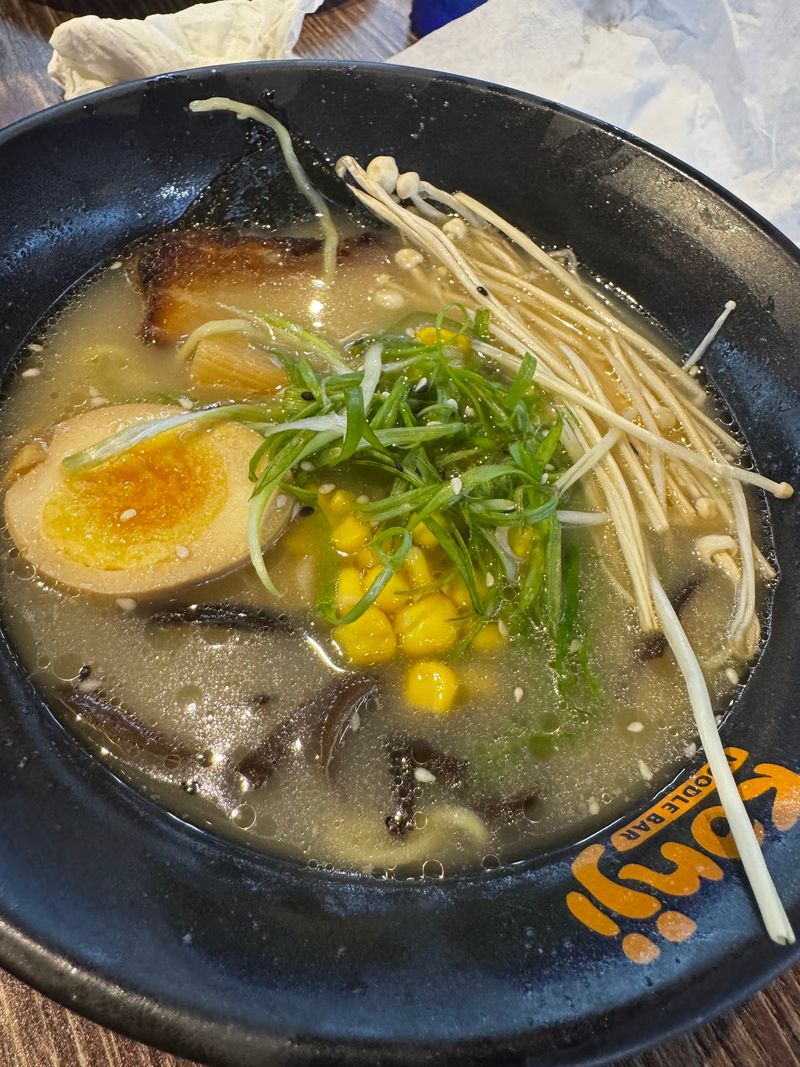
There comes a point in a giant buffet when another plate is not what you want. A bowl may be the answer.
UMI lists several ramen and staple dishes, including tonkotsu ramen, seafood ramen, vegetable shoyu ramen, spicy ramen, pineapple fried rice, chow mein, and even cheese pizza.
That last entry is a useful reminder that this buffet is not interested in keeping every appetite on the same track.
Ramen gives you something warm, brothy, and self-contained between trips through the larger stations.
Tonkotsu brings pork-bone broth with noodles and toppings, while seafood ramen keeps the meal closer to the restaurant’s main theme. A vegetable shoyu option provides another route, and spicy ramen turns the temperature back up.
Then there are the staples.
Fried rice and chow mein can fill out a plate beside grilled dishes or seafood, while pizza gives younger or more cautious diners a familiar option when the rest of the room is busy offering squid, oysters, and hot pot ingredients.
If you reach the ramen station late in the meal, portion size becomes your best friend. A smaller bowl lets you change direction without giving up on dessert, which may be the closest thing this buffet offers to strategic restraint.
A buffet this large does not require you to be adventurous every minute. Sometimes the smartest detour is a bowl of noodles before round six.
Dessert Waits Until Your Confidence Is At Its Weakest
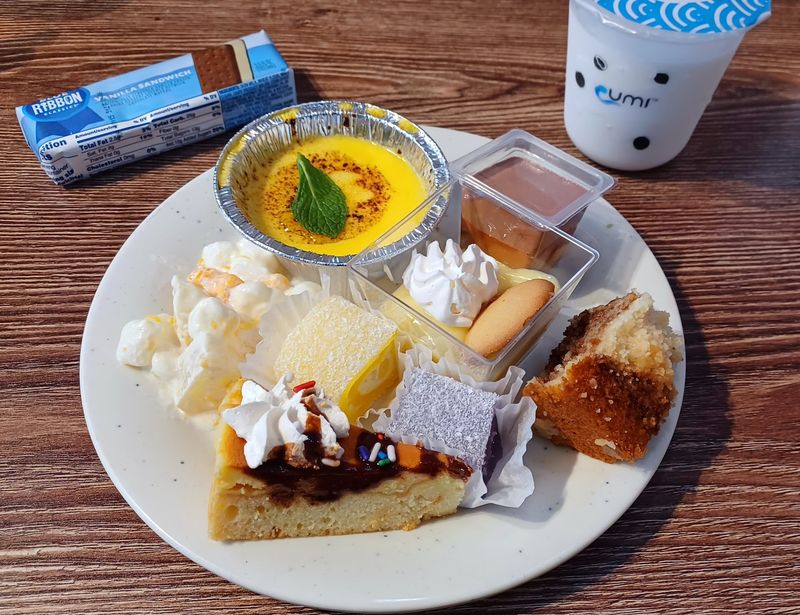
The buffet has one final test, and it arrives after you have already declared yourself full.
UMI separates dessert into its own menu category and promotes artisan sweets as part of the all-you-can-eat experience. Dessert is one of eight major categories included across the broader menu.
The timing is what gets you.
After seafood, sushi, hot pot, grilled food, and ramen, dessert can seem completely unnecessary right up until you see it. A small sweet bite becomes easy to justify, followed by another item you only intended to taste.
That is how the final plate happens.
The wider selection gives you another way to change gears after a meal dominated by savory dishes.
Since dessert is already part of the unlimited format, you are not deciding whether to add another course so much as deciding whether your appetite can negotiate one final extension.
By this point, discipline has had a long evening. Dessert simply waits for the paperwork to clear.
More Than Two Hundred Choices Make The Detour Angle Easy
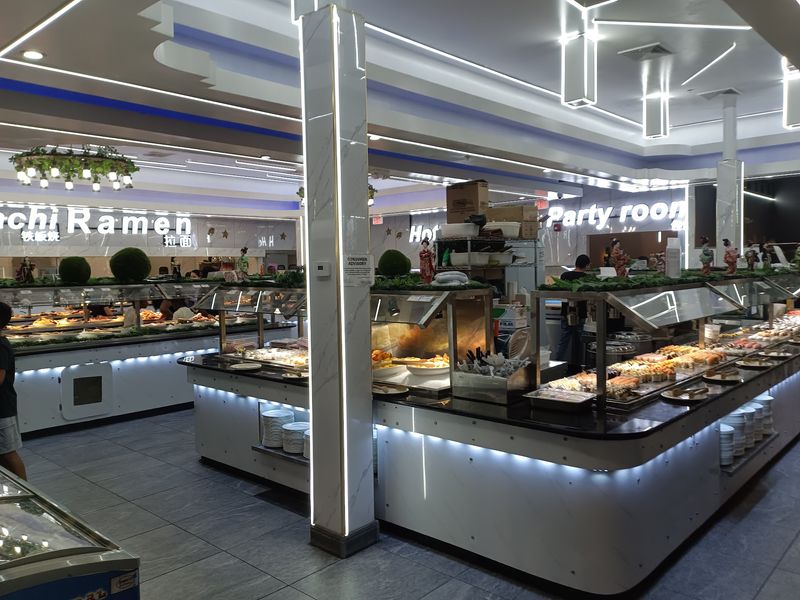
Forget the old buffet challenge of finding enough things you actually want.
The bigger challenge at UMI is deciding what you are willing to skip.
The restaurant advertises more than 200 menu items across eight broad categories: seafood, sushi and sashimi, chicken and pork, beef, ramen and staples, hot pot, appetizers, and dessert.
Seafood alone accounts for 23 listed preparations, while the hot pot section adds another 38 broths and ingredients.
That breadth changes how you can approach dinner.
You can build an almost entirely seafood meal around oysters, crab, shrimp, scallops, and lobster. You can spend most of the evening on sushi. You can make hot pot the centerpiece and treat the buffet as your ingredient pantry.
Or you can ignore any sensible order and bounce between all of them. No single plate can explain the whole place, and that is probably the point.
A restaurant offering this many choices does not need every diner to agree about the best station. It only needs you to keep finding another one worth visiting.
More than a hundred reasons to detour? You may stop counting long before the buffet runs out.