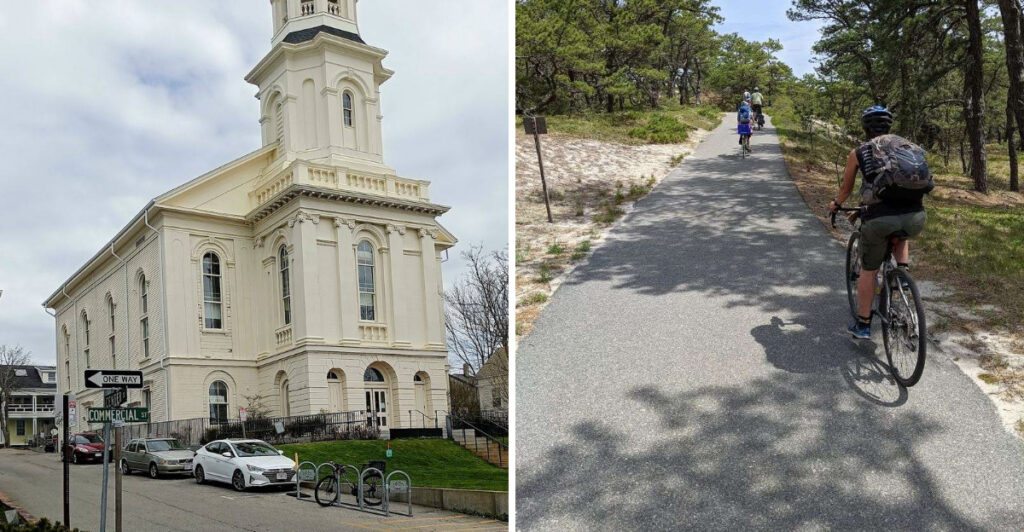
What if I told you a bike could take you almost anywhere in this town?
At the far end of Cape Cod, cycling is woven into everyday life. Riders can pedal through downtown, head toward the beaches, or connect with paved trails without treating the bike like a once-a-year vacation accessory.
That habit has serious history behind it. Local bicycling dates back to the nineteenth century, and the town later became the northern end of Massachusetts’ first designated bike route.
Today, racks are scattered around busy areas, rental shops keep visitors moving, and the Province Lands loop adds a tougher ride when a casual cruise will not cut it.
The car may get you there, but two wheels make a strong case for taking over once you arrive.
In this corner of Massachusetts, the bike is not just along for the ride.
Bicycles Have Been Part Of Town’s Life For More Than 125 Years
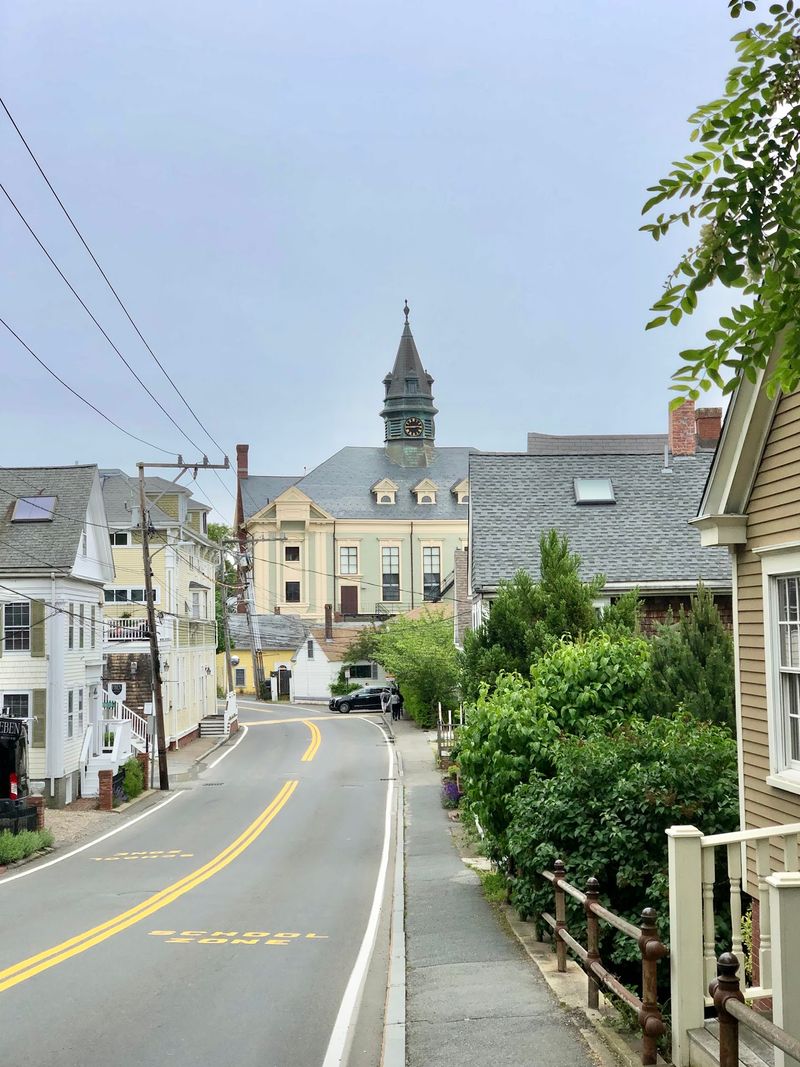
Provincetown’s bicycle story reaches back to the nineteenth century. Town records say residents began using bikes for transportation soon after the machines appeared.
A local newspaper was already discussing a bike path connecting Provincetown with the rest of Cape Cod in 1899.
That long timeline gives the town’s cycling culture some weight. Bicycles were useful here before protected lanes, trail apps, and tourism maps made riding easier to organize. People used them because the compact street network and daily errands made two wheels practical.
The habit never disappeared. The town now describes bicycling as part of its culture and history, and old photographs show generations of riders moving through the same community long before today’s rental fleets arrived.
You can still see that continuity in ordinary moments. A bicycle outside a shop or a rider heading down Commercial Street is not automatically part of a sightseeing tour. It may simply be transportation.
That is what makes Provincetown different from a place that only has one popular trail. The bicycle story is not confined to recreation. It has been woven into town life for more than a century.
A rented cruiser may be new to you, but the idea behind it is anything but new here.
Two Wheels Can Take You From Downtown To The Airport
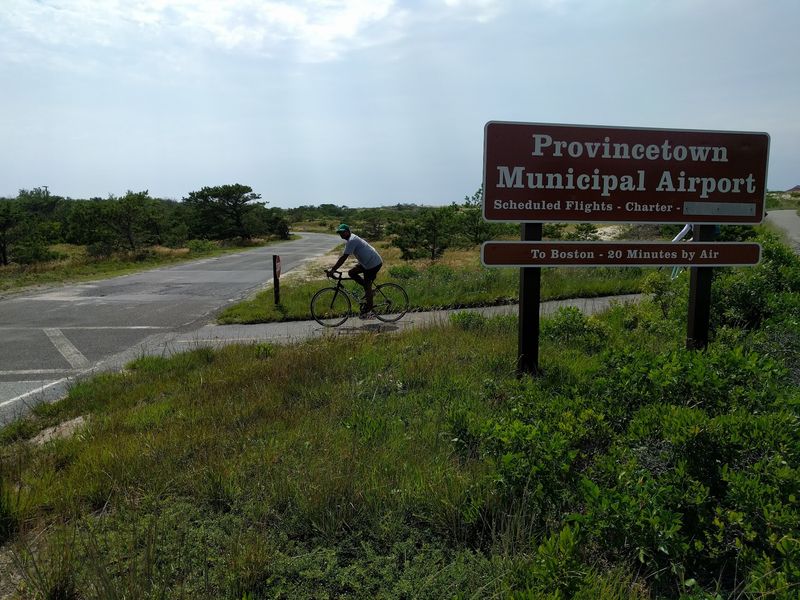
Provincetown’s official bicycle information makes a bold point: you can get everywhere in town by bicycle, including the municipal airport. Bicycles are allowed on town roads, and the airport itself connects with the trail network and has bicycle parking.
That makes a bike useful for much more than a scenic afternoon. Downtown, beaches, neighborhoods, and trailheads all sit within a place whose geography keeps many trips relatively short.
Pedal-powered riders also get unusual freedom on Commercial Street. In 2026, the town reiterated that standard bicycles may travel in both directions there, even though motorized traffic follows one-way rules.
E-bikes and other motorized devices must follow the designated traffic direction, so the distinction matters before you start riding.
For a central reference point, Provincetown Town Hall stands at 260 Commercial St, Provincetown, MA 02657.
From there, bike racks, shops, galleries, restaurants, and waterfront access spread out around you. You can lock up, walk a block, get back on the saddle, and change plans without moving a car.
Provincetown does not make every ride effortless, but it makes the bicycle useful. That is a much stronger sign of bike culture than a decorative rack outside one visitor center.
More Than 700 Bike Parking Spaces Back Up The Reputation
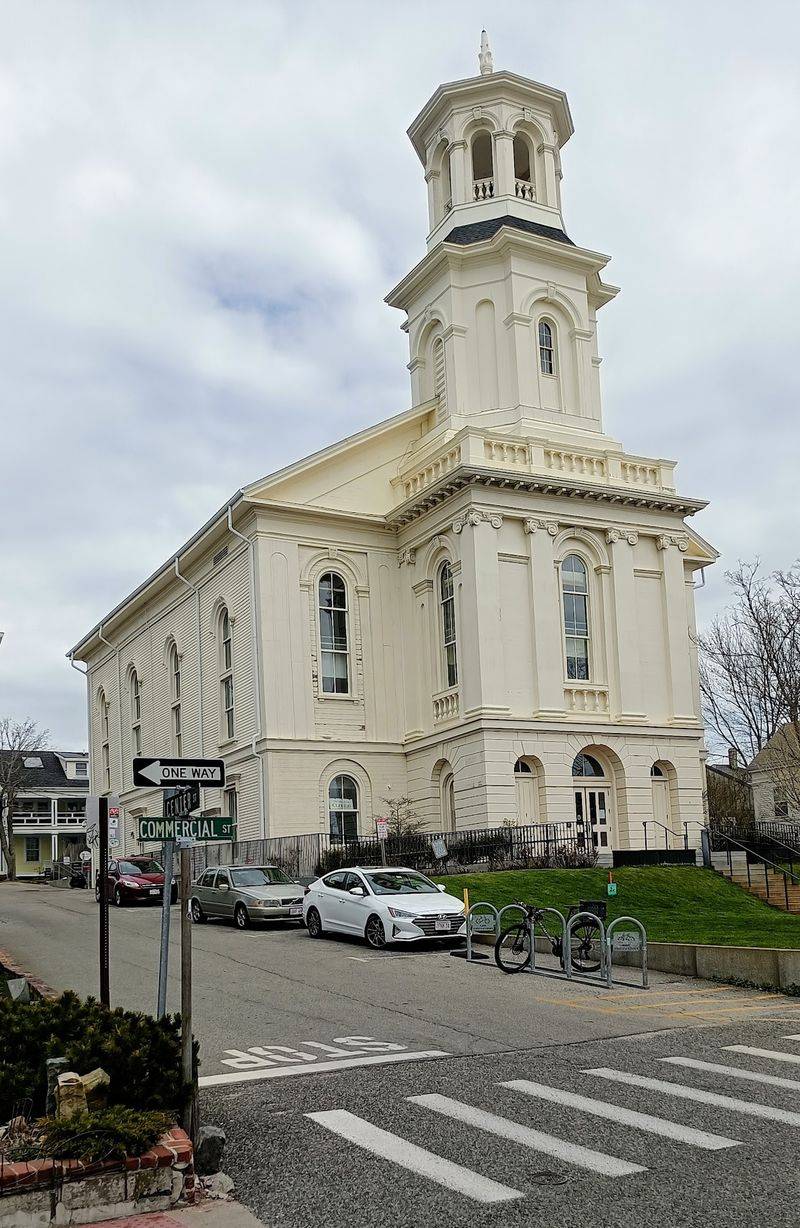
A town can call itself bicycle-friendly, but parking reveals whether the promise survives contact with real life. Provincetown maintains more than 700 bicycle parking spaces at over 100 locations.
Those spaces are not limited to the busiest part of downtown. The town notes that racks also appear at nature trails, conservation areas, and parking areas within Cape Cod National Seashore.
iBusinesses add their own racks, giving riders more places to stop near shops and lodging.
Public rules are practical too. Bikes may be locked to public bike racks or street sign poles as long as they do not block the sidewalk. The town specifically warns riders not to use trees, railings, benches, fences, or other street furniture.
That level of detail tells you something important. Provincetown is managing bicycles as normal transportation, not treating them as occasional recreational equipment.
It also makes a day of riding easier to improvise. You can stop for lunch, browse a shop, or walk toward the harbor without wondering where the bike belongs every single time.
Seven hundred spaces may sound like a dry infrastructure statistic. In practice, it means fewer awkward searches for a legal place to lock up and more time deciding where to pedal next.
Commercial Street Shows Everyday Cycling In Real Time
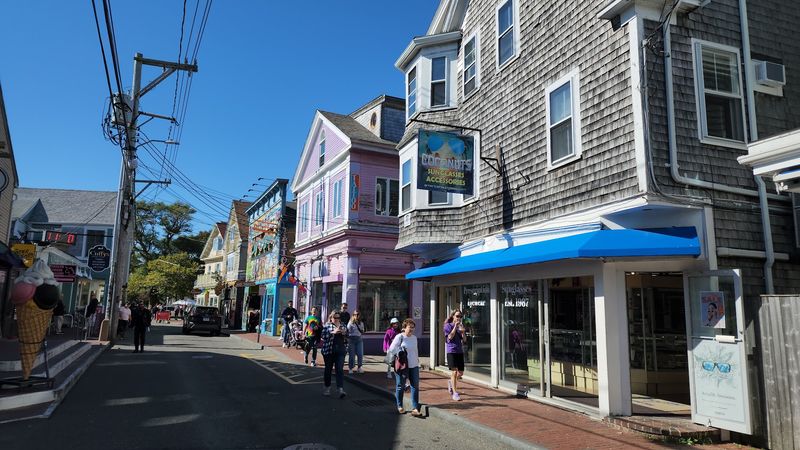
Commercial Street puts Provincetown’s bicycle culture right in the middle of its busiest corridor. Shops, galleries, restaurants, pedestrians, drivers, and riders all share a narrow stretch where awareness matters as much as convenience.
Standard pedal-powered bicycles may travel in either direction on Commercial Street. The rule does not extend to e-bikes, which must follow one-way motor-vehicle traffic. That difference received renewed enforcement attention from the town in summer 2026.
Riders are expected to obey stop signs and signals, yield to pedestrians, slow near crosswalks, and travel at an appropriate speed. The town also advises against riding on sidewalks in downtown business areas.
Those rules are a useful reminder that bicycle-friendly does not mean bicycle-only. Commercial Street works because riders are part of a mixed street, not because everyone else disappears.
For a visitor, that creates a very Provincetown kind of trip. You might pedal several blocks, lock up for a gallery, walk through a crowded section, then ride again once the street opens up.
The best strategy is not speed. It is patience, attention, and enough curiosity to stop when something catches your eye. Commercial Street gives you plenty of reasons to use the brakes.
Province Lands Turns A Bike Ride Into A Real Cape Cod Challenge
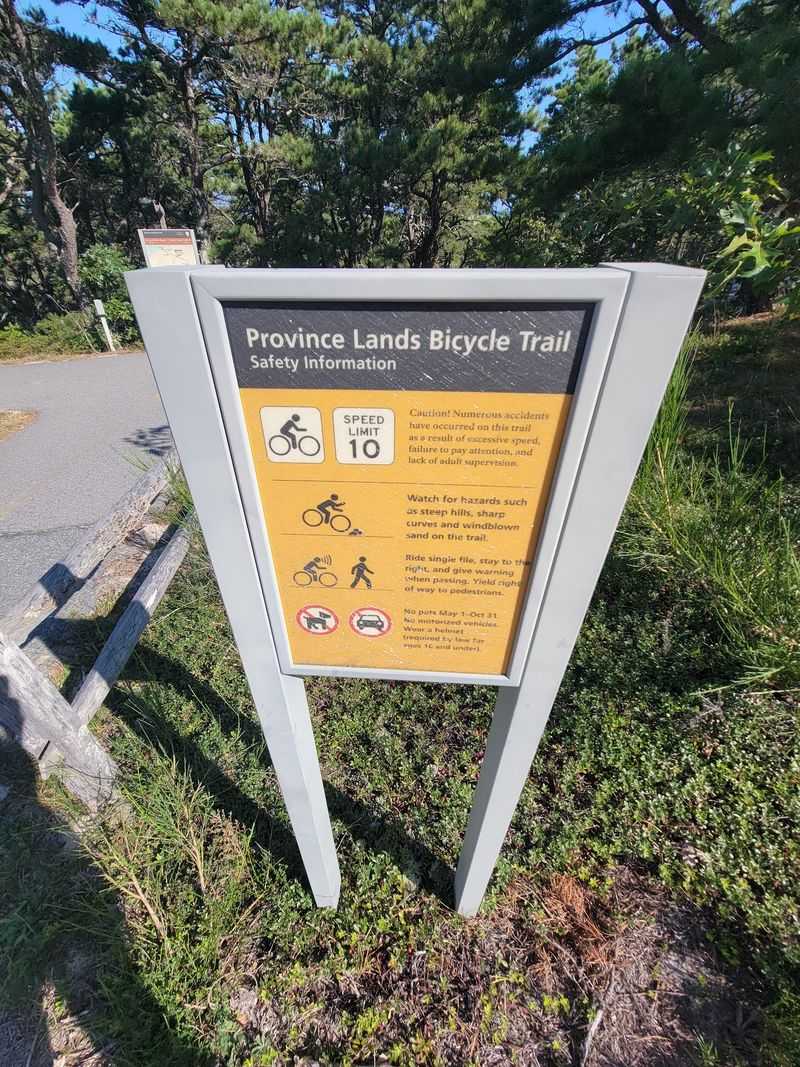
The Province Lands Bike Trail is where casual town riding gives way to a more demanding Cape Cod loop. The National Park Service lists the paved main circuit at 5.45 miles, with additional spurs to Herring Cove Beach, Race Point Beach, and Bennett Pond.
Do not let the paved surface fool you into expecting a flat cruise. The Park Service rates the route advanced-intermediate because of steep hills, sharp turns, tunnels, and sections where sand or standing water may appear.
That makes preparation important. The posted speed limit is 10 mph, riders should stay right except when passing, and bicycles must be walked through the tunnels. Helmets are required for riders age sixteen and younger and strongly encouraged for everyone.
The payoff is variety. The loop moves through pine forest, dunes, cranberry bogs, and open sections of the Province Lands, while the beach spurs let you add extra mileage when your legs still have an argument left in them.
Access points include the Province Lands Visitor Center, Beech Forest parking area, Herring Cove Beach, and Race Point Beach. The visitor center and Beech Forest access points do not charge for parking, while beach parking can carry seasonal fees.
This is the ride that reminds you Cape Cod is not completely flat. Your legs will receive the memo before the scenery lets you forget it.
One Of America’s Earliest National Park Bike Trails Began Here
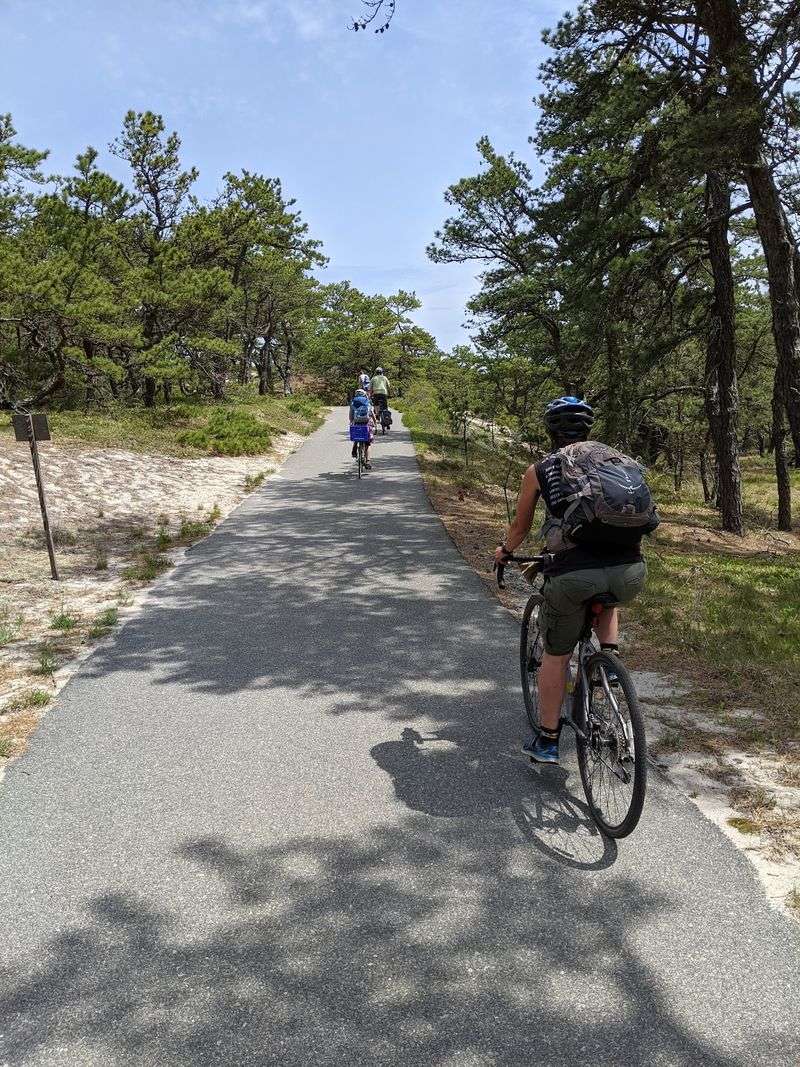
The Province Lands route carries more than scenery. When it was dedicated in September 1967, it became the first bicycle trail designed and constructed in a national park area.
That was an unusual investment at the time. Cape Cod National Seashore itself had been established only several years earlier, yet planners made bicycle access part of the park experience almost immediately.
The trail later received major rehabilitation work, including resurfacing, widening in many areas, new signs, pavement markings, and efforts to manage drifting sand. The modern ride still follows a route with roots in an early chapter of national-park cycling.
Provincetown added another milestone in 1978. Massachusetts established its first designated bike route, MA-1, running about 125 miles from Boston to Provincetown. The route became known as the Claire Saltonstall Memorial Bikeway.
That history gives local cycling two very different scales. One story circles through dunes on a national seashore trail. The other connects the tip of Cape Cod with Boston.
You do not need to ride 125 miles to appreciate either one. A loop through the Province Lands is enough to put your tires on a route that helped make bicycle access part of the national-park conversation.
The Town Still Invests In Everyday Bicycle Culture
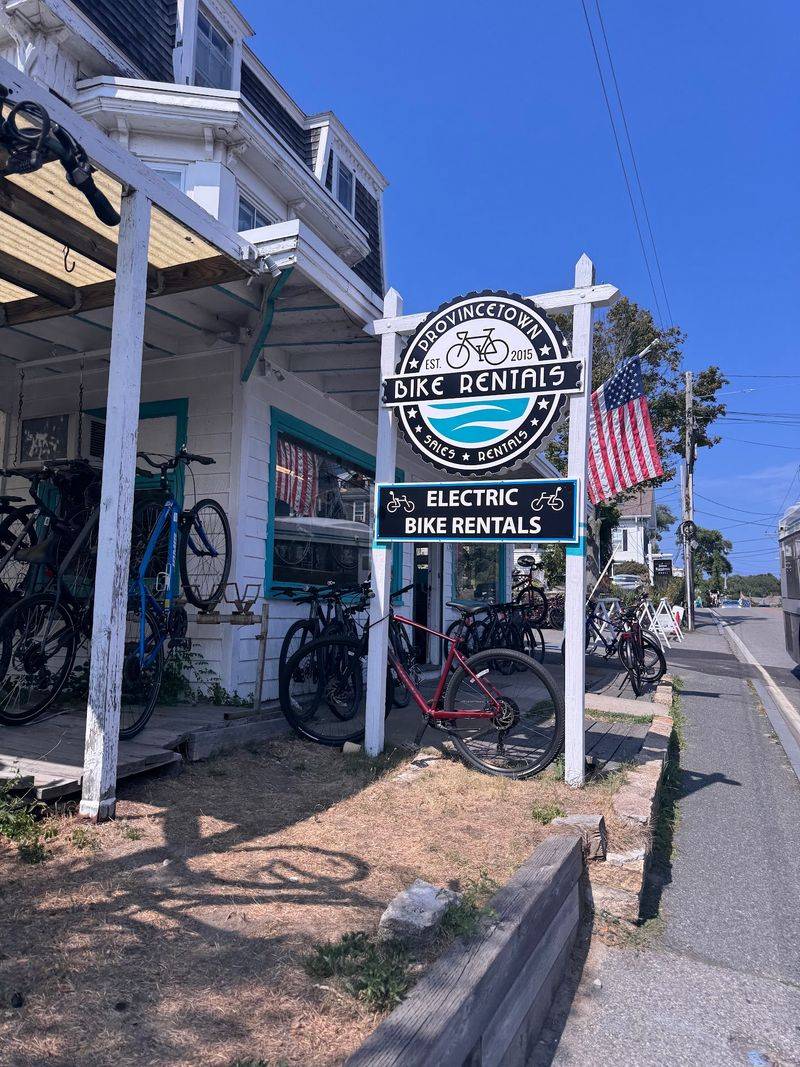
Provincetown’s cycling history would mean less if the town stopped supporting riders once the old photographs were framed. Instead, the Bicycle Committee created in 2011 continues advising town officials on bicycle facilities, racks, policy, safety, and active transportation.
Its Bicycle Map and Safety Guide is another sign of how seriously the town treats practical riding. The committee prints 25,000 copies a year and says more than 250,000 copies have been distributed around Provincetown over time.
The map points riders toward trails, parking, rentals, transit connections, and safety information. That matters in a town where summer crowds can turn a simple bicycle trip into a lesson in sharing space.
Infrastructure is still evolving too. Provincetown’s Shank Painter Road reconstruction, scheduled to begin in September 2026, includes dedicated bike lanes and multi-use paths as part of a broader road project.
That mix of history and current planning is the strongest argument behind the title. Provincetown does not merely tolerate bicycles because visitors like renting them.
It maintains parking, publishes maps, runs a bicycle committee, updates street rules, and keeps building connections.
Plenty of coastal towns look good from a bicycle seat. Provincetown has spent more than a century making sure the bicycle belongs in the picture.