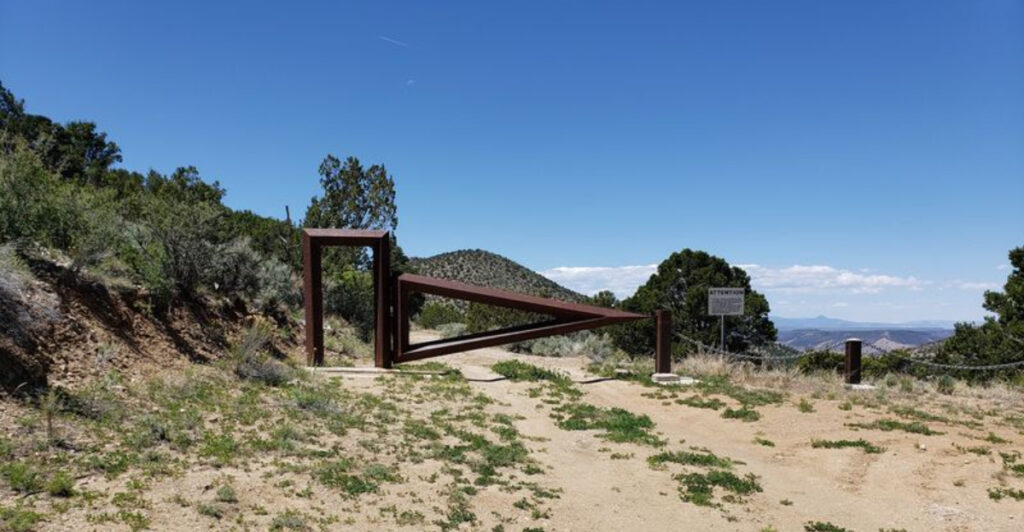
The first surprise is how much color can hide in a pile of old mine rock. Pink flashes between pale chunks, and purple mica catches the sun.
Suddenly, every few feet feels worth another look. This former mining site in northern New Mexico gives visitors a rare chance to explore exposed pegmatite and collect a limited amount of mineral material for personal use.
You do not need to be a geologist to get pulled into the search. Slow down and scan the loose stone closely.
Something interesting may be sitting right on the surface. Above the rock piles, the quarry walls show off the site on a much bigger scale, with light pegmatite standing sharply against darker country rock.
Historic workings add another layer to the experience and make the past easier to picture. Before making the drive, though, visitors need to handle the required release form and access details.
Every Rock Pile Holds A Surprise
A flat sliver of pinkish mica can sit right on top of the loose rock, waiting for someone to notice it. That alone makes these piles easy to linger over.
The old mine dumps are the star attraction for collectors, and they require little equipment. Rock picks, hammers, and chisels are not needed on the dumps because the material has already been broken up and left in heaps by earlier workers.
Over 60 different minerals have been identified at this site, which explains why mineral clubs, geology students, and weekend hunters keep making the drive. Collecting is permitted for personal collections only, generally a handful per person, so think pocket-sized rather than bucket-sized.
I can see why people end up spending so much time looking down here. Flaky purple pieces can appear beside milky quartz, and something interesting may be sitting just a few steps away.
Slow down and look at the surface before moving rocks. The prettiest specimens are often already exposed by rain and gravity.
Take the limit seriously, since the piles are shared with every visitor who comes after you. Restraint keeps the experience rewarding for others as well.
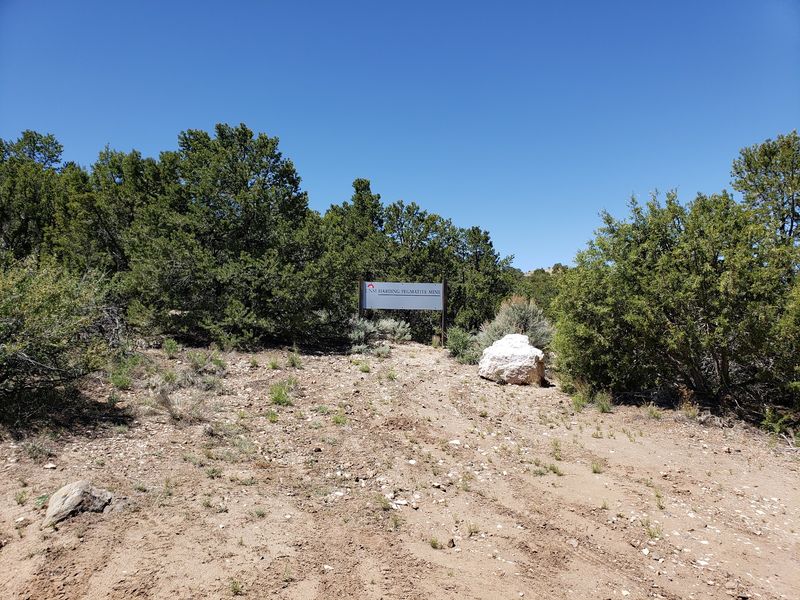
The site is Harding Pegmatite Mine at Unnamed Road, Peñasco, NM 87553.
Pale Cliffs Create An Otherworldly Scene
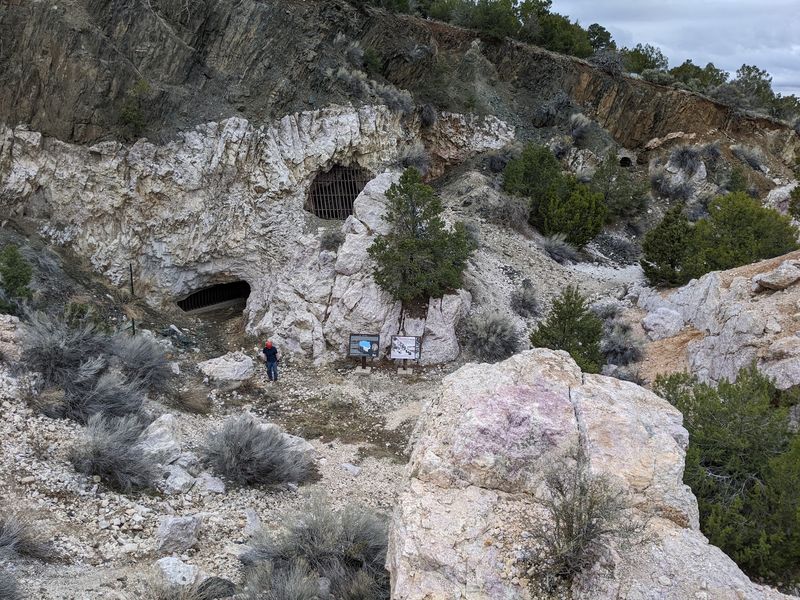
Walking in, the west wall grabbed my attention before anything else did. It rises sheer and pale, and the contrast against the dark surrounding rock is almost cartoonishly sharp.
That bright band is the pegmatite itself, packed with white and light-colored minerals. The dark backdrop is amphibolite, a metamorphic host rock that frames the lighter material like a picture mount.
What makes the view genuinely useful, not just pretty, is that the exposed upper limit of the pegmatite is visible. You can trace where the body originally sat before any mining happened, which is rare at old workings.
The main dike changes thickness as it goes and dips gently toward the south. I found myself following that slope with my eyes, trying to picture the whole mass hidden inside the hillside.
Photographers should know that harsh midday sun washes out the pale rock badly. Morning or late afternoon light gives the wall shape and texture instead of glare.
Stand back a bit for the full effect, and resist the urge to hammer anything off the wall itself. The exposure is the reason people travel here, and it stays impressive only if nobody chips away at it.
The Mountain Setting Feels Wonderfully Remote
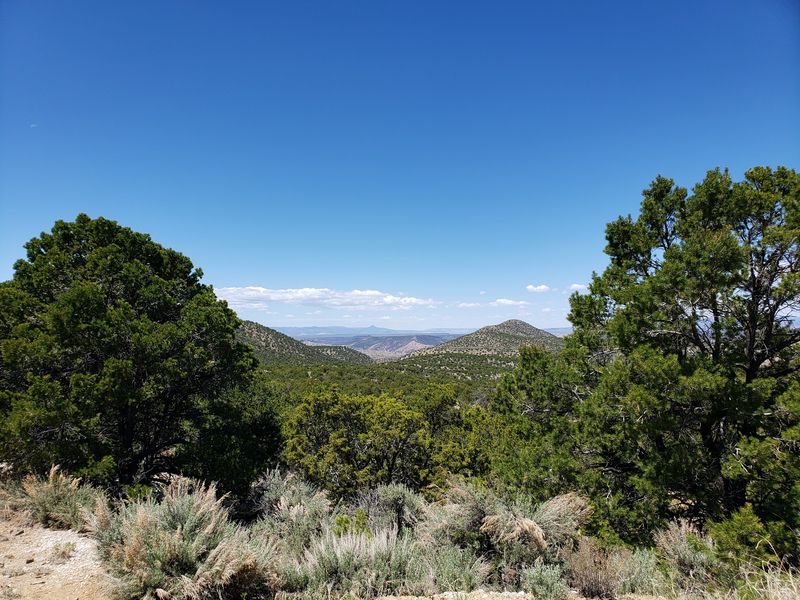
Cell service faded, the pavement got rougher, and I knew I was close. The mine sits in piñon-juniper woodland in the Picuris Mountains, up at roughly 7,400 feet.
Geographically it lands between the towns of Dixon and Peñasco in Taos County, east of Dixon. Santa Fe is about 54 road miles to the south, and Taos is 33 miles to the north.
That distance is part of the charm. No snack bar, no ticket booth, just juniper, sky, and the sound of gravel under your boots.
Elevation deserves respect if you arrived from sea level. I drank more water than I expected to and still felt the thin air on the walk up.
Weather in the high country shifts quickly, especially during summer afternoons when clouds build fast. A hat, sturdy shoes, and a rain layer earned their place in my daypack.
Depending on the gate situation, you may be walking in from the entrance, and the trails are uneven in places. Bring more supplies than you think you need, because the nearest store is a long way back down the road.
Reaching a place this quiet takes effort, and that effort is exactly what keeps it quiet.
Old Mine Ground Sparks Curiosity
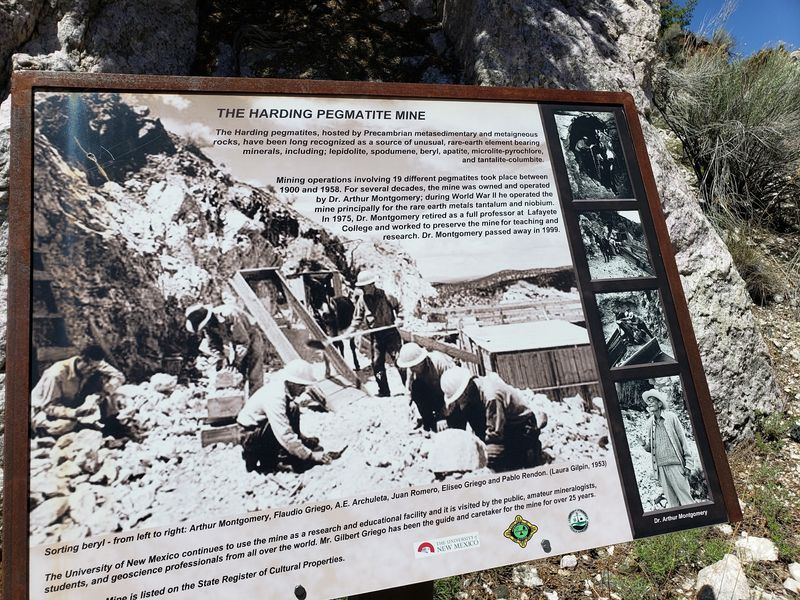
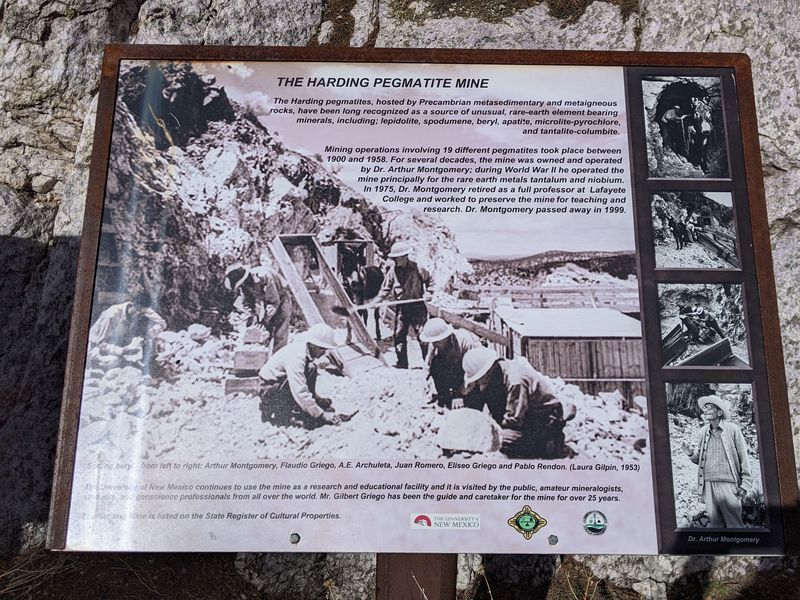
Here is the detail that surprised me most: this workplace was given away as a gift. Mining operations ended in 1958, and owner Arthur Montgomery later donated the property to the University of New Mexico.
Before that, it was a working adit mine producing lithium, tantalum, and beryllium. Mining happened in three main stretches between 1919 and 1958, with lepidolite, microlite, and beryl each taking a turn as the target product.
Today the university manages the ground as an outdoor geology laboratory where small-scale mineral collecting is allowed. That single decision turned an industrial site into a classroom without walls.
Permission is not optional, and I cannot stress this enough. Visitors need permission to enter and must carry a signed release form, with the details posted on the university’s site for the mine.
The phone number listed for the site is +1 505-277-4204, and the web page is worth reading before you commit to driving. A signed release form is required, so plan around that rather than hoping for luck.
Standing at the openings, I kept thinking about the crews who once hauled ore out of these cuts.
Exposed Rock Reveals Geologic History
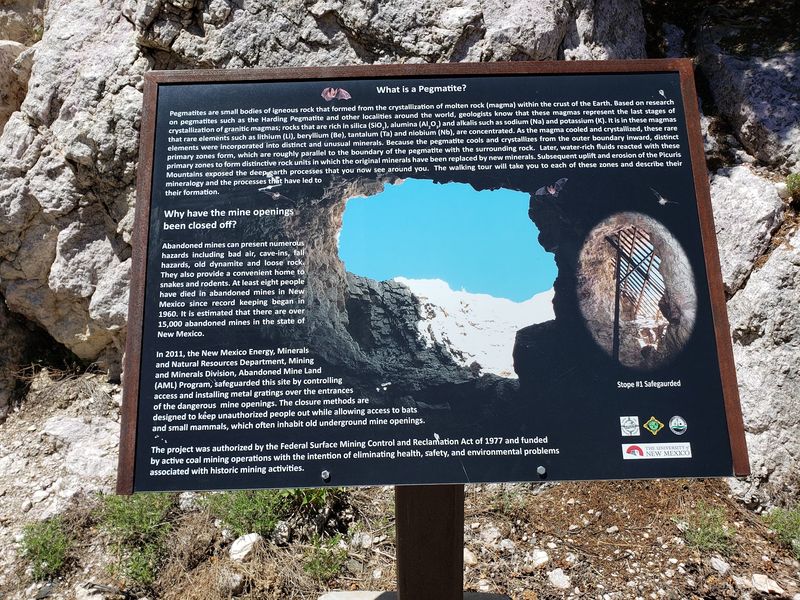
Roughly 1.3 billion years of history sits in plain sight along these walls. The pegmatite crystallized from volatile-rich magma, creating an unusually coarse-grained body packed with minerals that record a long Proterozoic history.
That volatile-rich melt concentrated unusual elements, helping the crystals here grow to remarkable sizes. Granite normally cools slowly underground and is coarse-grained, while pegmatite can develop much larger crystals under volatile-rich conditions, especially where late-stage melt chemistry becomes extreme.
The body pushed in along a complicated boundary between amphibolite and quartz-muscovite schists. Those host rocks are Precambrian metamorphic units around 1.7 billion years old, so the pegmatite is the younger newcomer by about 400 million years.
Size-wise, the pegmatite runs about 2,500 feet long with a maximum width near 500 feet, and its shape is irregular and complexly structured. Geology textbooks cite it as a classic example of a zoned granite pegmatite, containing eight distinct lithologic units.
I am not a geologist, and I still found the zoning obvious once someone pointed out where the mineral makeup shifted. Reading a short primer beforehand made the walk far more rewarding.
Few places let you touch time this old with a bare hand.
Mineral Colors Brighten The Stone
Pink rock. Purple rock.
I honestly thought my sunglasses were playing tricks on me until I picked up a piece and turned it over.
Lepidolite and rose muscovite are abundant here, and together they give most exposed surfaces a delicate pink-purple wash. Those soft hues come from traces of manganese, though the two minerals are tough to tell apart by eye alone.
The color list does not stop there. Pink muscovite, lepidolite, amazonite, blue apatite, black apatite, beryl, rose quartz, and smoky quartz all turn up on the property.
My favorite find was cleavelandite, which forms radiating clusters of lustrous white or cream-colored curving plates. It looks like something a jeweler arranged on purpose.
A cheap hand lens changed the whole visit for me, revealing structure I would have walked right past. A spray bottle of water helps too, since damp rock shows its true colors far better than dusty rock.
Bring an egg carton or a few small cloth bags so your specimens do not grind against each other on the ride home. Flaky micas are surprisingly fragile.
Sorting my little haul on a motel bedspread that night felt ridiculous and completely worth it.
Loose Rock Turns Into Treasure
Treasure hunting here needs no shovel, no permit fee for equipment, and no upper-body strength. The loose rock scattered across the site does most of the work for you.
Quartz, feldspar, and assorted micas are the common companions, showing up almost everywhere you look. Lepidolite and rose muscovite are frequent finds too, recognizable by their flaky texture and reddish or purplish tint.
The showstopper is spodumene, which occurs as opaque white-to-light-gray lath-shaped crystals or fine-grained masses. Some of these crystals reach several feet in length, which is genuinely startling when you spot one in the wall.
Collecting is restricted to a few samples for personal collections, and that rule is what keeps the site open. I picked five pieces, put two back, and still felt like I had won something.
Sturdy gloves saved my fingertips from sharp edges, and closed-toe shoes with real grip made scrambling on the loose material much safer. Flip-flops would be a mistake.
Label your finds while you remember which pile they came from, because everything looks similar once the dust settles. A pencil and masking tape do the trick nicely.
Small pockets, big grins. That is the whole formula.
Historic Workings Shape The Landscape
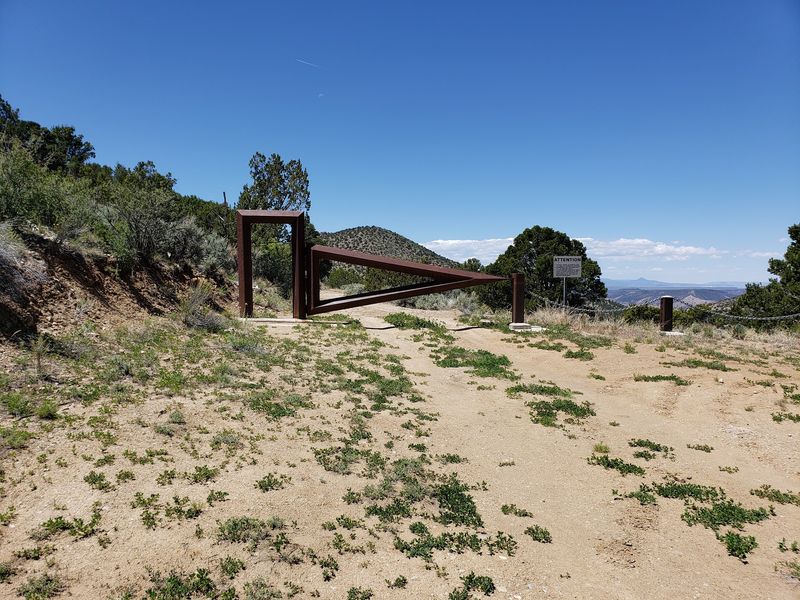
Old mining left its signature all over this hillside, and the shapes are easy to read. Open cuts, a large quarry, and short inclined adits slice into the pegmatite body from several angles.
The main workings stretch roughly 1,100 feet in length and reach up to 250 feet across in the quarry area. Standing at one end and looking down the whole run gives a real sense of scale.
Interpretive signs and steel marker posts guide a self-guided walking tour, so you are not left guessing what you are looking at. I followed the posts in order and picked up more geology in an hour than I had in years.
Specialists describe these cuts as among the world’s finest exposures of a mineralogically complex pegmatite. That is a bold claim for a quiet hillside between two small towns.
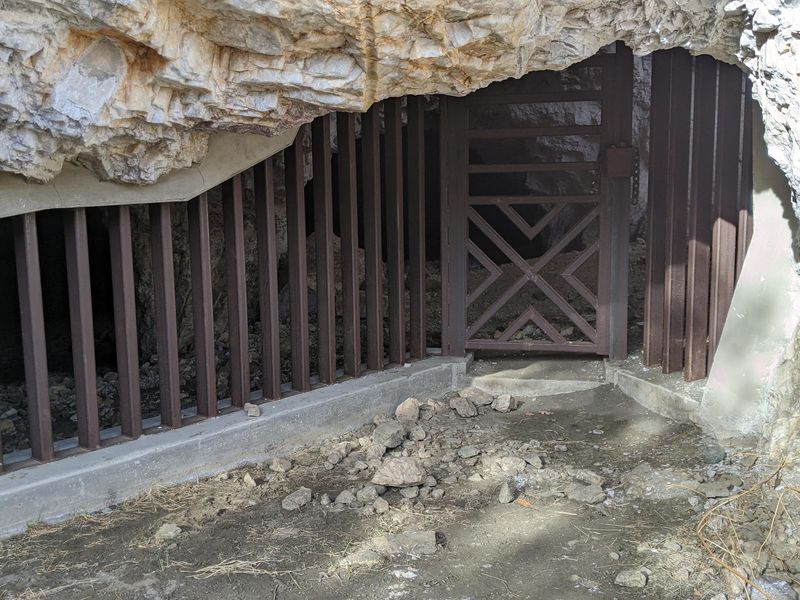
Footing on the tour route is uneven in places, so take your time and watch where you step. Avoid entering any adit openings, and keep children close near the cut edges.
Give yourself two or three unhurried hours. Rushing through a site like this defeats the entire purpose of coming.