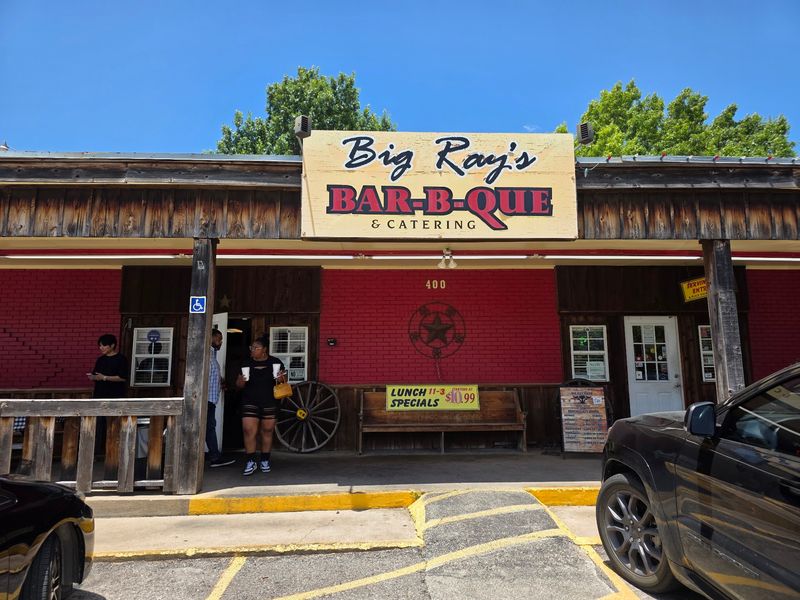
Florida has a way of hiding its best meals behind plain facades and hand-painted signs. Sometimes the most memorable plate you will ever eat comes from a place that looks more like a bait shop than a restaurant.
One spot in Tampa has built a quiet but real reputation for a fried grouper sandwich that makes diners genuinely glad they made the trip. If you have ever gone out of your way for a single sandwich and felt completely justified afterward, this is the kind of story that will make your stomach growl.
The Tampa Fish Camp Worth the Drive
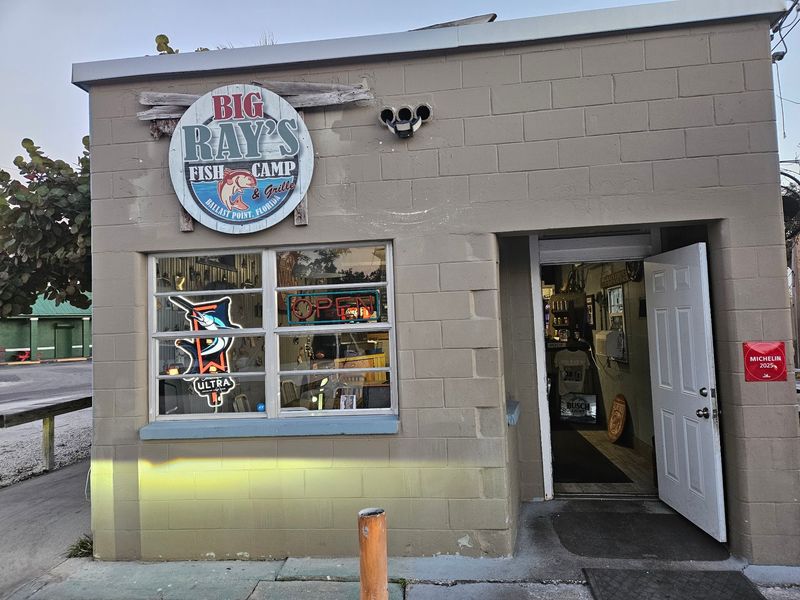
Somewhere along Interbay Boulevard in Tampa’s Ballast Point neighborhood, there is a seafood shack that looks like it belongs to a quieter, slower Florida. The building does not announce itself with neon signs or a valet stand.
Pull up and you might spend a moment wondering if you have the right place, which is part of what makes the experience feel like a small discovery.
That shack is Big Ray’s Fish Camp, and it is the strongest researched match for the kind of unassuming, grouper-forward fish-camp experience that food-minded road-trippers talk about in hushed, hungry tones. The Michelin Guide describes the spot as a low-key seafood shack that could easily be mistaken for a bait-and-tackle shop, complete with outdoor picnic-table seating and a house fried grouper sandwich that qualifies as a signature dish.
That is not faint praise from a publication that does not hand out attention casually.
The premise of this article deserves a quick, honest setup. Big Ray’s is a documented destination for fried grouper in Tampa, and local and regional coverage supports the idea that diners are willing to go out of their way to eat there.
What the available evidence does not establish is a broad, recurring pattern of regulars driving the entire Gulf Coast specifically for the sandwich. That framing makes for a vivid headline, but the fairer, more accurate description is a restaurant that draws diners willing to make the drive.
Big Ray’s sits on Interbay Boulevard, a real street in a real Tampa neighborhood, not a hidden retreat accessible only by boat or back road. The low-key setting is genuine.
The official Big Ray’s website presents a place focused on seafood and simplicity rather than spectacle, and that focus is exactly what gives it destination appeal for the right kind of eater.
A Modern Restaurant With Old Florida Roots
Raymond “Nick” Cruz did not open Big Ray’s Fish Camp because a market study told him Tampa needed another seafood spot. FOX 13 Tampa Bay reporting on Cruz connects his cooking and fishing background directly to the restaurant’s identity, describing a man who puts genuine heart into each dish rather than chasing trends.
That personal investment is visible in the menu, the atmosphere, and the restaurant’s stubborn refusal to dress itself up beyond what it needs to be.
Cruz’s official story, as shared on the restaurant’s own site, traces his love of fishing to his grandfather, who passed along both the patience and the appreciation for what the water provides. That family influence shaped a cooking philosophy built around straightforward preparation and respect for the fish itself.
Ballast Point, the Tampa neighborhood where the original location landed, carries its own fishing heritage, and Cruz’s choice of that location feels deliberate rather than accidental.
83 Degrees Media documented that the original Interbay Boulevard location opened in 2015, which means Big Ray’s is a relatively young restaurant evoking an older Florida tradition rather than a multigenerational institution with decades of wear on its countertops. That distinction matters.
The fish-camp spirit is real and earned, but it comes from Cruz’s values and approach, not from a building that has been standing since the mid-twentieth century.
One point worth stating clearly: the available sources do not establish that Cruz or members of his family personally catch the grouper served at the restaurant. The official Big Ray’s website describes a fishing-rooted identity without making specific claims about who catches what is on the plate.
The restaurant’s character comes from that ethos, not from a dock-to-table supply chain that has been independently verified.
The Fish-Camp Atmosphere Does the Selling
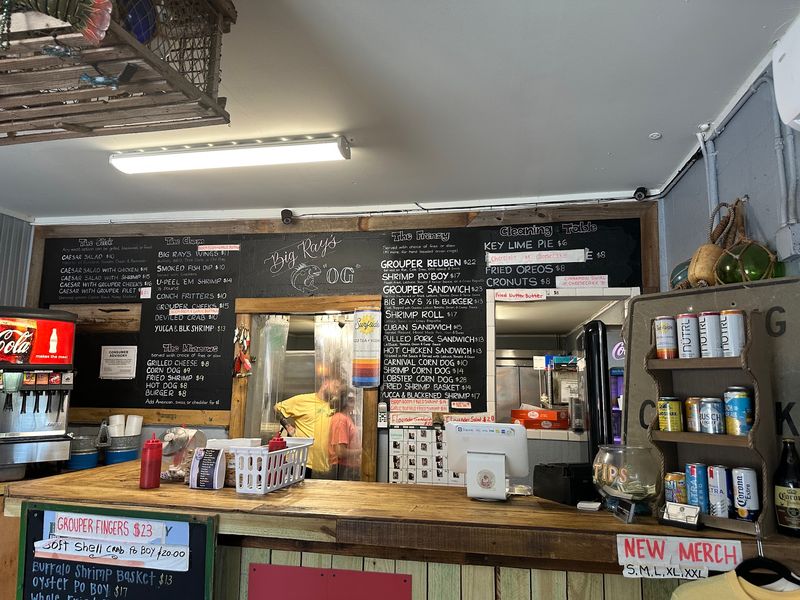
Counter ordering, simple indoor seating, and tent-covered picnic tables outside. That is the documented physical experience at Big Ray’s, and for a certain type of diner, it is more appealing than white tablecloths and a host who knows your name.
Michelin’s profile of Big Ray’s captures the atmosphere efficiently: a casual seafood shack where the setup is unfussy and the food is the point. Nothing about the description suggests a manufactured rustic aesthetic layered over a polished kitchen operation.
Old Florida fish camps, the real ones, were working places. They existed to get fresh seafood from the water to the table with minimum fuss and maximum flavor.
Big Ray’s opened in 2015, so it does not carry decades of salt and history in its walls, but it carries the same operating philosophy. The simplicity is structural, not decorative.
You order at a counter because that is how a working seafood shack runs, not because someone decided counter service would feel charming.
Eating at a picnic table under a tent while the Florida heat does its thing is its own kind of sensory experience. The surroundings are not dramatic.
There is no waterfront panorama documented in the available sources, and inventing one would be dishonest. Big Ray’s presents itself as a neighborhood seafood spot, and that neighborhood identity is a selling point rather than a limitation for diners who are tired of restaurants that try too hard.
The atmosphere earns its appeal by getting out of the way and letting the food do the work.
The Fried Grouper Sandwich Is the Main Event
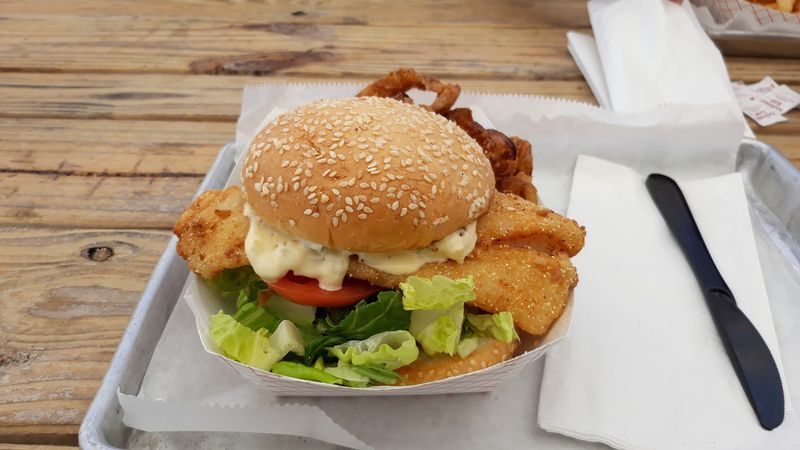
Order the fried grouper sandwich. That is the clearest, most direct advice this article can offer, and it is grounded in what the sources actually confirm.
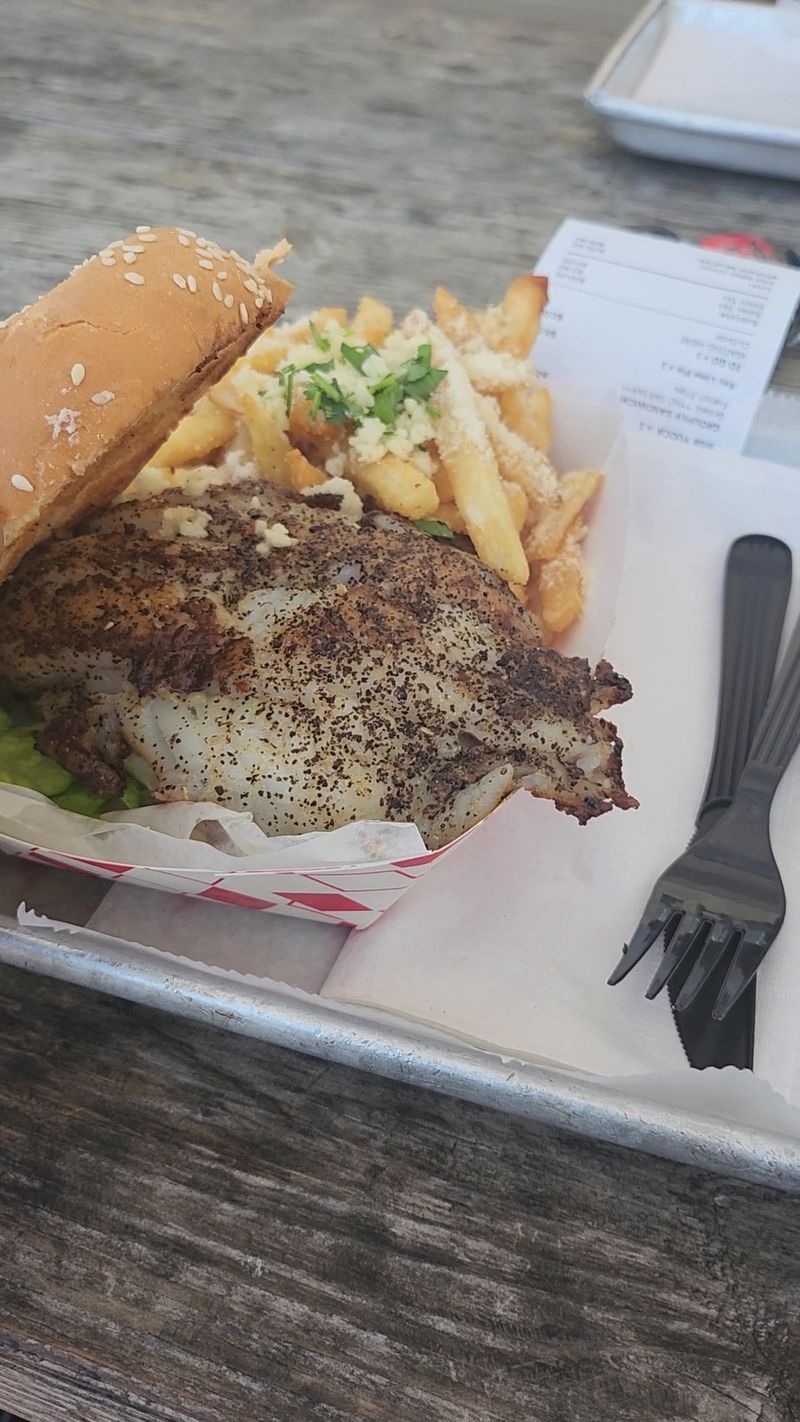
Big Ray’s official menu lists a grouper sandwich available three ways: grilled, blackened, or fried. The fried version is the one that anchors the restaurant’s reputation and the premise of this article, and it is the preparation that shows up consistently in coverage of the restaurant.
Grouper as a species earns its place on Florida menus for reasons that go beyond local loyalty. Florida’s Department of Agriculture and Consumer Services describes grouper as a popular Florida fish with mild flavor and firm flesh, qualities that make it well-suited to a fried preparation.
That mild flavor means the fish does not fight the seasoning or the batter. The firm flesh holds together in the fryer rather than falling apart into a greasy tangle.
For a sandwich format, those characteristics are exactly what you want.
The menu at Big Ray’s extends well beyond the grouper sandwich, and that range gives the restaurant its fish-camp credibility. A grouper Reuben offers a different take on the same fish.
Grouper cheeks, a cut that rewards diners who know to order them, appear alongside smoked fish dip, shrimp, conch fritters, and key lime pie. The full menu reads like someone who actually loves Florida seafood put it together, not like a corporate committee trying to cover demographic bases.
One clarification worth making upfront: this article focuses on the fried grouper sandwich specifically because that is what the sources document as the restaurant’s signature. The menu does not confirm a grouper basket, grouper bites, or a whole-fish preparation as standard offerings, so those are not described here.
Stick with what the evidence supports, and in this case, what it supports is a sandwich worth driving for.
Freshness Needs More Precise Language
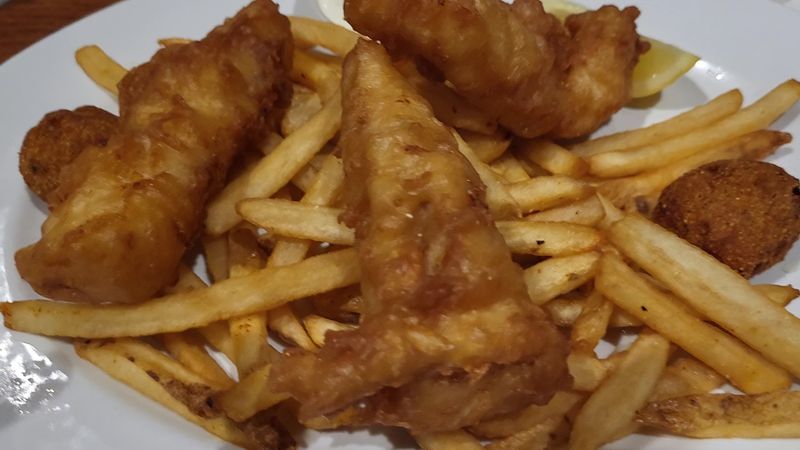
“Freshest fried grouper on the Gulf” is a phrase that tastes good to write and even better to read when you are hungry. It is also a claim that no source in this article’s research can verify as an objective fact.
Big Ray’s presents itself as a freshness-focused seafood operation, and the restaurant’s identity is clearly built around quality and care rather than volume and shortcuts. But the available sources do not document the restaurant’s delivery schedule, the harvest location of its grouper, or whether individual portions are previously frozen before preparation.
A Super Bowl concessions document that listed Big Ray’s grouper used the phrase “locally caught fresh grouper” in describing the offering. That wording is notable, but it describes a specific concessions context rather than establishing a universal sourcing promise for every plate served at the Interbay Boulevard location on any given day.
A single document from a single event does not rewrite the restaurant’s supply chain in permanent ink.
Grouper’s popularity in Florida creates its own complications. Florida’s agriculture department advises consumers to be cautious of suspiciously low prices because less expensive species are sometimes substituted for grouper.
This is a recognized industry concern, not a specific accusation aimed at Big Ray’s. The restaurant’s pricing, reputation, and documented identity do not suggest a low-cost substitution operation.
The FDA’s Regulatory Fish Encyclopedia exists specifically to help detect species substitution and economic deception in the seafood industry. Its existence reflects a real, industry-wide challenge.
Mentioning it here is not an implication that Big Ray’s mislabels its fish. Species identification and sourcing verification require documentation or testing, and neither has been applied to Big Ray’s in any source reviewed for this article.
The honest framing is that Big Ray’s has a documented reputation for quality grouper, not that every bite has been independently certified from Gulf to bun.
Why Diners Make the Detour
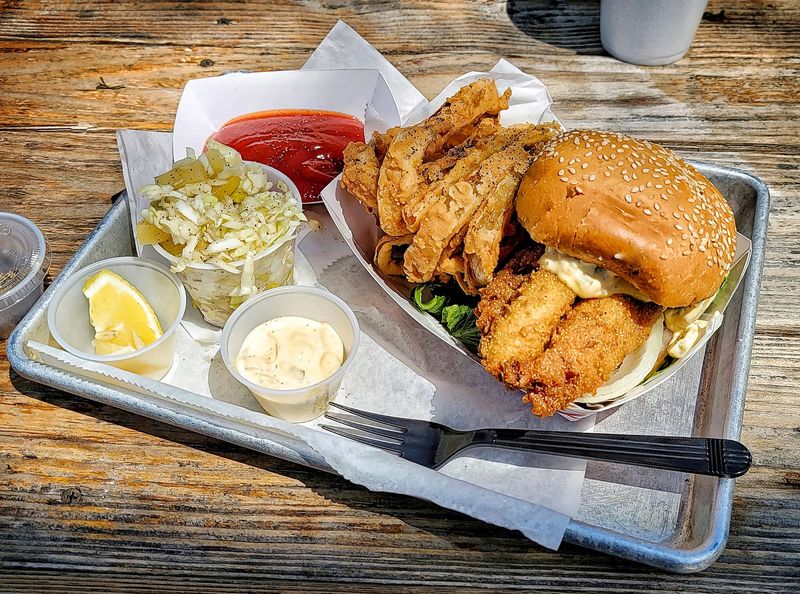
Tampa Bay Times food coverage noted that Big Ray’s does seafood right, with the grouper earning particular attention. That kind of regional recognition matters because it reflects the judgment of writers who eat at a lot of restaurants and are not easily impressed by a fish sandwich.
FOX 13 Tampa Bay’s profile of the restaurant described Cruz as someone who sinks heart and soul into each dish, which is the kind of detail that explains why a place with picnic tables and counter service earns serious coverage.
The original “regulars drive the coast” framing in this article’s title is best understood as colorful shorthand for a real but more modest phenomenon: diners who are willing to go out of their way for a good grouper sandwich. 83 Degrees Media documented the restaurant’s growth from its original Interbay Boulevard location to additional Tampa spots, which suggests the kind of loyal customer base that supports expansion. A restaurant that no one drives for does not open a second location.
The grouper sandwich itself carries cultural weight in Florida that goes beyond any single restaurant. Tampa Magazine’s history of the grouper sandwich traces the dish as an icon of Gulf Coast food culture, the kind of thing that Floridians grow up eating and visitors remember long after they leave.
Big Ray’s steps into that tradition with a straightforward, unpretentious version that does not try to reinvent the dish. Sometimes the best move is to cook something well and let the ingredients speak.
Plan the Ballast Point Visit
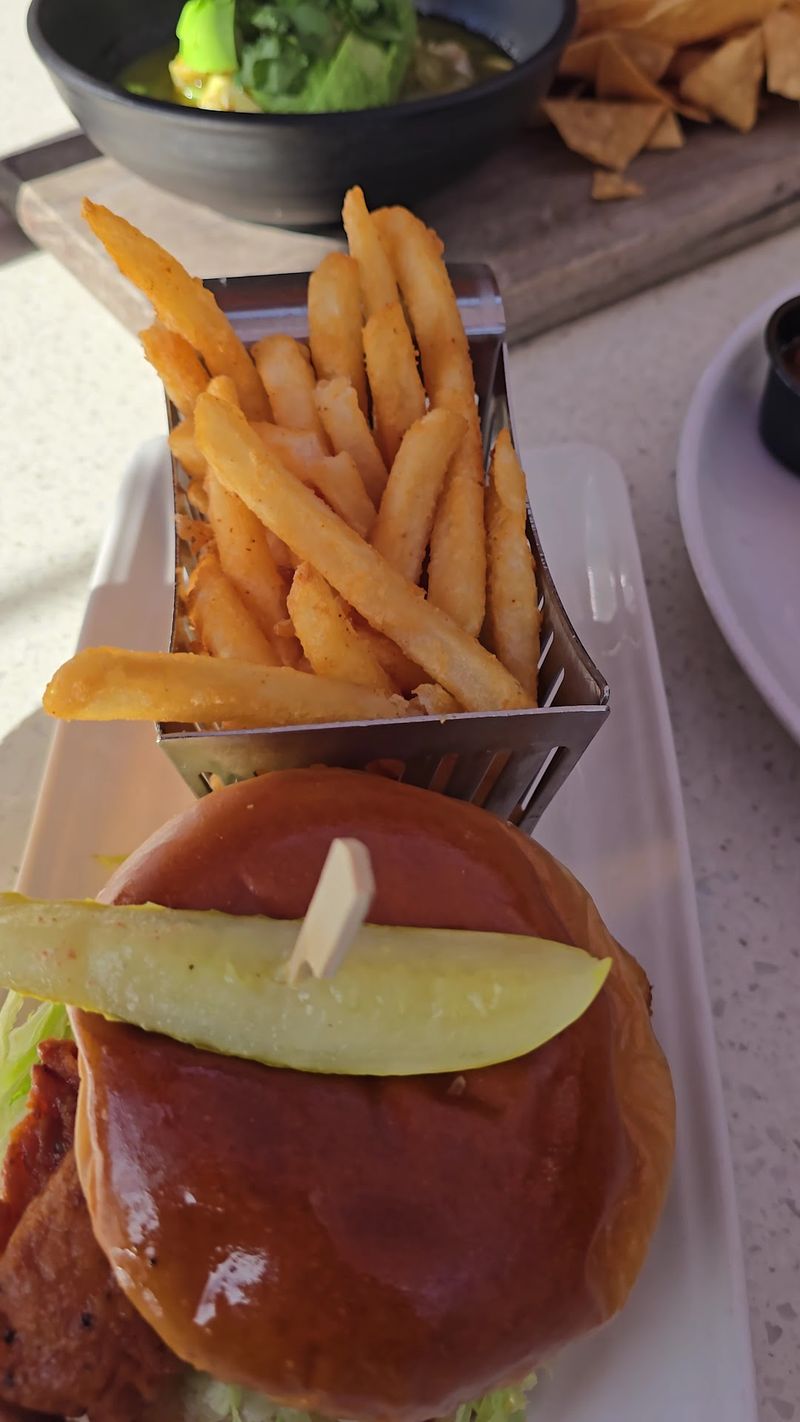
Getting there is straightforward. The original Big Ray’s Fish Camp sits at 6116 Interbay Blvd., Tampa, Florida, in the Ballast Point neighborhood.
It is a real street address on a real city road, not a remote waterfront location requiring local knowledge to find. Plug the address into your navigation app and it will take you directly there.
The official Big Ray’s website currently lists service Tuesday through Sunday, with Monday as the closed day. Hours are subject to change, and restaurant schedules shift for holidays, private events, and other reasons that are impossible to predict from the outside.
Check the official site or call ahead before making a long drive, especially if you are planning a special trip around a single meal.
When you get there, the menu gives you options beyond the fried grouper sandwich. The grouper can also be ordered grilled or blackened if fried is not your preference.
Grouper cheeks are worth ordering if they are available, as they represent a less common cut that rewards adventurous eaters. Smoked fish dip, conch fritters, and shrimp round out the seafood-camp experience, and key lime pie handles dessert in a way that feels appropriate for Tampa.
For readers following this article’s central promise, the fried grouper sandwich is the clearest order. That is the preparation the sources document most consistently, and it is the dish that defines the restaurant’s identity for first-time visitors.
Order it, find a picnic table, and let the experience be what it is: an honest, unpretentious Florida seafood meal at a place that earned its reputation one sandwich at a time.
A Destination, Not a Proven Gulf-Wide Champion
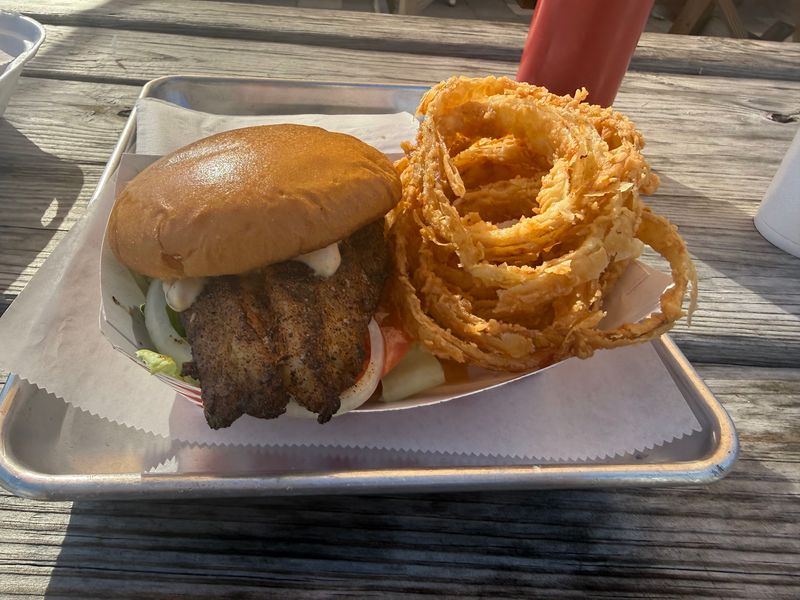
Big Ray’s Fish Camp combines an unassuming setting, a relaxed fish-camp identity, and a documented fried grouper sandwich into a Tampa seafood stop that holds up to scrutiny. The restaurant’s own presentation is honest about what it is: a straightforward seafood operation with a genuine personality and a menu anchored by grouper.
That combination is rarer than it sounds in a state where seafood restaurants multiply faster than pelicans on a dock.
“Freshest on the Gulf” remains a matter of personal judgment. Taste is subjective, sourcing details are not fully documented in available sources, and no ranking exists that objectively crowns a single Gulf Coast sandwich as the finest.
What Michelin’s recognition and regional coverage do support is the accurate, defensible claim that Big Ray’s is a destination for fried grouper: a place people seek out, talk about, and return to.
That is a meaningful distinction for any restaurant, and it is the right frame for what Big Ray’s actually offers. Skip the superlatives.
Make the drive, order the fried grouper sandwich, and let your own judgment settle the question of where it ranks. Some meals earn their reputation one honest bite at a time, and this one has been doing exactly that since 2015.