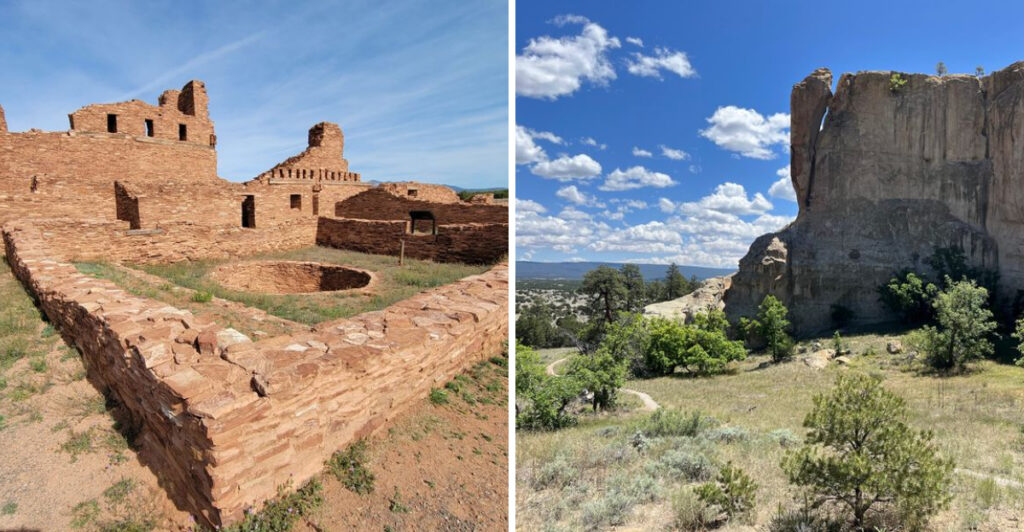
The best family adventures are often the ones that do not come with a painful price tag. A few dollars can still buy a day full of exploring, and some of the most memorable stops cost nothing at all.
New Mexico makes that kind of weekend surprisingly easy. One morning can lead to ancient carvings beside a trail, while another afternoon might end beside water in the desert.
Kids get room to move instead of standing in another long attraction line. Parents get a day that feels worthwhile without watching the budget disappear before lunch.
That is the sweet spot this list is chasing. Every place here offers something worth seeing, but none requires a resort-sized budget to enjoy it.
Pack a simple lunch and bring enough water for the road. Then choose the stop that sounds most fun and see how much adventure can fit into one affordable day.
Petroglyph National Monument, Albuquerque
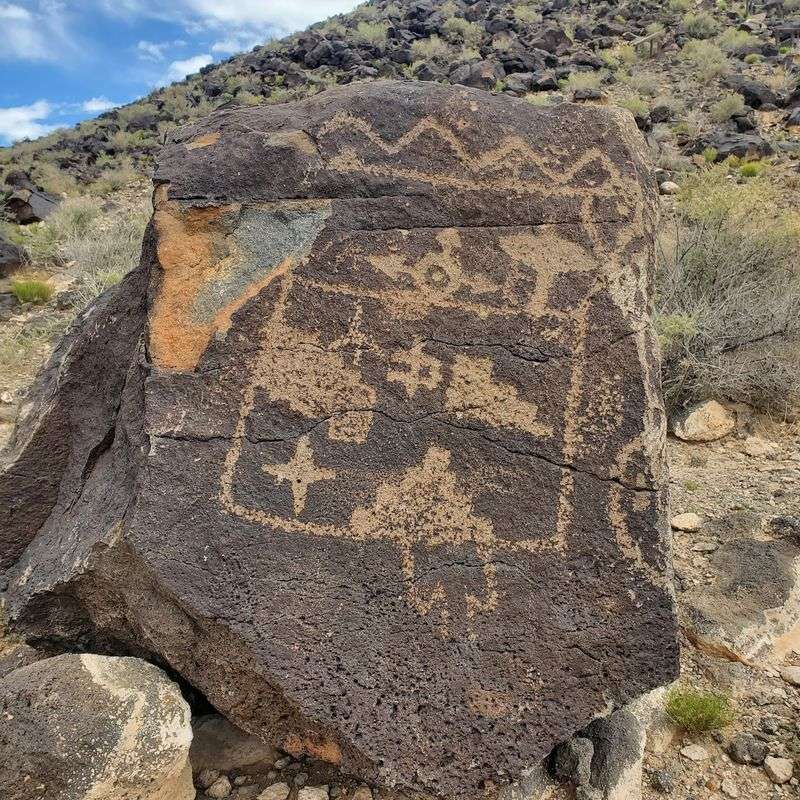
Thousands of images carved into dark volcanic rock sit right on the edge of a busy city, and that contrast still surprises me every visit. Petroglyph National Monument at 6510 Western Trail NW in Albuquerque protects one of North America’s largest collections of rock carvings, made by early Native peoples and Spanish settlers centuries ago.
Entry to the monument itself costs nothing, though Boca Negra Canyon charges a small parking fee. Boca Negra suits shorter legs best, since its trails are paved and quick, and kids can count carvings like a scavenger hunt.
Rinconada Canyon rewards families who want a longer walk, roughly two and a bit miles round trip through soft sand with hundreds of images hiding along the basalt. Piedras Marcadas offers a quieter third option when the other lots fill up.
Stop at the visitor center first for maps and trail conditions, because the rangers there know exactly which spots are shaded and which are not. Water bottles and closed-toe shoes are non-negotiable, and morning light makes the carvings far easier to spot.
One reminder I share with every family: look, photograph, and never touch the images. My kids liked guessing what each spiral meant more than any museum exhibit we visited that week.
Bring a notebook and let them sketch their favorites.
City Of Rocks State Park, Faywood
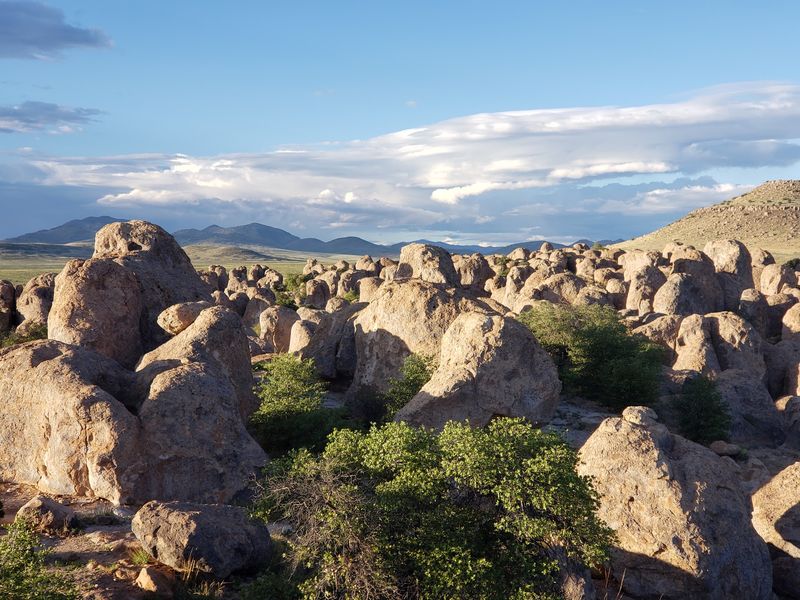
Giant rounded boulders stand in rows and clusters, forming natural lanes and little plazas that beg to be explored. City of Rocks State Park sits at 327 Hwy 61 in Faywood, New Mexico, and the formations rose from ancient volcanic eruptions before wind and water sculpted them into columns.
Kids treat the whole place as a maze, ducking through gaps and popping up somewhere unexpected. Parents get an easy job here: sit on a warm rock, keep an eye out, and let the exploring happen on its own.
In 2026, residents pay five dollars for day use from May through September and are exempt from October through April, while nonresidents pay ten dollars year-round. Annual day-use passes cost $75 for residents and $150 for nonresidents.
Picnic tables sit right inside the rock corridors for easy lunches.
The park’s botanical garden walk introduces desert plants without feeling like homework, and the labels help kids name what they see later on the trail. Hiking here stays short and manageable, with a few climbs for braver visitors.
Cooler months bring the most comfortable temperatures, and clear nights turn the sky into a show worth staying for. Bring a hat, then let the boulders do the entertaining.
Bottomless Lakes State Park, Roswell
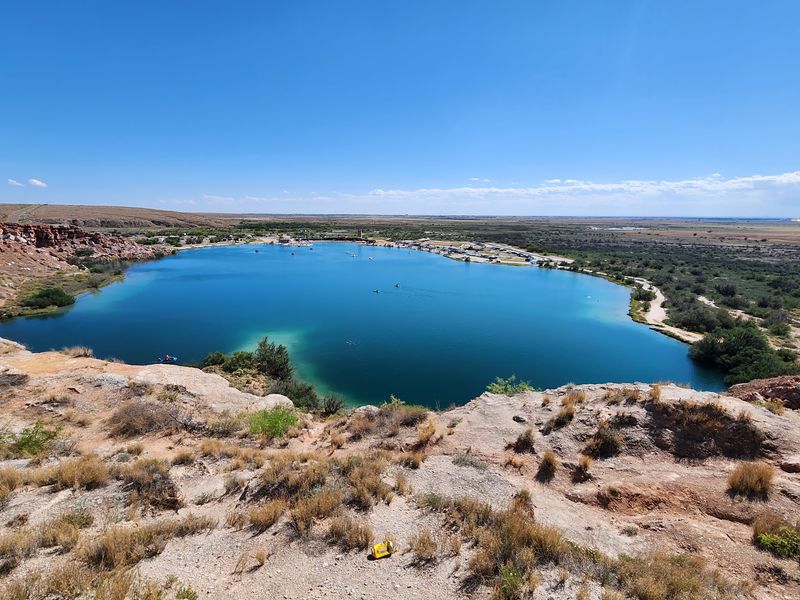
Deep blue-green water in the middle of dry country looks almost fake until you jump in. Bottomless Lakes State Park at 545 A Bottomless Lakes Rd in Roswell holds a chain of lakes formed when underground caves collapsed, leaving steep-sided pools ringed by reddish bluffs.
The name comes from old cowboy guesses about how far down the water went. Lea Lake is the swimming spot, complete with a sandy shore, paddle boat rentals in warm months, and shaded picnic shelters.
Other lakes along the park road serve fishing families, with rainbow trout stocked during cooler seasons. Bring your own gear and a valid license for anyone old enough to need one.
Birdwatchers do well here too, since the water pulls in species you would not expect this deep in the desert. I keep binoculars in the glove box for exactly this reason.
Day-use fees stay low, and camping sites make an overnight stay affordable if you want a sunrise swim. Wear water shoes, because the lake bottom feels rocky in spots.
Roswell’s alien-themed shops sit a short drive away, so you can combine dripping swimsuits with a little playful sightseeing. Few desert stops cool you down this thoroughly.
Living Desert Zoo and Gardens State Park, Carlsbad
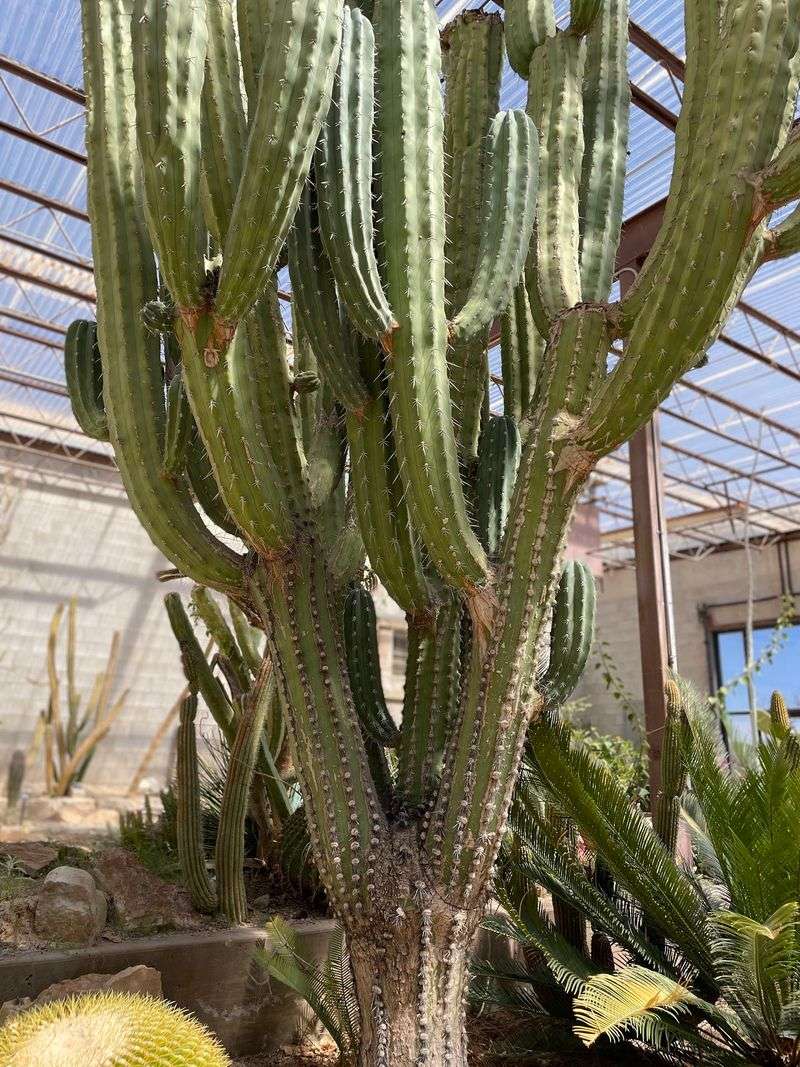
Cougars, wolves, and a greenhouse packed with cactus all live on one hillside above Carlsbad. Living Desert Zoo and Gardens State Park at 1504 Skyline Dr focuses entirely on the Chihuahuan Desert, so every animal and plant you meet actually belongs to the region.
Winding paved paths connect the exhibits, and signs explain how each creature survives heat and drought. My favorite section is the nocturnal building, where dim lighting reveals animals that usually stay hidden while we are awake.
Admission runs about ten dollars for adults and five for children ages seven through twelve, with little ones six and under entering free. That price covers hours of walking, so plan on two to three hours minimum.
Spring and fall bring the kindest temperatures, and morning visits catch animals while they are still active. Summer afternoons turn toasty, so arrive early and carry water.
The succulent collection deserves more attention than most visitors give it, with shapes that look invented rather than grown. Kids usually race past it toward the bear enclosure, which I understand completely.
Pair this stop with nearby caverns for a full weekend of underground and above-ground wildlife. Strollers roll fine on the main loop.
Smokey Bear Historical Park, Capitan
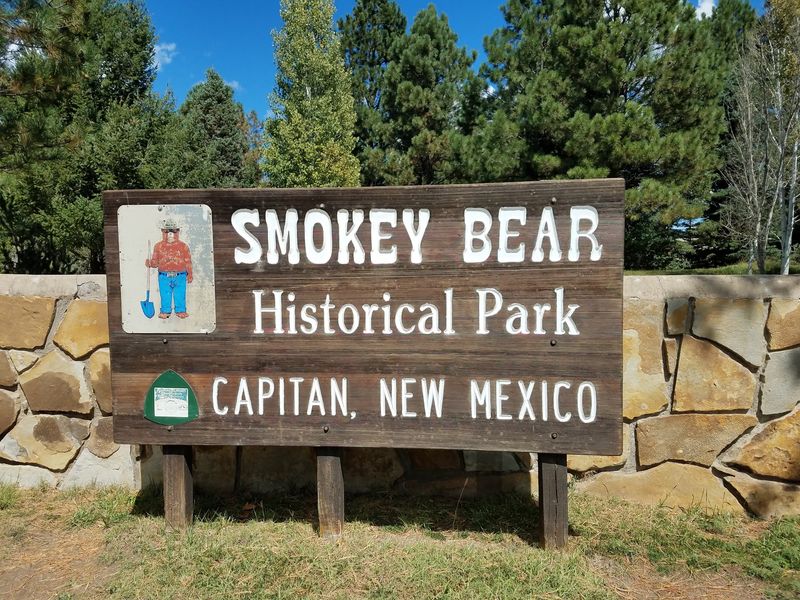
A bear cub rescued from a burning forest in the Capitan Mountains grew into the most recognizable wildfire-prevention symbol in the country. Smokey Bear Historical Park at 118 W Smokey Bear Blvd in Capitan tells that whole story in a compact, kid-friendly museum.
Exhibits trace the cub’s rescue, his years as a national spokesbear, and the fire safety message he still carries. A short film runs about fifteen minutes, which fits neatly inside most children’s attention spans.
The talking, full-size Smokey exhibit gets the biggest reaction from younger visitors. Outside, a native plant garden and Smokey’s peaceful memorial site give the visit a quieter, reflective ending.
Adult admission sits around six dollars with youth tickets near three, making this one of the most affordable history stops in New Mexico. Junior Ranger activity sheets keep kids busy and send them home with a badge.
Capitan itself is small and walkable, with a couple of casual places to grab lunch nearby. I like combining this with a drive through the surrounding forest roads, where the story feels much more real.
Ask staff about seasonal programs, since special events pop up during summer. Simple, sincere, and surprisingly moving for such a small park.
Aztec Ruins National Monument, Aztec
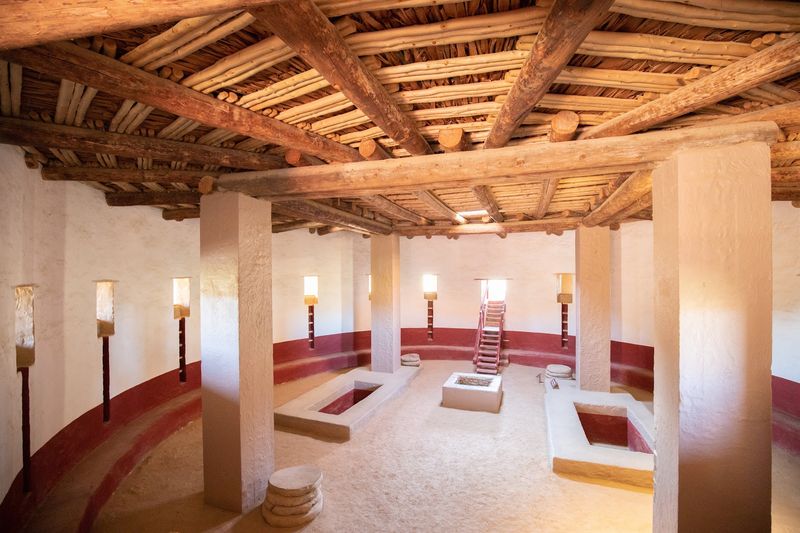
Walking through original doorways built by Ancestral Pueblo hands is the sort of thing that quiets even chatty kids. Aztec Ruins National Monument at 725 Ruins Rd in Aztec preserves a large village complex, including a reconstructed Great Kiva you can actually step inside.
The kiva interior feels cool, dim, and hushed, and standing there gave my family a better sense of the past than any textbook chapter. Original wooden roof beams still sit in some of the room blocks, which is remarkable.
Entry costs nothing at all. A self-guided trail loops through the site in roughly forty-five minutes to an hour, with a printed guide available at the visitor center.
Summer often brings ranger talks that add detail about farming, trade, and daily routines in the village. Ask about Junior Ranger booklets if your children like earning badges.
Picnic pavilions near the parking area make a packed lunch easy, saving money and time in a town without many quick options. Shade is limited along the trail, so hats help.
Despite the name, the site has no connection to the Aztec empire. Early settlers simply guessed wrong, and the label stuck.
El Morro National Monument, Ramah
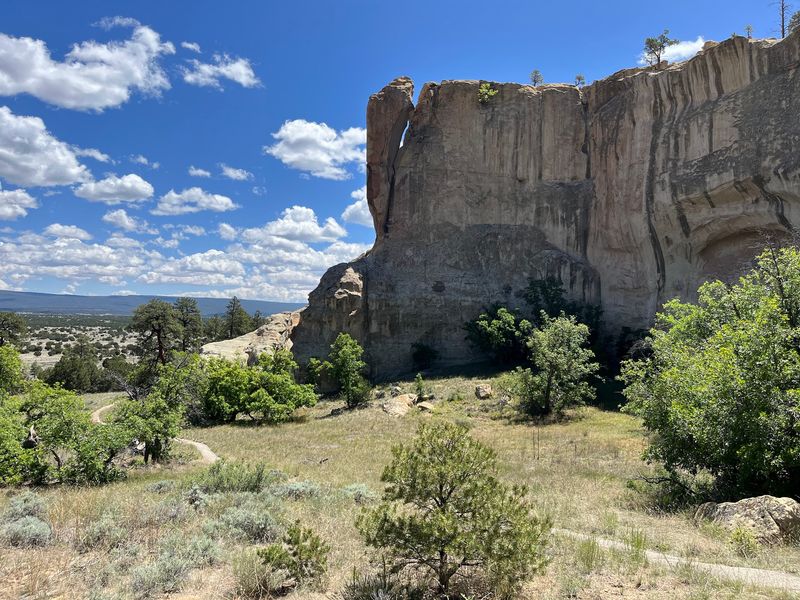
Centuries of travelers stopped at one reliable pool of water, and many of them left their names carved in the sandstone above it. El Morro National Monument at Mile Marker 44.6 on Hwy 53 near Ramah holds those messages, along with Ancestral Puebloan petroglyphs and Spanish inscriptions.
The Inscription Rock trail is paved, short, and shaded in places, so it works well for mixed-age groups. Reading signatures left by explorers and pioneers turns the walk into a timeline you can touch with your eyes only.
Ambitious hikers can continue up the Headland Trail to pueblo ruins on top of the bluff, where the view stretches across juniper country. Check with rangers first, since the upper trail closes in bad weather.
No entrance fee applies here, which makes it one of the best free history lessons around. The visitor center runs a short introductory video and keeps a small museum worth ten minutes of your time.
The pool at the base looks modest, yet it explains everything about why people kept coming back. Morning visits mean cooler air and better shade.
Carry water anyway, since the elevation catches people off guard. Pure storytelling written in stone.
Pecos National Historical Park, Pecos
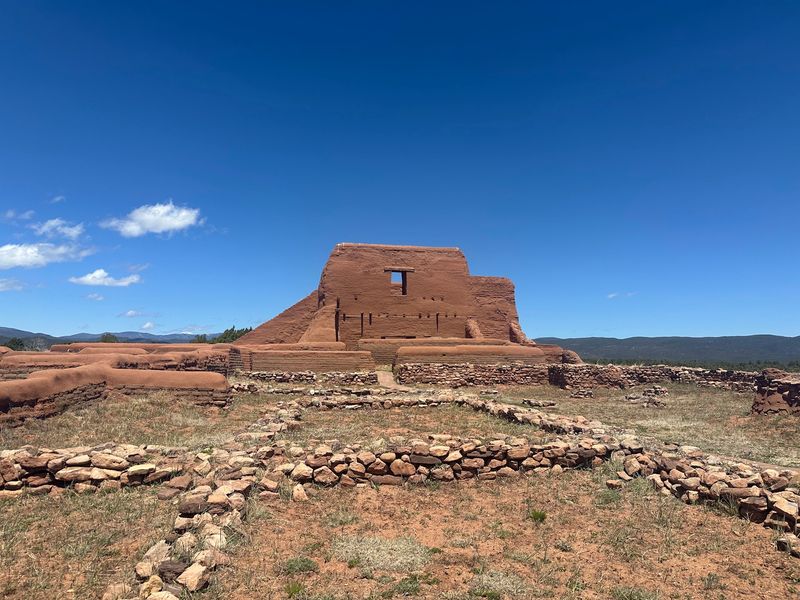
Thick adobe mission walls rise straight out of a grassy hillside, and behind them lie the foundations of a once-crowded pueblo. Pecos National Historical Park at 1 Peach Dr in Pecos protects both, telling a layered story of trade, faith, and cultural meeting points in the Pecos Valley.
The main loop trail runs a little over a mile with interpretive signs at each stop. Kids can climb down a ladder into a reconstructed kiva, which is usually the highlight of the entire walk.
Visiting costs nothing, and the visitor center adds a museum plus a short introductory film. Shaded picnic tables outside make this an easy lunch stop between Santa Fe and points east.
Families with extra energy can tackle a longer trail connected to the Battle of Glorieta Pass, adding Civil War history to an already busy timeline. Ask staff about access hours for that section.
Piñon and juniper trees frame views toward the Sangre de Cristo Mountains, and afternoon light on the church walls photographs beautifully. Summer thunderstorms roll through quickly, so pack a light jacket.
Few free stops in New Mexico pack this much history into one gentle loop. Allow two unhurried hours.
Salinas Pueblo Missions National Monument, Mountainair
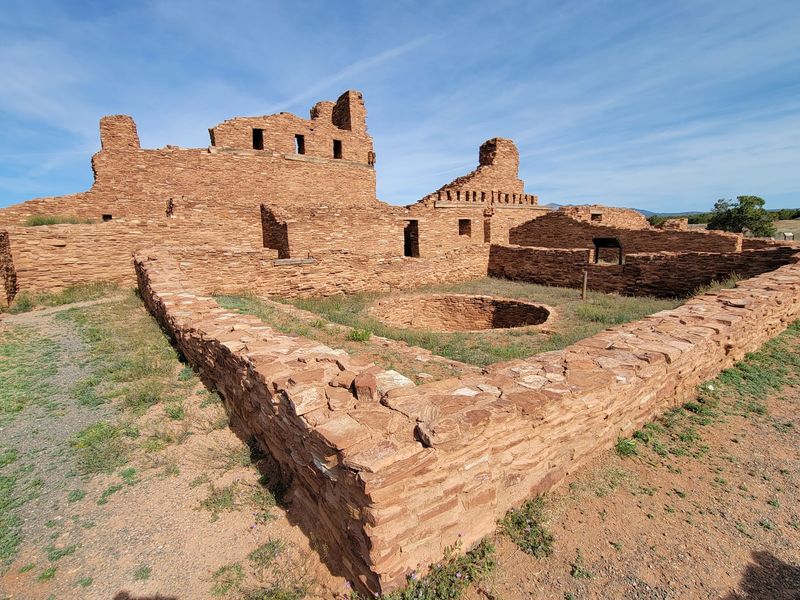
Three separate sites, one free monument, and a whole afternoon of ruins to wander. Salinas Pueblo Missions National Monument runs its headquarters at 105 S Ripley Ave in Mountainair, and paved roads lead out to the Abo, Quarai, and Gran Quivira units.
Abo impressed me most, with red sandstone mission walls still standing tall against open grassland. Quarai feels shadier and more intimate, tucked among cottonwoods with a spring nearby.
Gran Quivira spreads widest, showing large pueblo remains alongside two church structures and long views across the plains. Each unit hands out a self-guided pamphlet, so nobody needs a tour reservation.
Everything is free, including the headquarters museum in town. That makes it easy to visit one site or all three depending on how the kids are holding up.
Driving between units takes time, so fill the gas tank and pack snacks before leaving Mountainair. Restrooms exist at each unit, though services are limited otherwise.
The story here covers Puebloan farming villages, Spanish missionaries, and the eventual departure of both communities. Signs explain it without overwhelming younger readers.
Wide skies and almost no crowds make the whole loop feel like a private discovery. Start early to fit all three.
Rio Grande Nature Center State Park, Albuquerque
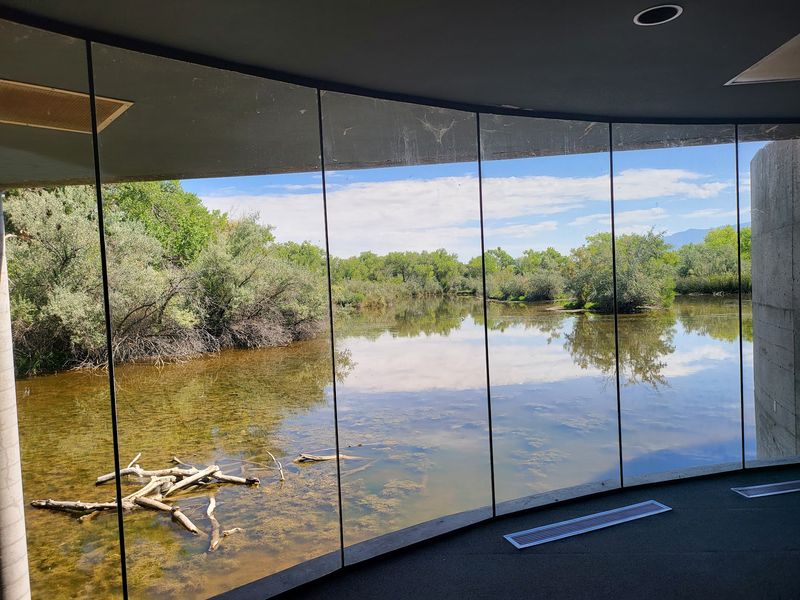
Cottonwood shade, a quiet pond, and a wall of windows where ducks paddle by at eye level. Rio Grande Nature Center State Park at 2901 Candelaria Rd NW sits inside Albuquerque yet feels tucked far away from traffic noise.
The visitor center’s viewing room is the star attraction, with underwater and above-water windows onto the pond. Kids press their faces to the glass and forget about screens entirely.
The park lists 1.2 miles of trails, with access to city-managed trails toward the Rio Grande and Bosque. Flat paths mean strollers and tired legs manage fine.
Parking runs about five dollars per vehicle, which is a bargain for hours of wildlife watching. Binoculars and field guides are available to borrow at the visitor center, so leave yours at home if you like.
Hundreds of bird species pass through along the flyway, and late autumn brings sandhill cranes that announce themselves before you spot them. Winter mornings are cold, quiet, and excellent.
Demonstration gardens near the entrance show which native plants attract pollinators, handy if your family gardens back home. Junior naturalist activities appear during school breaks.
Bring a snack, sit on a bench, and let the river set the pace.
Museum of Nature & Science, Las Cruces
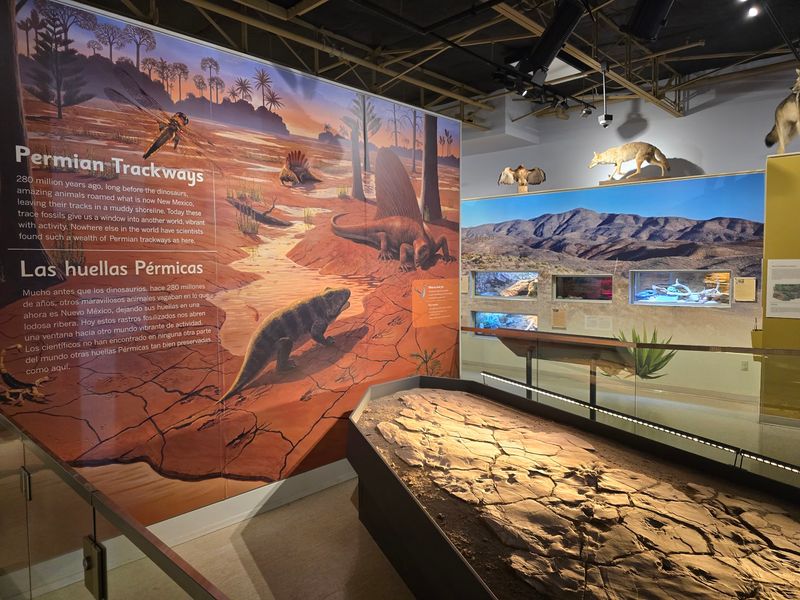
Free admission plus hands-on exhibits equals a very easy yes on a hot afternoon. The Museum of Nature & Science at 411 N Main St in Las Cruces sits right downtown, focused on the natural history and science of the Chihuahuan Desert.
The Desert Life section introduces local animals and plants, some of them live, which always draws a crowd of curious kids. Permian Trackways displays ancient fossil footprints found in the surrounding region.
Light and Space brings the interactive stuff, with displays children can push, spin, and test without anyone saying be careful every ten seconds. Staff members clearly enjoy explaining things, and they answer the strangest questions patiently.
Because entry costs nothing, this works well as a short stop rather than a full-day commitment. An hour or two covers the main exhibits comfortably.
Downtown Las Cruces surrounds the museum with a pedestrian-friendly plaza, so you can grab lunch or catch the farmers market on market days. Parking nearby is straightforward.
Check the schedule before arriving, since special programs and traveling exhibits rotate through. Rainy or blazing hot days make this stop especially welcome.
Curious kids leave with new questions, which I count as a win.