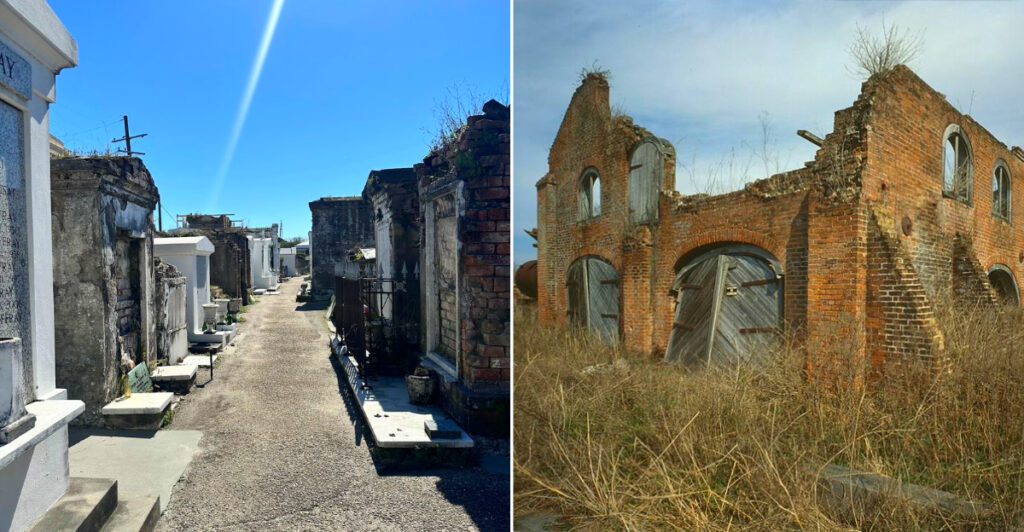
Spanish moss does not just hang from trees in Louisiana. It drapes them, suffocates them, turns every road into a corridor of green-gray curtains that sway when there is no wind. I have driven these roads at dusk and felt the atmosphere shift from scenery to something heavier.
A plantation where guests report faces in mirrors that were not there before. A cemetery so dense with above-ground tombs that you walk through the dead like a neighborhood, and you cannot enter without a licensed guide.
A capitol building that looks like a medieval castle dropped onto the Mississippi, with a spiral staircase and a senator who died under mysterious circumstances. These are not stories I am inventing.
These are places you can visit and feel the weight of. Plantations with trapped spirits, a cemetery you cannot enter alone, and a castle on the river are all real places in Louisiana.
The Myrtles
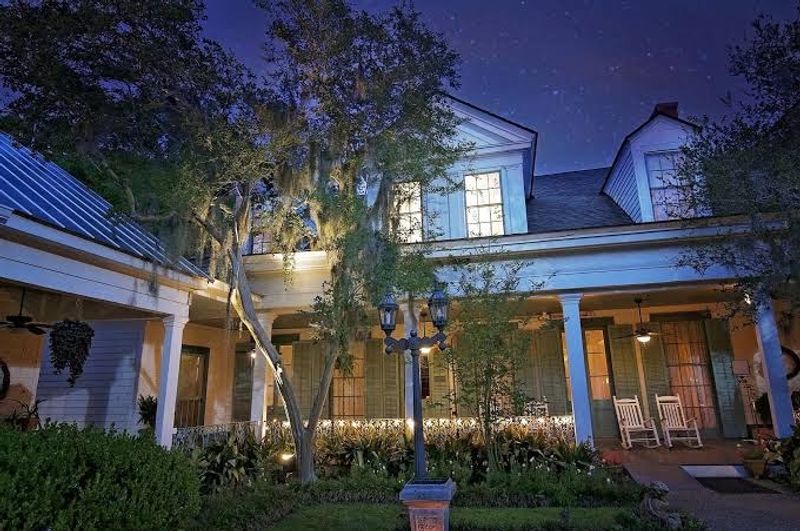
Nightfall has been part of the marketing here for decades, but the house hardly needs darkness to create atmosphere. The Myrtles stands at 7747 U.S.
Highway 61, St. Francisville, LA 70775, surrounded by old trees and broad galleries that make the property look almost purpose-built for Louisiana ghost lore. It began as Laurel Grove under David Bradford and was later renamed The Myrtles.
The property openly embraces its reputation as one of America’s most haunted homes, offering daytime visits along with Evening Mystery tours seven nights a week.
Stories involving footsteps, mirrors, photographs, and unseen occupants have become inseparable from its identity, although they are better approached as folklore than documented events.
There is real tragedy underneath the legends. William Winter died violently in 1871, an event the property’s own history connects to its later supernatural reputation.
That mixture is what makes the house interesting. Visit for the architecture and actual family history first, then allow the ghost stories to occupy the uncertain spaces around them. If you want the atmosphere at full strength, choose an evening tour.
If you are skeptical, go anyway. Old houses are perfectly capable of becoming unsettling without help from the dead.
St. Louis Cemetery No. 1
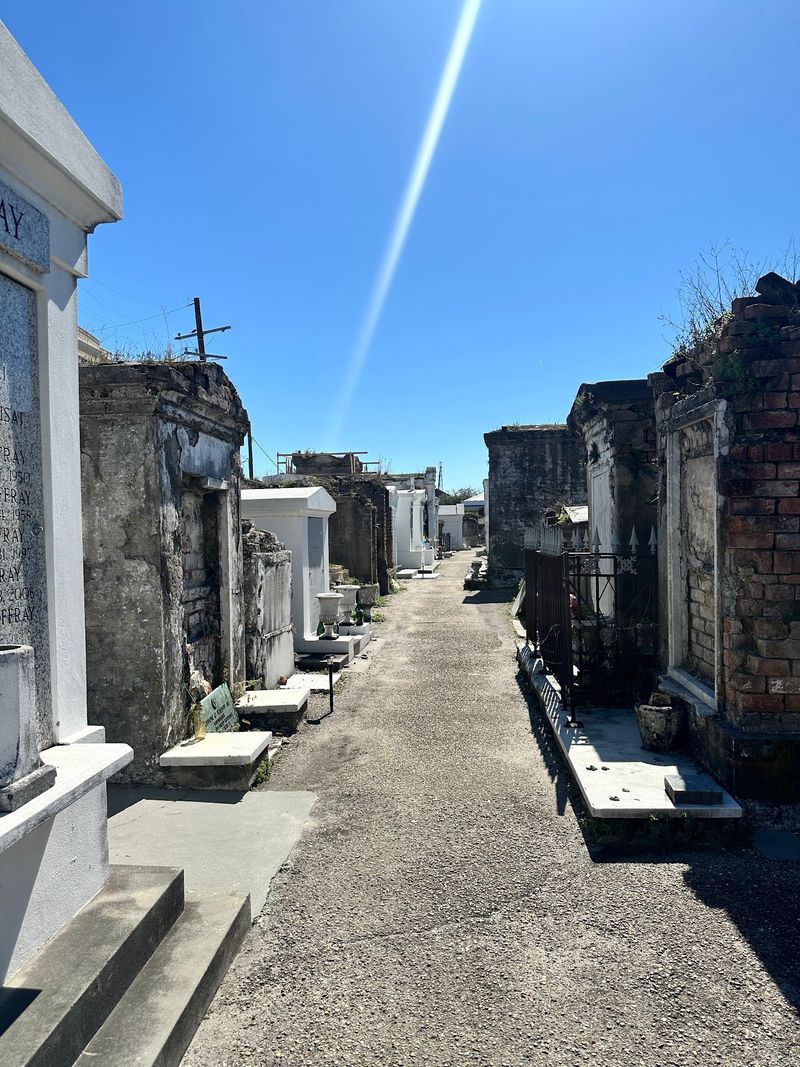
Stone walls close around the paths so tightly that this cemetery can feel less like an open burial ground and more like walking through a miniature city. St. Louis Cemetery No. 1 is at 425 Basin Street, New Orleans, LA 70112, just beyond the French Quarter, and burials began here in 1789 after the city’s earlier cemetery was abandoned.
Its above-ground tombs deserve a more interesting explanation than the usual high-water-table story. Flooding and low elevation mattered, but New Orleans Catholic Cemeteries notes that the architecture also descended from French and Spanish burial traditions.
An 1803 ordinance encouraging above-ground interment helped establish the landscape visitors recognize today.
Marie Laveau’s tomb is the most famous, but rushing directly toward it misses the effect of the cemetery itself: layers of family vaults, weathered inscriptions, narrow passages, and generations occupying an astonishingly compact space.
Access remains controlled. Visitors enter through the official guided-tour system, with tours departing from Basin St. Station at 501 Basin Street across from the cemetery.
Go slowly and treat it as an active sacred place rather than haunted entertainment.
Louisiana’s Old State Capitol
A medieval castle beside the Mississippi would seem implausible almost anywhere else. Louisiana’s Old State Capitol rises at 100 North Boulevard, Baton Rouge, LA 70801, its Gothic Revival towers and battlements looking considerably more theatrical than the average government building.
The restored structure now operates as a museum of Louisiana political history.
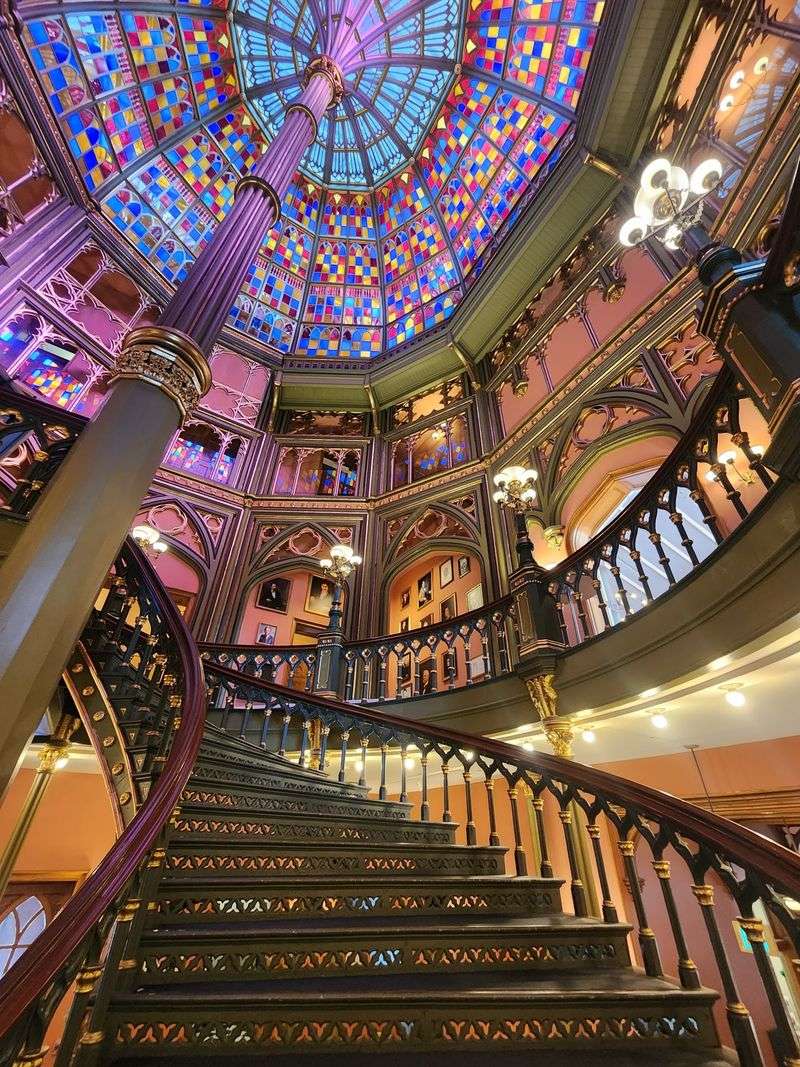
Inside, the building becomes stranger rather than more ordinary. A sweeping staircase rises beneath elaborate stained glass, turning the central hall into something closer to a nineteenth-century fantasy than a legislative chamber.
The site’s haunted reputation is also unusually self-aware. Instead of pretending a vague legend is documented fact, the museum itself offers The Ghost of the Castle, an immersive presentation built around Civil War diarist Sarah Morgan.
Morgan genuinely wrote about the building, while the show transforms her into the Capitol’s theatrical resident ghost.
That is a much better story than attaching an invented mysterious death to the building.
Current museum hours are Tuesday through Friday from 10 a.m. to 4 p.m. and Saturday from 9 a.m. to 3 p.m.
Visit for the architecture first.
When sunlight catches the stained glass, the building looks magical.
When clouds darken the river outside, it begins looking like somewhere Edgar Allan Poe might have sent a state legislature.
Old Ursuline Convent Museum
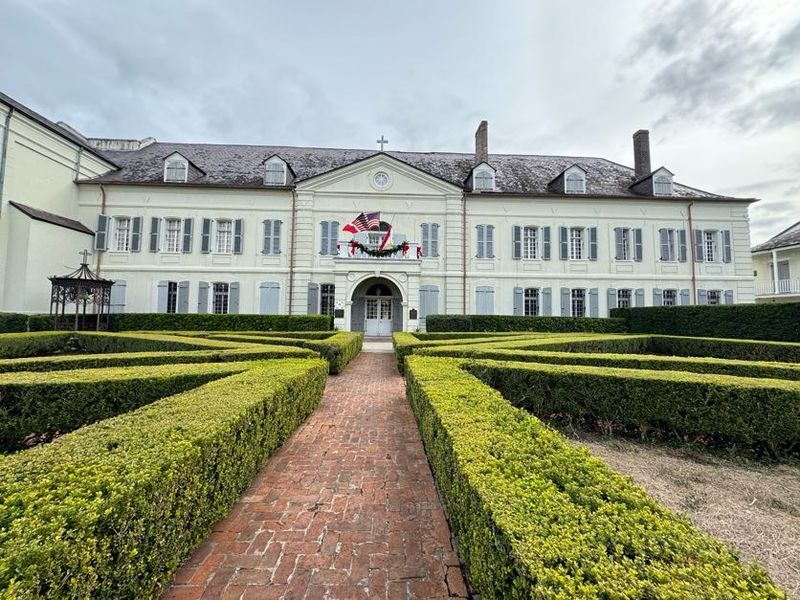
Quiet is surprisingly noticeable after stepping off busy Chartres Street. The Old Ursuline Convent Museum is at 1112 Chartres Street, New Orleans, LA 70116, inside one of the oldest surviving buildings in the Mississippi Valley and one of the strongest remaining examples of French Colonial architecture in the city.
The building’s age is only the beginning. Ursuline sisters arrived in Louisiana in 1727 and created a religious community deeply involved in education, health care, and care for children.
The convent eventually outlived much of the colonial city around it, passing through several different civic and religious uses while the French Quarter transformed outside its walls.
Nothing requires a ghost story here.
Deep window openings, thick masonry, interior courtyards, old religious objects, and rooms that have existed through generations of epidemics, fires, war, and social change create enough weight on their own.
The museum currently welcomes visitors Tuesday through Saturday, with both self-guided admission and docent tours available depending on the day and availability.
Saint Joseph Abbey
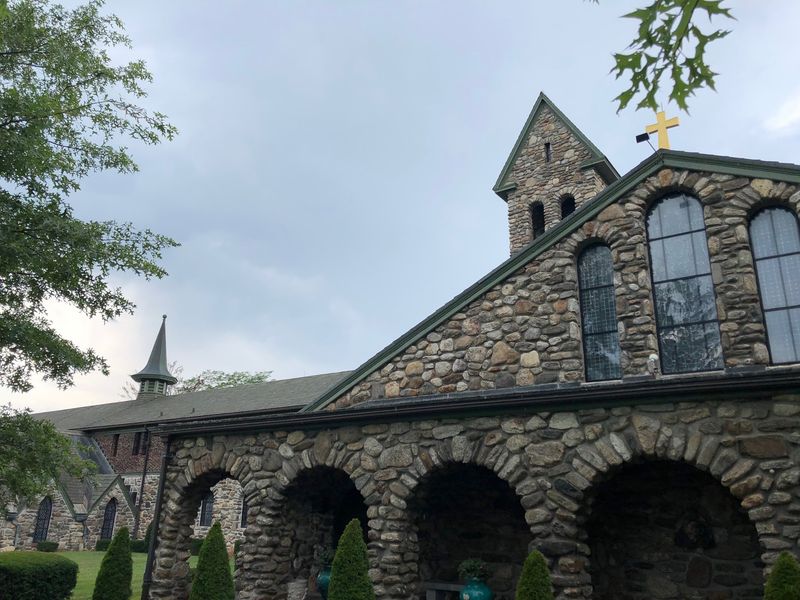
Long pine roads strip away most of the outside world before you reach the monastery. Saint Joseph Abbey occupies 75376 River Road, Saint Benedict, LA 70457, on roughly 1,100 acres where Benedictine monks have maintained a religious community whose Louisiana history began in 1889.
Nothing about the abbey is conventionally frightening. Its power comes from repetition, silence, and the awareness that daily life here still follows rhythms of prayer and work very different from those outside the grounds.
The abbey church and surrounding buildings sit among pine forest rather than an urban neighborhood, so even ordinary sounds seem amplified. Footsteps, bells, wind, and voices carry differently when traffic disappears.
The monks are also known for practical crafts, including handmade wooden caskets, a business that produced one of the abbey’s most remarkable modern stories when Louisiana funeral regulators attempted to stop them from selling directly to the public.
The monks challenged the restriction and ultimately prevailed in federal court. Yet the legal story feels distant once you are actually walking the grounds.
Remember that Saint Joseph is an active religious community, not a haunted attraction. Visitors should respect worship schedules and areas intended for monastic life. Come expecting calm rather than ghosts.
Melrose On The Cane
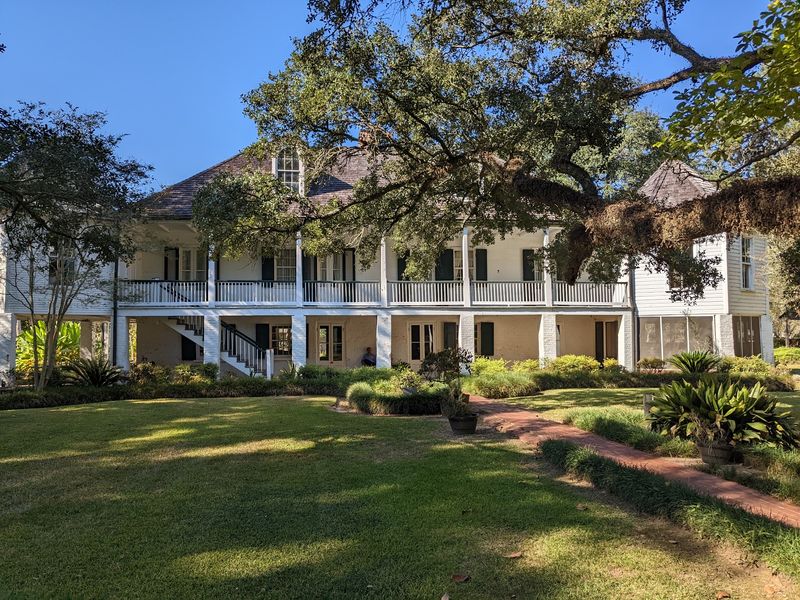
Several different Louisiana histories overlap so completely here that the property can feel like multiple places occupying the same ground. Melrose on the Cane is at 3533 Highway 119, Melrose, LA 71452, about 15 miles from Natchitoches, with nine historic buildings spread across the property.
Its story reaches into the Cane River Creole community, the Metoyer family, slavery and Reconstruction, and later an artists’ retreat developed under Carmelite Garrett Henry. Eventually, Melrose also became inseparable from Clementine Hunter, who worked there before becoming one of Louisiana’s most celebrated folk artists.
The African House provides the site’s most unforgettable interior. Hunter completed her famous murals in 1955, creating scenes of work, religion, celebration, and daily life along Cane River. They remain installed there today.
That layered past gives Melrose its strange emotional quality. Beauty is everywhere, but it is difficult to detach that beauty from labor, race, ownership, and enormous social changes.
Guided tours currently run Thursday through Sunday, and access to the Big House and upper African House requires the guided option.
Do not race through looking for something spooky.
Magnolia Plantation
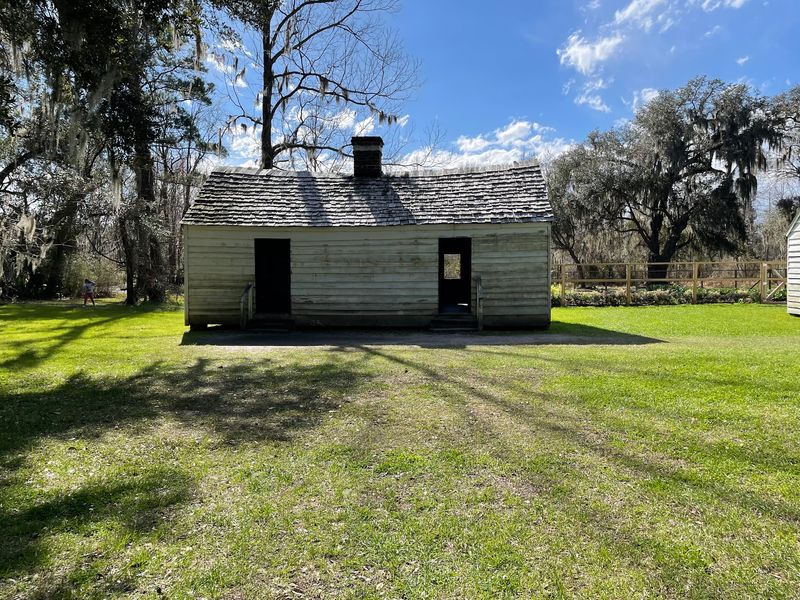
Weathered buildings spaced across open land reveal more than a polished mansion ever could. Magnolia Plantation, part of Cane River Creole National Historical Park, is reached at 5549 Highway 119, Derry, LA, where the National Park Service preserves one of Louisiana’s most intact plantation landscapes.
Visitors should understand one important detail before arriving: the historic main house remains privately owned and is not open as part of the public NPS experience.
The national park preserves the working landscape and outbuildings, including enslaved-worker and later tenant cabins, the plantation store, blacksmith shop, overseer’s house, and gin barn.
That is actually what makes Magnolia so powerful.
Instead of reducing plantation history to wallpaper, furniture, and the lives of wealthy owners, the surviving spaces make labor visible. The National Park Service interprets a system that began with human slavery and continued through tenant farming, sharecropping, and later wage labor.
Walk between the cabins and agricultural structures slowly. Distances matter.
The placement of buildings matters. So does the fact that generations of people worked here long after emancipation.
Check current NPS conditions before driving out because schedules for interior access can vary.
Magnolia is haunting because the landscape still explains how the system functioned.
Destrehan Plantation
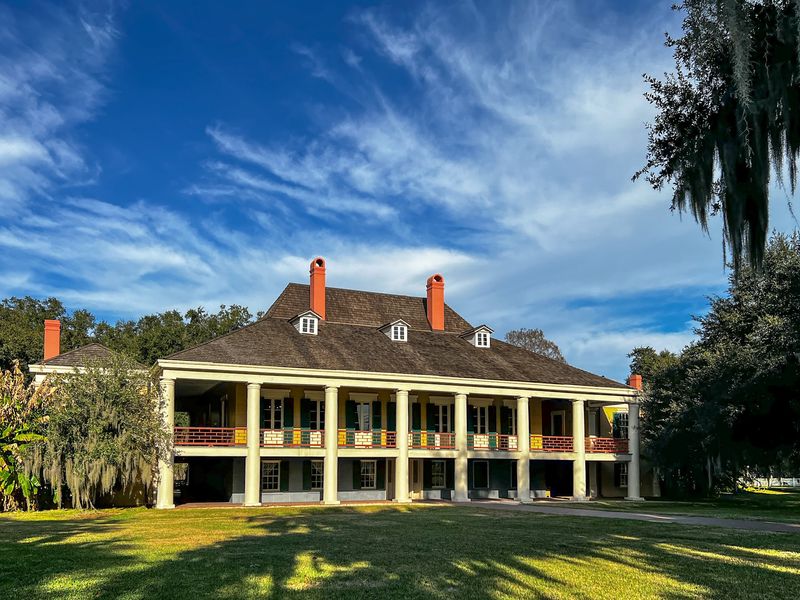
The broad galleries and orderly facade initially suggest the familiar River Road plantation image. The history underneath becomes considerably less comfortable once the tour begins.
Destrehan Plantation stands at 13034 River Road, Destrehan, LA 70047, where construction on the French Colonial house began in 1787. Its own research credits Charles Paquet, who was enslaved when commissioned for the project and later gained his freedom during construction, as the skilled builder responsible for the house.
The site also preserves a direct connection to the 1811 German Coast Uprising, one of the largest revolts by enslaved people in United States history. After the uprising was suppressed, one of the tribunals that condemned captured participants operated at Destrehan, with Jean Noël Destrehan among the judges.
The museum now includes an exhibit dedicated to that history.
That is where the property’s real weight comes from.
The current guided experience includes the historic house and an enslaved cabin, while additional exhibits address both the uprising and the post-Civil War Rost Home Colony associated with the Freedmen’s Bureau.
Tours currently begin at 9:30 a.m. and run through the afternoon.
Go for the architecture, but do not let it control the story.
Oak Alley Plantation
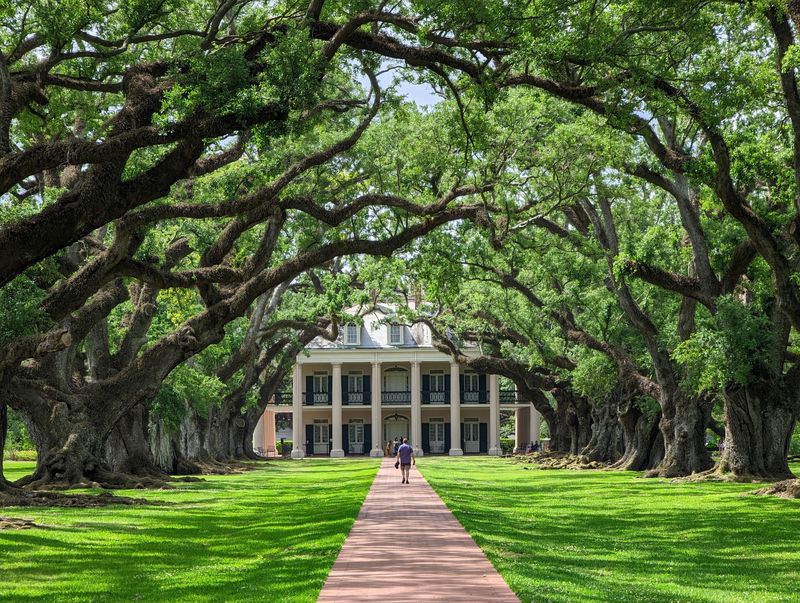
Few Louisiana landscapes are more immediately cinematic than the double row of live oaks leading toward this house. Oak Alley Plantation is at 3645 Highway 18, Vacherie, LA 70090, where the trees form a long corridor between the Mississippi River and a nineteenth-century Greek Revival mansion.
The visual perfection is precisely why a visit needs context. Oak Alley Foundation now interprets the property not only through the Big House but through exhibits focused on the enslaved men, women, and children whose labor sustained the sugar plantation.
Its Slavery at Oak Alley exhibit presents individual lives, working conditions, and what happened to plantation labor after emancipation.
Even the celebrated oak alley carries labor history. Foundation research discusses enslaved workers being involved in moving and planting mature trees to shape the landscape visitors photograph today.
That changes the experience of walking beneath them.
The trees remain extraordinary. Their symmetry, heavy branches, and filtered light can make the approach seem almost fictional, especially early or late in the day.
But beauty should not flatten the property into scenery.
Oak Alley is currently open daily, with guided Big House visits running throughout the day and self-guided historical exhibits available across the grounds.
Laurel Valley Plantation
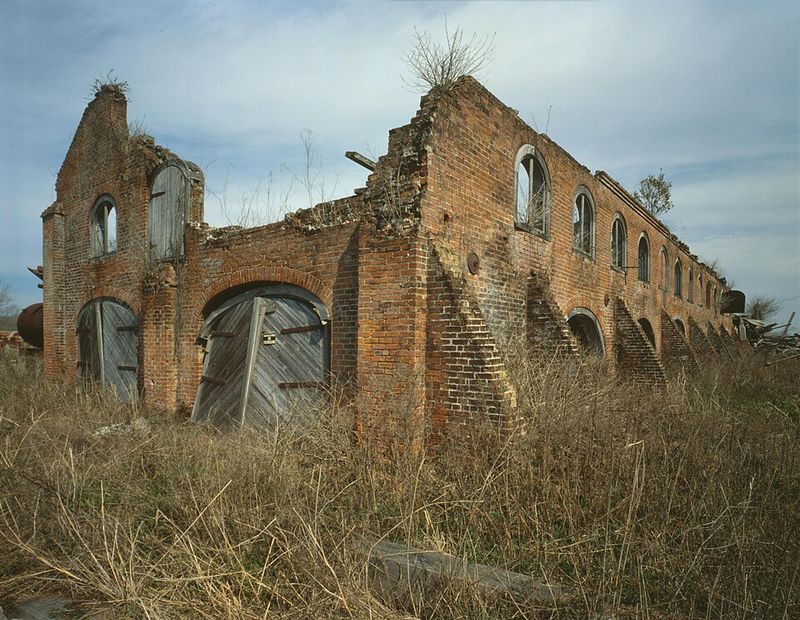
Rows of weathered wooden buildings create a different kind of plantation landscape outside Thibodaux. Instead of one mansion dominating the scene, Laurel Valley preserves nearly 60 original structures associated with a vast nineteenth- and twentieth-century sugar operation.
The best visitor starting point is the Laurel Valley Store and Museum at 595 Highway 308, Thibodaux, LA 70301.
The scale is what makes the place linger in memory.
Worker housing, agricultural buildings, and other surviving structures stretch through a landscape that continued functioning long after slavery ended, carrying plantation agriculture into systems of tenancy and wage labor. Louisiana’s official tourism office describes Laurel Valley as the largest surviving nineteenth- and twentieth-century sugar plantation complex in the United States.
Time and weather have given the buildings an appearance no movie set could reproduce convincingly. Cypress boards fade, roofs sag, vegetation presses inward, and empty spaces between structures allow the former population to become almost imaginable.
The property now offers historic village tours, while the store and museum provide the practical arrival point. Current local tourism information lists tours during the day, but checking ahead is wise because access arrangements can change.
Talbert-Pierson Cemetery Grave Houses
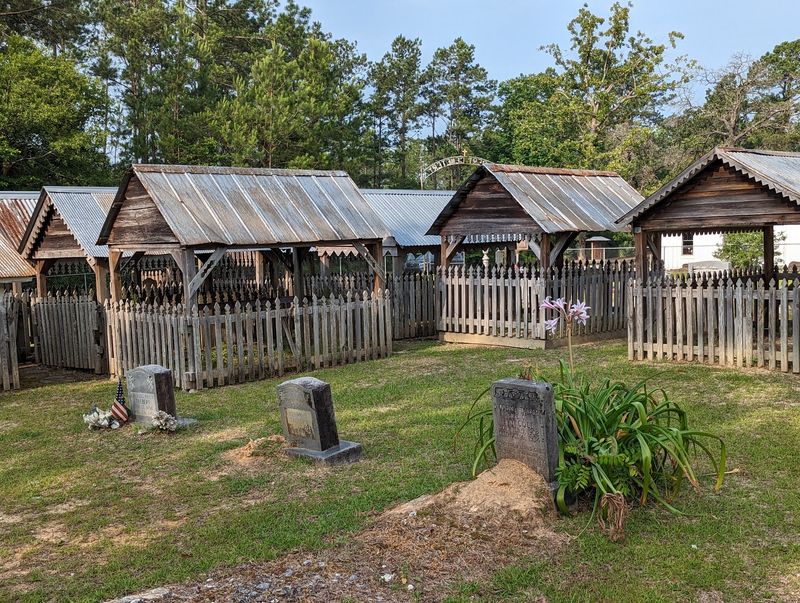
Tiny wooden houses standing above graves can make the brain hesitate before it understands what it is seeing. Talbert-Pierson Cemetery lies beside Pine Grove Methodist Church near Highway 277, Cravens, LA 70656, in rural Vernon Parish.
The cemetery is known for its unusual grave houses, small roofed structures built above individual burial sites. Vernon Parish tourism notes that their exact origins remain uncertain.
One traditional explanation is that they protected graves before fencing became common, with locally cut wood shaped into decorative pickets and topped with metal roofs. Some families have continued the practice into more recent generations.
That uncertainty makes the site more interesting rather than less.
The structures are clearly acts of care, but their forms blur the line between architecture, folk art, and memorial. Some resemble tiny homes.
Others look almost like miniature chapels or shelters built against Louisiana rain.
The cemetery’s grave-house tradition was significant enough to earn National Register recognition.
There is no theatrical haunted-house experience waiting here, and that is exactly how it should be.
Visit quietly. Stay on obvious paths, never touch or enter the structures, and remember that these are family graves.
De La Ronde Ruins
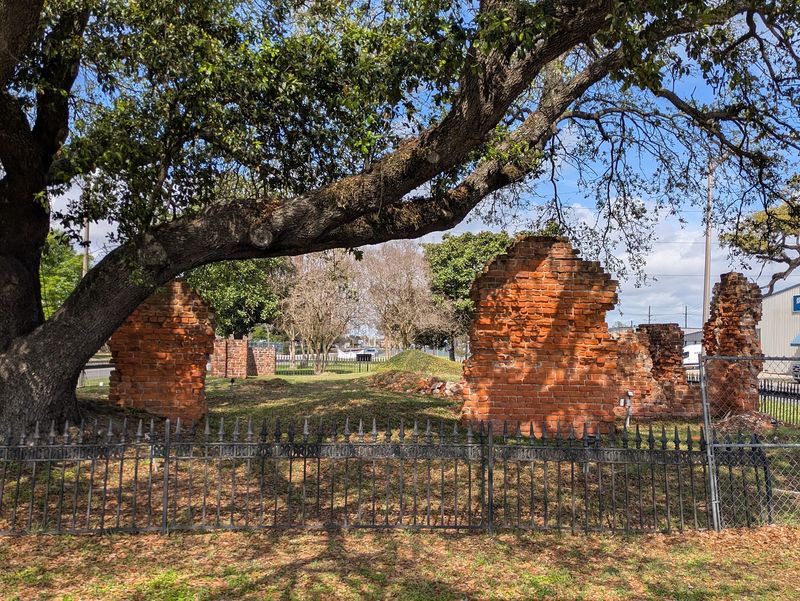
Modern traffic makes these ruins seem impossible at first. Brick fragments sit in the median of West St. Bernard Highway near Fenelon Street in Chalmette, with a practical navigation point around 500 W.
St. Bernard Highway, Chalmette, LA 70043.
What survives belonged to the plantation of Pierre Denis de La Ronde, and the ruins are directly connected to the final campaign of the War of 1812.
Fighting crossed this and neighboring plantations during the December 23, 1814 night battle. On January 8, 1815, the de La Ronde house was used by British forces as a temporary headquarters and field hospital during the Battle of New Orleans.
Historical interpretation identifies the surviving ruins as the final structural remnant directly associated with the battle still standing in this extended landscape.
The house survived the war only to burn later in the nineteenth century. What remained eventually became a familiar roadside ruin, and preservation specialists have since stabilized the masonry using historic bricks and mortar formulated to resemble the original material.
This is not a conventional attraction with a visitor center or leisurely parking area. Stop only where doing so is legal and safe, and avoid crossing busy traffic simply for a closer photograph.