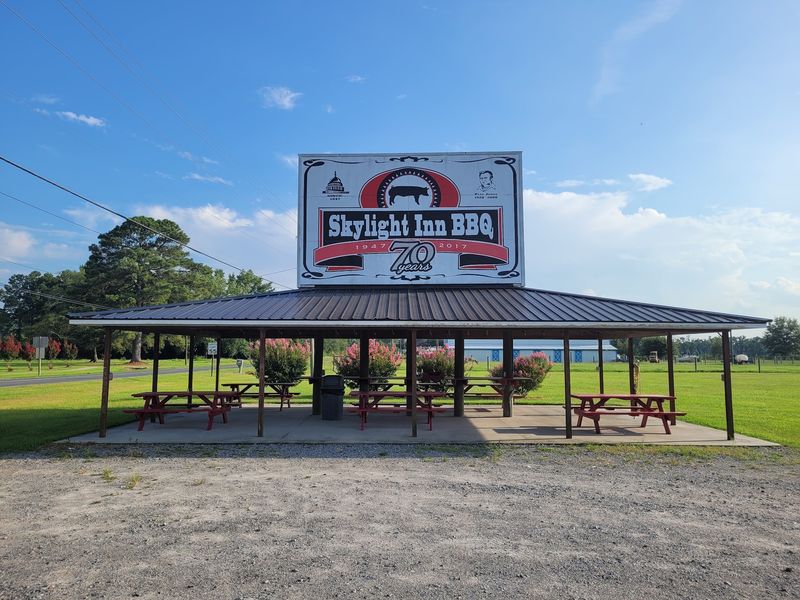
Somewhere in North Carolina, a cinder-block building without much fanfare is turning out barbecue that makes people rearrange their travel plans. The smell hits you before the sign does, and the line of regulars tells you everything about what is waiting inside.
This is the kind of place that does not need to advertise because the food has been doing the talking for decades. If you have ever wondered what it feels like to eat something that a whole region grew up loving, keep reading.
The Clues Point to a Plain-Dressed Barbecue Destination

Dudley, North Carolina is not a town most GPS devices announce with much ceremony, but food writers and barbecue road-trippers have been pointing their cars toward it for years. The restaurant drawing them in is Grady’s Barbecue, a cinder-block building on the side of the road that opened in 1986 under the care of Steve and Gerri Grady.
Based on the available reporting, Grady’s is the strongest match for the article’s central clues, though those clues are not so unique that the identification can be called certain.
Our State magazine’s profile of Grady’s Barbecue describes a whole-hog operation set inside a plain structure with little need for elaborate signage. That profile, along with coverage from the Raleigh News and Observer, establishes the restaurant’s reputation as something genuinely worth seeking out.
The setting is unassuming in the truest sense: no polished dining room, no branded merchandise display, no theatrical open kitchen for customers to photograph.
What the restaurant does have is a following that extends well beyond Wayne County. The News and Observer identified Grady’s as a traditional wood-cooked whole-hog restaurant worth a road trip, and Our State reported that some visitors have traveled from as far as New York specifically to eat there.
That kind of pull is not manufactured by a marketing campaign. It grows slowly, the same way the barbecue cooks, through word of mouth and the memory of a meal that stayed with you longer than expected.
Calling Grady’s hidden would be inaccurate. It has received meaningful press attention and has a documented following.
Calling it universally beloved would overreach too, since taste is personal and not every local resident has an opinion on it one way or another. What the evidence does support is a plain roadside smokehouse that has earned genuine destination status through its food and its process, not through its decor or its social media presence.
Why Eastern North Carolina Starts With the Whole Hog
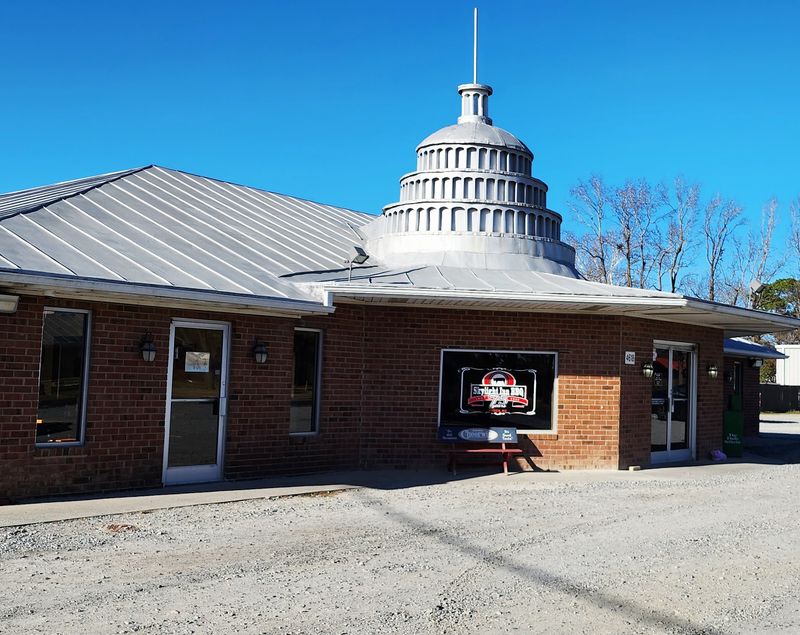
North Carolina’s barbecue identity runs deep, and understanding Grady’s requires knowing the regional tradition it belongs to. Eastern North Carolina barbecue has long centered on cooking a split or whole hog slowly over hardwood coals, then chopping or pulling the meat and seasoning it with a sauce built on vinegar and pepper.
NCpedia’s entry on North Carolina barbecue traces this tradition through centuries of cooking practice tied to hog-raising culture across the eastern part of the state.
The whole-hog approach means the pitmaster is working with every part of the animal at once, balancing cuts that cook at different rates, from the shoulders to the hams to the belly. When it all comes together properly, the finished meat has layers of flavor and texture that a single cut simply cannot replicate.
That complexity is part of what keeps people loyal to the tradition.
Lexington-style barbecue, practiced primarily in the Piedmont region of the state, follows a different path. NCpedia’s historical overview of North Carolina barbecue explains that Lexington-style restaurants generally focus on pork shoulder or butt rather than the whole animal, and the sauce in that tradition typically includes tomato, giving it a slightly sweeter, richer character.
Neither style is a lesser version of the other. Both belong to North Carolina’s barbecue history, and both have passionate defenders across the state.
The distinction matters when you are trying to understand what Grady’s represents. The North Carolina Pork Council notes that North Carolina’s barbecue culture is passed through families, restaurants, and community gatherings rather than through any single definitive institution.
Eastern whole-hog barbecue is a major traditional style, but framing it as the only authentic North Carolina approach would leave out a rich Piedmont tradition that has its own deep roots and devoted following.
A Patient Fire Does the Heavy Lifting
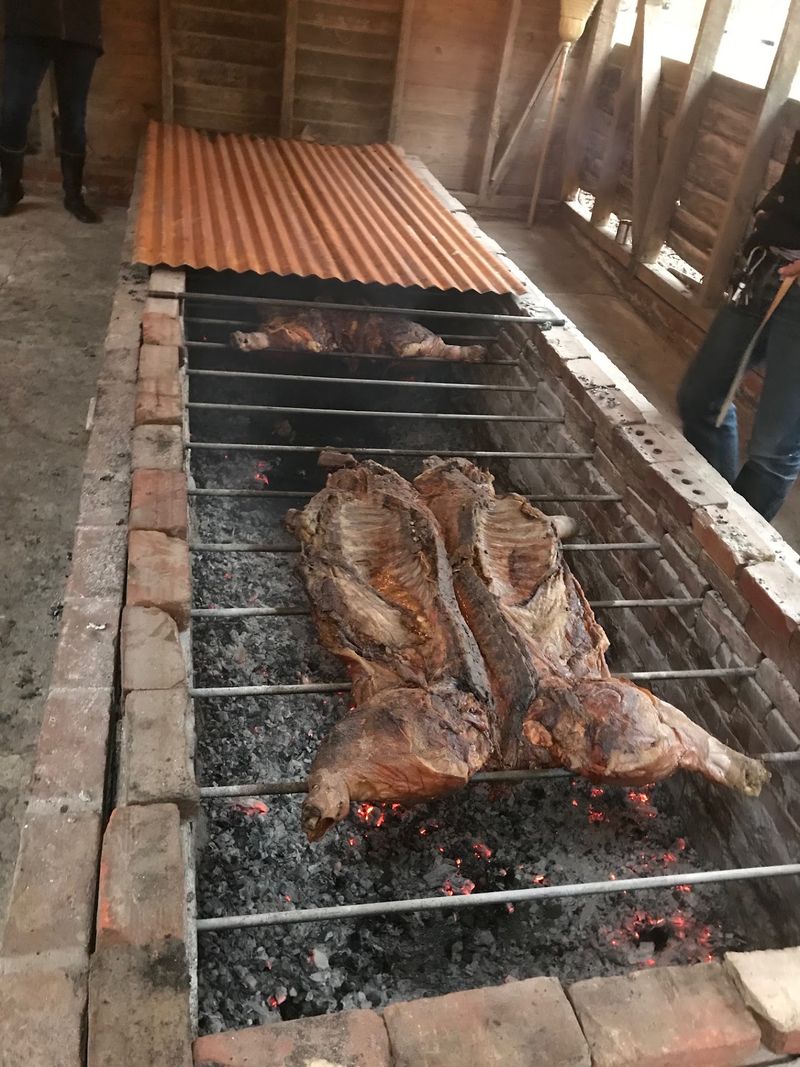
Patience is the ingredient that does not appear on any menu. At Grady’s, the cooking process is an extended one, rooted in the kind of overnight or all-day commitment that defines traditional whole-hog barbecue across Eastern North Carolina.
The historical account documented by Our State describes a fire started with charcoal, followed by the use of hickory and oak to carry the cooking through its long duration. That detail matters because it is more layered than a simple claim that the restaurant burns only fresh hardwood from start to finish.
Our State’s reporting on Grady’s cooking method identifies hickory and oak as the primary woods involved in the process. Both are hardwoods with dense grain structures that produce steady, long-burning coals and a smoke character that Eastern North Carolina pitmasters have favored for generations.
Hickory tends to deliver a bold, assertive smoke, while oak burns cleaner and slightly milder, and the combination creates a flavor profile that is recognizable to anyone who grew up eating barbecue in this part of the state.
NCpedia’s historical overview of the tradition notes that traditional whole-hog cooking often lasts overnight, though the precise duration depends on the size of the hog, the design of the pit, and the judgment of the pitmaster. No confirmed cook time from Grady’s is available from public sources, and it would be misleading to borrow a specific number from another restaurant and apply it here.
What the sources do support is that the process is slow, intentional, and not something that can be rushed without losing what makes it worth eating.
One more thing worth noting: the documented account of Grady’s process includes changes over time, including a shift in how the initial fire is started. Presenting the restaurant as cooking exactly the same way it did when it opened in 1986 would not be accurate.
Traditions evolve, and the people who tend them make adjustments based on experience. That is not a flaw in the story.
If anything, it is evidence that the process is still being actively tended rather than simply repeated by habit.
The Plate Carries a Regional Grammar
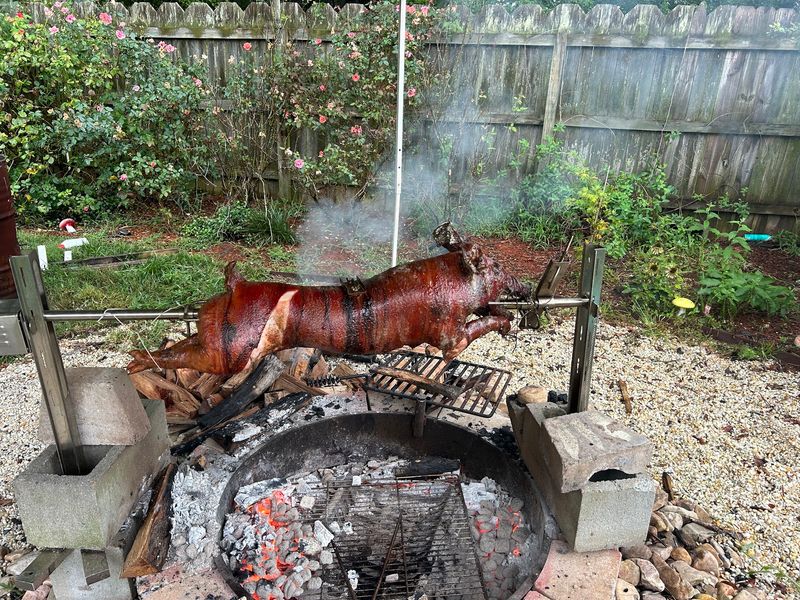
Eating Eastern North Carolina barbecue is not just a meal. It is a lesson in regional shorthand, where every element on the plate has a role and a history.
The chopped or pulled pork arrives seasoned with a vinegar-and-pepper sauce that is sharp enough to cut through the richness of slow-cooked fat without overpowering the smoke underneath. NCpedia’s overview of North Carolina barbecue places vinegar-based seasoning at the center of Eastern-style tradition, distinguishing it from the tomato-influenced sauces common in the Piedmont.
Around the pork, the plate typically fills in with slaw, hush puppies, and other accompaniments that vary from one kitchen to the next. Some restaurants serve the slaw on the side, others pile it directly onto the sandwich, and the ratio of cabbage to dressing is a matter of strong local opinion.
Hush puppies come in different shapes and sweetness levels depending on who is making them. The precise recipes and side dishes at Grady’s are not publicly documented in enough detail to describe with confidence, so the specifics here reflect the broader Eastern North Carolina tradition rather than any invented menu particulars.
The North Carolina Pork Council describes the state’s barbecue culture as one built on community and shared meals rather than on any single standardized recipe. That framing is useful here.
The plate at a traditional Eastern North Carolina smokehouse is not trying to be definitive. It is trying to be familiar, and for people who grew up eating this food, that familiarity carries real emotional weight.
For first-timers, the straightforward presentation can be a surprise: no architectural garnishes, no drizzled reductions, just barbecue that has been cooked long enough to speak for itself.
The Smokehouse Earned Its Detour Reputation
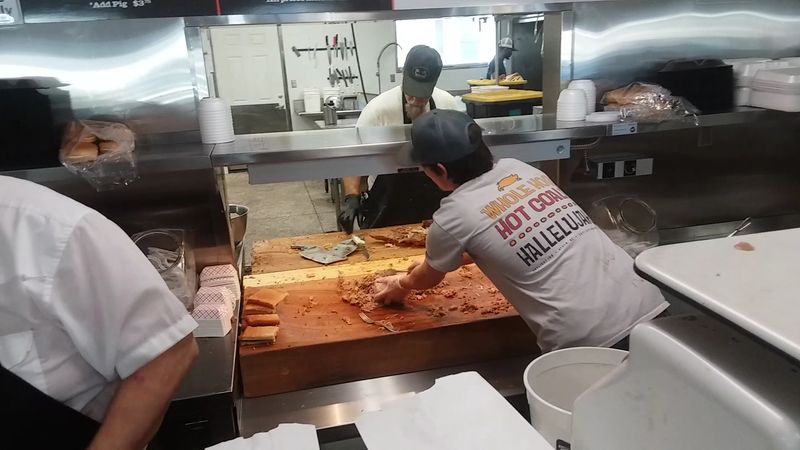
Most restaurants earn regulars from the surrounding neighborhood. Fewer earn visitors who plan a trip around them.
Grady’s sits in that second category, and the evidence for it comes from documented sources rather than from promotional copy. Our State reported that some visitors have traveled from New York to eat there, a detail that says something real about the kind of pull a small roadside smokehouse can develop when the food consistently delivers.
The Our State profile presents Grady’s as a destination rooted in process and tradition rather than in atmosphere or novelty. That framing helps explain the long-distance appeal.
A diner willing to reroute a road trip is usually not chasing a trendy concept or a famous chef. They are chasing something they have heard described in terms that made them genuinely curious, and at Grady’s, those descriptions tend to focus on the cooking itself.
The News and Observer characterized Grady’s as worth a road trip in the context of listing traditional barbecue restaurants across North Carolina, placing it alongside other established whole-hog operations. That kind of editorial endorsement, from a publication covering the state’s food scene, carries more weight than an anonymous recommendation because it reflects a journalist’s considered judgment rather than a single diner’s enthusiasm.
Framing Grady’s as the best barbecue in North Carolina would go beyond what the sources support. Barbecue preference is personal, regional loyalties run strong, and there are excellent whole-hog operations scattered across Eastern North Carolina.
What can be said with confidence is that Grady’s has built a documented reputation for destination-worthy barbecue, and that reputation was earned over years of cooking, not overnight. Some diners make a significant detour for it.
That is a meaningful statement about a cinder-block building on a rural road.
A Long Drive Deserves a Little Planning
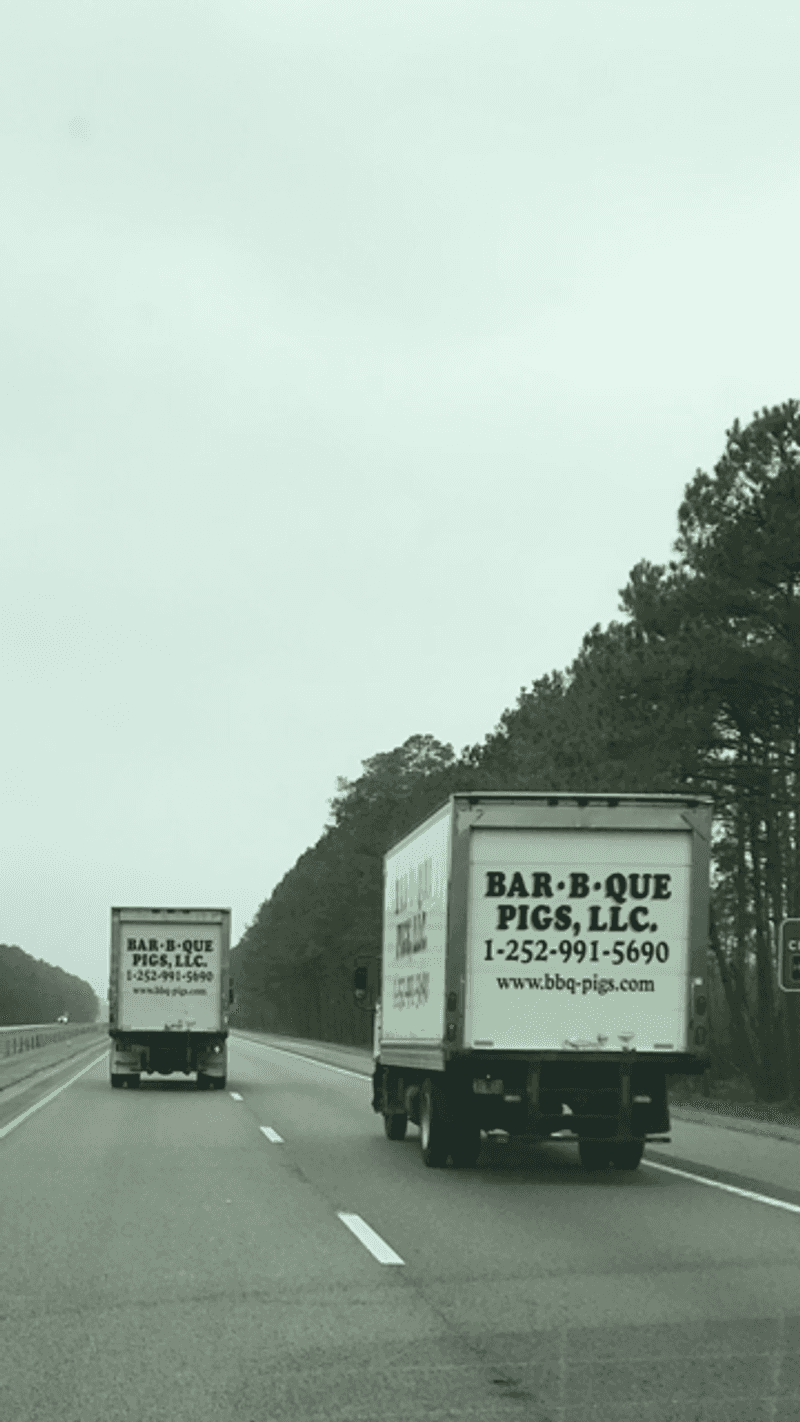
Before loading up the car and pointing it toward Dudley, a few minutes of preparation will make the trip go much more smoothly. Third-party listing sites report that Grady’s operates Wednesday through Saturday with limited daytime hours, but those listings are not maintained by the restaurant itself.
Hours at small, family-run smokehouses can shift without much notice, especially when a hog sells out early or a family situation changes the schedule. Call ahead or check for the most current information before committing to a long drive.
If you are planning to take barbecue home rather than eat on site, handling it properly during the trip back matters. USDA guidance on cooked pork recommends refrigerating leftovers within two hours of cooking, or within one hour when the surrounding temperature climbs above 90 degrees Fahrenheit.
A cooler with ice packs in the back seat is a straightforward solution for a drive of any real length, especially during the warmer months.
When you reheat the barbecue at home, USDA recommends bringing leftovers to an internal temperature of 165 degrees Fahrenheit. That threshold applies to reheating at home and is not a description of how the restaurant cooks or finishes the meat.
A food thermometer is the reliable way to confirm that temperature, since visual cues like color or texture are not dependable indicators of whether food has been heated safely. Smoke rings and tenderness are signs of a well-cooked barbecue, but they are not substitutes for checking the temperature of reheated leftovers.
Getting there and eating on site removes most of these concerns, and a meal eaten at the source is almost always the better experience anyway. Pack a cooler just in case, confirm the hours before you leave, and give yourself enough time to enjoy the drive through Wayne County without rushing.
The Tradition Is the Destination
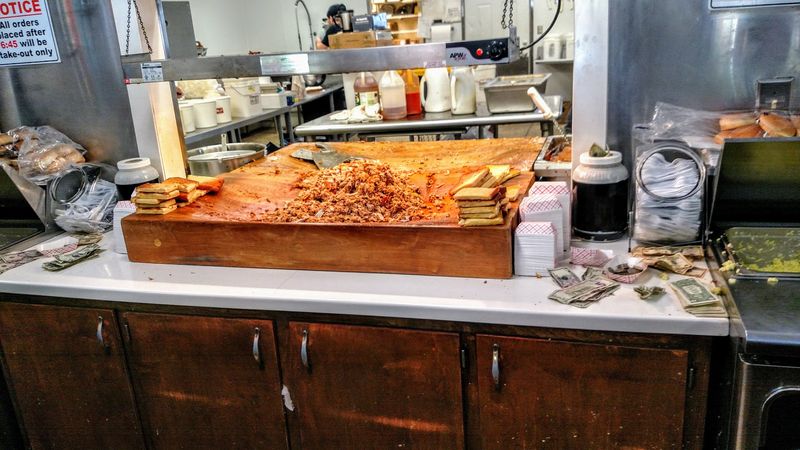
Pull back far enough from any single meal at Grady’s and what comes into focus is not just a restaurant. It is a thread connecting a particular way of cooking to a particular landscape, and to the generations of people who learned to love this food long before they could explain why.
Our State’s portrait of Grady’s frames the restaurant as a place where the process itself is the point: the extended fire, the hickory and oak, the whole hog, and the unhurried pace that makes the final plate possible.
Grady’s is the closest documented match to the clues in this article’s title, but it is not the only Eastern North Carolina smokehouse cooking this way, and the sources do not establish it as uniquely superior to every other whole-hog operation in the region. What they do establish is a restaurant with a plain setting, a documented process rooted in regional tradition, and a reputation that has drawn visitors from well outside the county.
North Carolina’s barbecue culture belongs to the whole state, carried forward through family recipes, community cookouts, and modest roadside buildings that do not look like much until you smell what is happening out back.
The drive to Dudley is the kind of trip that reminds you why food made with time and care feels different from food made quickly. The cinder-block walls and the gravel lot are not obstacles to a great meal.
They are part of what makes it honest.