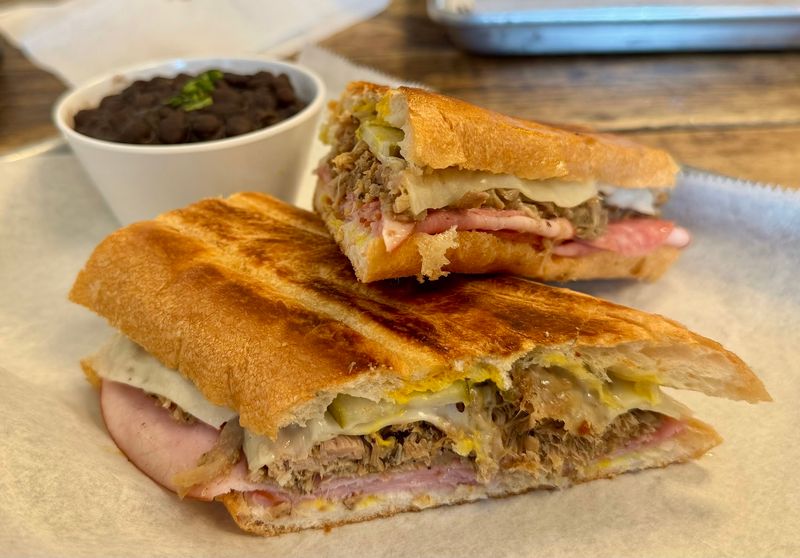
Somewhere in Florida, tucked behind a plain counter with a well-worn press and no pretense, a Cuban sandwich arrives wrapped in paper and still hissing from the heat. The bread is golden and slightly flattened, the cheese barely visible through the crisp seam, and the smell of roast pork and mustard hits before you even unwrap it.
Places like this rarely advertise much, but the regulars know exactly where to find them. Understanding what goes into that sandwich, and why Tampa became so closely tied to it, turns a good lunch into something worth thinking about.
An Unassuming Counter, Once the Business Is Confirmed
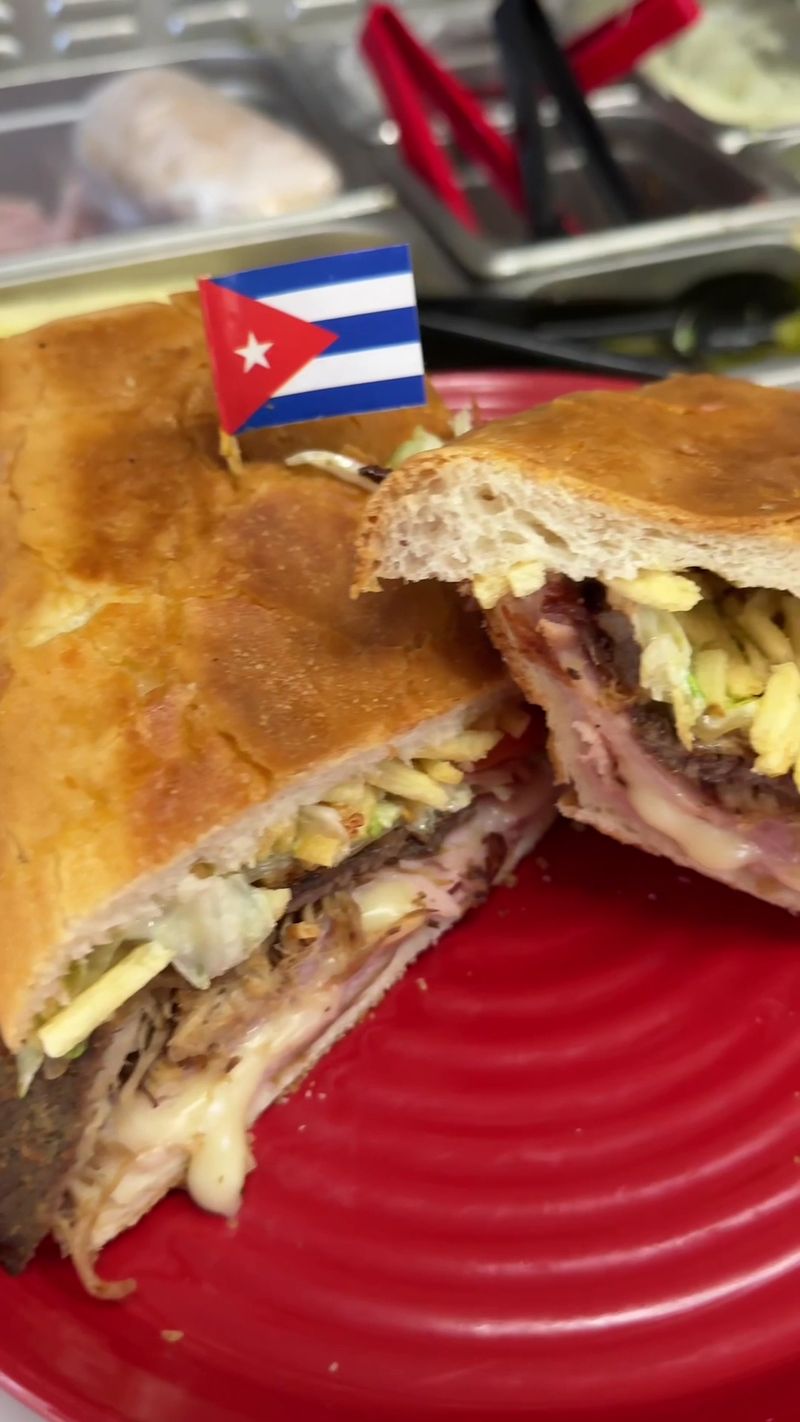
Walk up to a counter like this and the first thing you notice is the press. It sits heavy and flat on the prep surface, already warm, already waiting.
There is no performance here, no open kitchen theater or artisan chalkboard fonts, just the hiss of bread meeting a hot surface and the faint smell of pork and mustard drifting toward the door.
Several Tampa-area counters fit this description honestly. Brocato’s Sandwich Shop, which opened in 1948, is one of the oldest continuously operating sandwich counters in the area.
West Tampa Sandwich Shop, which identifies itself as established in 1992 and promotes its honey Cuban sandwich, is another. La Segunda Bakery’s Ybor City location describes itself as the “Home of the Original Cuban Sandwich” and draws both locals and visitors to its counter daily.
Each of these places has its own character, its own sourcing, and its own version of the sandwich. Before naming any one of them as the subject of a feature article, a writer needs to visit the counter, confirm the pressing practice firsthand, and verify current hours, menu, and ownership directly with the business.
What this article can do right now is explain what a Tampa-style Cuban sandwich actually is: the bread, the layered fillings, the press, and the regional history that shaped all of it. The sensory experience at any honest Tampa counter, that warm paper bundle, the crackle of the first bite, is the starting point for understanding why this particular sandwich earned a following that has lasted generations.
Tampa Popularized a Sandwich With Cuban Precursors
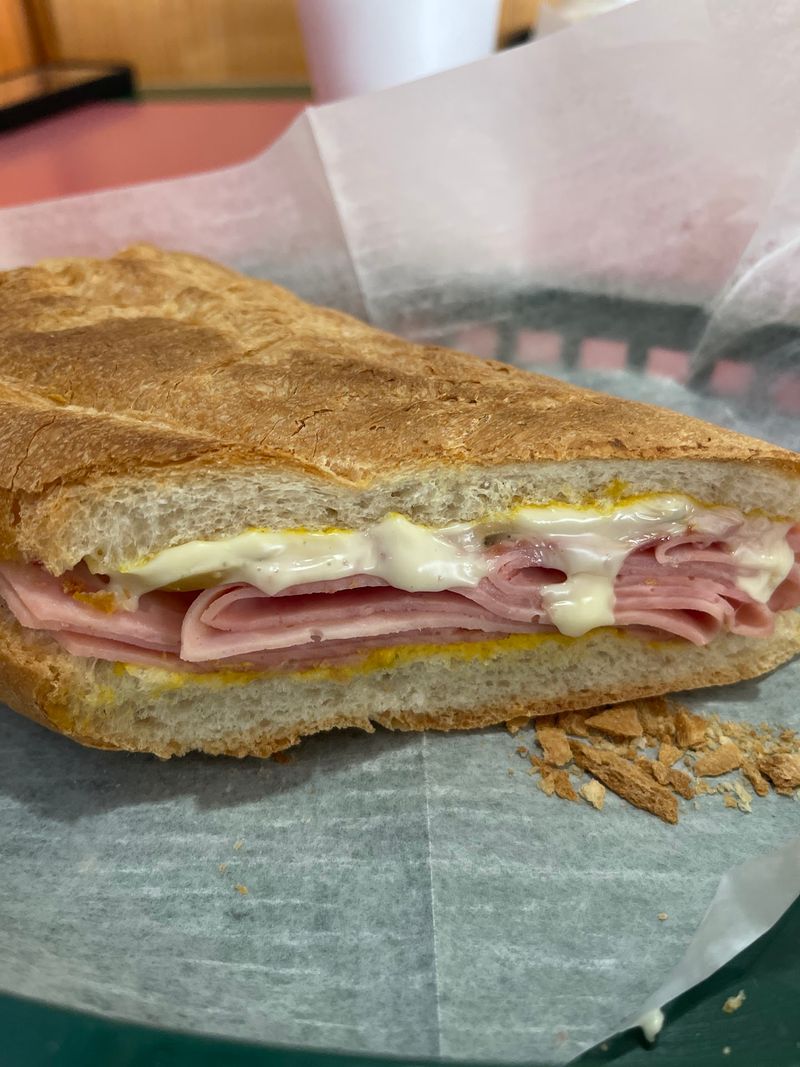
The story of the Tampa-style Cuban sandwich does not begin in Tampa. Researchers at the University of South Florida have documented historical evidence for an earlier Cuban sandwich, sometimes called the mixto, that predates the version associated with Ybor City and West Tampa.
USF’s account of the sandwich’s history describes Cuban precursors before explaining how Tampa’s immigrant communities transformed and popularized the sandwich in the United States.
Tampa’s role was substantial. In the late 1800s and early 1900s, Ybor City became home to large communities of Cuban, Spanish, and Italian immigrants, many of them employed in the cigar industry.
Historical accounts from Florida Memory connect Ybor City’s sandwich culture directly to those cigar factory workers, who needed a filling, portable, affordable midday meal. The Cuban sandwich, pressed flat and packed with meat, fit that need exactly.
West Tampa developed a parallel sandwich tradition across the Hillsborough River. Both neighborhoods shaped what most people now recognize as the Tampa-style Cuban: a specific combination of ingredients on Cuban bread, pressed until the exterior is crisp and the interior is warm and cohesive.
A discussion of the sandwich’s layers published by the University Press of Florida describes the ingredient question as genuinely contested history, not a settled recipe handed down from a single source. Tampa did not produce one binding national standard.
What it produced was a regional style with enough consistency to be recognizable and enough variation to keep the argument going at lunch counters across the city. That tension between tradition and individuality is part of what makes the sandwich interesting.
The Core Ingredients Build More Than a Deli Sandwich
Cuban bread is the structural foundation, and it is not interchangeable with a hoagie roll or a baguette. The crust is thinner and more delicate, which means the press can flatten it without making it tough.
La Segunda Bakery, which has been baking Cuban bread in Tampa since 1915, supplies bread to restaurants across the region, and its long presence in the city reflects how central the bread itself is to the sandwich’s identity.
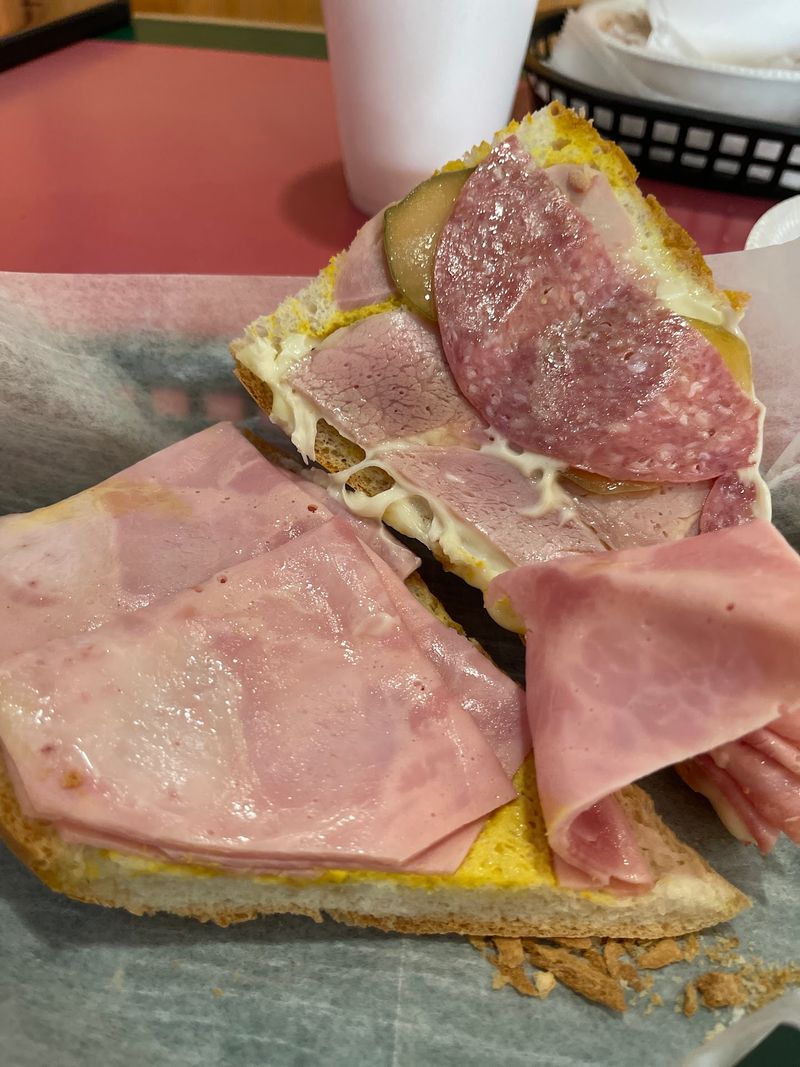
The City of Tampa’s Cuban Sandwich Month proclamation offers the broadest official description of the traditional profile. Tampa’s proclamation describes a sandwich built with Cuban bread, roast pork, ham, Swiss cheese, pickles, and yellow mustard, buttered or oiled and pressed.
That combination creates a specific set of contrasts: the richness of roast pork against the sharpness of pickles, the mild melt of Swiss cheese against the bite of yellow mustard, the tender interior of the bread against a pressed, toasted crust.
Roast pork prepared with mojo, a marinade built on citrus and garlic, is the ingredient that most clearly separates a Cuban sandwich from a generic pressed deli sandwich. The pork brings a savory, slightly tangy depth that smoked ham alone cannot replicate.
Ham adds salt and a different kind of smokiness. Swiss cheese melts cleanly without overwhelming the other flavors.
La Segunda’s Kennedy location menu, which lists Cuban bread, mojo-marinated roast pork, smoked ham, Genoa salami, Swiss cheese, pickles, and sauce as the Kennedy-location sandwich’s components, gives a useful picture of the Tampa-style profile, though that menu belongs to the Kennedy branch specifically. Any claims about what a different location serves require separate confirmation from that counter’s current menu or direct observation.
Heat and Pressure Create the Signature Texture
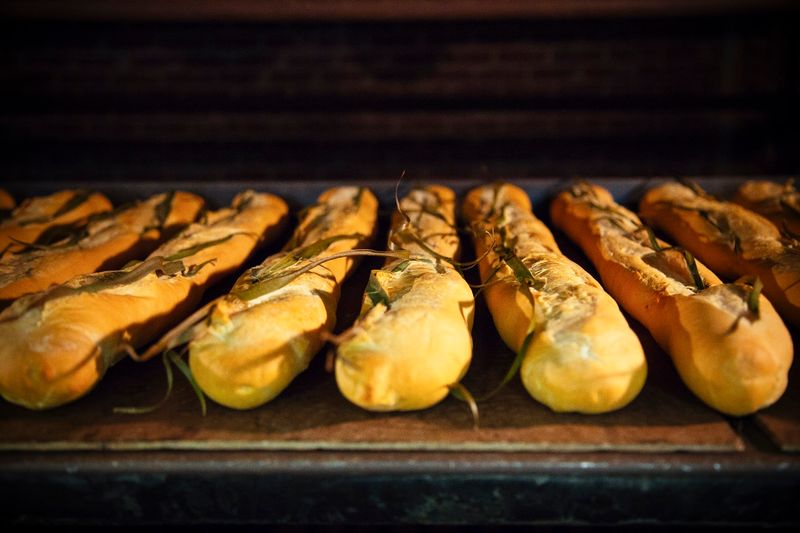
Pressing is not a finishing touch. For a Tampa-style Cuban sandwich, heat and pressure are the process that transforms a stack of ingredients into a unified thing.
The bread flattens, the crust toasts, the cheese softens and begins to bond with the pork and ham, and the pickles release just enough brine to season the layers around them. Without the press, the sandwich is an assembly.
With it, the sandwich becomes something you eat in two hands and do not put down.
The City of Tampa’s Cuban Sandwich Month proclamation and historical sources including Florida Memory’s Ybor City accounts consistently describe the sandwich as pressed or heated, which reflects how central the step is to the style’s identity. Tampa’s official proclamation describes the sandwich as buttered or oiled and pressed, but it does not specify a press temperature, a required compression depth, or a cooking duration.
Those details vary by shop and equipment.
The sensory result of a good press is easier to describe than to quantify. The exterior of the bread should be golden and slightly rigid, giving a faint crackle when you press the sandwich with a finger.
The interior stays soft. The cheese should be fully melted, not just warm at the edges, and the fillings should feel cohesive rather than layered and separate.
La Segunda’s Ybor location, which identifies itself as the Home of the Original Cuban Sandwich, offers pressed sandwiches, though confirming that every order across every menu variation receives the same treatment requires direct observation at that counter. Pressing affects texture and serving temperature; it is not a substitute for proper food handling or temperature control at any stage of preparation.
Salami Defines a Tampa Variation Without Settling Authenticity
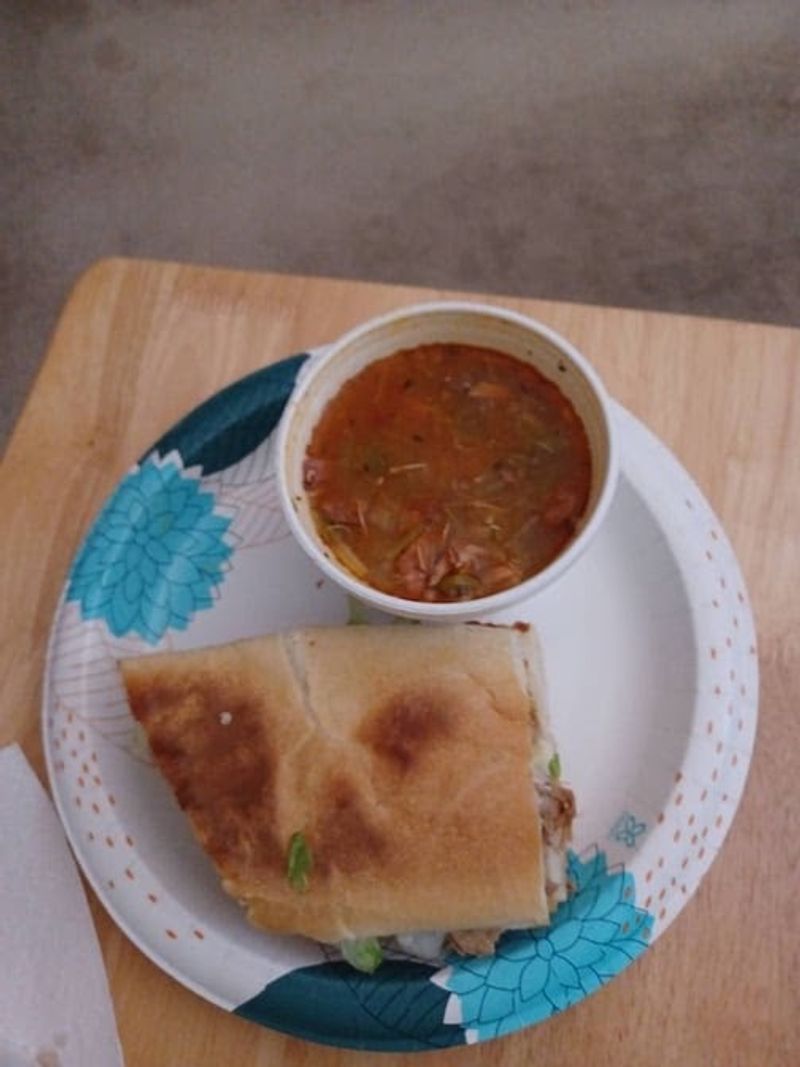
Genoa salami appears in many Tampa-style Cuban sandwiches, and its presence is directly connected to the city’s Italian immigrant community. When Italian workers settled in Ybor City and West Tampa alongside Cuban and Spanish immigrants, their food traditions mixed with the sandwich culture already taking shape in those neighborhoods.
Salami became a common addition, adding a cured, slightly fatty layer with a different flavor profile than the ham or roast pork.
The distinction between Tampa and Miami versions of the sandwich is real and well-documented. USF researchers describe salami as sometimes included in Tampa sandwiches, while Miami versions commonly omit it.
A University Press of Florida discussion of the sandwich’s history treats the salami question as one of the recipe’s central points of dispute, not a settled rule.
Using salami as an authenticity test creates more confusion than clarity. Some Tampa shops include it as a matter of course.
Others leave it out. A sandwich without salami is not automatically a lesser or incorrect version; it may simply reflect a different shop’s tradition, a customer’s preference, or a recipe that predates the Italian-influence additions.
The City of Tampa’s Cuban Sandwich Month proclamation describes the core profile without mandating salami as a universal requirement. What salami does, when it is included, is add a distinct cured-meat richness that complements the other layers.
Whether a specific counter includes it is a question answered by that counter’s current menu, not by any single regional rule.
Eat It Promptly for the Best Crust and Cheese
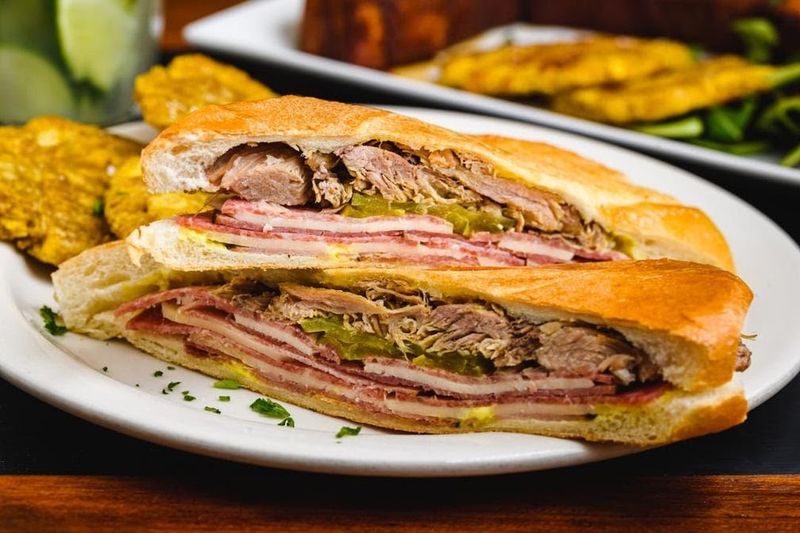
A pressed Cuban sandwich is at its best within minutes of leaving the press. The crust is still rigid, the cheese is fully molten, and the fillings are warm enough to release their full aroma with every bite.
Letting it sit too long means the crust softens as steam builds inside the wrapper, and the cheese begins to firm back up. Neither change is catastrophic, but the sandwich you eat at the counter is meaningfully different from the one you open an hour later in the car.
For a sandwich you are taking home, the quality advice and the safety advice point in the same direction but for different reasons. Eat it soon for the crust.
Refrigerate it promptly for safety. USDA guidance on leftovers recommends refrigerating perishable food within two hours of preparation, or within one hour when the ambient temperature is above 90 degrees Fahrenheit.
A sandwich containing roast pork, ham, and cheese qualifies as perishable.
Reheating a leftover Cuban sandwich is possible, and a press or a dry skillet over medium heat can restore some of the original crust. USDA guidance on reheating recommends bringing leftovers to an internal temperature of 165 degrees Fahrenheit throughout before eating.
A food thermometer is the only reliable way to confirm that.
Before visiting any of the Tampa-area counters mentioned in this article, check the business’s current hours, menu, and prices directly with the restaurant or through its official website. Hours, offerings, and ownership details can change, and what was accurate at the time of writing may not reflect what you find at the counter on a given day.
The Tampa-Style Cuban Sandwich Is a Regional Tradition, Not a Single Rule
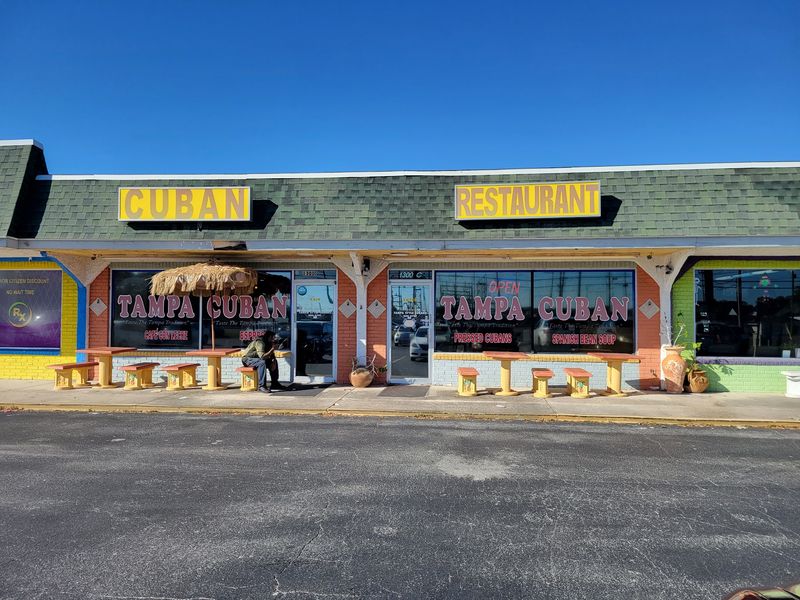
Cuban bread, roast pork, ham, Swiss cheese, pickles, yellow mustard, and a press that toasts the exterior and melds the interior: that combination is the Tampa-style Cuban sandwich in its broadest, most defensible form. Salami appears often, reflecting the Italian immigrant influence that shaped Ybor City and West Tampa, but its presence or absence does not determine whether a sandwich is authentic.
Variation among shops is part of the tradition, not a deviation from it.
Tampa’s role in the sandwich’s American history is significant and well-supported. USF researchers describe Tampa as central to the sandwich’s popularization in the United States, while also documenting Cuban precursors that belong in any honest account of the sandwich’s origins.
Tampa helped define and spread the style; it did not invent the idea from scratch, and Tampa’s own proclamation frames the sandwich as a tradition built through community and history rather than a single recipe fixed at a single moment.
Every shop that presses a Cuban sandwich in Tampa is working within that tradition and interpreting it through its own sourcing, its own bread, and its own sense of what the sandwich should taste like. The press is the constant.
The crackle of that first bite is the part that stays with you long after the paper is gone.