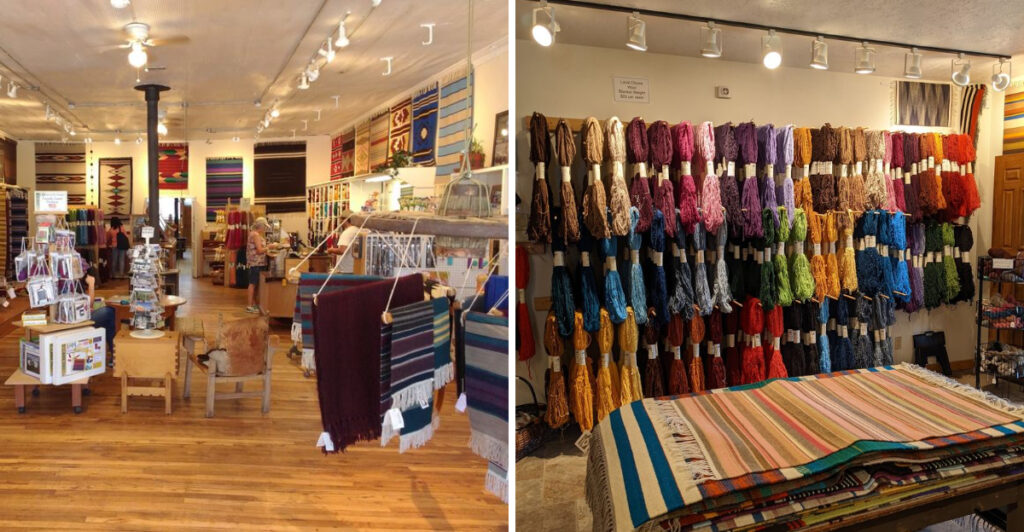
Some shops make you want to browse. This one makes you want to cancel the rest of your afternoon.
Shelves glow with yarn in countless shades, while handwoven pieces bring bursts of pattern to the rooms. Then the working looms pull your attention in another direction.
It feels creative without trying too hard.
That is part of the fun. You can wander from skeins to finished textiles and pause over the details in a handwoven rug.
Suddenly, it becomes easy to understand why fiber lovers get so excited about places like this. Even visitors who have never picked up knitting needles may find themselves slowing down for a closer look.
In New Mexico, where traditional craft and bold color feel right at home, this shop fits beautifully into the landscape. The place feels warm and tactile, with enough visual interest to make every room worth exploring before you head outside.
A Rustic Porch Gives The Shop Its Storybook First Impression
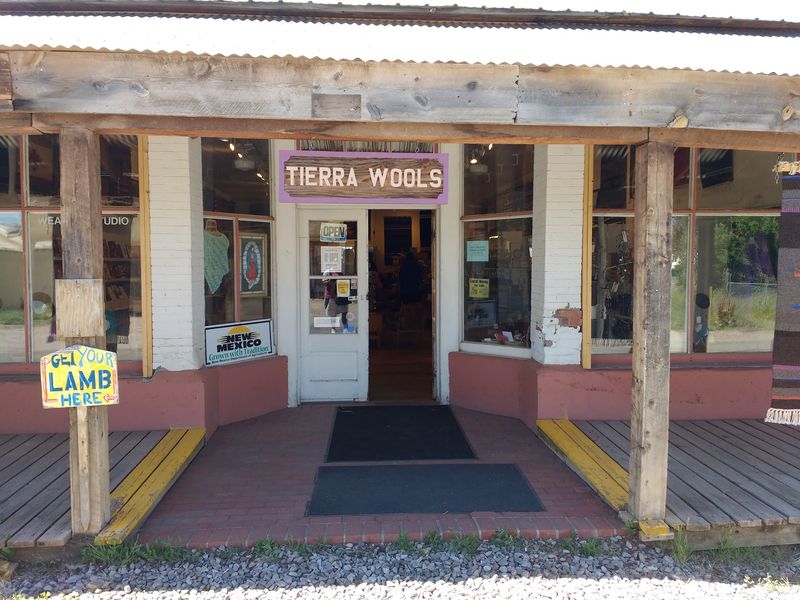
The impression begins before the door opens. The property sits just south of town along US Highway 64/84, set back from the road on wooded grounds.
New Mexico Magazine describes the entrance as a rustic farmhouse porch, and that detail gives the building much of its character. Handwoven Southwestern rugs hang from the eaves, placing color and craftsmanship right at the threshold.
The setting makes the shop feel connected to the landscape around it rather than separated from the work happening inside. In 2020, the business moved here after years in the historic T.D.
Burns Mercantile building in Los Ojos. The newer site was chosen partly for its brighter weaving studio, more functional classroom space, and proximity to areas used for gathering plants for natural dyeing.
That background adds meaning to the exterior. This is not simply a storefront decorated to catch attention.
The porch introduces the materials and regional craft traditions visitors will encounter indoors. Wooded surroundings soften the setting, while the hanging textiles signal that fiber work is central here.
The place is Tierra Wools at 2540 US-64 #84, Chama, NM 87520.
Handwoven Rugs Turn The Entrance Into A Burst Of Color
The rugs hanging outside do more than decorate the porch. They give visitors an immediate look at the kind of textile work associated with Tierra Wools, using strong Southwestern patterns and noticeable color against the wood of the building.
New Mexico Magazine compared the porch to an open-air art gallery, a description that fits the way the pieces are displayed beneath the eaves. That outdoor presentation also creates a natural bridge between the shop and the weaving studio inside.
Tierra Wools has been producing handwoven work since 1983, and its current gallery carries rugs, tapestries, blankets, and other fiber pieces. Many of those works are made using techniques tied to Río Grande weaving traditions, which remain central to the operation.
The contrast is photogenic. Textiles bring geometric pattern and saturated color to a rustic exterior framed by trees, so the entrance already feels connected to what the shop is about.
Visitors do not have to study weaving to understand the appeal. Workmanship is visible before they cross the threshold.
Once inside, that same emphasis continues on a larger scale. The porch is essentially the opening scene, offering a quick preview of the color, texture, and handwork waiting throughout the shop.
Room After Room Opens Into Another Fiber-Filled Scene
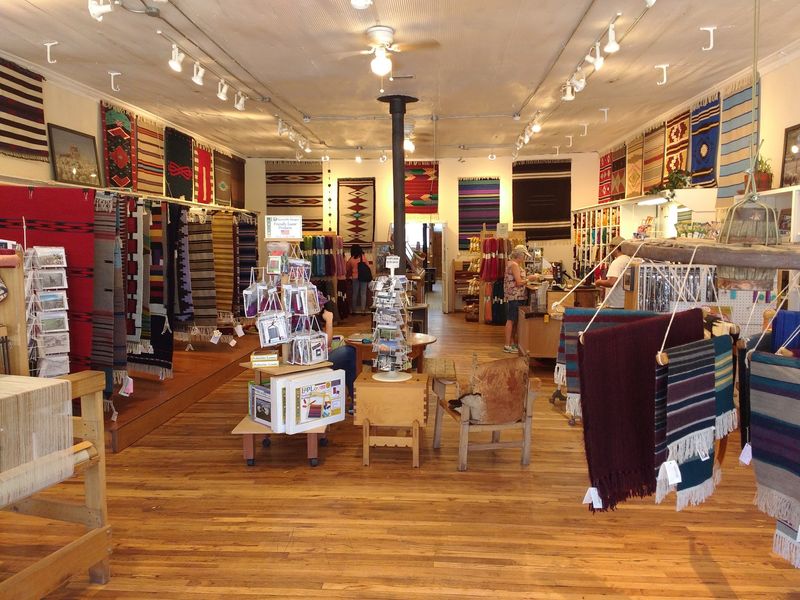
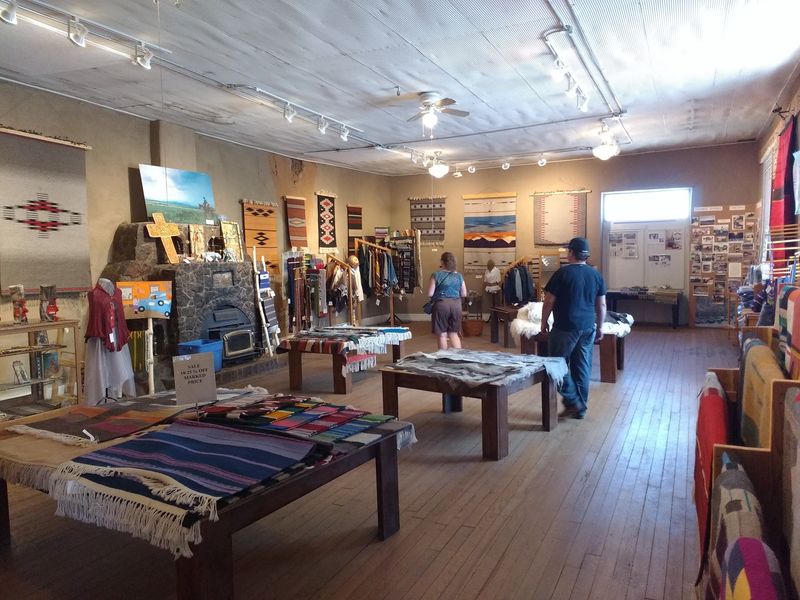
Inside, the shop spreads through five rooms, giving the displays room to unfold beyond what the exterior suggests. New Mexico Magazine describes yarn lining the walls and tables stacked with rugs and tapestries, along with fiber art and knitted pieces from local makers.
The result feels less like a single retail floor and more like a sequence of spaces devoted to different sides of fiber craft. That layout works well for a photo-led visit.
One room may put skeins at the center of attention, while another draws attention toward finished woven pieces. The working areas add another dimension because Tierra Wools is both a store and an active weaving center.
Visitors can see materials for knitters and weavers beside examples of what those fibers can become. The selection reaches beyond finished textiles.
The shop carries weaving and knitting yarns, craft kits, equipment, roving, and fleece. Some yarn comes from locally grown fibers, which reinforces the connection between the retail shelves and the wool process practiced here.
Each room contributes another piece of that story. Instead of revealing everything at once, the interior gives visitors repeated shifts in color, texture, scale, and purpose as they make their way through the building.
Walls Of Yarn Make Every Corner Worth A Closer Look
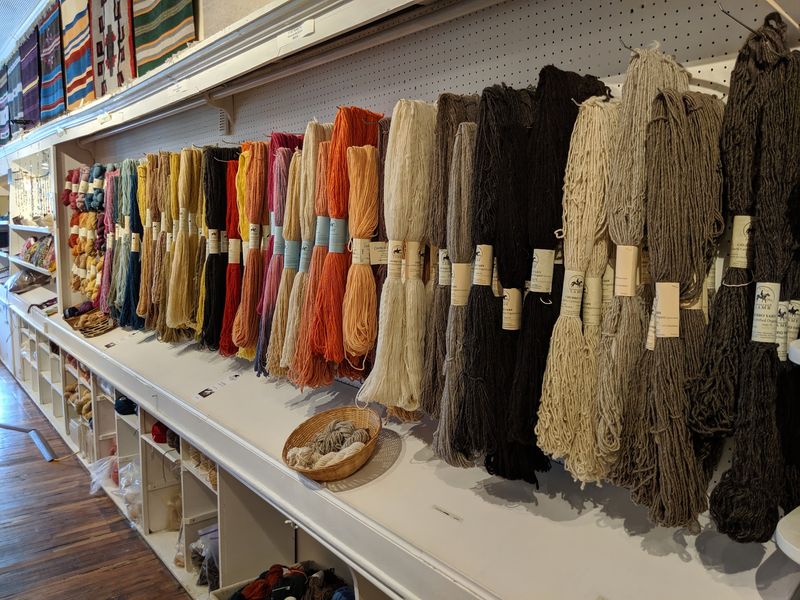
Yarn is one of the defining visual features inside the shop. New Mexico Magazine describes fuzzy skeins lining the walls, including yarns dyed with native New Mexican plants.
Tierra Wools also sells undyed wool and several yarn types suited to knitting or weaving, so the shelves reflect natural fiber tones beside a much wider range of hand-dyed color. The dyeing process gives those displays more context.
According to Tierra Wools, the shop currently uses both acid dyes and natural plant dyes. Yarn is hand-dyed in large pots over piñon wood fires, then rinsed and arranged in rows of skeins to dry.
The company also offers natural-dye classes that use locally grown yarn and may incorporate plants gathered in the surrounding area. Knowing that process changes the way the yarn walls read visually.
The skeins are not simply merchandise organized by shade. They represent one stage in a larger fiber operation that links wool, dye work, design, and weaving.
For knitters, the variety provides plenty to inspect at close range. For travelers more interested in the setting, the shelves create dense bands of texture and color around the rooms.
Either way, the yarn gives the interior much of its unmistakable character.
Río Grande Looms Give The Studio Its Strongest Sense Of Place
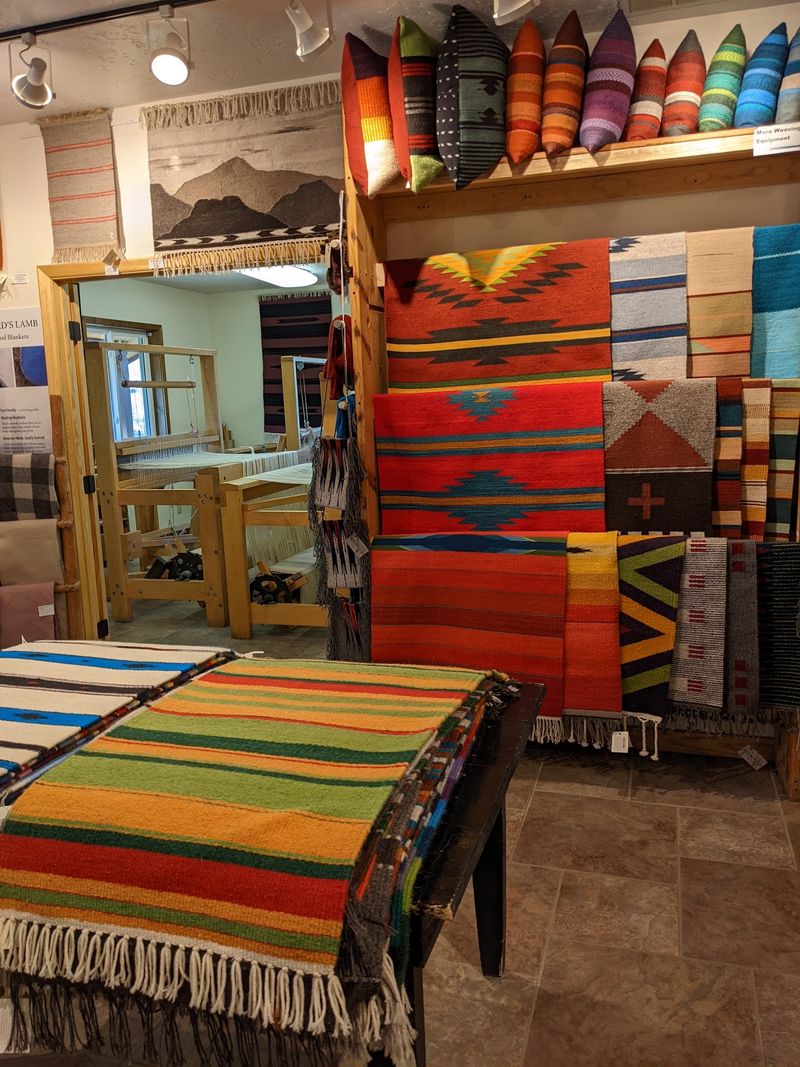
The Río Grande-style looms give the studio a direct connection to northern New Mexico’s weaving history. Tierra Wools uses counterbalance floor looms modeled on a design whose European ancestors arrived on the continent with Spanish settlers in the 1500s.
Over generations, versions of those looms were adapted through Mexico and what is now the Southwestern United States. The looms at Tierra Wools are not museum pieces placed behind a barrier.
They are working equipment used for weaving and instruction. The shop’s loom history explains that local craftspeople helped build its early looms, while later workshop needs led to sturdier models.
Craftsman Hans Leitner eventually designed five large hardwood Río Grande walking looms for the Tierra Wools weavers. Their presence gives the studio a different visual rhythm from the retail rooms.
Thick wooden frames, stretched warp threads, and works in progress make the mechanics of weaving visible. Visitors may also watch skilled local weavers working on Río Grande-style looms in the workshop and gallery.
That combination of history and daily use is what makes the looms so important to the space. They show that the weaving tradition represented on the walls is also a working craft practiced in the building today.
A Working Studio Keeps Old Weaving Traditions Alive
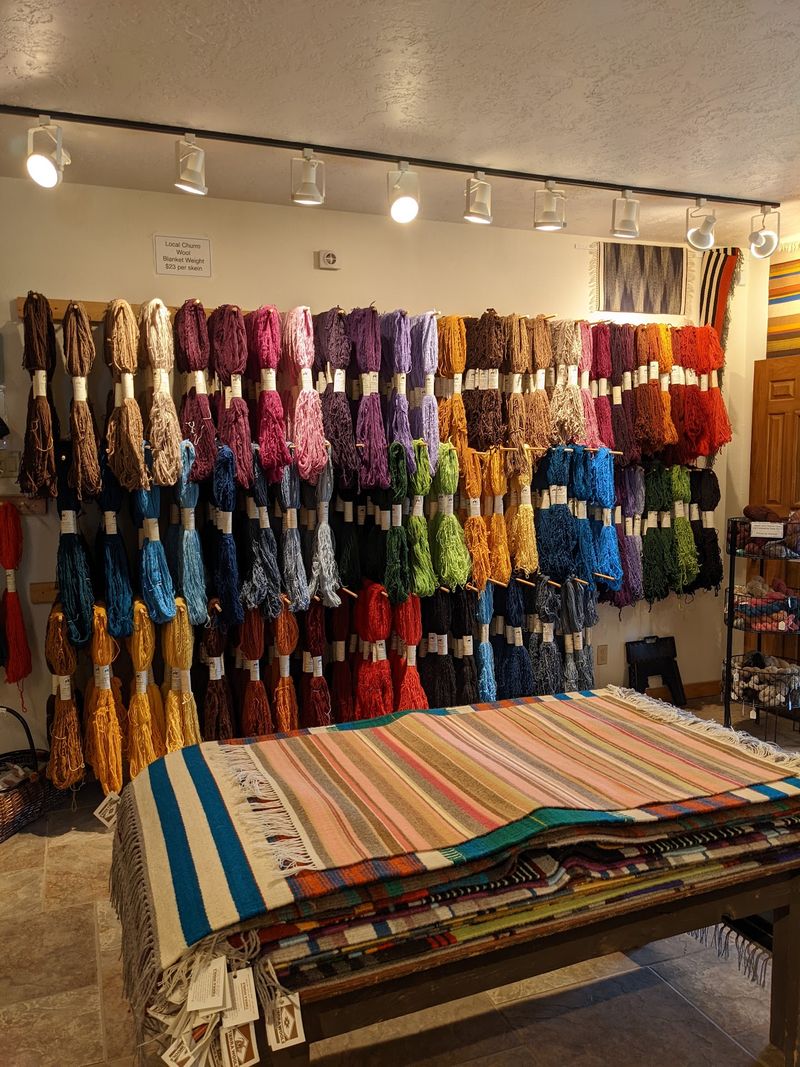
The studio is where the shop’s history becomes something visitors can actually watch. Tierra Wools describes itself as a place where Río Grande weaving heritage continues through generations, and its workshop allows guests to see local weavers working on Río Grande-style looms.
Classes also bring students into the same tradition through direct hands-on instruction. The organization traces its beginnings to 1983, when it opened a workshop and retail outlet in the historic T.D.
Burns Mercantile building in Los Ojos. Its roots came through Ganados del Valle, a community nonprofit focused on creating rural economic opportunities through cultural and agricultural resources.
Weaver and author Rachel Brown played an important early role by teaching members how to select wool and turn it into handmade goods. That history still has a visible presence in the current studio.
The looms are used rather than displayed as static artifacts, and current classes cover beginning weaving, tapestry weaving, loom warping, and natural hand dyeing. Students work with the same fiber process that shapes the shop.
For visitors, the studio helps connect rugs and yarn shelves to the hands-on craft behind them. It turns weaving from something seen on a wall into part of the place.
Southwestern Textiles Bring Pattern And Personality To The Rooms
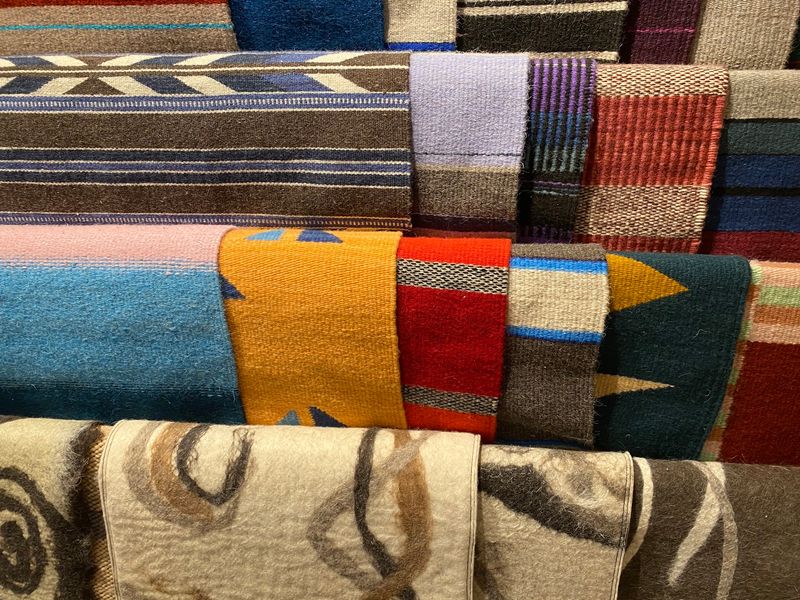
Finished textiles give the rooms another layer of visual interest beyond the yarn. Rugs and tapestries appear throughout the shop, while the current retail collection also includes handwoven blankets, pillows, and work by individual artists.
New Mexico Magazine notes that tables are stacked with colorful rugs and tapestries, making the finished pieces a prominent part of the rooms. Many of the designs reflect the shop’s connection to Southwestern and Río Grande weaving.
Tierra Wools teaches and produces work on Río Grande-style floor looms, and its history reaches back to a community effort centered on wool and regional craft knowledge. That makes the patterns on display more than decorative additions to the room.
Textile scale changes the visual experience as well. Skeins create small blocks of color, while rugs and tapestries can fill larger sections of a wall or table.
Close views reveal individual threads and changes in texture. At a distance, repeated shapes and contrasting tones become more noticeable.
The gallery arrangement gives visitors a chance to see materials and finished work in the same setting. Yarn shows the possibilities at the beginning of a project, while the textiles demonstrate how those fibers can become substantial pieces of woven art.
Even The Smallest Corners Feel Made For Fiber Lovers
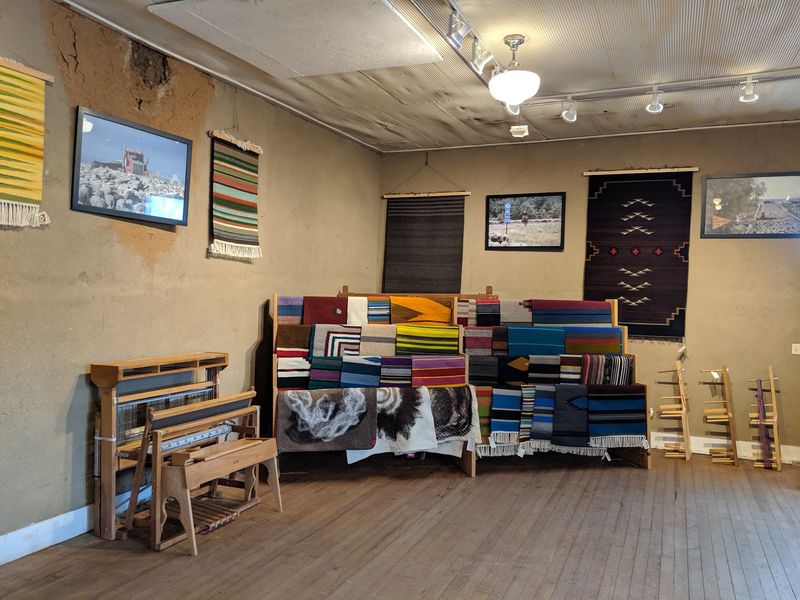
Smaller details help explain why the shop appeals to different kinds of fiber enthusiasts. Tierra Wools carries knitting and weaving yarns, but the shelves also include tools, books, roving, fleece, and weaving equipment.
Finished goods add another layer, with handwoven pieces and locally made fiber art throughout the retail space. Those objects make the interior rewarding to examine closely.
A visitor focused on knitting might spend more time with yarn weights and hand-dyed skeins, while a weaver can look toward tools and warp yarn beside the working looms. Someone interested in regional craft can focus on the finished rugs and tapestries.
The shop brings those interests together under one roof without separating the creative process from the finished result. The details also connect back to Tierra Wools’ broader approach.
Its official site describes the fiber journey as extending from locally grown wool through dyeing and weaving. The retail displays therefore sit beside a working studio, while the business is rooted in wool production and craft education.
That is what gives the quieter corners purpose. Even a single skein or folded textile may seem small on its own, but each belongs to the same larger story of fiber work practiced here.