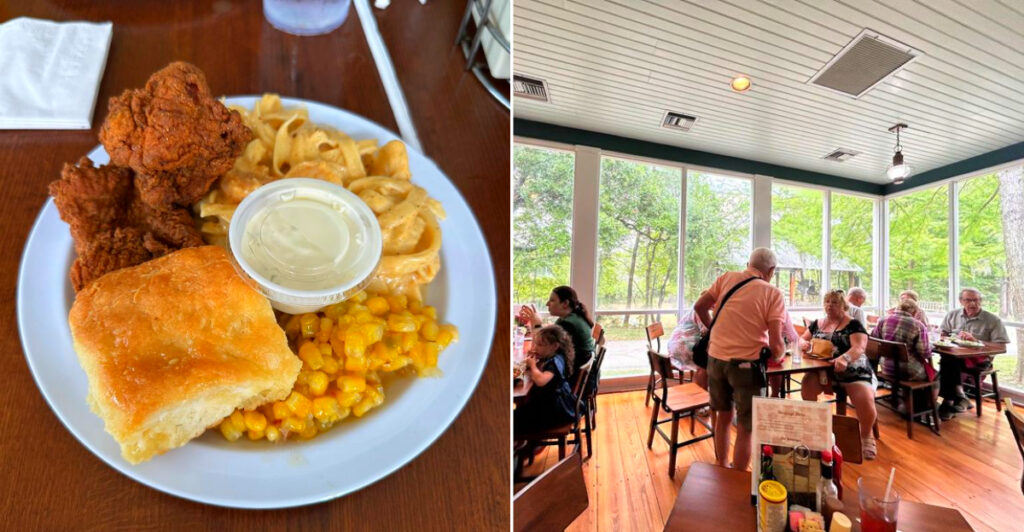
The gumbo was the first thing I noticed. Then the building it was served in.
Then the fact that the building was one of about twenty reconstructed 19th-century structures sitting on a bayou.
This restaurant sits inside a living history museum that recreates an entire Acadian village from the 1700s and 1800s.
The all-you-can-eat buffet serves gumbo, etouffee, boudin, and bread pudding in quantities that make you question whether the whole concept was designed for people who skip lunch entirely. I ate standing up at one point because I could not decide between seconds and thirds.
Outside, artisans were weaving and blacksmithing while I went back for cornbread. You do not need museum admission to eat here, but you should pay it anyway because walking off this buffet is the only responsible choice.
Louisiana does not separate food from history, and this place proves it.
Step Back In Time At Vermilionville
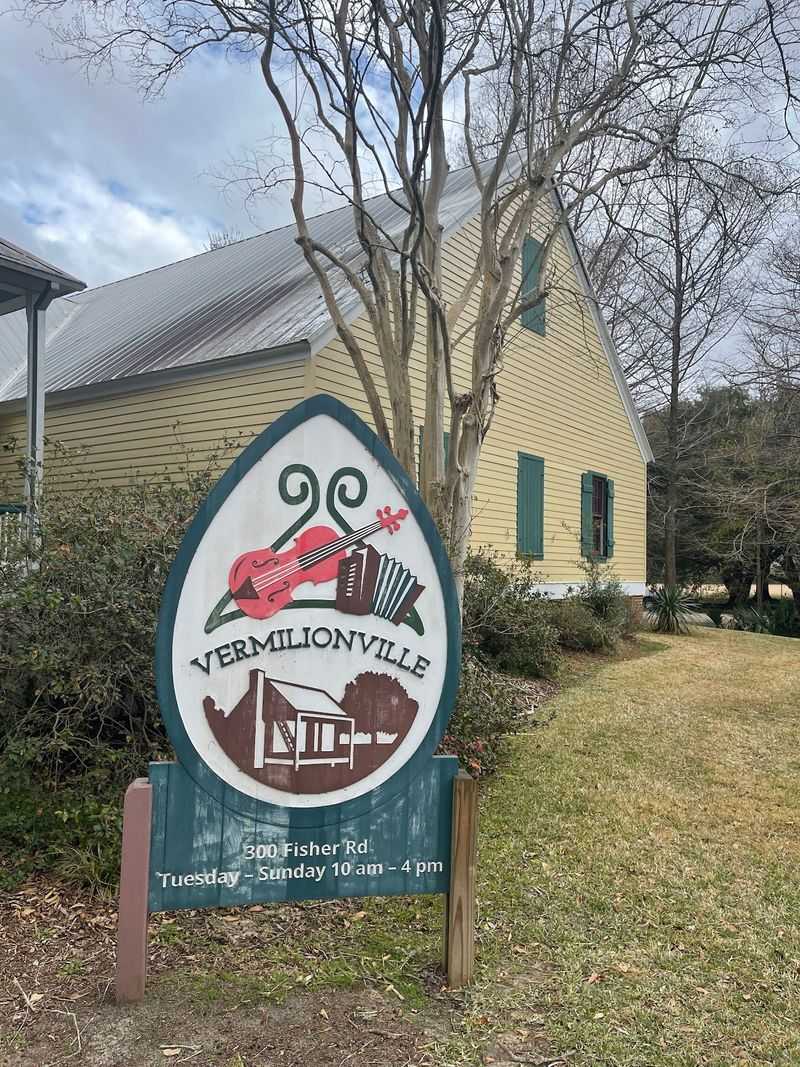
A restaurant hidden inside a history village sounds like a clever road-trip secret, yet the setting carries real substance. Vermilionville occupies 23 acres beside Bayou Vermilion and interprets Acadian, Creole, and Native American cultures between 1765 and 1890 through original structures, reconstructed buildings, demonstrations, and carefully presented stories.
Pairing lunch with a village tour gives familiar foods a deeper frame. Gumbo, rice dishes, stews, and biscuits become more meaningful after seeing the homes, tools, waterways, and working methods that shaped everyday life in southern Louisiana.
Consider eating first if hunger makes museum labels blur, then allow enough time for an unhurried walk. The village operates Tuesday through Sunday from 10 AM to 4 PM, with last admission at 3 PM, while restaurant service ends at 2 PM.
A combined visit works best when it begins before noon rather than late afternoon, especially for first-time guests.
Discover The Buffet Feast
La Cuisine de Maman is located inside Vermilionville at 300 Fisher Road in Lafayette, Louisiana, directly across from Lafayette Regional Airport. Surrey Street provides the main approach, with Fisher Road branching toward the folklife park entrance.
Follow Surrey Street toward the airport area, then turn onto Fisher Road and continue toward the Vermilionville entrance. The restaurant is inside the heritage park rather than in a separate roadside building, so the Vermilionville signs are the ones to follow on the final approach.
Use the free visitor parking at Vermilionville, then enter through the Welcome Center and continue toward La Cuisine de Maman. Restaurant entry itself does not require admission to the historic village.
Taste The Celebrated Gumbo
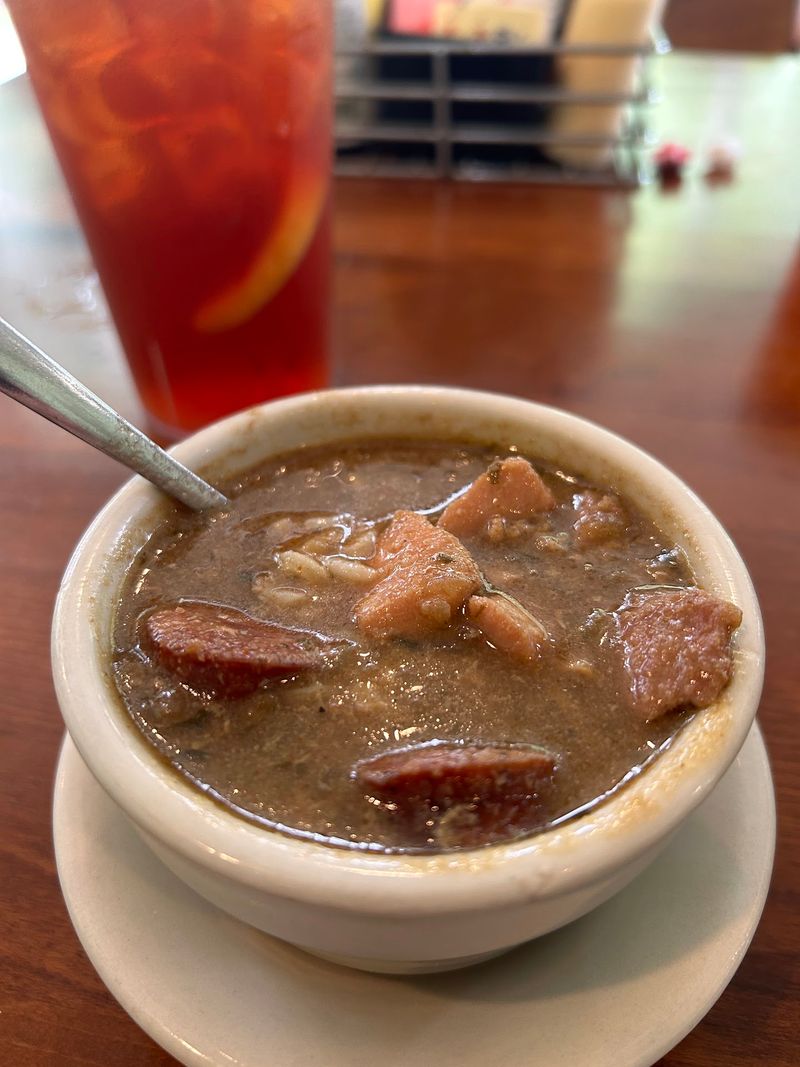
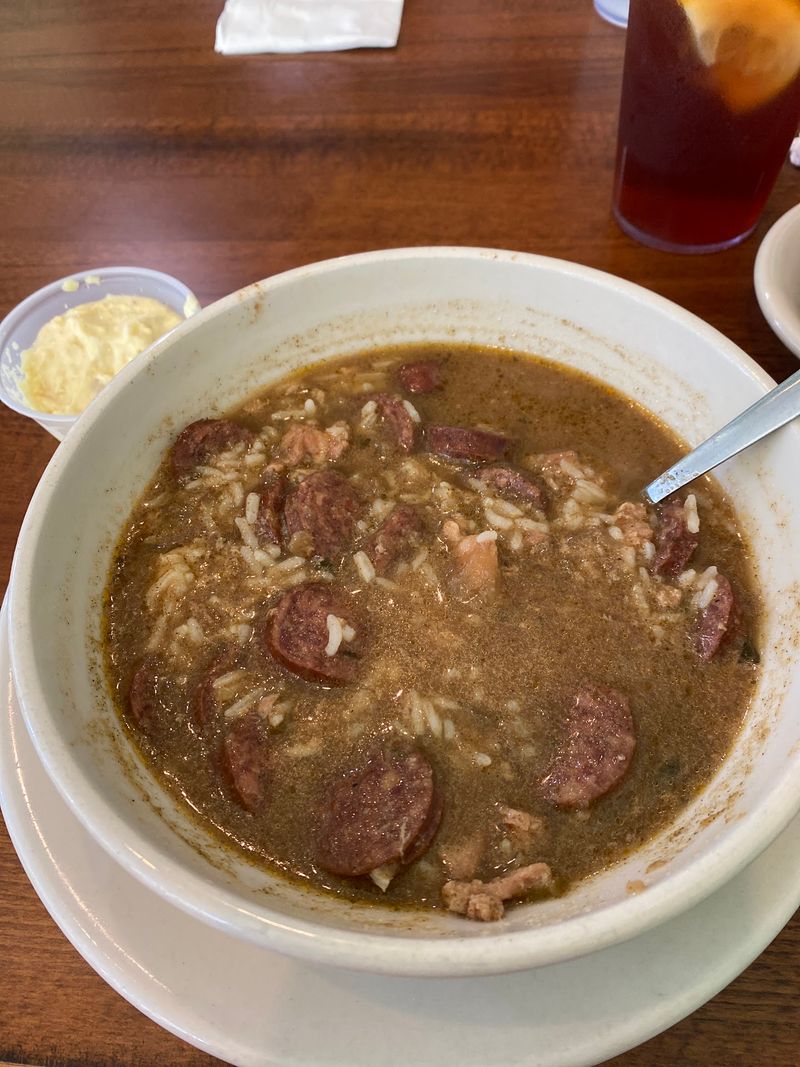
Steam rising from a bowl of gumbo is a fine opening act, especially when the main plate still waits in the wings. La Cuisine de Maman regularly features its celebrated gumbo with plate lunches and on the Sunday buffet, making the dish one of the easiest constants to seek among changing daily selections.
Gumbo reflects both Cajun and Creole traditions, although recipes differ widely by cook, season, and household. A deeply cooked roux commonly supplies color and roasted flavor, while versions may include chicken and sausage or seafood.
Rather than rushing through it like a minor side, try a spoonful before adding anything and notice the texture, seasoning, and slow-built depth. Save part of the biscuit for the final streaks left in the bowl.
Guests sensitive to heat or specific ingredients should ask which gumbo is being served that day, since the available style may change.
Save Room For Buttermilk Biscuits
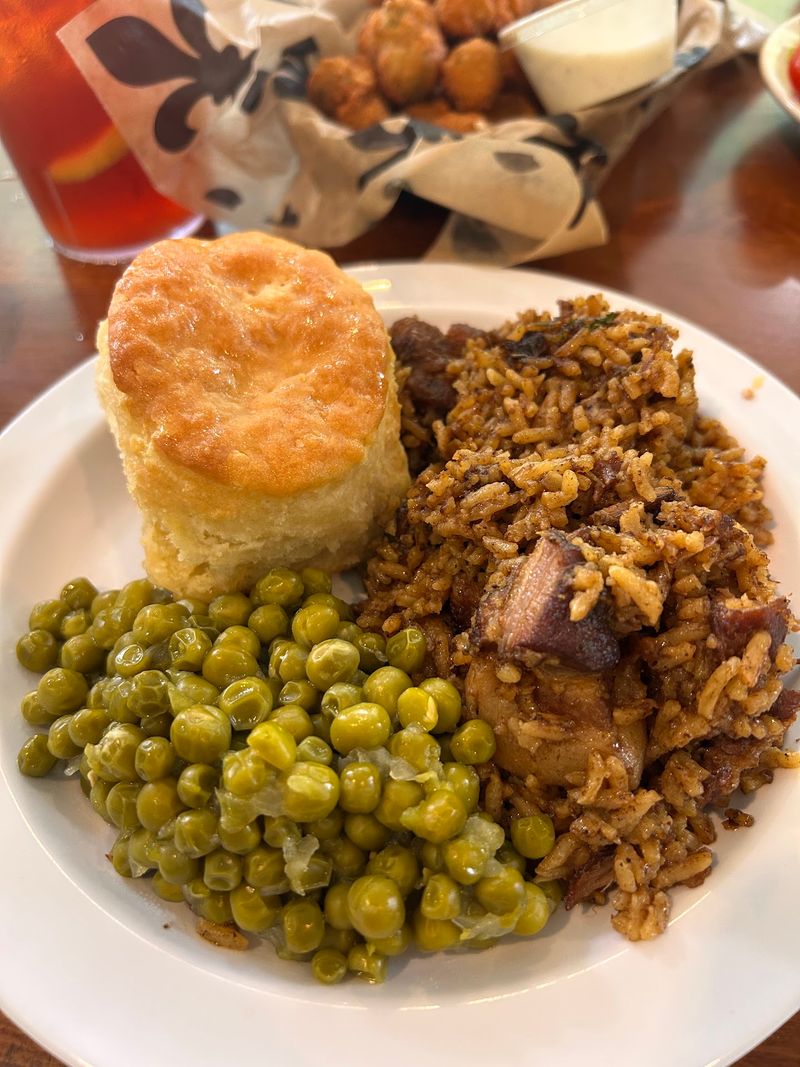
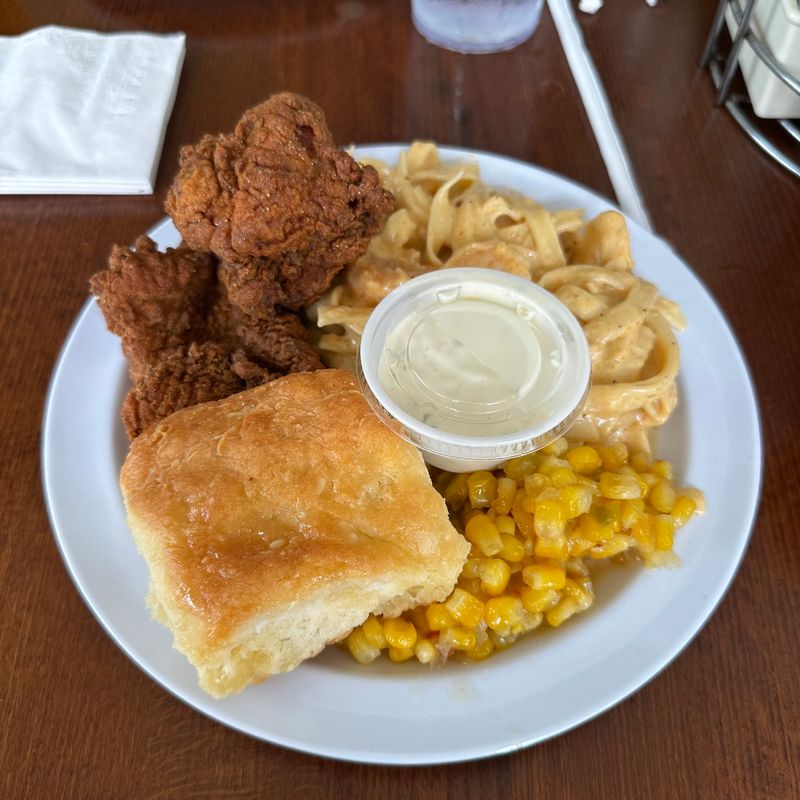
Some supporting players quietly steal lunch, and the homemade buttermilk biscuit has that sort of charm. Included with plate lunch specials and the Sunday buffet, it brings a warm, tender counterpoint to richly seasoned stews, gumbo, gravies, and rice-based dishes without demanding much attention from the rest of the meal.
Break it open while it is warm rather than letting it wait beneath a crowded napkin. The soft center is useful for catching gravy, while the browned outside adds a pleasant contrast to softer foods.
I like reserving half until later, because a final swipe through a stew bowl often tastes better than the first polite bite. Biscuits also help pace a plate loaded with bold flavors, but filling up on them too early defeats the buffet strategy.
Take one, enjoy it properly, and return only if appetite permits. Dessert still has a claim on the remaining space.
Finish With Comforting Bread Pudding
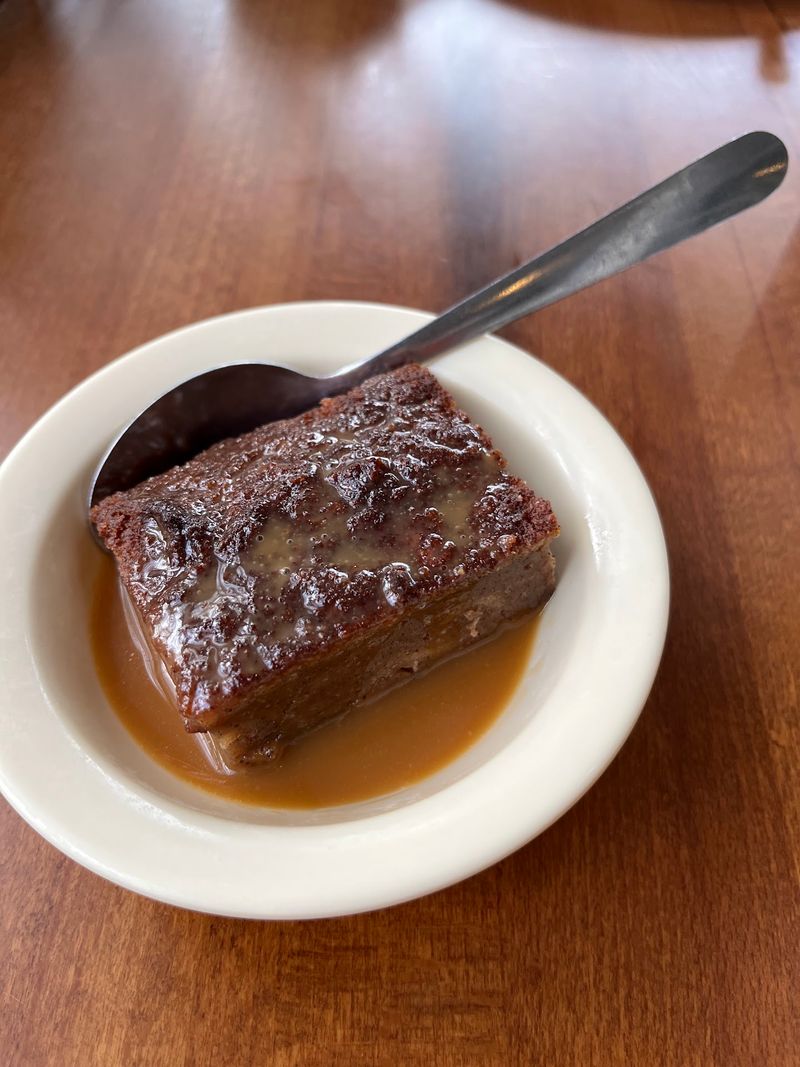
Bread pudding arrives with the reassuring look of a dessert that has never needed fancy decoration. La Cuisine de Maman is particularly associated with this Southern favorite, which commonly appears with daily plate specials and the Sunday buffet.
Its soft, custard-like body makes a gentle finish after peppery gumbo, savory meat, and hearty sides.
Leaving room requires a little discipline because the lunch portions cover several courses. On buffet day, take modest entree samples before returning for seconds, and remember that a biscuit can be surprisingly filling.
Bread pudding is best approached warm and slowly, when its tender center and browned edges can be appreciated rather than swallowed as an obligation. Dessert selections may vary, so ask what is available before designing an entire meal around one sweet ending.
If bread pudding is present, a smaller serving often satisfies more than an overloaded bowl. Comfort food should feel comforting, not like an endurance event afterward.
Notice The Cajun Holy Trinity
Before roux, meat, or stock takes center stage, three modest vegetables often begin the flavor conversation. Onion, celery, and bell pepper form the foundation commonly called the holy trinity in Cajun cooking, supplying aroma and savory depth to many regional stews, gumbos, rice dishes, and sauces served across Acadiana.
The mixture resembles French mirepoix, but bell pepper replaces the carrot, giving Louisiana cooking its own recognizable base. Chef Paul Prudhomme helped popularize the term during the 1980s, though cooks had relied on those vegetables long before the phrase became widely known.
At La Cuisine de Maman, pay attention to how this foundation supports a dish without announcing each ingredient separately. A spoonful of gumbo or gravy may taste unified because the vegetables have softened and blended during cooking.
Knowing the trio also helps diners describe what they enjoy beyond simply calling a dish spicy, rich, or good to friends afterward.
Meet Culture Through Village Docents
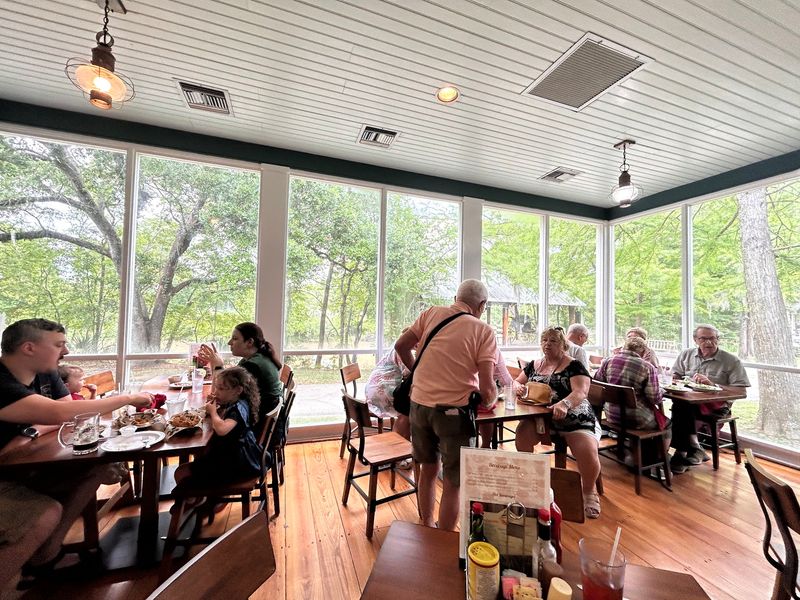
Lunch explains flavor through the plate, while Vermilionville’s docents supply the people, language, and memory around it. The village works with interpreters connected to Acadian, Native American, and African Creole heritage, allowing visitors to hear cultural knowledge in a setting designed to preserve the region’s layered history.
Ask focused questions rather than requesting the story of everything at once. Cooking methods, family meals, local crops, bayou travel, music, building practices, and language all provide useful paths into the past.
Conversations can make the restaurant menu feel less like a collection of famous Louisiana dishes and more like the result of communities adapting ingredients and techniques over generations. Respect that these cultures are living traditions, not costumes frozen in the nineteenth century.
Eating before the tour gives you specific foods to ask about; touring first can sharpen your attention at lunch. Either order works, provided the restaurant’s 2 PM closing time remains firmly in view.
Study The Traditional Architecture
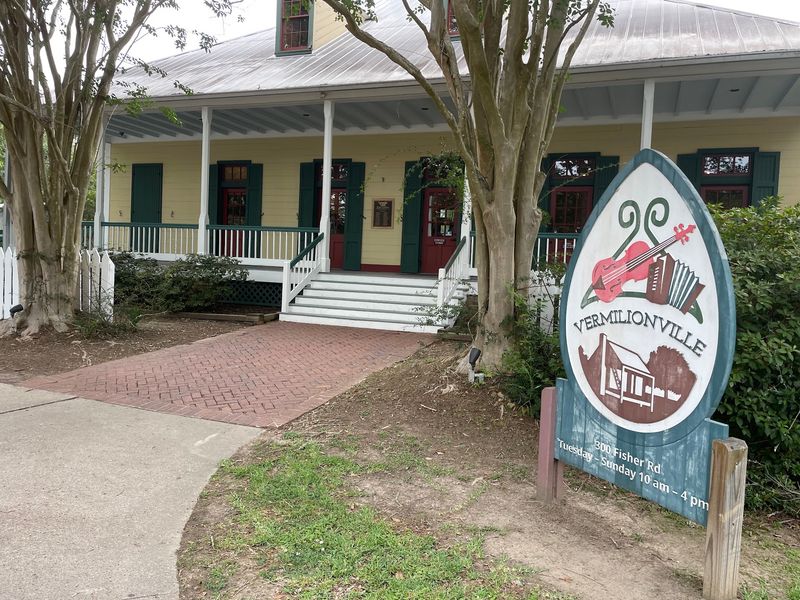
Mud and Spanish moss may sound like materials for a garden mishap, yet together they helped shelter Louisiana families. Vermilionville includes buildings that demonstrate bousillage, a traditional wall-filling and insulation method using a mixture associated with mud and Spanish moss, alongside other features of regional nineteenth-century construction.
Look beyond the facades when walking after lunch. Porches, raised floors, rooflines, room arrangements, windows, and building orientation reveal practical responses to heat, rain, available materials, and family life.
Notable structures include the Boucvalt House and La Maison Coussan, the latter dating to around 1850. Some buildings are original, while others are reconstructions, so read the signs before making assumptions about age.
The architectural details create a useful bridge between the homelike restaurant atmosphere and the wider village story. A slow circuit after a substantial plate lunch also feels pleasantly sensible, giving biscuits and bread pudding time to settle before the drive home begins.
Plan Around The Short Lunch Hours
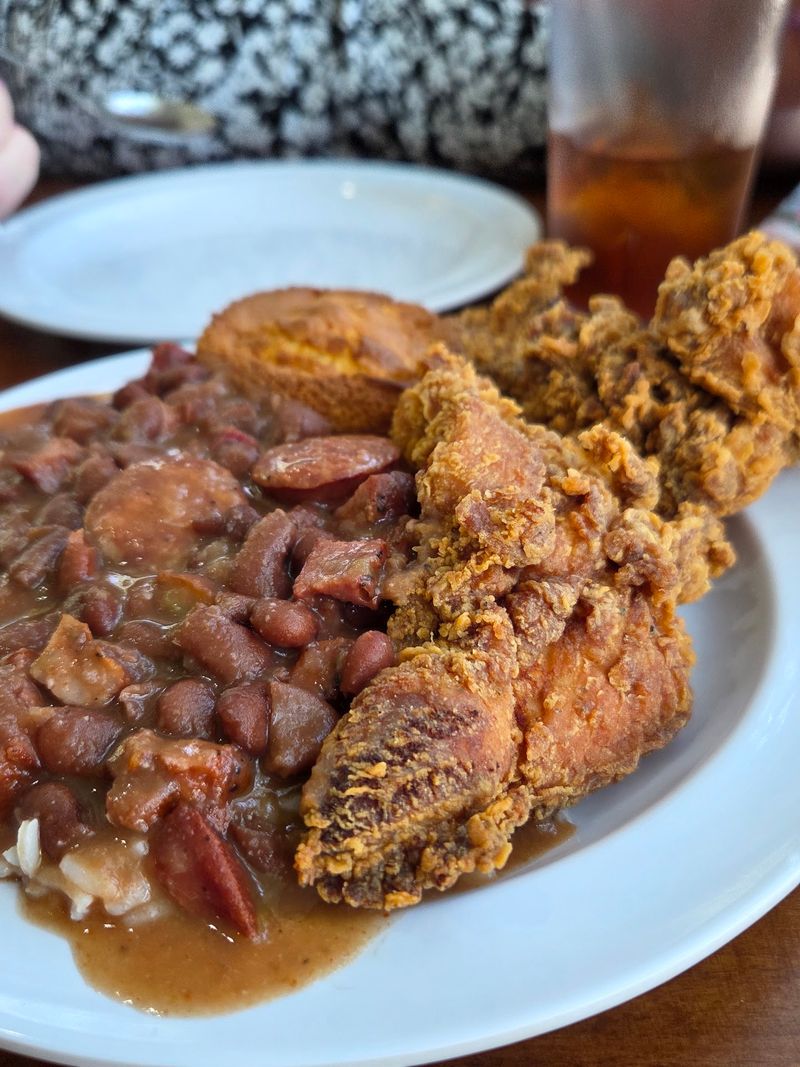
The clock matters here more than it does at an all-day roadside diner. La Cuisine de Maman serves lunch from 11 AM to 2 PM, Tuesday through Sunday, and closes on Monday.
Showing up at midafternoon with gumbo on the brain will produce scenery, perhaps, but not the meal you planned.
Aim for late morning or around noon, particularly on Sunday when the buffet is the main attraction. Arriving earlier leaves breathing room for several courses and reduces the temptation to hurry through dessert.
Vermilionville opens from 10 AM to 4 PM on the same Tuesday-through-Sunday schedule, with last admission at 3 PM, so lunch can sit neatly before or after part of a tour. Confirm current hours on the official website before making a long drive because operations can change for events, holidays, or maintenance.
The restaurant is located at 300 Fisher Road in Lafayette, an address worth saving before departure.
Enter The Restaurant Without Village Admission
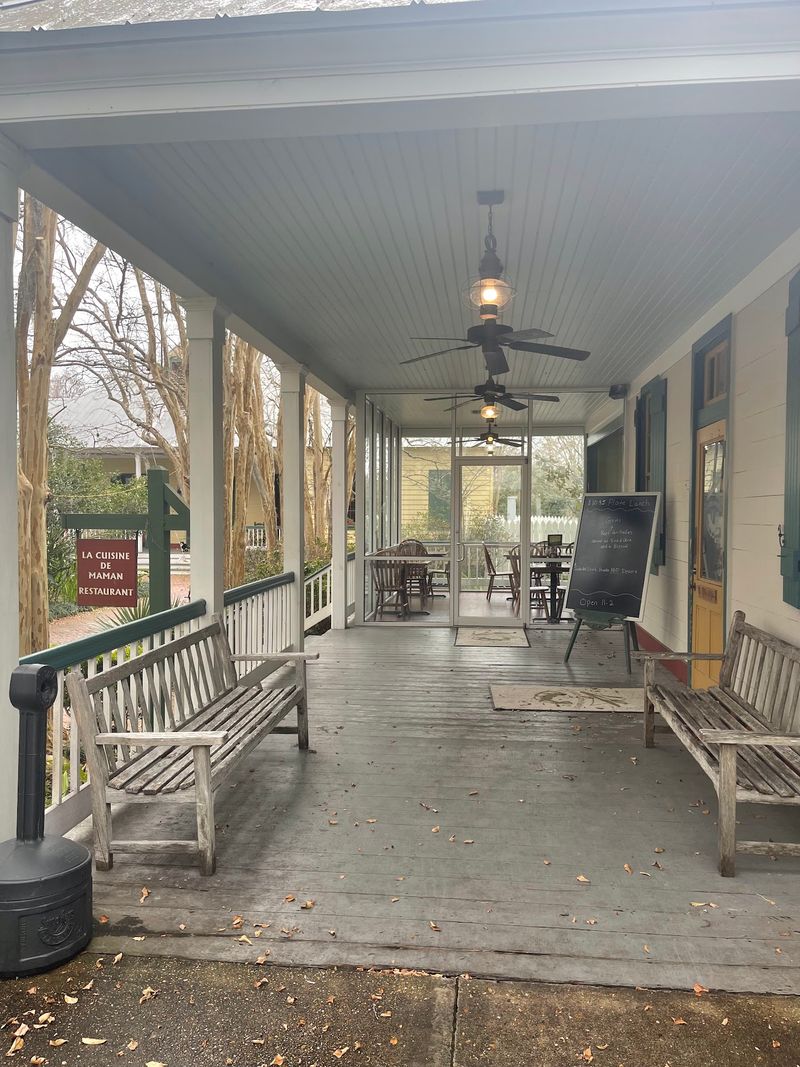
Here is the useful surprise: eating inside a living history park does not require buying admission to the entire village. Access to La Cuisine de Maman itself is free, so anyone can stop for lunch, enjoy the restaurant, and leave without adding a historical tour to the day’s schedule.
Village admission is separate and applies when guests want to explore Vermilionville beyond the restaurant. That arrangement makes the destination flexible for local workers, families managing limited time, travelers passing through Lafayette, and diners whose main interest is gumbo rather than nineteenth-century buildings.
Tell staff what you plan to visit if the route or entrance feels unclear. Those with enough time should still consider combining both experiences, since the cultural setting adds context to the menu.
Budget for them as two separate activities, and check current village ticket prices through the official site. Lunch is not a hidden surcharge disguised as a history lesson.
Try A Daily Plate Lunch
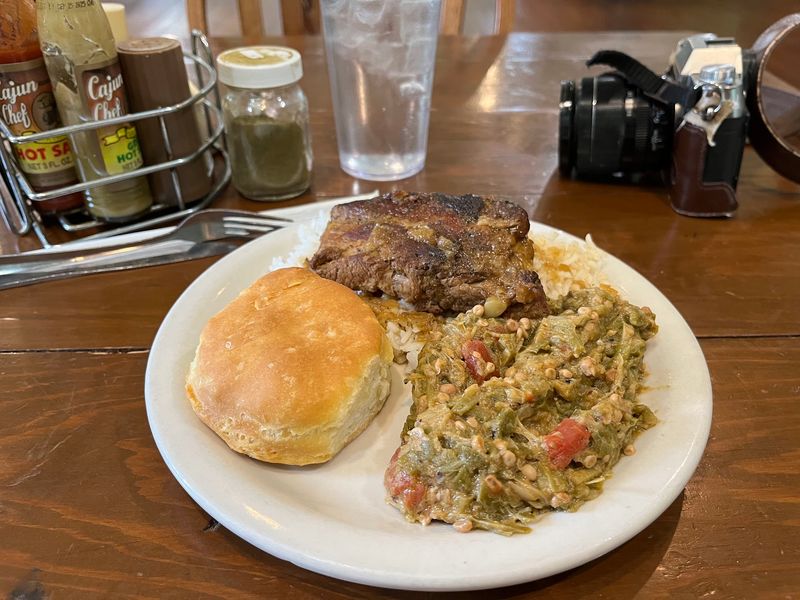
Sunday gets the buffet spotlight, but Tuesday through Saturday may suit diners who prefer a composed meal. Daily plate lunch specials typically bundle an entree, a side, gumbo or salad, a homemade buttermilk biscuit, dessert, and a beverage, creating a full introduction to the kitchen without requiring repeated trips to a serving line.
Selections change, which is part of the appeal. Examples have included smothered chicken, meatball stew, grilled pork chops, and Friday seafood cornbread, but no specific entree should be assumed without checking that day’s offering.
Call ahead or consult the restaurant’s current updates when dietary needs or strong preferences are involved. The plate format also encourages attention to how components work together: gravy with rice, gumbo before the entree, biscuit with the final sauce, then dessert.
For a first visit outside Sunday, the special is a practical choice because it gathers several house staples into one orderly, satisfying lunch.