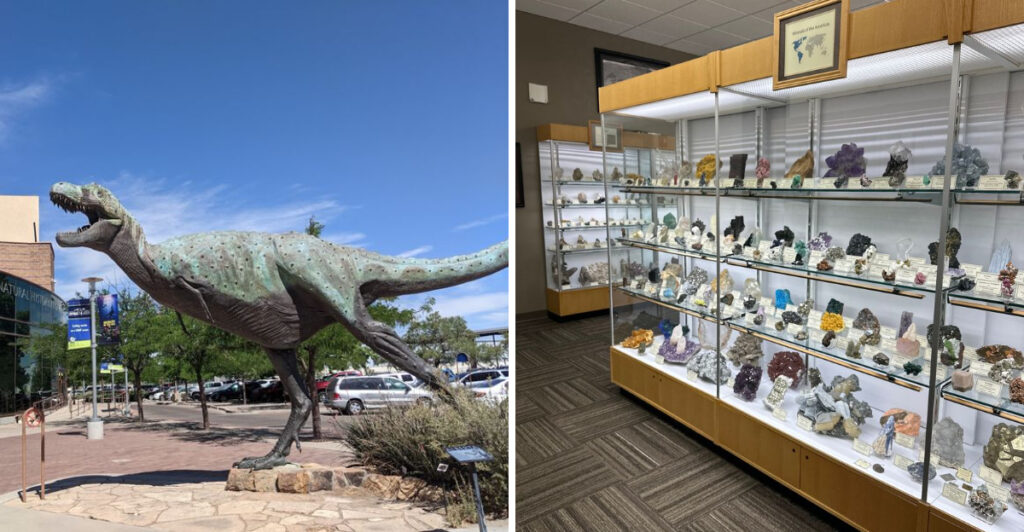
You know a stop is good when it makes you forget what time it is. That can happen fast in New Mexico, especially when the day involves dinosaur footprints or a hillside where the rocks are actually worth inspecting.
These are the kinds of places that turn a simple drive into a scavenger hunt. One minute you are looking for agate in the dirt.
The next, you are standing beside fossils from a world that vanished long before people existed. Museums add another layer, with collections that make ancient life feel much closer than a textbook ever could.
The best part is that you do not have to know much before you arrive. Curiosity does most of the work.
These stops give rock lovers plenty to see, but they are just as entertaining for anyone who enjoys old stories and the thrill of finding something they did not expect.
1. Rockhound State Park, Deming
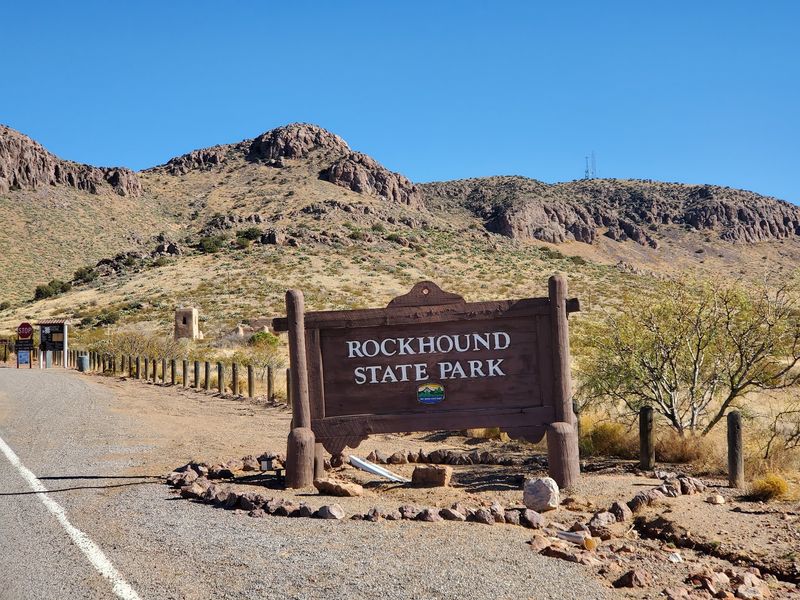
Finders keepers is actual policy here, which is rare enough to make this park famous. Rockhound State Park sits at 9880 Stirrup Rd SE in Deming, New Mexico 88030, and it holds the unusual distinction of being a park where collecting rocks and minerals for personal use is allowed.
Visitors may carry out up to fifteen pounds of material per person each day. That limit sounds generous until you start filling a bucket with agate, jasper, perlite, and the occasional geode that refuses to reveal its insides until it is cracked open at home.
The geology traces back to ancient volcanic activity that cooked and bubbled through this corner of the desert. Gas pockets in the old lava eventually filled with silica, and the result is the hollow stone surprises that keep collectors climbing the slopes with hammers and canvas bags.
Hunting works best on the hillsides above the parking area, where erosion keeps pushing fresh material into view. Sturdy boots matter more than fancy tools, since the ground shifts and the prickly plants have opinions about where you place your hands.
Scenery does plenty of heavy lifting even when the rocks are stubborn. The Florida Mountains rise in jagged layers behind the park, and hiking trails climb high enough to give you a long look across the Chihuahuan Desert basin below.
Camping sites with hookups make it easy to stretch a rock hunt across a weekend. Mornings tend to be cool and quiet, which is when most serious collectors are already out on the slopes with coffee in hand.
The dry, tan landscape here looks nothing like the green hills and quartz country that draw crystal hunters to Arkansas, yet both states share that same treasure-hunt energy. Bring more water than you think you need, and a small pry bar for stubborn seams.
Few parks let you drive away with souvenirs pulled straight from the ground.
2. Mineral Museum, Socorro
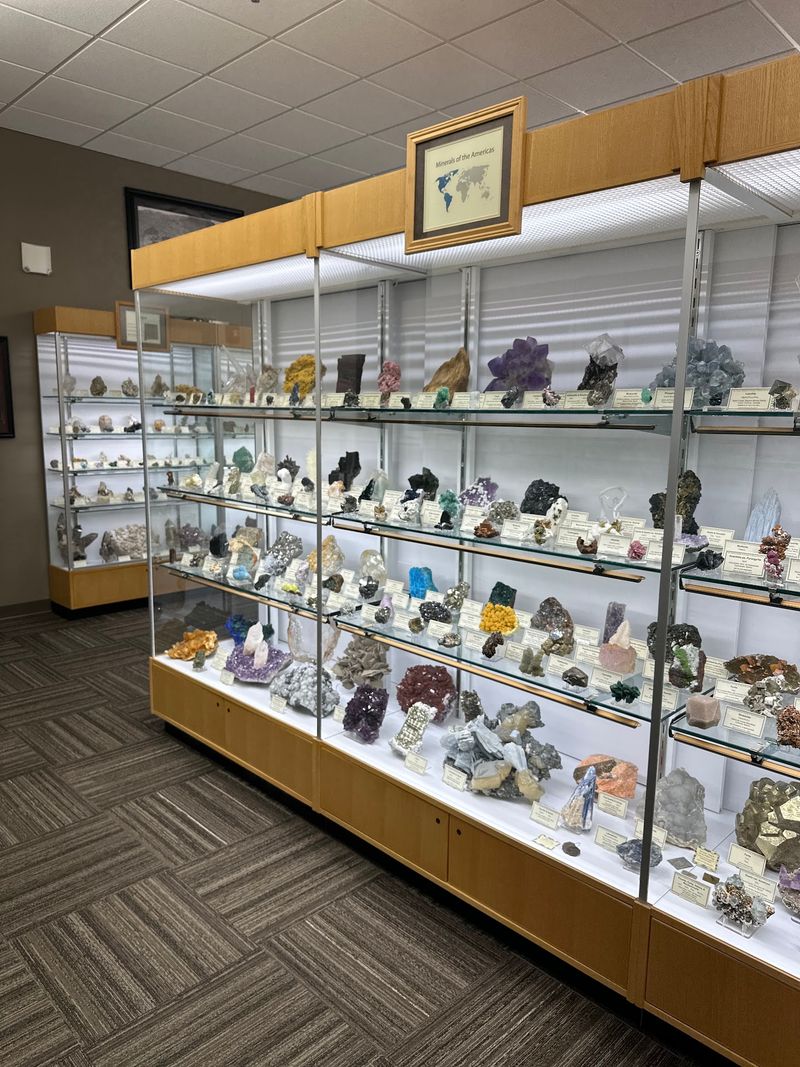
Over fifteen thousand mineral specimens live inside one building on the New Mexico Tech campus, and admission costs nothing. The Mineral Museum is housed within the New Mexico Bureau of Geology and Mineral Resources at 801 Leroy Pl, Socorro, New Mexico 87801.
Cases here glitter with gold and silver, cut gemstones, and formations gathered from across the Southwest and the wider world. The variety is honestly startling for a collection tucked into a college science building.
New Mexico material gets the spotlight it deserves. Turquoise in several shades sits near bluish smithsonite from the former Kelly Mine, deep-blue halite from the Carlsbad Potash District, and azurite pulled from the Atwood Mine.
Smithsonite is the specimen most rock lovers make the trip for, since the Kelly Mine botryoidal pieces look like frozen blue-green bubbles. Photographs never quite capture the glow, which is a decent argument for showing up in person.
Mining history rounds out the experience through displays of old tools and equipment used by crews who worked these hills long ago. Socorro grew up around ore and ambition, and the artifacts make that connection easy to follow.
A meteorite exhibit adds another layer, complete with a lesson on telling real space rocks from the hopeful lumps of slag that people bring in. Museum staff have a playful nickname for those imposters, calling them meteor-wrongs.
Families passing through on Interstate 25 often stop for an hour and stay considerably longer. Kids gravitate toward the fluorescent minerals, which switch from ordinary gray to electric green and orange under special lighting.
Free admission means a rainy afternoon here costs nothing but time. Parking on campus is straightforward, and the museum sits close enough to downtown Socorro for an easy lunch break afterward.
Anyone curious about what turquoise really looks like before it reaches a jewelry counter will find plenty of answers waiting in these cases.
3. Zuhl Museum: Home Of The Zuhl Collection, Las Cruces
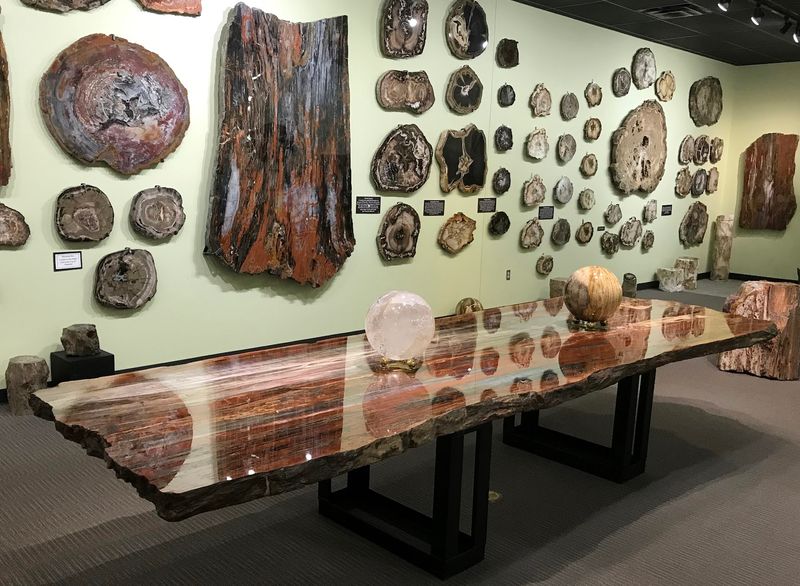
Petrified wood in shades of red, gold, and violet fills an entire room here, and the effect is unforgettable. The Zuhl Museum sits at 775 College Dr, Las Cruces, New Mexico 88003, on the New Mexico State University campus.
The collection holds more than eighteen hundred specimens of petrified wood, fossils, and minerals, making it the largest petrified wood display of its kind in the country. Polished stumps stand upright throughout the gallery, creating a stone forest that visitors walk right through.
Exhibits run in chronological order, so a stroll across the floor becomes a walk across the geologic timescale. I appreciate that layout, because it turns a jumble of ancient objects into a story with a beginning.
The oldest item is a Banded Iron Formation from Australia that predates almost everything else on display. Further along, a Giant Ground Sloth from Missouri looms over the cases with claws that look built for serious business.
Two residents draw the biggest crowds. Archie is the only known skeleton of Archeria crassidisca, a reptile-like amphibian, while Borealis is a baby woolly mammoth skeleton small enough to make visitors go quiet.
Dinosaur bones share space with a rare nest of dinosaur eggs, and marine reptiles including Ichthyosaurus and Keichousaurus float in their stone slabs. A meteorite weighing one hundred thirty-five pounds sits nearby, looking heavier than it has any right to.
Part art gallery and part natural history museum, the place works well for visitors who normally find fossil halls a little dusty. The colors alone hold attention, even before the labels get read.
Las Cruces makes an easy base, with the Organ Mountains rising east of town and the campus offering simple parking. Hours can vary with the university calendar, so a quick check before driving over saves frustration.
Stone trees and baby mammoths under one roof make for an odd, wonderful pairing.
4. The Ruth Hall Museum Of Paleontology At Ghost Ranch, Abiquiu
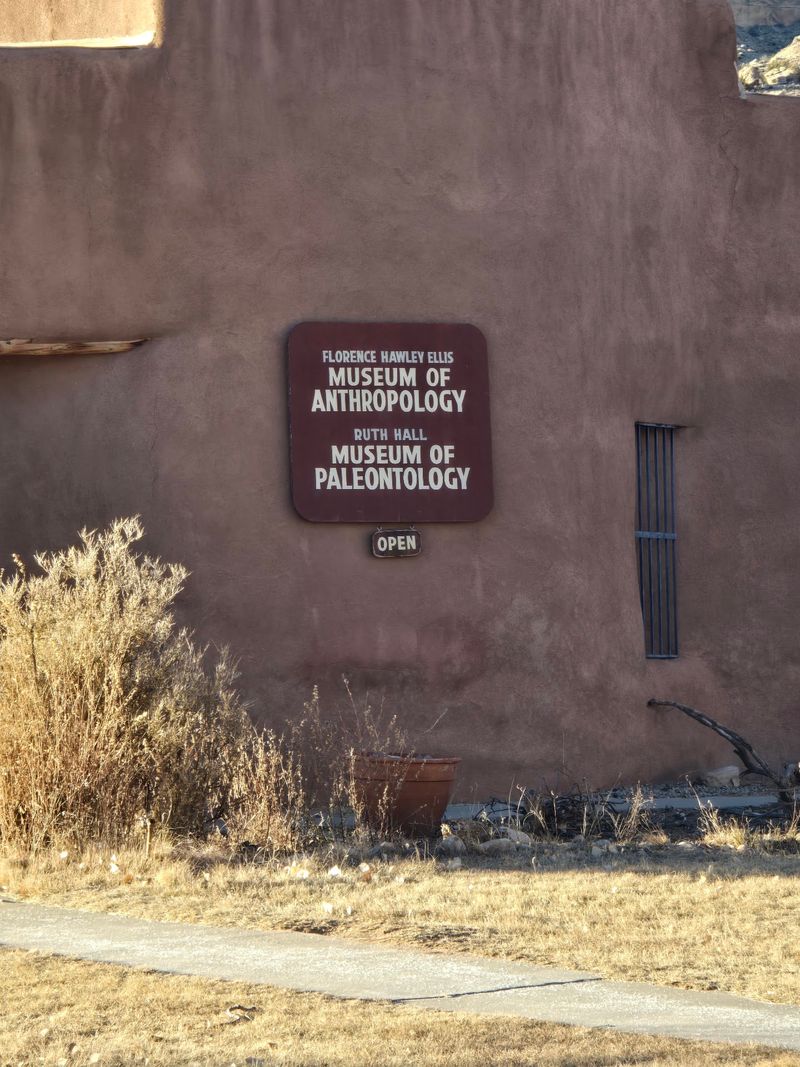
Red cliffs wrap around this little museum, and the fossils inside are just as dramatic as the view outside. The Ruth Hall Museum of Paleontology sits at 280 Private Drive 1708, Abiquiu, New Mexico 87510, on the grounds of Ghost Ranch.
Specialists know the place for Late Triassic fossils from the dawn of the age of dinosaurs. The rock layers around Abiquiu preserved creatures from a period when the first dinosaurs were still figuring out how to rule the planet.
Coelophysis bauri headlines the collection and holds the title of New Mexico state fossil. Slender, quick, and roughly the size of a large dog stretched long, it hunted in packs across a landscape that looked nothing like today’s high desert.
An enormous block of fossil-bearing mudstone anchors the main hall, quarried from the site where hundreds of Coelophysis skeletons were uncovered in the nineteen forties. Bones tangle across its surface in a knot that paleontologists are still untangling.
Neighbors from the same ancient world share the space. Armored plant-eating aetosaurs and giant crocodile-like phytosaurs came from the Canjilon Quarry and Coelophysis Quarry, both close enough to visit in spirit if not on foot.
Dromomeron, an archosaur rather than a dinosaur, and early theropod dinosaur Tawa hallae also appear in the cases. Their fossils helped researchers understand how dinosaurs and other archosaurs lived together during the Triassic.
Ghost Ranch itself adds plenty of reasons to linger, with hiking trails winding beneath sandstone walls that inspired generations of painters. Chimney Rock and Kitchen Mesa trails both start within walking distance of the museum door.
Spring and fall bring the most comfortable temperatures for combining fossils with footpaths. Summer afternoons here can turn brutally hot, so early starts pay off.
Small museums rarely punch this far above their weight, and this one throws a serious Triassic haymaker.
5. Mesalands Dinosaur Museum, Tucumcari
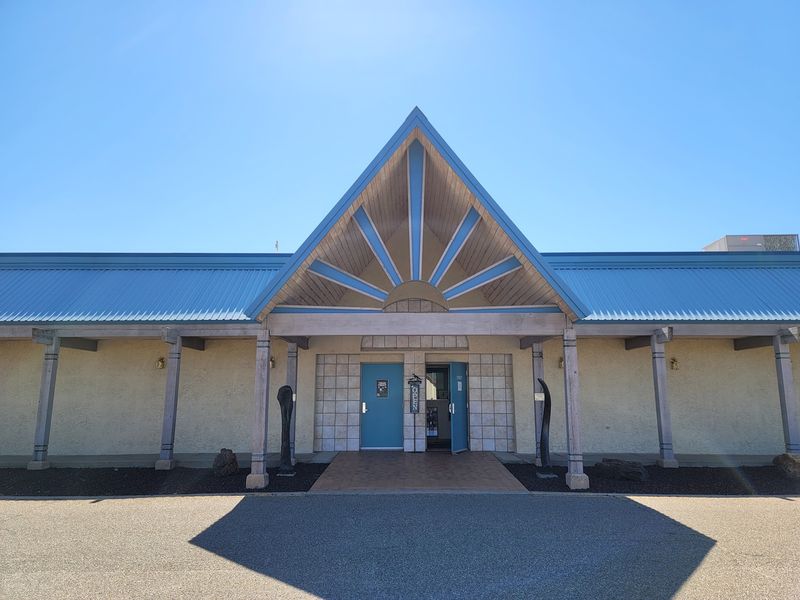
Route 66 travelers rolling through Tucumcari often expect neon signs, not a forty-foot Jurassic predator. Mesalands Dinosaur Museum sits at 222 E Laughlin Ave, Tucumcari, New Mexico 88401, and the Torvosaurus skeleton inside is the reason many people pull off the highway.
Torvosaurus was a heavyweight relative of Tyrannosaurus rex from the Jurassic period, and the mounted skeleton stretches long enough to dominate its gallery. Standing beneath the ribcage puts the scale into perspective fast.
The museum belongs to Mesalands Community College and doubles as a working research center. More than ten thousand square feet of exhibit space holds authentic fossils alongside bronze replicas cast right on campus.
Those bronze casts are a signature touch you will not find in many other fossil halls. Metal skeletons catch the light differently than bone, and visitors are welcome to touch several of them, which delights kids and adults equally.
Dinosaur footprints appear throughout the collection in cast form, many taken from dig sites in the surrounding region. Eastern New Mexico turns out to be surprisingly generous with prehistoric evidence.
Minerals and ancient rocks from around the world round out the displays, giving rockhounds something to study between the giant skeletons. A few specimens sparkle enough to compete with the bones for attention.
A viewing window looks into the preparation lab, where paleontologists and students chip away at matrix with tiny tools. Watching that painstaking work makes the finished mounts feel earned rather than magical.
Tucumcari itself leans hard into its highway heritage, with vintage motel signs glowing after dark. Pairing a fossil visit with a cruise down the old road makes for a satisfying day.
Hands-on exhibits keep restless visitors busy, which parents driving cross-country tend to appreciate. Hours shift with the college schedule, so calling ahead is wise.
Bronze bones and Jurassic giants make an unlikely roadside combination that absolutely works.
6. Clayton Lake State Park And Dinosaur Trackways, Clayton
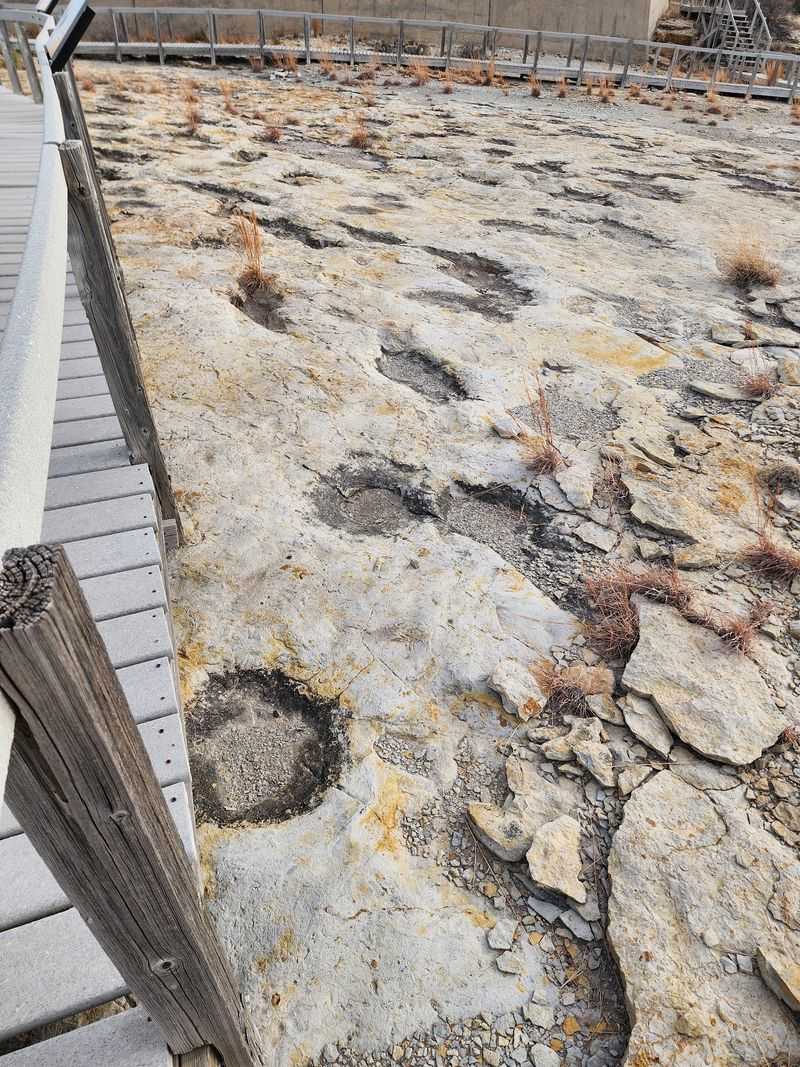
Over five hundred dinosaur footprints sit exposed on a spillway in northeastern New Mexico, though vehicle day-use fees generally apply. Clayton Lake State Park and Dinosaur Trackways is located at 141 Clayton Lake Rd, Clayton, New Mexico 88415.
The tracks were pressed into the mud of a Cretaceous shoreline roughly a hundred million years ago. Plant-eating ornithopods and meat-eating theropods left the majority, and the sizes range from a footprint barely a foot long to those made by thirty-foot adults.
Rare trail drags appear among the prints, marks left by tails or bellies scraping the soft ground. Those scrapes give researchers clues about posture and movement that footprints alone cannot provide.
Reaching them takes a quarter-mile trail leading to the dam spillway, with a boardwalk and signs explaining what you are looking at. Morning and late afternoon light rakes across the rock at a low angle and makes the impressions pop.
Midday sun flattens everything out, which frustrates photographers who arrive at noon. Timing matters more here than at almost any other fossil site in the state.
The reservoir currently covers about fifty-nine surface acres and supports non-motorized boating while water levels stay low. Picnicking, camping, and seasonal fishing fill out the recreation menu.
Rolling grasslands and scattered volcanic rock give the park a wide-open feel that suits the region. Wildlife watching is decent, especially around the water at dawn.
Night brings the other headline attraction. The park was designated New Mexico’s first dark sky park and operates a Lake Observatory for stargazing programs.
Skies out here get dark in a way that surprises visitors from bigger cities, and even people used to rural nights in Arkansas tend to be impressed. The Milky Way shows up without any effort at all.
Ancient footprints by day and star clusters by night is a schedule worth building a weekend around.
7. New Mexico Museum Of Natural History And Science, Albuquerque
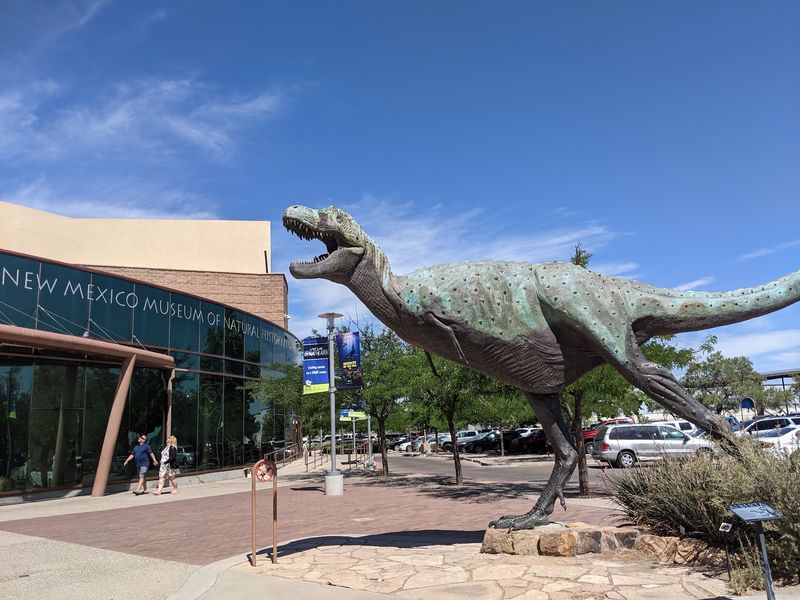
Two bronze dinosaurs named Spike and Alberta guard the entrance, and kids rarely walk past without climbing for a photo. The New Mexico Museum of Natural History and Science stands at 1801 Mountain Rd NW, Albuquerque, New Mexico 87104, minutes from the Old Town Plaza.
Exhibits trace a path from the formation of the universe all the way through the Ice Age. That timeline sounds ambitious for one building, yet the galleries handle it without feeling rushed.
Dinosaur halls carry the biggest crowds, with a Tyrannosaurus rex and an enormous long-necked sauropod that has become something of a state celebrity. Seismosaurus was its original name before researchers reclassified it.
Permanent displays include the only Triassic hall in North America, covering the strange creatures that shared the world with the earliest dinosaurs. Visitors who stopped at Ghost Ranch earlier in their trip will recognize familiar faces.
A walk-through volcano rumbles with sound and light, and a reconstructed Ice Age cave nearby drops the temperature mood considerably. A living forest and a marine aquarium round out the ecosystems on offer.
The Space Science wing swings the focus upward with a full-scale replica of the Mars Exploration Rover and a genuine moon rock. Holding attention across such different subjects is a neat trick.
The Planetarium and the Verus Research DynaTheater run shows throughout the day for anyone wanting a seat and a spectacle. Tickets for those are separate from general admission.
Younger visitors gravitate to the Naturalist Center, where hands-on activities let them handle specimens instead of squinting through glass. Staff there answer the endless stream of why questions with real patience.
Old Town sits close enough for lunch and shopping, including plenty of shops selling New Mexico turquoise jewelry. Rockhounds heading home with buckets of agate often finish their trip right here.
Few museums cover volcanoes, mammoths, and Mars before closing time.