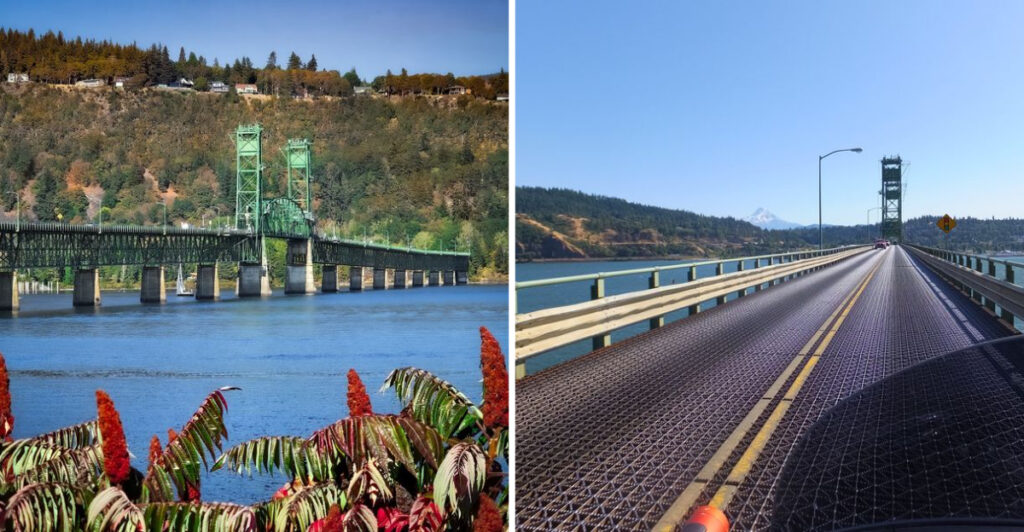
Some bridges get you across the water. This one makes you pay attention.
I have always liked places where everyday things, like a bridge, end up having a story of their own.
Connecting Oregon and Washington across the Columbia River, this century-old crossing still carries traffic while keeping a few old-school engineering quirks alive.
Built in 1924, the bridge is known for its narrow lanes, steel-grated roadway, and a design that feels very different from modern crossings.
Plans for a wider replacement are moving forward, but the current span remains a piece of transportation history.
It is not the biggest bridge around, but it has plenty of personality. The kind of bridge that makes you slow down and wonder why it was built this way.
Two Lanes Create A Tight River Crossing
The first thing you notice is the space, or rather, the lack of it.
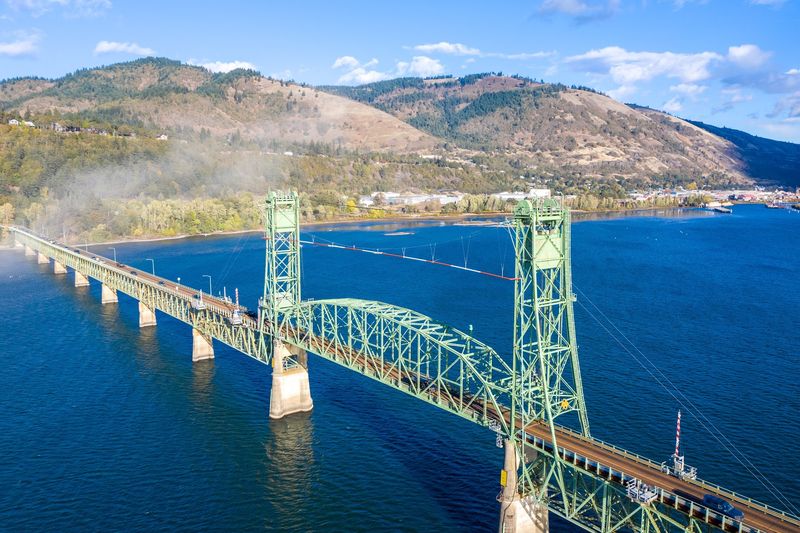
The Hood River-White Salmon Interstate Bridge carries traffic in two narrow lanes across the Columbia River. The crossing stretches 4,418 feet, or roughly eight-tenths of a mile, giving you plenty of time to notice how different it is from a modern highway bridge.
There are no shoulders separating traffic from the outer edges of the roadway. The structure is also restricted to vehicles, so pedestrians and bicycles are not allowed to cross.
The bridge’s narrow design reflects the transportation standards of the 1920s, when vehicles were generally smaller and modern lane widths had not yet become standard.
Today, that old layout still has to handle passenger cars, pickups, trucks, and other traffic moving between Oregon and Washington.
The Port of Hood River says the bridge serves an average of about four million users each year and normally remains open around the clock except during scheduled maintenance or emergency closures.
That makes its age more than a historical curiosity. This is still an important transportation connection for people traveling between communities on both sides of the Columbia.
If you are crossing for the first time, the best strategy is uncomplicated. Stay centered in your lane, follow the posted speed, and avoid sudden maneuvers. There is not much spare pavement to work with.
Each Lane Measures Less Than Ten Feet Wide
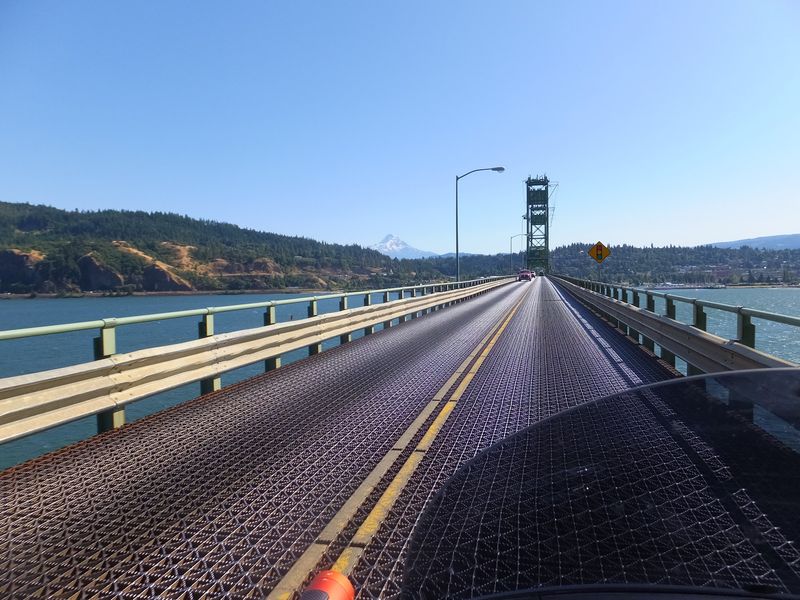
The numbers explain why the bridge stands out.
Each travel lane measures nine feet, four and three-quarter inches from the center stripe to the guardrail. That is noticeably narrower than the twelve-foot lanes commonly used on modern highways.
The difference becomes especially apparent when larger vehicles approach from the opposite direction.
The Port of Hood River advises drivers of large vehicles to turn in their mirrors before approaching the bridge because mirrors can collide with those on vehicles traveling the other way.
Wide loads face additional restrictions. The bridge does not accommodate ordinary overwidth traffic, although special arrangements can be made in advance for some crossings with flaggers and pilot vehicles.
Height is another limitation. Vehicles taller than fourteen feet, seven inches cannot use the bridge.
The bridge is also subject to current weight restrictions for several truck configurations, another reminder that this century-old structure has limits that newer crossings are designed to avoid.
For standard passenger vehicles, the crossing remains open and routine. The main adjustment is simply getting used to less lateral space than most drivers see on newer bridges.
A quick mirror check before entering is not a bad idea. On lanes this narrow, inches suddenly seem more noticeable.
The Steel-Grated Deck Gives The Drive A Different Feel
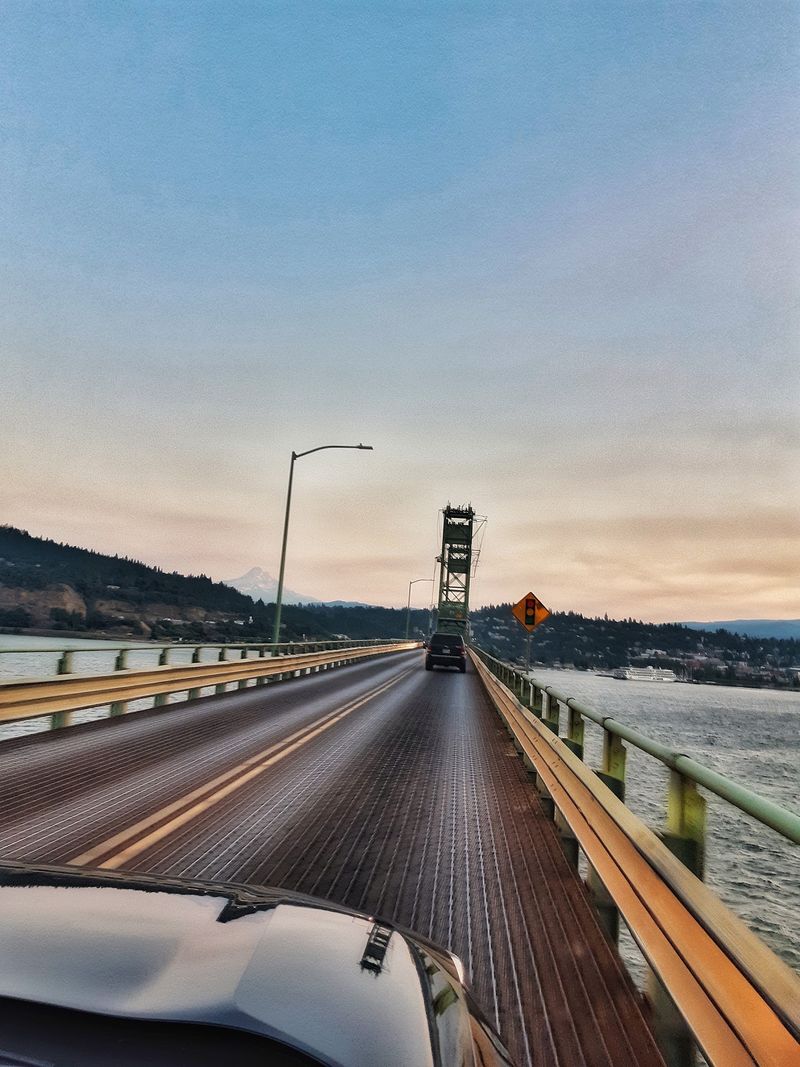
The road surface is another feature that separates this bridge from a typical paved crossing.
The Hood River Bridge uses a steel-grated deck across its roughly eight-tenths-mile length. The Port lists 201 deck panels between the approaches.
Instead of driving over an uninterrupted layer of asphalt or concrete, vehicles travel across metal grating that forms the roadway itself.
That construction gives the crossing a different sound and texture from a conventional bridge.
Motorcyclists can be especially aware of grated bridge decks because two wheels respond differently to road surfaces than four, while drivers in cars may simply notice the change in sound beneath the tires.
The important part is to keep movements smooth and follow the posted speed rather than reacting abruptly to the surface.
The grating is also not merely decorative evidence of the bridge’s age. It remains part of the working structure, and maintenance of the steel deck has continued as the Port keeps the bridge operating.
That ongoing maintenance matters because the existing span is expected to remain open while its replacement is built nearby.
For now, every crossing still includes the same steel deck that makes the Hood River Bridge immediately recognizable from behind the wheel.
Large RVs And Oversized Vehicles Face Extra Restrictions
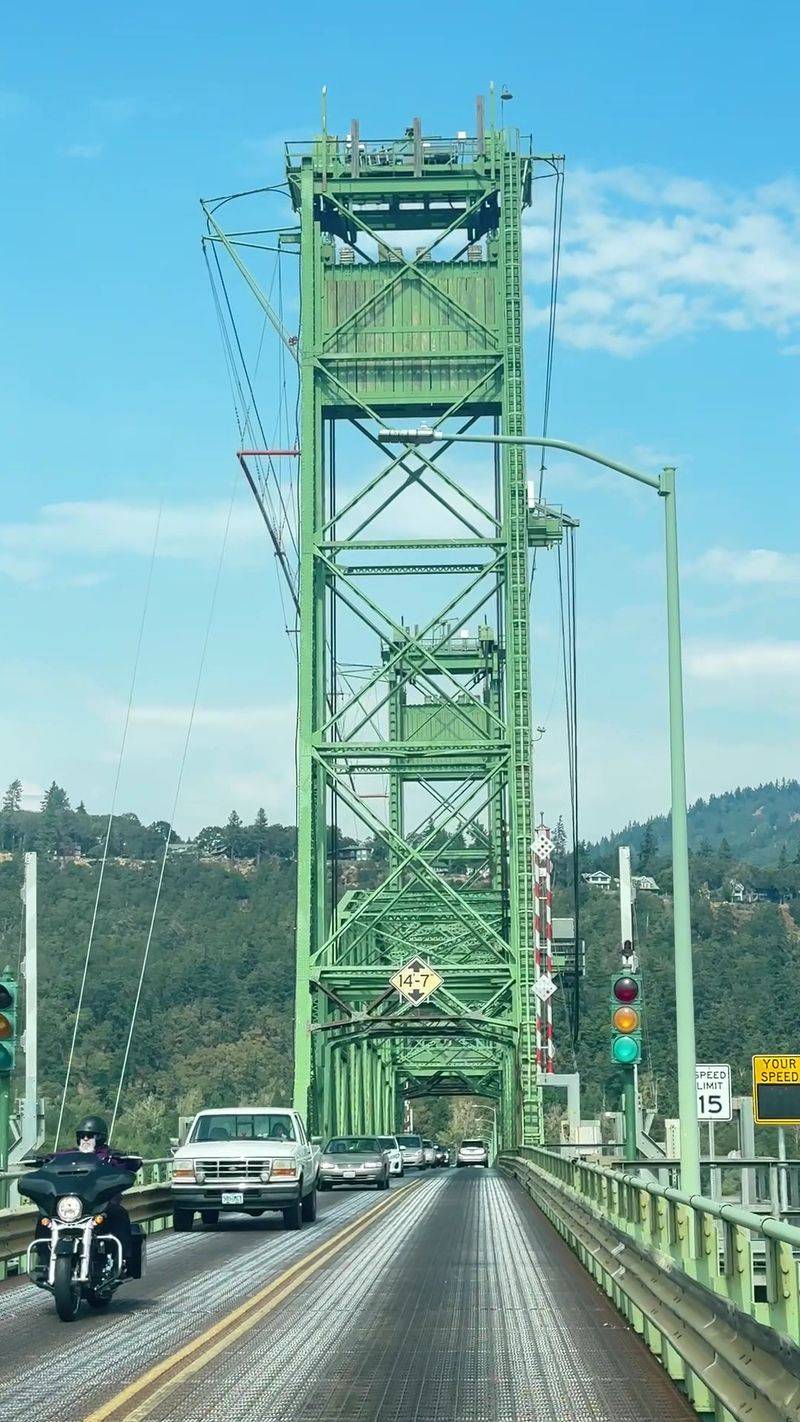
Not every vehicle is a good match for this crossing.
The Port of Hood River specifically advises large RVs to use another Columbia River bridge because of the narrow travel lanes.
The suggested alternatives are the Bridge of the Gods at Cascade Locks to the west or the Dalles Bridge to the east. Both require a detour, but they give larger vehicles another way across the river.
The existing Hood River bridge also has a maximum vehicle height of fourteen feet, seven inches, along with restrictions on wide loads and certain heavy truck configurations.
Those limits are practical consequences of a structure designed long before modern recreational vehicles and freight equipment reached their current dimensions.
Drivers of large vehicles are also advised to turn in mirrors before approaching the bridge.
That recommendation says a lot about how little extra width exists when two large vehicles meet.
If you are traveling in a standard passenger car, these restrictions may barely affect your trip. If you are towing, driving a large RV, or operating a commercial vehicle, checking the current bridge limits before leaving can save a substantial reroute later.
Sometimes an extra twenty miles is easier than discovering your vehicle does not fit the crossing you planned to use.
Nearly A Mile Of Columbia River Views Surround The Bridge
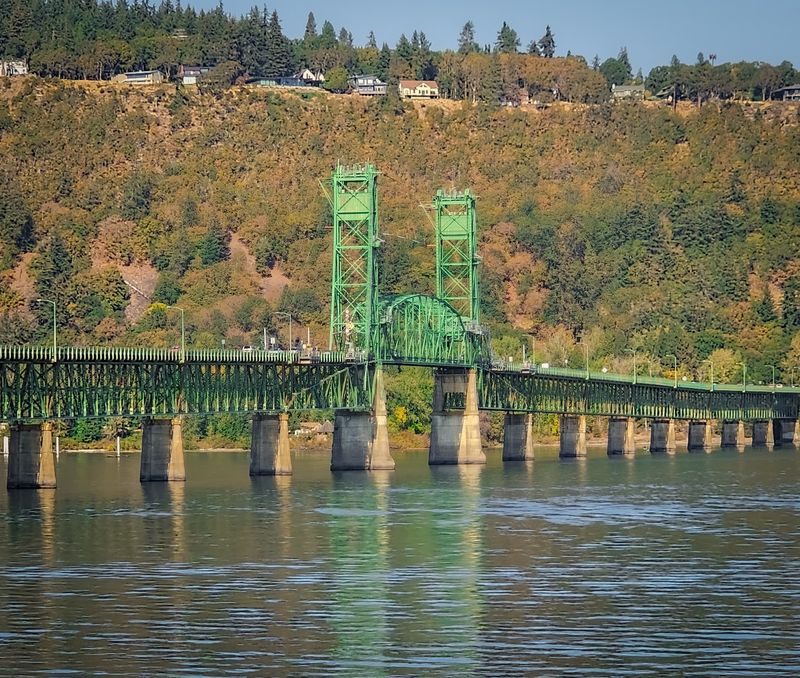
At 4,418 feet long, the bridge carries traffic across a broad section of the Columbia River in the central Columbia Gorge.
The setting puts drivers between Hood River on the Oregon side and the White Salmon and Bingen communities on the Washington side.
For passengers, the crossing opens views of the river, surrounding slopes, and the wider Gorge landscape.
Drivers have a more important assignment.
With narrow lanes, steel grating, and opposing traffic close by, this is not the place to let the scenery pull your attention away from the road.
Weather can also affect the experience. Wind and rain are worth taking seriously on an exposed river crossing, particularly when the roadway already asks for more concentration than a wider modern bridge.
The bridge is more than a scenic connection. It provides a direct route for commuters, families, businesses, and freight moving between the two states.
The nearest alternative Columbia River crossings are more than twenty miles away in either direction, which helps explain why keeping the existing bridge operating remains important while replacement plans advance.
You may cross it in only a few minutes. Its role in the region is much bigger than that short drive suggests.
The Lift Span Has Been Raising Boats Since 1938
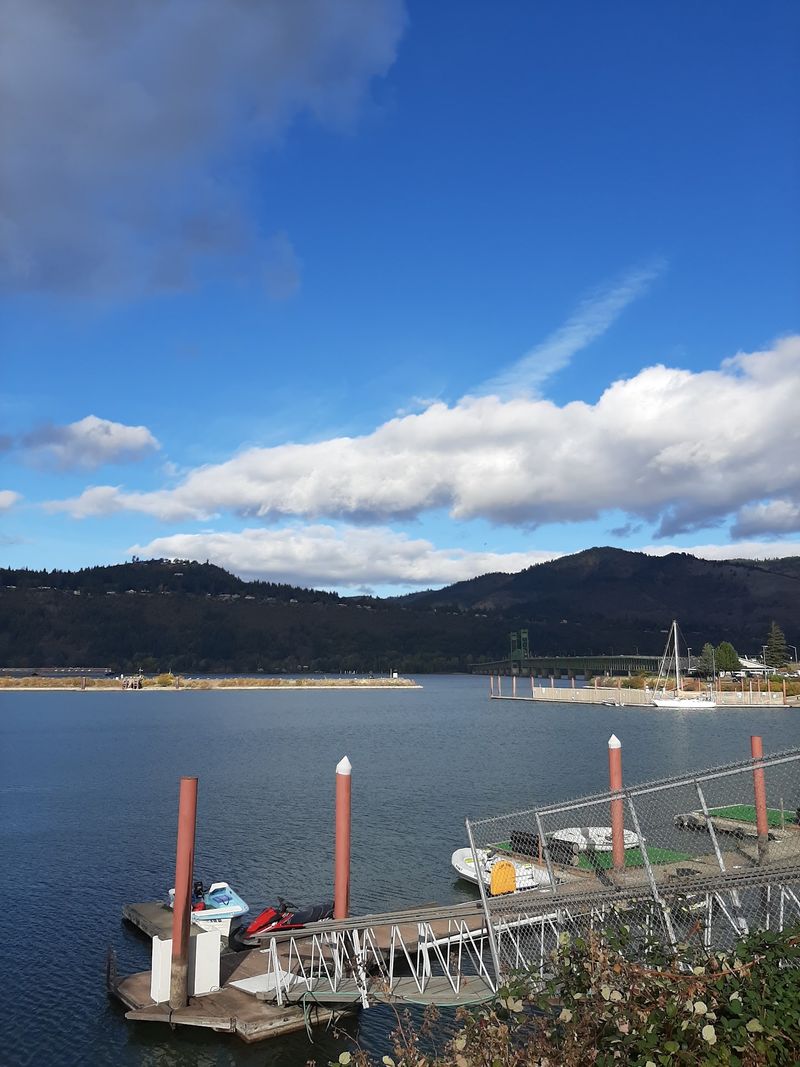
The bridge changed substantially fourteen years after it first opened.
Construction of Bonneville Dam raised water levels in the Columbia, and in 1938 the bridge was elevated and a vertical lift span was added to preserve clearance for river traffic.
That lift section remains operational today.
When a marine vessel requires additional clearance, the roadway can rise from roughly fifty-seven feet above the water to about 148 feet, depending on the level of the Bonneville Pool.
The Port says bridge lifts typically last fifteen minutes or less and may occur with little notice because the Columbia River is a federal waterway.
That means a driver can occasionally encounter a delay that has nothing to do with highway traffic.
The bridge has to serve two transportation systems at once: vehicles traveling across the river and vessels traveling along it.
The lift towers are now one of the most recognizable parts of the structure, but they were not included in the bridge’s original 1924 form.
They are the result of the Columbia itself changing.
That makes the bridge a useful reminder that infrastructure sometimes has to adapt not only to newer vehicles, but also to major changes happening around it.
A Wider Replacement Bridge Is Moving Forward
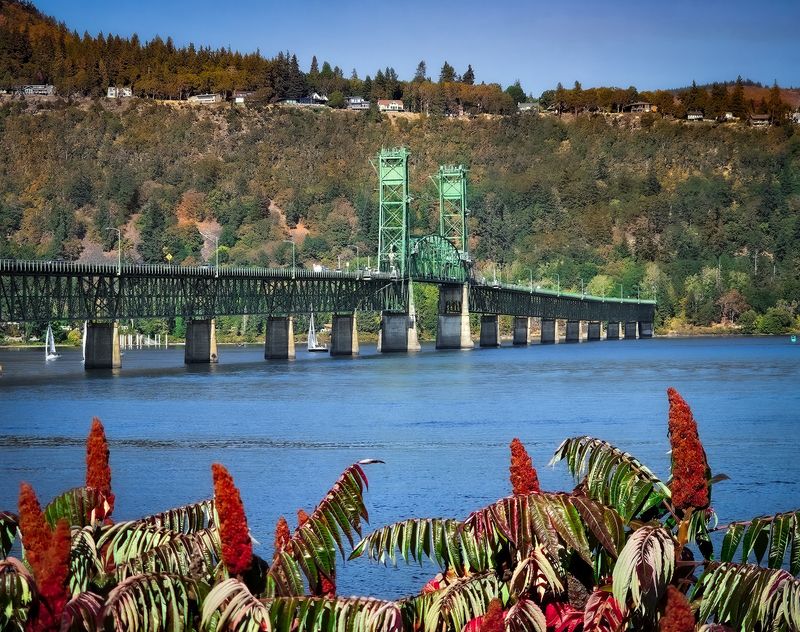
The next major change will be much larger than a new deck panel or another maintenance project.
The Hood River-White Salmon Bridge Authority is advancing a replacement bridge that would be built about 150 feet west, or downstream, of the current crossing.
The proposed structure will have one twelve-foot vehicle lane in each direction, four-foot shoulders, separate five-foot directional bicycle paths, and an eight-foot pedestrian path.
That is a dramatic difference from today’s narrow two-lane bridge, which has no pedestrian or bicycle access at all.
Final design is underway, and construction-ready plans are expected in spring 2027.
The project has completed federal environmental review, but the remaining construction timeline still depends on final federal funding.
If that funding is secured, construction is scheduled to begin in October 2027, with the new bridge targeted to open in 2031.
The existing bridge is expected to remain operational during most of construction because the new structure will rise alongside it. Only later tie-in work is expected to create limited traffic impacts.
For now, the century-old span remains the crossing.
It also uses all-electronic tolling, a system introduced in April 2025. Drivers pass through without stopping at traditional toll booths, with payments handled through BreezeBy or the Port’s other payment methods.
Eventually, the replacement will bring wider lanes, shoulders, and dedicated space for people walking and biking.
Until then, the old bridge keeps doing the job it began in 1924, one narrow crossing at a time.