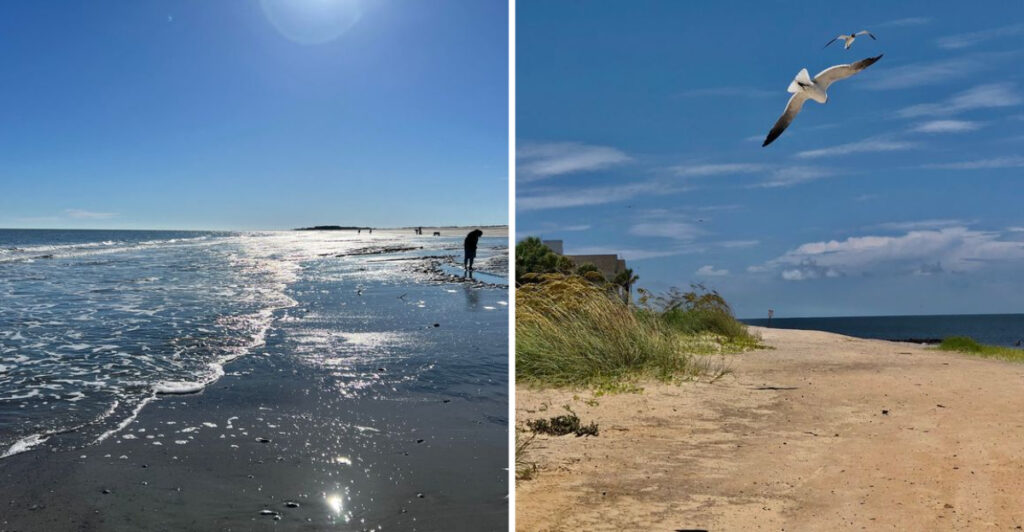
Forget the towel. I’d be watching the sand.
Edisto Beach keeps things simple, with a long South Carolina shoreline and plenty of room to wander without rushing.
Low tide is when the search gets more interesting. Sand dollars live in the shallow waters offshore, and the exposed shoreline gives you a better chance of spotting one among the shells.
The beach also stays closely tied to its wildlife, with seasonal rules helping protect the animals that use the coast too.
I’d probably spend twice as long here as planned, convinced the next patch of sand is the one.
Four And A Half Miles Of Shoreline Give You Room To Explore
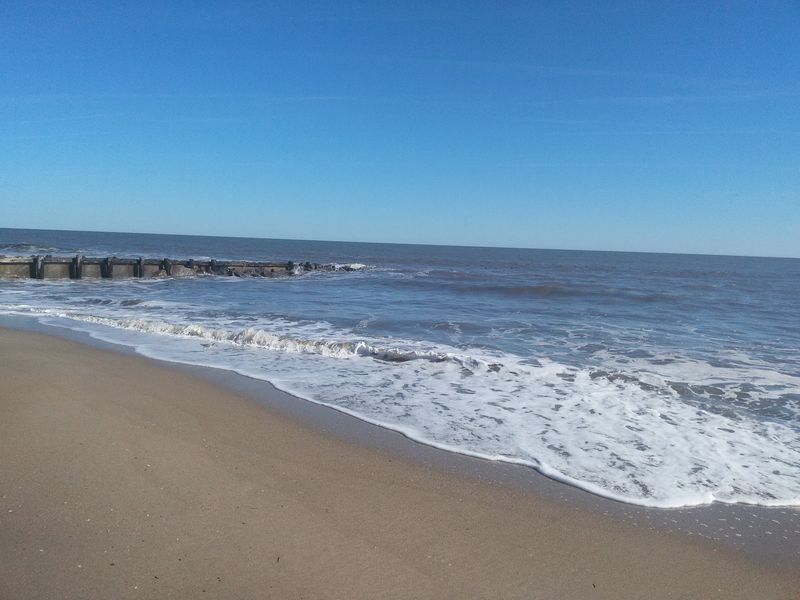
Edisto Beach stretches for roughly four and a half miles along the Atlantic, giving you a long section of shoreline to explore at your own pace.
That distance matters when beachcombing is part of the plan. You can start near one public access, walk until the scenery changes, and turn back whenever you are ready.
A longer shoreline also means you are not limited to one small stretch of sand when you want to look for shells or other natural finds.
The town sits in Colleton County near the mouth of the Edisto River, which travels roughly 206 miles before reaching the Atlantic. River, ocean, tides, and weather all help shape this part of the South Carolina coast.
A low-tide walk gives you more exposed shoreline to inspect. Wet sand, shell fragments, drift material, and other small coastal finds become easier to see once the water pulls back.
You do not need special equipment for a simple walk. Comfortable shoes, water, sun protection, and a small bag for legal keepsakes are enough for most beachcombing trips.
If you prefer bare feet, watch for shells and other sharp natural debris along the tide line.
The best part is the pace. A long beach gives you room to wander without turning the walk into a checklist.
Sand Dollars Really Do Live In The Shallow Water Offshore
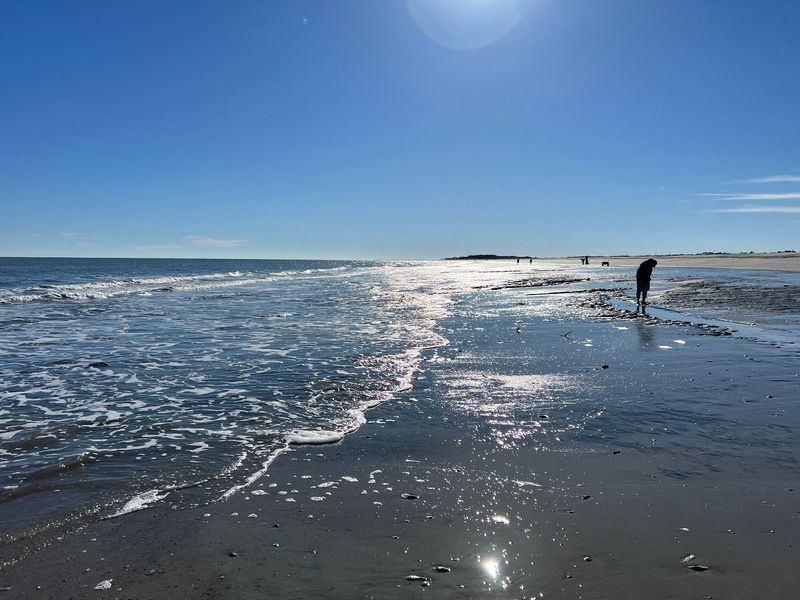
Sand dollars are not just occasional objects that wash in from somewhere else. They are part of the marine life found in the shallow subtidal environment off Edisto Beach.
Living sand dollars look very different from the bleached white shells people often picture. They are usually darker in color and covered with tiny spines that create a soft, velvety appearance.
Those spines help the animal move and interact with the sandy bottom.
If you come across a living sand dollar, leave it where you found it. The pale, empty tests that wash ashore are the familiar keepsakes most people recognize.
A low-tide walk can expose more of the wet beach, giving you a better look at the zone where shells and other marine remains may collect. That does not guarantee a sand dollar, but it does give you more shoreline to examine.
Look slowly rather than scanning only for perfect white circles. Shell fragments, worn pieces, and less obvious finds can be easy to miss when you move too quickly.
The sand-dollar connection makes Edisto especially interesting if you like learning what lives just beyond the waves.
Even when you do not find one, knowing these animals are part of the local marine environment changes the way you look at the shore.
Keyhole Sand Dollars Give Beachcombers Another Detail To Watch For
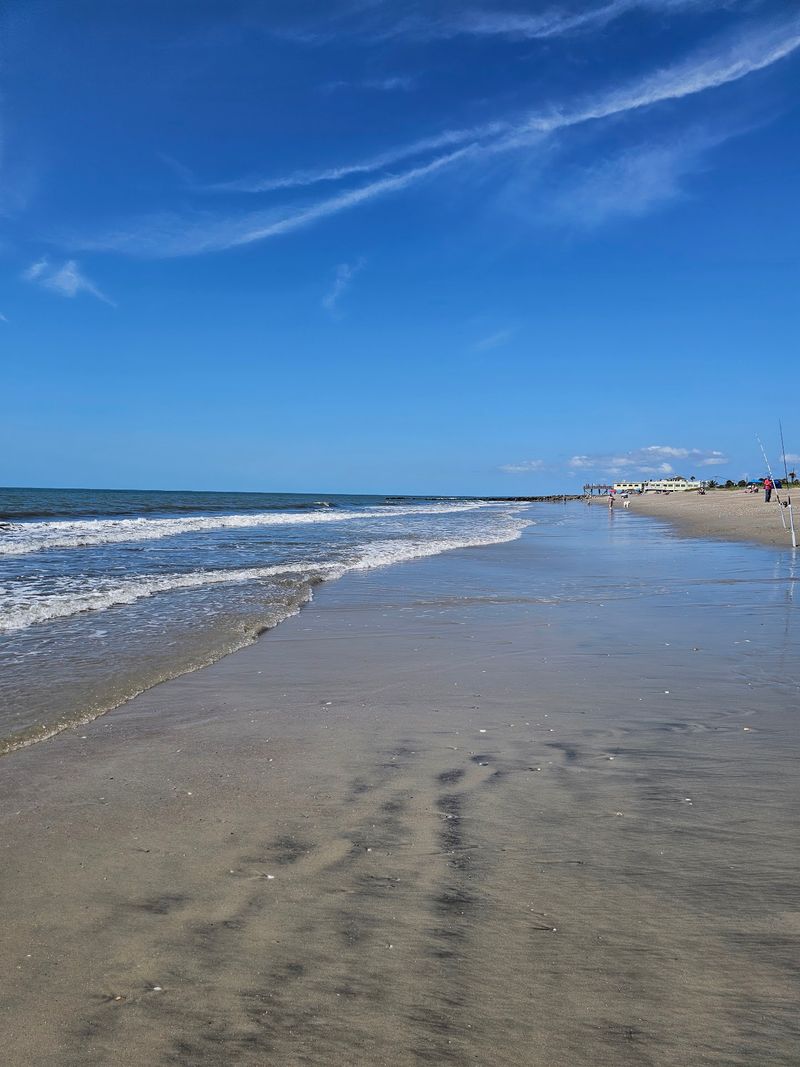
The keyhole sand dollar is one of the more distinctive finds associated with Edisto Beach.
This variety gets its name from the narrow opening in its body, which gives the shell a different look from the rounder sand dollars many people know first.
The town has highlighted the keyhole variety in its own beach information, connecting it directly to the shallow coastal waters around Edisto.
If you find an empty one, handle it carefully. Dry sand-dollar tests can be fragile, especially once they have been rolled around by waves and exposed to sun.
A small mesh bag can be useful for carrying shells because loose sand falls out as you walk. You can also wrap especially delicate finds before putting them into a larger beach bag.
The easiest way to search is to slow down near the wet edge of the beach. Look around shell lines, shallow wash zones, and places where the tide has recently moved across the sand.
Not every sand dollar will be complete. Broken sections can still show the shape, pattern, and openings that make the keyhole variety recognizable.
If you enjoy identifying what you find rather than simply collecting it, this is one coastal detail worth learning before your walk.
Thirty-Seven Public Beach Access Points Make The Shore Easy To Reach
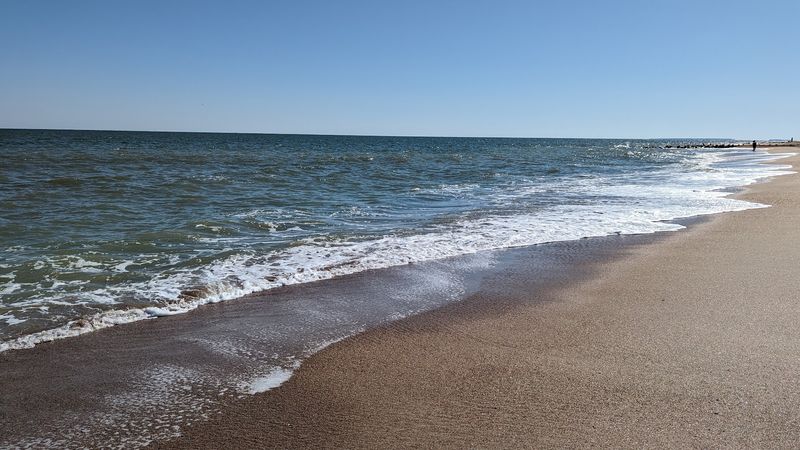
Edisto Beach has 37 public beach access points along Palmetto Boulevard, giving you plenty of ways to reach the shoreline.
Some accesses include dune walkovers, which help direct foot traffic across the dune system while protecting sensitive vegetation.
Accessibility mats are also available at several designated accesses. These mats create a firmer surface over the sand and can make the beach easier to reach for visitors who use mobility devices or need steadier footing.
Parking arrangements vary by access, so it helps to check the town’s current beach-access information before choosing your starting point.
Once you are on the sand, you can walk in either direction and connect long sections of beach on foot.
That flexibility is useful if you plan to spend more than a few minutes beachcombing. You can choose an access near your lodging, pick one close to another part of town, or simply start wherever your day takes you.
Using the marked public accesses also helps protect the dunes. Cutting across unmarked areas can damage plants that stabilize the sand.
For a first visit, choosing a formal walkover or one of the accessible entries keeps the route straightforward from the beginning.
Edisto Keeps The Focus On A Gently Developed Coast
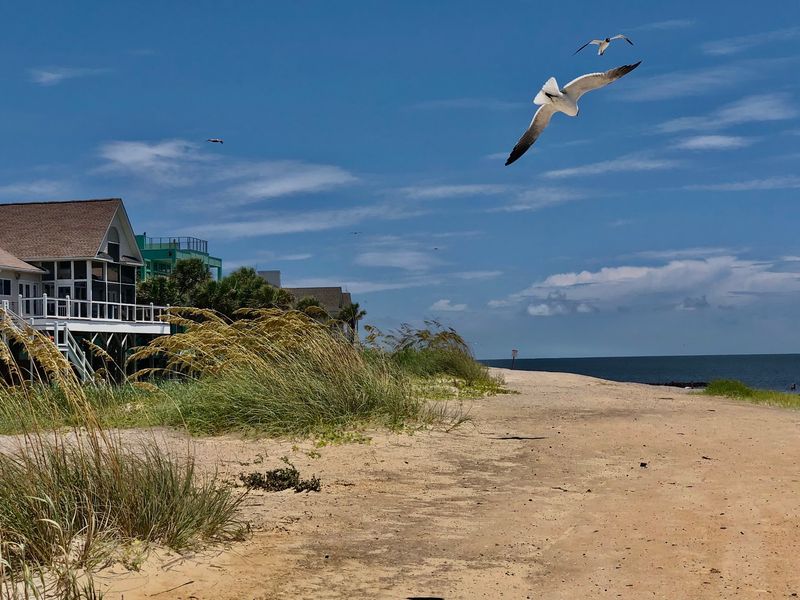
Edisto Beac is one of South Carolina’s remaining family-oriented, gently developed beaches.
That character shapes the experience. You will not find a large amusement strip or a heavily built-up oceanfront competing with the shoreline.
Instead, the town’s coastal setting supports simple activities such as walking, biking, kayaking, beach time, and wildlife watching.
If you prefer a trip built around outdoor time rather than a packed entertainment schedule, Edisto makes that easy.
The limited development also keeps natural features more visible. Dunes, marshes, shoreline, and open water remain a major part of what you see as you move around the area.
That does not mean the town has no services or places to stay. It simply means the beach itself has not been turned into a dense resort strip.
For beachcombing, that slower atmosphere can be a good match. You can spend time looking at shells, watching the tide, or walking farther than you planned without feeling like you should be moving on to the next attraction.
A simple day works well here. Start with a beach walk, take a break, and return later when the tide or light has changed.
Sea Turtle Season Brings Extra Rules From May Through October
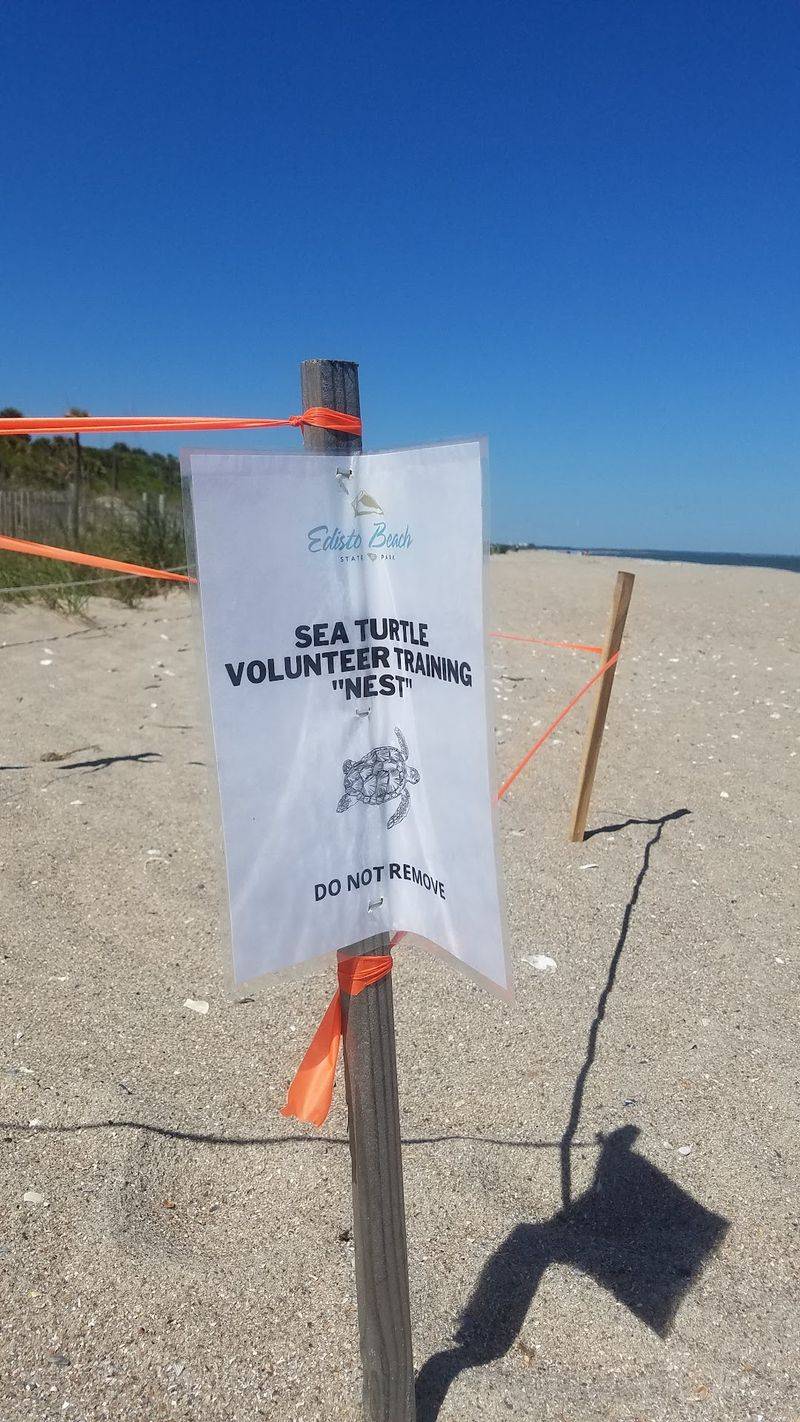
Edisto Beach is also an important nesting area for loggerhead sea turtles.
Nesting season runs from May 1 through October 31, and several beach rules become especially important during those months.
Artificial light visible from the beach is restricted because bright lights can disorient hatchlings as they move toward the ocean.
Dogs must also be leashed on the beach from May 1 through October 31. Outside that period, pets still need to remain under the owner’s control.
If you bring chairs, umbrellas, toys, or other beach gear, remove them when you leave. Keeping the beach clear overnight helps reduce obstacles for nesting turtles and hatchlings.
Other year-round rules include bans on bonfires, camping, glass containers, and motorized vehicles on the beach.
The town also states that there are no lifeguards on duty, so swimming requires extra attention to conditions and your own ability.
If you are visiting with children, stay close and keep an eye on the surf.
These rules are part of using the beach responsibly. You can enjoy the shoreline fully while still giving wildlife the space it needs.
Edisto Beach Turns A Simple Walk Into A Slower Coastal Search
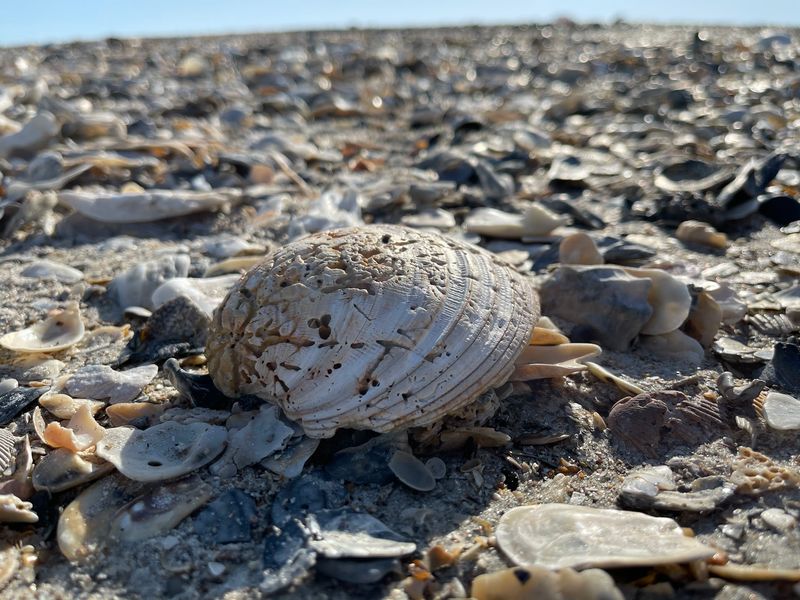
Edisto Beach works well because the experience does not need much structure.
You have roughly four and a half miles of shoreline, 37 public access points, a gently developed coastal setting, and a real chance to learn about the marine life that lives just beyond the waterline.
Sand dollars are part of that story, including the keyhole variety associated with the shallow waters off Edisto. A low-tide walk gives you more exposed beach to examine, but the fun is in looking closely rather than expecting a guaranteed find.
You can start from a public access, follow the wet edge of the sand, and see what the tide has left behind.
Along the way, remember the basic rules. Leave living creatures where you find them, use marked dune crossings, respect turtle-season restrictions, and keep swimming conditions in mind because there are no lifeguards.
The beach does not need a long list of attractions to hold your attention. The shoreline itself gives you enough to work with.
If you like coastal walks where small details matter, Edisto makes it easy to slow down.
One shell, one sand-dollar fragment, or one unfamiliar shape in the sand can be enough to keep you looking a little longer.