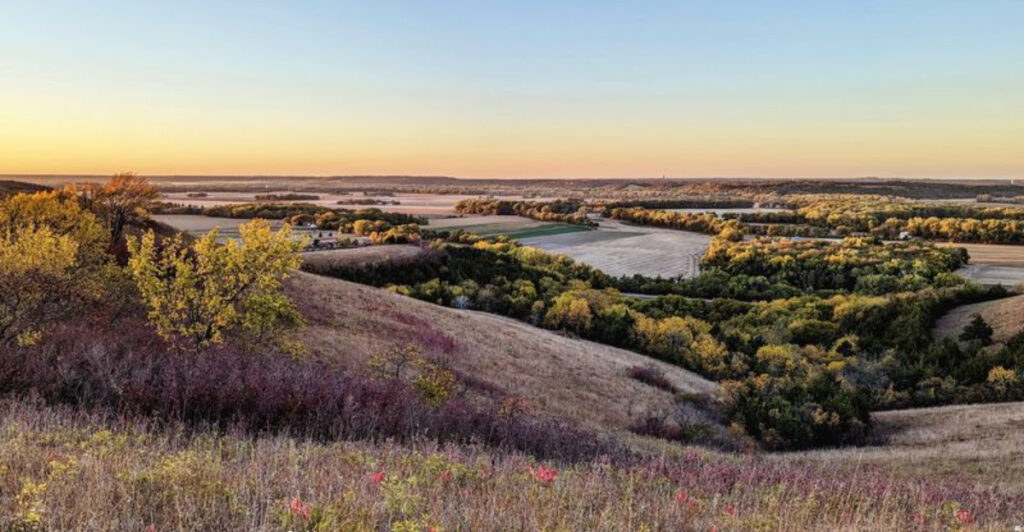
A beautiful hike can lose some of its charm the second you realize the grass is not the only thing brushing against your legs.
This Kansas trail is known for wide-open scenery, but summer also brings a less welcome companion: ticks. That does not mean the trail is off-limits.
It just means a little preparation goes a long way before heading out. The contrast is almost funny.
You come for fresh air and a peaceful walk, then spend part of the hike wondering if something tiny just hitched a ride. Still, plenty of people consider the views worth the extra caution.
I have learned to respect any trail that looks completely harmless at first glance. One summer hike taught me that lesson after I spent the entire drive home checking my socks like they had personally betrayed me.
Since then, Kansas prairie trails have earned one extra step in my routine: enjoy the scenery first, then do a very thorough tick check before calling the day finished.
A Living Laboratory In The Flint Hills
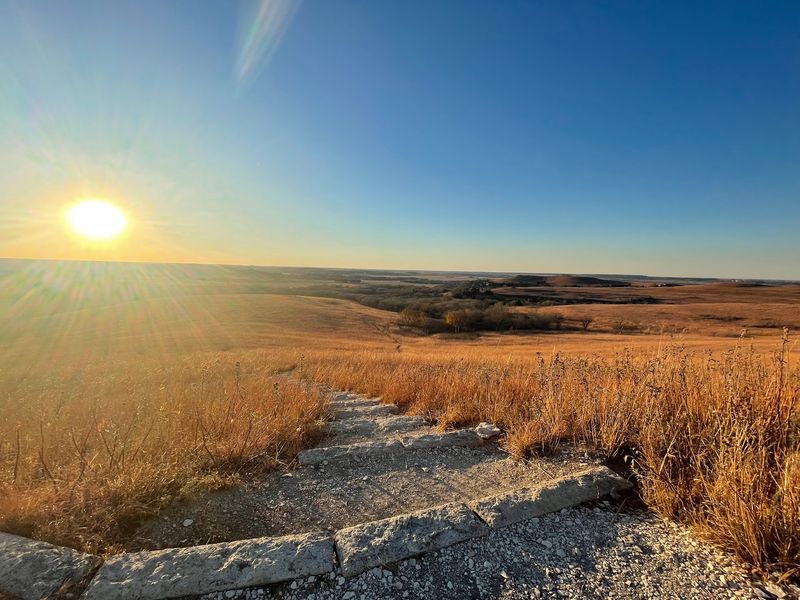
Long before it became a favorite walking spot, this stretch of grassland was set aside as a research preserve, and that history still shapes every step you take.
Konza Prairie Nature Trail sits within a much larger biological station managed for science, which means most of the surrounding land stays off-limits to the public.
Hikers get access to a carefully chosen corridor, and researchers get thousands of protected acres to study fire, grazing, and native plants.
I liked knowing that the grass around me was part of long-term experiments rather than a manicured park lawn. Watersheds here are burned on different schedules, so one hillside might look freshly blackened while another stands shoulder-high in bluestem.
The address is simple enough for your map app: Konza Prairie – Nature Trail, Manhattan, KS 66502.
Parking sits at the base, and the trailhead begins near a shaded creek before the real climbing starts. Walking through a research site felt like being handed a backstage pass to Kansas ecology.
Ticks Turn Summer Into A Contact Sport
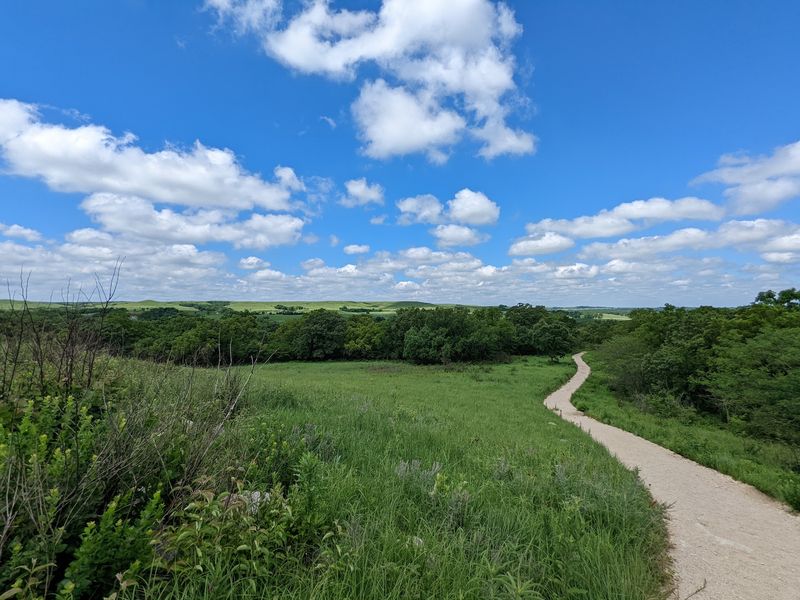
Warm months bring the preserve’s most famous nuisance, and I am not exaggerating when I say the ticks here are legendary among Kansas hikers.
Tall grass leans over the path in June and July, and those seed heads act like tiny launch pads.
Lone star ticks are especially common across the Flint Hills, and they are quick, small, and shockingly persistent.
My routine became a ritual. Long pants tucked into tall socks, repellent on shoes and ankles, light-colored clothing so I could spot hitchhikers, and a full check in the car mirror before driving away.
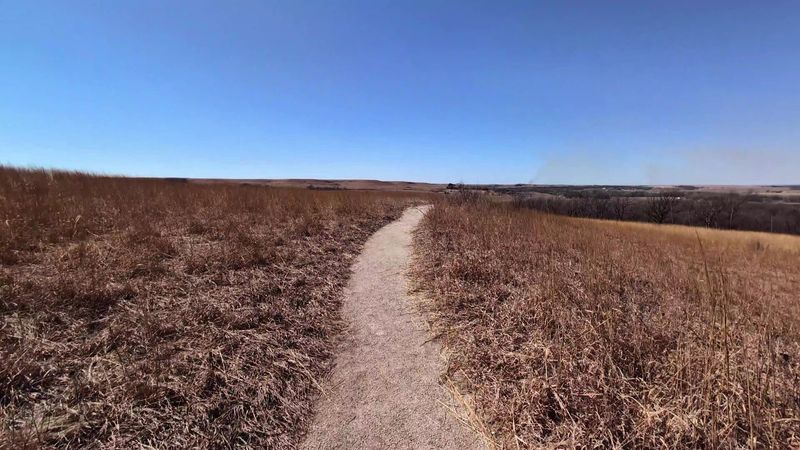
Staying centered on the crushed gravel tread helps enormously, since brushing the grassy edges is how most bites begin.
A second check at home, including your scalp and waistband, is worth the two minutes.
None of this should scare you off.
Plenty of people hike all summer here and finish the loop unbothered, armed with nothing fancier than socks, spray, and a little vigilance.
Three Loop Choices For Three Energy Levels
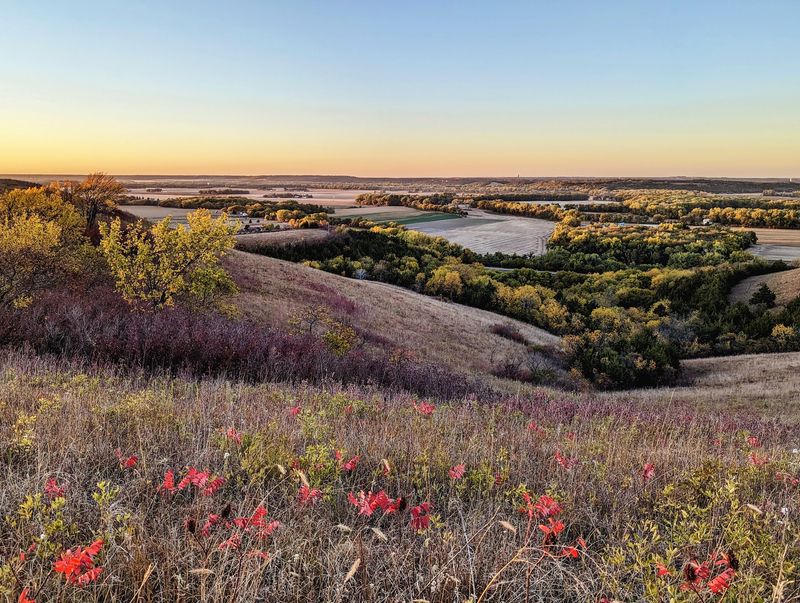
Choosing your distance here feels refreshingly simple, because the trail system fans out into three nested loops.
The shortest runs roughly 2.6 miles, the middle option lands near 4.6 miles, and the longest stretches to about 6.2 miles.
All three share the same opening climb, so you can decide partway up whether your legs are feeling ambitious.
I started with the short loop on a hot afternoon and regretted nothing. It still delivers the big ridge view, still gets your heart thumping, and still shows off the wide Kansas horizon that draws people out here.
The longer loops drop into quieter draws where you may hear turkeys before you see them. Traffic noise from nearby roads occasionally drifts in, though the grass swallows most of it.
Junction signs are clear, and interpretive posts along the way explain what grows underfoot. Picking a loop is less about fitness and more about how long you want the prairie to keep you.
That First Climb Will Wake You Up
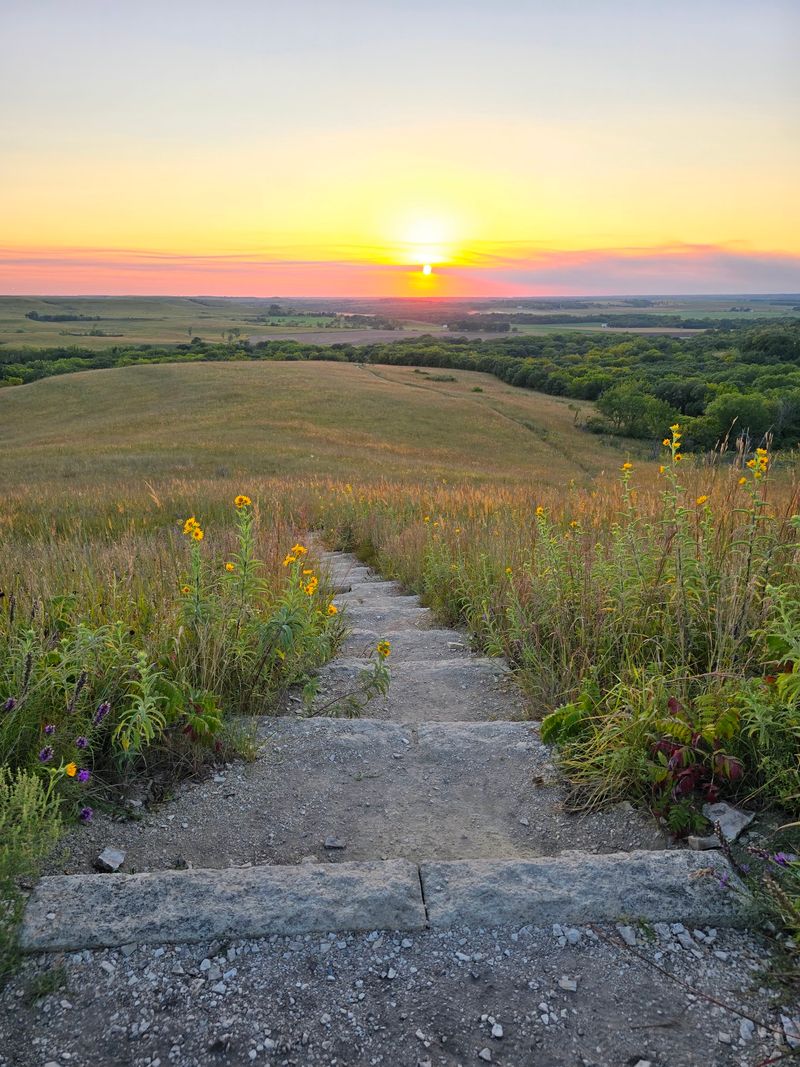
Anyone who assumes Kansas is flat has clearly never hauled themselves up the opening grade of this trail.
After crossing a bouncy little footbridge over the creek, the path tilts upward and stays that way for a solid stretch.
The surface turns rocky, loose in spots, and steep enough that most people pause at least once to catch their breath.
The official clockwise route tackles the steepest work early. You earn the ridge, then coast afterward through gentler terrain for the rest of the loop.
Hiking shoes with real tread beat sneakers on the crushed gravel, especially after rain washes gullies into the steeper pitches.
Trekking poles are handy if your knees complain on descents. Kids handle it fine with breaks, and the reward at the top does most of the convincing.
Once you crest that hill and the grassland unrolls in every direction, the burning calves suddenly seem like a bargain rather than a complaint.
Sunrise And Sunset Steal The Show
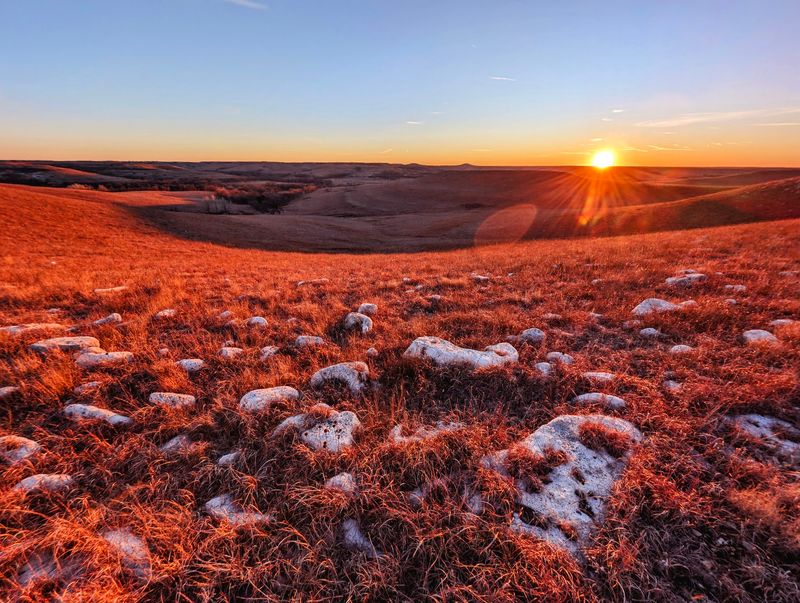
Golden hour on the prairie is something I keep replaying in my head months later.
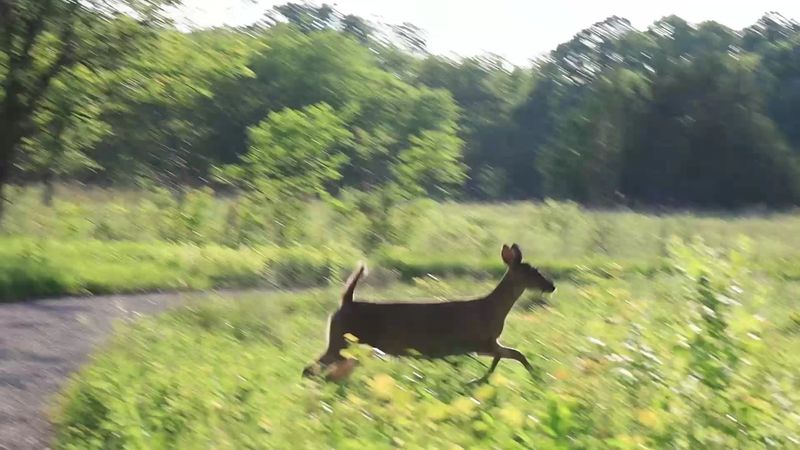
The trails open at dawn and close at dusk, giving early risers and evening wanderers plenty of time to explore. Morning brings birdsong, cooler air, and deer moving through the draws before the heat settles in.
Evening flips the mood entirely. Low sun turns the grass copper, shadows stretch across the ridges, and the hills seem to layer themselves into the distance.
Photographers gather near the high overlook for good reason, since you can see for miles in nearly every direction.
Give yourself enough time to descend and return to the parking area before the trails close. One practical warning: deer move onto the access road at dusk, so drive out slowly.
Between a quiet sunrise and a blazing sunset, I honestly could not pick a favorite, though the mosquitoes might vote for you.
Wildlife Sightings Come Easy Here
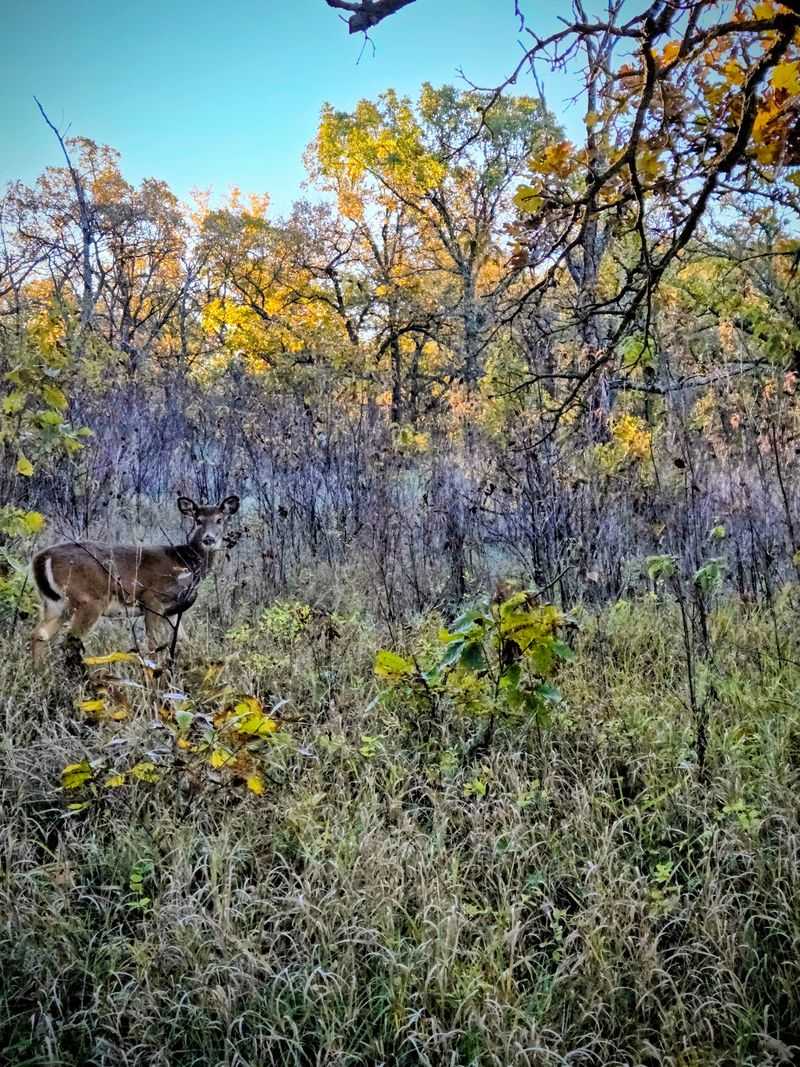
Deer stepped out of a wooded gully within ten minutes of my start, and they barely looked up.
Wild turkeys are common enough that their gobbling becomes background music, particularly in spring. Birders do well here too, spotting grassland species like dickcissels, meadowlarks, and the occasional summer tanager flashing red through the trees.
Hawks ride thermals above the ridges, and butterflies work the wildflowers in waves through the warmer months. Grasshoppers explode from the grass with every footstep, which the kids in your group will find endlessly entertaining.
Bison live on the preserve, though they are kept in fenced areas away from the public trails, so you will not stumble into a herd. Cattle sometimes graze nearby research plots as part of ongoing studies.
Binoculars earn their weight, and a plant identification app makes the walk feel like a scavenger hunt.
Quiet feet and early hours are the only real tricks to seeing more than grass.
Burn Season Paints The Hills Black
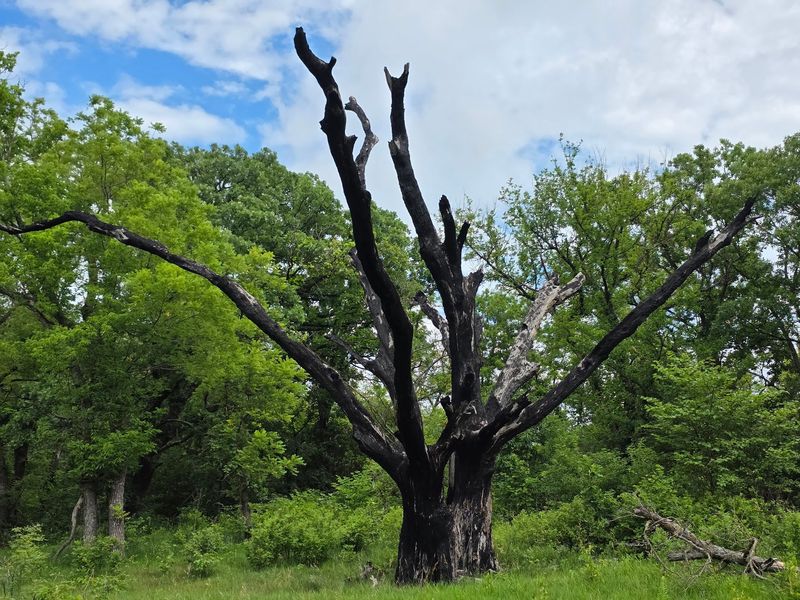
Fire is not a disaster in the Flint Hills. It is maintenance, and it has been for thousands of years.
Each spring, usually from March through May, crews set controlled burns on different sections of the preserve.
Smoke drifts over the hills, the ground turns charcoal, and within weeks new green shoots push up thicker than before.
Burning keeps trees and shrubs from swallowing the grassland, which is exactly how this landscape survived in the first place.
Researchers here study those fire cycles closely, comparing plots burned annually against ones left alone for years.
Active burns can temporarily close the trails, so watching from a public overlook is not something to count on. Heavy smoke days are best skipped if you have breathing trouble.
Visiting a few weeks after a burn rewards you with startlingly vivid green slopes and clear sightlines.
Fire on the prairie looks destructive for about a month, then proves itself the best gardener Kansas ever hired.
Leave The Leash At Home
Here is the rule that surprises the most visitors: dogs are not allowed, not even leashed ones.
Because the site doubles as an active research station, protecting native wildlife and long-term study plots takes priority over pet-friendly policies. Bicycles are also off the table, as are horses and drones.
I understand the disappointment. Plenty of people show up ready for a joint adventure and have to rethink the plan at the parking lot.
Manhattan has other parks and river trails where four-legged company is welcome, so it helps to check before loading the car. Leaving pets in a hot vehicle is never an option during Kansas summers.
The upside is a quieter trail with less disturbance, which is part of why deer and turkeys wander so close to the path.
Trail running is encouraged, cameras are welcome, and curiosity costs nothing, so your pup will simply have to hear the highlights when you get back.
Shade Is Scarce, So Pack Accordingly
A short wooded stretch near the creek gives you a false sense of security at the beginning.
Past that, the trail runs almost entirely exposed. No canopy, no shelters, no water fountains along the route, and summer temperatures in this part of Kansas regularly push into the nineties.
I carried two liters for the short loop and finished nearly all of it. For the longer options, three liters is more realistic, plus electrolytes if you sweat heavily.
A wide-brimmed hat, sunglasses, and sunscreen reapplied halfway through will save your skin. Starting right at dawn is the single smartest heat strategy available.
Wind sweeps the ridges constantly, which feels wonderful but also dries you out faster than you notice.
The new visitors pavilion at the trailhead offers a place to rest before or after, with four stone benches set beside its informational displays for visitors.
Treat the sun as the toughest opponent out here, and the hike becomes pure pleasure.
An Easy Detour Off Interstate 70
Road-trippers crossing Kansas often blow past one of the best leg-stretchers in the state without realizing it.
The turnoff sits a short drive from Manhattan and only a few minutes from the interstate corridor, making it a genuinely convenient break. Parking is free, the lot is gravel, and a porta-potty is available near the start.
If you only have an hour, do not count on finishing the full loop comfortably. K-State recommends allowing at least two hours for the shortest 2.6-mile route at Konza.
Fall might be the finest season, with amber grasses and cooler air, while late spring brings wildflowers in every color.
Winter strips the hills bare and quiet, which has its own stark appeal. Cell service is patchy, so download your map beforehand and tell someone your plan.
Trading an hour of highway boredom for a walk through Konza Prairie Nature Trail is the kind of swap I would make every single trip.