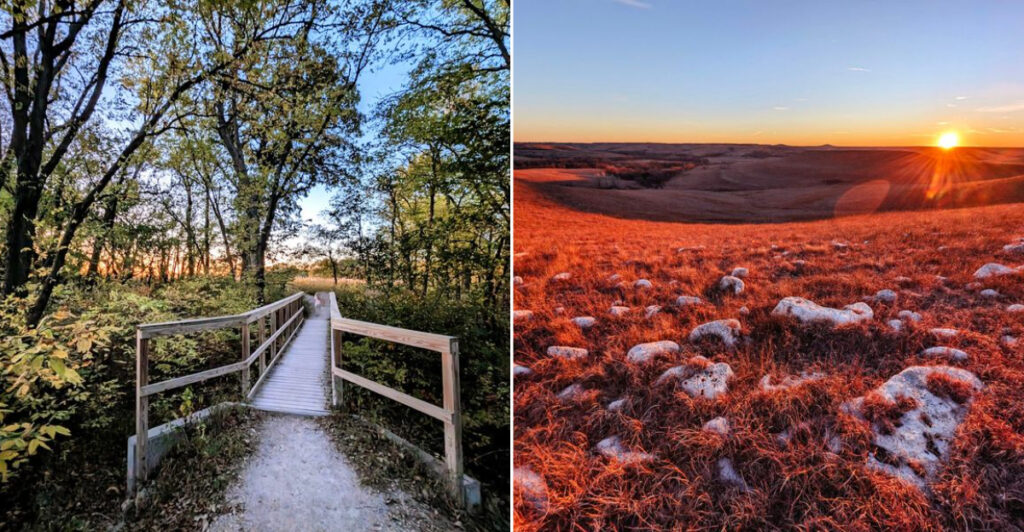
A peaceful hike can get a lot more interesting when the trail starts feeling like it has more snakes than hikers. This Kansas trail has earned that kind of reputation during warmer months, when sightings can become much more common.
The scenery still pulls people in, but the possibility of crossing paths with a snake adds a little extra tension to an otherwise relaxing walk.
That does not mean the trail suddenly becomes off-limits. It just changes the mood.
You pay closer attention, watch where you step, and remember that the prairie belongs to plenty of wildlife besides the people passing through.
I have had hikes where one snake sighting completely rewired my brain for the rest of the afternoon. Every stick looked suspicious. Every rustle got my attention.
I still enjoyed the walk, but I definitely stopped wandering around like I owned the place. Kansas trails can be beautiful, but sometimes they also remind you very quickly who was there first.
Sun-Warmed Limestone Ledges Are Prime Snake Real Estate
Rock does something sneaky out here.
Limestone soaks up heat all morning, then radiates it back like a slow oven, and cold-blooded creatures know it.
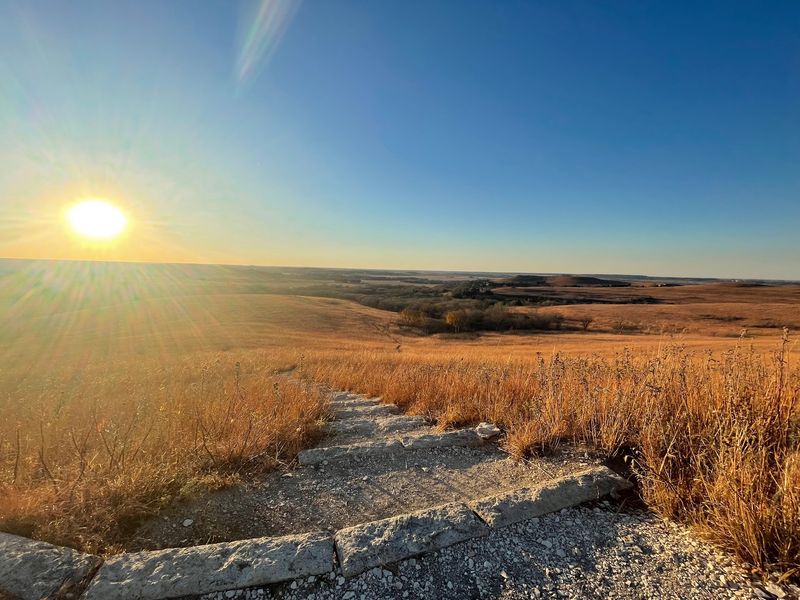
Walking the loops, I noticed how the path cuts through shelves of pale stone and rocky gullies where the ground drops away. Those ledges are exactly the kind of spot a snake picks for a mid-morning warm-up.
The practical takeaway is simple. Look before you place a hand on a rock, and never step blindly over a ledge when you could step onto it first and see what is on the other side.
I got in the habit of scanning three or four steps ahead instead of staring at my boots. It slowed me down maybe two minutes per mile, which felt like a bargain.
Kansas prairie geology is the whole reason this landscape survived the plow, since farmers could not break the rocky soil. That same stubborn stone now doubles as reptile lounging furniture.
Most Residents Here Are Completely Harmless
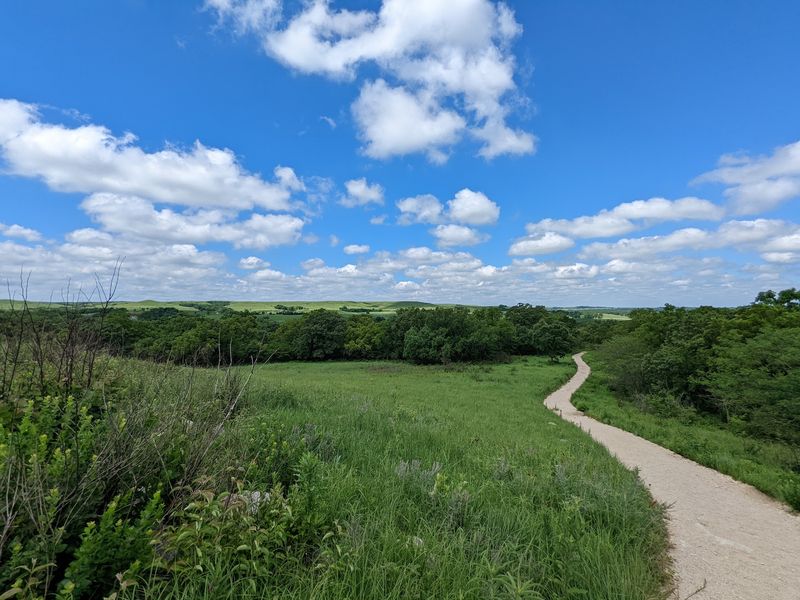
Before anyone cancels their hike, let me set the record straight. The overwhelming majority of snakes crossing these trails are non-venomous and want absolutely nothing to do with you.
Great Plains rat snakes, bullsnakes, garter snakes, and racers all call this grassland home. Bullsnakes in particular love a dramatic performance, hissing and vibrating their tails to imitate something scarier.
I watched one stretched across the gravel like a garden hose someone forgot to coil. It slid off into the bluestem the moment I shifted my weight.
Here is a genuinely useful fact. Bullsnakes eat rodents, and Kansas wildlife experts also note that many native snakes here help control rats, mice, and other small wild mammals.
So the sight of a big snake is usually good news for the health of the land.
Give it distance, snap a photo with zoom rather than proximity, and let it get on with its day. Coexistence costs you nothing but patience.
Copperheads Do Live In The Flint Hills
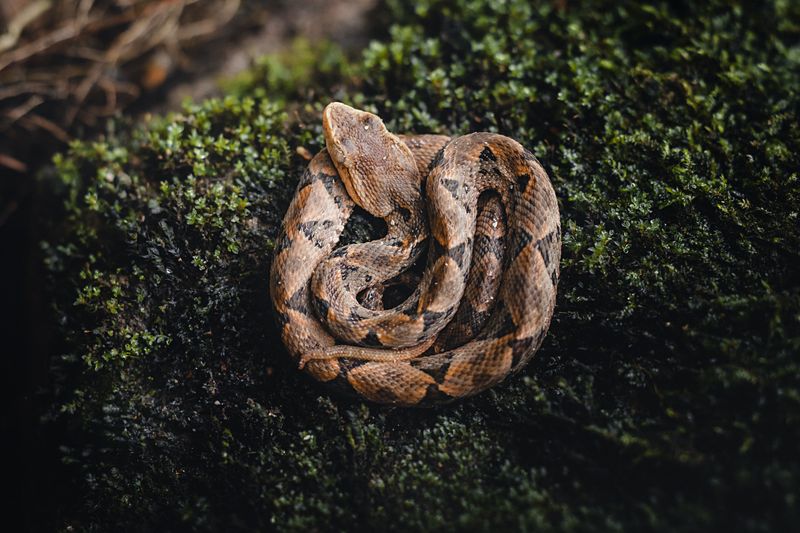
Now for the honest part. Copperheads are native to eastern Kansas, and the wooded draws and brushy edges around this preserve fit their habitat preferences perfectly.
Their camouflage is the real problem. Coppery hourglass bands blend into leaf litter so well that hikers frequently walk within inches without noticing anything at all.
Copperheads are not aggressive and rarely strike unless stepped on or grabbed. Still, a bite requires prompt medical attention, so awareness beats bravado.
I stuck to the center of the crushed gravel path in the shaded lower sections near the stone buildings, where leaf cover is thickest.
Long pants and sturdy boots also make sense, especially in late spring and early autumn when temperatures are mild and reptiles are most active during daylight.
The good news is that visibility on the open Kansas ridgetops is excellent, and hazards are much harder to hide up there.
Respect the shady spots, relax on the summits, and you will be fine.
Three Loop Lengths Let You Choose Your Exposure
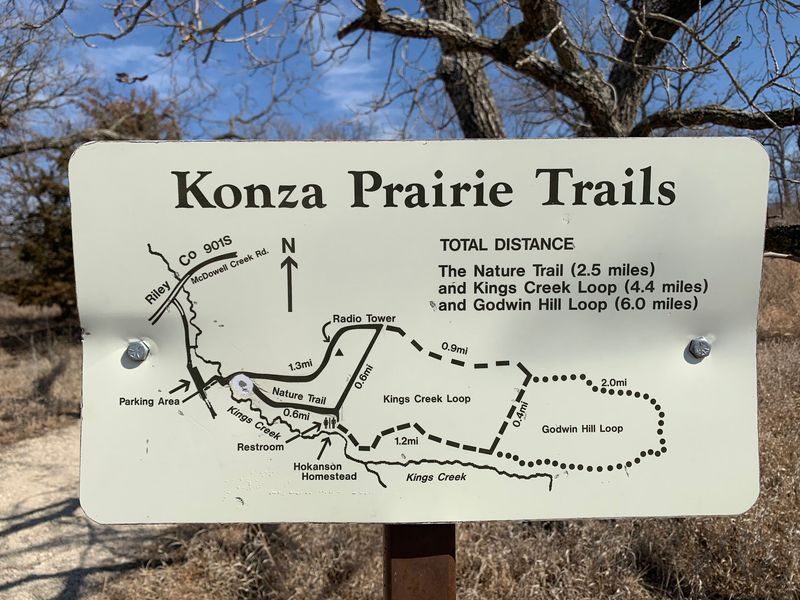
Choice is one of the best features here, and it directly affects how much snake country you cover.
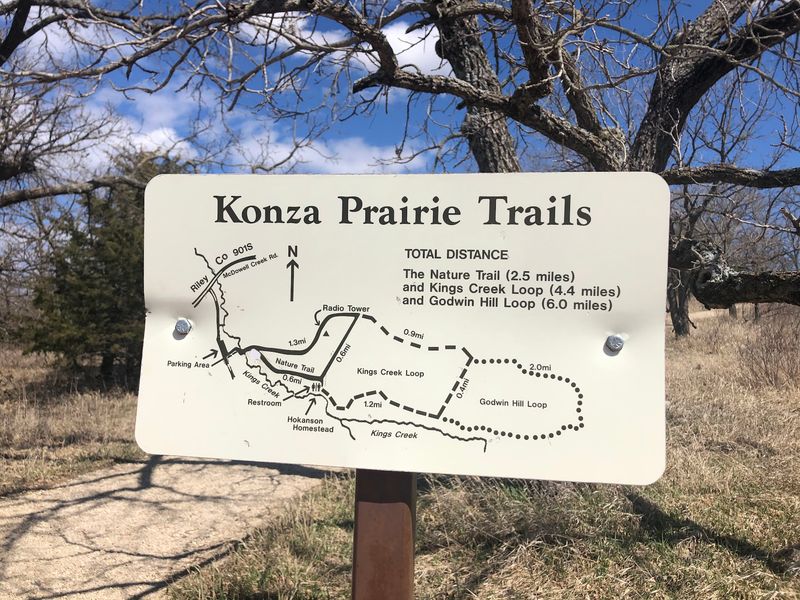
The Nature Trail offers roughly a 2.6 mile loop, a mid-length option near 4.6 miles, and a longer route stretching past 6 miles into deeper backcountry.
Shorter walkers stay closer to the parking area and the most heavily used tread, where footsteps and voices tend to clear the path ahead.
Longer loops wander into quieter grassland where you may not see another person for an hour, which is glorious and also means you are your own lookout.
I picked the middle route on my second visit and found the balance ideal. Big views, fewer crowds, still manageable in a morning.
Whichever distance you pick, note the junctions, because signage is clear but the prairie looks similar in every direction once you are deep in the grass.
Start early, and the whole thing feels like a private tour of the Flint Hills.
That First Climb Will Wake Up Your Legs
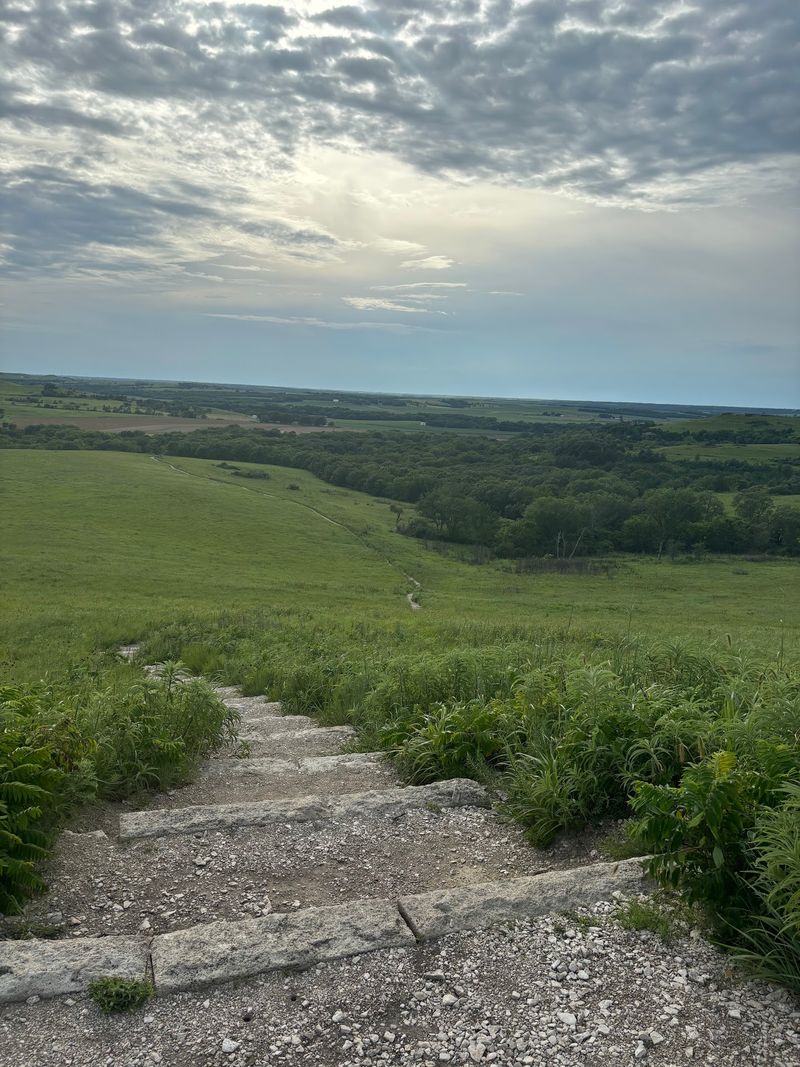
Nobody warned me about the opening ascent, and my calves filed a formal complaint.
Going clockwise, the trail climbs steeply almost immediately, gaining the ridge on loose gravel and embedded stone. It is short, but it is not gentle.
Several regulars swear by going left at the start to get the big climbs finished early, then enjoying a long, cool downhill for the remainder.
I tried both directions and agree completely. Front-loading the effort makes the second half feel like a victory lap.
Difficulty overall is officially rated as moderate. Kids handle it, but they will need water breaks and encouragement on the steeper pitches.
Watch your footing on the rocky sections, especially after heavy rain has washed channels into the tread.
The reward arrives fast. From the top you can see for miles across rolling grassland with barely a building in sight, which is a rare thing anywhere in the country.
Your legs will forgive you eventually.
Shade Is Practically A Myth Out Here
Sunscreen is not optional. I learned that the pink way.
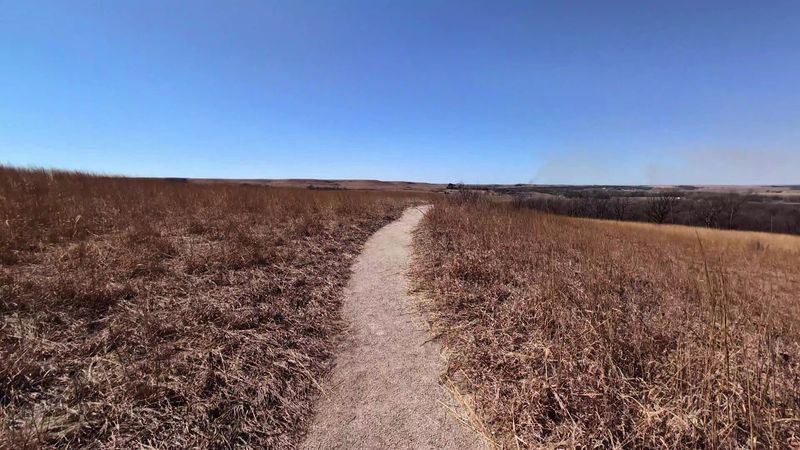
A patch of trees greets you near the trailhead, and then the canopy essentially disappears for the rest of the walk. The prairie is gloriously open and completely unshaded.
Summer temperatures climb fast, and the gravel radiates heat back at you from below. Carrying more water than you think you need is the single smartest decision you can make.
I bring two full bottles for the short loop and three for anything longer, plus a wide-brim hat that has saved my ears repeatedly.
Heat also influences reptile behavior. On blazing afternoons, snakes retreat to shade and burrows, then emerge in the cooler hours near dawn and dusk.
That means midday hiking is hot but quiet, while golden-hour walks are comfortable and require sharper eyes.
Pick your trade-off, pack accordingly, and this stretch of Kansas grassland treats you kindly either way.
Leave The Dog At Home, Seriously
Here is the rule that disappoints more visitors than any other.
Dogs are not allowed on these trails, and neither are bicycles.
The restriction exists because the preserve doubles as an active ecological research site. Decades of long-term data depend on minimizing disturbance to wildlife and vegetation.
Honestly, the snake situation makes the policy feel practical too. Curious noses and camouflaged reptiles are a combination nobody wants to manage miles from a vehicle.
I have watched families arrive, spot the sign, and reshuffle plans on the spot, so save yourself the hassle and plan ahead.
Trail running is welcome and popular, and hikers of nearly every fitness level find a suitable distance.
Interpretive posts along the route explain the grasses, geology, and management practices, turning a walk into a genuine lesson about tallgrass ecosystems.
Respecting the rules keeps this Kansas landscape functioning as both a laboratory and a public treasure. That balance is worth a little inconvenience.
Wildlife Sightings Go Far Beyond Reptiles
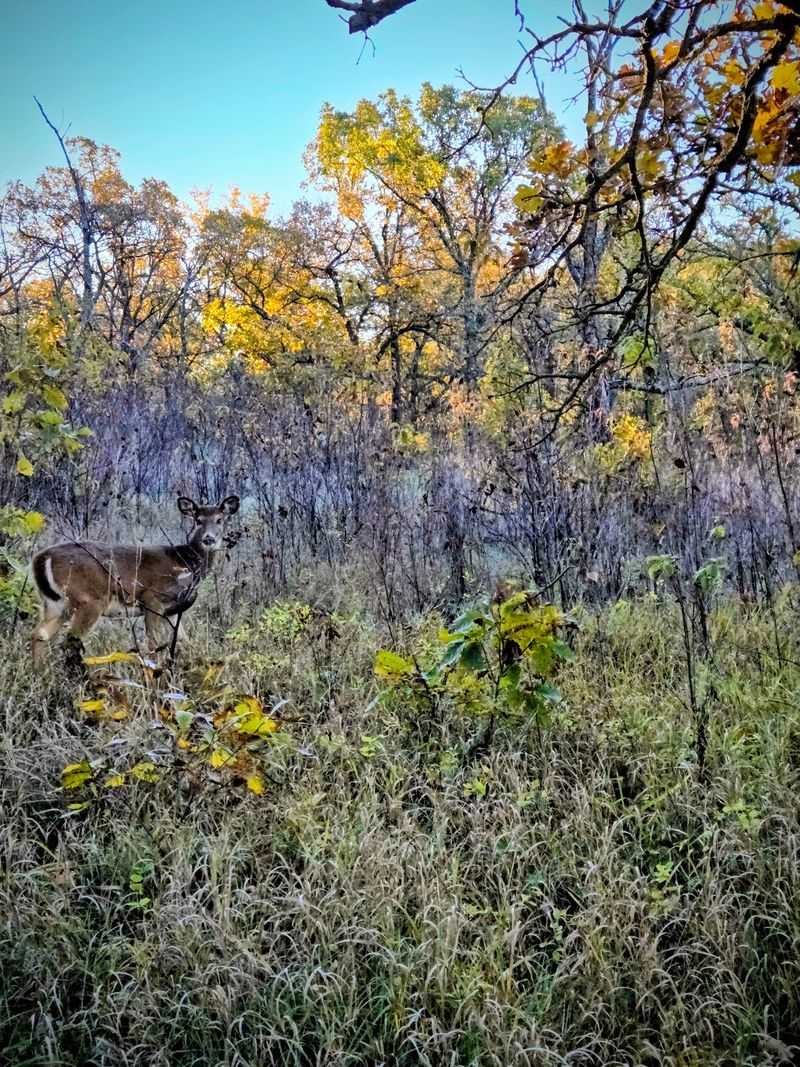
Snakes get the headline, but they are a minority act in a much bigger show.
Deer materialize out of the grass at dawn and dusk in impressive numbers. Wild turkeys gobble from the draws, and I once counted six before breakfast.
Birders do very well here. Summer tanagers, meadowlarks, hawks, and grassland sparrows all use the preserve, and early mornings sound like an orchestra tuning up.
Wildflowers put on their own performance through late spring and summer, splashing purple, yellow, and white across the green.
Bison live on the preserve in a separate research area, fenced away from the public hiking loops, so you may glimpse the herd but will not share the path.
Grasshoppers, butterflies, and beetles fill in the smaller roles, and a plant identification app turns the whole loop into a scavenger hunt.
The prairie rewards slow walkers far more generously than fast ones. Linger, and the place opens up.
Burn Season Changes Everything In Spring
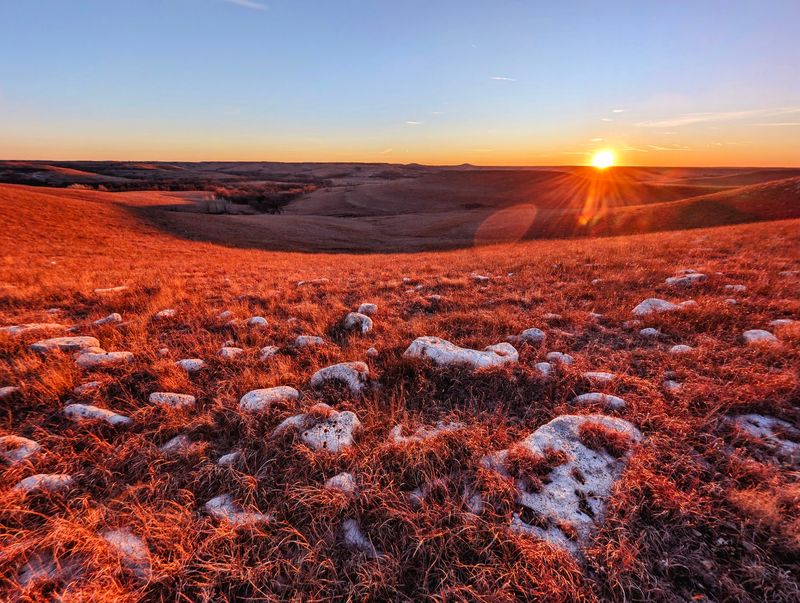
Spring burns run from March into May in the Flint Hills, and they are entirely intentional.
Prescribed burning is a centuries-old management tool that clears thatch, suppresses invading trees, and triggers explosive new growth of native grasses.
Active burns are not a spectator event at Konza. Trails may close during prescribed burning, and K-State warns visitors not to approach areas being burned.
The downside is air quality. If you have breathing sensitivities, skip hiking on active burn days, because smoke settles thick in the valleys.
Post-burn, the landscape looks scorched black for a week or two, then erupts in vivid green that draws grazing animals from everywhere.
Interestingly, burns also temporarily reduce ground cover, leaving early spring sections more exposed than the shoulder-high grass that can develop later in summer months.
Check conditions before driving out, dress for wind, and treat the smoke haze as part of the prairie calendar rather than an inconvenience.
Timing And Preparation Make Or Break The Visit
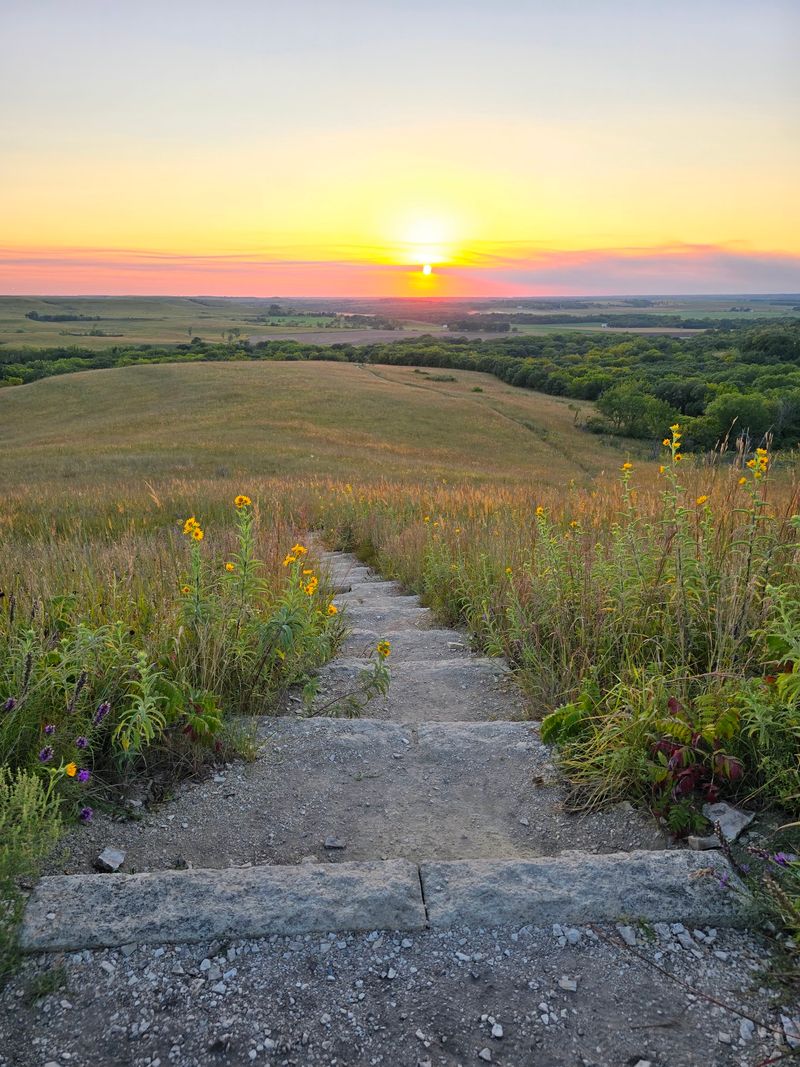
Everything I have mentioned comes down to one thing: showing up prepared.
The trailhead sits at Konza Prairie Nature Trail, Manhattan, KS 66502, roughly six miles south of town and an easy detour off I-70 for road trippers needing a leg stretch.
The public trails are officially open daily from dawn to dusk, so sunrise and sunset walks are both fair game.
My kit is boringly effective. Closed boots, long pants, plenty of water, sunscreen, a hat, and a fully charged phone with offline maps.
Trekking poles help on the loose gravel descents and double as a handy way to rustle the grass ahead of you.
Stay on the marked tread, do not reach into rock crevices, and give any snake a wide berth rather than a photo shoot.
Handled that way, the Konza Prairie Nature Trail delivers some of the finest open-country hiking in Kansas, reptiles included. The grass is worth every careful step.