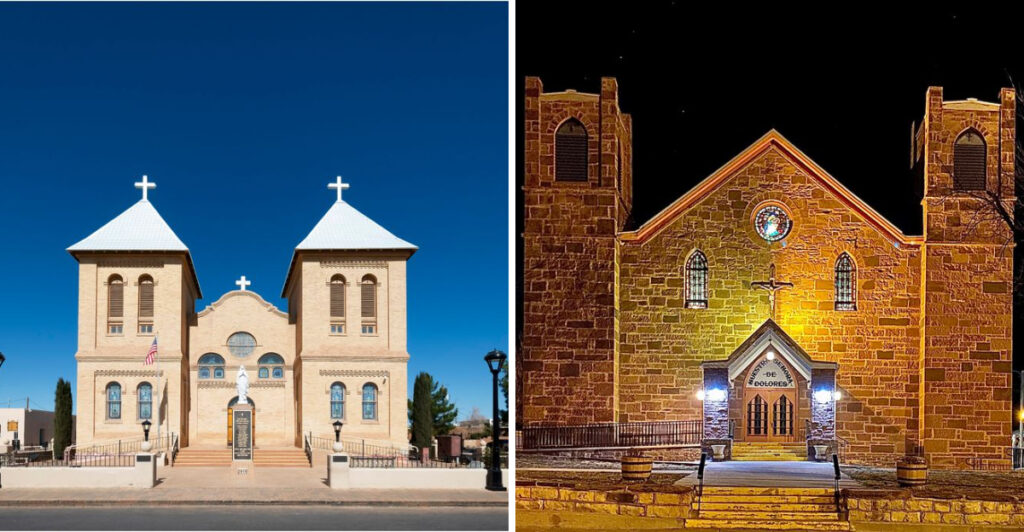
You do not have to cross the Atlantic to find church architecture that feels centuries removed from the American Southwest. New Mexico has sanctuaries where Romanesque arches frame heavy stone walls and Gothic windows rise above quiet streets.
The surprise comes in how naturally those influences fit the landscape. French bishops helped shape some of these buildings, while European craftsmen left details that still stand out today.
Other churches kept regional materials but borrowed plans with roots far beyond the desert. Walk inside and the story gets even richer.
Stained glass glows against thick walls, while carved altarpieces hold generations of devotion. The cool interiors can quiet the outside world almost instantly.
Each stop carries its own history, but together they create an architectural trail through the state. An ordinary road trip can suddenly feel much closer to Europe, even when the desert remains visible just beyond the church doors.
1. The Cathedral Basilica Of St. Francis Of Assisi, Santa Fe
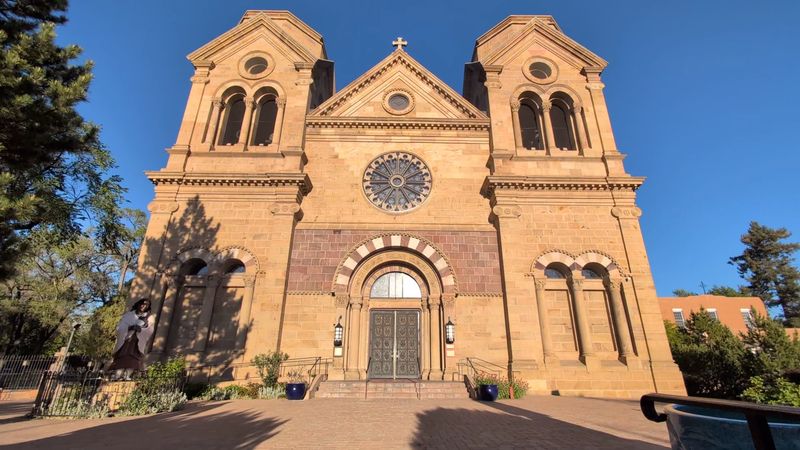
Yellow limestone rises above the low adobe rooflines at 131 Cathedral Place, and suddenly Santa Fe looks a little like southern France. Archbishop Jean Baptiste Lamy wanted a church that echoed the Romanesque cathedrals he grew up around, so French architects and Italian stonemasons went to work with rock quarried nearby.
Round arches, thick walls, and Corinthian columns give the exterior a solid, unhurried strength. The rose window at the front and the stained glass showing the Twelve Apostles were shipped over from Clermont-Ferrand, which explains why the colored light inside feels so distinctly Gallic.
Pope Benedict XVI raised it to the rank of minor basilica, adding a title normally associated with Rome. I love that the grand stone shell still holds a small adobe room inside it: the La Conquistadora chapel, saved from an earlier church, shelters the oldest representation of the Virgin Mary in the country, carried here from Spain.
Mornings are quietest for visitors who want time to study the carvings without crowds shuffling past. The bronze doors alone reward a slow look, each panel telling a piece of local history.
Step out onto the plaza afterward and the mix of stone, mud, and mountain light does something no European city quite manages.
2. Basilica Of San Albino, Mesilla
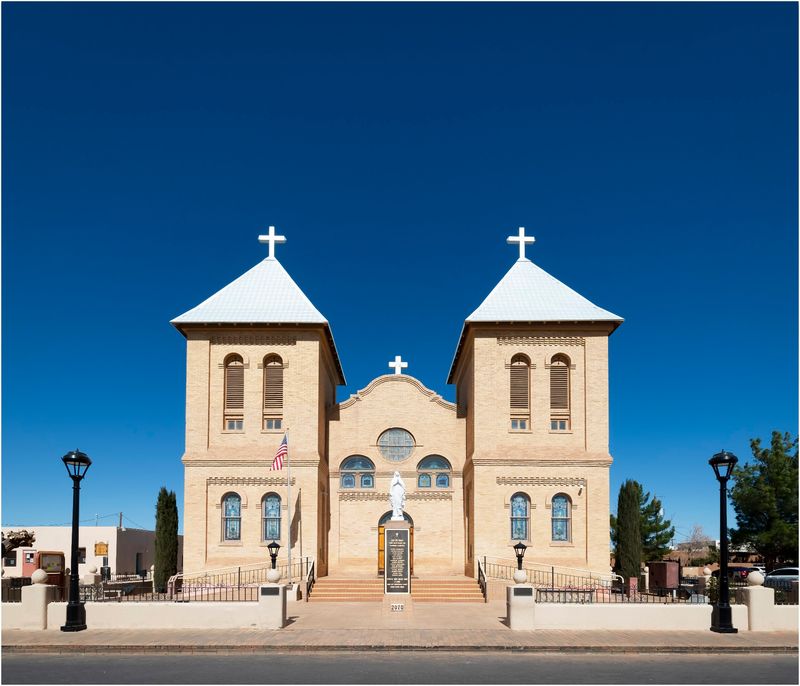
Mesilla’s old plaza has a way of making time feel optional, and the Basilica of San Albino at 2070 Calle de Santiago is the reason most people stop walking and start staring. Twin bell towers climb above the square with a poise borrowed straight from Spanish parish churches.
An earlier building went up in the 1850s, and the structure standing today was consecrated in the early twentieth century with a classic cruciform floor plan. Arched windows march along the sides in tidy symmetry, the kind of restrained elegance colonial builders learned from Spain and carried into the Mesilla Valley.
Inside, painted retablos and religious artwork keep the older devotional traditions of the region very much alive. Pope Benedict XVI named it a minor basilica, linking this southern New Mexico village to the great basilicas of Rome.
The courtyard outside stays shaded and calm even when the plaza fills with music and vendors, which happens often. Autumn evenings here are particularly pleasant, with green chile roasting somewhere close and the towers glowing pink at sunset.
Photographers tend to shoot the facade head-on, though the angle from the plaza’s far corner catches both towers beautifully. Small village, serious architecture.
3. Our Lady Of Sorrows Church, Las Vegas
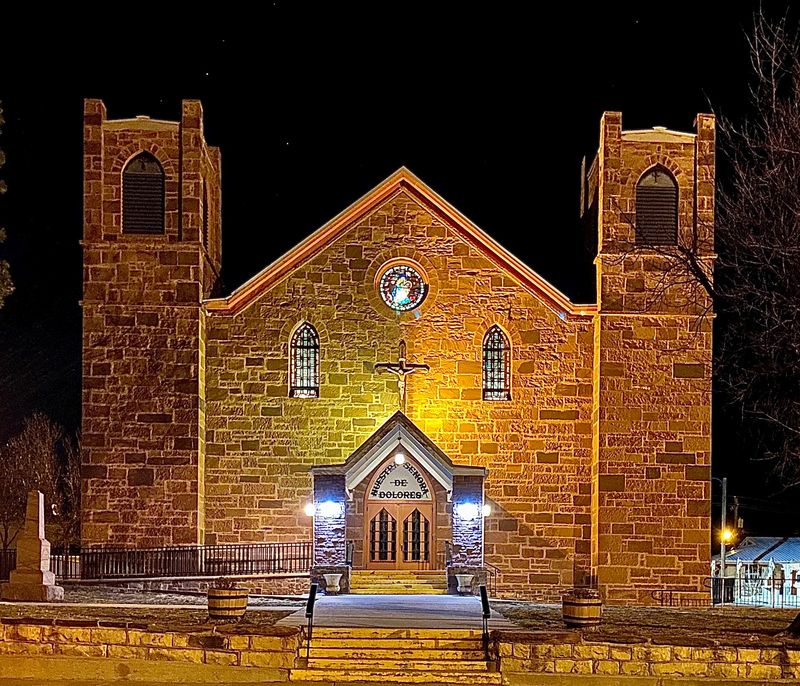
Locals have called it The Cathedral for generations, and standing at 403 Valencia Street it is easy to see why. Red sandstone climbs skyward in a mix of Gothic and Romanesque details that looks almost transplanted from a French provincial town.
Two square towers anchor the south facade, each capped with a belfry pierced by four arched openings. In a region famous for rounded adobe, this hard-edged masonry lands like a plot twist.
Work on the walls began in the 1850s, though the interior kept evolving for decades afterward, including the installation of an enormous water-powered Kilgen organ. Bishop Jean Baptiste Lamy’s French tastes echo through the whole design, as they do in several churches on this list.
The parish holds the distinction of being the first Roman Catholic congregation established in Las Vegas, replacing a modest adobe chapel that served the plaza community earlier.
The surrounding neighborhood makes the visit better: brick storefronts, Victorian houses, and a historic plaza all within strolling distance. Northern New Mexico weather can flip fast up here, so a jacket rarely goes unused.
Late light turns that sandstone deep rust, and the towers look twice their size.
4. Immaculate Conception, Las Vegas
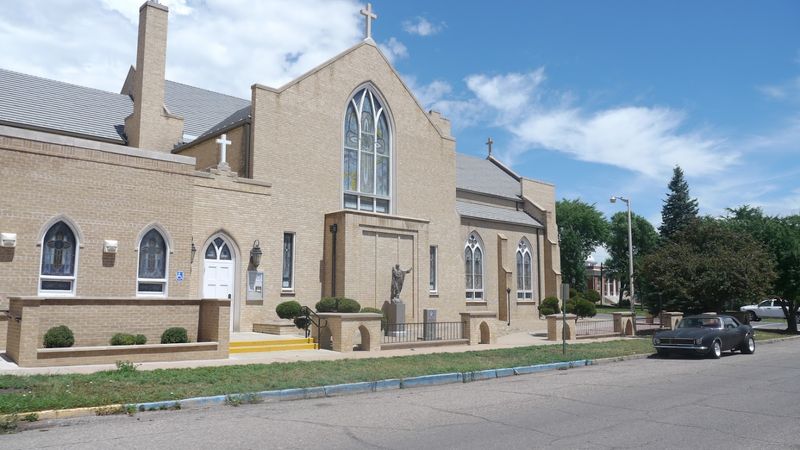
Not every European echo needs to shout. Over at 811 6th Street in East Las Vegas, Immaculate Conception offers the smaller, warmer kind of parish church you would find tucked along a lane in the French or Irish countryside.
The congregation was established in the 1880s, largely serving English-speaking Catholics in the growing eastern half of town. The present church arrived much later, in 1949, designed by architect Les J.
Wolmagood in the Late Gothic Revival style.
Adobe traditions step aside here in favor of masonry, pointed arch windows, and a traditional bell tower. The cream-brick building uses a Latin cross plan with large pointed windows and an asymmetrical tower, giving it a distinctly Gothic profile within the surrounding historic district.
What I appreciate most is the scale. You can take in the whole building from the sidewalk without craning your neck, which encourages you to notice brickwork and window details instead.
The surrounding streets are full of railroad-era architecture, so this stop pairs naturally with a longer wander through the historic district. Two very different churches within a few minutes of each other make Las Vegas a strong double feature.
Quiet, tidy, and quietly convincing as an old-world parish.
5. San Juan Bautista Catholic Church, Ohkay Owingeh
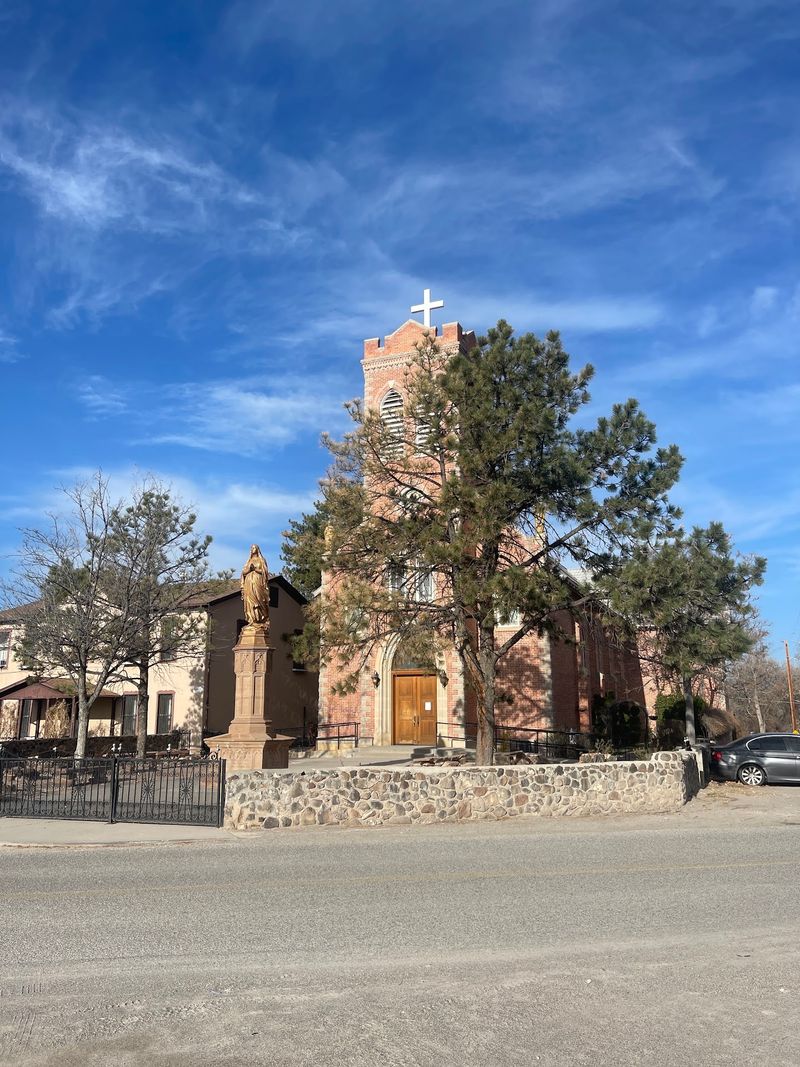
Red brick and stone, pointed windows, a neo-Gothic silhouette: at 185 Po’Pay Avenue, the architecture arrives from a very different world than the adobe homes nearby, and the contrast is unforgettable.
San Juan Bautista Catholic Church sits at the heart of Ohkay Owingeh Pueblo, north of Santa Fe. Wood floors, carved marble altars, and stained glass reflect the strong French influence that ran through the Diocese of Santa Fe in the nineteenth century.
The building visitors see today went up in the early 1910s and is either the fifth or sixth church raised on this site. The parish itself reaches back to the late 1500s, making it one of the oldest Native American congregations in the country.
Across the street stands a freestanding chapel dedicated to Our Lady of Lourdes, built of lava rock in the same neo-Gothic spirit and designed by the architects Antoine and Projectus Mouly.
Because this is a living pueblo community, respectful behavior matters: check posted guidelines before photographing anything, and observe posted rules about entering during services or feast days.
Seeing Gothic arches framed by cottonwoods and pueblo rooflines rearranges your expectations of the Southwest in about ten seconds.
6. St Joseph Apache Mission, Mescalero
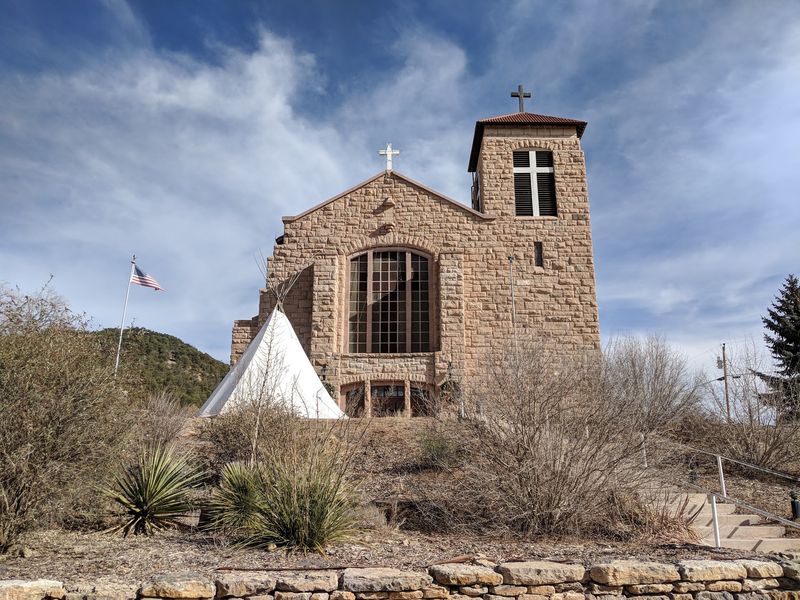
Pines, mountain air, and then a wall of stone that would not look out of place in a European hill town. St Joseph Apache Mission at 636 Mission Road rises high in the Sacramento Mountains on the Mescalero Apache Reservation.
Father Albert Braun came back from serving as an Army chaplain in World War I determined to build a lasting church for the Apache people, one that also honored those lost in the war. Construction started in the 1920s and stretched across two decades, powered largely by volunteers and stone gathered nearby.
Romanesque walls climb dramatically, and the floor plan takes the traditional shape of a cross, a layout repeated in churches all over Europe. Because the rock came from the surrounding land, the building looks like it grew there.
The most striking element is the cultural weaving. Stained glass carries Apache motifs, light fixtures echo the regalia of Apache Crown Dancers, and an Apache Christ presides above the altar.
That fusion is genuinely moving, and it makes the mission far more than an architectural curiosity. Elevation keeps summers mild here, so pack layers.
Few mountain drives in the state end with a payoff quite like this.
7. San Felipe De Neri Church, Albuquerque
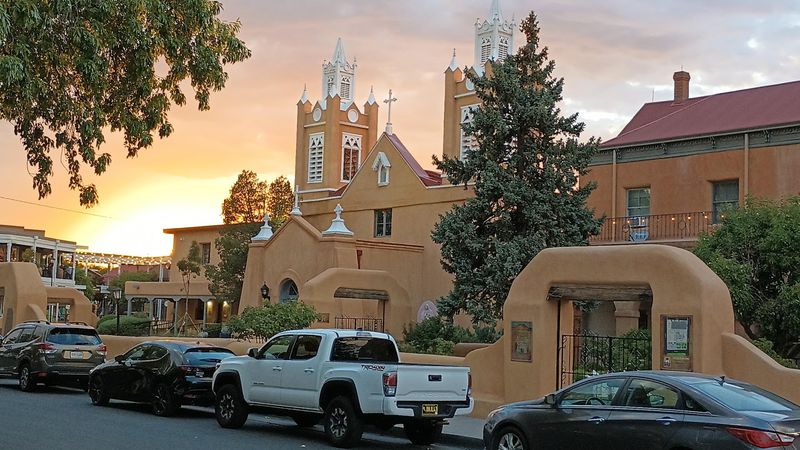
Old Town Plaza in Albuquerque hums with vendors and guitar music, and the church at 2005 N Plaza Street NW has watched it all for a very long time. San Felipe de Neri went up in the 1790s and remains one of the city’s oldest continuously used buildings.
The bones are Spanish colonial adobe, thick walls and wooden vigas laid out in a cross plan. Then the Victorian era arrived, Bishop Lamy’s European preferences took hold, and the church gained twin bell towers plus a pitched roof.
Jesuits from Naples oversaw much of that late-1800s remodeling, layering Italian sensibilities onto a mud-brick frame. Inside, hand-carved altars and painted statues share space with a pressed tin ceiling added in the 1910s.
That mix of eras is exactly what makes the building fun to read. You can practically trace each generation’s taste as your eyes travel upward.
A small museum and gift shop next door fill in the history, and the shaded plaza across the street is ideal for a break with a sopaipilla in hand.
Two centuries of remodeling, and somehow it all still holds together gracefully.
8. San Miguel Chapel, Santa Fe
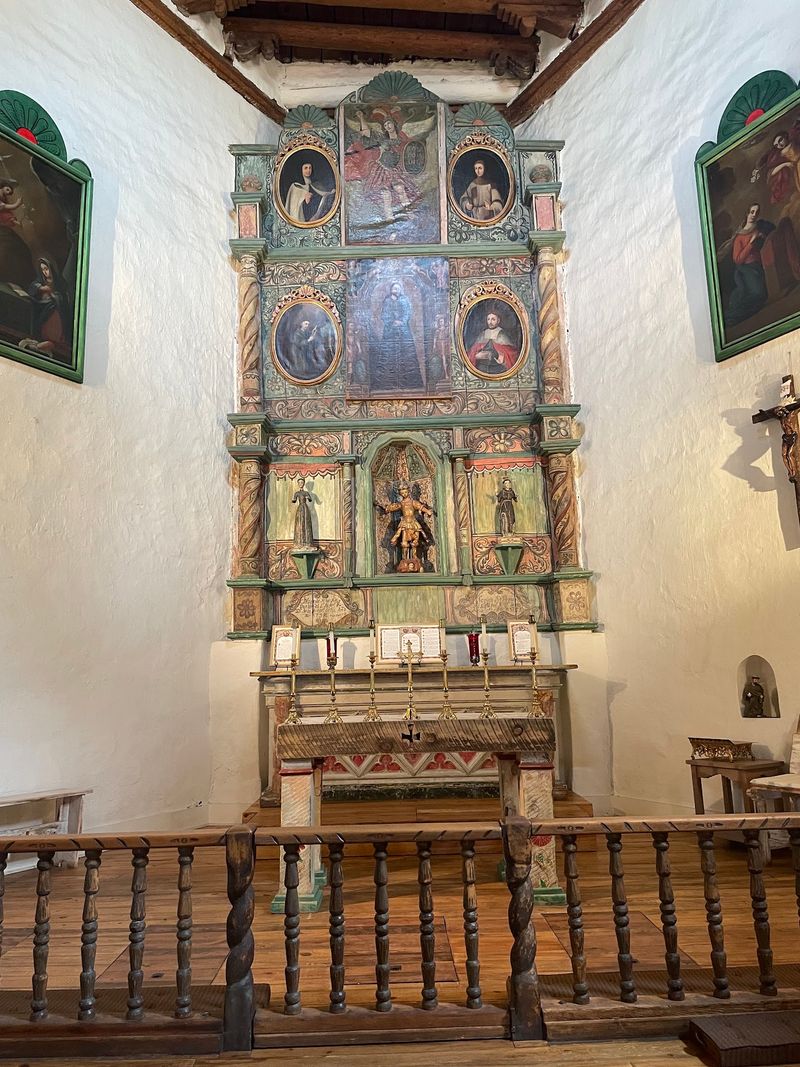
Plain and stubbornly standing: San Miguel Chapel at 401 Old Santa Fe Trail is often called the oldest church in the continental United States, and its power comes from restraint rather than spectacle.
Work began not long after Santa Fe was founded, carried out by Tlaxcalan Indians from Mexico who traveled north with Spanish colonists. Centuries of repairs and changes followed, yet the simple, sturdy shape of early mission architecture survives.
Thick adobe walls, small windows, and a bare interior create an atmosphere close to the austerity of Europe’s earliest Christian chapels. Sound behaves strangely in a room like this, soft and swallowed.
The historic reredos from the late 1700s anchors the sanctuary, along with an eighteenth-century statue of St. Michael that has watched over worshippers for generations. Old bells and worn timbers add to the sense of accumulated time.
It sits in the Barrio de Analco district, one of the oldest neighborhoods in the country, so the walk in sets the mood before you reach the door. A seven-dollar entrance fee supports upkeep.
Standing in that dim, cool space, the ocean crossing that brought these traditions here feels remarkably close.
9. San Francisco De Asis Church, Ranchos De Taos
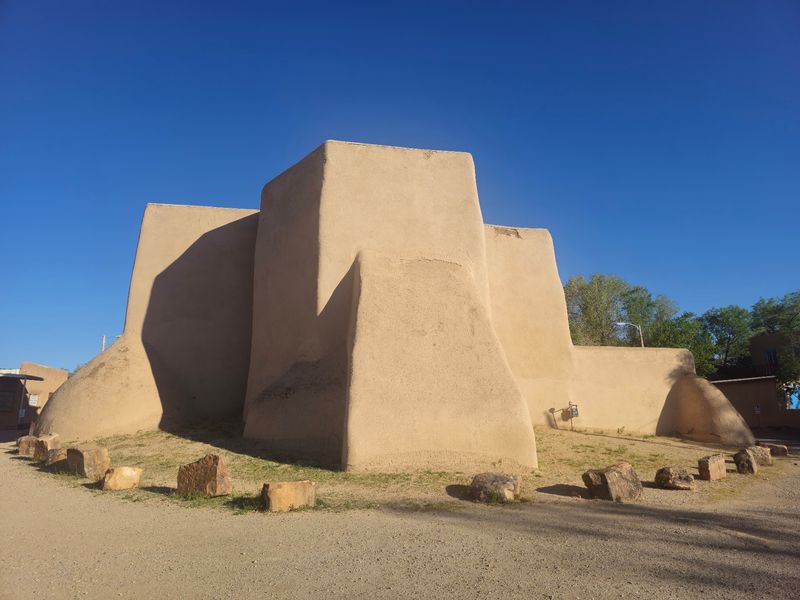
Painters have been circling this building for a century, and once you see the back of it you understand the obsession. San Francisco de Asis Church at 60 St Francis Plaza in Ranchos de Taos was completed in the early 1800s and looks carved rather than built.
Enormous adobe buttresses swell out from the rear elevation, giving the apse a monumental heft you rarely find in mud-brick construction. Scholars often note the buttresses are more sculptural than structural, which somehow makes them better.
Georgia O’Keeffe painted those curves, Ansel Adams photographed them, and the church has been drawing artists ever since. Shadows shift across the surfaces through the day and the whole form seems to change mood.
The craftsmanship represents the Spanish and Franciscan adobe tradition at its peak, blending Pueblo building methods with European religious plans. Fortified simplicity, without a single wasted line.
Every spring the community replasters the walls by hand with mud, a ritual that keeps the building alive and the technique passed along.
Parking sits just off the plaza, and a small shop nearby explains the church’s famous mystery painting.
Walk the full perimeter or you will miss the best angles entirely.
10. Santuario de Chimayo, Chimayo
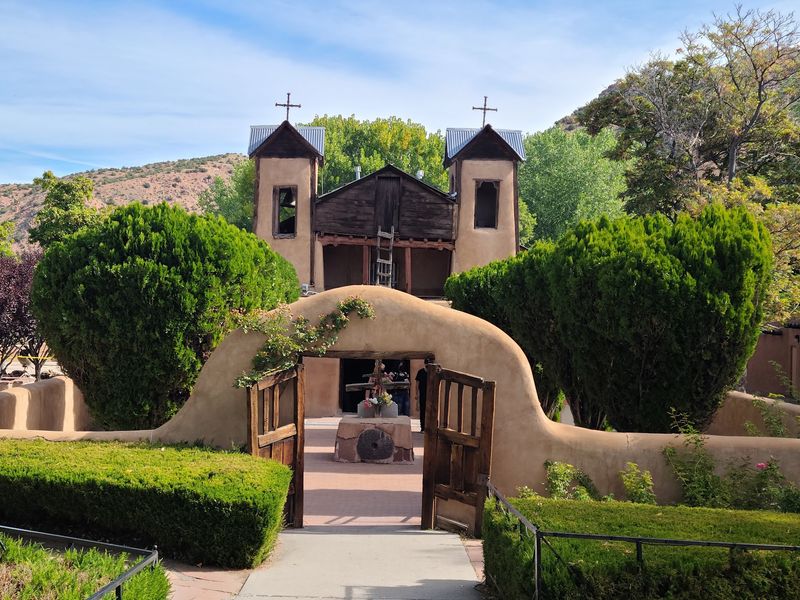
Thousands of pilgrims walk here every Holy Week, some setting out before dawn along the highway shoulders. Santuario de Chimayo, at 15 Santuario Drive, sits in a green valley where the road narrows and the mood shifts.
Built of adobe with twin bell towers and wooden gates, the chapel is modest in size and enormous in meaning. Its role as an international pilgrimage destination puts it in company with places like Lourdes and Fatima.
The famous draw is a small room holding sacred earth that many believe carries healing power, surrounded by crutches, photographs, and letters left in gratitude. Devotion is thick in the air, and even casual visitors tend to lower their voices.
Hand-carved wooden altars and traditional retablos fill the interior, painted in a folk style that traces directly back to Spanish colonial religious art. Old world artistry, made from local wood and local pigment.
The courtyard outside stays cool under big trees, and nearby shops sell woven textiles that Chimayo has been famous for across generations.
Weekday mornings are calmer, while Holy Week brings crowds and closed roads.
Earth, timber, and centuries of hope, gathered in one small valley chapel.
11. Holy Cross Catholic Church, Santa Cruz
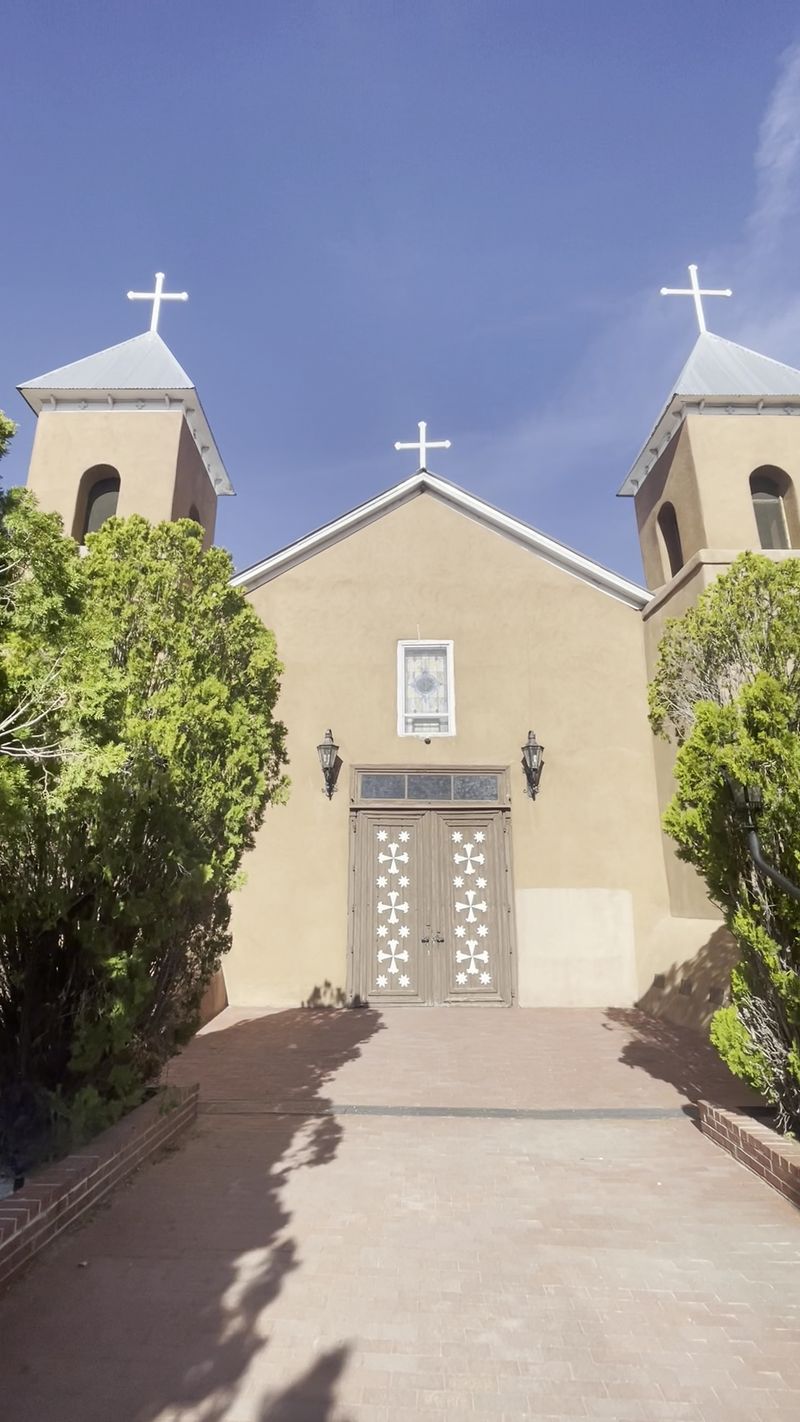
Few buildings in the country have served the same community for as long as Holy Cross Catholic Church at 126 South McCurdy Road in Santa Cruz. The village was formally established in the 1690s, and a church was dedicated here shortly after.
Adobe forms the walls, as you would expect in northern New Mexico, but the scale and cruciform layout follow classical European church planning. Big, calm, and unmistakably built to last.
Inside, elaborate altarpieces and religious paintings carry the influence of Baroque styles that traveled north from Mexico and, before that, from Spain. The painted woodwork rewards patient looking, especially in the side chapels.
What strikes me here is the continuity. Generations have gathered under this roof without pause, which is exactly what gives ancient European parish churches their weight.
The building sits along the low road between Santa Fe and Espanola, so it fits easily into a day that also includes Chimayo. Services still fill the pews, so plan visits around the schedule.
Thick walls keep the interior cool even in July, a practical bonus for travelers.
Stand in the nave a while and history stops feeling like a museum subject.
12. Cristo Rey Catholic Church, Santa Fe
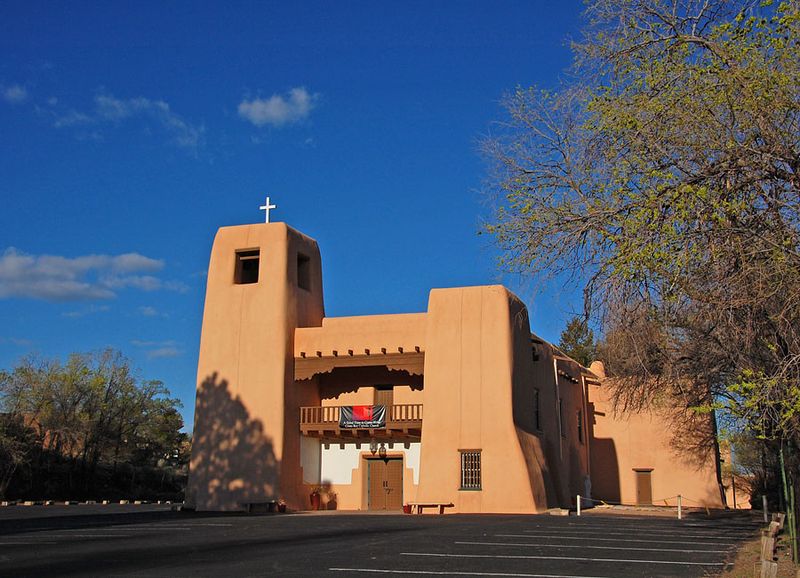
Massive walls, minimal decoration, and a presence that quietly dominates its street corner. Cristo Rey Catholic Church at 1107 Cristo Rey Street was completed around 1940 and ranks as the largest adobe structure in the country, built with well over a hundred thousand mud bricks.
Architect John Gaw Meem worked in the Pueblo Revival style, drawing on regional forms while aiming for a scale usually reserved for old world cathedrals. The result reads as thoroughly New Mexican and unmistakably grand at once.
Thick walls, deep window recesses, and long unbroken planes give the building the same sense of permanence you find in Romanesque churches across Europe. Sunlight does wonderful things to those tan surfaces late in the day.
The treasure inside is a stone reredos from the 1700s, originally part of a military chapel in Santa Fe. Carved and painted, it would look perfectly at home in a village church in Spain.
The neighborhood is residential and quiet, a short drive from the plaza crowds, which makes visiting refreshingly relaxed.
Big adobe, old altar screen, and a stillness that lingers after you leave.